
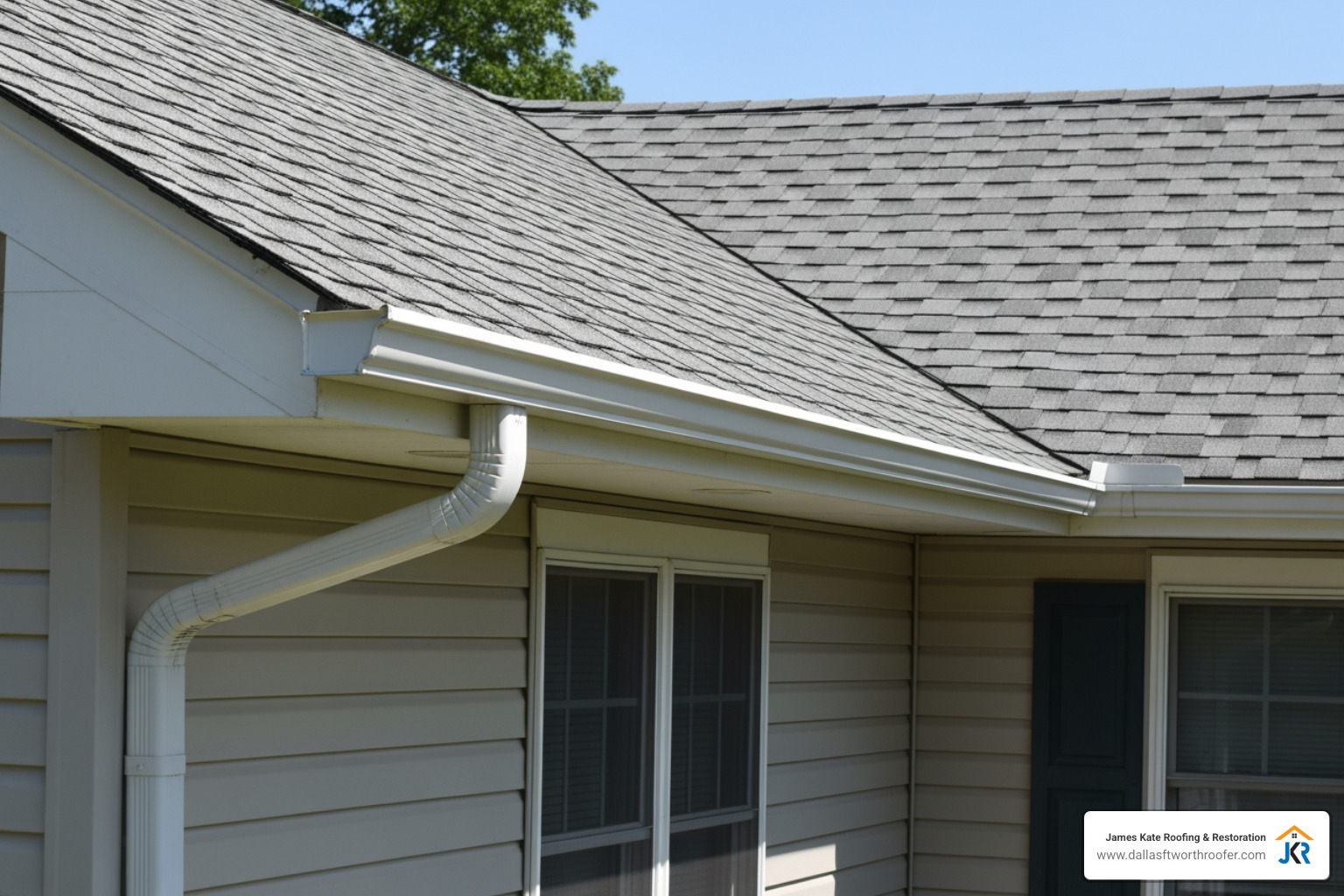
Why Gutters and Roofing Work Together to Protect Your Entire Home
Gutters and roofing are two parts of the same system — and when one fails, the other suffers.
Here’s a quick breakdown of how they work together:
| Component | Primary Role |
|---|---|
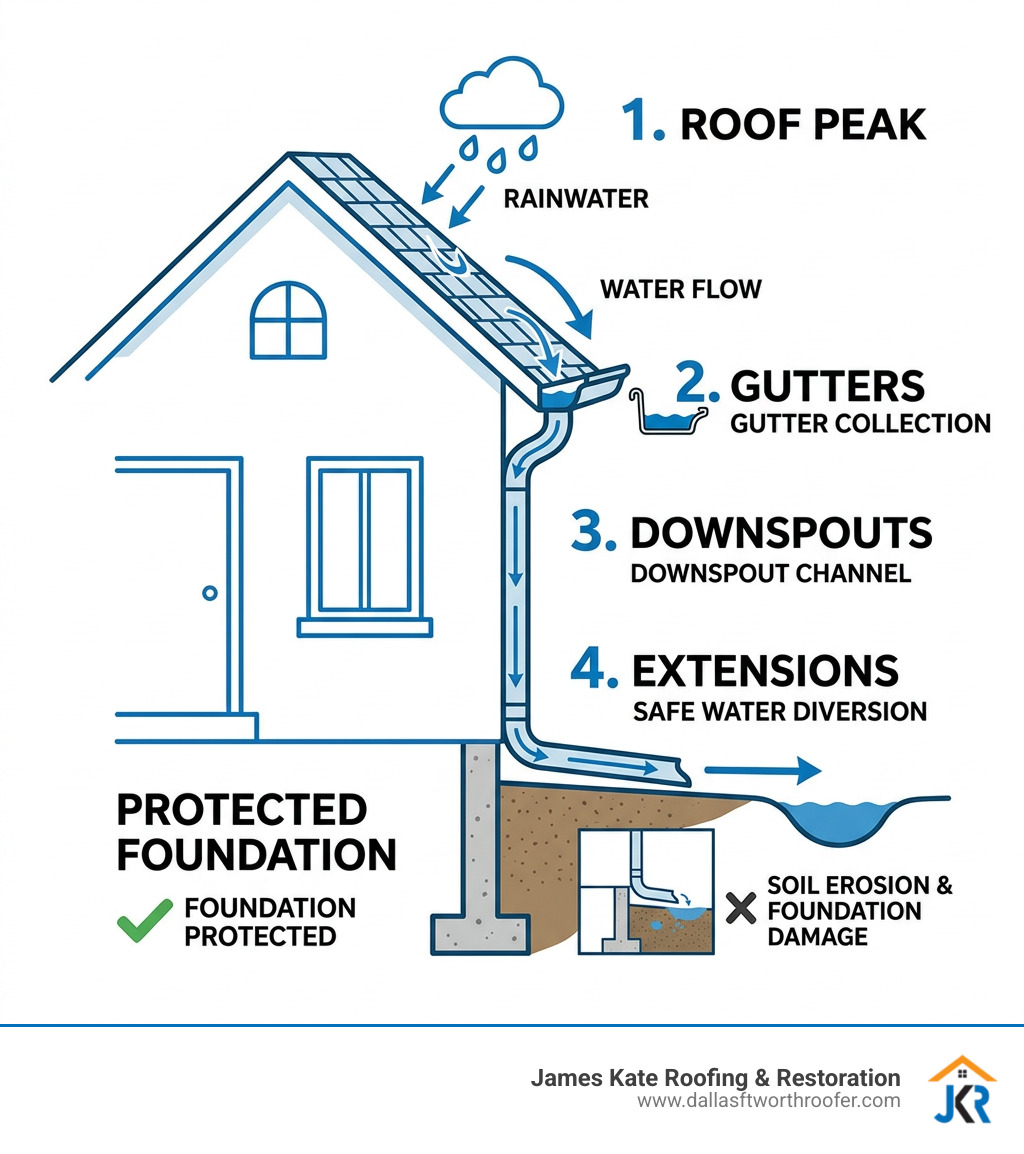
| Roof surface | Sheds rainwater away from the structure |
| Gutters | Collect and channel that water off the roofline |
| Downspouts | Move water from gutters down to ground level |
| Extensions | Direct water away from your foundation |
When this system works correctly, rainwater flows from your roof peak, into the gutters, through the downspouts, and safely away from your home. When it doesn’t — you get roof rot, fascia damage, soil erosion, and eventually, foundation problems.
Moisture is the primary enemy of most roofing materials. And in the DFW area, where heavy storms can dump significant rainfall in a short time, a poorly designed or neglected gutter system can accelerate roof wear and cause thousands of dollars in structural damage.
I’m Dustin Eatman, owner of James Kate Roofing & solar, and I’ve spent years diagnosing exactly how gutters and roofing failures compound each other on DFW homes. In this guide, I’ll walk you through everything you need to know to keep both systems working together.
Related content about Gutters and roofing:
The Critical Connection Between Gutters and Roofing
At James Kate Roofing & solar, we often tell our clients in Mansfield and Arlington that their roof is only as good as its drainage. Think of your roof as a giant umbrella. While the shingles or metal panels keep the water from entering your attic, the gutters act as the perimeter drainage system that ensures that water doesn’t just “dump” straight down onto your siding or into your flower beds.
When Gutters and roofing are perfectly synced, they manage moisture effectively, protecting the fascia boards (the long wooden boards behind the gutters) and the soffit ventilation (the vents under your eaves). Without functional gutters, water can “wick” back up under the bottom edge of your shingles, causing the wooden roof deck to rot.
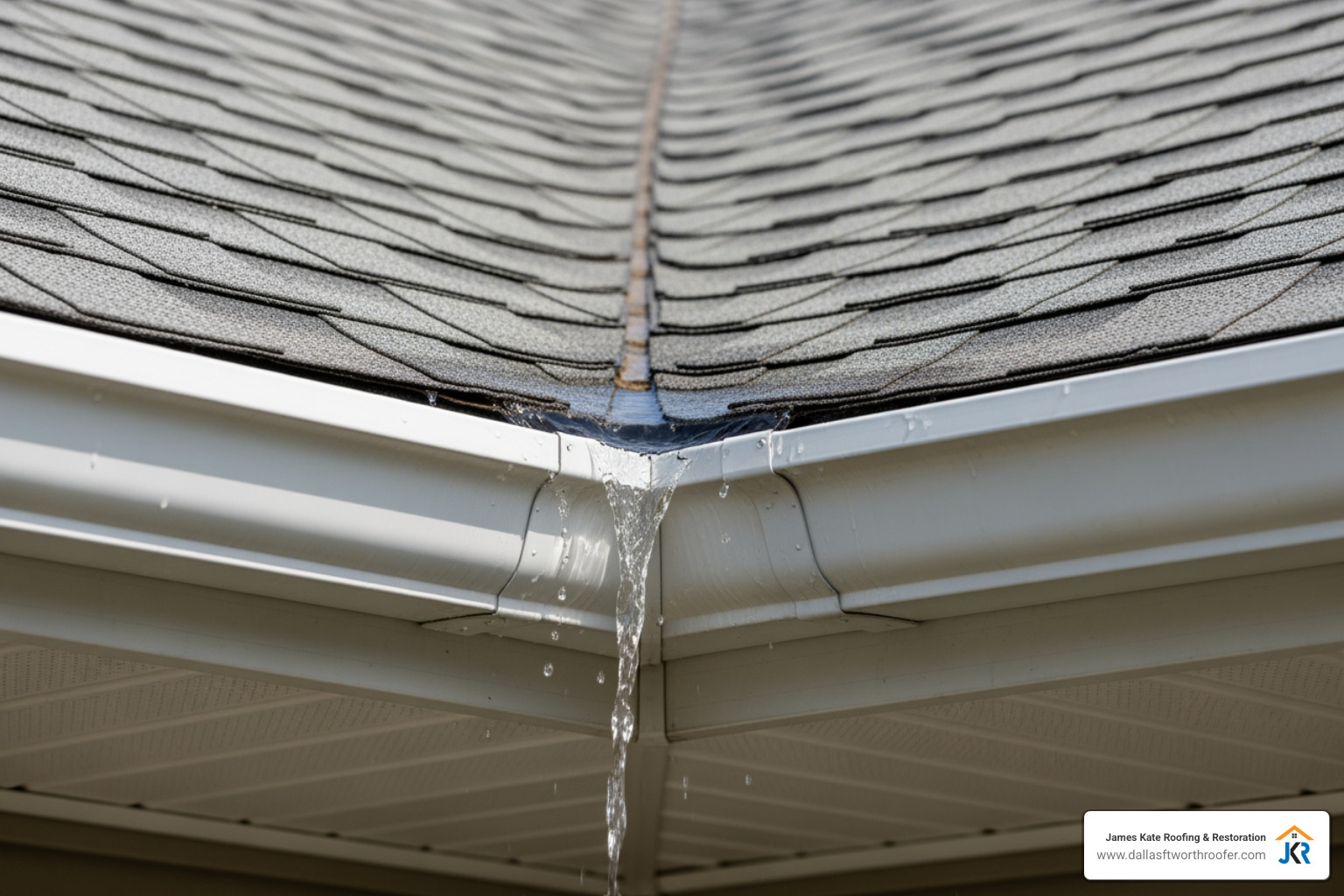
Primary Gutter Functions:
- Preventing Standing Water: Keeps water from pooling at the roof’s edge.
- Protecting Fascia and Soffits: Diverts water away from vulnerable wood trim.
- Reducing Thermal Stress: By keeping roofing materials dry, gutters minimize the expansion and contraction that leads to cracks.
- Foundation Preservation: Channels thousands of gallons of water away from the concrete slab.
How Gutters and Roofing Prevent Shingle Deterioration
Many homeowners don’t realize that their gutters can actually tell them the health of their shingles. If you find a layer of sand-like granules in your gutter troughs, it’s a sign that your shingles are reaching the end of their lifespan. These granules protect the asphalt from UV rays; once they wash away, the shingle becomes brittle and prone to leaks.
Poorly installed gutters can lead to water pooling, which creates a breeding ground for mold and mildew. In the humid Texas climate, this can quickly spread to your roof deck. If you are noticing dark streaks or soft spots near your roofline, it might be time to look into our residential roofing services to assess the damage.
Managing Rainfall Capacity and Roof Pitch
The DFW area is known for intense “indicative storms” that can deliver massive amounts of water in minutes. To ensure your Gutters and roofing can handle the load, we use specific calculations. For example, a 4-inch gutter with a single downpipe can typically drain a 600-square-foot roof area. However, if your roof has a steep pitch, the water moves faster, requiring higher capacity gutters or more frequent downspouts to prevent overflow.
According to scientific research on rainwater conveyance, an inch of rain on an average roof can result in nearly 1,900 gallons of water. If your gutters aren’t sized correctly for your roof’s square footage and pitch, that water will overshoot the gutter and land right next to your foundation.
Choosing the Right Gutter System for Your Roof
Selecting the right material is just as important as the installation itself. In Texas, we have to account for extreme heat and the occasional hailstorm. We generally recommend seamless gutters because they eliminate the joints where leaks usually start.
| Material | Pros | Cons | Estimated Lifespan |
|---|---|---|---|
| Aluminum | Lightweight, rust-proof, affordable | Can dent from heavy hail | 20–30 Years |
| Copper | Extremely durable, beautiful patina | High initial cost | 50–100 Years |
| Steel | Very strong, handles heavy snow/ice | Prone to rust if not galvanized | 20+ Years |
| uPVC/Vinyl | Cheapest, easy DIY | Becomes brittle in TX sun | 10–20 Years |
Material Compatibility in Gutters and Roofing
One mistake we see often is the mixing of “dissimilar metals.” If you have a metal roof and install gutters made of a different metal, a chemical reaction called galvanic corrosion can occur, eating away at both systems. This is why we always refer to the technical bulletin on dissimilar metals when designing a custom system. Whether you have asphalt shingles or a modern metal roof, we ensure the gutter material and fasteners won’t cause premature failure.
Modern Innovations in Gutter Protection
If you’re tired of climbing ladders in Mansfield or Granbury, you might consider gutter guards. Modern micro-mesh screens allow water in while keeping leaves, twigs, and even shingle granules out. Innovations like GutterDome technology use military-grade aluminum to provide a 30-year no-clog guarantee. Choosing the right guard depends heavily on your roof type; for instance, a steep metal roof might need a different guard style than a low-slope shingle roof to prevent “water sheeting.”
Maintenance Strategies to Extend Roof and Gutter Lifespan
We recommend a bi-annual maintenance routine for all DFW homeowners. The best times are early spring (to clear out winter debris) and late autumn (after the leaves have fallen).
Our Recommended Maintenance Routine:
- Clear Debris: Remove leaves, nests, and shingle granules.
- Flush the System: Use a garden hose to ensure water flows freely through the downspouts.
- Check Alignment: Gutters should have a slight “fall” (about 1 inch for every 20 feet) toward the downpipe.
- Inspect Brackets: Ensure hangers are tight; loose gutters can sag and pull away from the fascia.
For more detailed tips, check out our guide on roof maintenance.
Signs Your System Needs Professional Repair
Sometimes, a simple cleaning isn’t enough. If you notice any of the following, your Gutters and roofing system may be failing:
- Sagging Troughs: Indicates the hardware is failing or the gutters are weighted down by debris.
- Peeling Paint or Rust: A sign that water is constantly sitting in the gutter.
- Landscape Erosion: If you see “trenches” in your mulch or dirt under the eaves, your gutters are overflowing.
- Basement or Crawlspace Dampness: This often means water is pooling at the foundation.
If you see these signs, it’s best to schedule roofing repairs before the damage reaches your home’s interior.
The Role of Professional Inspections
While you can check your gutters from a ladder, a professional roofer should inspect your entire system at least once every three years. We look for things the average homeowner might miss, such as cracked caulk at end caps, damaged flashing, or subtle signs of roof leaks in the attic. A professional inspection is a small investment that can save you thousands in “build-back” construction costs later.
How Poor Drainage Leads to Foundation and Structural Failure
This is where the “solar” part of James Kate Roofing & solar comes in. When water isn’t diverted away from the house, it saturates the soil around your foundation. In the DFW area, our clay-rich soil expands when wet and shrinks when dry. This constant movement creates hydrostatic pressure that can crack your foundation.
Beyond the foundation, poor drainage can lead to “wicking” where water travels up into your siding, rotting the sill plates and causing internal wall leaks. If you’ve experienced this, our solar services can help with water mitigation and structural repairs.
Preventing Costly Structural Mitigation
Neglecting your gutters is an expensive gamble. While clearing gutters might cost a modest amount, replacing rotten fascia boards or repairing a cracked foundation can run into the tens of thousands. For our business clients, ensuring commercial roofing protection includes maintaining high-capacity box gutters to prevent interior flooding that could halt operations.
Frequently Asked Questions about Gutter Protection
How often should gutters be cleaned in the DFW area?
At a minimum, twice a year. However, if your home in Arlington or Grand Prairie is surrounded by large oak or pecan trees, you may need quarterly cleanings to prevent clogs.
Do gutter guards eliminate the need for maintenance?
Not entirely, but they reduce it significantly. You should still have a professional check them once a year to ensure no fine debris has bypassed the mesh and that the brackets remain secure.
What is the lifespan of seamless aluminum gutters?
When properly installed and maintained, seamless aluminum gutters typically last 20 to 30 years. They are 0.027 inches thick and are the “gold standard” for residential homes in North Texas.
Conclusion
At James Kate Roofing & solar, we believe in doing things the right way. As a family-owned DFW company, we stand by our work with honesty, integrity, and Biblical principles. Whether you are in Mansfield, Arlington, or Midlothian, we understand that your home is your most significant investment.
Our GAF President’s Club recognition and up to 25-year workmanship warranty mean you can trust us to ensure your Gutters and roofing are working in perfect harmony. Don’t wait for the next Texas downpour to find out your drainage is failing.
Ready to protect your foundation? Schedule a professional roofing and gutter consultation with us today.