What Every Homeowner Should Know About Their Residential Roof
A residential roof is one of the most important — and most expensive — parts of your home. It protects everything underneath it from rain, wind, heat, and hail. Yet most homeowners don’t think about it until something goes wrong.
Here’s a quick overview of the most common residential roofing materials to help you get oriented fast:
| Material | Cost per Sq Ft | Lifespan |
|---|---|---|
| Asphalt Shingles | $3.50 – $5.50 | 20 – 30 years |
| Metal | $7.00 – $12.00 | 40 – 50+ years |
| Clay / Concrete Tile | $10.00 – $20.00 | 50+ years |
| Natural Slate | $15.00 – $30.00 | 75 – 100+ years |
| Wood Shakes | $4.50 – $9.00 | Up to 30 years |
| Synthetic Slate | $6.00 – $12.00 | 30 – 50 years |
The national average cost of a roof replacement is $9,515, with most homeowners spending between $5,867 and $13,212 depending on material, roof size, and labor.
Asphalt shingles are by far the most popular choice — they cover roughly 75% of all steep-slope residential roofs in the U.S. — but they’re far from your only option.
This guide walks you through everything: materials, costs, components, warning signs, and how to make the right call for your home and budget.
I’m Dustin Eatman, owner of James Kate Roofing & solar in the Dallas–Fort Worth area, with hands-on experience diagnosing and replacing residential roofs across a wide range of materials, slopes, and weather conditions. Whether you’re dealing with storm damage or simply planning ahead, I’ll give you the straight facts so you can make a confident decision.
Residential roof terms to know:
- best roofers
- i need a roofer
- nearby roofing companies
Understanding the Modern Residential Roof System
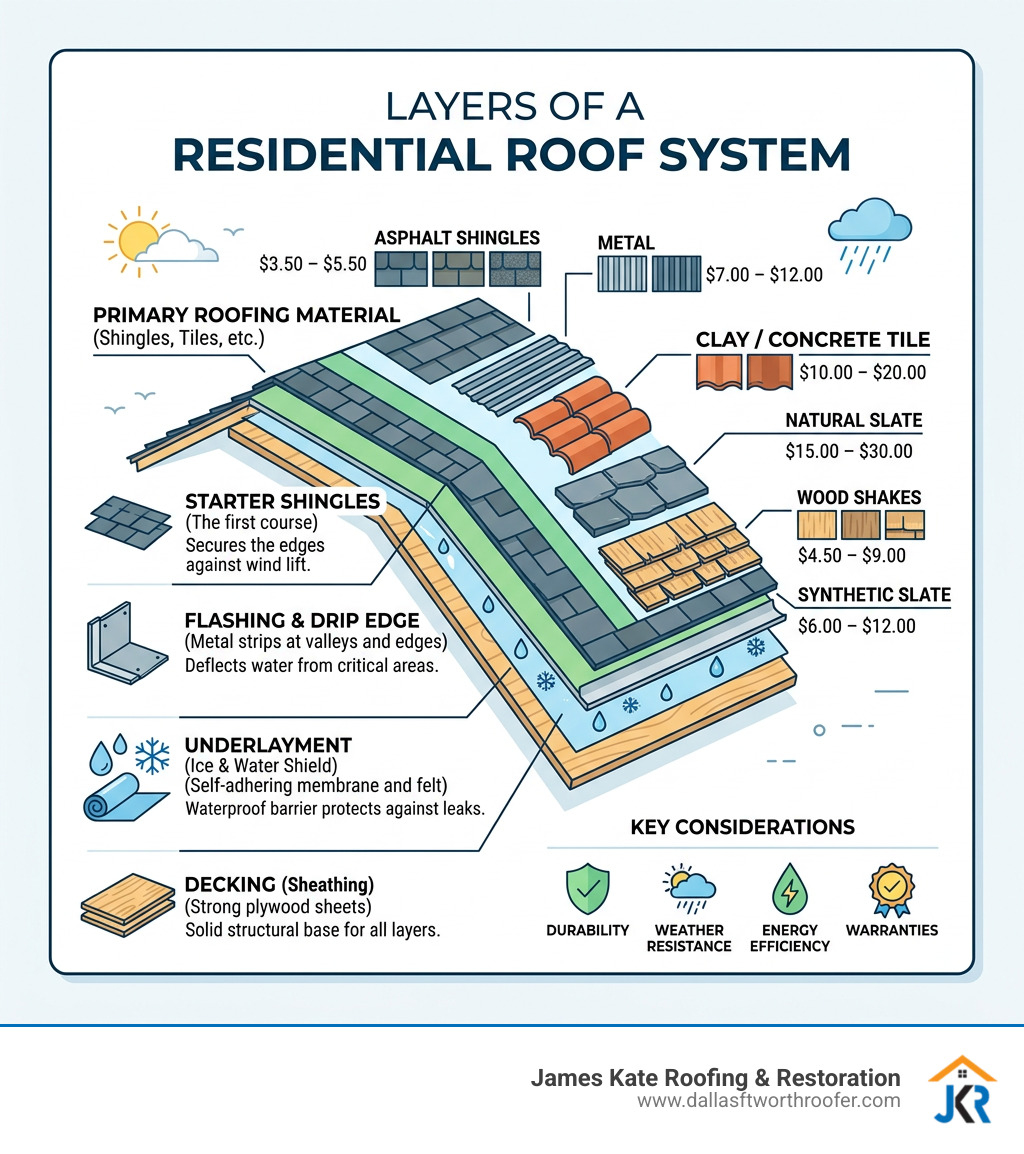
When you look at your house, you see shingles. But a high-performing residential roof is actually a complex, multi-layered system where every part has a specific job to do. If one piece of the puzzle is missing or installed incorrectly, the whole system can fail, leading to leaks, mold, and expensive structural damage.
Think of it like an onion (but one that keeps you dry). It starts with the roof deck, usually made of plywood or OSB, which provides the structural foundation. On top of that, we install several critical layers:
- Leak Barriers: These are self-adhering waterproof membranes installed at the most vulnerable areas, like eaves, valleys, and around chimneys. They are your last line of defense against wind-driven rain and the ice dams that can occasionally surprise us here in North Texas.
- Roof Deck Protection (Underlayment): This is a water-resistant layer, often made of synthetic materials today rather than old-fashioned felt paper. It allows moisture from inside the attic to escape while preventing rain from getting in.
- Starter Shingles: These are the first row of shingles installed at the eaves. They are specifically designed with a strong adhesive to prevent shingles from blowing off during high-wind events.
- Flashing: These are metal pieces installed wherever the roof meets a vertical surface, like a wall or a chimney. It directs water away from these “penetrations” and down to the gutters.

One of the most overlooked parts of this system is attic ventilation. A healthy roof needs to breathe. Building codes generally specify a minimum ventilation rate of 1 square foot of opening per 150 square feet of roof area (the 1:150 rule). Without proper airflow — usually achieved through a balance of intake vents at the soffits and exhaust vents at the ridge — heat and moisture get trapped. This can cook your shingles from the inside out in the Mansfield summer heat and lead to wood rot in the winter.
You can learn more about the various roof types we install and how they integrate with these components. For a deeper technical dive, you can also check out this CertainTeed guide to roof components which illustrates how these pieces work together seamlessly.
Selecting the Right Residential Roof Material
Choosing a material is the biggest decision you’ll make. In the U.S., asphalt shingles hold a massive 75% market share because they offer the best balance of cost and reliability. But “asphalt” is a broad category.
- 3-Tab (Strip) Shingles: These are the most basic and affordable. They consist of a single layer and have a flat, traditional look.
- Architectural (Dimensional) Shingles: These are the modern standard. They use dual-layer technology to create a thicker, multi-dimensional look that mimics wood shakes. They are heavier and perform significantly better in the wind.
- Luxury (Premium) Shingles: These are the highest tier of asphalt. They are laminated to provide enhanced aesthetics, often mimicking natural slate or old-world tile, and offer the best durability.
| Material | Avg. Lifespan | Pros | Cons |
|---|---|---|---|
| Asphalt | 20-30 Years | Affordable, easy to repair | Shorter life, prone to wind damage |
| Metal | 40-50+ Years | Durable, energy-efficient | Higher upfront cost, can be noisy |
| Tile | 50+ Years | Beautiful, fire-resistant | Very heavy, expensive |
| Slate | 75-100+ Years | Unmatched longevity | Extremely heavy and costly |
When you are ready for a roof replacement and installation, we help you weigh these pros and cons based on your home’s specific architecture and your long-term goals.
Maximizing Your Residential Roof Longevity
A new residential roof is a significant investment, so you want it to last as long as possible. The secret isn’t just the material; it’s the maintenance. We recommend routine inspections at least once a year, or after any major DFW storm.
Key maintenance steps include:
- Gutter Cleaning: Clogged gutters back up water under your shingles and rot your fascia boards.
- Debris and Moss Removal: Leaves trapped in valleys hold moisture. While moss is less common in Texas than in the Northwest, algae (those black streaks) is a frequent visitor.
- Algae Resistance: Many modern shingles feature “StainGuard” technology, which uses copper-lined granules to prevent algae growth for 25 years or more.
Longevity also depends on the quality of the install. That’s why we emphasize roof maintenance and offer robust workmanship warranties. A manufacturer’s warranty covers defects in the material, but a workmanship warranty covers the actual installation — which is where most roof problems actually start.
Comparing Material Costs, Lifespan, and Performance
Cost is usually the elephant in the room. As mentioned, the national average is around $9,515, but that number can double or triple depending on your choices.
According to Freedonia Group research on metal roofing growth, metal roofs are surging in popularity, especially in storm-prone areas. While a standing seam metal roof might cost $7.00 to $12.00 per square foot, its resistance to leaks and wind uplift makes it a “one-and-done” investment for many homeowners.
If you are looking for high-end aesthetics, clay and concrete tiles are fantastic for Mediterranean-style homes. They are fire-resistant and can last half a century, but they are heavy — sometimes requiring extra structural bracing for your home.
For those who want the look of natural slate without the $30 per square foot price tag, synthetic rubber slate is an excellent alternative. It’s made from recycled materials, weighs much less, and offers incredible impact resistance against the hail we often see in Arlington and Grand Prairie.
Key Factors Influencing Your Roofing Decisions
In the DFW area, we have a unique set of challenges. When we help you choose a residential roof, we look at three main factors:
1. Climate Resilience Our roofs take a beating from the sun and hail. This is why “cool roofs” have become such a hot topic (pun intended). According to the DOE Energy Saver guide to cool roofs, light-colored roofs or those with reflective pigments can reduce home cooling costs by up to 15%. White roofs reflect 60-90% of sunlight, while even “cool-colored” darker roofs can reflect 30-60%.
2. Roof Slope Your roof’s “pitch” or slope dictates what materials you can use. Most shingles require a “steep slope” (a pitch of 2:12 or greater) to shed water effectively. If you have a flat or low-slope section over a porch or garage, we have to use specialized materials like EPDM rubber or TPO to prevent standing water from seeping in.
3. Incentives and Efficiency Did you know there is a 30% federal tax credit for solar roofs available through the end of 2025? If you’re considering solar shingles (which look like traditional shingles but generate power), the savings can be massive. You can research certified products through the Cool Roof Rating Council resources to see which materials offer the best bang for your buck in energy efficiency.
Signs Your Home Needs a Roof Replacement
How do you know if you need a total replacement or just a few roof repairs? Sometimes the signs are obvious, and sometimes they require a pro’s eye.
Watch for these “Red Flags”:
- Granule Loss: If your gutters look like they’re filled with coffee grounds, your shingles are losing their protective coating.
- Curling or Buckling: This is a sign that the shingles are past their life expectancy or the attic is poorly ventilated.
- Interior Water Stains: If you see yellow or brown spots on your ceiling, you have a leak that has already bypassed your decking and insulation.
- Sagging Roofline: This is a serious structural issue, often caused by long-term water damage or undersized framing.
- The 20-Year Milestone: Most asphalt roofs in Texas start to fail between 18 and 22 years. If you’re in that window, it’s time for a proactive inspection.
Frequently Asked Questions about Residential Roofing
How much does a new residential roof cost on average?
The national range for a typical home is between $8,500 and $16,000. However, in the DFW market, factors like the number of stories, the steepness of the roof, and the number of “penetrations” (chimneys, skylights, vents) will influence the final labor rate.
What are the benefits of a “cool roof”?
A cool roof uses highly reflective surfaces to stay significantly cooler than a traditional roof. This reduces the “urban heat island” effect in cities like Grand Prairie and Arlington and can save you roughly 15% on your summer electric bills.
How long do different roofing materials typically last?
- Asphalt: 20–30 years
- Metal: 40–50 years
- Slate: 75–100+ years
- Tile: 50+ years Proper maintenance can extend these timelines, while severe weather or poor ventilation can cut them in half.
Conclusion
Your residential roof is your home’s first line of defense. At James Kate Roofing & solar, we understand that a roof replacement is a major life event. As a family-owned DFW company, we operate on the principles of honesty, integrity, and Biblical values.
We are proud to be recognized in the GAF President’s Club — a distinction held by less than 1% of roofers nationwide — and we back our work with up to a 25-year workmanship warranty. Beyond just roofing, we are full-service solar experts. If you’ve suffered a disaster, we handle water mitigation, fire and mold mitigation, and the complete build-back construction to get your life back to normal.
Don’t wait for the next big storm to find out if your roof is up to the task. Schedule your residential roofing service today and let us provide the protection your family deserves.