Why Your Roof Needs Attention Before DFW’s Next Storm Hits
Roof inspection DFW homeowners rely on is one of the smartest — and most overlooked — steps in protecting a home from North Texas weather.
Here’s what you need to know at a glance:
| Question | Quick Answer |
|---|---|
| How often should you inspect? | At least twice a year, plus after any major storm |
| When is the best time? | Spring and fall, ideally before storm season |
| How soon after a storm? | Within 24-48 hours |
| Is a professional inspection worth it? | Yes — hidden damage is common and easy to miss |
| Does it help with insurance? | Yes — inspection reports are key to filing claims |
Dallas-Fort Worth is one of the toughest climates in the country for roofs. Scorching summer heat, sudden hailstorms, high winds, and heavy rain cycle through the region year after year. Most homeowners don’t think about their roof until water shows up on the ceiling — and by then, the damage has already spread.
The goal of this guide is simple: give you a clear, practical checklist so you can stay ahead of problems before they become expensive.
I’m Dustin Eatman, owner of James Kate Roofing & Solar in the DFW metroplex, and I’ve spent years performing roof inspection DFW homeowners and businesses depend on — from diagnosing hidden hail damage to guiding clients through complex insurance claims. Let’s walk through exactly what a thorough roof inspection looks like, so you know what to expect and what to watch for.
Simple Roof inspection DFW glossary:
Why Regular Roof Inspections are Essential in DFW
In the Dallas-Fort Worth area, your roof is the first line of defense against some of the most volatile weather in the United States. We aren’t just talking about a little rain; we are talking about a climate that actively tries to degrade your roofing materials 365 days a year.

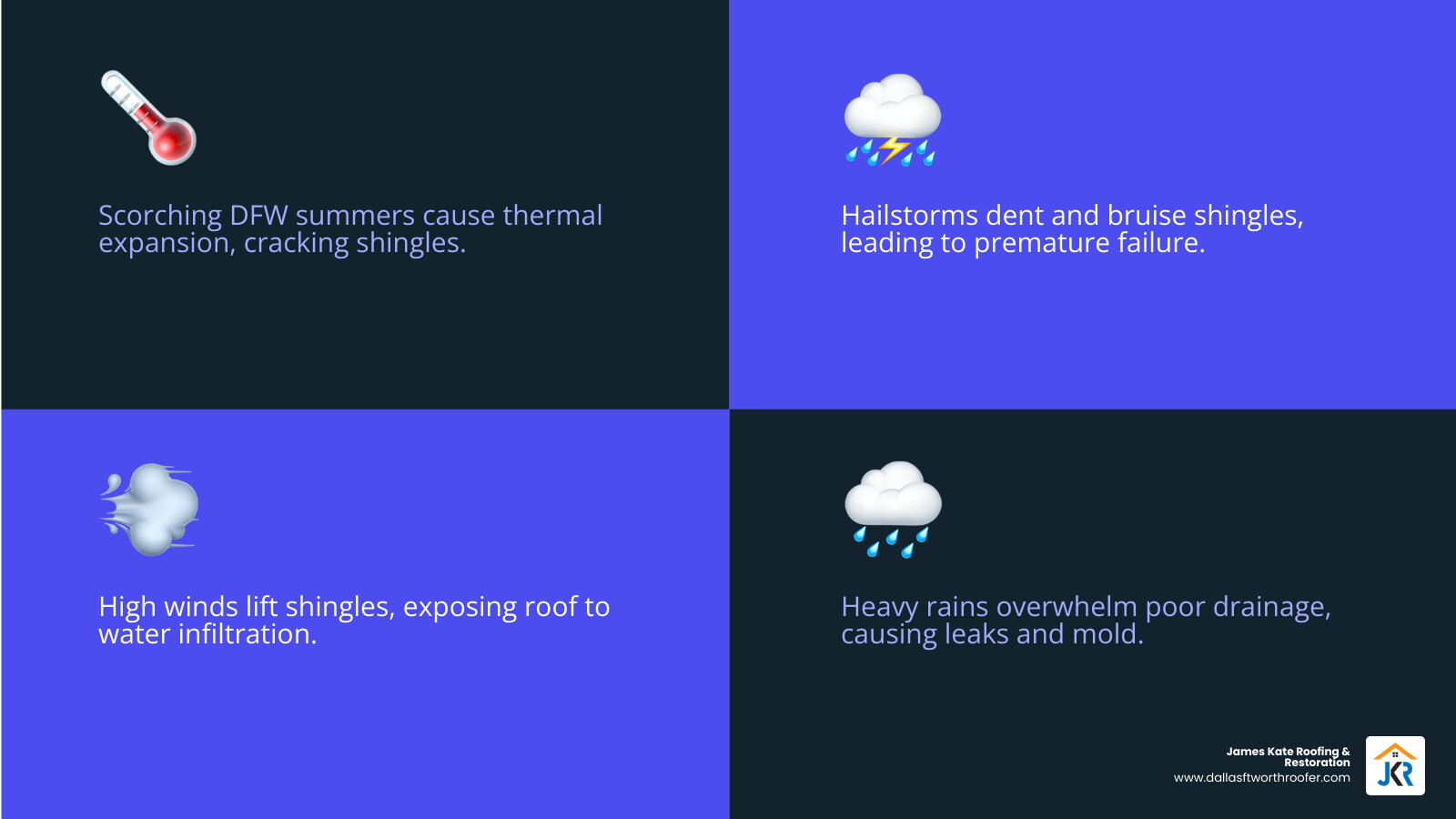
The DFW Weather Gauntlet
- Scorching Summers: Our Texas sun is brutal. UV rays bake shingles, causing them to become brittle over time.
- Thermal Expansion: The rapid shift from 100-degree days to cooler nights causes roofing materials to expand and contract. This “thermal shock” can cause fasteners to back out and sealants to crack.
- High Winds and Thunderstorms: DFW is notorious for straight-line winds that can lift shingles, allowing water to drive underneath the primary barrier.
- Hail Damage: This is the big one. Even small hail can bruise the mat of a shingle, leading to shingles losing their protective granules and failing prematurely.
Neglecting a roof inspection DFW can lead to catastrophic failures. Unaddressed leaks often result in mold and mildew growth, which poses significant health risks to your family. Furthermore, a compromised roof loses its energy efficiency, causing your AC to work overtime during those $100+ degree August afternoons. By catching minor issues early, you maintain your home’s structural integrity and protect its overall property value.
For a deeper, neutral overview of how asphalt shingles work (and why granule loss matters), see Asphalt shingle.
Note: As with any roofing topic, reputable resources can help you understand the material science, but nothing replaces a hands-on roof inspection DFW by a qualified local professional who can evaluate your specific roof system and storm exposure.
The Professional Roof Inspection DFW Checklist
When we arrive at your home in Mansfield, Arlington, or Grand Prairie for a professional evaluation, we don’t just “glance” at the shingles. A comprehensive roof inspection DFW requires a systematic approach to ensure every component of the roofing system is functioning correctly.
Our Comprehensive Inspection Points:
- Structural Assessment: We check for sagging ridgelines or uneven planes that might indicate structural movement or deck rot.
- Exterior Evaluation: We examine the shingles for curling, buckling, or missing pieces.
- Flashing Inspection: This is the #1 spot for leaks. We check the metal around chimneys, vents, and dormers.
- Gutters and Downspouts: We ensure they are clear of debris and properly pitched to move water away from your foundation.
- Soffits and Fascia: We look for signs of wood rot or animal entry.
- Roof Penetrations: We inspect the seals around pipe boots and attic fans.
- Attic Ventilation and Insulation: A roof is a system. If your attic isn’t breathing, your shingles will cook from the inside out.
- Moisture Detection: We look for signs of trapped moisture or active leaks in the attic space.
DIY vs. Professional Inspection
While you can certainly walk your perimeter with binoculars, a professional roof inspection DFW provides depth that a DIY check simply cannot match.
| Feature | DIY Inspection | Professional Inspection |
|---|---|---|
| Safety | High risk of falls | OSHA-compliant safety gear |
| Hail Detection | Hard to see from ground | Close-up tactile evaluation |
| Attic Check | Often overlooked | Thorough moisture/vent analysis |
| Documentation | Casual notes | Professional photo/video reports |
| Insurance Ready | Rarely accepted | Industry-standard documentation |
For more on how we handle these details, check out our roofing services.
Key Signs You Need a Roof Inspection DFW Immediately
If you notice any of the following, don’t wait for the next storm. You need a pro on your roof now:
- Missing or Damaged Shingles: If you find shingles in your yard after a windstorm.
- Water Stains: Brown spots on your ceiling or walls are a “smoking gun” for a leak.
- Granule Loss: Finding what looks like “sand” in your gutters is a sign your shingles are reaching the end of their life.
- Dented Gutters or Vents: These are clear indicators that hail has struck your property.
- Algae or Moss Growth: Green or black streaks mean moisture is being trapped, which can rot the underlying wood.
If you are seeing these signs, explore our roof repairs page to see how we can help.
Advanced Tools Used in a Modern Roof Inspection DFW
At James Kate Roofing & solar, we believe in using the best technology available to protect your home. Modern inspections often include:
- Drone Technology: We use high-resolution drones to capture images of steep or inaccessible areas safely.
- Thermal Imaging: Infrared cameras can “see” temperature differences that indicate trapped moisture behind walls or under roofing membranes.
- Moisture Meters: These tools allow us to quantify exactly how much water has penetrated your decking.
Navigating Storm Damage and Insurance Claims
In North Texas, a roof inspection DFW is often the first step in an insurance claim. Following a major hailstorm, the process can feel overwhelming. We are here to act as your advocate.
The Insurance Process Simplified
- Initial Inspection: We document all damage with photos and video.
- Filing the Claim: You contact your insurance company with our report in hand.
- The Adjuster Meeting: This is critical. We prefer to be on-site when the insurance adjuster arrives to ensure they don’t miss the “hidden” damage, like wind uplift or flying debris impacts.
- Claim Documentation: We provide the necessary paperwork to ensure your scope of work is accurate.
- solar: Once approved, we move forward with solar services, including emergency tarping if needed.
One common hurdle is the mortgage endorsement. If you have a mortgage, your insurance check will likely include your bank’s name. We can help guide you through the process of getting those funds released so your project stays on schedule.
Residential vs. Commercial Roof Inspection Requirements
While the goal is the same—keeping the building dry—the approach to a roof inspection DFW differs significantly between a home in Mansfield and a warehouse in Grand Prairie.
Commercial Specifics
Commercial roofs are often flat or low-slope, which presents unique challenges.
- Drainage Patterns: We look closely for “ponding water”—water that sits for more than 48 hours—which can rapidly degrade a commercial roofing membrane.
- Membrane Integrity: We check seams and welds on TPO, PVC, or EPDM systems to ensure they haven’t separated.
- Roof Coatings: Sometimes a full replacement isn’t needed; we evaluate if roof coatings can extend the life of the existing system.
- Safety Equipment: Commercial inspections often involve checking fixed ladders and fall protection anchors.
Whether you have a steep-slope shingle roof or a complex roofing system on a commercial building, regular maintenance is the key to longevity.
Frequently Asked Questions about DFW Roof Inspections
How often should I schedule a roof inspection in North Texas?
We recommend biannual checks—once in the spring and once in the fall. The spring inspection prepares you for the upcoming hail season, while the fall inspection ensures your roof is ready for the winter. Additionally, you should always request an inspection within a 24-48 hour window after any major storm event. Different roof types may have different needs, but twice a year is the gold standard for DFW.
What should I do to prepare for a professional roof inspection?
To make the process as smooth as possible:
- Clear Access: Ensure the gate is unlocked so we can get to the backyard.
- Move Vehicles: Keep the driveway clear so we can set up ladders safely.
- Secure Pets: We love dogs, but for their safety and ours, please keep them inside.
- Attic Clearance: If we need to perform an interior check, please clear a path to the attic access.
- Fragile Items: If we are performing a roof replacement, vibrations can occasionally cause items to fall from walls; it’s a good idea to secure them beforehand.
What qualifications should a DFW roof inspector have?
Don’t trust your biggest investment to a “storm chaser.” Look for:
- GAF Certification: We are proud members of the GAF President’s Club, a distinction held by very few contractors.
- Local Experience: We have deep roots in Mansfield, Arlington, and the surrounding areas.
- Insurance and Licensing: Never hire an uninsured team.
- Solid Warranty: We offer up to a 25-year workmanship warranty because we stand behind our craft.
Conclusion
A roof inspection DFW is about more than just finding leaks; it’s about peace of mind. At James Kate Roofing & solar, we operate on the principles of honesty, integrity, and Biblical values. We treat your home as if it were our own, ensuring that every shingle, nail, and seal is exactly where it should be.
Beyond roofing, we are a full-service solar partner. If a storm has caused more than just roof damage, our team is equipped to handle water mitigation, fire mitigation, mold mitigation, and the complete build-back construction once the mitigation is finished.
Don’t wait for the next North Texas supercell to find out if your roof is up to the task. Schedule your roof inspection estimate today and let us help you protect what matters most.