Why Asphalt Shingles Dominate North American Roofing
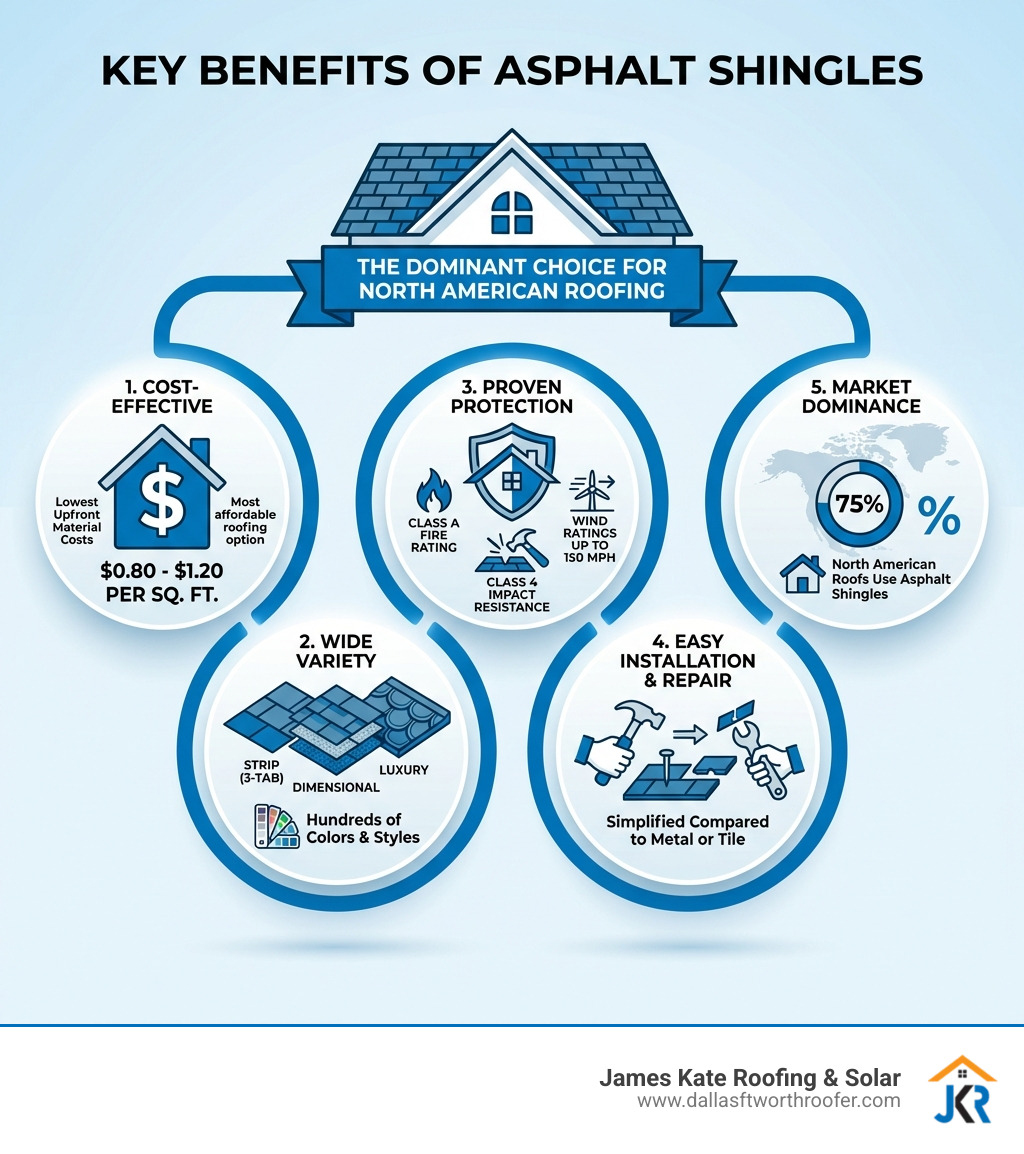
Asphalt shingles account for more than 75% of all roofing materials installed across North America, and it’s easy to see why. They offer the best balance of affordability, durability, and design flexibility for residential and commercial properties alike.
Quick Answer: What Are Asphalt Shingles?
- Definition: Composite roofing material made from a fiberglass or organic mat, coated with asphalt, and topped with mineral granules
- Main Types: Strip (3-tab), Dimensional (Architectural), and Luxury shingles
- Lifespan: 15-30 years depending on type and quality
- Cost: Most affordable roofing option, ranging from $0.80-$1.20 per square foot for materials
- Benefits: Weather protection, fire resistance, wide color selection, ease of installation
Whether you’re a homeowner dealing with storm damage or a business owner planning a roof replacement, understanding your options is the first step toward making a smart investment. Asphalt shingles come in hundreds of colors and styles—from basic three-tab designs to premium luxury products that mimic slate or wood shake—giving you the flexibility to match any architectural style while staying within budget.
The technology behind modern asphalt shingles has evolved significantly since their invention in 1903. Today’s products feature fiberglass reinforcement, self-sealing adhesive strips, and specialized granules that resist algae growth, UV damage, and impact from hail. These improvements mean better performance in extreme weather conditions—something every DFW property owner needs to consider.
I’m Dustin Eatman, owner of James Kate Roofing & Solar, and I’ve spent years working with asphalt shingles on residential and commercial projects throughout the Dallas-Fort Worth area, helping property owners steer insurance claims, select the right materials, and ensure proper installation for long-term performance. My experience includes everything from basic three-tab replacements to premium architectural systems with improved wind and hail ratings.
Understanding the Main Types of Asphalt Shingles
When selecting asphalt shingles in the DFW area, you’ll choose between three main types: strip, dimensional, and luxury. Each offers distinct aesthetics, performance, and price points. Understanding these differences is key to making an informed choice for your budget, home style, and our Texas climate.

The visual impact of your roof is significant, affecting your property’s curb appeal and overall value. For more detailed information on various roofing options, you can explore our shingle roofing services.
Strip Shingles (3-Tab)
Strip shingles, commonly known as 3-tab shingles, are the most basic and economical type of asphalt shingle. They are characterized by their single-layer construction and uniform, flat appearance. The cutouts along their lower edge create the illusion of three separate pieces, hence the “3-tab” designation.
An excellent choice for cost-effective roofing, 3-tab shingles are often found on entry-level homes. While they offer reliable protection, their flat profile and simple design lack the visual depth of more advanced options.
In terms of lifespan, 3-tab shingles typically need to be replaced after 15–18 years. While this is a shorter lifespan than other options, their affordability and ease of installation make them a popular choice for many. You can learn more about this foundational type of shingle by visiting our page on 3 tab composition shingle.
Dimensional Shingles (Architectural)
Dimensional shingles, also widely referred to as architectural or laminate shingles, have become the most prevalent type of asphalt shingle in the market today. They are manufactured with two or more layers of asphalt and fiberglass, laminated together to create a thicker, more textured, and multi-dimensional appearance. This construction gives them a premium look that beautifully replicates natural wood shakes or slate tiles, enhancing the curb appeal of any home.
Their layered design offers superior aesthetics and contributes to improved durability. Dimensional shingles are engineered to withstand tougher weather, a significant advantage for properties in storm-prone DFW communities.
Homeowners in Mansfield, Arlington, and Granbury often choose dimensional shingles for their blend of beauty and resilience. With proper installation and maintenance, dimensional shingles typically last 24–30 years, offering a longer service life than 3-tab options. For a deeper dive into these popular roofing materials, check out our guide to composition shingle types.
Luxury Shingles
Luxury shingles represent the pinnacle of asphalt shingle technology and aesthetics. These are the highest quality laminated shingles available, featuring the heaviest and most robust construction. They offer maximum dimensionality, richer color blends, and more pronounced gradations, providing the most authentic representation of old-world wood shake and quarried slate roofing.
Luxury shingles provide superior protection with a robust construction that improves impact and wind resistance. They are an excellent investment for homeowners in Grand Prairie and Midlothian who prioritize premium performance and aesthetics. While they are the highest cost, their longevity and visual appeal can significantly boost a property’s value.
TABLE comparing Strip, Dimensional, and Luxury Shingles
To help you visualize the differences, here’s a quick comparison of the three main types of asphalt shingles:
| Feature | Strip (3-Tab) Shingles | Dimensional (Architectural) Shingles | Luxury Shingles |
|---|---|---|---|
| Appearance | Flat, uniform, single-layer | Multi-layered, textured, dimensional | Thickest, highest dimensionality, rich colors |
| Lifespan | 15-18 years | 24-30 years | 25-40+ years |
| Cost | Most affordable | Mid-range | Highest |
| Best For | Budget-conscious, rental properties, simple roofs | Improved curb appeal, durability, mimicking natural materials | Premium aesthetics, maximum protection, high-end homes |
The Anatomy and Advantages of Asphalt Shingles
To truly appreciate the resilience and popularity of asphalt shingles, it helps to understand what they’re made of. These aren’t just simple pieces of asphalt; they are engineered systems designed to protect your home through decades of weathering.
At their core, modern asphalt shingles consist of several key components:
- Fiberglass Mat: This is the base layer, typically a non-woven fiberglass mat that provides strength and stability. It’s resistant to moisture and fire. (Historically, organic felt mats were used, but fiberglass became dominant in the 1960s).
- Asphalt Coating: The fiberglass mat is saturated and coated with a layer of asphalt, which is the primary waterproofing agent. This asphalt is often modified with polymers to improve flexibility, weather resistance, and adhesion.
- Mineral Granules: Embedded into the top layer of asphalt, these ceramic-coated granules provide several critical functions: they protect the asphalt from harmful UV rays (which can cause deterioration), add color and aesthetic appeal, and can offer specialized benefits like algae resistance or solar reflectivity.
- Adhesive Strips: Many shingles feature self-sealing adhesive strips on their underside. When exposed to heat from the sun after installation, these strips activate, bonding the shingles together and creating a strong seal against wind uplift.
Understanding these components helps explain why asphalt shingles are such a reliable and versatile roofing material. For more insights into the fundamental components of roofing, you can refer to “Roofing 101: the basics of asphalt used in roofing”. Additionally, we have a dedicated section on our site about composition asphalt shingles.
The Pros and Cons of Asphalt Shingles
Like any building material, asphalt shingles come with their own set of advantages and disadvantages. We believe in providing you with a complete picture so you can make the best decision for your DFW property.
Advantages:
- Cost-Effectiveness: Asphalt shingles are one of the most affordable roofing options for materials and labor, making them an accessible choice for many property owners.
- Ease of Installation: Asphalt shingles are easier and quicker to install than materials like slate or tile, which means lower labor costs and faster project completion.
- Color & Style Variety: With hundreds of colors and styles, asphalt shingles offer incredible design flexibility. You can find textures that mimic wood or slate to complement your property’s aesthetic and even use visualizer tools like CertainTeed’s ColorView® to see options on your home.
- Wide Availability & Repairability: Widely available from many manufacturers, asphalt shingles ensure competitive pricing and easy access to repair materials. A single damaged shingle can often be replaced individually.
- Proven Protection: Modern asphalt shingles are engineered to provide excellent protection against fire, wind, and hail, with specialized options for improved resistance, which is particularly important for properties in Texas.
Disadvantages:
- Shorter Lifespan (Compared to Some Alternatives): While durable, the typical lifespan of asphalt shingles (15-30 years) is generally shorter than that of metal (40-70 years) or tile roofs (100+ years).
- Susceptibility to Extreme Weather (without specialized features): Standard asphalt shingles can be vulnerable to damage from severe hail or high winds if they don’t have improved ratings. However, specialty shingles are designed to mitigate these concerns significantly.
- Heat Absorption: Darker asphalt shingles can absorb a considerable amount of solar heat, potentially increasing attic temperatures and cooling costs. Fortunately, “cool roof” technologies with reflective granules are available to address this.
- Environmental Concerns: Historically, a significant amount of asphalt shingle waste ended up in landfills. While recycling efforts are growing, it remains a concern for some environmentally conscious property owners.
A Brief History of Asphalt Shingle Technology
Asphalt shingles have evolved dramatically since their invention in 1903. Early versions used an organic felt base, but their popularity grew in the 1920s as a fire-resistant alternative to wood shingles. A significant leap occurred in the 1950s with self-sealing adhesive strips, which dramatically improved wind resistance. The 1960s saw the shift to more durable and fire-resistant fiberglass mats.
Throughout the late 20th and early 21st centuries, advancements continued, focusing on durability, aesthetics, and environmental concerns. Innovations like impact-resistant materials, algae-resistant granules, and “cool roof” technologies have continually refined the asphalt shingle into the resilient material we know today. To dig deeper into this rich history, you can read “The Evolution of Asphalt Shingles: Survival of the Fittest?”.
Performance, Durability, and Key Features
When we talk about the performance of asphalt shingles, we’re not just discussing how long they last. We’re considering their ability to stand up to the specific challenges of our climate here in the DFW area – from scorching Texas summers to sudden hailstorms and strong winds. Modern asphalt shingles are engineered with advanced features and tested against rigorous standards to ensure they provide robust protection.
Factors like your roof’s slope and the local climate significantly influence the choice of asphalt shingles. For instance, steeper roofs shed water more efficiently, while roofs in hail-prone regions like ours benefit immensely from impact-resistant options. Understanding these performance ratings and specialized features is key to selecting the right roof for your property.
For more information on how different materials and designs perform, explore our insights into different roof types.
Hail and Impact Resistance
Hail is no stranger to Texas, and its impact can be devastating to a roof. That’s why hail and impact resistance are paramount concerns for homeowners in Mansfield, Arlington, and Granbury. Specialty asphalt shingles are designed specifically to resist the damage caused by hailstones and other falling debris.
The industry standard for impact resistance is UL 2218, which classifies shingles from Class 1 to Class 4. UL 2218 Class 4 is the highest rating and signifies the best resistance to impact damage. These shingles are tested by dropping steel balls of various sizes from different heights onto them. Class 4 shingles can withstand the impact of a 2-inch steel ball dropped from 20 feet without cracking. This improved durability often comes from incorporating polymer-modified asphalt, which makes the shingles more flexible and less prone to cracking upon impact.
Choosing Class 4 impact-resistant shingles can offer significant benefits. Beyond superior protection against dents and cracks, many homeowners’ insurance carriers in Texas offer discounts on premiums when these shingles are installed. In some areas, having a high impact-resistance rating may even be required for coverage. This makes them a smart investment for both protection and potential savings.
Wind Resistance
Texas weather can be unpredictable, and strong winds are a common threat to roofing systems. That’s why the wind resistance of your asphalt shingles is a critical performance factor. We want our roofs to stay put!
The primary standard used by most United States residential building codes for wind resistance is ASTM D7158. This standard provides class ratings based on wind speed. The highest rating, Class H, signifies resistance to wind speeds up to 150 mph (240 km/h). This level of resistance is achieved through several design features:
- Reinforced Nailing Zones: Many high-performance shingles feature wider or reinforced nailing strips, providing a stronger anchor to the roof deck and reducing the chance of nail pull-through during high winds.
- Advanced Sealant Strips: The self-sealing adhesive strips on the underside of shingles are crucial. Manufacturers continuously improve these sealants to ensure they form a strong, durable bond that resists uplift, even in cold weather conditions where sealing can be slower.
- Heavier Construction: Dimensional and luxury shingles, being heavier, naturally offer more resistance to wind uplift than lighter 3-tab options.
These advancements mean that modern asphalt shingles can provide exceptional protection against the high winds we sometimes experience in the DFW metroplex.
Algae and Fire Resistance
Beyond impact and wind, asphalt shingles offer crucial resistance against common environmental threats: algae growth and fire.
Algae Resistance: In humid climates like ours in Texas, unsightly black streaks caused by blue-green algae (Gloeocapsa magma) can be a common problem. These streaks don’t just look bad; they can also affect your roof’s ability to reflect heat. To combat this, specialty asphalt shingles are manufactured with algae-resistant granules. These granules are typically infused with copper, which acts as a natural biocide, inhibiting algae growth and keeping your roof looking cleaner and performing better for longer. Manufacturers often offer 5- to 10-year warranties against algae growth for these products.
Fire Resistance: The inherent composition of modern asphalt shingles makes them naturally fire-resistant. The fiberglass mat base and mineral granules play a significant role in this. The fire resistance of roofing materials is rated by UL 790 and ASTM E108, with classifications of Class A, B, or C. Class A is the highest fire resistance rating, meaning the shingles are highly resistant to external fire exposure. Most fiberglass-based asphalt shingles achieve a Class A rating, providing an important layer of safety for your home or business. Organic shingles, which contain more asphalt, typically achieve a maximum Class B rating.
These specialized features highlight how asphalt shingles have evolved to address specific challenges, providing comprehensive protection for your property.
Installation, Maintenance, and Environmental Impact
Proper installation and diligent maintenance are critical to ensuring your asphalt shingle roof performs as expected and achieves its maximum lifespan. A professional installation ensures every component works together, including proper nailing (preferred over staples for durability) and adequate attic ventilation, which is vital for your roof’s health.
For more details on how we approach roof replacement and installation, please visit our roof replacement and installation page.
Lifespan and Maintenance of Asphalt Shingles
The lifespan of your asphalt shingles is directly tied to the quality of the materials, the expertise of the installation, and, crucially, consistent maintenance. While dimensional shingles typically last 24–30 years and 3-tab shingles last 15–18 years, these are general guidelines. Several factors can influence how long your roof truly lasts:
- Climate: Extreme heat (hello, Texas summers!), rapid temperature fluctuations, and severe weather events can accelerate wear.
- Ventilation: Proper attic ventilation is paramount. A well-ventilated attic helps regulate temperature and moisture, preventing premature aging of shingles from excessive heat buildup.
- Maintenance: Neglecting your roof is like neglecting your car – it will break down faster!
We recommend these simple but effective maintenance steps:
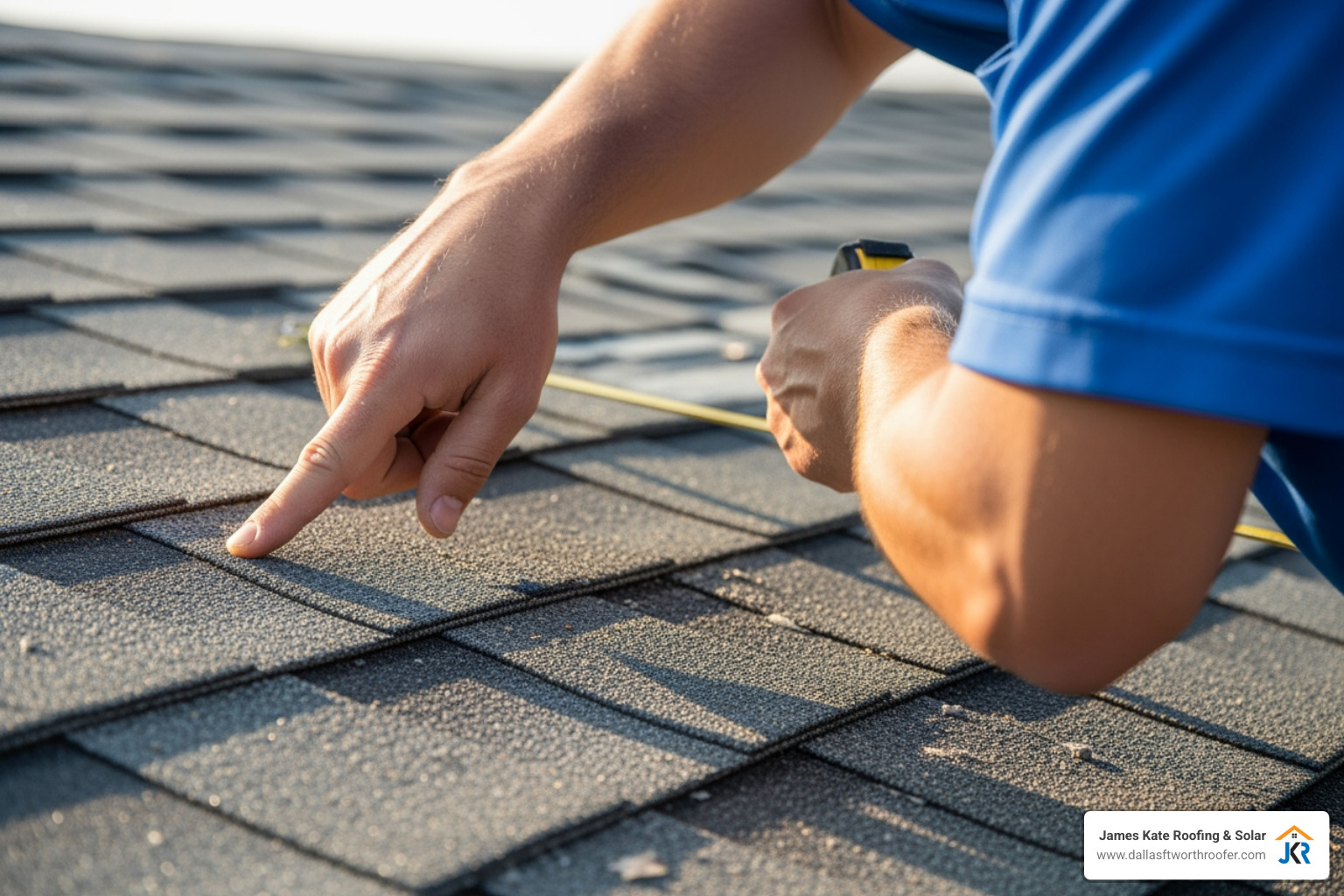
- Annual or Bi-Annual Inspections: We suggest inspecting your roof every two to three years, or after any major storm. Look for damaged, missing, or curling shingles, and check the condition of flashings around chimneys and vents.
- Debris Removal: Keep your roof free of leaves, branches, and other debris. Accumulated debris can trap moisture, promote algae growth, and even damage granules.
- Gutter Cleaning: Clogged gutters can cause water to back up under your shingles, leading to leaks and rot. Keep them clear, especially before and after rainy seasons.
- Trim Overhanging Branches: Branches rubbing against your roof can wear away granules, and falling branches can cause significant damage.
By following these simple steps, you can significantly extend the life of your asphalt shingles and protect your investment. For more comprehensive tips, explore our roof maintenance guide.
Environmental Concerns and Recycling
The roofing industry is making significant strides in recycling asphalt shingles to reduce landfill waste. In the United States alone, approximately 11 million short tons of asphalt shingle waste are generated annually. Historically, the most common disposal method was simply landfilling.
Reclaimed Asphalt Shingles (RAS) are increasingly processed and incorporated into asphalt mixtures for pavements. This process diverts a substantial amount of material from landfills, giving old shingles a new life as part of our infrastructure.
While recycling offers a promising solution, there are some considerations. For shingles manufactured before the early 1980s, there’s a potential concern for the presence of asbestos. Modern recycling facilities are equipped to test for this, and strict protocols are in place to manage it. Additionally, asphalt naturally contains polycyclic aromatic hydrocarbons (PAHs), and careful processing ensures environmental safety. We are committed to responsible disposal and working with recycling partners whenever possible to minimize our environmental footprint in the DFW area.
Frequently Asked Questions about Asphalt Shingles
When you’re considering a new roof, it’s natural to have questions. Here are some of the most common inquiries we receive about asphalt shingles, providing clear and concise answers to help you feel confident in your choices.
How long do asphalt shingles typically last?
The lifespan of asphalt shingles varies primarily depending on their type, the quality of installation, and how well they are maintained.
- Three-tab shingles typically need to be replaced after 15–18 years.
- Dimensional (architectural) shingles generally last much longer, with an expected lifespan of 24–30 years.
- Luxury shingles, due to their superior construction, can often exceed 30 years.
However, climate plays a huge role. In the DFW area, extreme heat, hail, and high winds can shorten a roof’s life if it’s not designed to withstand these conditions. Proper attic ventilation and regular maintenance are also key factors in maximizing your roof’s longevity.
Can you install new asphalt shingles over an old layer?
Yes, in some cases, you can install new asphalt shingles directly over an existing layer. This practice, often called “re-roofing” or “overlaying,” can be a more cost-effective option as it avoids the labor and disposal costs associated with tearing off the old roof.
However, there are important caveats:
- Local Building Codes: Most building codes, including those in our service areas like Mansfield and Grand Prairie, permit only one or, at most, two layers of shingles on a roof. If you already have two layers, a tear-off is mandatory.
- Roof Deck Condition: The existing roof deck must be in excellent condition – flat, sound, and free of rot or damage. Any underlying issues will be magnified by adding a new layer.
- Warranty: Installing over old shingles can sometimes void or reduce the warranty on your new shingles. Manufacturers often prefer a clean deck.
- Performance: A full tear-off allows us to inspect and repair the roof deck, install new underlayment, and ensure a perfectly flat surface for the new shingles, which generally leads to better performance and a longer lifespan for your new roof.
While overlaying can save money upfront, we generally recommend a full tear-off to ensure optimal performance, address any hidden issues, and provide the best warranty coverage for your investment.
What do the different performance ratings mean?
Performance ratings for asphalt shingles are crucial indicators of their ability to withstand specific environmental challenges. These ratings are established through rigorous testing by independent organizations and are especially important for us here in Texas.
- Fire Resistance (Class A): This is the highest rating for fire resistance, meaning the shingles are highly resistant to external fire exposure. Most fiberglass-based asphalt shingles achieve a Class A rating, offering superior protection against fire spread.
- Hail/Impact Resistance (UL 2218 Class 4): This is the best rating for impact resistance against hail damage. Shingles with this rating have demonstrated the ability to withstand the impact of a 2-inch steel ball dropped from 20 feet without fracturing. In Texas, where hailstorms are common, Class 4 shingles are highly recommended and can often lead to insurance premium discounts.
- Wind Resistance (ASTM D7158 Class H): This standard tests a shingle’s ability to resist wind uplift. The Class H rating is the top tier, signifying resistance to wind speeds up to 150 mph (240 km/h). This is critical for protecting your roof against the strong winds that can accompany Texas storms.
Understanding these ratings helps us select the most appropriate and resilient asphalt shingles for your specific property and local weather conditions.
Your Trusted Partner for Asphalt Shingle Roofing
We’ve covered a lot of ground today, from the different types of asphalt shingles to their intricate anatomy, historical evolution, and impressive performance features. What stands out is clear: asphalt shingles are a versatile, cost-effective, and highly durable roofing solution, continually advancing to meet the demands of modern homes and commercial properties. For property owners in the DFW area, choosing the right asphalt shingles means balancing aesthetics, budget, and crucial resistance to our local climate challenges like hail and high winds.
The key takeaway is that while asphalt shingles offer incredible benefits, their long-term performance hinges on two critical factors: selecting the appropriate product for your needs and ensuring professional installation. That’s where we come in.
At James Kate Roofing & Solar, we are a family-owned DFW company dedicated to providing top-tier roofing and solar services. Our commitment to honesty, integrity, and Biblical principles guides every project we undertake. We don’t just install roofs; we build lasting relationships and trust with our clients. Our expertise in asphalt shingles is backed by industry recognition, including the prestigious GAF President’s Club award. This acknowledgment means we consistently meet the highest standards for quality, service, and installation excellence. Furthermore, we stand behind our work with up to a 25-year workmanship warranty, giving you unparalleled peace of mind.
Whether you’re in Mansfield, Arlington, Granbury, Grand Prairie, or Midlothian, our team is ready to help you steer asphalt shingles. From initial consultation to final installation, we ensure a seamless and satisfying experience.
Don’t wait until a small issue becomes a big problem.
Schedule your free roof inspection estimate today!

Dustin Eatman is a seasoned roofing professional with deep, hands-on expertise that spans residential and commercial roofing, insurance solar, and long-term roof asset management. As the owner of James Kate Roofing & solar in the Dallas–Fort Worth metroplex, he’s built a reputation for diagnosing roof systems accurately, communicating clearly, and executing projects with a high standard of workmanship and documentation. Dustin understands the technical details that make roofs perform—proper underlayment selection, slope and drainage considerations, ventilation strategy, flashing and penetration detailing, and manufacturer-specific installation requirements—because he’s worked through the real-world challenges that cause leaks, premature wear, and warranty issues. He’s equally fluent in the operational side of roofing: jobsite planning, quality control, safety, material ordering, crew coordination, and customer experience from inspection to closeout. In insurance-related projects, Dustin brings practical knowledge of claim workflows, adjuster meetings, scope alignment, supplements, and the importance of photo evidence and thorough records, helping property owners navigate stressful situations with confidence. For commercial clients—especially property and facility managers—he emphasizes proactive maintenance and targeted repairs that reduce disruption, extend roof life, and prevent expensive interior damage. Dustin also stays focused on doing things the right way: educating customers on realistic options, setting expectations, and prioritizing solutions that hold up over time rather than quick fixes. That blend of technical skill, field experience, process discipline, and owner-level accountability is what makes Dustin Eatman a trusted expert in the roofing industry.