The Moment Disaster Strikes: Understanding Emergency Water Remediation
Facing sudden water damage? Here’s what to do right away:
- Safety First: Ensure there are no electrical or gas hazards. If safe, turn off the main power and water supply to the affected area.
- Document Damage: Take clear photos and videos of all affected areas and damaged items for insurance purposes.
- Initial Containment: If safe, move valuables to dry areas and use towels or buckets to limit water spread.
- Call Professionals: Contact a 24/7 emergency water remediation service immediately. Delays can lead to mold growth in as little as 24-48 hours.
Emergency water remediation is a critical service when your home or business faces unexpected water intrusion. A burst pipe, a sudden flood, or an appliance malfunction can quickly turn into a devastating disaster. Water damage is one of the most common and costly events for property owners, with 80% of claims stemming from plumbing failures. The longer water sits, the more severe the damage becomes, with mold potentially starting to grow in as little as 24-48 hours. This guide will walk you through understanding, responding to, and effectively remediating water damage, helping you choose the right partner to restore your property and peace of mind.
I’m Dustin Eatman, owner of James Kate Roofing & solar. With experience in insurance solar and deep expertise in residential and commercial property damage, I understand the critical importance of effective emergency water remediation from initial assessment to full solar. My goal is to ensure property owners receive trustworthy, high-quality service and clear communication throughout any emergency.
Understanding the Emergency: Why Every Second Counts
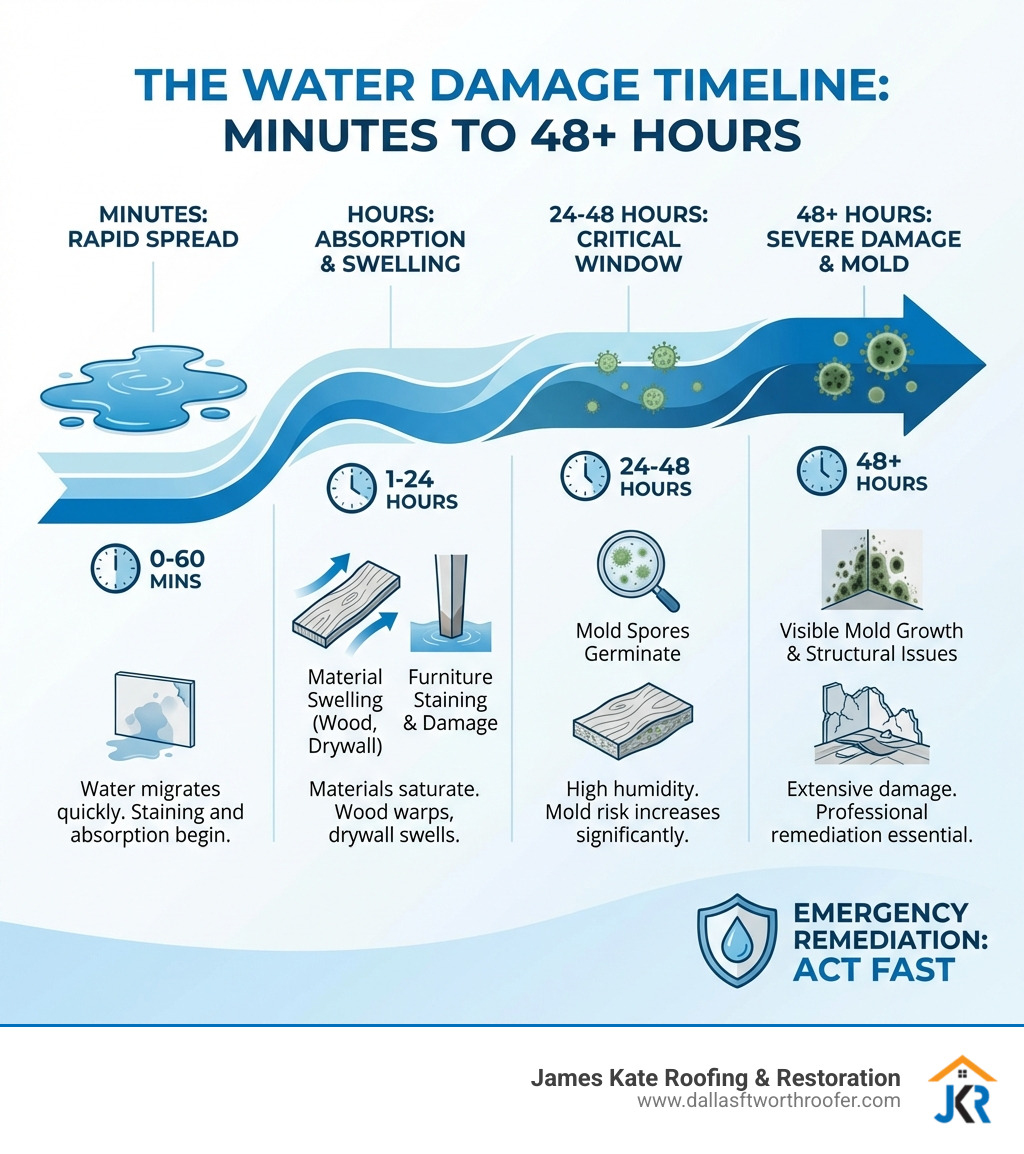
When water infiltrates your property, it’s not just a mess; it’s a race against time. The speed at which water spreads and causes damage is astounding, making immediate action crucial. That’s why understanding what constitutes a water emergency and the rapid timeline of damage is so vital for homeowners and business owners across the DFW area.
What Constitutes a Water Emergency?
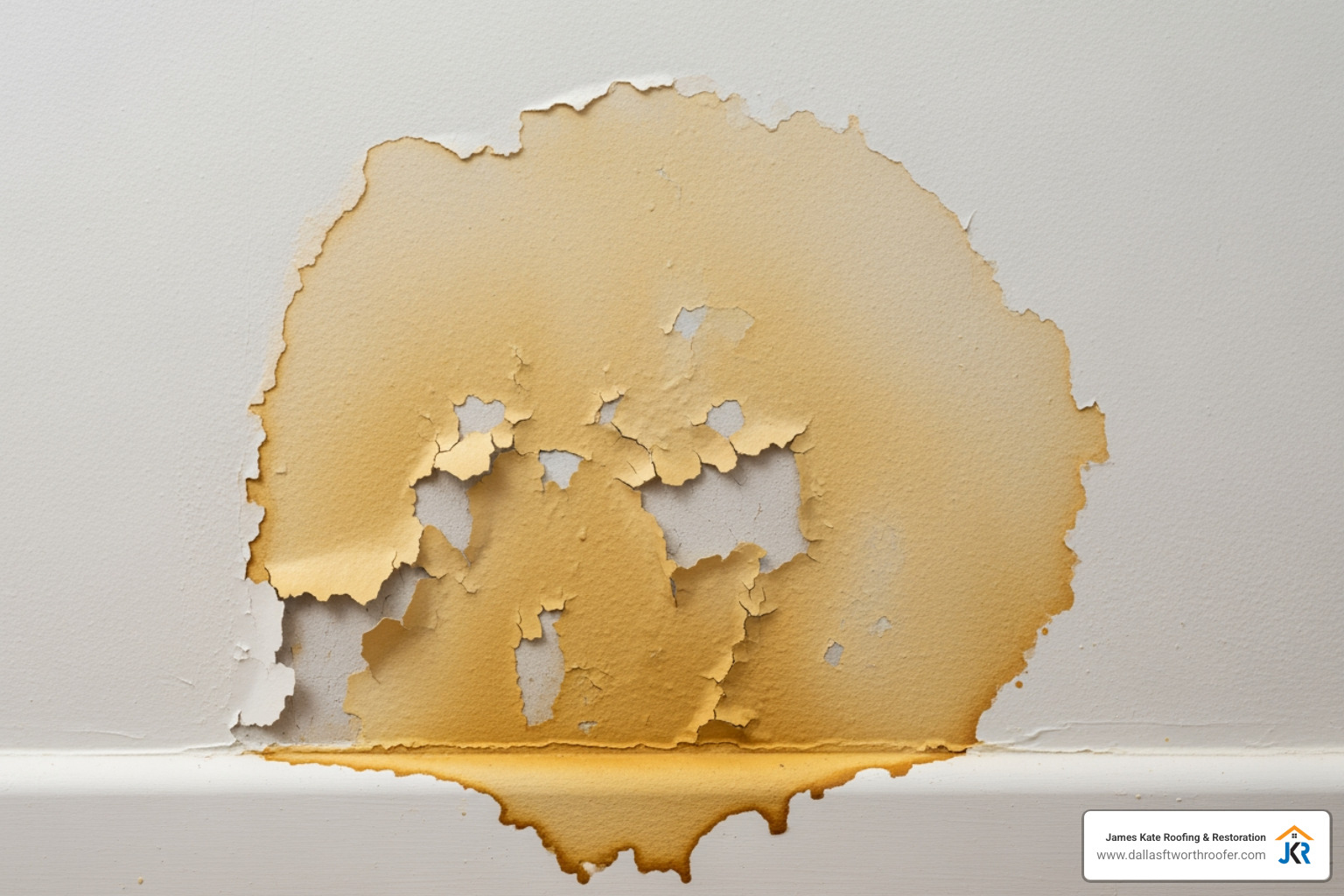
A water emergency is any event that results in significant, uncontrolled water intrusion into your home or business, posing an immediate threat to property integrity and occupant health. These aren’t just minor leaks; they are situations demanding prompt professional intervention.
Common scenarios we see in the DFW area that constitute a water emergency include:
- Burst Pipes: Whether due to freezing temperatures or age, a burst pipe can release gallons of water per minute, flooding an area rapidly. This is a common cause, with plumbing failures accounting for 80% of water damage claims.
- Appliance Failure: Malfunctioning washing machines, dishwashers, water heaters, or refrigerators can overflow or leak profusely, causing extensive damage to floors, walls, and surrounding structures.
- Sewage Backup: This is perhaps one of the most hazardous water emergencies. Sewage water introduces severe health risks due to harmful bacteria and pathogens, requiring specialized and immediate cleanup.
- Storm Damage: Heavy rainfall, hail, or strong winds common in North Texas can lead to roof leaks, breached windows, or flash flooding, allowing large volumes of water to enter your property.
- Flooding: Whether from external sources like overflowing rivers or internal sources like significant plumbing issues, widespread flooding is a clear emergency.
- Overflows: A clogged toilet or bathtub left running can quickly lead to an overflow, saturating floors and potentially affecting lower levels.
- Significant Water Intrusion: Any situation where a substantial amount of water enters your property from an uncontrolled source, threatening structural integrity or creating hazardous conditions.
Recognizing these situations as emergencies is the first step toward minimizing their impact. The average cost of water damage cleanup and solar can range from $2,000 to $7,000, depending on the severity, highlighting the financial stakes involved.
The Critical 48-Hour Window
Why is an immediate response so critical for water damage? Because water damage doesn’t stop once the leak is contained. It continues to cause secondary damage, and the clock starts ticking the moment water enters your property. The most significant concern within this timeframe is mold growth. Mold can begin to grow in as little as 24-48 hours after water exposure, turning a water problem into a mold problem, which significantly complicates remediation and poses additional health risks.
Beyond mold, delays can lead to:
- Structural Integrity Issues: Wood can warp, swell, and rot; drywall can crumble; and metal can corrode. The longer materials remain wet, the weaker they become, potentially compromising your home’s structure.
- Electrical Hazards: Standing water can energize electrical circuits, creating a severe risk of shock or fire.
- Bacterial Contamination: Especially with gray or black water, bacteria can multiply rapidly, making the environment unsafe.
- Worsening Damage: Items that might have been salvageable if dried quickly can become unsalvageable, increasing solar costs and emotional distress.
Prompt response is crucial, as delays in cleanup can significantly worsen the situation. Untreated water damage can worsen property damage and put health at great risk. For more information on protecting yourself from mold after a disaster, we recommend reviewing CDC’s tips on protecting yourself from mold after a disaster.
Common Causes of Water Damage in DFW Homes
While water emergencies can stem from various sources, certain causes are particularly prevalent in our DFW communities:
- Plumbing Failures: As mentioned, these are the leading cause. This includes burst pipes, leaky supply lines to appliances, faulty water heaters, and overflowing toilets. Regular inspection and maintenance of your plumbing system can help prevent these sudden disasters.
- Leaky Roofs: The intense storms and temperature fluctuations we experience in DFW can take a toll on roofs. Missing shingles, damaged flashing, or an aging roof can lead to water infiltration, especially during heavy rains. We offer more info about emergency roof repair services to address these issues promptly.
- HVAC Issues: Condensation from air conditioning units, if not properly drained, can accumulate and cause water damage to ceilings or walls. Regular HVAC maintenance is key.
- Sump Pump Failure: For homes with basements or crawl spaces, a malfunctioning sump pump during heavy rains can lead to significant flooding.
- Natural Disasters: While less frequent, events like flash floods can quickly inundate homes, particularly in low-lying areas.
- Clogged Gutters: Overflows from clogged gutters can cause water to pool around your foundation or seep into your walls, leading to significant damage over time. Regular gutter cleaning is a simple yet effective preventative measure.
Understanding these common culprits helps us be better prepared and react swiftly when a water emergency strikes.
Your First 60 Minutes: A Property Owner’s Action Plan
When water invades your home or business, panic is a natural reaction. But knowing what to do in the immediate aftermath can significantly reduce damage, mitigate risks, and streamline the solar process. Our advice for your first 60 minutes is focused on safety, documentation, and calling for professional help.
Step 1: Ensure Safety and Stop the Source
Your personal safety, and the safety of those around you, is paramount. Never put yourself at risk.
- Identify Electrical Hazards: Water and electricity are a dangerous combination. If there’s standing water near electrical outlets, appliances, or wiring, do not enter the area. If it’s safe to do so from a dry location, turn off the main power supply to the affected area or your entire property at the circuit breaker. Never turn power on or off while standing in water.
- Turn Off the Water Main: If the water intrusion is from an internal source (e.g., a burst pipe, appliance leak), locate and turn off your main water supply. This will stop the flow and prevent further damage.
- Address Slip-and-Fall Risks: Wet floors are incredibly slippery. Exercise extreme caution when moving through affected areas.
- Check for Gas Leaks: If the water damage is extensive or involves gas appliances, there’s a slight chance of a gas leak. If you smell gas, evacuate immediately, and contact your gas provider and emergency services. Do not use electrical devices or light matches.
Step 2: Document Everything for Insurance
Once immediate safety concerns are addressed, your next crucial step is to carefully document the damage. This evidence will be invaluable for your insurance claim and for us to understand the scope of work needed.
Here are essential documentation steps:
- Take Photos and Videos: Capture comprehensive images and videos of all affected areas, including standing water, damaged furniture, walls, flooring, and personal belongings. Don’t forget to photograph the source of the water if identifiable (e.g., a burst pipe). The more detail, the better!
- Protect Undamaged Items: If safe, move valuable or undamaged items to a dry area to prevent them from becoming further compromised.
- Save Damaged Fixtures: Do not discard damaged appliances, fixtures, or pieces of the structure (like a section of burst pipe) immediately. Your insurance adjuster may want to inspect them.
- Create a Detailed List: Begin compiling a list of all damaged items, including descriptions, estimated age, and approximate value.
Documenting flood damage effectively is vital for a smooth insurance claims process. For detailed guidance, refer to How to Document Flood Damage Insurance Claims.
Step 3: Call a 24/7 solar Professional
After ensuring safety and beginning documentation, the most impactful action you can take is to contact a professional emergency water remediation company like James Kate Roofing & solar. We are available 24/7 because water damage doesn’t adhere to business hours.
While waiting for our team to arrive, you can take some initial steps to minimize damage:
- Initial Water Removal: If safe and the water is clean (Category 1), you can use mops, towels, or a wet/dry vacuum to remove excess standing water.
- Protect Belongings: Place aluminum foil or wood blocks under furniture legs to prevent staining carpets or floors.
- Move Furniture: If possible, move smaller furniture items to a dry location to prevent further damage and to allow for better airflow.
These are temporary measures. Our professional team will arrive equipped with specialized tools and expertise to handle the situation thoroughly and efficiently.
The Professional Response: What to Expect from an Emergency Water Remediation Team
When you face a water emergency, you need a partner who can respond swiftly and effectively. At James Kate Roofing & solar, we pride ourselves on being that partner for DFW homeowners and businesses. Our structured approach to emergency water remediation ensures every step is handled with precision and care, from the initial call to the final solar.
Step 1: Emergency Contact and Damage Assessment
The moment you contact us, our process begins.
- 24/7 Availability: We understand that emergencies don’t wait. Our team is ready to take your call anytime, day or night. You’ll speak with a certified water solar specialist who can provide immediate guidance on minimizing further damage until our team arrives.
- Rapid Dispatch: Our certified water damage experts will be dispatched to your DFW property promptly, typically within three hours or less, ready to assess the situation.
- Initial Inspection and Assessment: Upon arrival, our technicians conduct a thorough inspection. This involves:
- Identifying the Water Source: Pinpointing where the water came from is crucial for immediate containment and preventing recurrence.
- Classifying Water Type: We determine if the water is Category 1 (clean), Category 2 (gray), or Category 3 (black). This classification dictates the remediation methods and safety protocols required.
- Assessing Extent of Damage: We use specialized tools like moisture detection meters and thermal imaging cameras to locate hidden moisture behind walls, under floors, and in other inaccessible areas. This ensures no hidden pockets of water are missed, which could lead to future mold growth.
This initial assessment allows us to develop a comprehensive action plan custom to your specific situation.
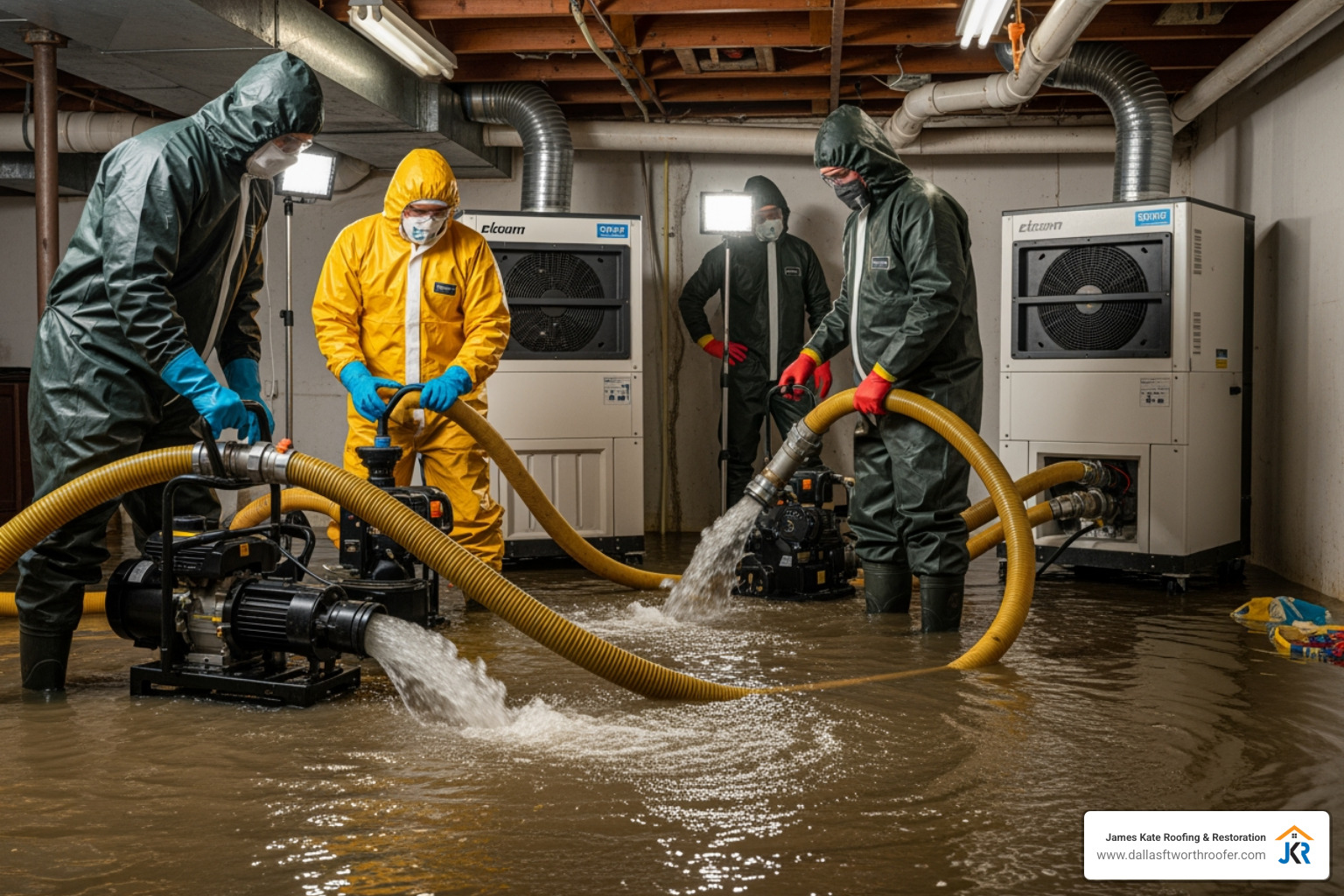
Step 2: Water Extraction and Removal
Once the assessment is complete, the immediate priority is to remove all standing water. This is where professional equipment makes a significant difference compared to DIY efforts.
- Industrial-Grade Equipment: We use powerful submersible pumps and truck-mounted vacuums to quickly and efficiently extract large volumes of water from your property. This equipment is far more effective than standard household vacuums or mops.
- Targeted Extraction: We don’t just remove surface water. Our techniques include extracting water from carpets, padding, and upholstery, which can hold surprising amounts of moisture. This step is critical because residual water left behind can continue to cause damage and foster mold growth.
- Loss Mitigation: During extraction, we also focus on mitigating further loss by moving or securing salvageable belongings, placing them in a safe, dry location.
The goal of this phase is to remove as much bulk water as possible, preparing the area for thorough drying.
Step 3: The Drying and Dehumidification Phase of Emergency Water Remediation
This is arguably the most critical phase of emergency water remediation for preventing secondary damage like mold. Drying a property isn’t just about making it feel dry; it’s a scientific process that requires specialized knowledge and equipment.
- Strategic Placement of Equipment: We deploy high-powered air movers and commercial-grade dehumidifiers. Air movers circulate air across wet surfaces to accelerate evaporation, while dehumidifiers remove moisture from the air, creating an optimal drying environment.
- Monitoring Progress: Our technicians are trained in psychrometrics, the science of drying. We continuously monitor temperature, humidity, and moisture levels in affected materials using specialized instruments. This allows us to adjust equipment placement and settings for maximum efficiency.
- Adherence to IICRC Standards: We follow the rigorous industry standards set by the Institute of Inspection, Cleaning and solar Certification (IICRC). This ensures your property is dried not just to touch, but to industry-recognized dry standards, preventing hidden moisture that could lead to long-term problems.
- Drying Timeline: The drying process can take several days to weeks, depending on the extent of the water damage, the type of materials affected (e.g., moderately wet drywall can take 1-3 days, while hardwood flooring might take 7-10 days), and the humidity levels. We provide regular updates on progress and estimated timelines.
- Checking for Hidden Moisture: Even after visible water is gone, hidden moisture can linger. Our advanced detection tools are used throughout this phase to ensure every nook and cranny is thoroughly dried.
Step 4: Cleaning, Sanitizing, and Final solar
Once drying is complete and moisture levels are restored to industry standards, we move on to cleaning, sanitizing, and restoring your property to its pre-damage condition.
- Cleaning Contents: We carefully clean and sanitize salvageable items and contents, removing any contaminants or odors.
- Antimicrobial Treatments: Depending on the water category and risk of mold, we apply EPA-approved antimicrobial treatments to inhibit mold and bacterial growth.
- Odor Removal: Water damage often leaves behind unpleasant odors. We use specialized techniques and equipment to neutralize these odors, ensuring your property smells fresh and clean.
- Disposing of Contaminated Materials: Non-salvageable materials, especially those affected by Category 3 water, are safely removed and disposed of according to local regulations.
- Build-Back Services: Our comprehensive services include full reconstruction and build-back. This means repairing or replacing damaged drywall, flooring, cabinetry, and other structural components. We handle everything from the initial water mitigation to the final touches, ensuring a seamless solar process. This extends to commercial properties as well, where we offer more info about commercial solar services to get your business back up and running.
Navigating the Nuances: Water Types, Certifications, and Insurance
Understanding the intricacies of water damage, from the different categories of water to the importance of professional certifications and navigating insurance claims, is key to a successful emergency water remediation process.
Understanding Water Categories: Clear, Gray, and Black
Not all water damage is created equal. The source and contamination level of the water dictate the remediation approach, health risks, and necessary precautions. Industry standards categorize water into three types:
| Category | Sources | Description and Remediation |
|---|---|---|
| Category 1 (Clean Water) | Broken supply lines, tub/sink overflows, melting snow. | Low risk; safe for short periods. Focuses on rapid extraction and drying. |
| Category 2 (Gray Water) | Dishwasher/washing machine discharge, toilet overflows (urine). | Medium risk; contains contaminants. Requires sanitization and removal of affected pads. |
| Category 3 (Black Water) | Sewage, rising flood waters, stagnant water. | High risk; contains pathogens. Requires specialized PPE and disposal of porous materials. |
The Importance of IICRC Certification in Emergency Water Remediation
When dealing with water damage, you want technicians who are trained to the highest industry standards. The Institute of Inspection, Cleaning and solar Certification (IICRC) sets the benchmark for the solar industry. Our team adheres to the IICRC S500 Standard for Professional Water Damage solar, ensuring your property is dried scientifically to prevent long-term issues like structural rot or mold. For more information, you can find guidance on hiring a qualified contractor to ensure your property is in good hands.
How Professionals Assist with Insurance Claims
Navigating an insurance claim while dealing with a flooded home is overwhelming. We aim to make the process as seamless as possible by providing detailed documentation, including photos, moisture readings, and itemized loss lists. We work directly with your insurance carrier to ensure they have the necessary information to process your claim efficiently. If you are concerned about out-of-pocket costs, we also offer more info about financing options to help you get started on repairs immediately.

Dustin Eatman is a seasoned roofing professional with deep, hands-on expertise that spans residential and commercial roofing, insurance solar, and long-term roof asset management. As the owner of James Kate Roofing & solar in the Dallas–Fort Worth metroplex, he’s built a reputation for diagnosing roof systems accurately, communicating clearly, and executing projects with a high standard of workmanship and documentation. Dustin understands the technical details that make roofs perform—proper underlayment selection, slope and drainage considerations, ventilation strategy, flashing and penetration detailing, and manufacturer-specific installation requirements—because he’s worked through the real-world challenges that cause leaks, premature wear, and warranty issues. He’s equally fluent in the operational side of roofing: jobsite planning, quality control, safety, material ordering, crew coordination, and customer experience from inspection to closeout. In insurance-related projects, Dustin brings practical knowledge of claim workflows, adjuster meetings, scope alignment, supplements, and the importance of photo evidence and thorough records, helping property owners navigate stressful situations with confidence. For commercial clients—especially property and facility managers—he emphasizes proactive maintenance and targeted repairs that reduce disruption, extend roof life, and prevent expensive interior damage. Dustin also stays focused on doing things the right way: educating customers on realistic options, setting expectations, and prioritizing solutions that hold up over time rather than quick fixes. That blend of technical skill, field experience, process discipline, and owner-level accountability is what makes Dustin Eatman a trusted expert in the roofing industry.