
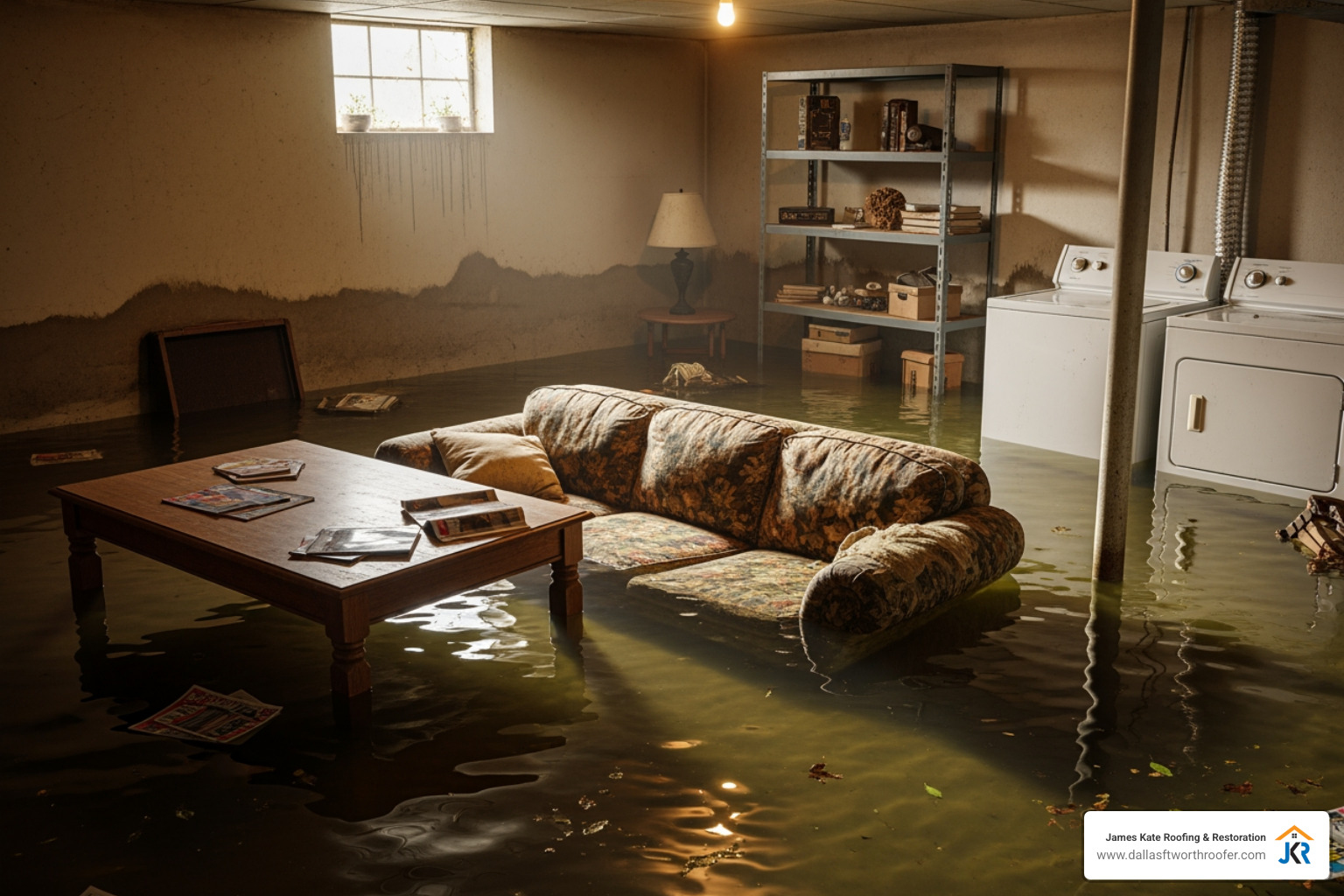
Why Immediate Action Matters When Your Basement Floods
Basement flood clean up is a time-sensitive emergency that requires immediate action to prevent structural damage, mold growth, and serious health risks. Here’s what you need to do right away:
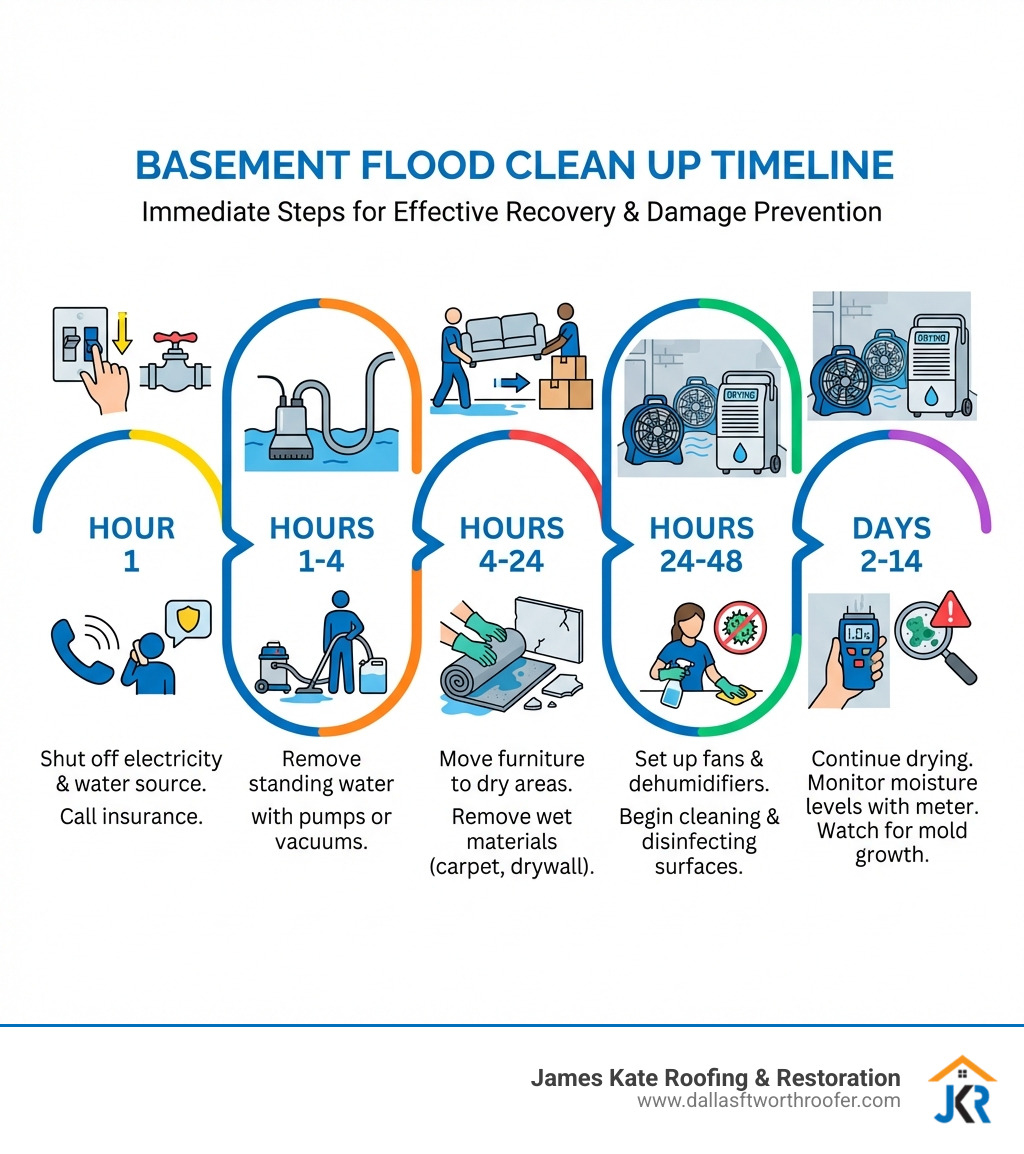
Critical First Steps (Do Within 24 Hours):
- Ensure Safety – Turn off electricity to the basement before entering
- Stop the Water Source – Shut off the main water valve or identify the leak
- Call Your Insurance – Document everything with photos and notify your insurer immediately
- Remove Standing Water – Use pumps or wet/dry vacuums to extract water
- Start Drying – Set up fans and dehumidifiers within 24-48 hours to prevent mold
- Discard Porous Materials – Remove and dispose of soaked carpets, padding, drywall, and insulation
The shock of finding water pooling across your basement floor is overwhelming. Whether it came from a burst pipe, heavy storm, or sewer backup, the clock starts ticking immediately. According to FEMA, mold can begin growing on damp surfaces in just 24 to 48 hours, and complete drying can take up to two weeks or more for moisture hidden behind walls and inside air ducts.
This guide walks you through the essential steps for safe and effective basement flood cleanup—from assessing immediate safety hazards to removing water, drying thoroughly, disinfecting properly, and preventing future flooding incidents.
I’m Dustin Eatman, owner of James Kate Roofing & solar in the Dallas-Fort Worth area, and while my primary expertise is roofing systems, I’ve worked extensively with homeowners on comprehensive property solar projects that include basement flood clean up following storm damage and plumbing failures. My experience with insurance claims, water damage assessment, and coordinating multi-phase solar projects gives me a practical understanding of what homeowners face when disaster strikes their property.
Safety First: Navigating the Hazards of a Flooded Basement
When water invades your basement, your first concern should always be safety. Floodwater can conceal a multitude of dangers, from electrical hazards to harmful contaminants and even structural damage. Before you even think about starting the basement flood clean up process, you need to ensure the area is safe to enter and work in.
Electrical Shock and Utility Dangers
Water and electricity are a deadly combination. The most immediate and severe risk in a flooded basement is electrical shock. If your basement is flooded, never wade into the water unless you are absolutely certain the power to that area has been turned off.
We always recommend turning off the main electrical breaker to your entire home if you can do so safely, without stepping into water. If the water level is high enough to reach electrical outlets, baseboard heaters, your furnace, or is near your electrical panel, do not enter. Call a qualified electrician to handle the power cutoff. The Electrical Safety Authority provides important electrical safety tips: Do not enter your basement if the water is above the level of electrical outlets, baseboard heaters or furnace, or is near your electrical panel.
Beyond electricity, be aware of other utility hazards. If you smell gas, evacuate immediately, open windows and doors, and call your gas utility company from outside your home. Never use anything that could create a spark. Natural gas appliances that have come into contact with floodwater are not safe to use until inspected by a professional, as flooding can impair their safety devices.
Understanding Floodwater Contamination
Floodwater isn’t just water; it’s often a cocktail of hazardous substances. Depending on the source, floodwater can be categorized into different types, each with varying levels of contamination and health risks:
- Clean Water: Typically from a burst pipe or overflowing sink, but can quickly become contaminated if left untreated.
- Gray Water: Contains a significant amount of chemical, biological, or physical contaminants (e.g., washing machine overflow, toilet overflow with urine).
- Black Water: Highly unsanitary and contains pathogenic agents (e.g., sewage backup, river flooding). This type poses severe health risks.
Exposure to contaminated floodwater can lead to infections, allergic reactions, and respiratory issues. Viruses, bacteria, and mold can rapidly grow in standing water and wet materials. If your basement flood involves sewage, special precautions are crucial due to the significant danger of infection. Children, pregnant women, and individuals with respiratory problems should never handle sewage-contaminated water or materials. The EPA offers comprehensive guidance on handling flood cleanup safely: Flooded Homes Cleanup Guidance.
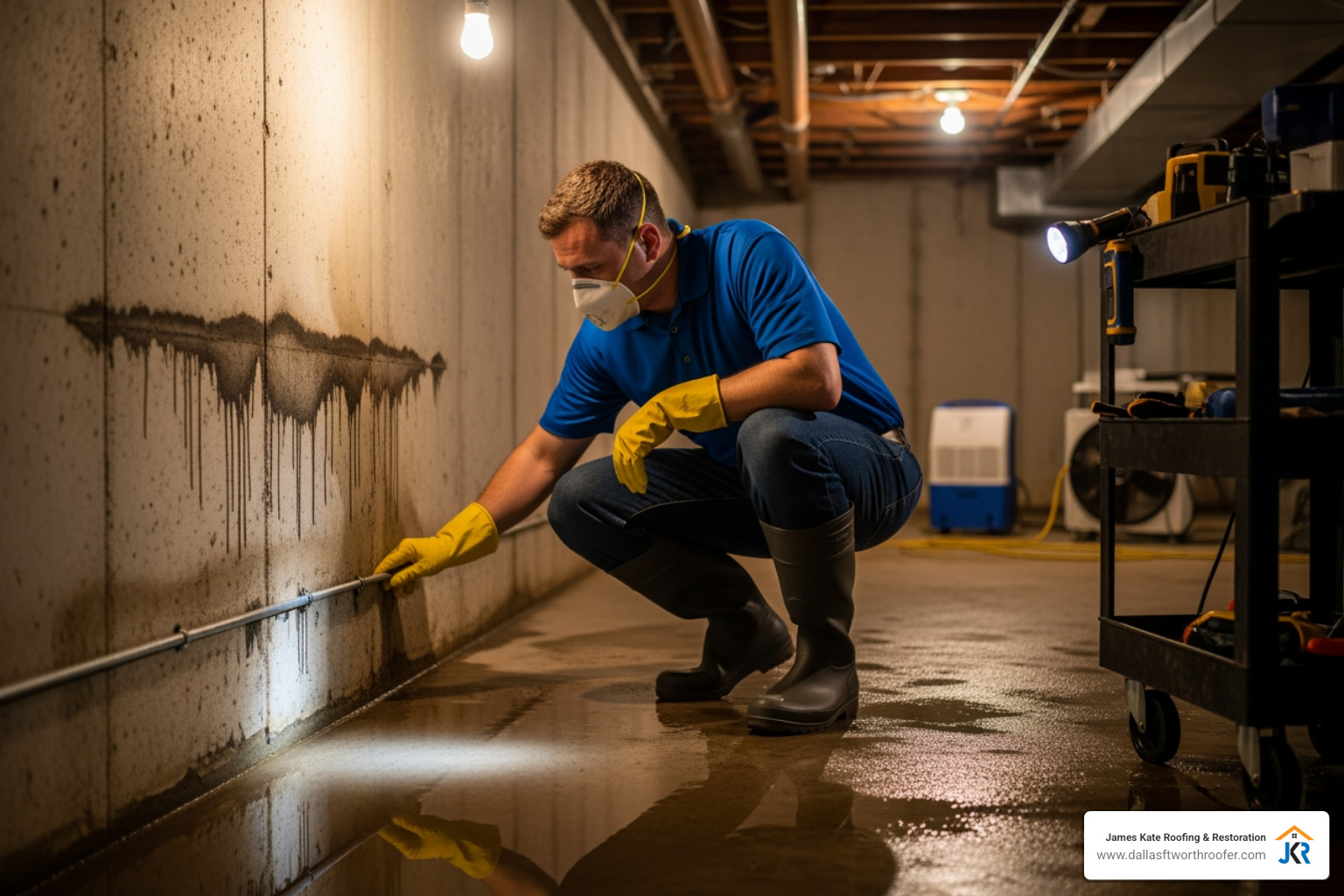
To protect yourself during basement flood clean up, always wear essential Personal Protective Equipment (PPE):
- Waterproof Boots: Rubber boots are essential when standing in any amount of water.
- Heavy-Duty Gloves: Protect your hands from contaminants and sharp debris.
- N95 Mask/Respirator: Especially important if mold is present or suspected, or if dealing with sewage.
- Goggles/Eye Protection: Prevents splashes of contaminated water from entering your eyes.
- Protective Clothing: Long sleeves and pants, or disposable overalls, to minimize skin exposure.
Assessing Your Home’s Structural Integrity
Flood damage can extend beyond cosmetic issues, affecting the very structure of your home. Before undertaking any extensive basement flood clean up, a quick assessment of your home’s structural integrity is vital. Look for obvious signs of damage such as:
- Foundation Cracks: Water pressure can exacerbate existing cracks or create new ones. The article from Renco.ca states: Check for structural damage to your home.
- Warped or Sagging Walls: Especially if they are drywall or wood-paneled, water can cause them to swell, warp, or even collapse.
- Sagging Ceilings: If the floodwater reached above the basement level, check the integrity of the ceiling.
- Unusual Odors: A strong, musty smell can indicate hidden mold growth, which might compromise structural wood.
If you observe significant structural damage, or if you suspect your home’s foundation has been compromised, do not proceed with cleanup until a qualified structural engineer or a professional solar company has assessed the situation. Your safety is paramount.
Your Immediate Action Plan: The First 24 Hours
The moment you find a flooded basement, every minute counts. Rapid action can significantly reduce damage, prevent mold growth, and streamline your insurance claim. The initial 24 hours are critical for setting the stage for a successful basement flood clean up.
Stop the Water and Contact Your Insurer
The very first step, after ensuring safety, is to stop the flow of water. Identifying the source of the flood is key:
- Burst Pipe or Appliance Leak: Locate and shut off the main water valve to your home. If it’s a specific appliance, try to shut off its water supply.
- Sump Pump Failure: If your sump pump isn’t working, check its power supply or consider if it’s overwhelmed.
- Heavy Rain/Groundwater: While you can’t stop the rain, you can take steps to divert water away from your foundation temporarily, like creating makeshift barriers or clearing debris from drains.
Once the water source is contained, immediately contact your insurance agent. Even if you’re not sure about your coverage, making the initial report early is crucial. Be prepared to provide details about the cause of the flood, the extent of the damage, and any immediate safety measures you’ve taken. According to American Family Insurance, taking these steps in the first 24 hours if you find water in your basement can be crucial.
Most standard homeowner’s insurance policies typically do not cover damage caused by external flooding (overland flooding). However, they might cover damage from internal sources like burst pipes or sewer backups. It’s always best to check your specific policy.
Document Everything for Your Insurance Claim
Documentation is your best friend when dealing with insurance claims. Before you move anything or begin cleaning, pull out your smartphone and start documenting everything.

- Take Photos and Videos: Capture the overall scene, the water levels, the source of the flood (if visible), and detailed close-ups of all damaged items and structural elements. Don’t forget to capture photos of items you plan to discard.
- Create an Inventory: Make a detailed list of all damaged belongings, including furniture, electronics, appliances, personal items, and any structural components (drywall, flooring, insulation). Include brand names, models, and estimated age if possible.
- Keep All Receipts: Any expenses incurred during the immediate aftermath—like emergency repairs, supplies for cleanup, or even temporary lodging—should be carefully documented with receipts. This includes things like wet/dry vac rentals, cleaning supplies, or even the cost of a plumber.
The more thorough your documentation, the smoother your insurance claim process will be. FloodSmart.gov emphasizes the importance of this step: How to Document Flood Damage Insurance Claims.
The Comprehensive Guide to Basement Flood Clean Up
With safety measures in place and your insurance notified, it’s time to roll up your sleeves (or call in the cavalry!). The actual basement flood clean up process involves several key steps: water extraction, removal of damaged materials, thorough drying, and meticulous cleaning and disinfection.
Step 1: Water Extraction and Removing Damaged Items
The goal here is to remove all standing water as quickly as possible and clear out anything that has been irrevocably damaged.
- Removing Standing Water: For significant amounts of water, a submersible sump pump is your best bet. For shallower water, a powerful wet/dry vacuum can be highly effective. Buckets and mops can handle the last remaining puddles. Position pump drainage hoses away from your home’s foundation to prevent re-entry.
- Discarding Porous Materials: Unfortunately, many items soaked by floodwater cannot be saved, especially if the water was contaminated or stood for an extended period. Porous materials like carpeting, carpet padding, upholstered furniture, mattresses, box springs, particleboard, and stuffed toys are breeding grounds for mold and bacteria.
- Carpet and Padding: If your carpet and padding have been soaked, especially by groundwater or sewage, they typically need to be removed and discarded.
- Drywall and Insulation: If drywall has been saturated, particularly above the waterline, it should be cut out and removed. Wet insulation behind walls is also a mold risk and must be taken out. These materials prevent the underlying structure from drying properly.
- Salvaging Valuables: Carefully assess what can be saved. Important documents and photos can sometimes be salvaged by freezing them immediately and then seeking professional solar services. For electronics, if they were in clean water, they might be repairable after professional inspection; however, if exposed to sewage, they should generally be discarded. For other items, move them to a dry, well-ventilated area for assessment.
Step 2: Drying and Dehumidifying the Space
Once the standing water is gone and unsalvageable items are removed, the next critical phase is drying. This is where you combat the invisible enemy: moisture. Thorough drying prevents mold growth and protects your home’s structure.
- Promoting Air Circulation: Open all windows and doors (if weather permits and security isn’t an issue) to create cross-ventilation.
- Using High-Volume Fans: Position powerful fans strategically to circulate air throughout the basement, focusing on damp walls and floors.
- Renting Dehumidifiers: Industrial-strength dehumidifiers are essential for removing moisture from the air and materials. These are far more effective than typical household units.
- How Long Drying Takes: While visible moisture might disappear in a few days, unseen moisture (behind walls, inside air ducts, within wood studs) can take much longer. An average drying situation can take approximately 3-5 days, but it can take up to two weeks or more for a basement to completely dry out. This is a crucial period because, as FEMA states, mold can grow on a damp surface after just 24 to 48 hours.
- Using a Moisture Meter: A moisture meter is an invaluable tool for ensuring that materials like wood studs, subflooring, and drywall are truly dry. Don’t rely solely on visual inspection; what looks dry on the surface might still harbor significant moisture underneath.
Step 3: Cleaning, Disinfecting, and Handling Mold
After the basement is dry, the focus shifts to cleaning and sanitizing to eliminate any lingering contaminants and prevent mold.
- Cleaning All Surfaces: Wipe down all hard surfaces—walls, floors, beams, and non-porous items—with a mild detergent and warm water solution. Remove any dirt, mud, or residue left behind by the floodwater.
- Disinfecting to Kill Bacteria: Follow cleaning with a thorough disinfection. A hospital-grade disinfectant is recommended, especially if the water was contaminated. Always read product labels and ensure proper ventilation. The EPA provides comprehensive mold cleanup guidelines, which also often cover general disinfection.
- Identifying Mold Growth: Even with quick action, mold can sometimes take hold. Look for fuzzy patches (white, black, green, or brown) on surfaces. A persistent musty odor is also a strong indicator of hidden mold. If you find small areas of mold (less than 10 square feet), you might be able to handle it yourself with proper PPE and cleaning solutions. For larger areas, or if you suspect mold is behind walls or in HVAC systems, it’s always best to call a professional mold remediation specialist.
From Recovery to Prevention: Protecting Your Home
Once your basement flood clean up is complete, and your space is restored, the journey isn’t over. The best defense is a good offense, and that means implementing preventative measures to safeguard your home against future flooding incidents.
Key Steps for Preventing Future Basement Flooding
Many basement floods are preventable with proactive maintenance and strategic upgrades.
- Gutter and Downspout Maintenance: Regularly clean your gutters and ensure downspouts extend at least 5-10 feet away from your foundation. Clogged gutters can overflow, directing water directly against your basement walls.
- Proper Yard Grading: Ensure the ground around your home slopes away from the foundation. This directs rainwater away from your house rather than towards it.
- Sealing Foundation Cracks: Inspect your basement walls and floor for cracks. Small cracks can be sealed with hydraulic cement or epoxy injections. For larger or recurring cracks, consult a foundation specialist.
- Installing a Sump Pump: A sump pump is a critical defense mechanism, especially in areas prone to groundwater issues. It automatically pumps water out of your basement before it can accumulate. We highly recommend installing a sump pump with a battery backup to ensure it functions during power outages.
- Backwater Valve Benefits: Install back-flow valves in your sewer lines. These devices prevent sewage from backing up into your home through drains and toilets during heavy rainfall or municipal sewer system overloads.
- Lift Appliances and Utilities: If possible, lift your furnace, water heater, and electrical panel above potential flood levels. Even placing washers and dryers on cinder blocks can provide a buffer.
- Professional Inspections: Regular home inspections can identify potential vulnerabilities before they become major problems. This includes everything from your roof (which, if damaged, can contribute to water issues throughout the home) to your foundation. We offer professional roof inspections that can identify potential water entry points from above, helping you maintain a watertight home from top to bottom. Get a professional roof inspection to ensure your first line of defense against water is strong: Get a professional roof inspection.
When to Call Professionals for Your Basement Flood Clean Up
While some minor basement floods can be handled by a diligent homeowner, there are many situations where calling in professional solar services is not just recommended, but essential.
- Extensive Flooding: If your basement has several inches or feet of water, or if the water has been standing for more than 48 hours, professional extraction and drying equipment are necessary to prevent widespread mold and structural damage.
- Sewage Contamination: Any flood involving black water (sewage) requires specialized cleanup and disinfection protocols that only professionals are equipped to handle safely and effectively.
- Significant Mold Growth: If you find large areas of mold (more than 10 square feet) or suspect hidden mold, professional mold remediation is crucial to safely remove it and prevent its spread.
- Structural Damage Concerns: If you suspect the flood has compromised your home’s foundation, walls, or other structural elements, a professional assessment is critical. They can identify damage that might not be immediately visible.
- Lacking Proper Equipment: Professional solar companies have commercial-grade pumps, wet/dry vacuums, air movers, and dehumidifiers that are far more powerful and efficient than rental units, ensuring thorough drying.
- Hidden Damage: Professionals use specialized tools like thermal imaging cameras and moisture meters to detect hidden moisture pockets behind walls and under floors, preventing future problems.
- Emergency Repairs: Sometimes, the flood requires immediate structural or utility repairs. James Kate Roofing & solar can assist with emergency repairs, ensuring your property is secured quickly. Learn more about emergency repairs: Information on emergency repairs.
When in doubt, call the experts. The cost of professional cleanup is often less than the long-term costs of dealing with unresolved moisture issues, mold, and structural damage.
Frequently Asked Questions about Basement Flood Cleanup
We understand that a flooded basement brings many questions. Here are some of the most common ones we hear from homeowners in Mansfield, Arlington, Granbury, Grand Prairie, and Midlothian, TX.
How long does it take for a basement to dry completely?
The drying time for a flooded basement can vary significantly depending on several factors:
- Extent of Flooding: A few inches of water will dry faster than several feet.
- Materials Affected: Porous materials like wood and drywall retain more moisture and take longer to dry than concrete.
- Humidity Levels: Both indoor and outdoor humidity play a role.
- Equipment Used: Commercial-grade air movers and dehumidifiers drastically speed up the process compared to household fans.
Generally, visible moisture can disappear within a week. However, for a basement to be completely dry, including unseen moisture behind walls and inside air ducts, it can take two weeks or more. While an average drying situation might take 3-5 days with professional equipment, always use a moisture meter to confirm that materials are thoroughly dry before rebuilding or replacing anything. Acting quickly to remove water and begin drying within 24-48 hours is the most important factor in speeding up this process and preventing secondary damage like mold.
Will my homeowner’s insurance cover basement flood damage?
This is a critical question, and the answer is often complex. In Texas, like many other places, most standard homeowner’s insurance policies do not cover flood damage caused by external forces, such as heavy rain leading to overland flooding (water entering through windows or doors) or overflowing rivers. For this type of coverage, you typically need to purchase a separate flood insurance policy, often through the National Flood Insurance Program (NFIP).
However, your homeowner’s insurance policy may cover water damage from internal sources, such as:
- A burst pipe.
- A malfunctioning appliance (e.g., water heater, washing machine).
- A sudden and accidental discharge of water.
- Sewer backups (though this sometimes requires an additional endorsement).
Always review your specific policy documents and speak directly with your insurance agent to understand what is and isn’t covered. Documenting the cause of the flood accurately is vital for your claim.
What are the biggest health risks from a flooded basement?
The health risks associated with a flooded basement are significant and should not be underestimated.
- Contaminated Water: Floodwater, especially if it’s gray or black water, can contain a dangerous cocktail of bacteria, viruses, and parasites. Contact with this water can lead to infections, gastrointestinal illnesses, and skin irritations.
- Mold Growth: As mentioned, mold can start growing within 24-48 hours on damp surfaces. Mold spores can trigger allergic reactions, asthma attacks, and other respiratory problems. Prolonged exposure to certain types of mold can also lead to more severe health issues.
- Indoor Air Quality (IAQ): A flooded basement, even after visible water is removed, can significantly degrade your home’s indoor air quality. High humidity, mold spores, and off-gassing from damaged materials can create an unhealthy environment. As Mike Holmes, a home renovation expert, states, you must test the air quality of your home to confirm it matches outdoor conditions after a flood. If it doesn’t, it might not be safe to inhabit.
- Chemical Hazards: Floodwaters can pick up chemicals from garages, sheds, or even inside your home, creating toxic mixtures.
- Electrical Hazards: The risk of electrocution from submerged electrical systems is ever-present until power is safely disconnected.
Prioritizing safety and proper cleanup is essential to mitigate these health risks for you and your family.
Conclusion: Restoring Your Home and Peace of Mind
Finding your basement flooded can be a truly disheartening experience, but with the right knowledge and timely action, you can steer the crisis effectively. Remember the key steps: prioritize safety above all else, act quickly to stop the water and document the damage, thoroughly extract water and dry the area, and carefully clean and disinfect to prevent mold and bacteria.
While some minor incidents might be manageable as a DIY project, extensive flooding, sewage contamination, significant mold, or structural concerns warrant the expertise of professionals. Here at James Kate Roofing & solar, we understand the despair that comes with water damage. As a family-owned DFW company, we are committed to honesty, integrity, and Biblical principles, extending our services beyond roofing to comprehensive water mitigation and build-back construction. When the unforeseen happens, we’re here to help you restore your home and your peace of mind.
For a professional solar assessment and to discuss your basement flood clean up needs in Mansfield, Arlington, Granbury, Grand Prairie, or Midlothian, TX, don’t hesitate to reach out. Contact us today: Contact us for a professional solar assessment.

Dustin Eatman is a seasoned roofing professional with deep, hands-on expertise that spans residential and commercial roofing, insurance solar, and long-term roof asset management. As the owner of James Kate Roofing & solar in the Dallas–Fort Worth metroplex, he’s built a reputation for diagnosing roof systems accurately, communicating clearly, and executing projects with a high standard of workmanship and documentation. Dustin understands the technical details that make roofs perform—proper underlayment selection, slope and drainage considerations, ventilation strategy, flashing and penetration detailing, and manufacturer-specific installation requirements—because he’s worked through the real-world challenges that cause leaks, premature wear, and warranty issues. He’s equally fluent in the operational side of roofing: jobsite planning, quality control, safety, material ordering, crew coordination, and customer experience from inspection to closeout. In insurance-related projects, Dustin brings practical knowledge of claim workflows, adjuster meetings, scope alignment, supplements, and the importance of photo evidence and thorough records, helping property owners navigate stressful situations with confidence. For commercial clients—especially property and facility managers—he emphasizes proactive maintenance and targeted repairs that reduce disruption, extend roof life, and prevent expensive interior damage. Dustin also stays focused on doing things the right way: educating customers on realistic options, setting expectations, and prioritizing solutions that hold up over time rather than quick fixes. That blend of technical skill, field experience, process discipline, and owner-level accountability is what makes Dustin Eatman a trusted expert in the roofing industry.