
Why Metal Roofing Is the Smart Foundation for Your Solar Investment
Best metal roofing for solar panels is standing seam metal roofing, followed by corrugated and exposed fastener profiles—each offering distinct advantages for mounting systems, durability, and long-term performance.
Quick Answer:
Standing Seam Metal Roof – The gold standard. Allows clamp-on mounting without roof penetrations, preserving warranties and offering the fastest, most leak-resistant installation.
Corrugated Metal Roof – Cost-effective and structurally sound. Requires penetrative brackets with proper sealant, but handles solar loads well.
Exposed Fastener Metal Roof – Budget-friendly option. Needs careful weatherproofing and may require additional mounting considerations.
If you’re considering solar panels for your Dallas-Fort Worth home or business, the roof underneath is just as important as the panels themselves. A metal roof is a smart foundation for your solar investment, ensuring it performs well, requires minimal maintenance, and lasts for decades.
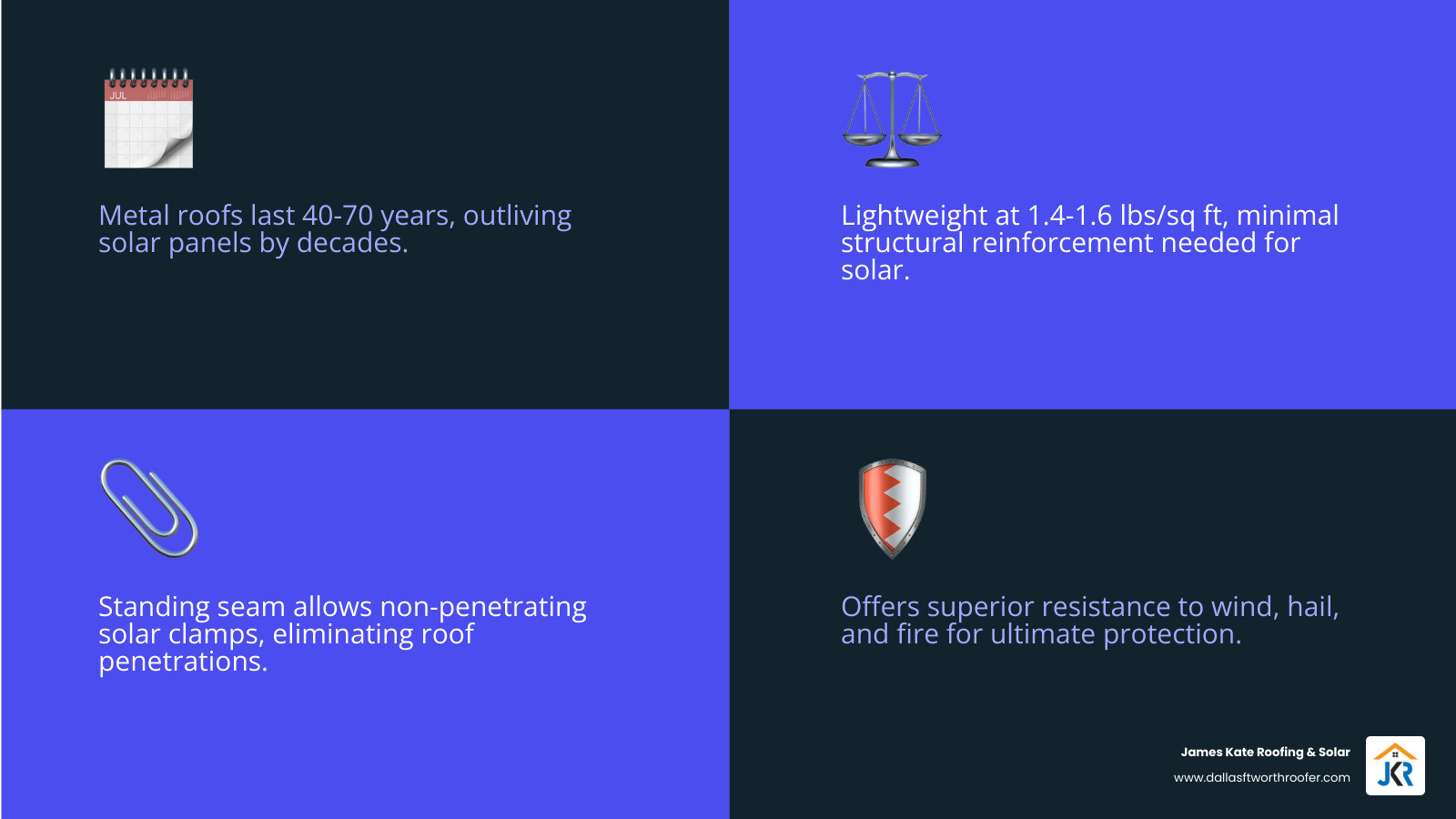
Metal roofs have surged in popularity across Texas for good reason. They’re durable, lightweight, and can easily outlast your solar panels. In fact, metal roofs can last 40 to 70 years, while most solar panels come with 25 to 30-year warranties. This means your roof will likely still be standing strong long after your panels have been replaced.
I’m Dustin Eatman, owner of James Kate Roofing & Solar, and I’ve spent years helping DFW property owners pair solar with the best metal roofing for solar panels. My goal is to help you make an informed decision that protects your investment and delivers real, long-term value.
A Foundation Built to Last
One of the most compelling reasons to choose metal for your solar installation is its incredible lifespan. If you install solar panels on a traditional asphalt shingle roof, which typically lasts 12 to 30 years, you’re almost guaranteed to face the costly hassle of removing and reinstalling your solar system when the roof needs replacement. With a metal roof’s 40–70 year lifespan, you gain the peace of mind that your roof will easily outlast your solar array, avoiding this expensive and disruptive scenario entirely.
Superior Strength and Weather Resistance
Living in the DFW metroplex, we’re no strangers to severe weather. Metal roofs are engineered to handle harsh conditions, making them an incredibly resilient foundation for your solar panels. They offer exceptional resistance to high winds, hail, and fire—an invaluable safety feature. This inherent durability is why insurance companies in our region often offer incentives for homes with metal roofs.
The Eco-Friendly Power Couple
Choosing metal solar panels is a powerful statement about your commitment to sustainability. Metal roofs are often made from recycled materials and are 100% recyclable at the end of their long life. They also contribute to energy efficiency, as many feature reflective coatings that can cut cooling costs by up to 25%. When solar panels are installed, they provide an additional layer of shade, further improving cooling and even boosting the performance of your solar panels, which operate more efficiently at cooler temperatures. It’s a win-win for your wallet and the planet, making your home a true rooftop for solar panels that works for you.
A Closer Look: Which is the Best Metal Roofing for Solar Panels?
While metal roofing is generally excellent for solar, the specific type of metal roof you have or choose will significantly influence the ease, cost, and effectiveness of your solar panel installation. Understanding these differences is key to selecting the best metal roofing for solar panels for your DFW property.
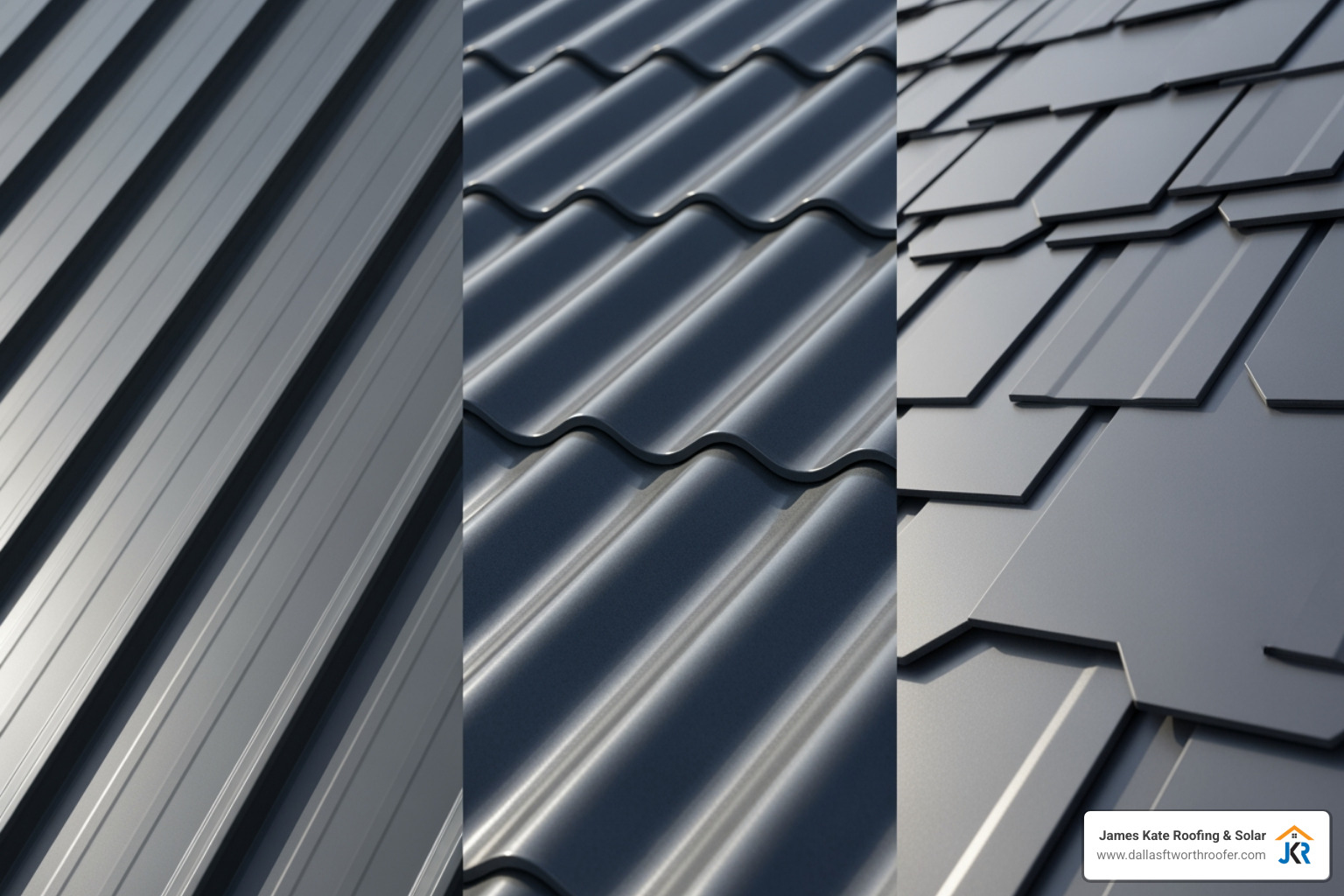
From sleek standing seam to robust corrugated and aesthetically versatile metal shingles, each profile presents unique opportunities and considerations for mounting your solar array.
Why Standing Seam is the Best Metal Roofing for Solar Panels
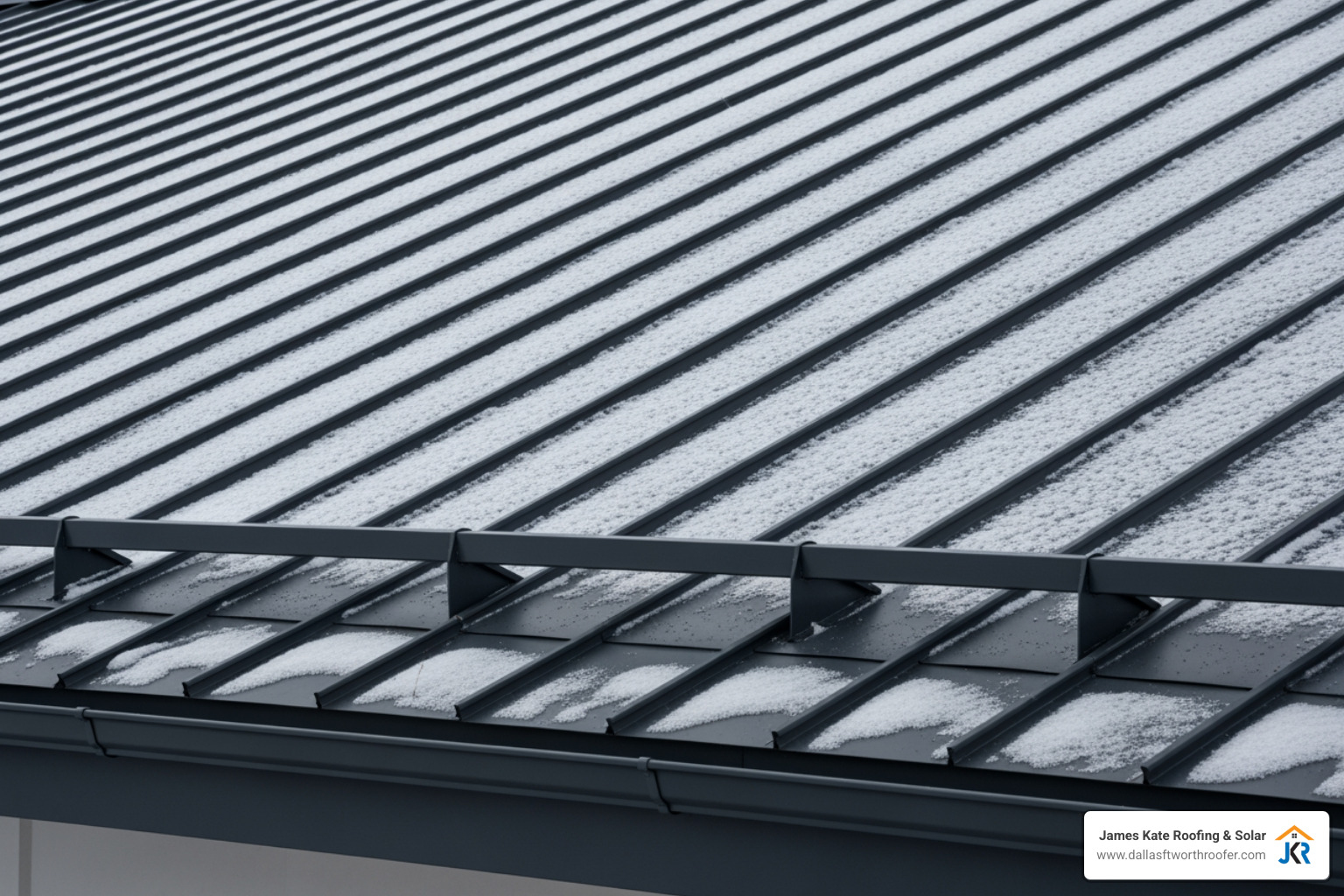
When it comes to the best metal roofing for solar panels, standing seam is the gold standard. Its defining feature is the raised, interlocking seams that run vertically up the roof. These seams provide a perfect attachment point for specialized clamp-on mounting systems, meaning no roof penetrations are needed.
This non-penetrative method offers several key advantages:
-
Eliminates Leak Risk: With no holes drilled into the roof, the primary risk of water leaks is virtually eliminated.
-
Faster Installation: The clamping process is generally quicker than drilling and flashing, reducing labor time.
-
Preserves Roof Warranty: Since clamps don’t penetrate the roof surface, they typically won’t affect your roof’s warranty.
-
Maintains Thermal Movement: Non-penetrating clamps allow the metal panels to expand and contract naturally with temperature changes, preventing stress on the roof system.
For these reasons, standing seam metal roofs are considered an excellent candidate for solar; some might even say they are the best type of roof to put solar panels on.
Corrugated and Exposed Fastener Roofs
While standing seam often gets the spotlight, corrugated and exposed fastener metal roofs are also viable and often more budget-friendly options for solar installations. However, they require a different approach.
Both corrugated (wavy profile) and exposed fastener roofs require penetrative mounting brackets. This means drilling through the metal panels into the roof structure. While this sounds risky, it’s a standard and safe procedure when done correctly. The key is meticulous waterproofing using high-quality, corrosion-resistant sealants and specialized flashing around every penetration. Manufacturers like S-5! produce specific solutions such as the Corrubracket for corrugated roofs, and EJOT offers stainless steel hanger bolts for robust attachment.
It’s vital to ensure that your metal roof has a minimum gauge of 20 for optimal support. If your roof is thinner, we might recommend installing plywood underneath to improve its structural integrity. While these roofs are a cost-effective option, the installation requires an expert’s attention to detail to prevent any future issues.
Metal Shingles and Tiles
Metal shingles and tiles blend durability with a traditional look, mimicking asphalt or clay. Solar installation on these roofs requires specialized mounts, some of which integrate seamlessly with the tile profile. While this often involves penetrating the roof deck, experienced installers use robust flashing and sealing to ensure a watertight, durable system. The inherent strength of metal shingles and tiles makes them a long-lasting and attractive foundation for your solar array.
The Installation Playbook: Mounting Systems and Best Practices
Installing solar panels on a metal roof requires the correct mounting systems and best practices to ensure a secure, watertight, and efficient system. Not all solar installers are experts with metal roofs, so choosing a team with specific experience is crucial. At James Kate Roofing & Solar, we have extensive experience with these specialized installations, following industry-leading guides like A Guide to Metal Roof Solar Installation.
Best Mounting Systems for Metal Roofing and Solar Panels
The right mounting system depends on your specific metal roof type. Here’s a breakdown of the best approaches:
-
Standing Seam (Non-Penetrative): Clamps onto the raised seams of the metal panels.
-
Corrugated (Penetrative): Uses specialized brackets with fasteners drilled through the profile.
-
Exposed Fastener (Penetrative): Uses clamp solutions or hanger bolts fastened through the metal panels.
Non-penetrating seam clamps remain the best choice for standing seam roofs, making them leak-proof and warranty-friendly. Rail-based and rail-free systems are both viable, while hanger bolts and gaskets are essential for corrugated and exposed fastener roofs.
Overcoming Common Challenges
Modern metal roofs can be installed with insulation coatings that reduce noise and prevent condensation. Corrosion is avoided by using compatible materials like aluminum and stainless steel, along with high-grade sealants for any penetrations.
As industry authorities note, not all solar installers are experts with metal roofs. Our team at James Kate Roofing & Solar specializes in these installations, ensuring your roof’s integrity and warranty are protected.
The Financial Equation: Cost, Maintenance, and Long-Term Value
Investing in a metal roof with solar panels offers substantial returns over time. Most homeowners can expect their solar panels to pay for themselves in 9 to 12 years, depending on incentives and usage.
Cost vs. Value: Is a Metal Roof Worth It for Solar?
While a metal roof has a higher upfront cost, its long-term value shines when paired with solar:
-
Longevity: Avoids costly re-roofing and solar panel reinstallation.
-
Federal Solar Tax Credit: Reduces the net cost of your solar installation.
-
Insurance Savings: Many insurers offer discounts for metal roofs.
-
Increased Property Value: Metal roofs plus solar significantly boost value.
-
Energy Savings: Reflective coatings can cut cooling costs by up to 25%.
Long-Term Care for Your Solar Metal Roof
Metal roofs require minimal maintenance, even with solar panels installed:
-
Occasional visual roof inspections
-
Routine solar panel cleaning
-
Periodic professional inspections
-
Post-storm debris checks
Frequently Asked Questions about Metal Roofs for Solar Panels
Will installing solar panels void my metal roof’s warranty?
Standing seam roofs with non-penetrating clamps typically do not. Other roof types require penetrations and must follow manufacturer guidelines.
How much weight do solar panels add?
Very little—well within structural limits.
Can I install thin-film solar panels on a metal roof?
Yes, especially on standing seam roofs, where they can adhere directly to the panels.
Partner with DFW’s Experts for Your Solar Metal Roof
Choosing a metal roof for your solar installation is a smart investment in durability, efficiency, and long-term value.
At James Kate Roofing & Solar, we specialize in pairing solar systems with the right metal roof for the Texas climate. With award-winning service and up to a 25-year workmanship warranty, you can move forward with confidence.
Ready to power up your roof? Contact us today for a professional evaluation for your rack-mounted solar system.