
What You Need to Know About Composite Roof Shingles Lifespan
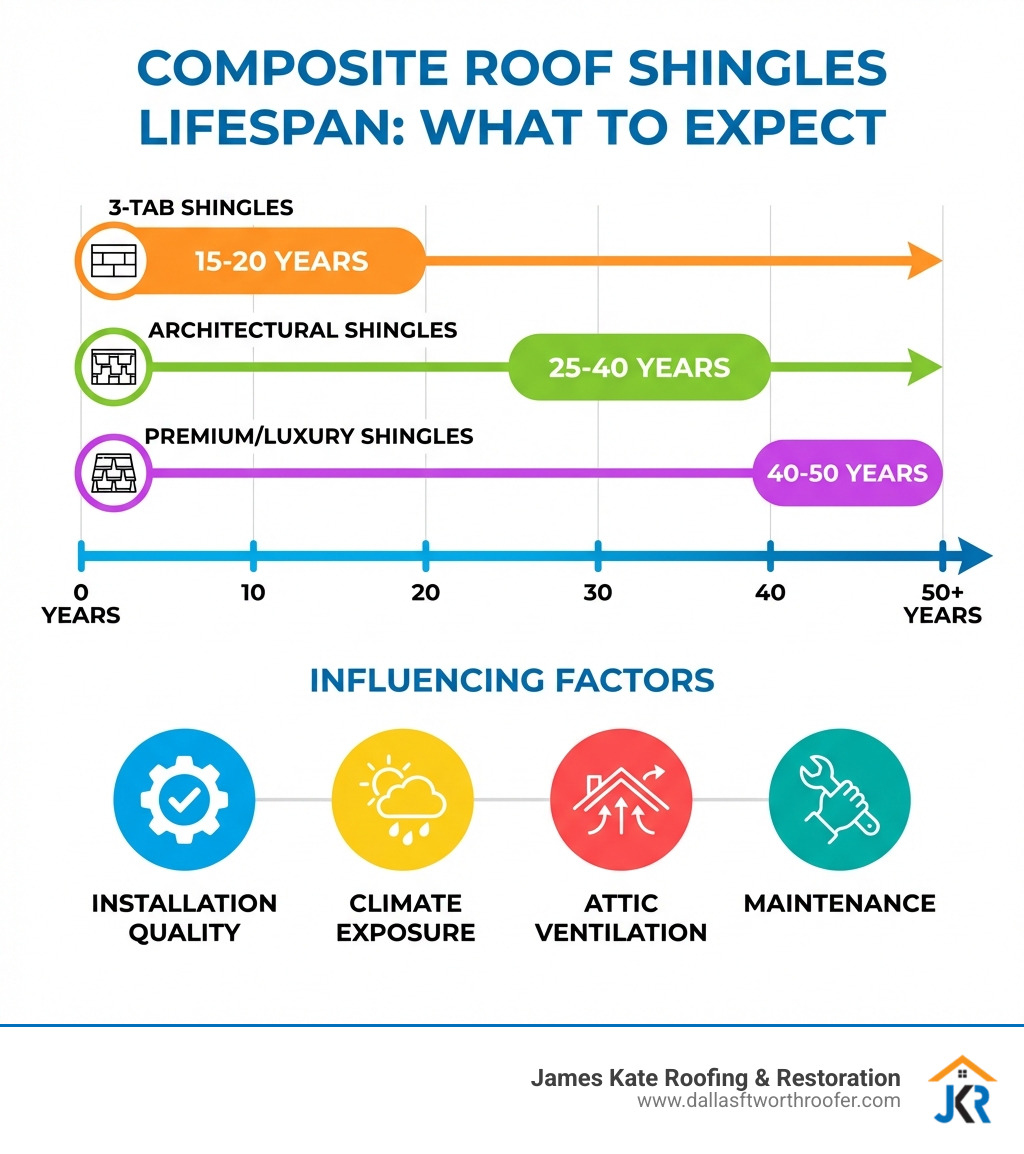
Composite roof shingles lifespan typically ranges from 20 to 50 years, depending on the type you choose and how well they’re maintained. If you’re trying to figure out how long your roof will last or when you’ll need a replacement, here’s a quick breakdown:
- 3-tab shingles: 15-20 years
- Architectural (laminated) shingles: 25-40 years
- Premium/luxury shingles: 40-50 years
Those numbers assume proper installation, balanced attic ventilation, and regular maintenance. Without those, even high-grade shingles can fail years earlier than expected.
A new roof is one of the biggest investments you’ll make in your home, and it’s frustrating to think your roof will last a certain length of time and then it doesn’t. The reality is that the “30-year shingle” on your roof might only give you 25 years—or even less—if installation shortcuts were taken, your attic isn’t ventilated correctly, or Texas heat and storms take their toll.
This guide will walk you through what composite shingles are made of, which factors shorten or extend their life, how they compare to other materials, and the warning signs that it’s time for a replacement. You’ll also learn what “lifetime warranty” really means and how to protect your investment from day one.
I’m Dustin Eatman, owner of James Kate Roofing & Solar in the Dallas–Fort Worth area, and I’ve spent years diagnosing composite roof shingles lifespan issues on both residential and commercial properties, working through insurance claims, and helping homeowners understand what they’re really getting when they invest in a new roof. My goal is to give you the straight facts so you can make a confident, informed decision.
Composite roof shingles lifespan word roundup:
What Are Composite Shingles and How Long Do They Last?
When we talk about composite shingles, the term can sometimes be a bit misleading because it’s used to describe a couple of different materials. Most commonly in our DFW area, it refers to asphalt shingles. These are called “composite” because they’re made from a combination of materials, typically a fiberglass mat saturated with asphalt and then coated with protective ceramic or mineral granules. This blend allows them to be durable and versatile.
However, the term “composite” also applies to newer, synthetic roofing materials made from recycled plastics, rubber, and other synthetic polymers. These are engineered to mimic the appearance of natural slate or cedar shakes, offering a high-end look without the associated weight, cost, or maintenance of natural materials.
Composition and Types of Composite Shingles
Let’s break down what composite shingles are made of and the main types you’ll encounter:
-
Asphalt-Based Composite Shingles: These are the most common type of roofing material in North America, installed on over 80% of homes. They start with a base made from either organic materials or, more commonly today, fiberglass. This base is then saturated with asphalt, coated with more asphalt, and finally, the surface is covered with protective mineral or ceramic granules. These granules protect the shingle from UV rays and add color. You can learn more about these versatile materials on our page about composition asphalt shingles.
Within asphalt shingles, we see several types:
- 3-tab shingles: These are the most basic and economical, characterized by their flat, single-layer appearance with three tabs per shingle.
- Architectural (laminated) shingles: Also known as dimensional shingles, these are thicker and more durable, made by laminating multiple layers of material. They create a more textured, aesthetically pleasing look, often mimicking the appearance of wood shakes or natural slate.
- Luxury shingles: These are the highest quality asphalt shingles, offering the thickest, heaviest, and most refined appearance, closely replicating natural slate or cedar shakes. They provide superior protection and curb appeal.
- Impact-resistant shingles: Designed to withstand hail and other impacts, these shingles often carry a Class 4 impact rating (the highest available), which can sometimes lead to insurance discounts in hail-prone areas like Texas.
- Cool-roof shingles: These are designed with reflective granules to reduce heat absorption, lowering attic temperatures and potentially cutting energy costs, especially beneficial in our hot Texas summers.
-
Synthetic/Recycled Material Composite Shingles: These are the true “composite” shingles in the sense that they are engineered from a blend of synthetic polymer, recycled materials (like plastics and rubber), and sometimes wood fibers or slate dust. Manufacturers often use molds of real slate tiles or cedar shakes to create incredibly realistic reproductions. Brands like DaVinci Roofscapes, for instance, are known for their high-quality synthetic slate and cedar shake shingles that feature realistic grain patterns and chisel marks. These are often more expensive but offer exceptional durability and a distinct aesthetic.
Typical Composite Roof Shingles Lifespan by Type
The composite roof shingles lifespan can vary significantly depending on the type you choose and the quality of the product. Here’s a general overview:
- 3-tab shingles: These are the entry-level option, and you can typically expect them to last between 15 to 20 years. However, in our challenging Texas climate with intense sun and frequent storms, their useful life can sometimes be on the lower end of that range, or even less if not properly maintained. According to InterNACHI’s Standard Estimated Life Expectancy Chart for Homes, three-tab asphalt shingles have an expectancy of 20 years.
- Architectural shingles: These are a popular choice for their balance of cost and durability. Their lifespan generally falls between 25 to 40 years. Many manufacturers warranty these for a minimum of 30 years.
- Premium/Luxury shingles: These top-tier asphalt shingles are built to last, often offering a composite roof shingles lifespan of 40 to 50 years. Their heavier construction and advanced materials provide superior resistance to weather and aging.
- Synthetic/Recycled Material Composite Shingles: These highly durable options, mimicking slate or cedar, often boast lifespans of 40 to 50 years, with some brands offering warranties extending even further. For example, Brava Roof Tile products come with a standard 50-year limited warranty.
These are typical expectations. Factors like installation quality, climate, and maintenance play a huge role in whether your roof reaches the higher end of its potential lifespan.
Understanding “Lifetime” Warranties
When you’re shopping for roofing, you’ll often hear about “lifetime” warranties, and it sounds great, right? Who wouldn’t want a roof that lasts a lifetime? However, as we often explain to our DFW homeowners, a “lifetime” in roofing parlance doesn’t always mean what you think it means. It’s more like 10 years when it comes to full replacement coverage.
A typical roofing system involves two main types of warranties:
- Manufacturer Materials Warranty: This covers defects in the shingles themselves. Most manufacturers offer ‘lifetime’ warranties on their shingles. However, this usually means an initial period (often around 10 years) where they’ll cover 100% of the cost to replace defective shingles. After this non-prorated period, the warranty typically becomes prorated, meaning they’ll only cover the depreciated value of the shingles. This means the longer your roof has been installed, the less the manufacturer will pay out if a defect occurs.
- Contractor Workmanship Warranty: This covers the quality of the installation. Even the best shingles won’t perform if they’re installed incorrectly. At James Kate Roofing & solar, we stand by our work with up to a 25-year workmanship warranty, giving you peace of mind that your roof was installed right.
Key things to know about “lifetime” warranties:
- Definition of “Lifetime”: For manufacturers, “lifetime” often refers to the period the original homeowner owns the home, but with significant limitations on what’s covered and for how long at full value. Consumer Reports highlights this well, stating that “a lifetime really isn’t a lifetime. It’s more like 10 years.”
- Prorated vs. Non-Prorated Periods: The initial non-prorated period is crucial because that’s when you get full coverage. After that, you’re usually looking at depreciated value.
- Exclusions: Warranties often have exclusions. Common ones include problems related to insufficient attic ventilation (which can void your shingle warranty) and damage from “acts of God” like very high winds and hail. This is why having good homeowners insurance is vital in Texas!
- Transferability: Some warranties can be transferred to a new homeowner, which can be a selling point for your home. However, there might be fees or reduced coverage for the second owner.
- Extending Coverage: Manufacturers sometimes offer extended full-replacement periods (e.g., up to 50 years) if you use their complete roofing system (shingles, underlayment, accessories) and have it installed by a certified contractor like us.
While a warranty is important, it shouldn’t be your sole focus. As experts advise, prioritize a strong shingle and a reliable contractor.
8 Factors That Influence the Composite Roof Shingles Lifespan
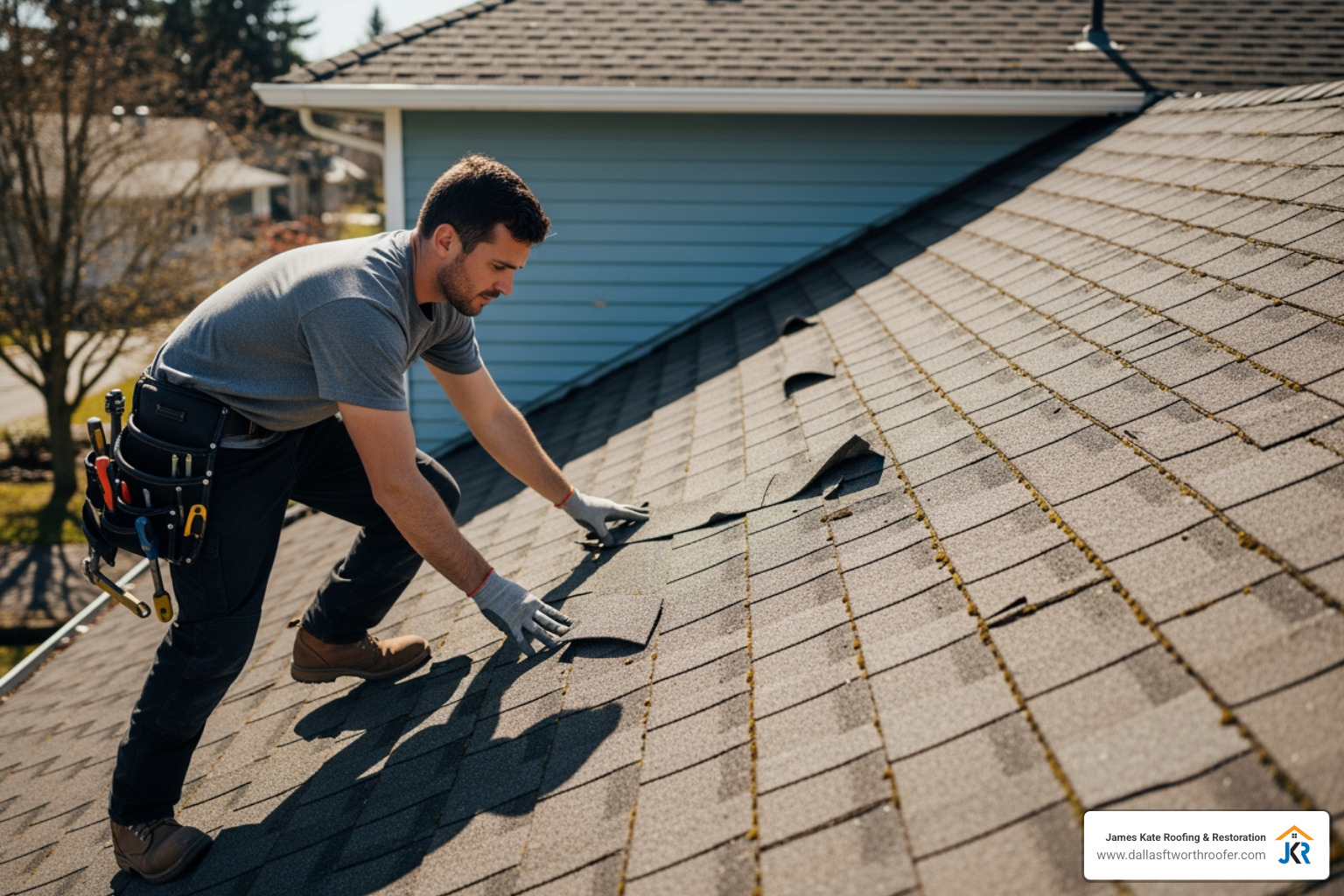
The composite roof shingles lifespan isn’t just about the material itself; it’s a complex interplay of several factors. Think of your roof as a system, not just a collection of shingles. Each component and environmental interaction plays a crucial role in how long your roof will protect your home in the DFW Metroplex.
Here are the key factors we consider:
Quality of Materials & Installation
This is perhaps the most critical factor. Even the highest-quality shingles won’t perform if they’re not installed correctly.
- Higher-grade materials: As we’ve discussed, premium and luxury composite shingles are engineered for greater durability and longevity. Investing in these upfront can significantly extend your roof’s life.
- Certified Contractors: Hiring experienced professionals ensures shingles are laid out correctly and adhere to building codes. Our team at James Kate Roofing & solar, as a GAF President’s Club award winner, combines top-tier materials with an unwavering commitment to integrity and craftsmanship. Our crews wear royal blue James Kate shirts so you know exactly who is working on your home.
- Nailing patterns: Incorrect nailing (too high, too low, too many, or too few nails) is a common cause of premature shingle failure, especially during high winds.
- Flashing details: Proper flashing around chimneys, vents, skylights, and valleys is essential to prevent leaks, which can undermine the entire roof system.
- Underlayment quality: The layer beneath your shingles provides an extra barrier against moisture. A high-quality synthetic underlayment offers superior protection compared to older felt papers.
- Starter strips: These specialized shingles are installed at the eaves and rakes to provide a strong, sealed edge, crucial for wind resistance.
A durable installation process involves meticulous planning, correct execution, and matched components to ensure optimal performance and to qualify for the strongest warranties. For more details on this, check out our roof replacement and installation services.
Climate and Environmental Exposure
Living in North Texas means our roofs face some serious challenges. The local climate is a major determinant of composite roof shingles lifespan.
- Texas heat: Our intense summer sun causes significant UV degradation, which breaks down the asphalt in shingles and leads to granule loss. Lighter-colored roofs can help by reflecting more sunlight and absorbing less heat, reducing thermal stress.
- UV degradation: Beyond just heat, the sun’s ultraviolet rays are relentless. They cause the shingle material to degrade, become brittle, and lose its protective granules.
- Hail damage: DFW is no stranger to hailstorms. Hail can cause granule loss, divots, cracks, and even subsurface splitting in shingles, creating vulnerabilities for water infiltration. Impact-resistant shingles are a popular choice here for good reason.
- High winds: Straight-line winds from our severe storms can reach speeds over 100 miles per hour, classified as damaging by the National Severe Storms Laboratory. These winds can blow off shingles, bend or curl them, and compromise their waterproof seal.
- Debris from trees: Overhanging trees can drop branches, leaves, and sap onto your roof. This debris can trap moisture, promote moss and algae growth, and physically damage shingles.
- Moisture and humidity: High humidity and frequent rainfall (when we get it!) can encourage algae and moss growth, which can retain water and accelerate granule loss. Ice dams, though less common in DFW, can also cause water to back up under shingles.
The Critical Role of Attic Ventilation
We can’t stress this enough: proper attic ventilation is paramount to maximizing your composite roof shingles lifespan. It’s often overlooked but has a profound impact.
- Balanced intake and exhaust: A well-ventilated attic has a continuous flow of air, with cool air drawn in at the eaves (intake) and hot, moist air expelled at the ridge (exhaust).
- Heat and moisture buildup: Without proper ventilation, heat gets trapped in the attic, especially during our scorching Texas summers. This heat can cause shingles to “cook” from the underside, leading to premature warping, cracking, and degradation. It also creates thermal stress on the shingles and underlayment.
- Shingle warping: Excessive heat can cause shingles to curl, buckle, and become brittle, making them more susceptible to wind damage and granule loss.
- Deck stability: Proper ventilation helps keep the roof deck (the wood sheathing beneath your shingles) at a more consistent temperature and moisture level, preventing warping or rotting that could compromise the entire roof structure.
- Slowing oxidation: Ventilation helps to slow the chemical process of oxidation in the asphalt, which otherwise stiffens and ages the shingles more quickly.
Many shingle manufacturers will void their warranties if the attic ventilation is inadequate, so it’s not just about comfort and energy bills—it’s about protecting your investment.
Roof Slope and Maintenance
These two factors, while seemingly distinct, work hand-in-hand to protect your roof.
- Water runoff: The pitch or slope of your roof directly affects how efficiently water drains off. Steeper roofs allow water to run off quickly, minimizing its contact time with shingles and reducing the risk of water penetration.
- Low-slope challenges: Flatter roofs, while aesthetically pleasing to some, present greater challenges for drainage. Water can pool, increasing the risk of leaks and promoting algae or moss growth. For low-slope areas, specialized roofing systems are often recommended over standard shingles.
- Debris removal: Regularly removing leaves, branches, and other debris prevents moisture retention and the accumulation of organic matter that can foster growth and cause damage.
- Gutter cleaning: Clogged gutters prevent proper drainage, causing water to back up and potentially seep under shingles or rot fascia boards. Keeping them clear is a simple yet effective maintenance task.
- Annual inspections: Proactive inspections, especially after severe weather events common in DFW, can catch minor issues before they become major problems. A professional inspection can identify granule loss, small cracks, or loose shingles that might not be visible from the ground.
- Prompt repairs: Addressing minor damages like cracked or missing shingles, or compromised flashing, immediately can prevent water infiltration and significantly extend your roof’s life. Delaying repairs can lead to much more extensive and costly damage to your decking, insulation, and interior.
Regular maintenance is not just about cleaning; it’s about vigilance. You can find more comprehensive information on how we help homeowners maintain their roofs on our roof maintenance page.
How Composite Shingles Compare to Other Materials
When considering your roofing options, it’s helpful to see how composite shingles stack up against other popular materials, especially in terms of lifespan, cost, and overall value. While composite shingles are generally less expensive than metal or slate, they offer similar durability and aesthetic appeal.
Here’s a quick comparison:
| Material Type | Typical Lifespan (Years) | Avg. Cost (per sq ft installed) | Weight (lbs/sq ft) | Key Pros | Key Cons |
|---|---|---|---|---|---|
| Composite Shingles | 20-50 | $5 – $15 | 2-4 | Affordable, versatile styles, easy to install and repair. | Shorter lifespan than other materials, susceptible to storm damage. |
| Wood Shakes/Shingles | 25-40 | $10 – $20 | 3-5 | Natural, rustic aesthetic with good insulation properties. | High maintenance, potential fire risk, susceptible to rot and insects. |
| Metal Roofing | 40-70+ | $9 – $25 | 1-3 | Extremely durable, long-lasting, energy-efficient, and lightweight. | Higher initial cost, can be noisy in rain, may dent from hail. |
| Slate or Tile | 50-100+ | $15 – $35+ | 8-20+ | Best lifespan, fireproof, neat appearance, low maintenance. | Very expensive, extremely heavy (may need structural reinforcement), brittle. |