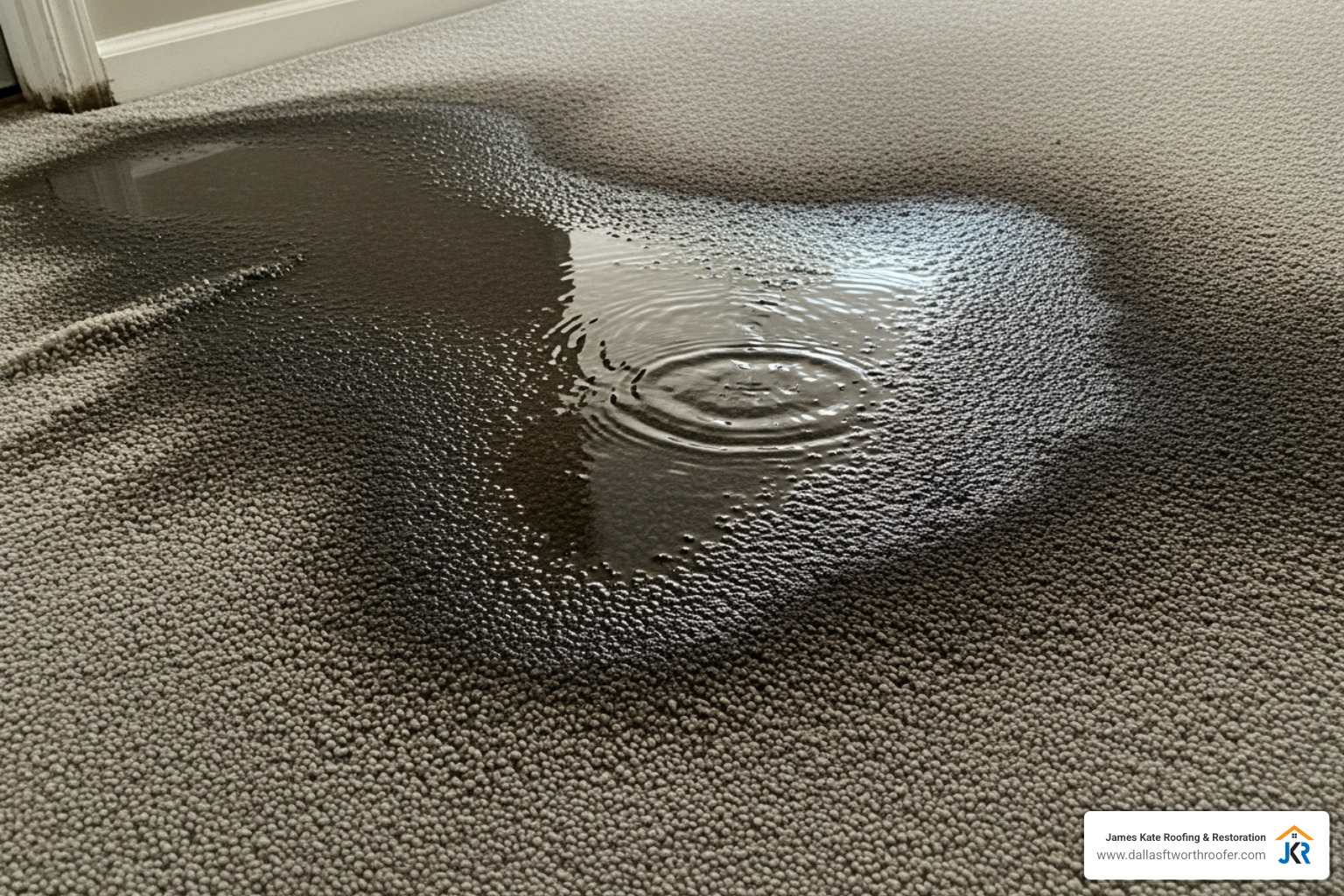
Why Speed and Safety Matter Most in Carpet Flooding Clean Up
When water invades your home and soaks your carpets, it’s more than just a mess—it’s an emergency. Carpet flooding clean up is a race against the clock, where every hour counts in the battle against permanent damage, costly repairs, and serious health risks. Here’s what you need to know right away:
Quick Action Steps:
- Turn off electricity and gas supplies in affected areas before entering.
- Stop the water source if possible (e.g., burst pipe, overflowing appliance) to prevent escalation.
- Extract water within 24 hours to minimize the chance of mold growth taking root.
- Document everything with detailed photos and videos for your insurance claim.
- Assess water type (clean, grey, or black) to determine the contamination level and if DIY cleanup is safe.
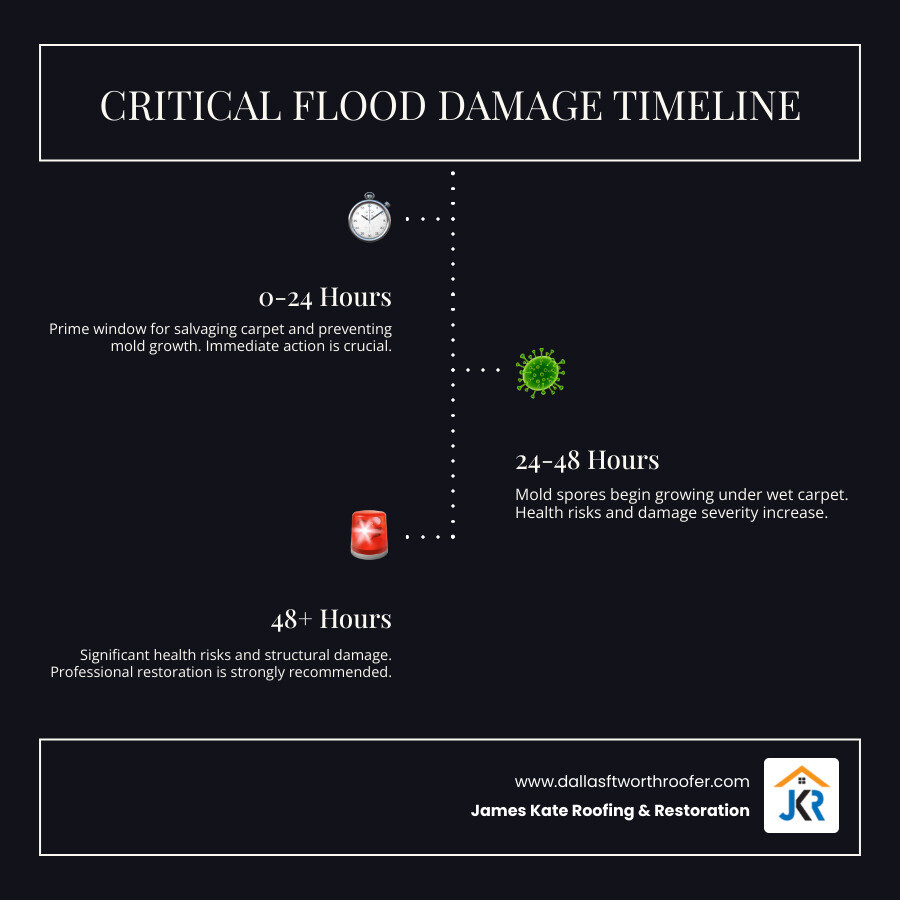
Critical Timeline:
- 0-24 hours: This is the prime window for salvaging your carpet. Water begins to soak into the subfloor, and carpet dyes may bleed, but professional extraction can prevent most long-term damage.
- 24-48 hours: Mold spores, which are always present, activate in the damp environment and begin to grow under the wet carpet. A musty odor may start to develop.
- 48+ hours: Health risks increase significantly as mold colonies form and water may become contaminated with bacteria. Structural materials like drywall and wood begin to swell and warp, and carpet replacement becomes highly likely.
Flooding creates immediate and severe health and structural hazards. Depending on the source, the water can be a toxic soup of contaminants, including sewage, industrial chemicals, pesticides, and harmful bacteria like E. coli and Salmonella. Even “clean” water from a supply line leak quickly becomes a threat. Within just 24-48 hours, it can stagnate and support the growth of dangerous mold, including Stachybotrys chartarum (black mold). Exposure can trigger allergic reactions, asthma attacks, and respiratory infections.
Beyond the immediate health concerns, water damage poses serious threats to your home’s structural integrity. Prolonged exposure to moisture causes wood framing to rot, metal components to rust, and drywall to crumble. The carpet’s backing can delaminate, causing permanent buckling and rippling that no amount of stretching can fix. Subfloors, particularly those made of particleboard or OSB, can swell and disintegrate when saturated, requiring complete replacement. These structural issues compound quickly—what starts as a simple wet carpet can escalate into thousands of dollars in repairs to flooring systems, wall assemblies, and even foundation elements if water seeps deep enough.
The cost of delay is steep—according to FEMA, just one inch of water can cause over $25,000 in damages. The average flood claim from 2005 to 2014 was $42,000, but major events can easily cause hundreds of thousands in damage. Insurance companies often scrutinize claims for evidence of negligence or delayed response, which can result in reduced coverage or claim denial. Acting swiftly not only minimizes damage but also demonstrates to insurers that you took reasonable steps to mitigate losses.
I’m Dustin Eatman, owner of James Kate Roofing & solar. For years, my team and I have served families across the Dallas-Fort Worth area, from Mansfield and Arlington to Granbury and Midlothian. We’ve seen how devastating water damage can be—from roof leaks causing carpet saturation to full basement floods requiring comprehensive carpet flooding clean up. My team and I understand that water doesn’t just damage floors; it threatens your family’s health, your home’s structural integrity, and your peace of mind. We are committed to restoring your home and your life with speed and integrity.
First Response: Immediate Steps for a Flooded Carpet
When your carpet takes an unexpected swim, the first few hours are absolutely critical. We often say that immediate action can save you not just time and money, but a whole lot of headaches down the line. Any delay allows water to penetrate deeper into the carpet fibers, padding, and subfloor, leading to permanent stains, buckled flooring, delaminating materials, and far more complex and costly repairs.
Safety is always our top priority, and it must be yours as well. Before you even think about touching that wet carpet, ensure the power is off in the affected area. Water and electricity are a lethal combination. Go to your breaker box and shut off the circuits supplying power to the flooded rooms. If you have to walk through water to get to the breaker box, stop and call a licensed electrician for assistance. Once the power is confirmed off, if you can safely identify and stop the water source – whether it’s a burst pipe, an overflowing washing machine, or a leaky roof – do so immediately. This crucial step prevents further saturation and gives you a head start on the cleanup. Wet floors are incredibly slippery, so tread carefully to avoid slip-and-fall hazards.
Once the area is safe, it’s time to move furniture. Lift and remove any items sitting on the wet carpet to prevent water rings, stains, and further damage to both the furniture and the carpet. If items are too heavy to move completely, place aluminum foil squares or wood blocks under the legs to create a protective barrier between the furniture and the wet carpet.
Crucially, document everything. Before you move a single piece of furniture or start any cleanup, grab your phone. Take extensive pictures and videos of all affected areas, capturing wide shots of the room and close-ups of the water level, damaged carpet, and any affected belongings. This visual evidence is invaluable for your insurance claims. The more thoroughly you document the initial damage, the smoother your claim process will be.
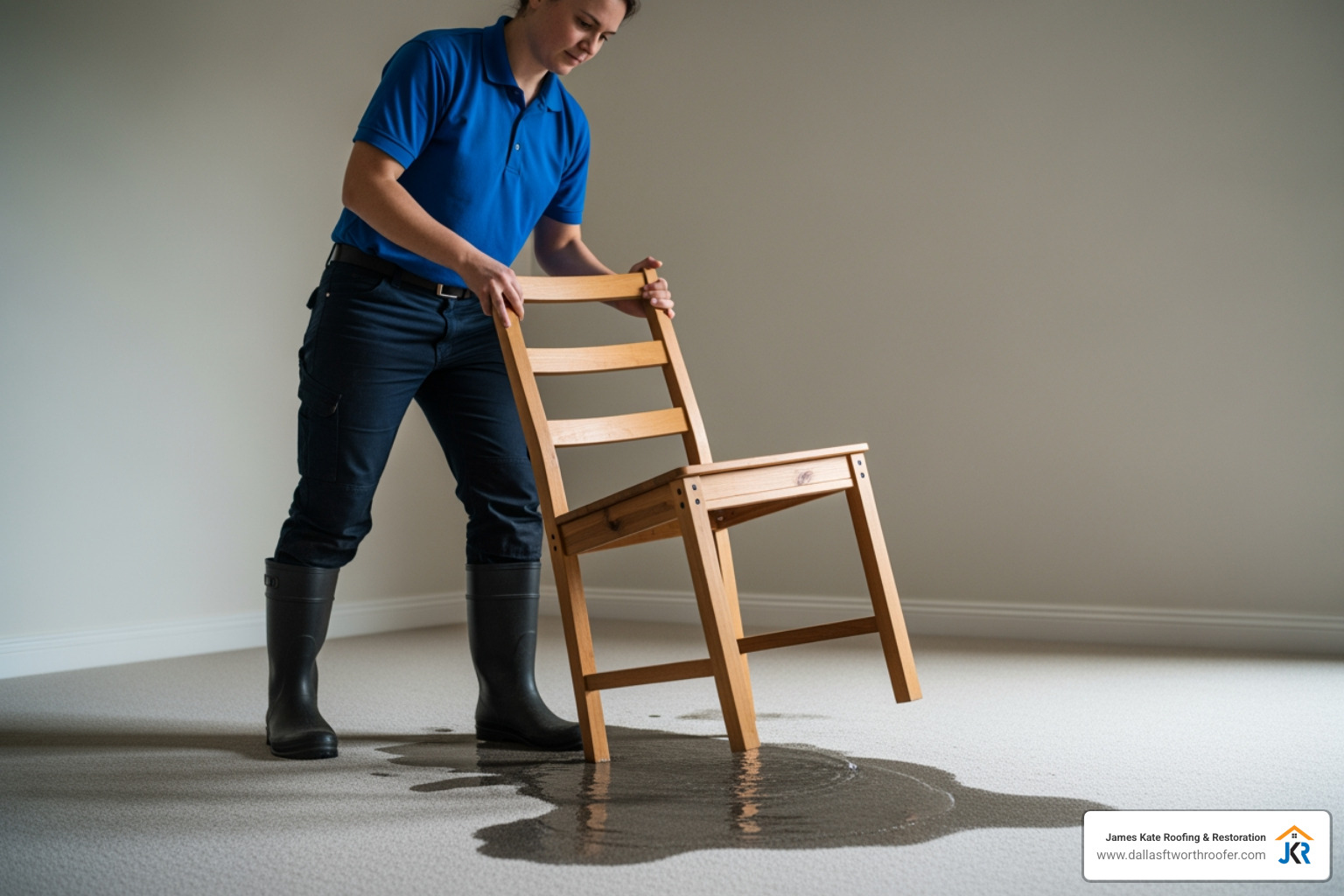
When working in a water-damaged environment, protecting yourself from contaminants is paramount. We recommend wearing the following essential safety gear:
- Waterproof gloves: Protects your hands from contact with contaminated water and cleaning agents.
- Rubber boots: Keeps your feet dry and provides protection against electrical hazards should the power be accidentally restored.
- N95 mask: Essential for filtering out airborne contaminants, especially if mold is suspected or the water is from a grey or black source. Mold spores can become airborne easily and pose a serious respiratory threat.
Assess the Damage: Understanding Water Categories
Not all water is created equal, especially when it comes to carpet flooding clean up. The source of the water dictates the severity of the contamination and, consequently, the cleanup approach and the carpet’s salvageability. Understanding these categories is key to a safe and effective solar.
Category 1: Clean Water This is water from a sanitary source that doesn’t pose a substantial immediate threat to health. Think of a burst supply pipe, an overflowing sink (without food waste or soap), or rainwater that hasn’t touched the ground or roofing contaminants. While it’s the least dangerous, time is still of the essence. If left untreated for more than 24-48 hours, it can degrade into Category 2 water as bacteria and mold begin to multiply. Carpets affected by clean water can often be salvaged if professional drying begins immediately.
Category 2: Grey Water Grey water contains a significant level of contaminants—chemical, biological, or physical—that could cause illness or discomfort if ingested or through skin contact. Common examples include discharge from a washing machine, a dishwasher overflow, a toilet overflow containing only urine (no feces), or a punctured waterbed. Carpets affected by grey water require aggressive cleaning and disinfection. While they may still be salvageable, professional intervention is highly recommended. If grey water sits for longer than 48 hours, it will almost certainly degrade to Category 3.
Category 3: Black Water This is the most dangerous category and is considered grossly unsanitary. Black water contains pathogenic agents and toxins. It typically comes from sewage backups, toilet overflows with feces, or any surface water that enters the home from flooding rivers or streams. Carpets and padding saturated with black water should always be removed and disposed of by professionals. The health risks are too severe, and attempting to clean it is not worth the danger. The cost to mitigate Category 3 water damage is the most expensive due to the extensive safety protocols and disposal requirements.
Here’s a quick overview of how these categories affect your carpet flooding clean up:
| Water Category | Source Examples | Health Risk | Cleanup Approach & Salvageability |
|---|---|---|---|
| Category 1: Clean Water | Burst water supply lines, overflowing sinks (no contaminants), rainwater. | Low | High Salvageability. Carpet can usually be saved if dried professionally within 24-48 hours. |
| Category 2: Grey Water | Washing machine or dishwasher overflow, toilet overflow (urine only). | Medium | Conditional Salvageability. Carpet may be saved with professional cleaning and disinfection. Padding should be replaced. |
| Category 3: Black Water | Sewage backup, flooding from rivers/streams, toilet overflow (with feces). | High | Low/No Salvageability. Carpet and padding must be removed and disposed of by professionals due to severe health hazards. |
For a more in-depth look at water damage, you can learn more about water damage categories from university extension resources.