What You Need to Know About Commercial Flat Roof Replacement
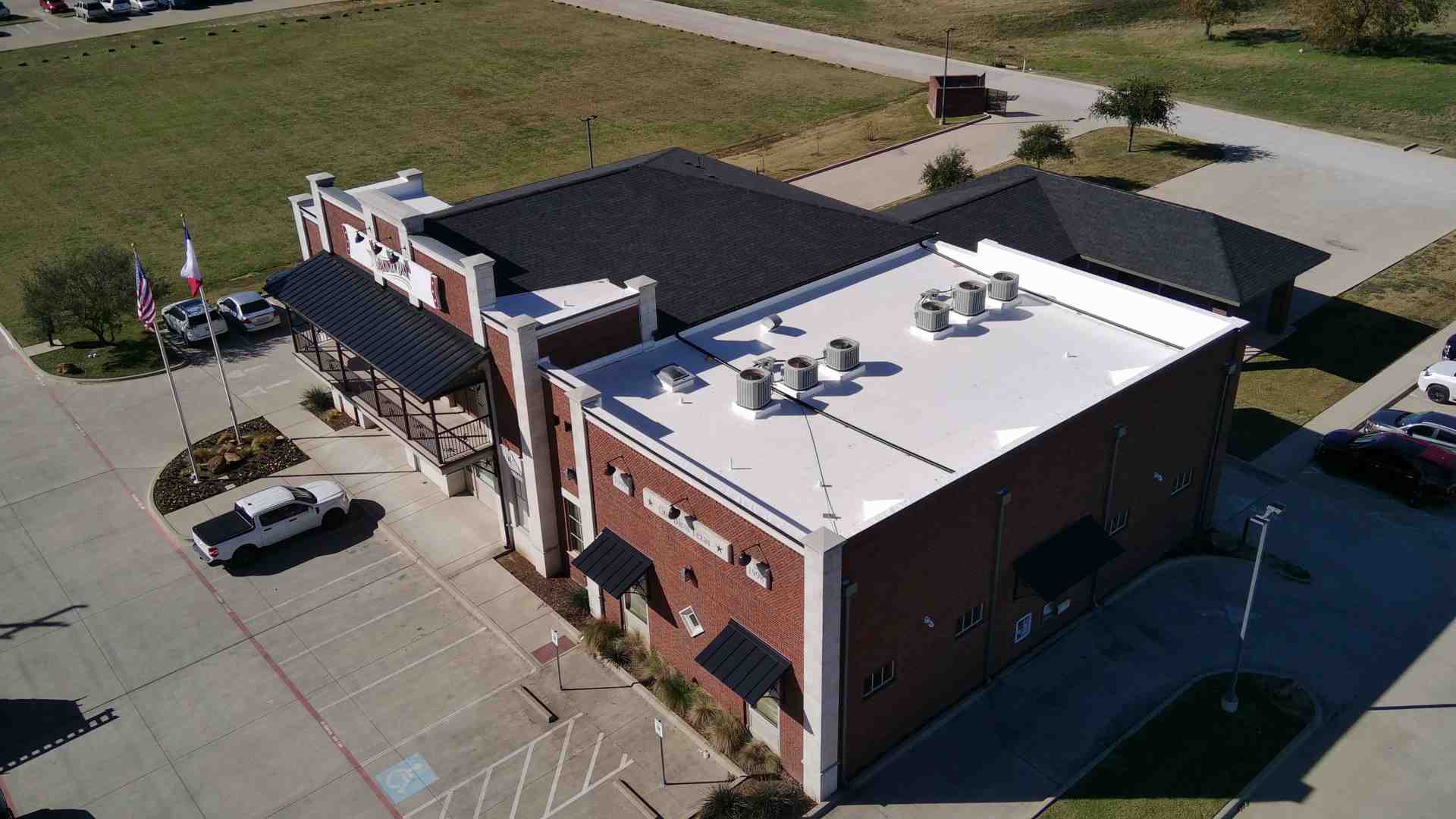
Commercial flat roof replacement is the process of removing your existing roofing system and installing a new one — typically needed when repairs no longer make financial sense or the roof has reached the end of its lifespan.
Here’s a quick overview of what’s involved:
| Topic | Quick Answer |
|---|---|
| When to replace | Roof age 15–30+ years, widespread leaks, structural damage, or failed membranes |
| Popular materials | TPO, PVC, EPDM, Modified Bitumen, Built-Up Roofing (BUR) |
| Typical cost | $5 to $15 per square foot depending on size, materials, and complexity |
| How long it takes | A few days to several weeks depending on roof size and conditions |
| Key benefit | Protects your building, lowers energy costs, and reduces long-term maintenance |
A failing flat roof doesn’t just cause leaks. It drives up energy bills, risks structural damage, and can shut down business operations at the worst possible time.
This guide walks you through every stage — from spotting the warning signs to choosing the right material and understanding what the replacement process actually looks like.
I’m Dustin Eatman, owner of James Kate Roofing & solar in the Dallas–Fort Worth area, and I’ve helped property owners navigate commercial flat roof replacement projects from initial inspection all the way through final walkthrough and warranty documentation. I’ll share what I’ve learned in the field so you can make a confident, informed decision for your building.
Handy commercial flat roof replacement terms:
Identifying the Need for a New Roof
In the DFW metroplex, our roofs take a beating. From the scorching July sun in Mansfield to the sudden hailstorms in Arlington, your commercial roof is your building’s first line of defense. But how do you know when that defense is finally crumbling?
One of the most obvious signs is ponding water. Now, we aren’t talking about a few puddles after a downpour; we mean water that hangs out for more than 48 hours. If your roof looks more like a swimming pool for local birds than a protective barrier, you have a drainage or structural issue. Over time, that weight stresses the deck and speeds up membrane deterioration.
You should also look for membrane blisters or “alligatoring.” This happens when the sun bakes the oils out of the roofing material, causing it to crack and resemble the skin of a reptile. Once those cracks appear, water finds its way into the insulation, which is where the real trouble begins.

Signs You Need a commercial flat roof replacement
While a single leak can often be patched, widespread moisture intrusion is a different story. If you find yourself calling a roofer every time a dark cloud appears over Granbury, you’re likely throwing good money after bad.
- Age of the Roof: Most commercial flat roofs are designed to last between 15 and 30 years. If your EPDM or TPO roof is approaching the two-decade mark, it’s time for a professional evaluation.
- High Energy Bills: If your AC is working overtime but your building still feels like a sauna, your roof insulation might be saturated. Wet insulation loses its R-value, meaning it no longer keeps the Texas heat out.
- Structural Sagging: This is the “red alert” of roofing. If you notice interior ceilings dipping or the roofline looking uneven from the outside, the structural integrity of the deck may be compromised.
When damage is this extensive, simple repairs won’t cut it. In many cases, we may need to discuss solar services or a full tear-off to ensure the building remains safe and dry.
Repair vs. Replacement Decision
Deciding between a patch job and a full commercial flat roof replacement often comes down to the “25% Rule.” As a general industry standard, if more than 25% of your roof is damaged or saturated, a total replacement is usually the most cost-effective long-term move.
We also have to look at the condition of the insulation. If we perform an infrared scan and find that the underlying “iso” boards are soaked, simply putting a new patch on top is like putting a band-aid on a broken leg. The trapped moisture will eventually rot the deck and cause the new patch to fail.
Section-by-section repair is an option for very large industrial complexes where one wing might be ten years newer than another. This allows us to prioritize the most urgent areas while managing your capital expenditure budget more effectively. However, for most standalone commercial buildings in Midlothian or Grand Prairie, a unified replacement provides the best warranty protection and peace of mind.
Comparing Popular Flat Roofing Materials
Choosing a material is the most critical part of the planning phase. Each system has its own set of pros and cons, especially when dealing with the unique climate of North Texas.
Single-Ply Membranes
Single-ply membranes are the “modern standard” for commercial flat roof replacement. They are lightweight, flexible, and highly reflective.
- TPO (Thermoplastic Polyolefin): This is the most popular choice in DFW. It is a white, reflective membrane that helps lower cooling costs by bouncing UV rays away from the building. TPO is also resistant to mold and chemical pollutants.
- PVC (Polyvinyl Chloride): Similar to TPO but even more durable. PVC is the gold standard for restaurants because it is highly resistant to grease and oils that get vented out of kitchen hoods. It also handles ponding water better than almost any other material.
- EPDM (Ethylene Propylene Diene Terpolymer): Often called “rubber roofing,” EPDM is incredibly durable and can last up to 50 years if properly maintained. It’s typically black, which isn’t always ideal for Texas heat unless it’s ballasted (covered with stones) or treated with a reflective coating.
For businesses looking to go “green,” there are also eco-friendly options like vegetative roofs. While beautiful and great for air quality, they require a significantly stronger structural deck to handle the weight of the soil and plants.
Traditional and Metal Systems
If you prefer the “tried and true” methods, traditional systems still have their place in the industry.
- Built-Up Roofing (BUR): These are the old-school “tar and gravel” roofs. They consist of multiple layers of asphalt and fabric. They are incredibly tough and provide excellent protection against foot traffic, but they are heavy and the installation process can be smelly.
- Modified Bitumen: Think of this as the evolution of BUR. It uses reinforced fabric layers but adds polymers to the asphalt to make it more flexible in cold weather and more resilient in the heat.
- Standing Seam Metal: While more expensive upfront, a metal roof on a low-slope application can last 50 years or more. It’s excellent for shedding water and is virtually maintenance-free, though it requires specialized installation to ensure the seams remain watertight.
| Material | Lifespan | Cost (per sq ft) | Best For |
|---|---|---|---|
| TPO | 20-30 Years | $5 – $10 | Energy efficiency in hot climates |
| PVC | 20-30 Years | $7 – $12 | Restaurants and chemical resistance |
| EPDM | 25-35 Years | $5 – $10 | Durability and ease of repair |
| Mod Bit | 20 Years | $5 – $9 | High foot traffic areas |
| Metal | 45+ Years | $10 – $15 | Long-term longevity |
The Step-by-Step commercial flat roof replacement Process
Once you’ve selected your material and signed the contract, the real work begins. We aim for transparency during every phase so you know exactly what’s happening above your head.
The process typically begins with a deep-dive inspection. We don’t just walk the roof; we look at the interior ceilings, checking for mold, water stains, and structural issues. We then move into the planning and staging phase, where we coordinate the delivery of materials and dumpsters to minimize disruption to your parking lot and customers. You can find more details on our commercial roofing services page.
Phase I: Demolition and Preparation
The “messy” part of the job. We start by tearing off the old roofing material down to the deck. This is a critical step because it’s the only way to truly see if the underlying wood or metal deck has been damaged by leaks.
- Deck Inspection: If we find rotted wood or rusted metal, we replace it immediately. You can’t build a great roof on a shaky foundation.
- Safety Perimeter: We set up roped-off areas and safety flags to protect your employees and customers. Falling debris is a serious hazard, and we take site safety very seriously.
- Insulation Prep: We install new insulation boards (usually polyisocyanurate) to meet current building codes and provide the thermal resistance your building needs.
Phase II: Installation and Final Inspection
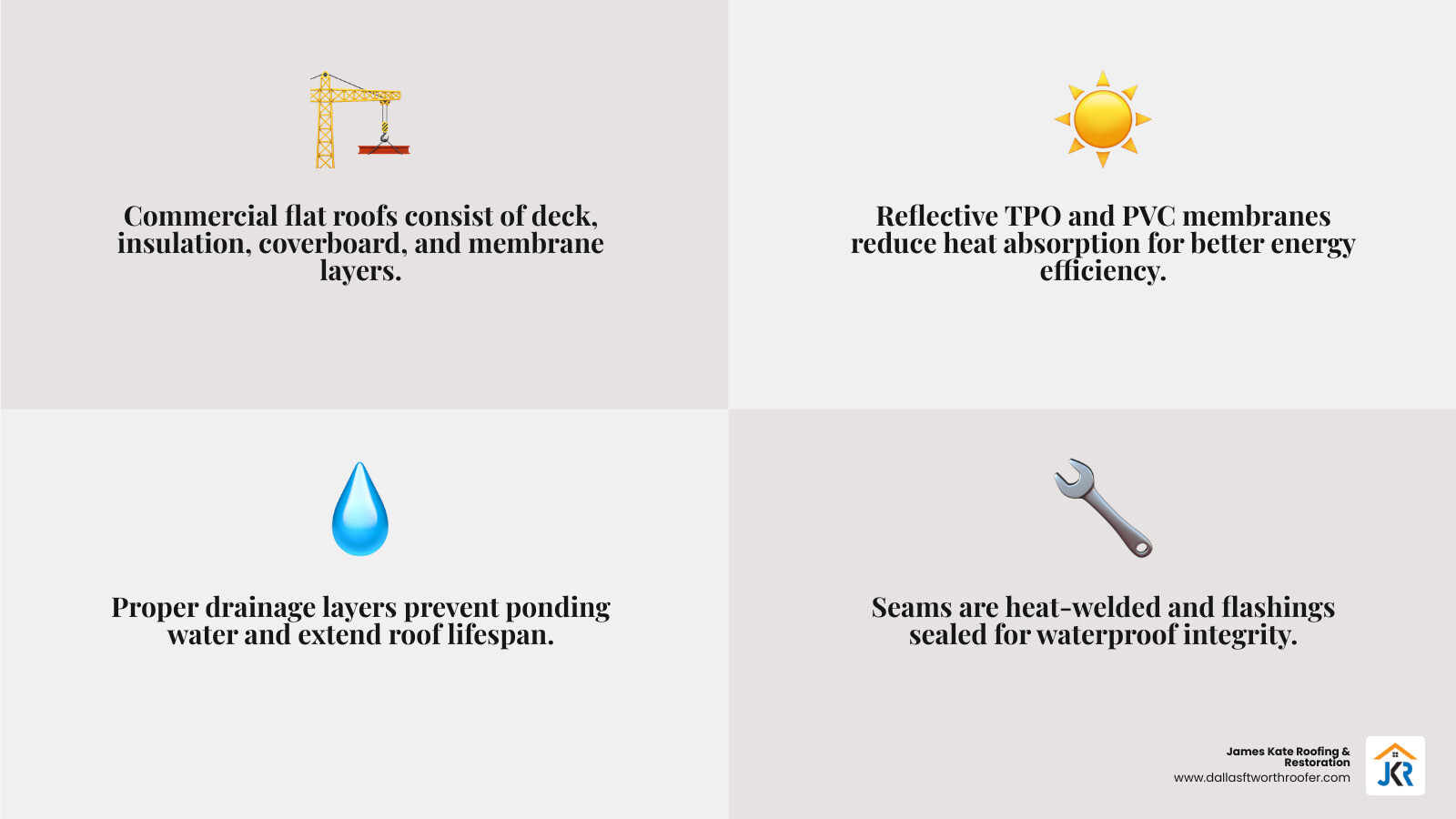
With the deck prepped and the insulation in place, we lay down the new membrane. For TPO and PVC, this involves using a robotic heat welder to fuse the seams together. This creates a monolithic, waterproof sheet across your entire building.
We then install the flashing—the material that seals the edges of the roof and any penetrations like pipes, vents, or HVAC units. Most leaks happen at these transition points, so we pay extra attention to the details here.
Finally, we conduct a “flood test” or drainage test to ensure water is flowing toward the drains as intended. A manufacturer’s representative often joins us for a final walkthrough to verify the installation meets the requirements for a high-level warranty.
Safety Standards and Financial Considerations
A commercial flat roof replacement is a major investment, and like any big project, it comes with legal and safety requirements.
In our neck of the woods, we strictly adhere to fall protection requirements. Whether it’s installing temporary guardrails or using harness systems, keeping our crew and your staff safe is our top priority. We also follow strict fire safety guidelines, especially when using torches or heat-welding equipment, to prevent the types of construction-related fires that occasionally make the news.
While the Ontario OHSA and NRCA guidelines provide a great framework for international safety, we make sure every project in Mansfield or Arlington complies with all local Texas building codes and federal OSHA standards.
Estimating the Cost of commercial flat roof replacement
You can generally expect to pay between $5 and $15 per square foot for a standard commercial flat roof replacement. Why the big range? Several factors influence the final quote:
- Tear-off Complexity: Removing one layer of old TPO is much easier (and cheaper) than hauling away four layers of old rock and hot tar.
- Insulation Requirements: Current energy codes often require thicker insulation than what was originally installed, which adds to the material cost.
- Building Height: A one-story warehouse in Grand Prairie is cheaper to roof than a five-story office building in Arlington because of the equipment needed to get materials up and down.
- Penetrations: A roof with 50 HVAC units and skylights requires significantly more labor than a “clean” roof with nothing but a few vents.
For a more tailored look at costs, check out our guide on roofing services.
Warranties and Maintenance Plans
A new roof is only as good as the paper backing it up. We often recommend a No Dollar Limit (NDL) warranty. Unlike a standard “pro-rated” warranty, an NDL warranty covers the full cost of repairs—both parts and labor—for the duration of the term (usually 15 to 25 years).
However, most warranties require you to perform regular maintenance. We suggest bi-annual inspections (Spring and Fall). During these checks, we clear debris from drains, inspect the caulking around HVAC units, and look for any signs of wind damage or vandalism. Think of it like an oil change for your building; it’s a small cost that prevents a massive engine failure later.
Frequently Asked Questions about Flat Roofs
How long does a commercial flat roof replacement take?
Most projects for average-sized buildings take between one and three weeks. However, the “Texas factor” always plays a role. If a spring storm rolls through DFW, we have to pause work and secure the site to prevent leaks during construction. We monitor the radar constantly to ensure your building is never left vulnerable to the elements.
Can you install a new roof over an existing one?
This is called a “recover” or “overlay.” Building codes generally allow for two layers of roofing. If you currently only have one layer and the insulation underneath is dry, an overlay can save you a significant amount of money in labor and disposal fees. However, if there is moisture trapped in the old system, an overlay is a bad idea—it will trap that moisture and rot your deck from the inside out. We always perform a moisture scan before recommending this option.
What is the best material for a flat roof in Texas?
For our climate, TPO is hard to beat. The white surface can be up to 50-60 degrees cooler than a dark roof during a Texas August, which translates to massive savings on your electric bill. It also handles the thermal expansion and contraction caused by our wild temperature swings (like when it’s 80 degrees on Monday and 30 degrees on Tuesday).
Conclusion
At James Kate Roofing & solar, we believe that a commercial flat roof replacement shouldn’t be a source of stress for business owners. Whether you are in Mansfield, Arlington, Granbury, or anywhere else in the DFW area, our family-owned team is here to provide the honesty, integrity, and technical expertise your project deserves.
As a GAF President’s Club member, we offer some of the strongest warranties in the industry, including up to a 25-year workmanship warranty. We don’t just stop at roofing, either; if your building has suffered from water, fire, or mold issues, we provide full solar and build-back services to get your business back on its feet.
Don’t wait for the next big storm to find out your roof is failing. Contact a DFW roofing expert today for a comprehensive evaluation and let us help you protect your investment for decades to come.