Why Modern Roofs Need a Systems Approach
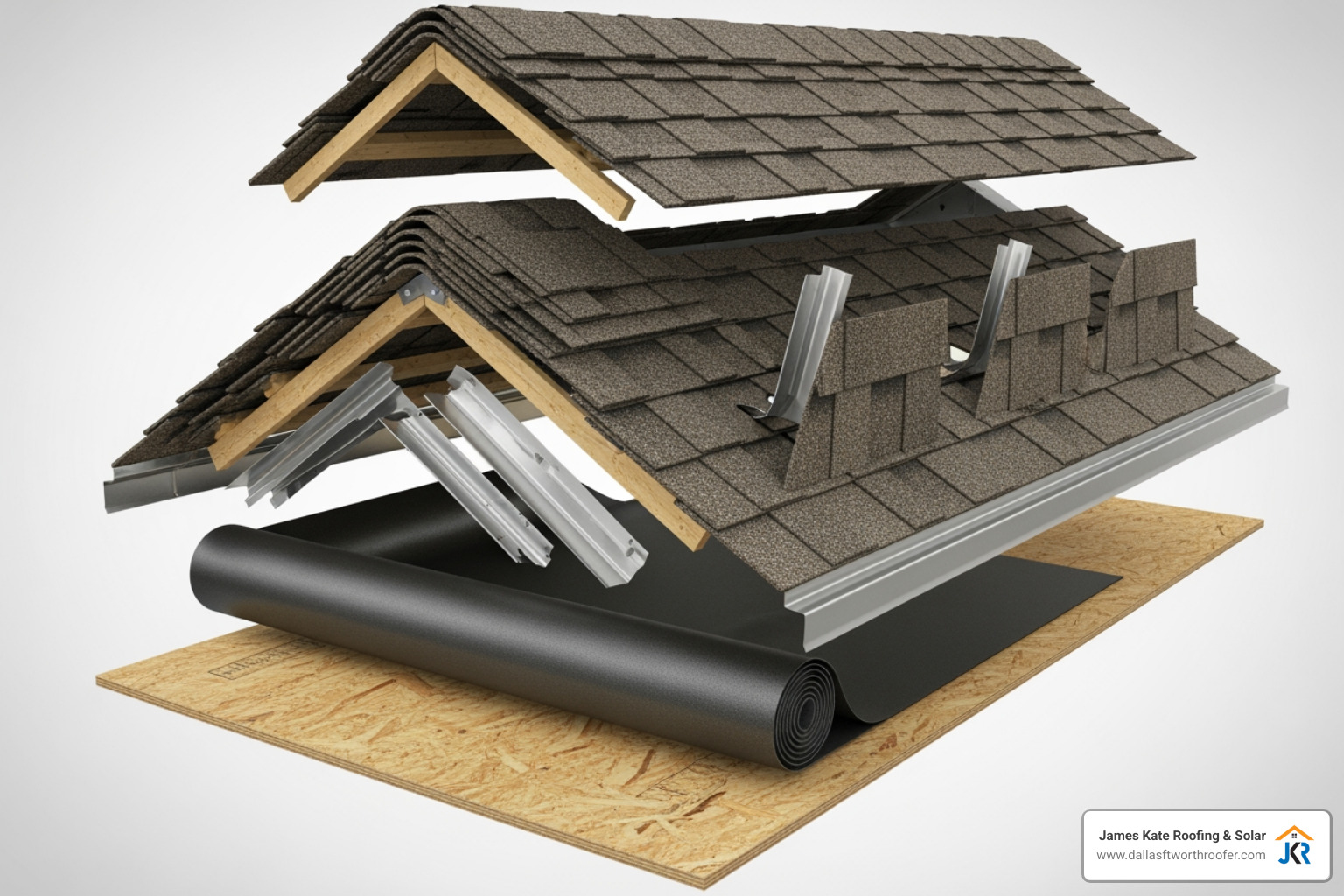
Integrated roofing systems are designed as a cohesive unit where all components—from underlayment to shingles, flashing, and ventilation—are engineered by a single manufacturer to work together for optimal performance and longevity. Unlike traditional roofing, which often involves mixing products from different manufacturers, integrated systems ensure guaranteed compatibility, streamlined warranties, and superior weather resistance.
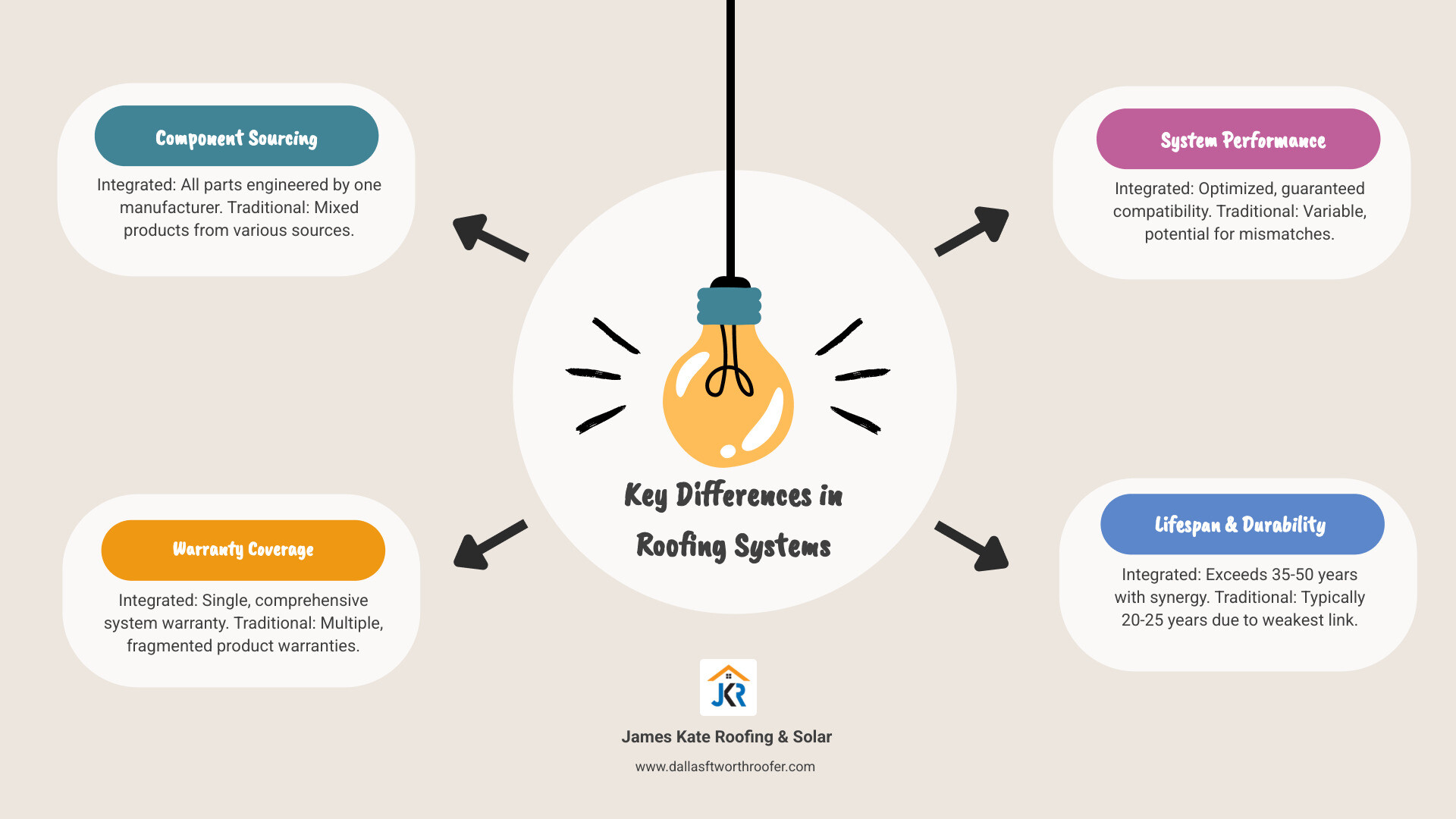
Key differences between traditional and integrated roofing:
- Component Sourcing: Traditional roofing mixes products from multiple manufacturers; integrated systems use components designed to work together
- Warranty Coverage: Traditional roofing requires multiple warranties; integrated systems offer single-source warranty protection
- Performance: Traditional roofing has variable compatibility; integrated systems deliver optimized, tested performance
- Lifespan: Traditional roofing typically lasts 20-25 years; integrated systems can exceed 35-50 years with proper maintenance
If you’ve ever dealt with a roof leak only to find that your underlayment wasn’t compatible with your shingles, you understand the frustration of piecemeal roofing. The problem isn’t just one component failing—it’s that the parts were never designed to protect your home as a unified system.
Traditional roofing approaches treat each layer as a separate decision: you choose your shingles, someone else picks the underlayment, and ventilation might be an afterthought. This creates gaps—literally and figuratively—in your roof’s defense against the elements. One manufacturer won’t warranty another’s product, leaving you vulnerable when something goes wrong.
Integrated roofing systems solve this by treating your roof as what it actually is: a complete protective envelope for your property. Every component is tested together, installed according to coordinated specifications, and backed by a single warranty. The result is better performance, longer lifespan, and real peace of mind.
For DFW property owners, this matters even more. Our climate throws everything at roofs—scorching summer heat, sudden hailstorms, high winds, and occasional ice. A system designed to work together stands a much better chance than mismatched components that might fail at their weakest link.
I’m Dustin Eatman, owner of James Kate Roofing & Solar, and I’ve seen how integrated roofing systems outperform traditional installations across hundreds of residential and commercial projects in the DFW metroplex. My team specializes in properly specifying, installing, and maintaining these systems to ensure property owners get the full lifespan and performance benefits that integrated roofing systems promise.
What Makes a Roofing System “Integrated”?
At its heart, an integrated roofing system is about synergy. It’s the philosophy that a roof isn’t just a collection of parts, but a carefully engineered system where every single component works together in perfect harmony. Think of it like a high-performance vehicle: every part, from the engine to the tires, is designed to complement the others, resulting in optimal performance, reliability, and longevity. This is the essence of system design in modern roofing.
When we talk about compatibility in roofing, we’re not just referring to whether one piece physically fits with another. We’re talking about how different materials react to temperature changes, moisture, and UV exposure over decades. Manufacturer engineering ensures that all components—from the initial decking to the final capstone—are rigorously tested together to guarantee they will perform as a unified, resilient barrier against the elements. This approach sets a new standard for performance, promising a roof that not only meets but often exceeds industry benchmarks.
Beyond Shingles: The Core Components
While shingles or the primary roofing material often get all the attention, they are just one layer in a complex, multi-faceted system. For an integrated roofing system to truly function, every component plays a vital role.
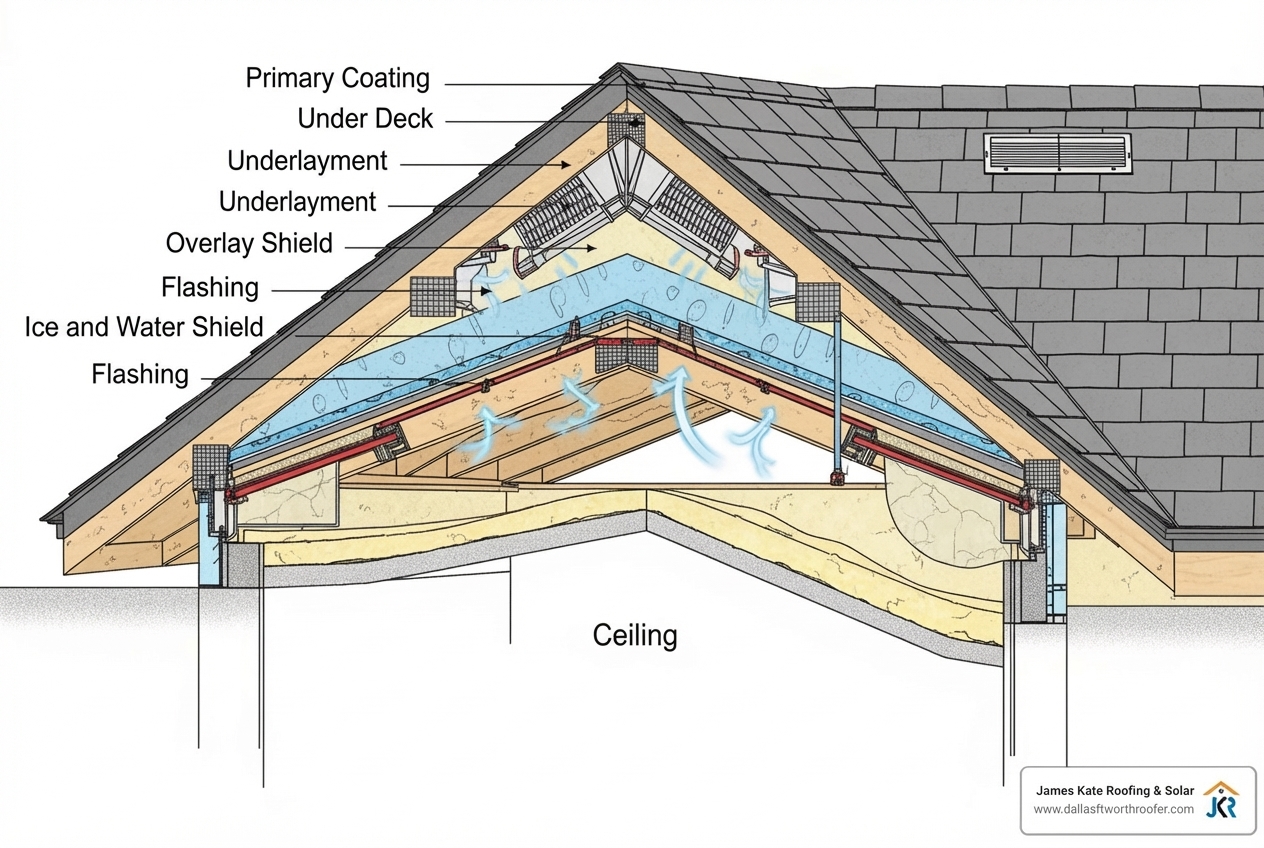
Here’s a closer look at the core components and their integrated functions:
- Roof Deck: This is the structural base, typically plywood or OSB, to which all other roofing components are attached. In an integrated system, its preparation and condition are crucial for the adhesion and stability of subsequent layers.
- Underlayment: Applied directly over the roof deck, the underlayment acts as a secondary barrier against moisture intrusion. In an integrated system, this isn’t just any felt paper; it’s engineered to be compatible with the primary roofing material, providing superior water resistance and often contributing to fire ratings.
- Ice and Water Shield: A self-adhering, waterproof membrane, this component is strategically placed in vulnerable areas like eaves, valleys, and around penetrations. It offers an extra layer of protection against ice dams and severe weather, preventing water from seeping into the roof structure. Its integration ensures it bonds perfectly with the underlayment and primary covering.
- Primary Roof Covering: Whether it’s asphalt shingles, metal panels, or PVC membranes, this is the visible layer that provides the main defense against weather. In an integrated system, these materials are specifically chosen and designed to work seamlessly with the underlayment and flashing for maximum protection.
- Flashing: This critical component is essential for sealing vulnerable areas like valleys, chimneys, skylights, and vents. Flashing prevents water intrusion where the roof plane changes direction or meets a vertical surface. In an integrated system, flashing pieces are custom-designed and manufactured to fit perfectly with the other system components, ensuring a watertight seal and protecting the integrity of the entire roof system.
- Ventilation: Proper ventilation—including intake and exhaust vents—is crucial for regulating temperature and moisture within the attic space. It prevents heat buildup in the scorching Texas summers, which can degrade roofing materials, and reduces condensation in cooler months. An integrated ventilation system is designed to work efficiently with the roof’s structure and insulation, protecting both the roofing materials and the home’s structure.
- Insulation: While often considered part of the building envelope, insulation is integral to the roof’s energy performance. Within an integrated system, insulation (like polyiso boards) works in conjunction with ventilation to manage thermal transfer, contributing significantly to energy efficiency.
All these components, from the roof deck to the ventilation systems, are designed to function as a unified whole, creating a robust and resilient barrier against the elements.
Traditional vs. Integrated Roofing: A Clear Distinction
To truly appreciate the value of an integrated roofing system, it’s helpful to compare it directly with the traditional approach. The differences extend far beyond just the materials themselves, impacting everything from installation to long-term performance and warranty coverage.
| Feature | Traditional Roofing | Integrated Roofing |
|---|---|---|
| Component Sourcing | Piecemeal selection from various manufacturers | Single-source components engineered to work together |
| Compatibility | Potential mismatch, leading to premature failure | Guaranteed compatibility, optimized interaction |
| Warranty | Multiple warranties from different manufacturers | Single, comprehensive warranty covering the entire system |
| Performance | Variable and often unpredictable | Optimized, tested, and reliable performance |
| Longevity | Typically 20-25 years, depending on components | Often exceeds 35-50 years with proper maintenance |
With traditional roofing, we often see components selected independently. A contractor might choose shingles from one brand, underlayment from another, and flashing from a third. While each product might be good on its own, they aren’t necessarily designed to interact perfectly. This can lead to issues where, for example, a chemical interaction between an underlayment and shingle adhesive degrades the system prematurely.
In contrast, integrated roofing systems are conceived as a whole. The manufacturer designs, tests, and often produces all components, ensuring true compatibility. This systematic approach eliminates the guesswork and potential vulnerabilities of a piecemeal roof, resulting in a far more robust and reliable protective envelope for your property.
The Lifespan Advantage of Integrated Systems
One of the most compelling arguments for investing in an integrated roofing system is its significantly extended lifespan. While traditional roofing often lasts between 20 to 25 years, an integrated system, properly installed and maintained, can easily exceed 35 years, with some lasting over 50 years. This remarkable durability is a direct result of system synergy.
When every part of the roof is engineered to work together, the entire system weathers the elements more effectively. Components are designed to expand and contract at similar rates, resist the same environmental stressors, and support each other structurally. This reduces stress points and prevents premature degradation that often plagues traditional roofs where mismatched materials might fail individually, compromising the entire system.
For example, our research shows that some high-quality PVC membrane systems, a common component in integrated flat roof solutions, surpass rigorous standards like ASTM D4434-12, demonstrating exceptional durability. We’ve also seen anecdotes of roofs performing flawlessly for over two decades with minimal maintenance beyond routine cleaning. This longevity translates into fewer replacements over the lifetime of a property, providing substantial long-term value for DFW homeowners and commercial property managers.
The Tangible Benefits of Integrated Roofing Systems
Investing in an integrated roofing system is more than just buying a new roof; it’s a strategic decision that yields significant returns on investment, improves property value, and provides unparalleled peace of mind. These systems aren’t just about protection; they’re about optimized performance across every measurable aspect of your roof.
Best Durability and Weather Resistance
The DFW metroplex is no stranger to severe weather. From intense hailstorms to powerful winds and relentless summer sun, our roofs face constant challenges. This is where the superior durability and weather resistance of an integrated roofing system truly shine.
These systems are engineered with our climate in mind. Components like advanced underlayments and flashing are designed to create a watertight seal, effectively preventing leaks even during the heaviest downpours. High wind ratings are achieved because each part is securely fastened and designed to interlock, reducing the risk of uplift and blow-offs during a Texas storm. Our experience shows that systems designed for storm damage Solar, including those capable of withstanding significant wind and hail, are crucial for commercial properties in our area.
By using components specifically designed for resilience and compatibility, an integrated roofing system stands as a formidable barrier, protecting your property against the unpredictable nature of Texas weather.
Boosting Energy Efficiency and Sustainability
Beyond sheer durability, integrated roofing systems are champions of energy efficiency and sustainability—factors that are increasingly important for property owners in DFW.
Many integrated systems incorporate “cool roofing” technologies, utilizing reflective materials and coatings that bounce sunlight away from the building. This significantly lowers attic temperatures, reducing the strain on your HVAC system during our scorching summers and leading to substantial energy savings. Our research indicates that reflective materials can lead to significant savings on heating and cooling, with buildings feeling much cooler inside.
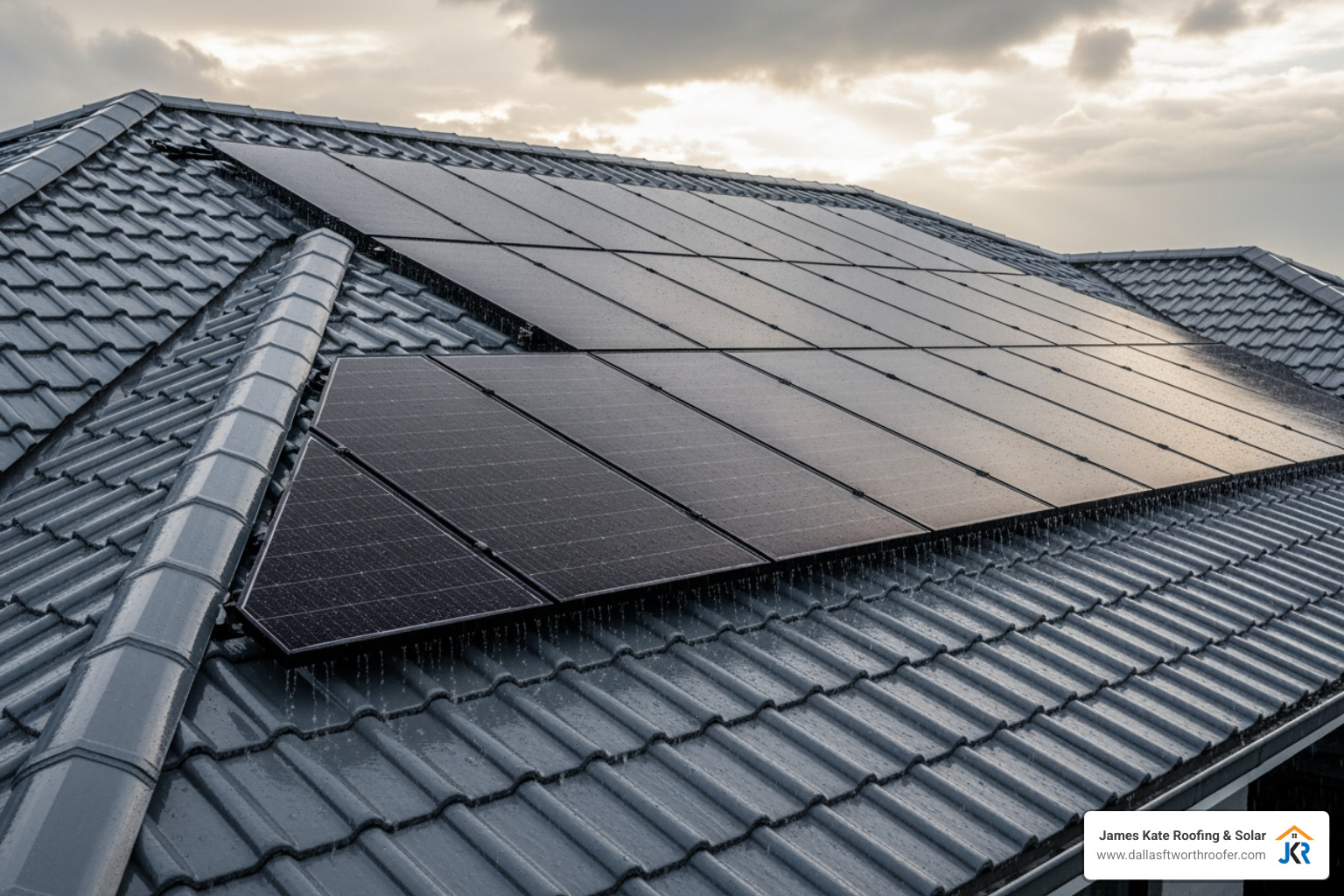
Furthermore, these systems contribute to a reduced carbon footprint. Options such as green roofs, which provide natural insulation and support biodiversity, or blue roofs, designed to manage and store excess rainwater to prevent urban flooding, are increasingly being integrated. For those looking to accept renewable energy, integrated systems are often designed for seamless Solar integration. This means your roof isn’t just a protective barrier but an active contributor to your property’s energy independence and environmental stewardship. We can even help you explore how Solar can be integrated into your new roof. Such sustainable building practices are suitable for residential and commercial buildings aiming for certifications like BREEAM (Building Research Establishment Environmental Assessment Method) or simply wanting to reduce energy consumption and environmental impact.
Long-Term Cost-Effectiveness and ROI
While the initial investment in an integrated roofing system might be slightly higher than a traditional roof, the long-term cost benefits and return on investment (ROI) are undeniable. We view it not as an expense, but as a smart investment in your property’s future.
The superior durability and weather resistance of these systems translate directly into lower maintenance costs and significantly reduced repair needs over their lifespan. Because all components are designed to work together, system failures are less common, meaning fewer unexpected and costly emergency repairs. Our experience with integrated systems shows that some roofs can last over two decades with minimal maintenance, saving property owners from allocating significant budget to roof repair and interior damage.
Moreover, the improved energy efficiency from reflective materials and superior insulation leads to noticeable savings on utility bills month after month. When you combine these savings with a longer replacement cycle (35-50+ years compared to 20-25 for traditional roofs), the initial investment quickly pays for itself. An integrated roofing system offers a compelling blend of quality and sustainability, ensuring that while the upfront cost might be a consideration, the long-term value it delivers makes it a financially sound choice for any DFW property owner.
Installation and Maintenance: Ensuring Peak Performance
The true potential of an integrated roofing system is open uped through meticulous installation and diligent maintenance. Without these crucial steps, even the most advanced system can fall short. Our approach at James Kate Roofing & solar emphasizes precision workmanship, strict adherence to manufacturer specifications, and comprehensive project management, whether it’s for new construction or a reroofing project.
The Critical Role of Certified Installers
The complexity and precision required for installing an integrated roofing system demand a level of expertise far beyond that of a general contractor. This is why the role of certified installers is absolutely critical to the success and longevity of your roof.
Certified installers undergo rigorous manufacturer training, ensuring they understand every nuance of the system’s components, from the specific adhesives to the proper fastening techniques. This specialized knowledge is essential for upholding the manufacturer’s warranty, as improper installation is often a leading cause of warranty invalidation. Our team, with over 100 years of combined experience in the commercial roofing industry, comprises certified professionals dedicated to providing the best workmanship. We even have HAAG Engineering certified professionals on staff, demonstrating our expertise in assessing and restoring roofs, particularly after storm damage.
Choosing a certified installer like James Kate Roofing & solar guarantees quality control and expertise, ensuring your integrated roofing system performs exactly as designed and is fully backed by its comprehensive warranty. Don’t trust your roof to an out-of-state “storm chaser” or a “Chuck in a Truck” when local, certified expertise is available right here in DFW.
Key Considerations for Your Integrated Roofing Systems Project
Starting on an integrated roofing system project requires thoughtful consideration of several key factors to ensure the best outcome for your DFW property.
First, while the initial cost might be a factor, it’s essential to view it as an investment in superior performance and longevity, not just an expense. The long-term savings often outweigh the upfront difference.
Second, contractor selection is paramount. We advocate for choosing a reputable, local company with a proven track record, extensive experience, and proper certifications. With nearly half a century of experience, our team boasts unparalleled expertise in the industry. We’ve been serving Texas since 2010, specializing in commercial roofing repairs and full replacement across the DFW metroplex, including storm damage Solar. Our commitment to honesty, integrity, and biblical principles, coupled with GAF President’s Club recognition and a 25-year workmanship warranty, means you’re partnering with a team you can trust.
Third, the choice of manufacturer significantly impacts the performance and reliability of an integrated roofing system. Leading manufacturers spend decades perfecting their systems, ensuring components are designed for true compatibility and backed by robust warranties.
Finally, consider the suitability for your building type. Integrated roofing systems are incredibly versatile. They are ideal for various commercial applications, including warehouses, data centers, and municipal buildings, which often benefit from the improved durability and energy efficiency. They are equally beneficial for residential homes, offering superior protection, energy savings, and increased property value. Whether it’s new construction or a reroofing project, an integrated roofing system provides a comprehensive and custom solution.
Simplified Maintenance for a Superior Roof
One of the often-overlooked benefits of an integrated roofing system is its simplified maintenance requirements, contributing to its long-term cost-effectiveness. Because these systems are designed for durability and cohesion, they tend to require less frequent and less intensive intervention compared to traditional roofs.
However, “simplified” doesn’t mean “no maintenance.” Regular inspections, ideally twice a year, are crucial to catch any minor issues before they escalate. This includes checking for debris, ensuring proper drainage, and verifying the integrity of flashing and sealants. Cleaning gutters and downspouts regularly is also vital to prevent water buildup that can compromise any roof system.
The beauty of an integrated system is that if an issue does arise, you have a single point of contact for service and warranty claims. This eliminates the headache of trying to determine which manufacturer is responsible for which component failure, streamlining the repair process and ensuring system integrity is maintained. Our proactive approach to roof care, including routine maintenance and leak response, ensures your integrated system performs optimally throughout its extended lifespan.
Frequently Asked Questions about Integrated Roofing Systems
What types of materials are used in integrated roofing systems?
The materials used in integrated roofing systems are chosen specifically for their compatibility and performance within the larger system. It’s not just about selecting individual materials, but about how they interact and contribute to the overall protective envelope.
Common primary roofing materials in integrated systems include:
- PVC Membranes: These are top-quality, single-ply roofing solutions, often used for flat or low-slope commercial roofs. They are known for their durability, flexibility, and excellent waterproofing characteristics. IB Roof Systems, for instance, offers premium PVC membranes engineered with features like anti-wicking scrims and balanced sheets for superior weldability and longevity.
- TPO Membranes: Another popular single-ply option for commercial roofs, TPO (Thermoplastic Polyolefin) offers similar benefits to PVC, including energy efficiency and resistance to UV radiation and chemical exposure.
- Metal Panels: Increasingly popular for both commercial and residential applications, integrated metal roofing systems provide exceptional durability, fire resistance, and energy efficiency. They are often part of a system that includes specialized underlayments and fastening methods.
- Asphalt Shingles: For steep-slope residential and some commercial properties, advanced asphalt shingle systems are available. These integrated systems include not just the shingles, but also compatible underlayments, starter strips, hip and ridge caps, and ventilation components—all designed to work together.
- Fluid-Applied Solutions: These can include cold-applied liquid systems or hot-melt systems, which create seamless, waterproof membranes. These are particularly useful for complex roof shapes, podiums, or refurbishment projects where traditional sheet materials might be difficult to apply.
- Reinforced Bituminous Membranes: Often used for flat and low-slope roofs, these systems involve multiple layers of modified bitumen sheets, integrated with primers and adhesives for a robust, weather-resistant solution.
The key across all these material types is that for an integrated roofing system, all the necessary components—from insulation and coverboards to adhesives, sealants, fasteners, and flashing—are typically sourced and engineered by the same manufacturer to ensure perfect system compatibility.
What is a single-source warranty and why is it important?
A single-source warranty is a hallmark of an integrated roofing system and offers a level of protection and peace of mind that traditional roofing simply cannot match. It means that one manufacturer stands behind the entire roofing system—all its components, and often the labor for installation—under a single, comprehensive guarantee.
Why is this so important?
- Comprehensive Coverage: Instead of having separate warranties for shingles, underlayment, and flashing from different companies, a single-source warranty covers everything as a unified system. This eliminates the “finger-pointing” that can occur if a problem arises and different manufacturers try to blame each other’s products.
- Manufacturer Accountability: The manufacturer of the integrated system takes full responsibility for the performance of all its components. They have designed them to work together, and they stand by that design. Our research highlights manufacturers offering “Total System Warranty” and “Single Point Guarantee” which cover all components of installation under one agreement.
- Simplified Claims Process: If an issue does arise, you only need to contact one entity. This streamlines the claims process, making it faster and less stressful for the property owner.
- Protection for All Components: A single-source warranty assures you that every layer and every piece of your roof is covered, providing protection for both materials and workmanship (when installed by a certified contractor). This means you’re covered from the roof deck up.
- Peace of Mind: Knowing that your entire roof is backed by a reputable manufacturer offers immense peace of mind, allowing you to rest easy knowing your investment is protected for decades.
Are integrated roofing systems suitable for both commercial and residential buildings?
Absolutely! One of the greatest strengths of integrated roofing systems is their versatility, making them highly suitable for both commercial and residential buildings across the DFW metroplex.
For commercial applications, integrated systems are often the preferred choice due to their superior durability, energy efficiency, and long-term cost benefits. We’ve seen these systems successfully installed on millions of square feet of commercial roofing across Texas, including municipal projects, data centers, and various commercial properties. They are ideal for:
- Warehouses and Industrial Facilities: Offering robust protection for large flat roofs, often with options for reflective surfaces to reduce cooling costs.
- Office Buildings and Retail Centers: Providing aesthetic appeal, energy efficiency, and long-lasting performance.
- Educational Institutions and Government Facilities: Meeting stringent performance requirements and offering sustainable solutions.
For residential homes, integrated roofing systems offer homeowners a significant upgrade in terms of protection, energy savings, and property value. They are an excellent choice for:
- New Construction: Allowing for seamless integration into the home’s design from the ground up, maximizing efficiency and performance.
- Reroofing Projects: Providing an opportunity to upgrade an existing home with a superior, long-lasting, and energy-efficient system.
- Solar-Ready Homes: Many integrated systems are designed to accommodate Solar panel installations, making the transition to renewable energy smoother and more efficient.
Whether you manage a sprawling commercial complex in Dallas or own a family home in Fort Worth, an integrated roofing system can be custom to meet your specific needs, architectural style, and budget, providing a comprehensive and future-proof roofing solution.
Conclusion
The future of roofing is undeniably here, and it’s integrated. As we’ve explored, integrated roofing systems offer a holistic approach to property protection, moving beyond the traditional piecemeal method to deliver unparalleled performance, longevity, and peace of mind.
From their superior durability and weather resistance—a crucial advantage in the demanding DFW climate—to their significant contributions to energy efficiency and sustainability, these systems represent a smart, long-term investment. The extended lifespan, reduced maintenance, and comprehensive single-source warranties all contribute to a compelling return on investment that protects both your property and your wallet.
At James Kate Roofing & Solar, we believe in the power of these advanced solutions. As a family-owned DFW company, we are dedicated to bringing top-tier Solar services, grounded in honesty, integrity, and Biblical principles, to our community. Our GAF President’s Club recognition and a 25-year workmanship warranty underscore our commitment to excellence in every project. We have the expertise to ensure your integrated roofing system is specified, installed, and maintained to the highest standards.
Protect your property, improve its value, and invest in a future-proof solution with us. We invite you to explore how Solar can be integrated into your new roof, further amplifying your property’s efficiency and sustainability.