
What Does It Really Cost to Replace Underlayment on a Tile Roof?
The cost to replace underlayment on a tile roof typically runs $6,000 to $10,000 for a 2,000 sq. ft. home — significantly more than other roof types because the tiles must be carefully removed, stored, and reinstalled.
Here’s a quick breakdown to help you budget:
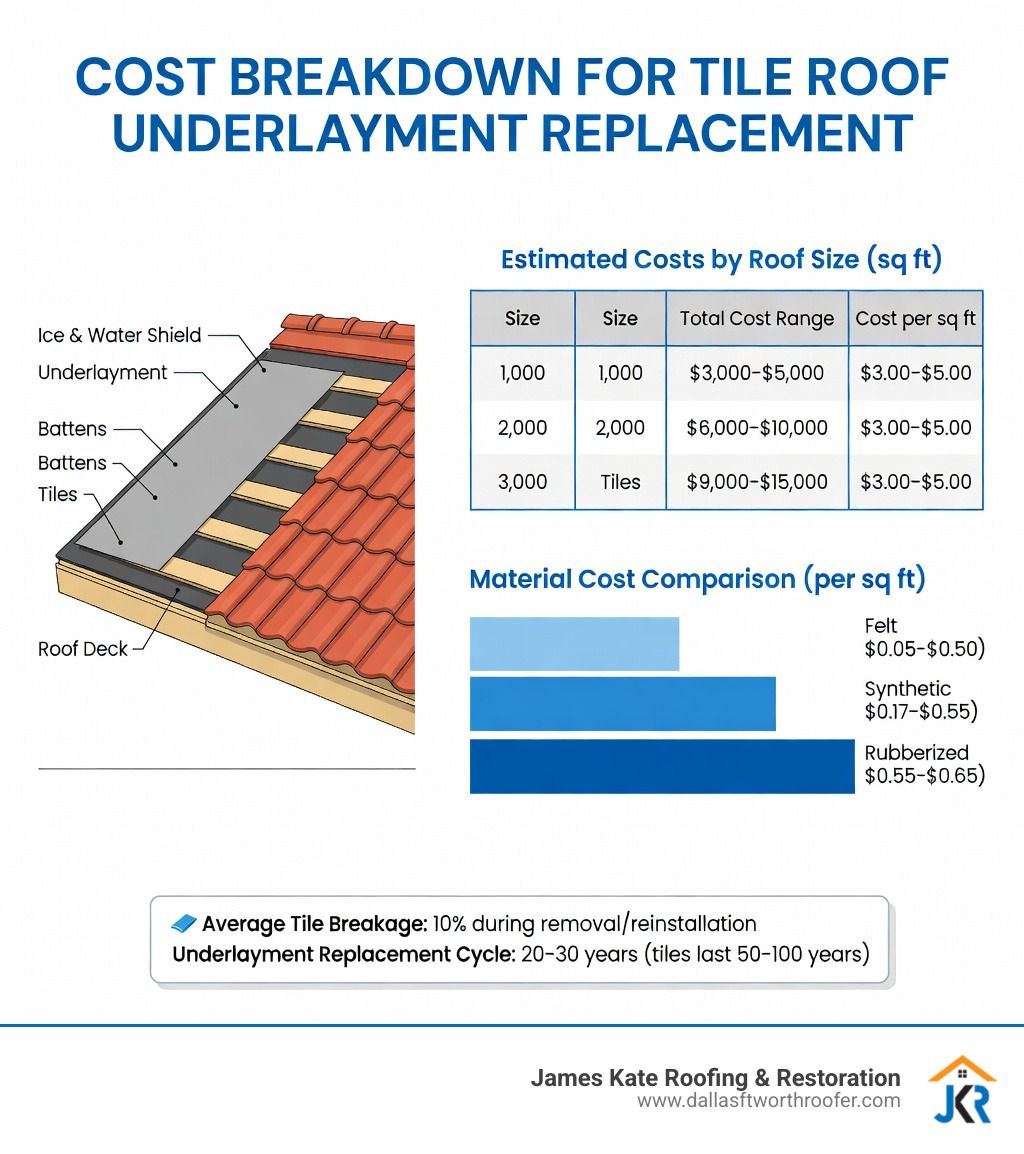
| Roof Size | Estimated Total Cost | Cost Per Sq. Ft. |
|---|---|---|
| 1,000 sq. ft. | $3,000 – $5,000 | $3.00 – $5.00 |
| 2,000 sq. ft. | $6,000 – $10,000 | $3.00 – $5.00 |
| 3,000 sq. ft. | $9,000 – $15,000 | $3.00 – $5.00 |
Key cost factors at a glance:
- Material type — Felt ($0.05–$0.50/sq. ft.), synthetic ($0.17–$0.55/sq. ft.), or rubberized asphalt ($0.55–$0.65/sq. ft.)
- Labor — $2.75 to $3.50 per sq. ft. for tile removal and reinstallation
- Tile breakage — Expect roughly 10% of tiles to need replacing during the process
- Roof complexity — Steep pitches, dormers, and skylights add cost
- Add-ons — Roof inspection ($100–$600), ice and water shield, deck repairs
Most homeowners don’t realize their tile roof’s underlayment quietly deteriorates long before the tiles themselves show any wear. Tiles can last 50 to 100 years — but the underlayment beneath them typically needs replacement every 20 to 30 years. That gap is exactly where leaks, mold, and costly structural damage begin.
I’m Dustin Eatman, owner of James Kate Roofing & solar in the Dallas–Fort Worth area, and I’ve helped hundreds of homeowners navigate the cost to replace underlayment on a tile roof — from accurate estimates to full lift-and-reset projects executed with the right materials for our Texas climate. In the sections below, I’ll walk you through everything you need to know to budget confidently and avoid common pitfalls.
Important cost to replace underlayment on tile roof terms:
What is Tile Roof Underlayment and Why Does it Fail?
Think of your tile roof like a high-end raincoat. The tiles are the outer shell that sheds the bulk of the water, but the underlayment is the waterproof layer underneath that keeps your skin—or in this case, your wooden roof deck—completely dry. In the roofing world, we often call this “deck protection.”
Tile roofs are unique because they are designed to allow air to circulate beneath the tiles. This is one of the practical reasons for tile being so popular in warmer climates like Mansfield and Arlington. However, this design also means that moisture, dust, and even the occasional wind-driven rain can get past the tiles. When that happens, the underlayment is the only thing preventing mold growth and wood rot.
So, why does it fail? While tile roofs can last anywhere between 50-100 years, the underlayment is often made of organic felt or petroleum-based materials that degrade over time. Heat is the biggest enemy. In the DFW area, the intense sun cooks the tiles, which then transfer that heat to the underlayment. Over 20 or 30 years, the material becomes brittle, cracks, and loses its ability to seal around roofing nails.
Whether you have S-shaped Spanish tiles that look like the terracotta pots in your container gardening setup or flat interlocking tiles, the structural integrity of your home depends on that hidden foundation.
Breaking Down the cost to replace underlayment on tile roof Projects
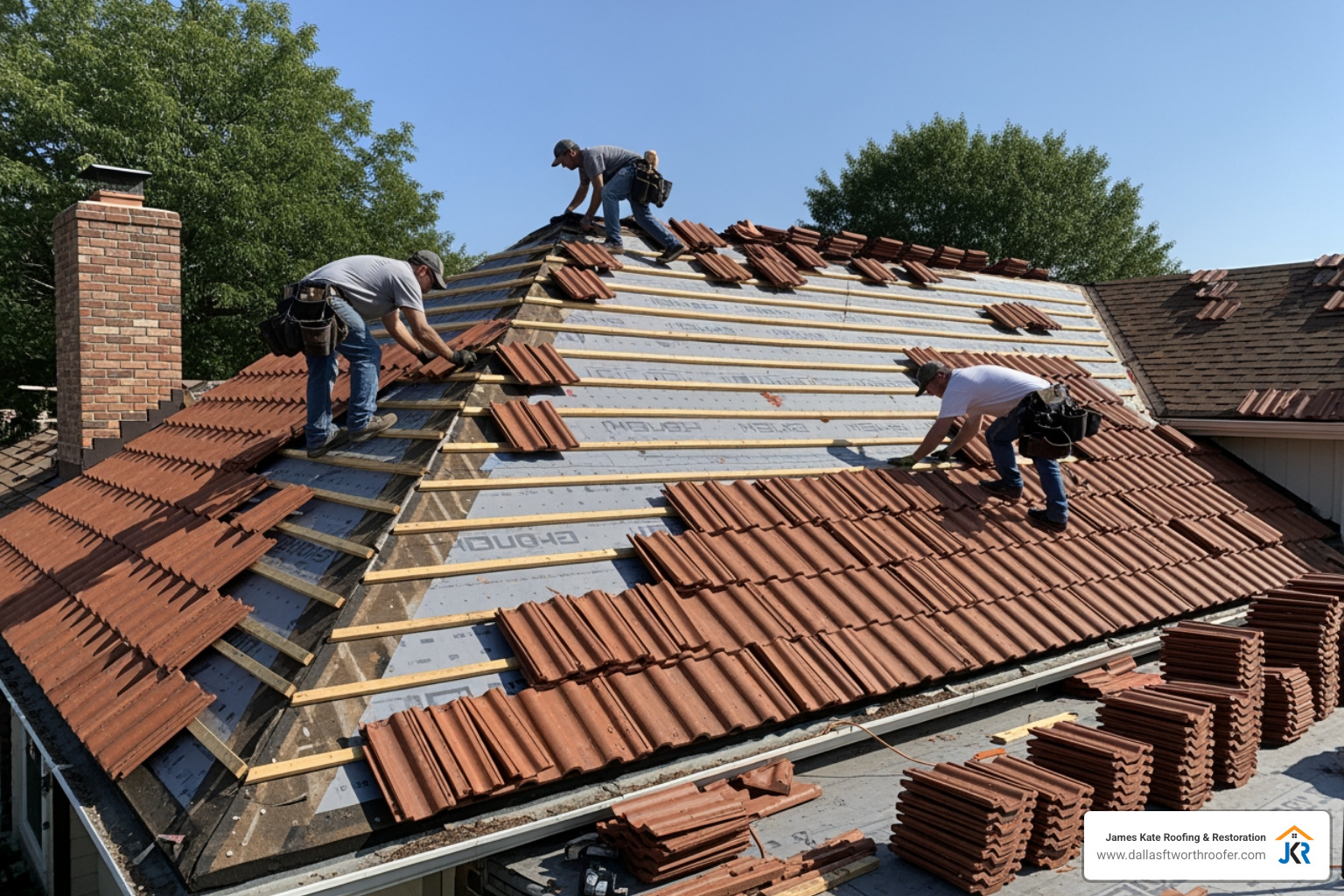
When we provide an estimate for the cost to replace underlayment on a tile roof, we aren’t just looking at a roll of paper. This project is a “lift and reset,” which is a labor-intensive process of surgically removing the existing tiles, cleaning the deck, installing new barriers, and putting the original tiles back.
The total cost to replace underlayment on a tile roof generally falls between $3 and $5 per square foot. This includes the removal of the old material, the new underlayment, and the reinstallation of the tiles. If you were looking at a full tile roof replacement cost, you’d be looking at $8 to $25 per square foot. By focusing only on the underlayment, you are saving a significant amount of money while essentially resetting the clock on your roof’s lifespan.
Material Expenses: Felt vs. Synthetic vs. Rubberized
The type of underlayment you choose significantly impacts both the upfront price and the long-term durability.
- Felt Underlayment ($0.05 – $0.50/sq. ft.): This is the traditional option. We usually recommend at least 30lb or 40lb felt for tile roofs to ensure it can handle the weight and heat. While it’s the most budget-friendly, it has a lower tear strength (about 2 lbs per square inch) compared to modern alternatives.
- Synthetic Underlayment ($0.17 – $0.55/sq. ft.): This is the industry favorite. Brands like GAF Deck-Armor or DuPont Tyvek offer incredible tear strength (34–77 lbs per square inch) and are much more resistant to UV degradation. For a 2,000 sq. ft. roof, you might only need 2 or 3 rolls of synthetic compared to 14 rolls of felt, which can actually save on labor time.
- Rubberized Asphalt ($0.55 – $0.65/sq. ft.): This is the “gold standard” for waterproofing. It is self-healing, meaning it seals itself around every nail hole. In North Texas, we always use high-temperature formulated rubberized asphalt to ensure it doesn’t soften or “bleed” under our summer sun.
When we arrive at your home, we typically use your driveway material for staging the pallets of material and the specialized equipment needed to safely transport tiles from the roof to the ground and back up again.
Labor and the cost to replace underlayment on tile roof
Labor is the largest component of the cost to replace underlayment on a tile roof, accounting for $2.75 to $3.50 per square foot. It is a meticulous process. Our crews must:
- Carefully lift each tile without breaking the surrounding ones.
- Remove old battens (the wood strips the tiles hook onto).
- Clean the roof deck and inspect for rot.
- Install the new underlayment and flashings.
- Install new pressure-treated battens.
- Reinstall the tiles, ensuring the collection system (gutters and valleys) is clear and functional.
We also factor in the “10% rule.” Even with the most careful hands, roughly 10% of tiles will break during a reset due to age and previous weather damage. We always source matching tiles to ensure your roof looks seamless when we’re finished.
Key Factors Influencing Your Total Investment
No two roofs in Midlothian or Granbury are exactly the same. Several variables can push your cost to replace underlayment on a tile roof toward the higher or lower end of the spectrum.
Complexity and Accessibility
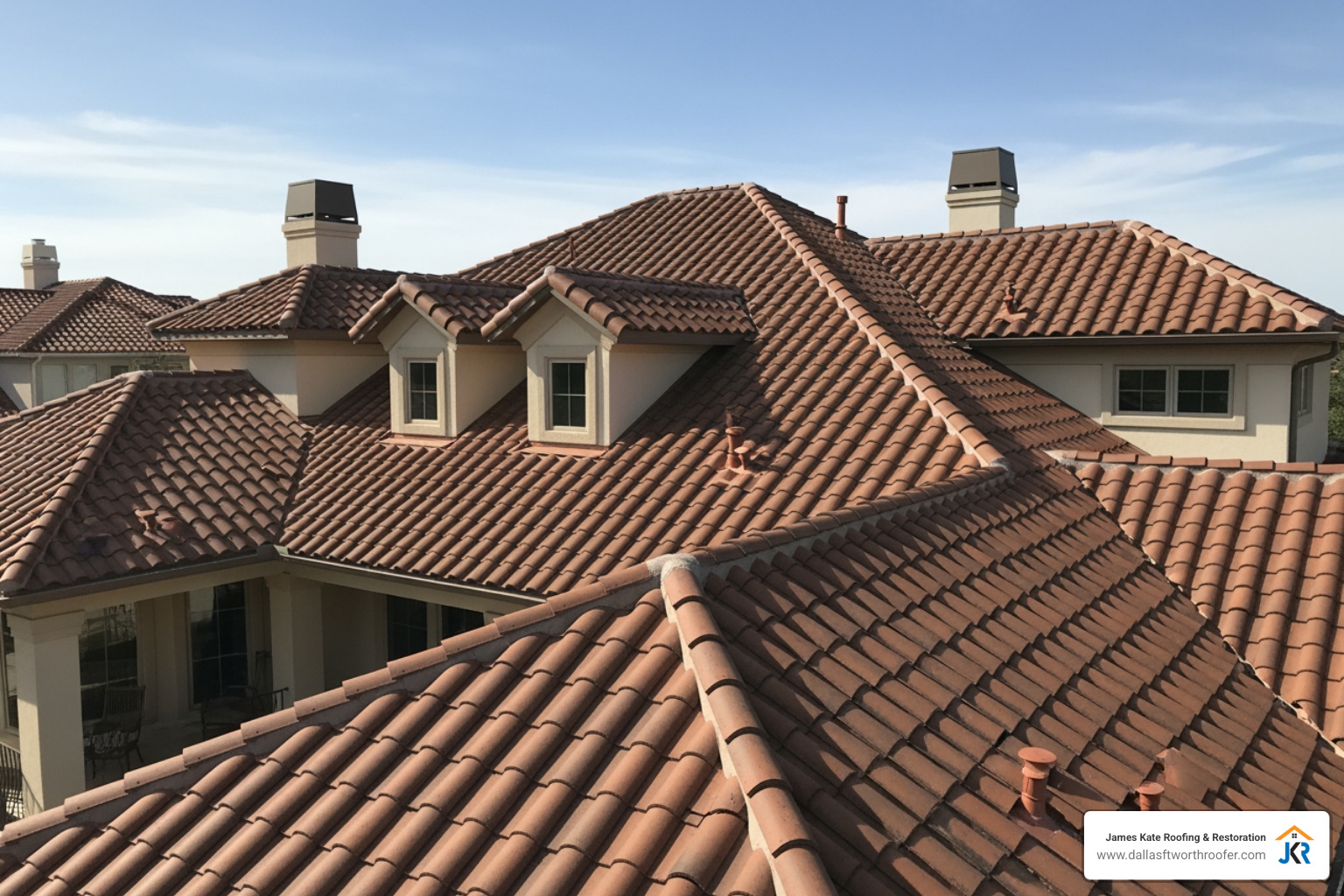
A simple, low-pitch gable roof is much faster to work on than a steep, multi-story Mediterranean villa with dormers, valleys, and chimneys. Steep pitches require more safety equipment and slow down the “lift and reset” process. If your home has limited access—such as being very close to a neighbor’s house or having delicate landscaping—we have to take extra precautions which can add to the labor hours.
Rooftop Equipment
Do you have solar panels? According to Environment America, many sun-belt cities are seeing a massive increase in rooftop solar. If you have panels, they must be professionally removed and reinstalled to replace the underlayment beneath them. This can add $1,500 to $3,500 to the project. Similarly, skylights and chimneys require new flashing and sealing during the process to ensure the new underlayment is truly watertight.
Regional Climate Impacts on the cost to replace underlayment on tile roof
Our local DFW weather is “relentless,” as the National Weather Service might say. We deal with extreme temperature fluctuations that cause tiles and underlayment to expand and contract. Because we are in a planting zone that can experience high humidity followed by bone-dry heat, we often recommend an ice and water shield on all eaves and valleys. This extra layer of protection is essential for preventing leaks during the heavy spring rains we see in North Texas.
Frequently Asked Questions about Tile Underlayment
How often should the underlayment on a tile roof be replaced?
We generally recommend a replacement cycle of every 20 to 30 years. While your tile roofs can last anywhere between 50-100 years, the underlayment is the “weak link.” If your roof is over 20 years old and you’ve noticed recurring minor leaks or brittle material around the edges, it’s time for an inspection. Catching it early prevents the need for a full deck replacement.
Can I save money by reusing my old roof tiles?
Absolutely. In fact, that is the primary goal of a “lift and reset.” Reusing your existing tiles is a form of simple maintenance that saves you thousands of dollars compared to buying new clay or concrete tiles. There is a common myth that you must replace the whole roof if the underlayment fails, but as long as your tiles are in good structural shape, we can put them right back where they belong.
What are the signs that my underlayment is failing?
Keep an eye out for these red flags:
- Interior water stains: If you see brown spots on your ceiling but your tiles look fine from the ground, the underlayment has likely failed.
- Brittle felt: If you find small pieces of black, paper-like material in your gutters, your underlayment is disintegrating.
- Sagging areas: This suggests water has already reached the roof deck and started to soften the wood.
- Age: If your tile roof was installed in the 1990s and has never been serviced, the underlayment is almost certainly at the end of its life.
Conclusion
The cost to replace underlayment on a tile roof is an investment in the next 30 years of your home’s safety. While it requires a higher upfront cost than a shingle repair, the longevity and beauty of a tile roof are unmatched when the foundation is solid.
At James Kate Roofing & solar, we bring DFW expertise to every project, whether you’re in Mansfield, Grand Prairie, or Arlington. We operate on Biblical principles of honesty and integrity, which is why we’ve earned the GAF President’s Club recognition. We don’t just “patch” problems; we provide solutions backed by up to a 25-year workmanship warranty.
If you suspect your tile roof’s hidden foundation is failing, don’t wait for the next Texas storm to find out for sure. More info about residential roofing services is just a click away, and our team is ready to provide a transparent, detailed estimate for your home.