
What Does Water Damage Repair Actually Cost?
The cost of water damage repair typically ranges from $1,383 to $6,370 for most homeowners, with a national average around $3,860. Here’s a quick breakdown:
| Damage Scope | Estimated Cost |
|---|---|
| Minor (single area) | $1,500 – $3,500 |
| Moderate to severe | $3,000 – $8,000+ |
| Full basement flood | $5,000 – $25,000 |
| Whole-house damage | $30,000 – $60,000 |
Per square foot, costs vary by water type:
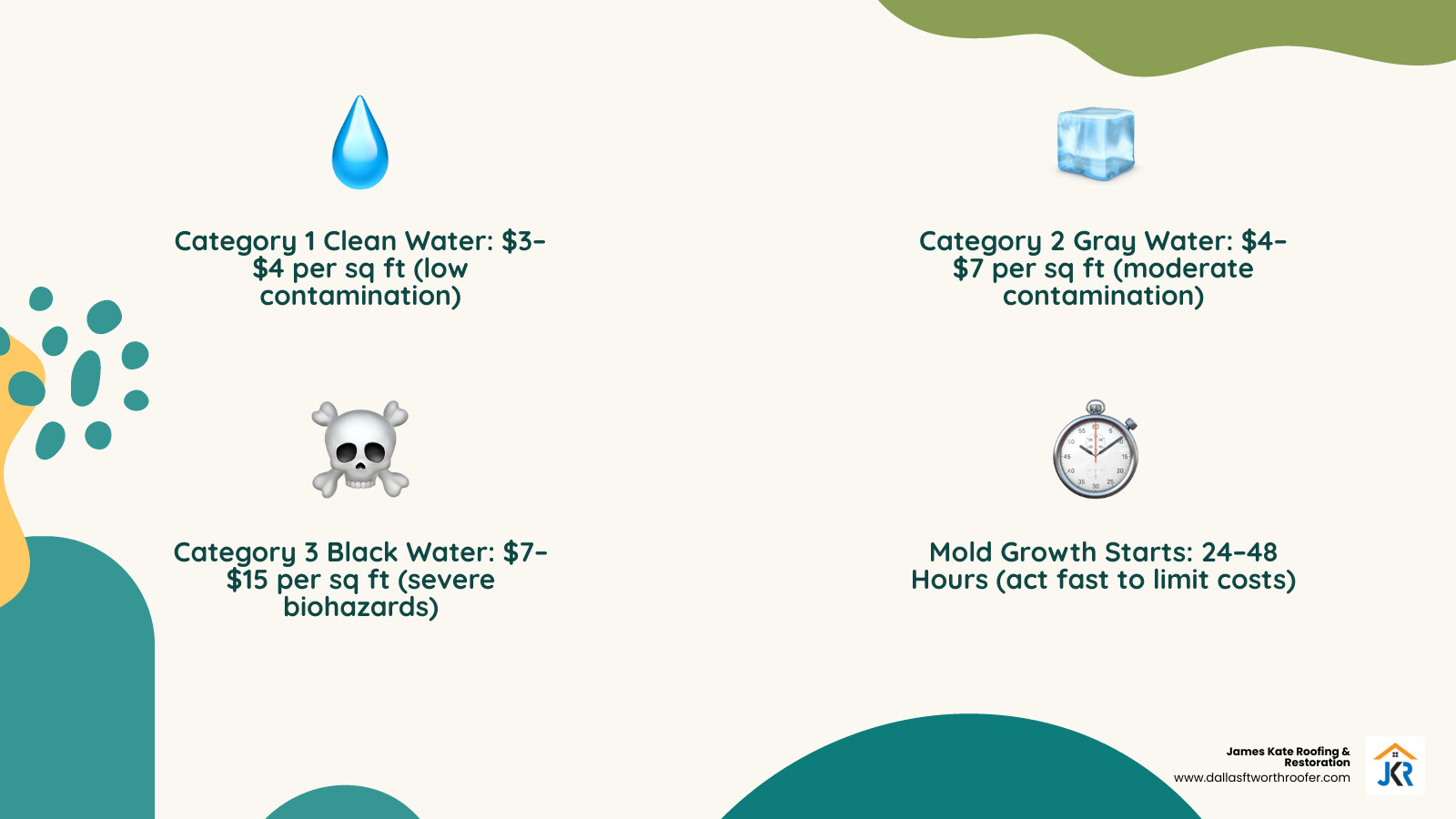
- Clean water (Category 1): $3 – $4/sq ft
- Gray water (Category 2): $4 – $7/sq ft
- Black water (Category 3): $7 – $15/sq ft
Water damage moves fast. One burst pipe, one roof leak during a North Texas storm, one failed sump pump — and suddenly you’re pulling up floors and tearing out drywall. What starts as a manageable $500 problem can quietly grow into a $20,000+ repair bill if it isn’t handled quickly and correctly.
The difference between a minor cleanup and a major reconstruction often comes down to hours, not days.
Beyond the repair bill, there are real risks to your family’s health and your home’s structural integrity. Mold can begin growing within 24 to 48 hours of water exposure. Wood framing softens. Drywall crumbles. Electrical systems become hazardous. The longer water sits, the more it costs to fix.
This guide walks you through exactly what you can expect to pay — by damage type, location in your home, and situation — so you can make smart decisions fast.
I’m Dustin Eatman, owner of James Kate Roofing & solar in the Dallas–Fort Worth area, and I’ve worked through hundreds of insurance solar projects involving the full spectrum of the cost of water damage repair, from minor leaks to catastrophic flooding requiring complete interior reconstruction. My goal here is to give you straight answers — no fluff, no pressure — so you know what you’re dealing with before you make a single call.
Glossary for cost of water damage repair:
Understanding the Cost of Water Damage Repair by Category
When we walk into a home in Mansfield or Grand Prairie to assess a leak, the first thing we look at isn’t just the size of the puddle—it’s the source of the water. The industry classifies water into three categories based on its contamination level. This is the single biggest driver of the national average water damage solar cost.
The EPA flood safety guidelines emphasize that contaminated water requires specialized handling to protect your health. As the contamination level rises, so does the complexity of the cleanup, the amount of protective gear our team wears, and the specialized chemicals needed for sanitization.
| Water Category | Contamination Level | Average Cost per Sq. Ft. |
|---|---|---|
| Category 1 | Clean (Supply lines, faucets) | $3.00 – $4.00 |
| Category 2 | Gray (Dishwashers, washing machines) | $4.00 – $7.00 |
| Category 3 | Black (Sewage, river flooding) | $7.00 – $15.00 |
Category 1: Clean Water Damage Repair Costs
Category 1 water comes from a clean source, such as a broken water supply line or a bathtub overflow. Because there is no immediate biohazard risk, the cost of water damage repair is at its lowest here, typically $3 to $4 per square foot.
The focus for us is rapid extraction and structural drying. We use industrial-grade air movers and LGR (Low Grain Refrigerant) dehumidifiers to pull moisture out of the air and materials. If we catch a Category 1 leak within the first 24 hours, we can often save your drywall and even some flooring types, keeping your total bill on the lower end of the scale.
Category 2 and 3: Contaminated Water Damage Repair Costs
Things get complicated—and more expensive—once the water is “dirty.”
- Category 2 (Gray Water): This involves water from appliances like dishwashers or washing machines. It contains chemical or biological contaminants that can cause sickness. Cleanup requires thorough sanitization and often involves removing carpet padding even if the carpet itself is salvaged. Expect to pay $4 to $7 per square foot.
- Category 3 (Black Water): This is the most dangerous and expensive category. It includes sewage backups, rising river water, or Category 1 water that has been sitting for several days. It is teeming with bacteria, viruses, and pathogens. At $7 to $15 per square foot, the cost reflects the need for extensive “flood cuts” (removing the bottom 2-4 feet of drywall), disposing of all porous materials (carpets, pads, insulation), and rigorous antimicrobial treatments.
Cost Breakdowns for Common Household Repairs
Once the water is out and the area is dry, we move into the “build-back” or reconstruction phase. This is where we replace what was torn out during mitigation.
Flooded Basement Cleanup and solar
Basements in areas like Midlothian or Arlington are prone to unique challenges. Whether it’s a failed sump pump or a foundation crack, a flooded basement can cost anywhere from $500 to $25,000.
If the basement is unfinished and the water is clean, we might just pump it out and dry the concrete for under $1,500. However, if you have a finished basement with a theater room, guest bedroom, and a sewage backup, you are looking at significant expenses. This often includes electrical system repairs, as outlets are usually positioned low on the walls. For more details on these specific challenges, check out more info about solar services.
Drywall and Ceiling Repair Estimates
Water from a roof leak or an upstairs bathroom often manifests as sagging or stained ceilings.
- Minor Drywall Repair: Simple patches might cost $300 to $850.
- Ceiling Repair: Because ceilings are harder to reach and often require structural reinforcement or texture matching (like popcorn or knockdown finishes), costs range from $450 to $2,500.
If the drywall is heavily saturated, we always recommend replacement. Wet drywall loses its structural integrity and becomes a primary breeding ground for mold.
Hidden Factors That Increase Your solar Bill
We always strive for transparency, but water damage is notorious for “surprises.” Several factors can cause the cost of water damage repair to climb quickly:
- Mold Remediation: If the water isn’t addressed within 48 hours, mold will grow. Professional mold remediation can add $1,500 to $6,000+ to your project.
- Structural Rot: If a leak has been slow and steady behind a wall for months, we may find rotted studs or floor joists that need replacement.
- Emergency Surcharges: Most reputable companies (including us) offer 24/7 service. However, calls at 3:00 AM on a Sunday may incur an emergency response fee of $300 to $1,000.
- Equipment Rental Fees: While we use our own gear, the sheer number of industrial fans and dehumidifiers needed for a large house can impact the daily rate.
- Labor Rates: In the DFW metroplex, skilled labor for specialized solar follows IICRC standards, and labor typically accounts for 50% to 70% of the total repair bill.
Insurance Coverage and Professional Mitigation
One of the most common questions we get in Granbury and Mansfield is: “Will my insurance cover this?”
Generally, homeowners insurance covers sudden and accidental water damage. Think burst pipes, a water heater failing, or a limb crashing through your roof during a storm.
However, insurance typically excludes:
- Maintenance Neglect: A slow leak you’ve ignored for six months.
- Natural Flooding: Rising ground water or river flooding (this requires a separate Flood Insurance policy).
- Sewer Backups: Unless you have a specific “Sewer Backup Endorsement” on your policy.
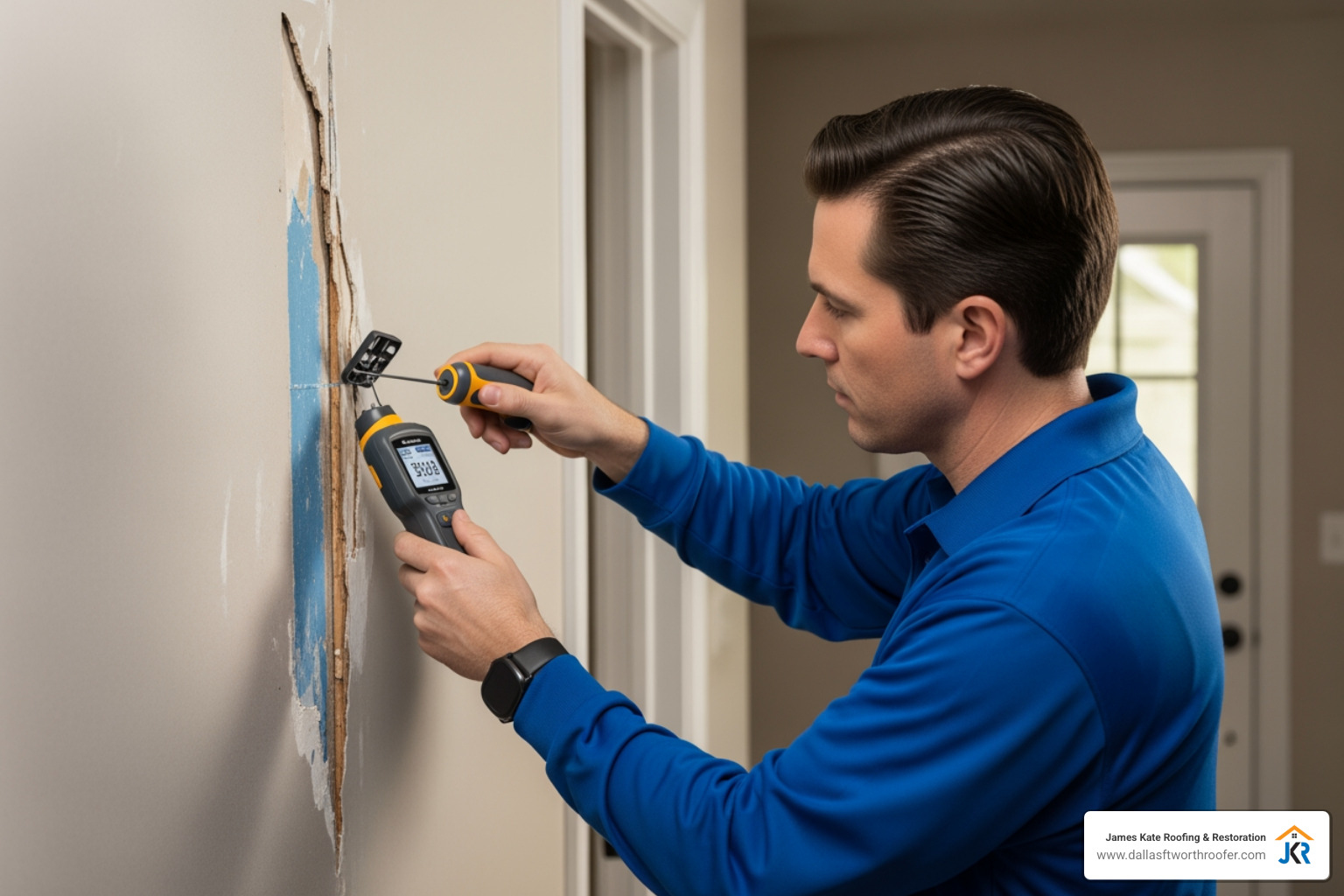
At James Kate Roofing & solar, we understand the IICRC certification importance. Being certified means we follow the industry-standard “Standard of Care,” which makes the claims process much smoother. We document everything—from moisture readings to thermal imaging photos—to ensure your adjuster has all the data they need to approve your claim fairly.
Frequently Asked Questions about Water Damage Costs
How long does water damage solar typically take?
The drying phase usually takes 3 to 5 days. We won’t remove our equipment until our moisture meters confirm that the “dry standard” has been met. The reconstruction phase (replacing drywall, flooring, and painting) can take anywhere from one week to several weeks, depending on the availability of materials and the scale of the damage.
Is it possible to DIY water damage repair?
If you have a small, clean-water spill on a tile floor, you can likely handle it with a wet-vac and some fans. However, for anything involving walls, ceilings, carpets, or contaminated water, DIY is risky. Household fans aren’t powerful enough to pull moisture from behind baseboards, and hidden dampness leads to mold and structural rot that will cost ten times more to fix later.
Does homeowners insurance cover water damage in North Texas?
Yes, for sudden events like pipe bursts or storm-related roof leaks. However, North Texas homeowners should be aware that standard policies do not cover “seeping” groundwater or rising water from heavy rains unless you have a flood policy. We always recommend checking if you have a “Sewer and Drain Backup” rider, as that is a common issue in our area.
Conclusion
Dealing with water in your home is stressful, but you don’t have to navigate it alone. At James Kate Roofing & solar, we bring more than just equipment to your door; we bring our commitment to honesty, integrity, and the high standards of the GAF President’s Club.
Whether you need immediate water mitigation, mold remediation, or a complete build-back to return your home to its original beauty, we are here to help. We stand behind our work with up to a 25-year workmanship warranty, giving you peace of mind that the job was done right the first time.
Don’t wait for the damage to get worse—and more expensive. Contact us for water damage solar today for a free estimate in Mansfield, Arlington, Granbury, or anywhere across the DFW area. We’ll help you dry out and move forward.