More Than Just a Job, A Craft
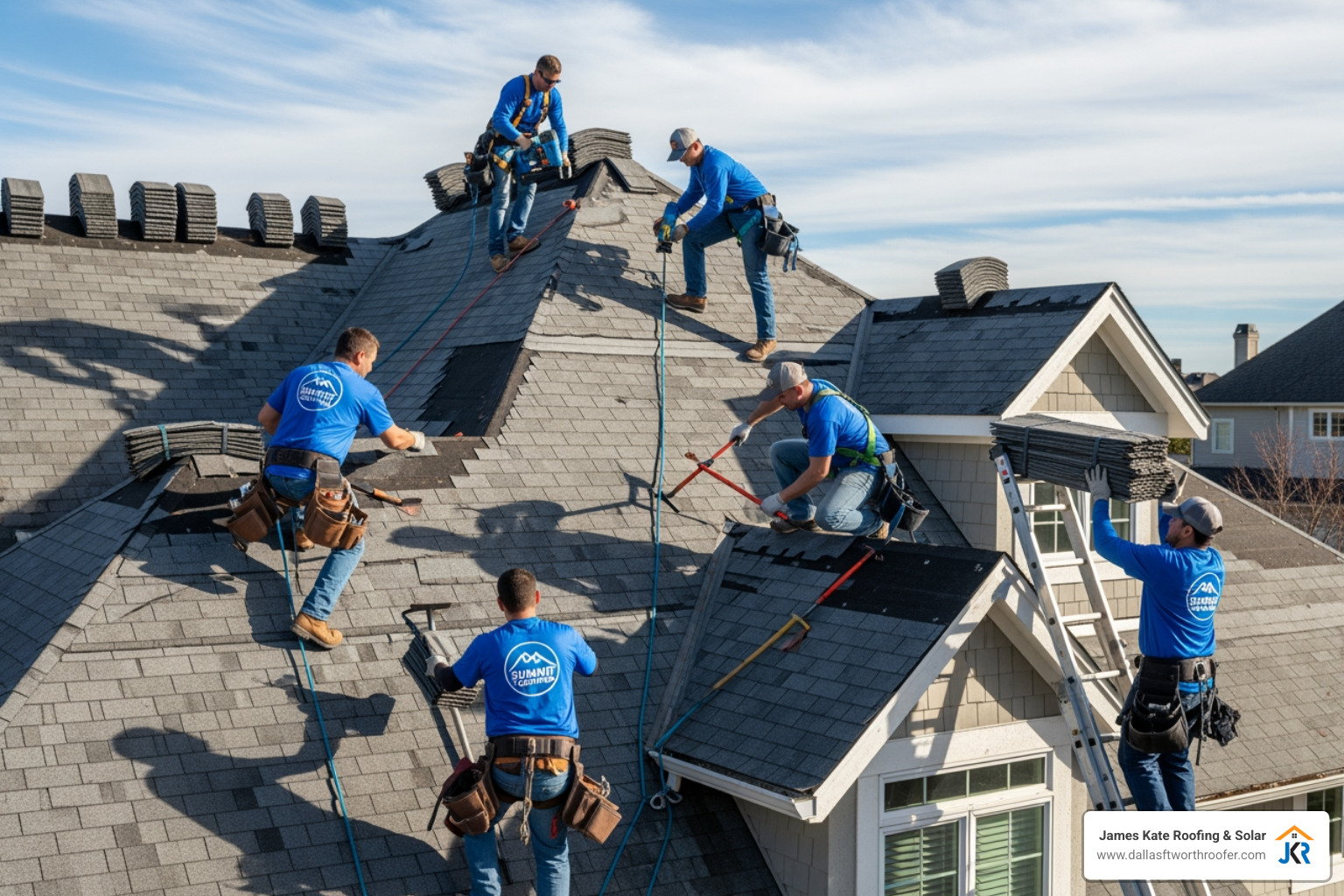
A roofer is a skilled tradesperson specializing in the construction, repair, and installation of roofing systems. They work with materials like asphalt shingles and metal panels to ensure structures are waterproof and protected from the elements.
What a Roofer Does:
- Inspects roof systems to identify damage, wear, or potential problems
- Repairs leaks, damaged shingles, flashing, and other roof components
- Replaces entire roof systems when repair is no longer viable
- Installs new roofs using materials like asphalt shingles, metal, tile, or flat roof membranes
- Waterproofs roof surfaces and seals vulnerable points like valleys and penetrations
- Assesses material needs and estimates project scope
- Ensures proper ventilation, insulation, and adherence to building codes
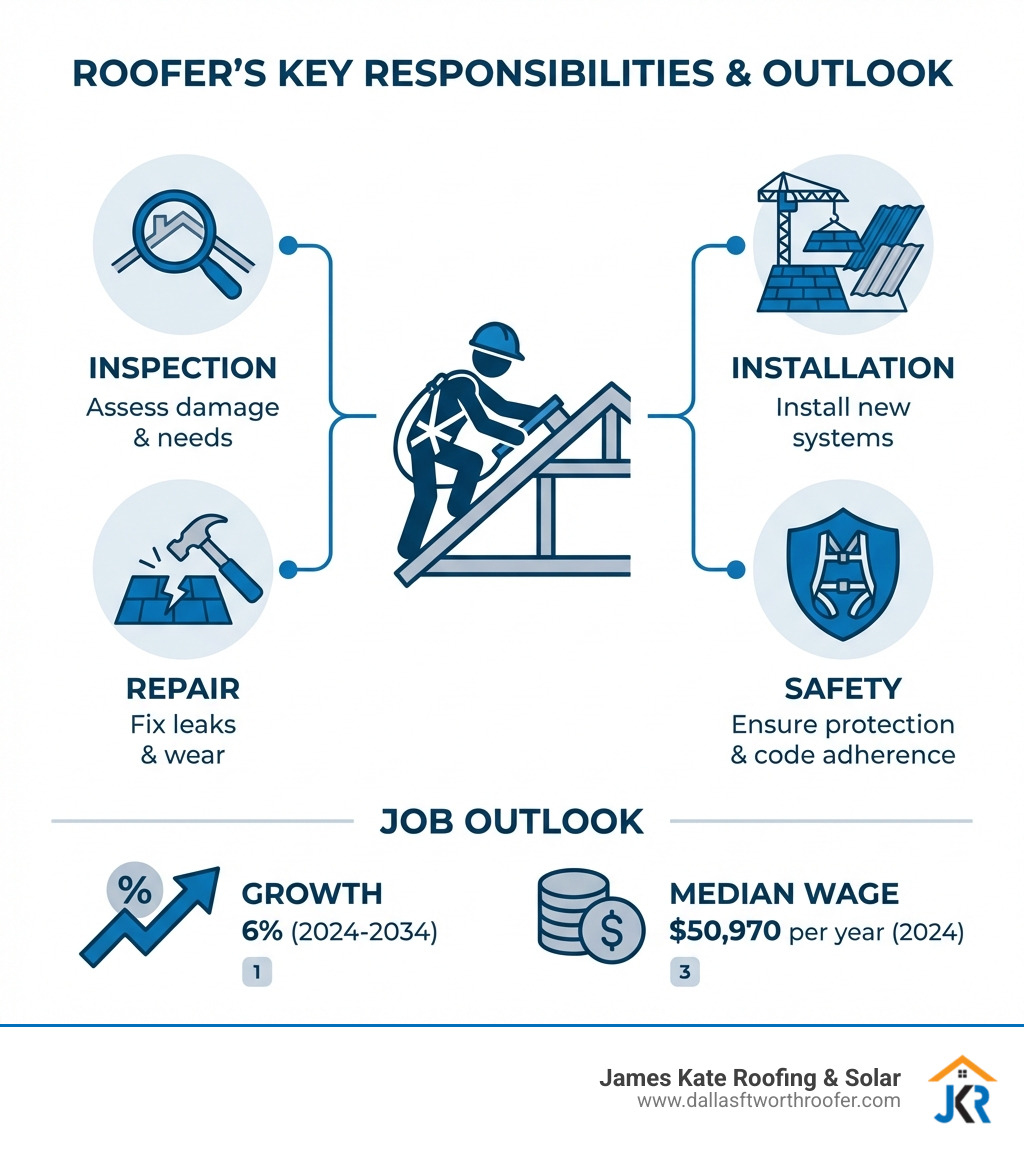
Roofing is a demanding trade requiring physical strength, patience, and technical knowledge, often performed at dangerous heights. It’s a profession with steady growth, with employment projected to increase 6 percent from 2024 to 2034 and a median annual wage of $50,970 as of May 2024. It is also one of the most hazardous construction jobs, with a fatal injury rate of 59.0 per 100,000 full-time workers in 2021—over 16 times the national average.
As Dustin Eatman, I’ve spent years working through the real-world challenges of roofing—from diagnosing hidden leaks to managing full replacements and navigating insurance claims—and I know what separates a quality roofer from a shortcut artist. In this guide, I’ll walk you through what a roofer really does, how they’re trained, the hazards they face, and how to find one you can trust.
Roofer terms simplified:
The Anatomy of a Roofer’s Workday
A roofer’s day blends physical labor with technical problem-solving to protect a property’s structure and appearance. This section covers a roofer’s daily responsibilities, materials, and work environment.
Core Responsibilities of a Professional Roofer
Our primary responsibility as roofers is to protect your property from the elements. This starts with a thorough understanding of your roof’s current condition and your specific needs.
- Roof Inspections: Every project starts with a detailed inspection to find wear, damage, or vulnerabilities like missing shingles, bad flashing, or water intrusion. At James Kate Roofing & solar, our comprehensive inspections ensure an accurate diagnosis.
- Damage Assessment: After inspection, we assess the damage to determine if a repair or full replacement is needed, considering the roof’s age and condition. Storm damage assessment is a frequent task in areas like Mansfield, Arlington, and Granbury.
- Roof Repairs: When damage is localized, we focus on precise repairs. This involves replacing shingles, sealing leaks, or fixing flashing to efficiently restore your roof’s protective capabilities. You can find More info about roof repair services on our website.
- Full Roof Replacements: For roofs that are aged or extensively damaged, we undertake full replacements. This involves removing the old system, inspecting the deck, making necessary repairs, and installing a new roof. This is a significant undertaking requiring careful planning.
- Material Estimation: Accurate material estimation is key. We calculate the precise amount of materials needed, which minimizes waste and helps us provide transparent, accurate quotes.
- Waterproofing: A roof’s main job is to keep water out. We ensure every layer contributes to a robust waterproof barrier, paying special attention to vulnerable areas like eaves and valleys to prevent leaks.
- Flashing Installation: Flashing, typically metal, is installed around roof edges, chimneys, and vents to prevent water intrusion. Proper flashing installation requires precision for a watertight seal.
- Client Communication: At James Kate Roofing & solar, we believe in open communication. We walk homeowners through every step, explaining our findings and recommendations. Our commitment to honesty, integrity, and Biblical principles guides every interaction, ensuring you feel informed.
A Look at Roofing Materials and Systems
The materials a roofer works with are diverse, and choosing the right one for our DFW climate is essential.
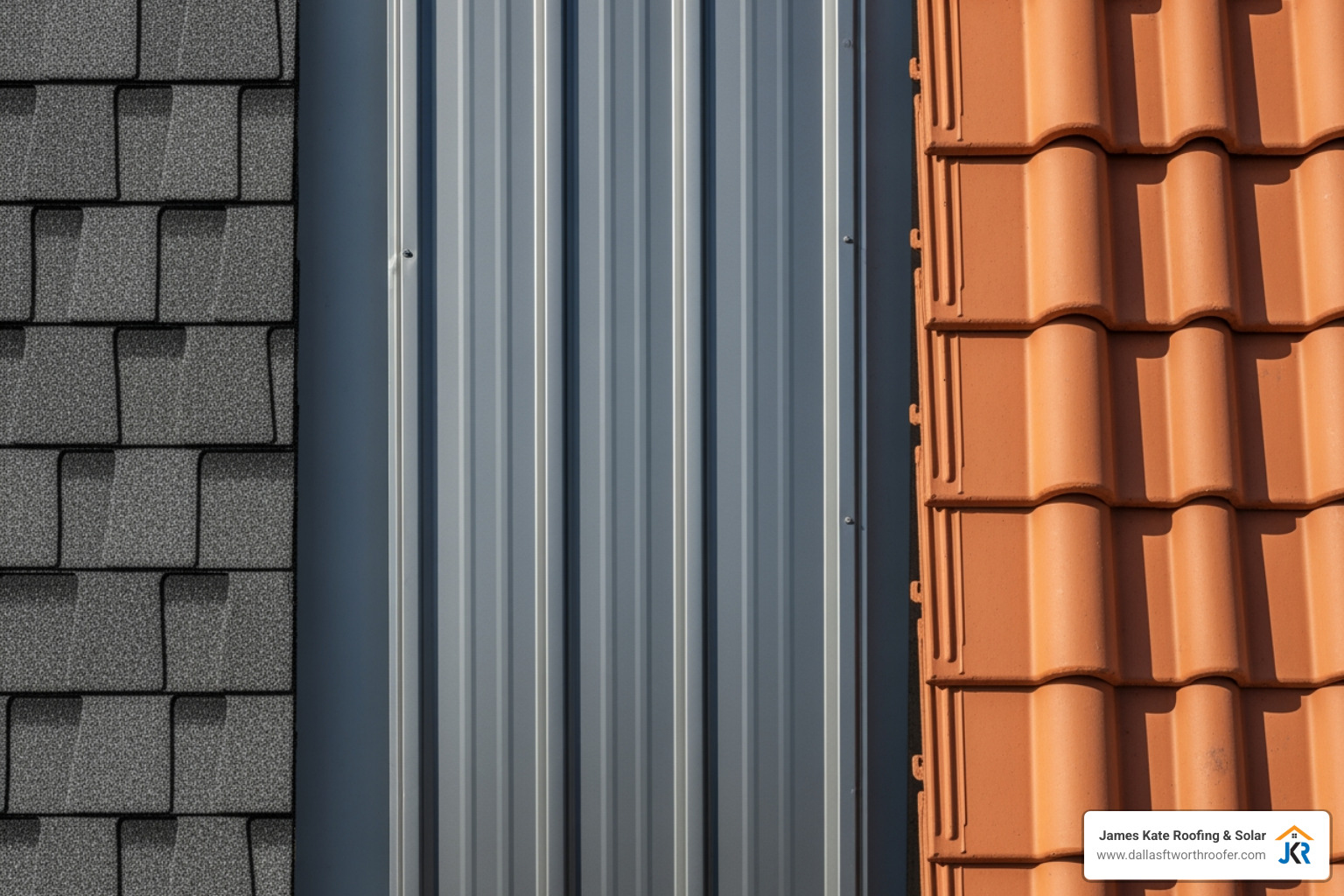
- Asphalt Shingles: As the most common US roofing material, asphalt shingles are affordable and versatile. We often use architectural shingles like GAF Timberline HDZ for their durability and aesthetic appeal, making them a reliable choice for homes in Mansfield and Grand Prairie. For More info about composition asphalt shingles, visit our site.
- Metal Roofing: Metal roofing is gaining traction for its longevity, energy efficiency, and modern look. Standing seam metal roofs can last 40-70 years. They also reflect Solar heat, a major advantage in Texas, and demand is increasing.
- Tile & Slate: Tile (clay or concrete) and slate roofs offer unparalleled durability and a high-end aesthetic. While a larger initial investment, they can last a century or more. Their thermal mass also improves energy efficiency.
- Flat Roof Systems: For commercial or low-slope residential roofs, roofers install specialized systems like EPDM, TPO, or PVC membranes. These materials create a continuous waterproof surface on low-pitch roofs. More info about commercial roofing systems is available on our website.
- Underlayment: Beneath the roofing material, the underlayment provides another layer of moisture protection. We select high-quality underlayment for superior waterproofing and a robust foundation.
The Demanding Work Environment
Roofing is a physically taxing job performed in challenging conditions.
- Physical Demands: Our work involves constant climbing, bending, kneeling, and heavy lifting of materials and tools. This demands high fitness and stamina.
- Working at Heights: The inherent nature of roofing is working at heights, which requires balance, awareness, and strict adherence to safety protocols.
- Extreme Weather Conditions: We work outdoors year-round, exposed to intense Texas heat, sun, and storms. Hydration and managing heat are critical, especially in Arlington and Midlothian.
- Seasonal Workload: The workload increases after storms or during mild weather, which often means longer hours to meet customer demand.
The Path to Becoming a Skilled Roofer
Becoming a roofer is a journey of skill acquisition learned through hands-on experience. We pride ourselves on expertise built over decades of practical application and continuous learning.
Education, Training, and Apprenticeships
A college degree is not required to become a roofer; the path to expertise is primarily practical.
- On-the-Job Training: Most roofers learn their trade through on-the-job training. Working with experienced professionals, they start with basic tasks and gain real-world experience with different techniques and materials.
- Apprenticeship Programs: Formal apprenticeship programs offer a structured path, combining paid on-the-job training with classroom instruction. For example, a program in Ontario, Canada, consists of approximately 4,000 hours. The principle of combining practical work with theory is consistent across programs.
- Manufacturer Certifications: We invest in manufacturer certifications, like our GAF Master Elite and GAF Green Roofer certifications. These programs ensure our team is proficient in installing products to the highest standards, which allows us to offer extended warranties. Our GAF President’s Club recognition shows our commitment to excellence. You can explore Education and Training resources from NRCA for more insights.
- No Formal Degree Required: The trade’s accessibility makes it an attractive career for those who prefer hands-on work and direct skill development.
- Continuous Learning: The roofing industry is always evolving. We are committed to continuous learning to provide the best service to our clients in Mansfield, Arlington, and beyond.
Regional Differences in Practice and Regulation
Roofing practices vary by region, influenced by local building codes, climate, and materials.
- Local Building Codes: Texas has specific building codes dictating material requirements and installation methods. As local DFW roofers, we are experts in these codes in Granbury, Grand Prairie, and Midlothian.
- Climate-Specific Techniques: The Texas climate influences our practices. For example, we emphasize proper ventilation to combat attic heat and recommend impact-resistant shingles for hail.
- Material Popularity by Region: While asphalt shingles are popular everywhere, other materials vary. In hotter climates, energy-efficient “cool” roofs are popular. Metal roofing demand is also increasing in Texas due to its durability and energy efficiency.
Safety First: Navigating the Hazards of the Trade
Safety is paramount in the dangerous roofing profession. Prioritizing our team’s well-being protects our roofers and ensures a smooth, incident-free project for clients.
Identifying Common Roofing Hazards
Roofing is one of the most dangerous occupations. The fatal injury rate for roofers in 2021 was 59.0 per 100,000 full-time roofers, far above the national average of 3.6. The primary hazards include:
- Falls from Height: The leading cause of injury and death, falls can occur from ladders, scaffolds, or roof edges.
- Ladder Instability: Improperly set or damaged ladders are a significant risk, with ladder fall injuries costing billions annually.
- Slips and Trips: Wet, icy, or debris-covered roofs can cause slips and trips.
- Heat Stroke and Exhaustion: Working under the intense Texas sun poses a severe risk of heat-related illnesses.
- Electrical Hazards: Contact with power lines or faulty equipment can lead to electrocution.
- Material Handling Injuries: Lifting heavy materials can cause back injuries, sprains, and strains.
- Hand and Finger Injuries: Power tools and sharp materials can cause hand and finger injuries.
Essential Safety Measures and Fall Protection
To mitigate these risks, we implement rigorous safety protocols and use specialized equipment, adhering to OSHA (Occupational Safety and Health Administration) guidelines.
- Personal Fall Arrest Systems (PFAS): For residential roofing, a PFAS is critical. This system includes an anchor, harness, and lanyard. We ensure all components are inspected and used properly to prevent falls.
- Guardrail Systems: On commercial or larger residential roofs, we install guardrail systems to prevent falls. These must meet specific OSHA height and strength requirements.
- Proper Ladder Usage: Ladders must be inspected by a competent person, set on stable surfaces, and secured. We use safety apps to assist with proper setup.
- OSHA Guidelines: We strictly follow OSHA’s regulations, particularly for fall protection at heights of 6 feet or more. The Protecting Roofing Workers guide from OSHA is a valuable resource for our practices.
- Hydration and Heat Safety: We enforce strict hydration schedules, provide shaded rest areas, and monitor our team for heat stress. We adjust work schedules to avoid peak heat, especially in Arlington and Midlothian.
- Toolbox Talks: Regular safety meetings, or “toolbox talks,” are held daily to discuss hazards and review safety procedures.
The Business of Roofing: Trends, Outlook, and Finances
The evolving roofing industry is a vital part of construction with high demand for skilled labor. Understanding its trends and finances is key for aspiring roofers and homeowners.
Job Outlook and Career Growth for a Roofer
The demand for skilled roofers remains strong, offering a stable career path.
- Employment Growth Projections: Employment for roofers is projected to grow 6 percent from 2024 to 2034, faster than average. This means about 12,700 openings each year, many from replacing workers who leave the labor force, ensuring consistent demand.
- Median Annual Wage: As of May 2024, the median annual wage for roofers was $50,970 per year or $24.51 per hour. Wages vary based on experience and location.
- Career Progression Paths: A roofer can advance to foreman or business owner. Specializing in materials like metal or services like Solar installation can lead to higher earning potential.
- Demand for Skilled Labor: The need for building maintenance and new construction, especially in growing areas like the DFW metroplex, ensures steady demand for qualified roofers. The U.S. Bureau of Labor Statistics’ Occupational Outlook for Roofers provides more detail on this outlook.
Emerging Industry Trends
The roofing industry is embracing innovation and sustainability to meet homeowner demand.
- Solar Roofs: Solar roofs and shingles are a major trend. They can reduce electricity bills by 40-70% and may qualify for federal tax credits. As a Solar and roofer specialist, we are at the forefront of this trend. You can learn More info about rack-mounted Solar on our site.
- Energy-Efficient “Cool” Roofs: Popular in warm climates like Texas, “cool” roofs use reflective materials to absorb less heat, keeping homes cooler and reducing A/C costs.
- Increased Demand for Metal Roofing: Metal roofing’s durability, low maintenance, and energy efficiency are driving its increased demand, offering excellent protection against severe weather.
- Drone Technology for Inspections: Drones allow roofers to safely and quickly assess roofs, capture images, and identify damage. This improves accuracy and efficiency.
- Sustainable Materials: There is growing interest in recycled, recyclable, or low-impact roofing materials, reflecting a shift toward sustainable building.
Financials: From Roofer Wages to Project Financing
Understanding roofing financials is important for both the roofer and the homeowner.
- Typical Roofer Pay Scale: The median annual wage for roofers is around $50,970. Wages increase with experience, specialized skills, and leadership roles. Union membership or strong benefit packages also influence compensation.
- Factors Affecting Project Cost: A roofing project’s cost depends on several variables:
- Roof Size and Pitch: Larger or steeper roofs require more materials and labor.
- Material Choice: Asphalt shingles are most affordable ($5,000–$12,000+), while metal, tile, or slate are more expensive but last longer ($15,000–$40,000+).
- Complexity: Roofs with many valleys, dormers, or chimneys are more complex.
- Damage Extent: Extensive damage requiring structural repairs increases costs.
- Location: Labor and material costs vary by market.
- What’s Included in a Roof Replacement Estimate:
- Removal and disposal of old materials
- Deck inspection and repair
- Installation of new underlayment, flashing, and ventilation
- Installation of chosen roofing material
- Job site cleanup
- Workmanship warranty
- Homeowner Financing Options: A new roof is a significant investment. We partner with financing providers to offer flexible payment plans. This helps homeowners manage costs without delay. Options can include plans up to $100,000 with quick funding and no prepayment penalties. We offer More info about our financing solutions to help.
How to Hire a Reputable Roofing Contractor
Choosing the right roofer is crucial for a quality, long-lasting roof. At James Kate Roofing & solar, we emphasize transparency and professionalism and recommend the following:
- Check for License and Insurance: Verify the contractor is licensed (if required) and carries adequate liability and workers’ compensation insurance. This protects you from liability for accidents or damage.
- Verify Local Business Presence: A reputable roofer should have a permanent business address. This indicates stability. As a family-owned DFW company, we are rooted in communities like Mansfield, Arlington, and Granbury.
- Ask for Client References: Requesting references lets you hear about their experience with the contractor’s quality and professionalism.
- Get a Detailed Written Contract: Insist on a comprehensive contract outlining materials, scope, timelines, payment schedule, and warranty information. This protects both you and the contractor.
- Understand Warranty Details: A strong warranty is a hallmark of a reliable roofer. We offer up to a 25-year workmanship warranty, reflecting our confidence and integrity. Understand what can void the warranty.
- Review Online Presence and Testimonials: Check online reviews on platforms like Google or the Better Business Bureau (BBB). A positive online reputation, like our A+ BBB rating, shows a commitment to customer satisfaction.
- Don’t Just Go for the Lowest Bid: The lowest bid isn’t always the best value. Quality materials and experienced labor have a fair price. Be wary of low bids, as they may indicate shortcuts.
Finding a reliable roofer is about finding a partner you can trust. We serve a wide range of areas, and you can find More info about our service areas on our website.
Frequently Asked Questions about the Roofer Profession
What are the main tasks of a roofer?
A roofer‘s primary tasks include inspecting, repairing, replacing, and installing roofs on residential and commercial buildings. This involves working with various materials like asphalt shingles, metal, and tile, ensuring the structure is waterproof, and following strict safety protocols. They also handle aspects like flashing installation, ventilation, and material estimation, all geared towards protecting the building from weather elements.
Is roofing a dangerous job?
Yes, roofing is consistently ranked as one of the most dangerous jobs in the construction industry. The primary risks stem from working at heights, leading to a high fatal injury rate (59.0 per 100,000 in 2021). Other hazards include ladder falls, heat-related illnesses, and injuries from handling heavy materials. Strict adherence to safety measures, such as using Personal Fall Arrest Systems (PFAS) and proper ladder techniques, is essential to mitigate these risks.
How long does it take to become a roofer?
Most roofers learn the trade through extensive on-the-job training, which can take several months to a few years to become proficient and skilled. Formal apprenticeship programs, where available, often combine practical work experience with classroom instruction, lasting around two years (e.g., 4,000 hours, including 3,520 hours of on-the-job training). Manufacturer certifications and continuous learning also play a significant role in a roofer‘s professional development.
Conclusion: Securing Your Future, From the Top Down
The roofer trade is a challenging yet rewarding profession, vital to the integrity and safety of our buildings. It demands skill, physical resilience, and an unwavering commitment to safety and quality. From navigating diverse materials and complex installations to braving the elements, roofers play a crucial role in safeguarding our homes and businesses.
For homeowners in the DFW area seeking a contractor who embodies these principles with honesty and integrity, James Kate Roofing & solar provides expert services backed by a GAF President’s Club recognition and an industry-leading 25-year workmanship warranty. We believe in providing top-tier Solar solutions, guided by biblical principles and a dedication to superior craftsmanship. To ensure your home is protected by the best, schedule your free inspection today.
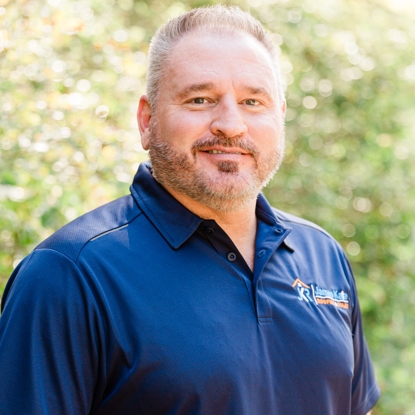
Dustin Eatman is a seasoned roofing professional with deep, hands-on expertise that spans residential and commercial roofing, insurance solar, and long-term roof asset management. As the owner of James Kate Roofing & solar in the Dallas–Fort Worth metroplex, he’s built a reputation for diagnosing roof systems accurately, communicating clearly, and executing projects with a high standard of workmanship and documentation. Dustin understands the technical details that make roofs perform—proper underlayment selection, slope and drainage considerations, ventilation strategy, flashing and penetration detailing, and manufacturer-specific installation requirements—because he’s worked through the real-world challenges that cause leaks, premature wear, and warranty issues. He’s equally fluent in the operational side of roofing: jobsite planning, quality control, safety, material ordering, crew coordination, and customer experience from inspection to closeout. In insurance-related projects, Dustin brings practical knowledge of claim workflows, adjuster meetings, scope alignment, supplements, and the importance of photo evidence and thorough records, helping property owners navigate stressful situations with confidence. For commercial clients—especially property and facility managers—he emphasizes proactive maintenance and targeted repairs that reduce disruption, extend roof life, and prevent expensive interior damage. Dustin also stays focused on doing things the right way: educating customers on realistic options, setting expectations, and prioritizing solutions that hold up over time rather than quick fixes. That blend of technical skill, field experience, process discipline, and owner-level accountability is what makes Dustin Eatman a trusted expert in the roofing industry.