
Why Your Roof Choice Determines Your Success
The best roof for solar panels depends on three critical factors: material durability, structural integrity, and installation compatibility. Metal roofs are the gold standard, but architectural asphalt shingles and tile roofs can also be excellent choices when properly assessed.
With the residential solar market growing and the Inflation Reduction Act offering a 30% tax credit through 2032, more Dallas-Fort Worth homeowners are considering solar. But many overlook a critical detail: your roof is the foundation of your entire solar investment.
The wrong roof can lead to costly premature replacements or poor energy production. Solar panels last 25–30 years; if your roof fails before then, you face a $3,000 to $8,000 bill just to remove and reinstall your system, on top of the cost of a new roof.
Different materials and structural strengths directly influence your system’s efficiency. A metal roof can reduce surface temperatures by up to 55°F, keeping panels cooler and more efficient. An asphalt shingle roof, however, can reach 150°F, reducing panel efficiency by up to 0.45% for every degree above 77°F.
The right roof doesn’t just support solar panels—it maximizes their performance and protects your investment for decades.
I’m Dustin Eatman, owner of James Kate Roofing & Solar. With years of hands-on solar integration experience in the Dallas-Fort Worth metroplex, I’ve helped countless homeowners identify the best roof for solar panels that works for our Texas climate.
The Critical Link: Matching Roof Lifespan to Your Solar Panels
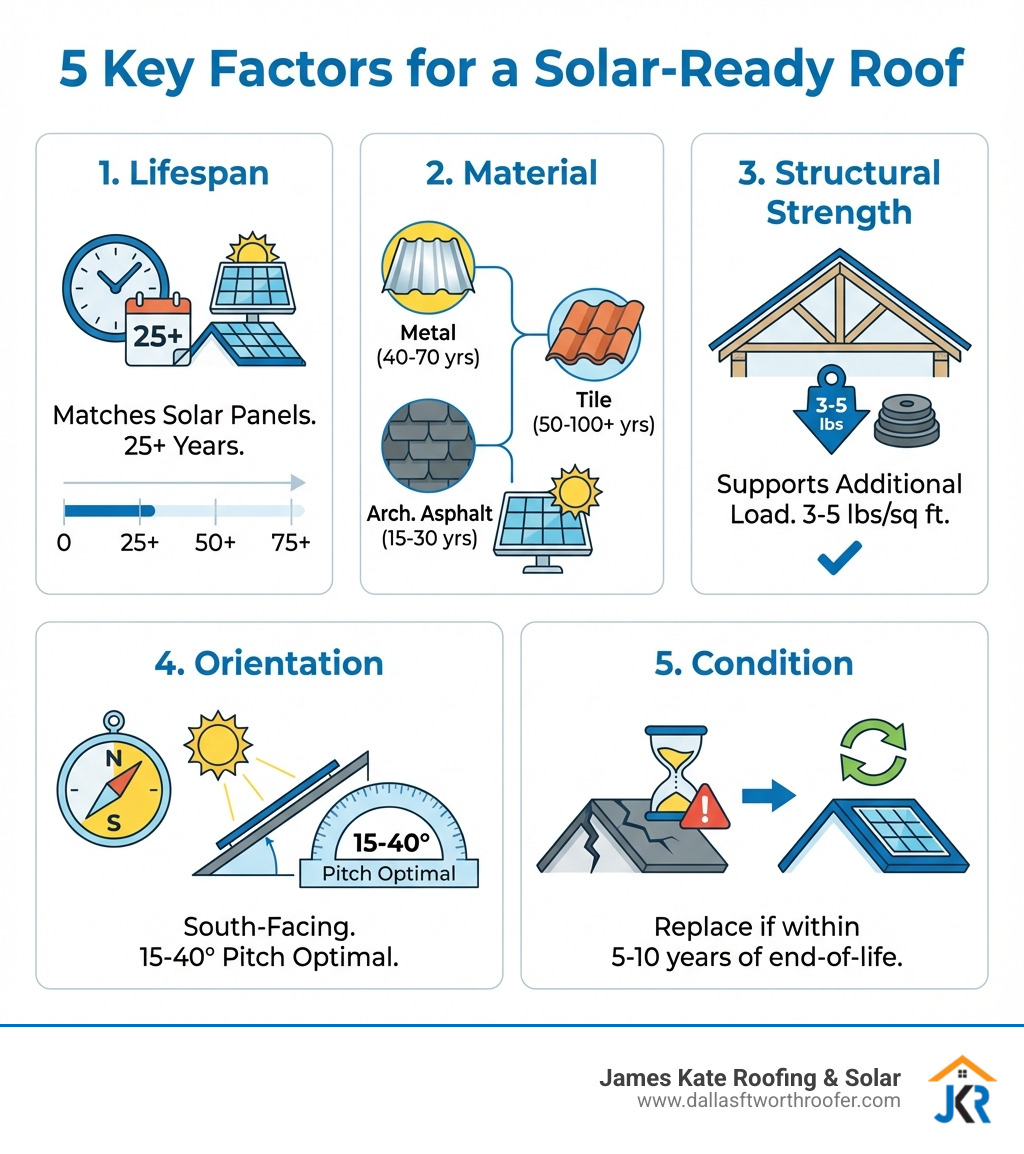
When we talk about the best roof for solar panels, the conversation must start with lifespan. Solar panels are a long-term investment, designed to produce electricity for 25 to 30 years, and sometimes up to 40 years. It makes little sense to install a system that will outlast the surface it sits upon.
Imagine installing a state-of-the-art solar system, only to find your roof needs replacing 10 years later. This scenario involves the significant, unexpected cost of removing and reinstalling the panels, which erodes your savings. To avoid this, your roofing material should have a lifespan that matches or exceeds your solar panels.
Let’s look at how common roofing materials stack up:
Asphalt Shingles: Popular for their affordability, asphalt shingles last 12 to 30 years. A shorter lifespan creates a mismatch with solar panels. If your asphalt roof is over 15 years old, it likely won’t outlast your new solar system.
Metal Roofs: Metal roofs are an ideal partner for solar, boasting a lifespan of 40 to 70 years. They will almost certainly outlast your solar system, eliminating the cost of panel reinstallation.
Tile Roofs (Clay & Concrete): As champions of longevity, tile roofs can last over a century. They provide a stable, long-term foundation for a solar system’s entire operational life.
Tar and Gravel Roofs: Typically found on flat roofs, these last about 20 to 30 years. This can align with solar panel lifespans, but a careful assessment of their current condition is paramount.
The age and condition of your roof are paramount. If your roof is five to 10 years from needing replacement, we’ll advise replacing it before going solar. This proactive approach ensures your investment is built on a solid foundation, preventing future disruptions and unexpected costs. A roof that’s 20 years or older will almost certainly need work or full replacement to support a new solar installation.
A roof that needs replacement within the 25-year lifespan of solar panels can turn your smart investment into a financial burden. By choosing a durable roofing material that aligns with the lifespan of your solar panels, you secure your energy independence for decades, as highlighted by sources like SolarReviews on the long lifespan of solar panels.
What is the best roof for solar panels? A Material-by-Material Breakdown
Choosing the best roof for solar panels isn’t a one-size-fits-all decision. Each roofing material brings its own set of advantages and challenges. Let’s break down the most common types we encounter in DFW and how they fare with solar.
| Roof Type | Lifespan (Years) | Weight (lbs/sq ft) | Installation Cost (Solar) | Solar Compatibility |
|---|---|---|---|---|
| Metal (Standing Seam) | 40–70 | 1.4–1.6 | Low | Excellent (clamp-mount, high reflectivity, lightweight) |
| Architectural Asphalt | 15–30 | 2.5–4 | Medium | Good (common, affordable, straightforward installation) |
| Tile (Clay & Concrete) | 50–100+ | 8–12 | High | Good (longevity), but requires specialized installation |
| Flat (Tar & Gravel / PVC) | 20–30 | Varies | Medium–High | Good (flexible orientation, but needs racking) |
Metal Roofs: The Gold Standard for Solar Installations
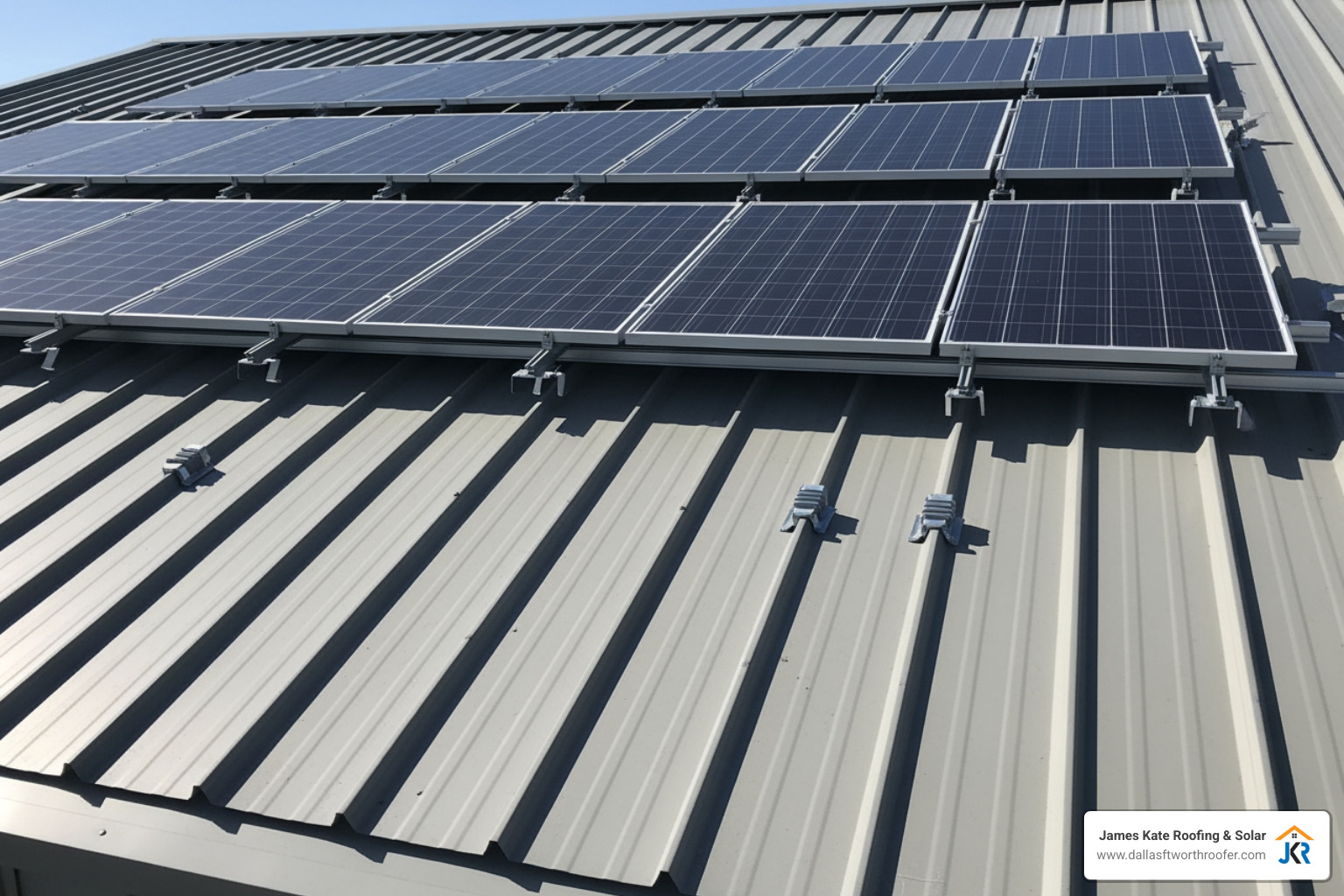
We often recommend standing-seam metal roofs as the gold standard for solar. Here’s why:
-
No Roof Penetrations: Standing-seam systems allow mounting brackets to clamp directly to the seams. This eliminates drilling, drastically reduces leak risk, and simplifies installation—a huge benefit for long-term peace of mind.
Exceptional Durability: A 40–70 year lifespan means your metal roof will outlast your solar panels, saving you the cost and hassle of panel reinstallation for a future re-roofing project.
Lightweight: At 1.4–1.6 lbs/sq ft, metal is light. This reduces stress on your home’s structure when adding the 800+ pounds of a solar system, often avoiding the need for structural reinforcements.
High Solar Reflectivity: Metal’s reflective surface can reduce roof temperatures by up to 55°F. This “cool roof” effect keeps panels operating more efficiently and can cut home cooling costs by up to 40%—a major benefit in Texas.
Increased Home Value: A metal roof can increase home value by up to 6% and may qualify for insurance discounts, amplifying your return on investment.
While metal roofs have a higher upfront cost, their long-term benefits and superior solar compatibility make them a valuable investment. You can learn more about their benefits from resources like BASC’s insights on metal roofs.
Architectural Asphalt Shingles: The Most Common, and a Reliable Choice for Solar Panels
As the most popular roofing material in DFW, architectural asphalt shingles are an affordable and reliable choice for solar panels.

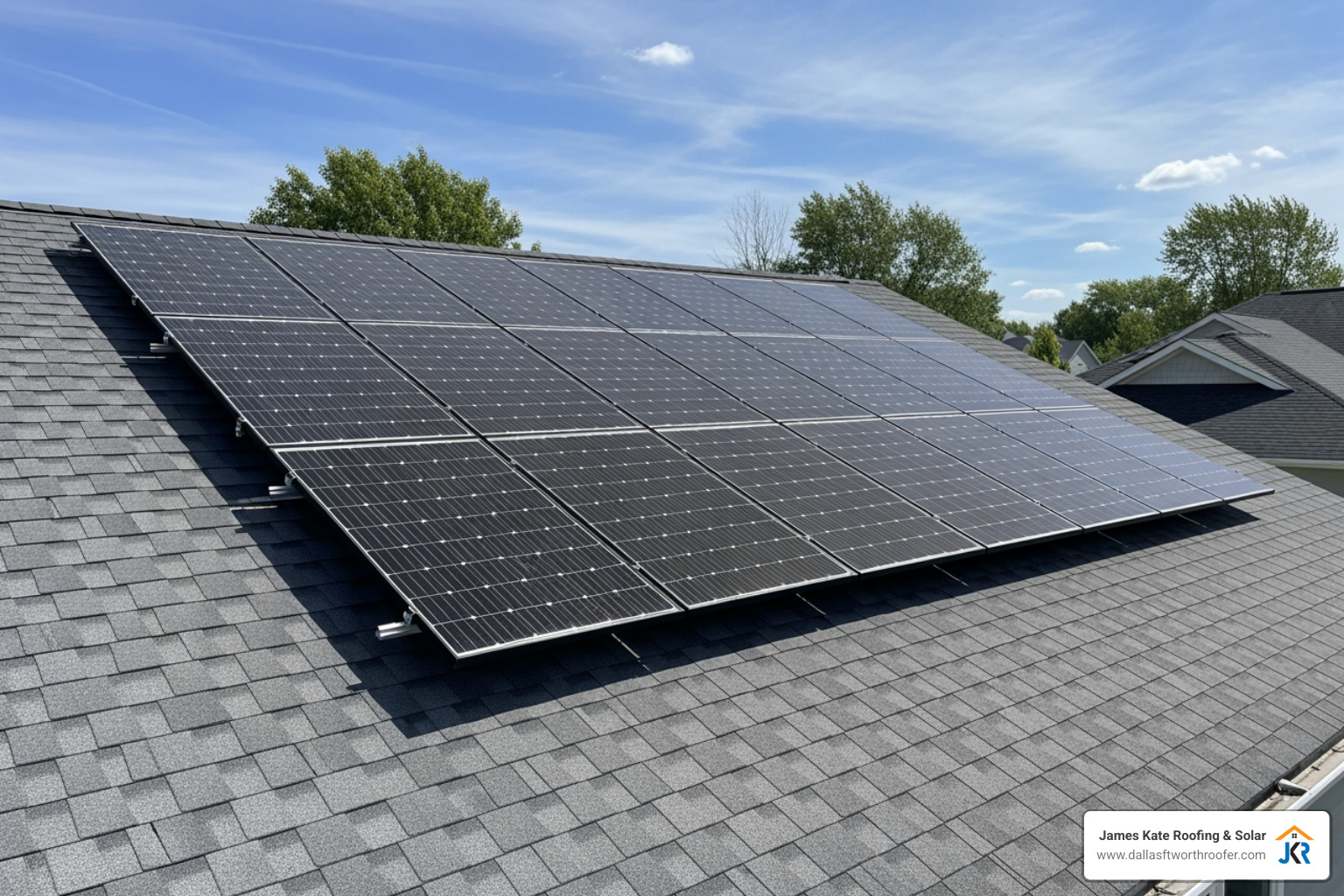
Here’s what makes them a suitable platform for solar:
Affordability and Accessibility: Their lower upfront cost makes them accessible, and most installers are highly experienced with them.
Straightforward Installation: The process involves drilling and attaching mounts, which are then sealed with flashing to ensure watertight integrity. With professional installation, the leak risk is minimal.
Good Durability (with caveats): High-quality architectural shingles last 15 to 30 years, which can align with solar panel lifespans. It’s crucial your shingles are in good condition before installing solar.
The main challenge with asphalt shingles is their heat absorption, which can slightly reduce panel efficiency. However, the benefits of going solar often far outweigh this minor loss. For more on asphalt shingles, check out CertainTeed’s information on asphalt roofing.
Tile Roofs (Clay & Concrete): Durable but Require Expertise
Tile roofs (clay or concrete) are known for beauty and longevity (50–100+ years), making them an excellent long-term foundation for solar panels. However, installation requires a specialized approach:
Longevity and Aesthetics: Tile offers remarkable durability and a distinct aesthetic. Their natural insulation properties also contribute to a cooler home.
Heavyweight: Weighing 8–12 lbs/sq ft, tile requires a structural assessment to ensure the roof can support the combined weight of the tiles and solar panels. Reinforcement may be needed.
Installation Complexity: Tile’s brittle nature makes installation labor-intensive and costly. It requires specialized mounts and expert installers who can work around the tiles without causing breakage to ensure a waterproof seal.
Despite higher labor costs, a tile roof in good condition can be a fantastic long-term partner for your solar system.
Flat & Low-Slope Roofs: Flexible but with Caveats
Flat and low-slope roofs, found on some modern homes and commercial properties, can accommodate solar panels with specific considerations.
Easy Access, Flexible Layout: Flat roofs offer easy access for maintenance and flexibility in panel layout, as we can use tilt-up brackets to achieve the optimal angle.
Racking Systems are Essential: Flat roofs require racking systems to tilt panels. These can be ballasted (weighted down, no penetrations) or attached (drilled and sealed), depending on the roof’s structure and load capacity.
Weight and Water Management: With ballasted systems, the additional weight must be carefully calculated. For any flat roof, proper drainage is critical, and we ensure the installation doesn’t impede water flow. PVC and TPO membranes are often preferred for their longevity and waterproofing.
Key Technical Factors for a Solar-Ready Roof
Beyond the material, several technical aspects of your roof are crucial for determining its suitability and the overall efficiency of your solar system.
Structural Integrity: Can Your Roof Handle the Weight?
This is a critical safety consideration. Your home’s structure must safely bear the significant additional weight of a solar panel system.
The Numbers: A typical 20-panel system adds over 800 pounds to your roof, not including the racking. Your roof must support this load, which is a minimum of 3 to 5 pounds per square foot of additional weight. While most modern roofs are designed for this, older homes may require a structural assessment.
Material Weights: Consider the base weight of your roofing material:
-
Metal roofs: 1.4 to 1.6 pounds per square foot
-
Asphalt shingles: 2.5 to 4 pounds per square foot
-
Wood shingles and shakes: 2.5 to 4 pounds per square foot
-
Clay tiles: 8 to 12 pounds per square foot
-
Concrete tiles: 9 to 12 pounds per square foot
Heavier materials like tile, combined with solar panels, put more strain on your roof’s framing. We always ensure your home can handle this combined weight.
Roof Design: The Impact of Pitch, Orientation, and Shading
Your roof’s design directly impacts how much sunlight panels capture, affecting energy production.
Optimal Roof Pitch: The ideal angle for solar panels in DFW is about 30 degrees, but systems perform well on roofs with a pitch between 15 and 40 degrees. We can use specialized racking to achieve the optimal tilt if needed.
Orientation is Key: A south-facing roof is optimal for maximizing production. However, east and west-facing sections are also highly productive. West-facing panels are great for generating energy during peak afternoon demand. The U.S. Department of Energy offers a helpful homeowners guide to going solar that details these considerations.
Shading is the Enemy: Even a small amount of shade can significantly reduce your system’s output. We conduct a thorough shade analysis to identify obstructions like trees or chimneys and design your system to minimize their impact. A clear, unobstructed roof area is crucial.
Thermal Performance: How Roof Temperature Affects Efficiency
Solar panels perform best when cool, a critical factor in our scorching DFW summers.
The Optimal Temperature: Panels are most efficient around 77°F, losing about 0.45% efficiency for every degree above that. High temperatures can significantly decrease energy output.
Roof Material’s Role:
-
Metal Roofs: Their reflective surface keeps the roof and panels cooler, maintaining higher efficiency and reducing home cooling costs.
-
Asphalt Shingles: These absorb heat, reaching up to 150°F. The higher ambient temperature can reduce panel efficiency.
Impact on Cooling Costs: A reflective, “cool roof” reduces heat absorbed into your attic, lessening the load on your air conditioning and creating synergistic savings with your solar panels.
Solar Roofing Options: Mounted Panels and Improved Curb Appeal
When considering solar, homeowners often weigh aesthetics alongside efficiency. While integrated solar shingles offer a seamless look, traditional rack-mounted solar panels have evolved significantly in terms of aesthetics, efficiency, and cost-effectiveness.
Modern rack-mounted solar systems are sleek and low-profile, blending more harmoniously with your roofline than older installations.
Advantages of rack-mounted solar panels:
-
Superior Efficiency and Power Output: Monocrystalline panels can reach efficiency ratings up to 24%, with outputs up to 400 watts per panel.
-
Cost-Effectiveness: Rack-mounted systems typically range from $24,000 to $36,000, compared to solar shingles averaging around $55,000.
-
Durability and Lifespan: Quality solar panels last 25–40 years with strong production guarantees.
-
Easier Maintenance and Replacement: Individual panels can be serviced or replaced without disturbing the entire roof.
For most DFW homeowners, rack-mounted solar panels offer the best balance of efficiency, cost, and aesthetics.
Frequently Asked Questions about Roofs and Solar Panels
Should I replace my roof before installing solar panels?
Yes, if your roof is nearing the end of its lifespan. Solar panels last 25+ years. Replacing an aging roof first avoids a $3,000–$8,000 future removal and reinstallation cost.
What roof types are not recommended for solar panels?
Wood shake/shingles and slate roofs are brittle, fire-prone, and difficult to work with. In these cases, we may recommend re-roofing or ground-mounted solar.
What if my roof doesn’t face south?
East and west-facing roofs are highly viable. They may produce 10–20% less annually, but still deliver strong savings—especially west-facing roofs during peak demand.
Your Solar Future: Choosing the Right Partner and Roof
Starting your solar journey is an exciting step toward energy independence.
Key takeaways:
-
Match roof lifespan to solar panel lifespan
-
Metal roofs offer the best long-term value
-
Quality asphalt shingles are a solid option
-
Replace aging roofs before installing solar
-
Minimize shading for peak performance
-
A strong roof maximizes your solar ROI
At James Kate Roofing & Solar, we are a family-owned DFW company committed to honesty, integrity, and long-term solutions. We don’t just install solar—we optimize your entire roof system for decades of clean energy.
Ready to move forward? Let us help you find the best roof for solar panels and design a system that works perfectly for your home.
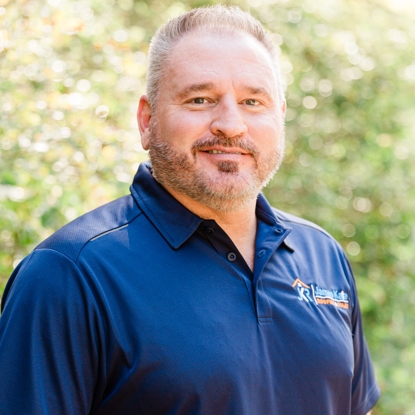
Dustin Eatman is a seasoned roofing professional with deep, hands-on expertise that spans residential and commercial roofing, insurance solar, and long-term roof asset management. As the owner of James Kate Roofing & solar in the Dallas–Fort Worth metroplex, he’s built a reputation for diagnosing roof systems accurately, communicating clearly, and executing projects with a high standard of workmanship and documentation. Dustin understands the technical details that make roofs perform—proper underlayment selection, slope and drainage considerations, ventilation strategy, flashing and penetration detailing, and manufacturer-specific installation requirements—because he’s worked through the real-world challenges that cause leaks, premature wear, and warranty issues. He’s equally fluent in the operational side of roofing: jobsite planning, quality control, safety, material ordering, crew coordination, and customer experience from inspection to closeout. In insurance-related projects, Dustin brings practical knowledge of claim workflows, adjuster meetings, scope alignment, supplements, and the importance of photo evidence and thorough records, helping property owners navigate stressful situations with confidence. For commercial clients—especially property and facility managers—he emphasizes proactive maintenance and targeted repairs that reduce disruption, extend roof life, and prevent expensive interior damage. Dustin also stays focused on doing things the right way: educating customers on realistic options, setting expectations, and prioritizing solutions that hold up over time rather than quick fixes. That blend of technical skill, field experience, process discipline, and owner-level accountability is what makes Dustin Eatman a trusted expert in the roofing industry.