
Why Every Property Owner Needs to Understand Water Damage solar
Water Damage solar is the professional process of extracting water, drying structures, sanitizing affected areas, and repairing property after flooding, leaks, or storm intrusion. The process typically involves five key phases: emergency inspection, water extraction, drying and dehumidification, cleaning and sanitization, and final repairs—all following strict IICRC S500 standards to prevent mold growth and structural decay.
Quick Facts About Water Damage solar:
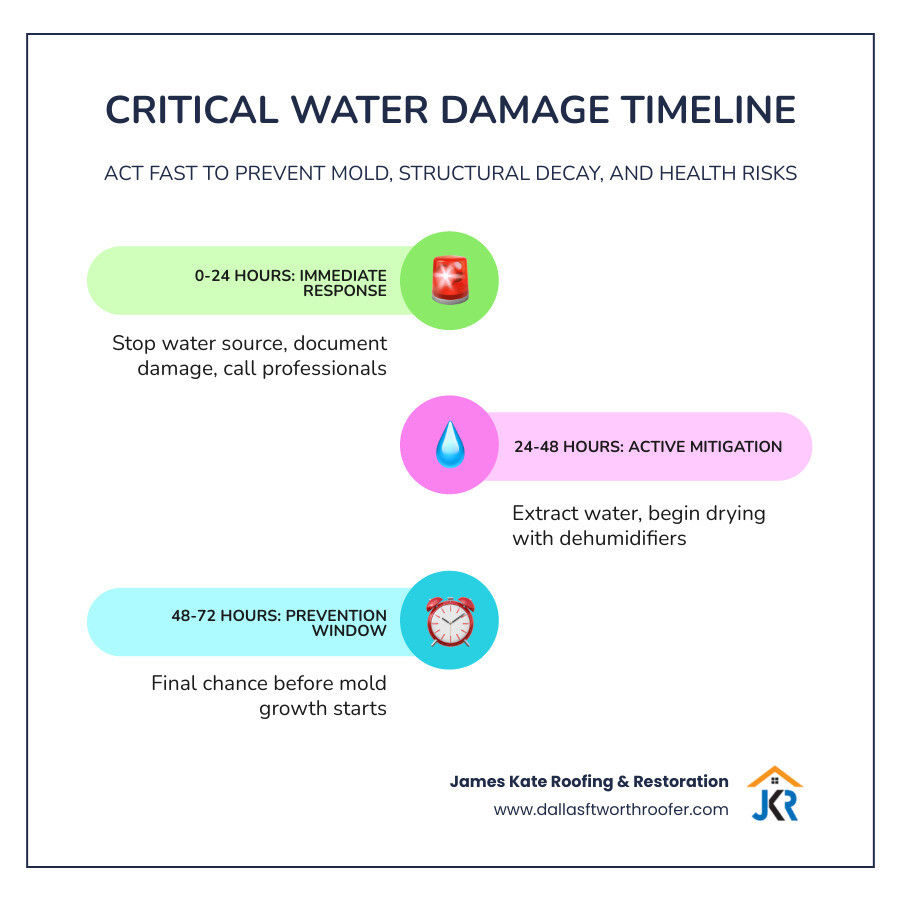
- Timeline: Mold can begin growing within 24-48 hours of water exposure
- Water Categories: Clean (Category 1), Gray (Category 2), and Black (Category 3) determine safety protocols
- Cost: Average flood claim totals $42,000, with hurricane damage reaching $150-200 billion
- Affected: Approximately 14,000 individuals experience water damage annually in the US
- Prevention: Proper drainage, sump pumps, and regular maintenance reduce risk significantly
Water damage affects around 14,000 individuals in the United States each year, and the stakes are high. Whether it’s a burst pipe in your Mansfield home, storm damage to your commercial building, or a slow leak that’s been hiding behind your walls, the clock starts ticking the moment water enters your property.
The difference between a manageable repair and a catastrophic loss often comes down to how quickly you respond. Flooding is the most common type of natural disaster affecting people across the United States, and flash flooding alone is responsible for approximately 200 deaths each year. Beyond the immediate danger, water that sits for more than 24-72 hours creates the perfect environment for toxic mold growth, structural wood rot, and electrical hazards that can persist long after the visible water disappears.
Here’s what makes this challenging: not all water damage is the same. A leaking water heater presents completely different risks than sewage backup or floodwater from a storm. The type of water—whether it’s clean, contaminated, or hazardous—determines which materials can be saved, what equipment is needed, and what safety precautions are required. DIY cleanup might seem like a cost-saving measure, but without proper moisture detection tools, industrial drying equipment, and knowledge of IICRC solar standards, you risk missing hidden water pockets that turn into expensive mold remediation projects months later.
I’m Dustin Eatman, owner of James Kate Roofing & Solar in the Dallas-Fort Worth area, and I’ve worked with countless property owners navigating the stress of Water Damage solar after storms, roof leaks, and plumbing failures—situations where quick action and proper solar techniques make all the difference. My team and I understand how overwhelming it feels when water threatens your home or business, which is why we’re walking you through exactly what professional solar involves, what to expect, and how to protect your property investment.
The Science of Water Damage solar
When we talk about restoring a home in Arlington or Grand Prairie after a major leak, we aren’t just talking about mopping up a puddle. We are talking about a highly technical field rooted in physics and microbiology. According to national research, 14,000 individuals are affected by water damage every day in the U.S. Furthermore, faulty water systems cause Americans to waste nearly 1 trillion gallons of water annually.
When that water enters your home’s structure, it threatens the structural integrity of your property. Water is the “universal solvent,” meaning it eventually breaks down almost everything it touches—drywall turns to mush, wood warps and rots, and metal fasteners corrode. Our goal in professional solar is to reverse these effects before they become permanent.
Why Immediate Water Damage solar is Critical
The most dangerous thing about water is that it doesn’t stay where you can see it. It follows the path of least resistance, seeping behind baseboards, under laminate flooring, and into wall cavities. This leads to “secondary damage.” While the primary damage is the initial soaking, secondary damage includes the warping of hardwood floors, the sagging of ceilings, and the inevitable arrival of mold.
The CDC and the EPA both warn that the window for preventing significant microbial growth is incredibly small—usually just 24 to 48 hours. Water Damage solar is a race against time. If we can begin the mitigation phase (the immediate containment and drying) within that first day, we can often save materials like drywall and flooring that would otherwise have to be torn out and replaced. This not only protects your property value but also keeps your family safe from respiratory issues.
Advanced Technology in Water Damage solar
Gone are the days of just opening a window and pointing a desk fan at a wet carpet. Today, we use psychrometrics—the science of drying. This involves manipulating temperature, airflow, and humidity to pull moisture out of dense structural materials.
We follow the IICRC S500, which is the “gold standard” for the solar industry. To do this effectively, we use:
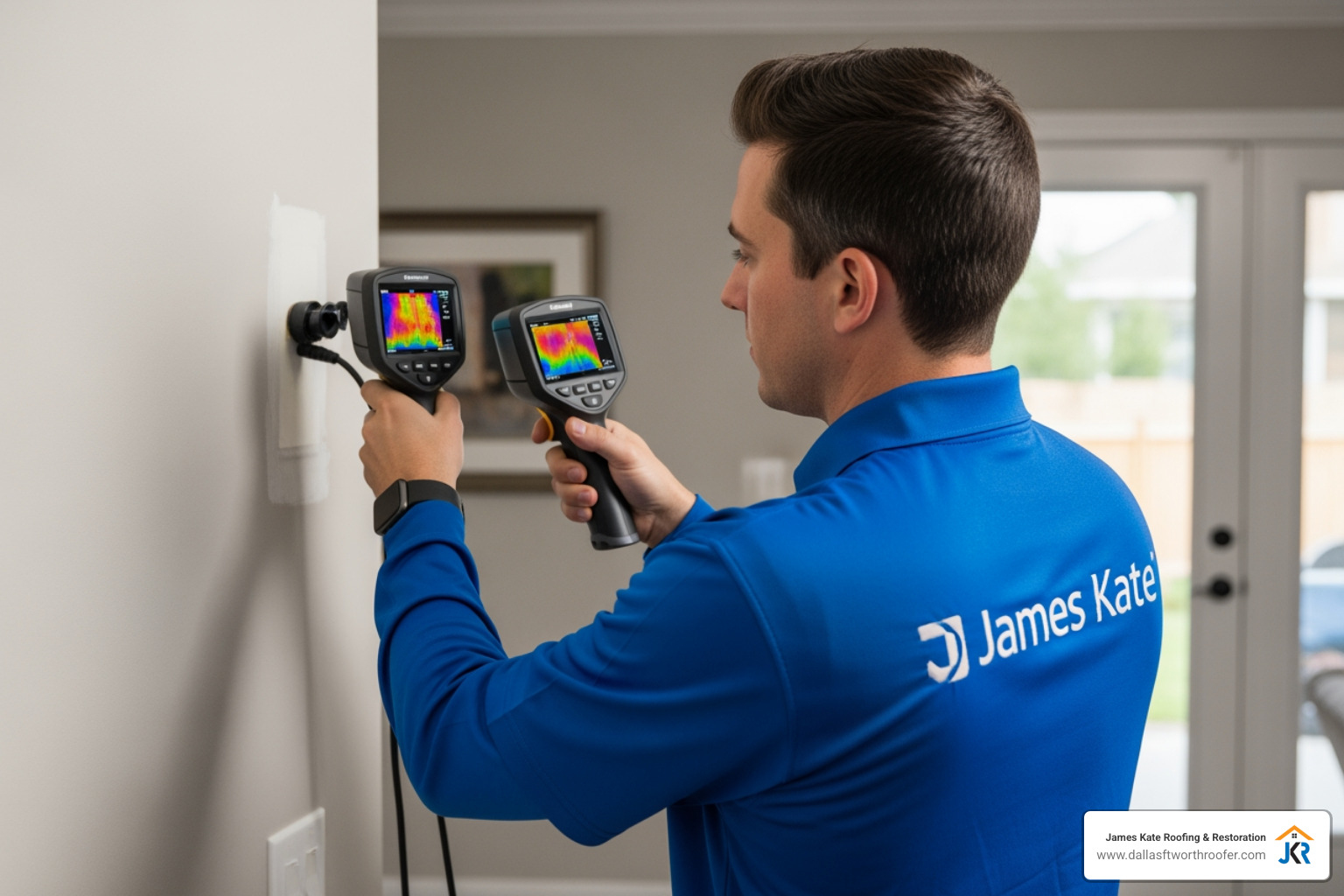
- Infrared Cameras: To see “cold spots” behind walls that indicate hidden moisture.
- Moisture Meters: To get a digital reading of exactly how much water is trapped in wood or concrete.
- LGR (Low Grain Refrigerant) Dehumidifiers: These are high-powered machines that can remove dozens of gallons of water from the air every day, even in the humid Texas climate.
- High-Velocity Air Movers: Specialized fans designed to create “evaporative cooling” on the surface of wet materials.
Common Causes and Categories of Intrusion
In the DFW area, we see it all. From the flash flooding that can strike Midlothian to the standard plumbing failures in older Arlington neighborhoods, water finds a way in. Natural disasters are a major contributor; in fact, flash flooding is responsible for approximately 200 deaths each year.
However, most residential water damage comes from internal sources:
- Burst frozen pipes (a major risk during our Texas “blue northers”).
- Leaking water heaters or washing machine hoses.
- Clogged gutters causing roof overflows.
- Sump pump failures during heavy rains.
Identifying Water Categories
Not all water is created equal. The industry classifies water into three categories based on its level of contamination. Understanding these is vital because it determines whether your carpet can be cleaned or if it must be thrown away.
| Category | Type | Description | Risk Level |
|---|---|---|---|
| Category 1 | Clean Water | From a clean source like a broken supply line or a faucet. | Low |
| Category 2 | Gray Water | Contains significant contamination (e.g., dishwasher or washing machine discharge). | Moderate |
| Category 3 | Black Water | Grossly unsanitary; contains sewage, rising floodwater, or chemical waste. | High (Dangerous) |
Category 3 water is particularly dangerous because it can carry bacteria, viruses, and parasites. This is why the use of EPA-registered disinfectants is mandatory during the cleanup of any Category 2 or 3 loss.
The 5-Step Professional solar Process
When you call us for help, we follow a rigorous Complete Guide to the Water Damage solar Process to ensure nothing is missed.
Phase 1: Emergency Inspection and Assessment
The first thing we do is identify the source of the water and stop it. We then perform a detailed assessment to determine the “Class” of water damage (Class 1-4), which describes the rate of evaporation based on the materials involved. We use moisture sensors and thermal imaging to map out the “moisture map” of your home. We also look for safety hazards like electrical risks or structural instability, following ASTM standards to ensure a safe work environment.
Phase 2: Water Extraction and Mitigation
Next, we get the standing water out. We use truck-mounted vacuums and submersible pumps that are exponentially more powerful than a standard shop-vac. The goal is to remove as much liquid water as possible before it has a chance to soak deeper into the subfloor. According to the Flooded Homes Cleanup Guidance, rapid extraction is the single most important step in preventing long-term damage.
Health Hazards: Mold and Structural Decay
The most common question we get is, “How long do I have before mold starts?” The answer is: not long. Mold spores are everywhere, but they need moisture to grow. Once a surface stays wet for 24 to 72 hours, mold begins to colonize.
The health risks from mold are real. Exposure can cause allergic reactions, asthma attacks, and other respiratory issues. Beyond health, water leads to structural decay. Wood rot can weaken the “bones” of your home, leading to sagging floors or even roof collapses if a leak is ignored.
Prevention and Insurance Survival Strategies
Prevention is always cheaper than solar. We recommend DFW homeowners install water leak detectors near appliances and ensure their landscaping slopes away from the foundation. Installing back-flow valves can also prevent the dreaded sewage backup.
When it comes to insurance, the average flood claim is $42,000. It is crucial to know How to Document Flood Damage Insurance Claims properly.
- Take Photos: Document everything before you touch it.
- Keep Samples: If you have to tear out carpet, keep a 1×1 square for the adjuster.
- Call FEMA: If you are in a declared disaster area, federal aid may be available.
- Separate Policies: Standard homeowners insurance usually does not cover rising floodwater; you need a separate NFIP policy for that.
Frequently Asked Questions about Water Damage
How long does the professional drying process typically take?
Most properties take between 3 to 5 days to dry completely. However, this depends on the “Class” of the damage and the materials involved. Concrete and hardwood take longer to dry than standard drywall. We monitor the progress daily with moisture meters to ensure we don’t pull the equipment too early.
Does standard homeowners insurance cover flood damage?
Usually, no. Standard insurance covers “sudden and accidental” water damage from internal sources (like a burst pipe). It typically does not cover “flood” damage, which is defined as water rising from the ground up (like a river overflowing or heavy rain pooling). For that, you need flood insurance through the National Flood Insurance Program.
Is it safe to stay in a home during the solar process?
If the damage is limited to one room (Category 1), you can often stay. However, for Category 3 (sewage) or large-scale flooding, the noise of the industrial fans and the potential for airborne contaminants make it safer—and much more comfortable—to stay elsewhere until the “sanitization” phase is complete.
Conclusion
At James Kate Roofing & solar, we know that your home is your sanctuary. When water threatens that sanctuary, you need a team that acts with urgency and integrity. We are a family-owned DFW company serving Mansfield, Arlington, Granbury, and the surrounding areas. We operate on Biblical principles of honesty and transparency, ensuring that you get the high-quality solar you deserve without the stress of being “sold” services you don’t need.
From initial water mitigation to the final build-back construction, we handle the entire process so you can get back to your normal life. If you’re facing a water emergency, don’t wait for the mold to move in. More info about solar services can be found on our website, or you can call us 24/7 for emergency assistance. We’re here to help you weather the storm.
