When Water Turns Dangerous: What You Need to Know About Category 3 Water Loss
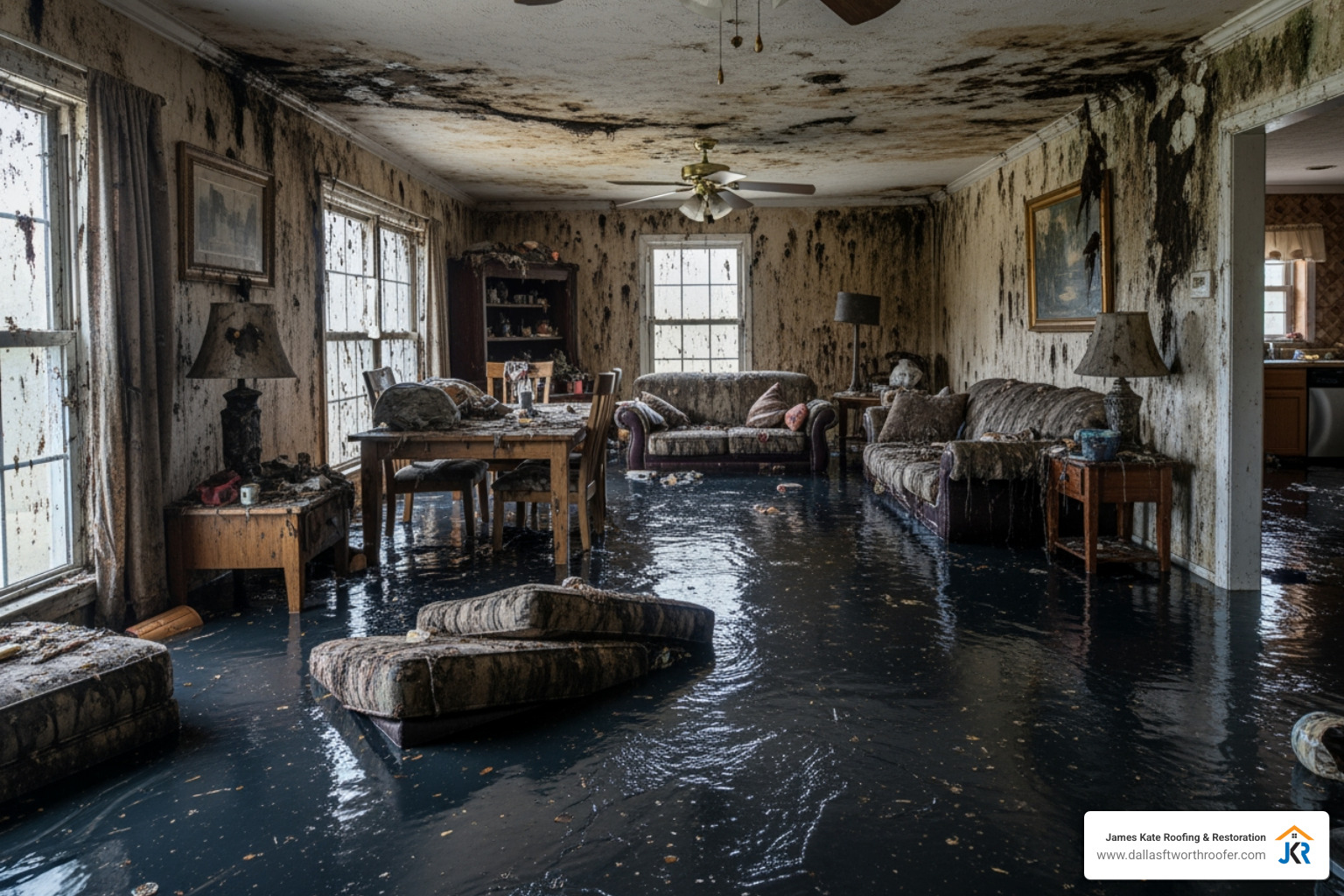
Category 3 water loss — also called “black water” — is the most hazardous type of water damage a property can experience. It contains sewage, pathogens, and toxic contaminants that pose serious health risks to anyone exposed.
Here’s a quick summary of what you need to know:
| Question | Quick Answer |
|---|---|
| What is it? | Grossly contaminated water from sewage, flooding, or toilet backflow |
| Is it dangerous? | Yes — contains E. coli, Hepatitis A, Norovirus, and other pathogens |
| Can I clean it myself? | No — requires IICRC-certified professionals with biohazard protocols |
| How fast does mold grow? | Within 24–48 hours of exposure |
| How long does cleanup take? | Typically 3–7 days |
| Does insurance cover it? | Not always — flood and sewer backup riders are often required |
| First step? | Evacuate the area and call a certified solar company immediately |
Water damage is already the second most common insurance claim in the U.S., costing homeowners over $20 billion every year. But not all water damage is created equal. A dripping faucet and a sewage backup are worlds apart in terms of danger, cleanup complexity, and cost.
Just one inch of floodwater — which qualifies as Category 3 — can cause more than $25,000 in property damage. And because microbial growth can begin in as little as 24 hours, the clock starts the moment contaminated water enters your home.
I’m Dustin Eatman, owner of James Kate Roofing & solar, and through years of hands-on insurance solar work in the Dallas–Fort Worth area, I’ve helped countless homeowners navigate the stress and confusion of category 3 water loss — from initial assessment through full build-back. In this guide, I’ll walk you through everything you need to know to protect your health, your property, and your wallet.
Basic category 3 water loss vocab:
Defining Category 3 Water Loss and Its Dangers
When we talk about water damage in the solar industry, we aren’t just looking at how wet your carpet is. We are looking at what is in that water. According to the IICRC S500 standards, category 3 water loss is defined as “grossly contaminated” water. This isn’t just a fancy way of saying it’s dirty; it means the water contains pathogenic agents and toxigenic substances that can cause serious illness or even death if handled improperly.
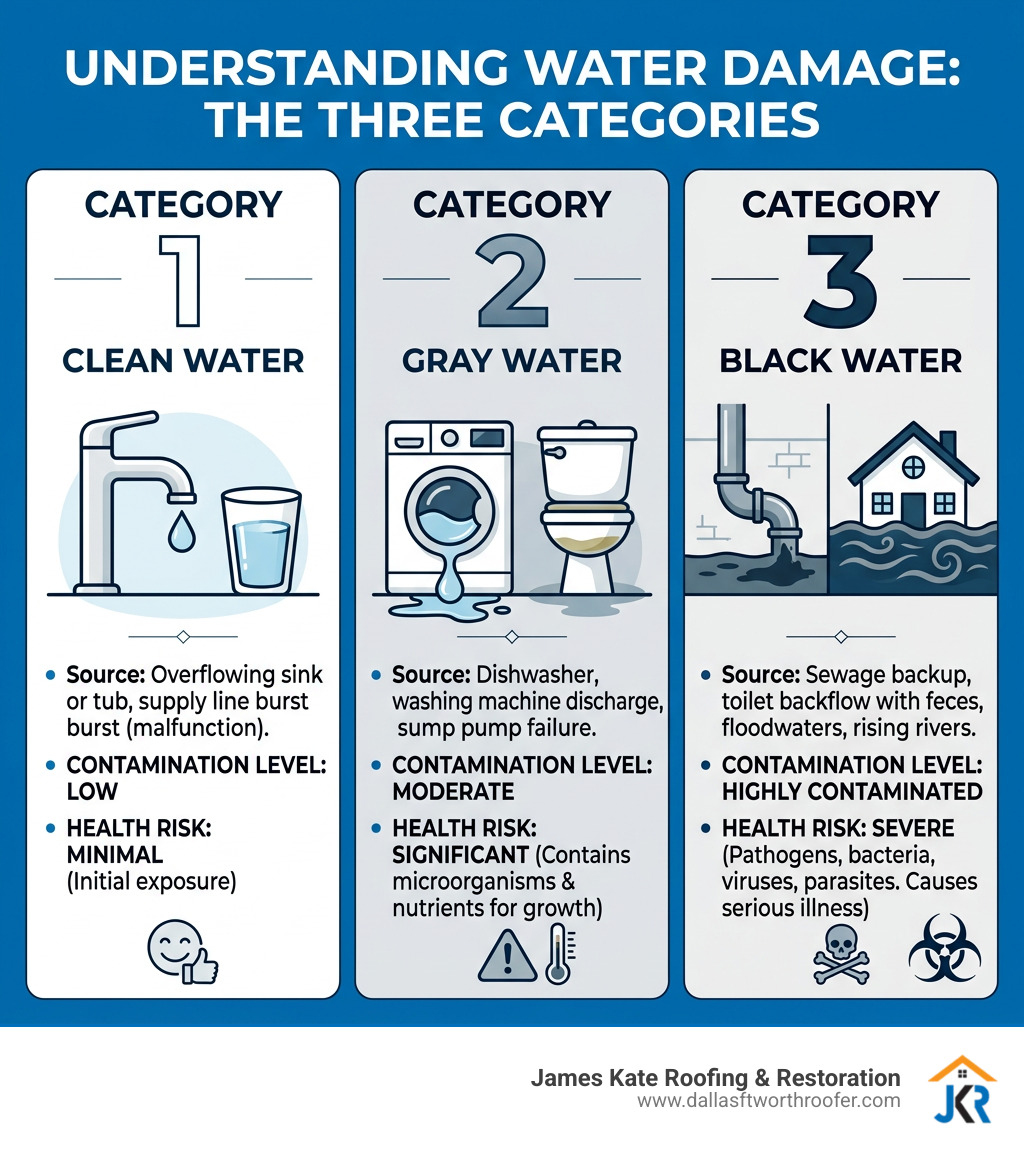
Think of Category 3 as a cocktail of things you never want in your living room: raw sewage, heavy metals, pesticides, and industrial chemicals. Because this water often comes from the ground or sewer systems, it is teeming with bacteria and viruses. Common pathogens found in these losses include E. coli and sewage pathogens, as well as Hepatitis A, Norovirus, and Rotavirus.
The danger doesn’t stop with the water itself. According to the EPA mold growth timeline, mold and other microbial growth can begin in just 24 to 48 hours after exposure. In a category 3 water loss, the organic matter in the water acts as “food” for mold, accelerating the growth process and turning a bad situation into a full-blown biohazard nightmare.
Identifying Category 3 Water Loss vs. Other Categories
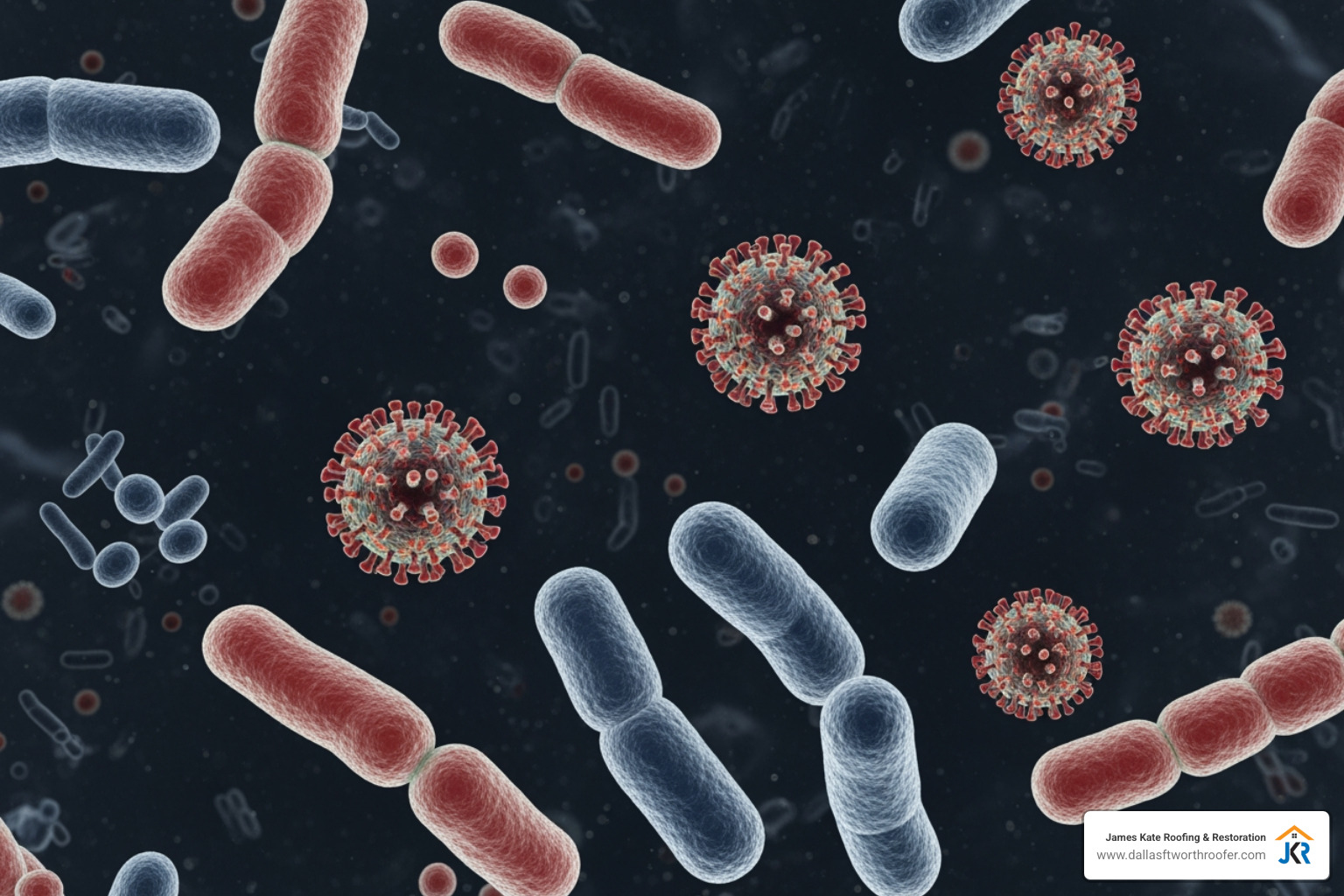
To understand the severity of Category 3, it helps to compare it to its “cleaner” cousins:
- Category 1 (Clean Water): This comes from a sanitary source, like a broken supply line or a bathtub overflow. While it’s “clean” initially, it can degrade into Category 2 or 3 within 48 to 72 hours if left stagnant.
- Category 2 (Gray Water): This water contains significant contamination, such as discharge from dishwashers, washing machines, or a sump pump failure. It has the potential to cause discomfort or sickness if consumed or touched.
- Category 3 (Black Water): This is the “big bad.” It includes sewage, rising floodwaters from rivers or streams, and wind-driven rain from hurricanes.
A key indicator of category 3 water loss is often the smell. While Category 1 water is odorless, Category 3 usually carries a pungent, earthy, or sulfurous scent due to the high organic load and bacterial activity.
Why Category 3 is a Serious Health Hazard
We cannot stress this enough: do not try to “shop vac” a sewage backup yourself. Exposure to black water can lead to severe gastrointestinal infections, respiratory distress, and significant skin irritation.
Because of these risks, OSHA biological hazard guidelines require specific safety protocols for anyone working in these environments. Professional restorers use specialized Personal Protective Equipment (PPE), including Tyvek suits, respirators, and nitrile gloves, to prevent cross-contamination to unaffected parts of the home.
Common Causes and Classes of Category 3 Water Loss
In the DFW area, we see category 3 water loss stem from a variety of sources, ranging from plumbing failures to North Texas weather events.
Common Causes of Category 3 Water Loss
- Sewage Backups: These are often caused by clogged municipal sewer lines, collapsed pipes on the property, or heavy rains overwhelming the system.
- Natural Flooding: Per FEMA flood insurance facts, even clean-looking water from a rising river or flash flood is automatically classified as Category 3. Once water touches the ground, it picks up animal waste, fertilizers, and road chemicals.
- Toilet Overflows: If a toilet backs up from beyond the trap (meaning it’s bringing up waste from the sewer line), it is a Category 3 event.
- Weather Events: Hurricane-force winds or severe DFW thunderstorms can drive rain into a building. If that water passes through insulation or building materials, it can quickly become grossly contaminated.
- Water Heater Failures: While a water heater starts as Category 1, the 75% water heater failure rate for units over 12 years old means many leaks go unnoticed. If that water sits in a warm basement for days, it degrades into a biohazard.
Understanding the Class of the Loss (Class 1-4)
While “Category” tells us how dirty the water is, “Class” tells us how hard it will be to dry.
- Class 1: Minimal moisture. Only a small area is affected, and materials are low-porosity (like a concrete floor).
- Class 2: An entire room is affected. Water has wicked up the walls (usually less than 24 inches) and soaked into carpets.
- Class 3: The most extreme evaporation load. This often involves water coming from overhead (like a ceiling collapse) and saturating entire walls, insulation, and subfloors.
- Class 4: Specialty drying situations. This involves water trapped in “deep” pockets of low-porosity materials like hardwood floors, plaster, or stone.
| Feature | Category 1 | Category 2 | Category 3 |
|---|---|---|---|
| Source | Supply line, sink | Dishwasher, sump pump | Sewage, river flood |
| Health Risk | Low | Medium | High (Biohazard) |
| Porous Material | Often salvageable | May need removal | Must be removed |
| Professional Req. | Recommended | Highly Recommended | Mandatory |
The Professional solar Process for Category 3 Water Loss
When our team at James Kate Roofing & solar arrives at a category 3 water loss, we don’t just start pulling up carpet. We approach the home like a hazardous materials site.
The IICRC certification importance cannot be overstated here. Certified technicians understand how to set up containment zones using heavy-duty plastic sheeting and negative air pressure machines. This ensures that as we remove contaminated drywall, the dust and pathogens don’t float into your kitchen or bedrooms. We also use HEPA filtration to scrub the air of microscopic spores and bacteria.
For more information on how we handle these complex projects, you can read more info about our solar services.
Step-by-Step Professional Cleanup Process
- Initial Assessment: We identify the source and use moisture meters to map out the “wet footprint.”
- Containment: We seal off the affected area to protect the rest of the family.
- Water Extraction: We remove standing water using industrial-grade pumps.
- Controlled Demolition: In a Category 3 loss, almost all porous materials (carpet, pad, drywall, insulation) that touched the water must be removed and disposed of as biohazardous waste.
- Antimicrobial Treatment: We apply EPA-registered, hospital-grade disinfectants to the remaining structural studs and subfloors.
- Industrial Dehumidification: We use LGR (Low Grain Refrigerant) dehumidifiers to pull moisture out of the air and the “bones” of the house.
- Monitoring: We return daily to check moisture levels until the home reaches its “dry standard.”
Typically, the cleanup phase takes 3–7 days, followed by the build-back phase where we restore your home to its original (or better!) condition.
Post-Cleanup Testing and Safety Verification
How do you know it’s actually clean? For category 3 water loss, we often recommend third-party environmental testing. This involves taking swabs of the surfaces to check for fecal bacteria or other pathogens.
This is especially vital if the damage occurred near high-sensitivity areas, like a baby’s room or the kitchen. We want to ensure that when we sign off on a project, your home is not just dry, but medically safe for re-occupancy.
Insurance Claims and Preventing Future Black Water Damage
Dealing with insurance adjusters is often the most stressful part of a category 3 water loss. Common insurance claim statistics show that water damage is a top concern for insurers, but Category 3 is tricky.
Standard homeowners insurance often excludes flood damage (rising water from the ground) and may require a specific “Sewer Backup” rider to cover a basement drain overflow. Without these endorsements, you could be facing a $25,000+ bill out of pocket.
We use Xactimate, the same estimating software used by major insurance carriers, to ensure our documentation is bulletproof. This includes detailed photos, moisture maps, and a line-by-line breakdown of why certain materials had to be removed for safety.
Immediate Steps for Homeowners
If you walk into your basement and see dark, foul-smelling water, follow these steps:
- Evacuate: Don’t let kids or pets near the water.
- Don’t Touch: Do not walk through the water without rubber boots and PPE.
- Shut Off Power: Only if you can reach the breaker box without stepping in water.
- Call the Pros: Contact James Kate Roofing & solar immediately.
- Document: Take photos from the doorway, but don’t linger in the contaminated air.
The 98% basement damage statistic proves that almost every homeowner will deal with this eventually. Being prepared is half the battle.
Effective Prevention Strategies
- Backwater Valves: These one-way valves prevent sewage from flowing back into your home if the city line clogs.
- Sump Pump Maintenance: Test your pump every spring and install a battery backup.
- Proper Drainage: Ensure gutters are clean and downspouts carry water at least 6-10 feet away from the foundation.
- Plumbing Inspections: Have a plumber check your main sewer line with a camera every few years, especially if you have mature trees with thirsty roots.
Frequently Asked Questions about Category 3 Water Loss
Can I clean up Category 3 water damage myself?
We strongly advise against it. The biohazard risks are real. Standard household cleaners aren’t enough to kill the pathogens found in sewage. Furthermore, DIY cleanup often fails to address hidden moisture behind baseboards, leading to structural rot and hidden mold that can plague your family’s health for years.
How long does it take to fully restore a property?
The mitigation phase (cleanup and drying) usually takes 3 to 7 days. Once the home is certified dry and safe, the reconstruction phase begins. Depending on the extent of the damage, full solar can take anywhere from two weeks to two months.
Is Category 3 water damage always covered by insurance?
No. This is a common misconception. “Sudden and accidental” pipe bursts are usually covered, but “seepage,” “backup,” and “flooding” often require specific policy add-ons. It is vital to review your policy with your agent before a disaster strikes.
Conclusion
A category 3 water loss is a significant event that requires a calm, professional response. At James Kate Roofing & solar, we operate on the principles of honesty, integrity, and Biblical values. As a GAF President’s Club recognized contractor, we bring the same level of excellence to our solar work as we do to our roofing projects.
Whether you are in Mansfield, Arlington, or anywhere in the DFW area, we are here to help you through the entire process — from the first gallon of water extracted to the final coat of paint during the build-back. Don’t risk your family’s health on a DIY cleanup.
If you’re facing a water emergency, more info about our solar services is just a click away. Let us help you turn your “black water” nightmare back into a safe, clean home.
