Understanding White Roof Sealant and Cool Roof Technology
When we talk about “cool roofs,” we aren’t just talking about a roof that looks stylish. In the roofing industry, specifically as we look toward the standards of May 2026, a cool roof is defined by its ability to reflect solar energy and emit thermal radiation. This is where white roof sealant plays a starring role.
The effectiveness of these sealants is measured by two primary factors: Solar Reflectance and Thermal Emissivity. Reflectivity is the ability to bounce sunlight back into the atmosphere, while emissivity is the ability to release any heat that was absorbed. Together, these determine the Solar Reflectance Index (SRI). High-quality products, such as those found in the White Seal technical specs, demonstrate how advanced polymer science can drastically change a building’s performance.
Statistics show that a premium white roof sealant can achieve an initial reflectivity of 87%. Over time, as the roof faces the Texas sun and wind, this “weathered” reflectivity typically settles around 77%. Even at that level, the sealant is significantly outperforming traditional dark roofing materials. By keeping the roof surface cooler, we also help mitigate the “urban heat island effect,” a phenomenon where metropolitan areas like Arlington and Grand Prairie become significantly warmer than surrounding rural areas due to heat-absorbing surfaces.
Comparing Elastomeric Acrylic vs. Silicone White Roof Sealant
Choosing the right sealant often comes down to a battle between two heavyweights: Acrylic and Silicone. Both have their place in our North Texas climate, but they perform very differently under specific conditions.
| Feature | Elastomeric Acrylic | Premium Silicone |
|---|---|---|
| Ponding Water | Not recommended (may swell or peel) | Excellent (resists standing water) |
| Rain Resistance | 4 hours to skin over | 15 minutes to be rain-safe |
| Cleanup | Soap and water | Mineral spirits / Solvent |
| Elongation | Up to 500% | High flexibility, less prone to brittle failure |
| VOC Levels | Low (Environmentally friendly) | Low-odor / High-solids formulas available |
| Cost | Budget-friendly | Premium investment |
Performance Benefits of Silicone White Roof Sealant
If your commercial building in Mansfield or Midlothian has a flat roof where water tends to sit after a heavy downpour, silicone is your best friend. Products like APOC 576 are 100% silicone and specifically designed for low-slope roofs.
The standout feature of silicone is its moisture-cure technology. It is often rain-safe in as little as 15 minutes, which is a lifesaver during those unpredictable Texas spring storms. Because silicone is non-sacrificial, it doesn’t wash away or thin out over time. It creates a permanent, leak-proof seal that laughs in the face of ponding water.
Versatility of Elastomeric White Roof Sealant
On the other hand, elastomeric acrylic sealants, like the 289 White Roof Sealant properties we often reference, offer incredible value. These are “breathable” coatings, meaning they allow moisture vapor from inside the building to escape without causing blisters in the membrane.
Acrylics are water-based, making cleanup easy and reducing the environmental impact. Modern formulas use internal crosslinking agents that activate as the water evaporates, creating a through-film elasticity. This allows the sealant to stretch and contract—up to 500% elongation—as your building shifts and temperatures fluctuate.
Application Guide: How to Seal Your Roof for Maximum Efficiency
Applying a white roof sealant isn’t as simple as slapping on a coat of paint. To get that 10-year or 20-year protection, the application must be precise. At James Kate Roofing & solar, we follow a strict protocol to ensure the bond is permanent.
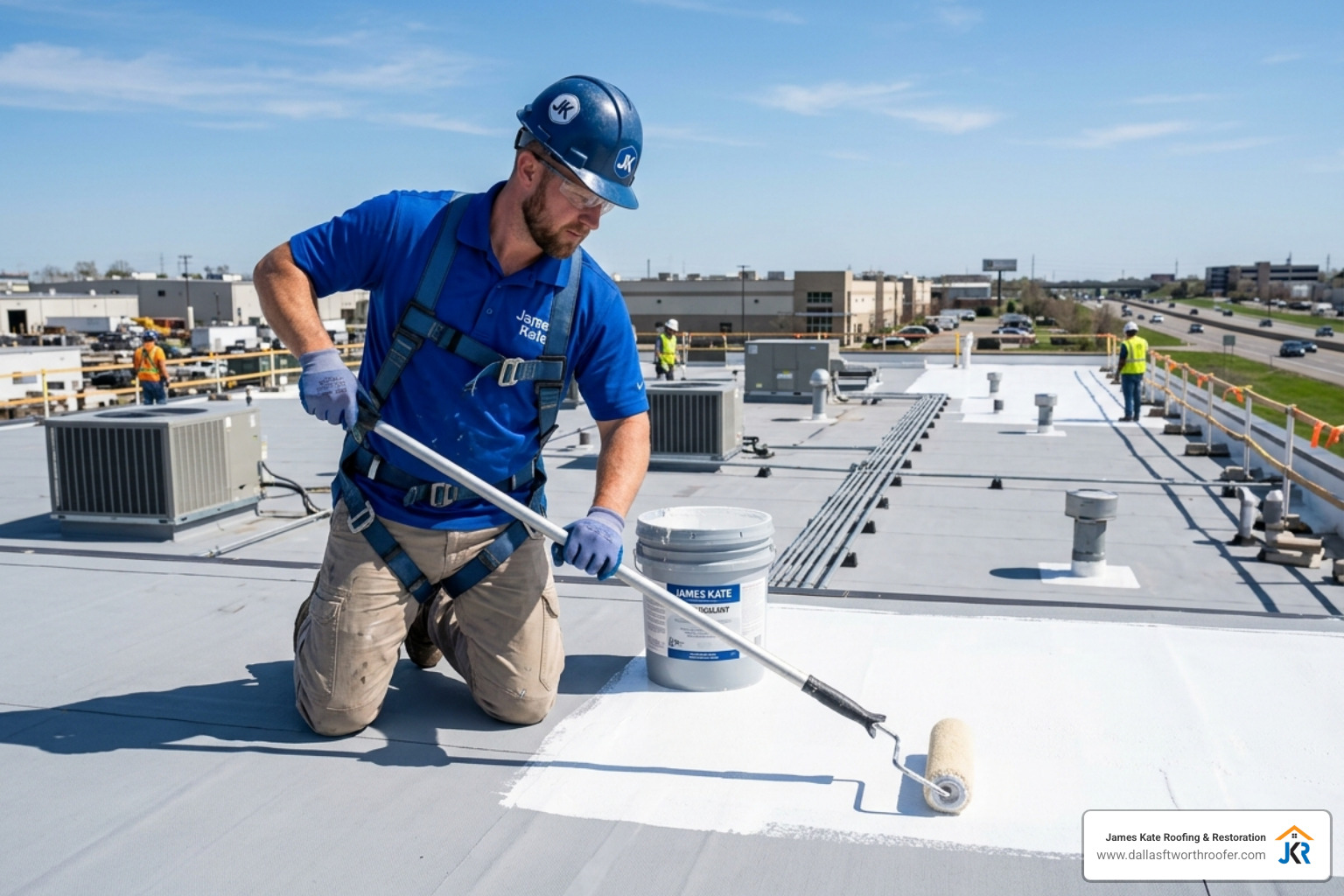
The process begins with surface preparation. We can’t emphasize this enough: the sealant is only as good as the surface it’s sticking to. We typically start with a professional pressure wash to remove dirt, grease, and loose debris. On certain surfaces like EPDM, we might even use a specialized cleaning solution to ensure the “bloom” is removed from the rubber.
Once clean and dry, we perform an adhesion test. We apply a small patch of sealant with a fabric reinforcement, let it cure, and then pull it. If it takes the substrate with it, we’re good to go. If it peels off like a sticker, we know we need a primer. Most modern systems require a two-coat application to reach the desired dry film thickness.
Preparing Different Surfaces for White Roof Sealant
- Metal Roofs: We focus on rust removal and treating fasteners. A white roof sealant on metal can drop interior temperatures by 50 degrees, but it won’t stop rust if it’s already bubbling underneath.
- Concrete: This is a porous surface. We often dampen concrete slightly (not wet) to prevent it from sucking the moisture out of the sealant too quickly, which can cause cracking.
- Modified Bitumen/Asphalt: The biggest challenge here is “bleed-through.” Oils from the asphalt can stain the white coating yellow. We use “bleed-block” primers or specific formulations like Henry 289 to ensure the white stays bright.
- EPDM: These “rubber” roofs require a deep scrub. We use a wide-tip pressure washer to avoid tearing the membrane while ensuring all carbon dust is removed.
Recommended Tools and Drying Times
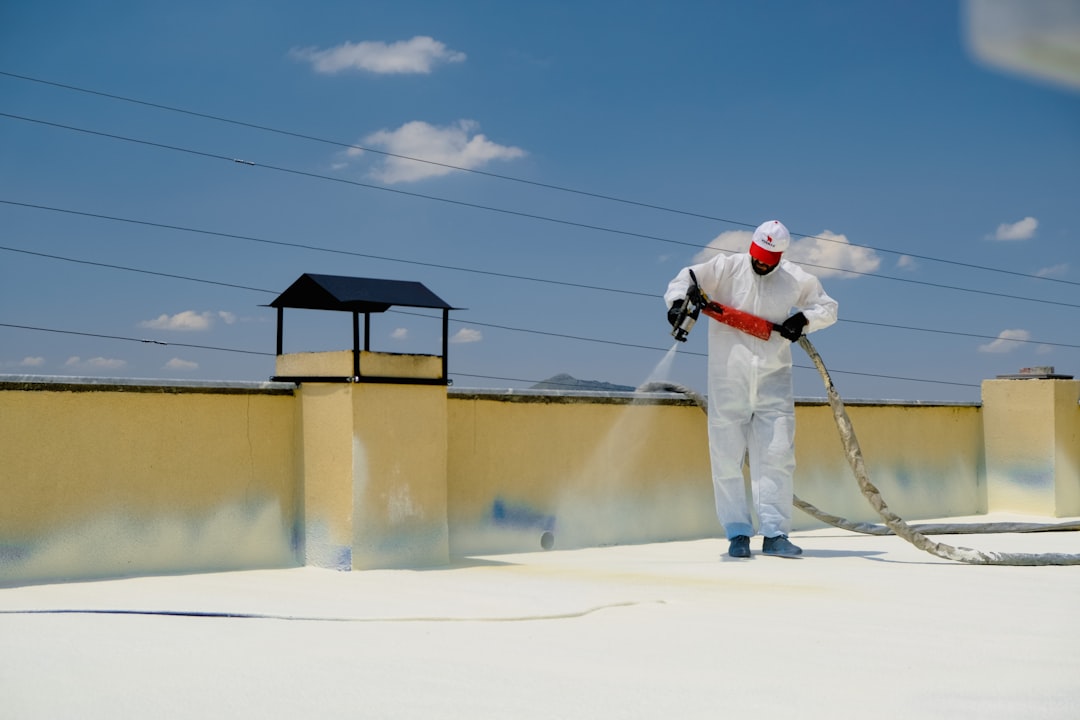
For smaller repairs or flashing work, a brush or trowel is standard. However, for large-scale energy efficiency projects, we use professional-grade airless sprayers. This ensures an even, consistent “milage” (thickness) across the entire roof.
Drying times are the most critical variable. While some silicone products are rain-safe in 15 minutes, most acrylic elastomeric coatings need at least 4 hours of clear weather and temperatures above 50°F to skin over. A full cure usually takes 24 hours. If we apply it too late in the day and dew settles on the roof, the coating can wash right off—which is a mess nobody wants!
Long-Term Maintenance and Energy Savings
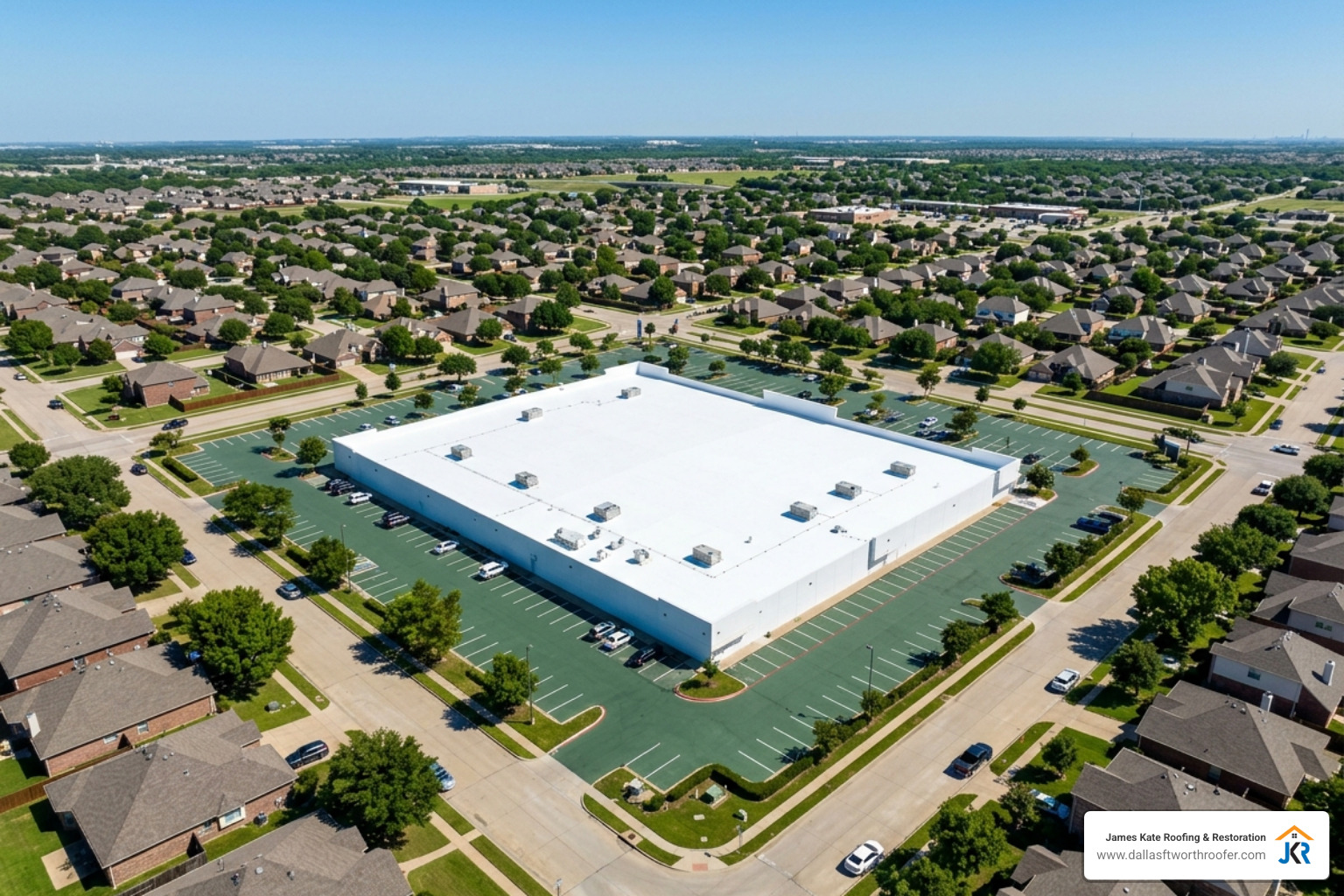
Once your roof is white, the savings start immediately. We have seen customers in the DFW Metroplex achieve up to 35% energy savings on their cooling costs. By reflecting the sun, the roof surface temperature can drop from a blistering 150°F to a manageable 100°F.
However, a white roof only works if it stays white. Dirt, pollen, and pollutants can “gray out” the surface, reducing its reflectivity. We recommend annual inspections to check for physical damage and a light cleaning every few years to maintain that high SRI.
Our commercial roofing solutions often include a maintenance plan. This ensures that any small punctures or areas of wear are touched up before they become leaks. Maintaining your coating is often a requirement for keeping your warranty in force. If you’ve invested in a 10-year protection plan, don’t let a lack of maintenance void your security.
Frequently Asked Questions about White Roof Sealants
How much coverage does a 5-gallon bucket provide?
Typically, a 5-gallon bucket of white roof sealant provides about 250 to 350 square feet of coverage for a single coat. However, coverage varies based on the porosity of your roof. A smooth metal roof will use much less product than a rough, mineral-surfaced cap sheet. For a standard two-coat system, you should plan on roughly 35 square feet per gallon total.
Can white roof sealant be used for leak repairs?
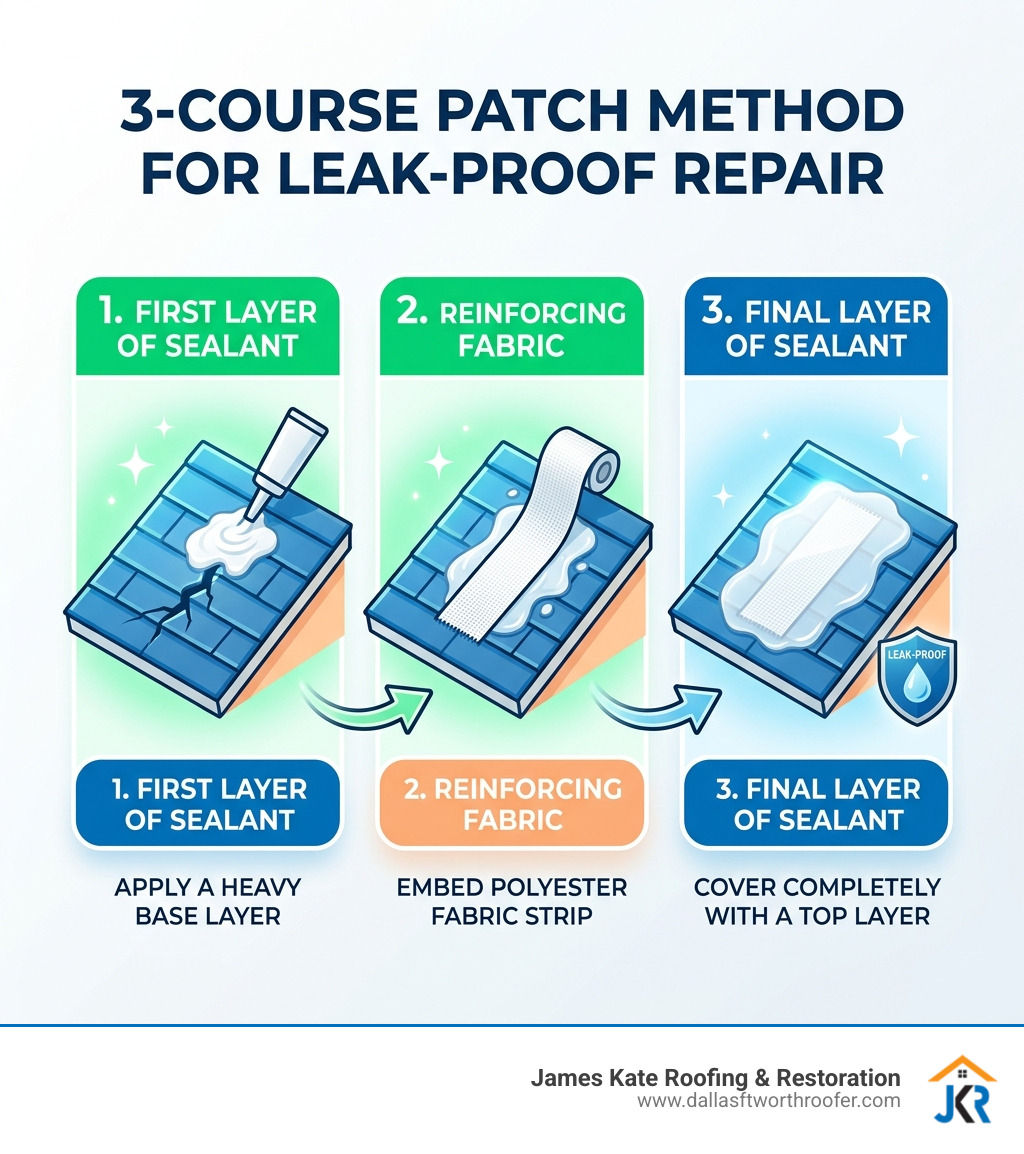
Yes, but you have to use the right “grade.” There are “brush grade” sealants for coating and “trowel grade” or “patching compounds” for repairs. For a leak, we use a 3-course patch: a heavy layer of sealant, a strip of reinforcing polyester fabric, and another heavy layer of sealant. This creates a seamless, reinforced membrane over the problem area. For professional help with these repairs, check out our roof solar services.
What are the most common application mistakes?
The “Big Three” mistakes we see are:
- Applying when it’s too cold: Most sealants need temperatures to be 50°F and rising.
- Trapping moisture: If you apply sealant over a damp roof that hasn’t properly dried, the sun will turn that moisture into steam, causing the coating to blister and peel.
- Going too thin: It’s tempting to stretch the product to save money, but if the coating is too thin, it won’t have the tensile strength to survive the expansion and contraction of the roof.
Conclusion
At James Kate Roofing & solar, we believe that “white is the new green.” By choosing a white roof sealant, you are making a sustainable choice that protects your building, your wallet, and our local Texas environment. Whether you are in Mansfield, Arlington, or anywhere else in the DFW area, our team is committed to providing honest, integrity-driven service.
We don’t just apply a product; we provide a long-term solution backed by our GAF President’s Club recognition and a commitment to Biblical principles. If you’re ready to stop paying for the sun to heat your building, we’re ready to help.

For a consultation on how to transform your roof into an energy-saving asset, visit our expert roofing services page or give us a call. Let’s make your roof work for you!
Dustin Eatman is a seasoned roofing professional with deep, hands-on expertise that spans residential and commercial roofing, insurance solar, and long-term roof asset management. As the owner of James Kate Roofing & solar in the Dallas–Fort Worth metroplex, he’s built a reputation for diagnosing roof systems accurately, communicating clearly, and executing projects with a high standard of workmanship and documentation. Dustin understands the technical details that make roofs perform—proper underlayment selection, slope and drainage considerations, ventilation strategy, flashing and penetration detailing, and manufacturer-specific installation requirements—because he’s worked through the real-world challenges that cause leaks, premature wear, and warranty issues. He’s equally fluent in the operational side of roofing: jobsite planning, quality control, safety, material ordering, crew coordination, and customer experience from inspection to closeout. In insurance-related projects, Dustin brings practical knowledge of claim workflows, adjuster meetings, scope alignment, supplements, and the importance of photo evidence and thorough records, helping property owners navigate stressful situations with confidence. For commercial clients—especially property and facility managers—he emphasizes proactive maintenance and targeted repairs that reduce disruption, extend roof life, and prevent expensive interior damage. Dustin also stays focused on doing things the right way: educating customers on realistic options, setting expectations, and prioritizing solutions that hold up over time rather than quick fixes. That blend of technical skill, field experience, process discipline, and owner-level accountability is what makes Dustin Eatman a trusted expert in the roofing industry.