How Much Wind Can Your Roof Actually Handle?
High-wind asphalt shingles are specially engineered roofing products designed to resist wind uplift, tab blow-off, and shingle delamination at speeds well beyond what standard shingles can handle. Here’s a quick breakdown of what to look for:
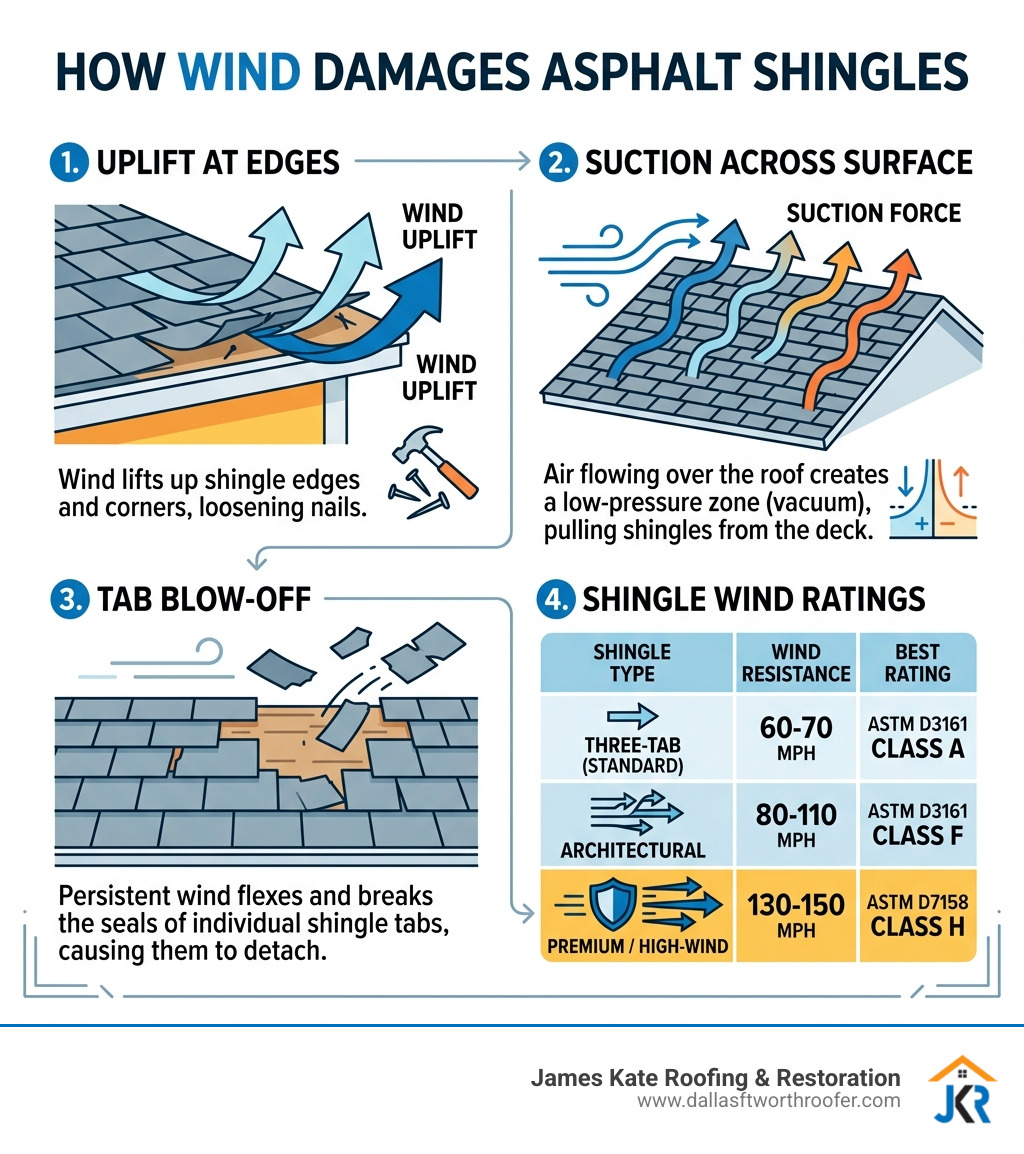
| Shingle Type | Wind Resistance | Best Rating |
|---|---|---|
| Three-tab (standard) | 60-70 mph | ASTM D3161 Class A |
| Architectural | 80-110 mph | ASTM D3161 Class F |
| Premium / High-Wind | 130-150 mph | ASTM D7158 Class H |
The top-rated high-wind asphalt shingles share three key traits:
- Rated ASTM D7158 Class H (resists uplift from winds up to 150 mph)
- Made with SBS-modified asphalt or reinforced fiberglass mats
- Backed by a wind warranty of 130 mph or higher (some offer unlimited wind speed coverage)
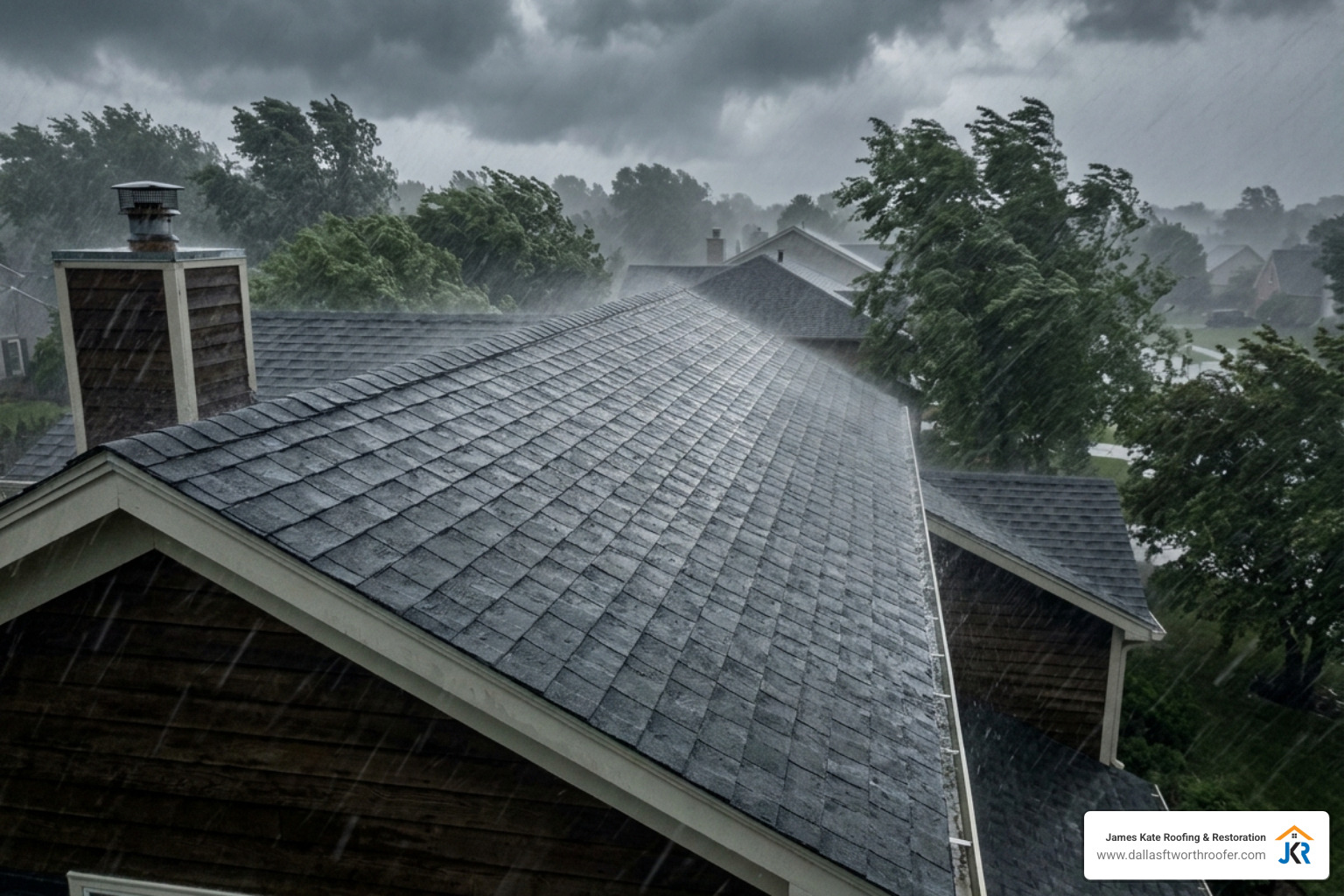
Every year, hurricanes and severe storms cause billions of dollars in damage to homes across the country. In the Dallas–Fort Worth area, it’s not just hurricanes — it’s the violent spring thunderstorms, straight-line winds, and hail that put roofs to the test year after year. The problem is, most homeowners don’t know whether their current shingles are built to survive those conditions until it’s too late.
Wind doesn’t just blow shingles off. It works against your roof in a more complex way — creating uplift pressure that tugs at the edges and corners, and suction pressure that pulls across the entire surface. Standard shingles aren’t always built to resist both forces, especially at the speeds DFW storms can produce.
That’s why choosing the right shingles before a storm matters far more than replacing them after one.
I’m Dustin Eatman, owner of James Kate Roofing & solar in the DFW area, and I’ve spent years inspecting, installing, and replacing roofs after severe wind and hail events — giving me a front-row seat to exactly how high-wind asphalt shingles perform when it counts. In this guide, I’ll walk you through everything you need to know to make a confident, informed decision for your home.
Easy high-wind asphalt shingles glossary:
Why High-Wind Asphalt Shingles are Essential in DFW
In North Texas, our roofs take a beating that most of the country can’t imagine. From Mansfield to Midlothian, the DFW Metroplex sits in a unique geographic position where warm, moist air from the Gulf meets cold, dry air from the north. The result? High-velocity straight-line winds and “microbursts” that can mimic the power of a Category 1 or 2 hurricane.
While standard three-tab shingles might be the “budget-friendly hero” for mild climates, they often fail when wind speeds cross the 60-70 mph threshold. In areas like Arlington or Grand Prairie, building codes have become increasingly stringent to ensure homes can withstand these pressures. Investing in high-wind asphalt shingles isn’t just about following the law; it’s a critical cost-benefit calculation. Replacing a few blown-off shingles every year adds up quickly in repair costs and stress. Worse, a single failed shingle can lead to water intrusion, damaging your attic and interior ceilings.
By opting for a premium wind-resistant system, you are protecting your largest investment. These shingles are designed to stay put, even when the wind tries its best to peel them back like an orange. If you’re looking for more details on how we can help protect your home, check out our residential roofing services.
Understanding High-Wind Asphalt Shingles Technologies
What actually makes a shingle “high-wind”? It isn’t just extra glue. Modern high-wind asphalt shingles are masterpieces of engineering, combining chemistry and structural design to fight back against Mother Nature.
Standard shingles can become brittle over time, especially under the intense Texas sun. When wind hits a brittle shingle, it snaps. High-wind versions use multi-layered protection and reinforced fiberglass mats to create a “skeleton” that can flex without breaking. Research by the Insurance Institute for Business & Home Safety (IBHS) has shown that the strength of the bond between shingles is the single most important factor in preventing blow-offs. You can read more about their findings in this study on Wind Uplift of Asphalt Shingles: Sensitivity to Roof Slope and Installation Temperature.
Advanced Sealants and Mechanical Fastening
The secret sauce of a wind-resistant roof lies in how the shingles stick together and how they are nailed down. Several proprietary technologies have changed the game:
- LayerLock® Technology: This innovation mechanically fastens the common bond between shingle layers. It creates a wider nailing zone, ensuring that the roofer hits the “sweet spot” every time, which significantly reduces the risk of the shingle pulling through the nail head.
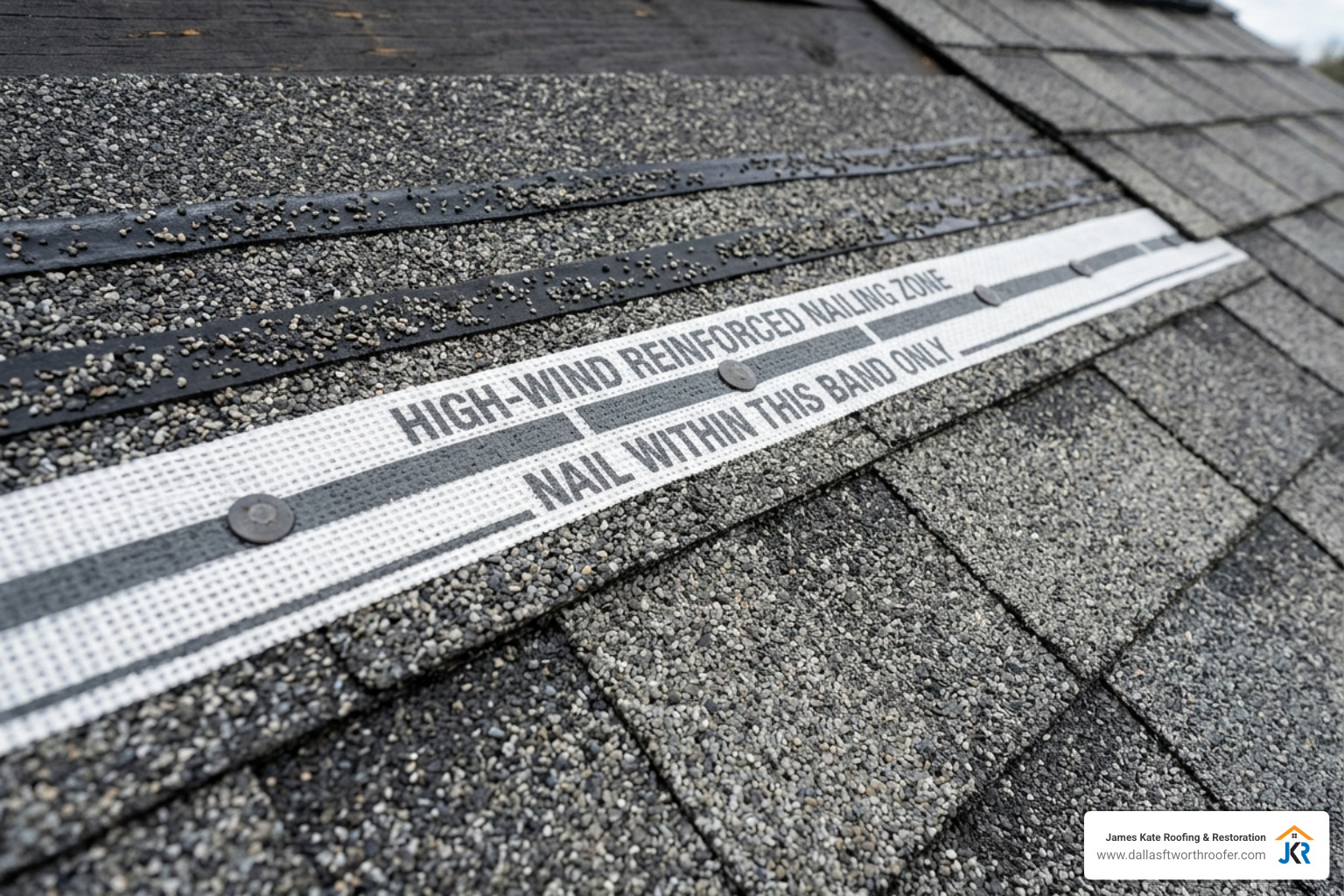
- Dura-Grip™ and SureNail®: These technologies focus on the sealant strip. Dura-Grip™ uses a specially formulated bitumen sealant that bonds the shingles together when heated by the sun. Once bonded, they are nearly impossible to pull apart by hand. SureNail® adds a reinforced fabric strip in the nailing area to provide incredible “nail pull-through” resistance—meaning the wind has to work much harder to rip the shingle off the roof.
- Thermal Sealing: For these sealants to work, they need heat. In DFW, we usually have plenty of that! Most shingles require temperatures above 140°F to fully activate the seal. Once that “thermal bond” is set, the roof acts as a single, cohesive shield.
Impact Resistance and SBS-Modified Asphalt
In Granbury and Mansfield, wind rarely comes alone—it usually brings hail. This is where SBS-modified asphalt comes in. SBS (Styrene-Butadiene-Styrene) is a rubberizing polymer mixed into the asphalt.
This “rubberized” asphalt makes the shingle flexible and resilient. Think of it like a rubber ball versus a cracker; when a hailstone hits a standard shingle, it might crack the asphalt. When it hits an SBS-modified shingle, the material “bounces” back. These are typically rated as UL 2218 Class 4, the highest impact rating available. In testing, this involves dropping a 2-inch steel ball from 20 feet onto the shingle. If the shingle doesn’t crack or rupture, it passes. For homeowners, this often means lower insurance premiums and a roof that survives the spring storm season intact.
Testing Standards and Wind Resistance Ratings
When you’re shopping for high-wind asphalt shingles, you’ll see a lot of “Class” ratings. Understanding these is the difference between buying a roof that lasts 30 years and one that fails in three.
There are two main tests you need to know:
- ASTM D3161: This is a “fan-induced” wind test. Class F is the gold standard here, meaning the shingles withstood 110 mph winds for at least two hours.
- ASTM D7158: This test measures “uplift resistance.” It’s a more modern, mathematical approach to how much force it takes to lift the shingle tab. Class H is the highest rating, signifying resistance to wind speeds up to 150 mph.
For a deep dive into how these calculations work, the D7158/D7158M Standard Test Method for Wind Resistance of Asphalt Shingles provides the technical framework used by the entire industry.
Wind Speed Limits for High-Wind Asphalt Shingles
While a shingle might be rated for 110 mph, many premium products now offer protection for 130 mph or even 150 mph peak gusts. This is crucial because a 110 mph “sustained” wind is very different from a 150 mph “three-second gust.” Most modern building codes in high-wind zones now use the three-second gust as the benchmark.
In some extreme cases, standard conditions don’t apply—such as homes built on high ridges or near large open bodies of water where wind speeds accelerate. In those scenarios, we look to the Asphalt Roofing Manufacturers Association (ARMA) guidelines to scale the shingle requirements properly.
Proper Installation and Warranty Requirements
Even the best high-wind asphalt shingles will fail if they aren’t installed correctly. At James Kate Roofing & solar, we see “high-wind” shingles in dumpsters every day simply because the previous installer didn’t follow the manufacturer’s “high-wind” instructions.
| Feature | Standard Installation | High-Wind Installation |
|---|---|---|
| Nail Count | 4 Nails per shingle | 6 Nails per shingle |
| Starter Strips | Optional at rakes | Required at all eaves and rakes |
| Nail Placement | General “nail line” | Precise placement in reinforced zone |
| Adhesive | Factory sealant only | Manual dabs of roof cement (in some cases) |
To qualify for the best warranties—like the WindProven™ Limited Wind Warranty—manufacturers often require a “complete roof system.” This means you can’t just use the shingles; you must use their specific starter strips, ridge caps, and leak barriers. When installed as a system with four required accessories, some manufacturers even offer unlimited wind speed coverage for the first 15 years.
If your roof has already suffered through a storm, we also provide comprehensive solar and build-back services to get your home back to its best condition.
Frequently Asked Questions about Weather-Resistant Roofing
What are the best shingles for high wind?
The “best” shingle is one that carries an ASTM D7158 Class H and ASTM D3161 Class F rating. Look for products with reinforced nailing zones (like a fabric strip) and high-performance sealants. Brands like GAF and Owens Corning offer top-tier architectural shingles that are specifically engineered for 130-150 mph gusts.
Do impact-resistant shingles last longer?
Yes, generally. Because they are made with SBS-modified asphalt, they remain flexible longer than standard shingles. This flexibility prevents the “drying out” and cracking that leads to granule loss. While they cost more upfront, the reduction in maintenance and the potential for insurance discounts often make them the more affordable choice over 20 years.
How do I spot wind damage on my roof?
Wind damage isn’t always as obvious as a missing shingle. Look for:
- Lifted Tabs: Shingles that look slightly “puffy” or aren’t sitting flat.
- Creased Shingles: A dark horizontal line near the top of the shingle tab where it has been blown up and folded back.
- Granule Loss: Check your gutters; if you see piles of sand-like granules, your shingles’ protective layer is wearing thin.
- Attic Leaks: Use a flashlight in your attic during the day to look for water stains or “daylight” peeking through the roof deck.
Conclusion
Living in the DFW area means accepting that severe weather is a “when,” not an “if.” Choosing high-wind asphalt shingles is one of the smartest moves you can make to protect your family and your finances.
At James Kate Roofing & solar, we don’t just “slap on” shingles. We are a family-owned company built on honesty, integrity, and Biblical principles. As a GAF President’s Club member—a distinction held by less than 1% of roofers—we have the expertise to install these high-performance systems so they actually work when the wind starts howling. Plus, we back our work with up to a 25-year workmanship warranty, giving you peace of mind through every storm season.
Whether you are in Mansfield, Arlington, or Midlothian, don’t wait for the next hurricane-force gust to test your roof. Contact us for a high-wind roofing consultation today, and let’s make sure your home is ready for whatever Mother Nature throws at it.

Dustin Eatman is a seasoned roofing professional with deep, hands-on expertise that spans residential and commercial roofing, insurance solar, and long-term roof asset management. As the owner of James Kate Roofing & solar in the Dallas–Fort Worth metroplex, he’s built a reputation for diagnosing roof systems accurately, communicating clearly, and executing projects with a high standard of workmanship and documentation. Dustin understands the technical details that make roofs perform—proper underlayment selection, slope and drainage considerations, ventilation strategy, flashing and penetration detailing, and manufacturer-specific installation requirements—because he’s worked through the real-world challenges that cause leaks, premature wear, and warranty issues. He’s equally fluent in the operational side of roofing: jobsite planning, quality control, safety, material ordering, crew coordination, and customer experience from inspection to closeout. In insurance-related projects, Dustin brings practical knowledge of claim workflows, adjuster meetings, scope alignment, supplements, and the importance of photo evidence and thorough records, helping property owners navigate stressful situations with confidence. For commercial clients—especially property and facility managers—he emphasizes proactive maintenance and targeted repairs that reduce disruption, extend roof life, and prevent expensive interior damage. Dustin also stays focused on doing things the right way: educating customers on realistic options, setting expectations, and prioritizing solutions that hold up over time rather than quick fixes. That blend of technical skill, field experience, process discipline, and owner-level accountability is what makes Dustin Eatman a trusted expert in the roofing industry.