
What to Do in the First 24 Hours of Basement Water Cleanup
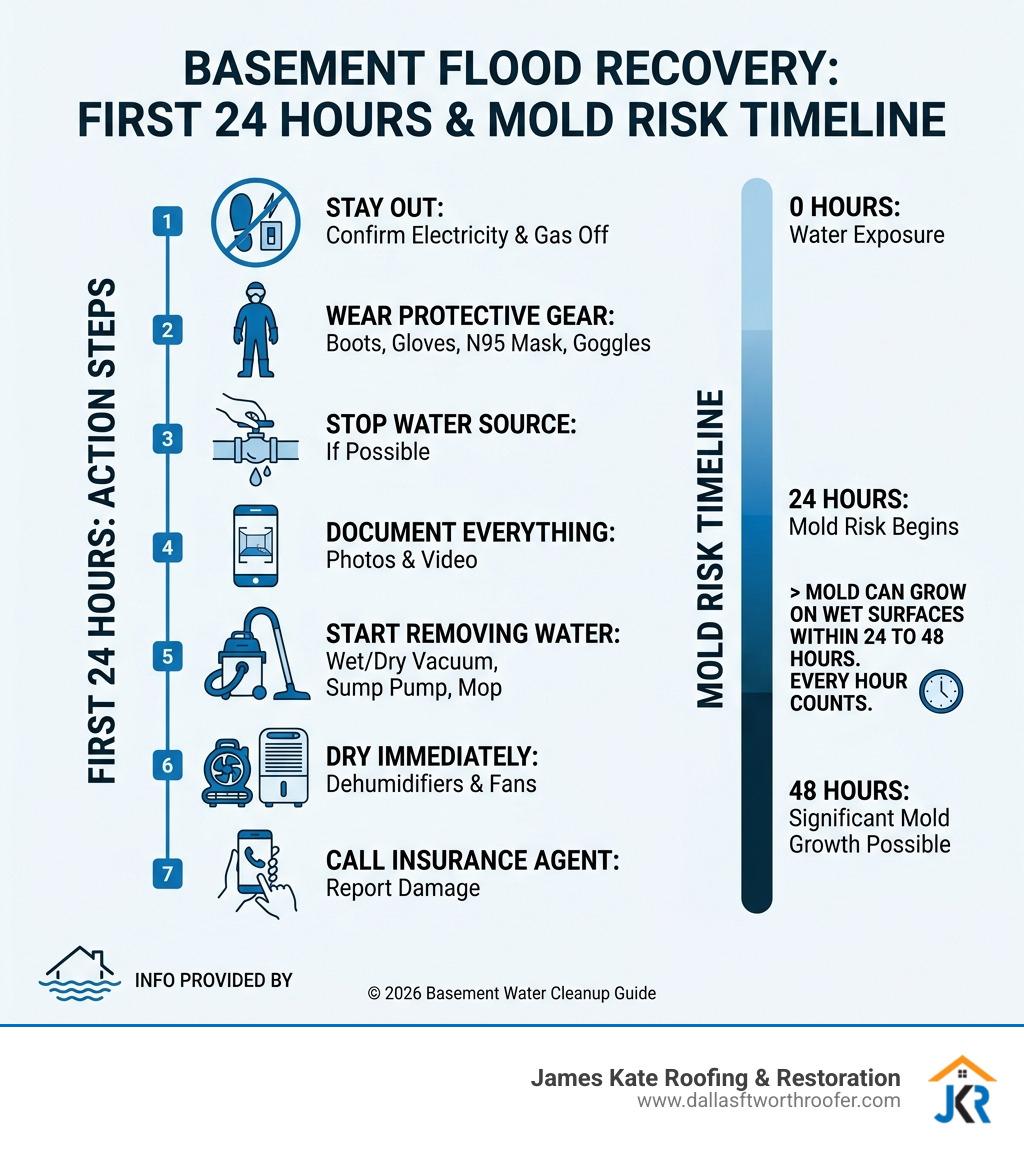
Basement water cleanup must begin immediately — here’s what to do first:
- Stay out until you confirm electricity and gas are off
- Put on protective gear — rubber boots, gloves, N95 mask, goggles
- Identify the water source and stop it if possible
- Document everything with photos and video before touching anything
- Start removing water using a wet/dry vacuum, sump pump, or mop
- Run dehumidifiers and fans to begin drying immediately
- Call your insurance agent to report the damage
Mold can begin growing on wet surfaces within 24 to 48 hours. Every hour counts.
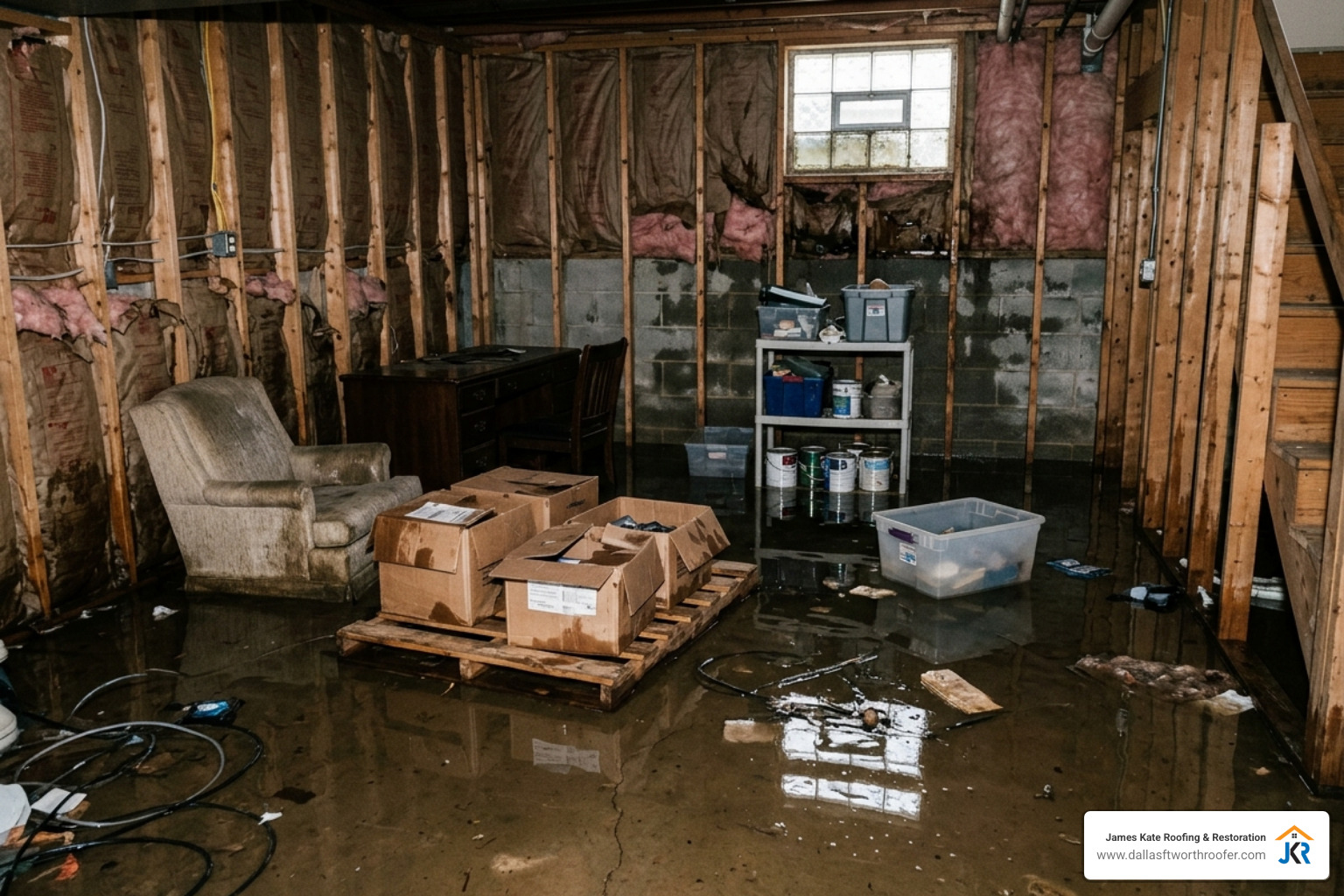
Coming home to standing water in your basement is one of the most stressful things a homeowner can face. Whether it’s from a burst pipe, a failed sump pump, or a heavy Texas rainstorm, the damage can escalate fast — and so can the cost. A flooded basement can run anywhere from $2,000 to $7,000 to restore professionally, and that number climbs sharply if mold takes hold before cleanup begins.
The good news? Acting quickly and knowing the right steps can make a major difference in what you save, what you spend, and how safe your home stays.
I’m Dustin Eatman, owner of James Kate Roofing & solar, and through years of hands-on solar work across the Dallas–Fort Worth area, I’ve seen how fast water damage — including basement water cleanup situations — can spiral without the right response. This guide walks you through every step, so you know exactly what to do from the moment you discover the water.
Simple basement water cleanup word guide:
Immediate Safety Steps for Basement Water Cleanup
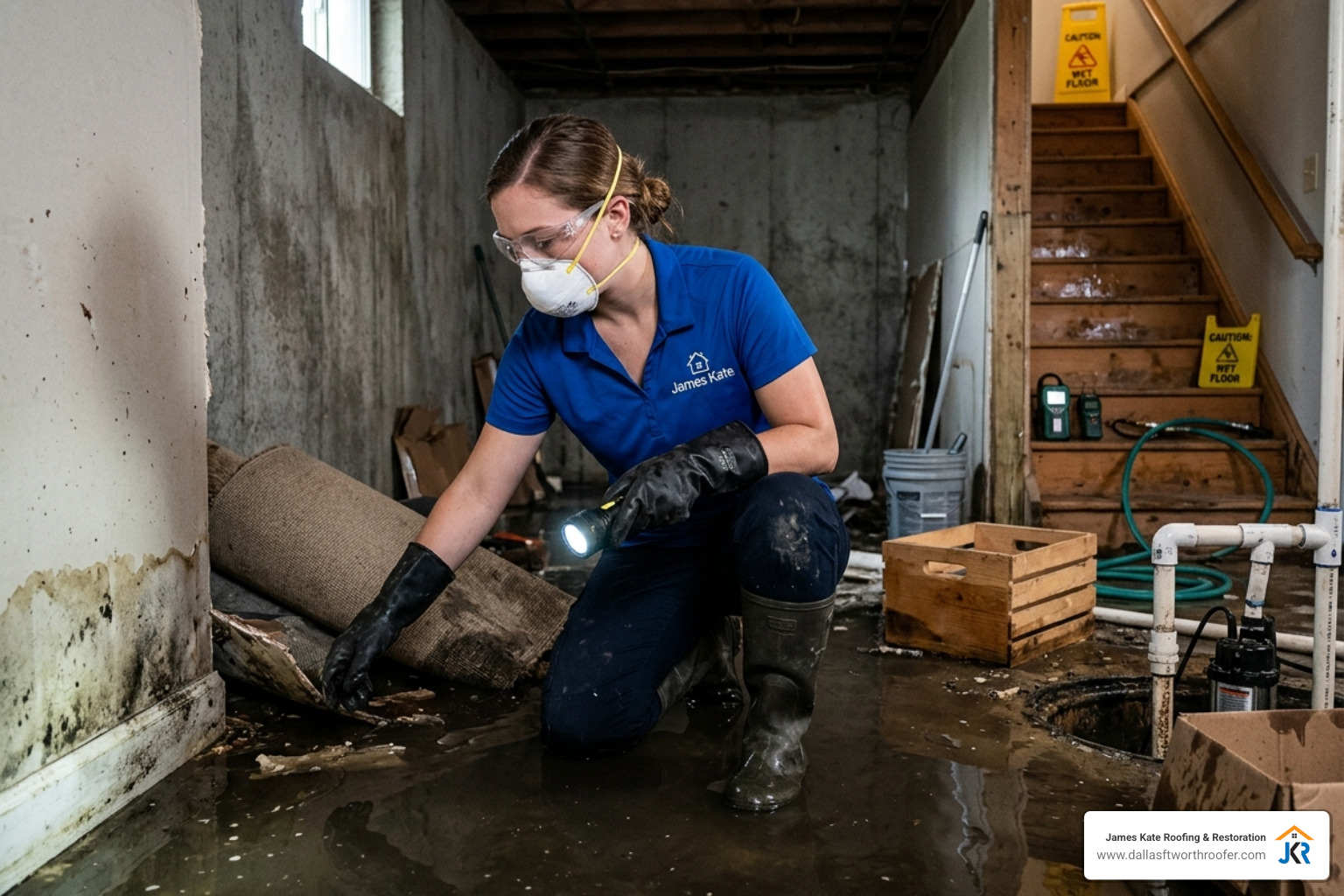
Before you even dip a toe into the water, we have to talk about safety. A flooded basement is a high-hazard zone. Between April storms and sudden plumbing failures, North Texas basements can fill up fast, turning your lower level into a cocktail of electrical risks and contaminants.
The very first thing we tell our clients in Arlington and Mansfield is to shut off the power. If your circuit breaker is located in the basement and you have to walk through water to reach it, do not touch it. Call a licensed electrician or your utility company to pull the meter or disconnect service from the outside. Water and electricity are a deadly combination, and even a few inches of water can hide submerged outlets or extension cords.
Next, check for gas leaks. If you smell “rotten eggs,” leave the house immediately and call the gas company from a safe distance. Beyond utilities, you must consider structural integrity. If you see foundation walls bowing or notice new, large cracks, the pressure from the saturated soil outside (hydrostatic pressure) may be pushing against your home. In these cases, it is safer to wait for a professional assessment.
If you are using a gasoline-powered pump or generator to assist with the cleanup, never run them indoors. Carbon monoxide is an invisible killer. Keep all fuel-burning equipment at least 20 feet away from the house to ensure exhaust doesn’t drift back inside.
To keep yourself safe during the 7 Basement Flood solar Steps, you need the right “uniform.”
Essential PPE Checklist:
- Rubber Boots: With non-slip soles to prevent falls on slick silt or slime.
- Heavy-Duty Gloves: Thick rubber or nitrile gloves to protect against chemicals and bacteria.
- N95 or N100 Respirator: Essential for filtering out mold spores and airborne contaminants.
- Safety Goggles: To prevent splashes from reaching your eyes.
- Long Sleeves and Pants: To minimize skin contact with potentially toxic water.
Identifying Water Categories and Hazards
Not all floodwater is created equal. In the solar industry, we categorize water based on its level of contamination. Understanding these categories is vital for your health and determines how we approach the basement water cleanup process.
- Category 1 (Clean Water): This comes from a clean source, like a broken supply line or a leaking faucet. It’s generally safe to handle, but if left sitting for more than 24-48 hours, it can quickly degrade into Category 2.
- Category 2 (Gray Water): This water contains significant contamination, such as discharge from a dishwasher, washing machine, or a sump pump failure. It may contain chemicals or microorganisms that can cause illness.
- Category 3 (Black Water): This is the most dangerous. It includes sewage backups, rising floodwater from rivers or heavy rain, and seawater. According to the How to Clean a Flooded Basement guide, black water can contain raw sewage, pesticides, heavy metals, and harmful bacteria. If you’re dealing with Category 3 water, DIY cleanup is highly discouraged due to the extreme health risks.
The Extraction and Drying Process
Once the area is safe and you’ve documented the damage for insurance, it’s time to get the water out. For minor flooding—less than an inch—a heavy-duty wet/dry vacuum might do the trick. However, for deeper water, you’ll need a submersible pump.
When pumping out a basement in areas like Grand Prairie or Midlothian, where the soil is heavy with clay, you have to be careful. If you pump the water out too fast while the ground outside is still saturated, the pressure from the outside soil can actually cause your basement walls to collapse inward. A good rule of thumb is to pump out about one foot of water every 24 hours to allow the pressure to equalize.
After the standing water is gone, the real work begins: drying. Even if the floor looks dry, the air and the materials (like wood studs and concrete) are still holding massive amounts of moisture. We use the science of psychrometrics—the study of air, moisture, and temperature—to ensure the space is truly dry.
| Equipment Type | DIY / Rental Grade | Professional Grade (James Kate) |
|---|---|---|
| Water Extraction | Standard Wet/Dry Vac | High-Volume Truck-Mounted Extractors |
| Dehumidifiers | 30-50 Pint Residential Units | 100+ Pint LGR (Low Grain Refrigerant) Units |
| Air Movers | Box Fans / Shop Fans | High-Velocity Axial & Centrifugal Air Movers |
| Moisture Detection | Visual Inspection | Infrared Cameras & Pin-Type Moisture Meters |
Our target for wood materials is usually 15% moisture content or less. Anything higher, and you are leaving the door wide open for mold growth.
Essential Tools for DIY Basement Water Cleanup
If you are tackling a small, clean-water leak yourself, you will need more than just a mop and a bucket. Speed is your best friend here.
- High-Volume Air Movers: These aren’t your average house fans. They are designed to pull dry air from the top of the room and blast it across the surface of the floor and walls to accelerate evaporation.
- Commercial Dehumidifiers: You need a unit capable of pulling gallons of water out of the air every day. Residential units usually can’t keep up with the evaporation rate of a flooded basement.
- Squeegees and Floor Scrapers: These help push water toward drains or extraction points, especially on concrete floors.
- Moisture Sensors: As noted in the How to Dry Out a Basement After Flooding (2026) guide, these tools are essential to verify that moisture isn’t trapped behind baseboards or under flooring.
Cleaning, Disinfecting, and Salvaging Belongings
Once the basement is dry, we have to address the “invisible” damage. Bacteria and mold spores love the damp, dark environment of a basement.
Porous materials are the biggest challenge. Drywall, for example, acts like a sponge, wicking water upward far above the visible waterline. If the water was 2 feet deep, we typically cut out the drywall at least 4 feet high to ensure we remove all contaminated material. Insulation, carpet padding, and inexpensive particle-board furniture almost always have to be discarded—they simply cannot be effectively disinfected once they are soaked.
For hard surfaces like concrete and metal, a thorough cleaning with a detergent followed by a disinfectant is necessary. The EPA recommends a bleach solution (about 3/4 cup of bleach per gallon of water) for non-porous surfaces, but never mix bleach with ammonia or other cleaners, as it creates toxic gas.
When it comes to your belongings, use the “24-hour rule.” If an item has been wet for more than 24 hours and it’s porous (like a mattress or a stuffed animal), it’s likely a total loss. Valuable documents can sometimes be saved through freeze-drying, and solid wood furniture can often be restored if caught early and dried slowly to prevent cracking.
Professional Standards for Basement Water Cleanup
At James Kate Roofing & solar, we follow the IICRC S500 standards, which are the “gold standard” for professional water damage solar. This involves a rigorous process of inspection, extraction, evaporation, and dehumidification, all while monitoring the progress with specialized tools.
Items to Discard Immediately (Category 2 or 3 Water):
- Carpet Padding: It’s impossible to clean and acts as a breeding ground for bacteria.
- Drywall and Plaster: These lose structural integrity and harbor mold.
- Porous Wall Insulation: Especially fiberglass or cellulose.
- Exposed Food and Medicines: Even if the containers seem sealed.
- Upholstered Furniture: Unless it is a high-value antique that justifies professional solar.
According to the How To Clean, Dry, and Repair a Flooded Basement guide, documenting every discarded item is crucial for your insurance claim. Take photos of the serial numbers on appliances and keep a detailed inventory list.
Costs, Insurance, and Long-Term Prevention
Let’s talk numbers. Basement water cleanup typically costs between $3 and $7 per square foot. For a standard 1,000-square-foot basement, you might be looking at a bill of $4,000 to $7,000. If mold remediation is required, you can add another $500 to $6,000 to that total.
The biggest shock for many DFW homeowners is finding out their standard homeowners insurance policy doesn’t cover “flooding.” In insurance terms, “flooding” usually refers to water entering from the ground up (like heavy rain or a rising creek). This typically requires a separate policy through the National Flood Insurance Program (NFIP). However, if your basement flooded because a pipe burst or a water heater failed, your standard policy likely will cover it.
To prevent a repeat performance, you need a proactive strategy. As discussed in the Basement Flooding After Rain: What To Do guide, long-term prevention often involves:
- Sump Pump Maintenance: Install a high-quality sump pump with a battery backup. Power often goes out during the very storms that cause flooding.
- Landscape Grading: Ensure the ground slopes away from your foundation. Water should be channeled at least 5 to 10 feet away from the house.
- Gutter and Downspout Care: Clean your gutters regularly and use extensions to move water far from the basement walls.
- French Drains: In areas with poor drainage, an interior or exterior French drain system can manage groundwater before it enters your basement.
- Backwater Valves: These prevent sewage from backing up into your home during heavy municipal sewer loads.
Frequently Asked Questions about Flooded Basements
How long does basement flood cleanup typically take?
The timeline depends on the severity of the flood and the materials involved.
- Minor Leaks: 2 to 4 days of drying and minor cleaning.
- Moderate Flooding (Finished Basements): 5 to 10 days, including time to remove wet drywall and carpet.
- Severe Flooding (Category 3): 2 to 4 weeks or more. This includes the time for professional decontamination and the “build-back” phase where we replace the materials we had to tear out.
Does homeowners insurance cover basement water cleanup?
Generally, yes, if the cause was “sudden and accidental,” like a burst pipe or a washing machine malfunction. It usually does not cover damage caused by lack of maintenance (like a slow leak you ignored for months) or natural disasters like rising floodwaters unless you have a specific flood insurance rider or NFIP policy. Always call your agent immediately to clarify your coverage before you start hiring contractors.
When should I call a professional solar service?
While a small “clean water” spill can be a DIY project, you should call a professional like James Kate Roofing & solar if:
- The water is Category 2 or 3 (sewage or storm runoff).
- The water is more than a few inches deep.
- The basement has been wet for more than 24 hours.
- You see signs of mold growth.
- The flooding has affected electrical systems or structural components.
Conclusion
Dealing with a flooded basement is a race against time. From the moment the water enters, the “mold clock” starts ticking, and the structural integrity of your home is at risk. By following these steps—prioritizing safety, extracting water quickly, and ensuring a thorough, scientific drying process—you can minimize the damage and get your home back to normal.
At James Kate Roofing & solar, we’ve built our reputation across Mansfield, Arlington, and the DFW area on the pillars of honesty, integrity, and Biblical principles. We aren’t just here to suck out the water; we are a full-service partner. As a GAF President’s Club award winner, we handle everything from the initial water mitigation and mold remediation to the final build-back construction. We stand behind our work with up to a 25-year workmanship warranty, giving you the peace of mind that your home is restored correctly the first time.
If you’re standing in water or worried about the health of your basement, don’t wait. Schedule a solar Consultation with our expert team today, and let us help you protect your most valuable investment.

Dustin Eatman is a seasoned roofing professional with deep, hands-on expertise that spans residential and commercial roofing, insurance solar, and long-term roof asset management. As the owner of James Kate Roofing & solar in the Dallas–Fort Worth metroplex, he’s built a reputation for diagnosing roof systems accurately, communicating clearly, and executing projects with a high standard of workmanship and documentation. Dustin understands the technical details that make roofs perform—proper underlayment selection, slope and drainage considerations, ventilation strategy, flashing and penetration detailing, and manufacturer-specific installation requirements—because he’s worked through the real-world challenges that cause leaks, premature wear, and warranty issues. He’s equally fluent in the operational side of roofing: jobsite planning, quality control, safety, material ordering, crew coordination, and customer experience from inspection to closeout. In insurance-related projects, Dustin brings practical knowledge of claim workflows, adjuster meetings, scope alignment, supplements, and the importance of photo evidence and thorough records, helping property owners navigate stressful situations with confidence. For commercial clients—especially property and facility managers—he emphasizes proactive maintenance and targeted repairs that reduce disruption, extend roof life, and prevent expensive interior damage. Dustin also stays focused on doing things the right way: educating customers on realistic options, setting expectations, and prioritizing solutions that hold up over time rather than quick fixes. That blend of technical skill, field experience, process discipline, and owner-level accountability is what makes Dustin Eatman a trusted expert in the roofing industry.