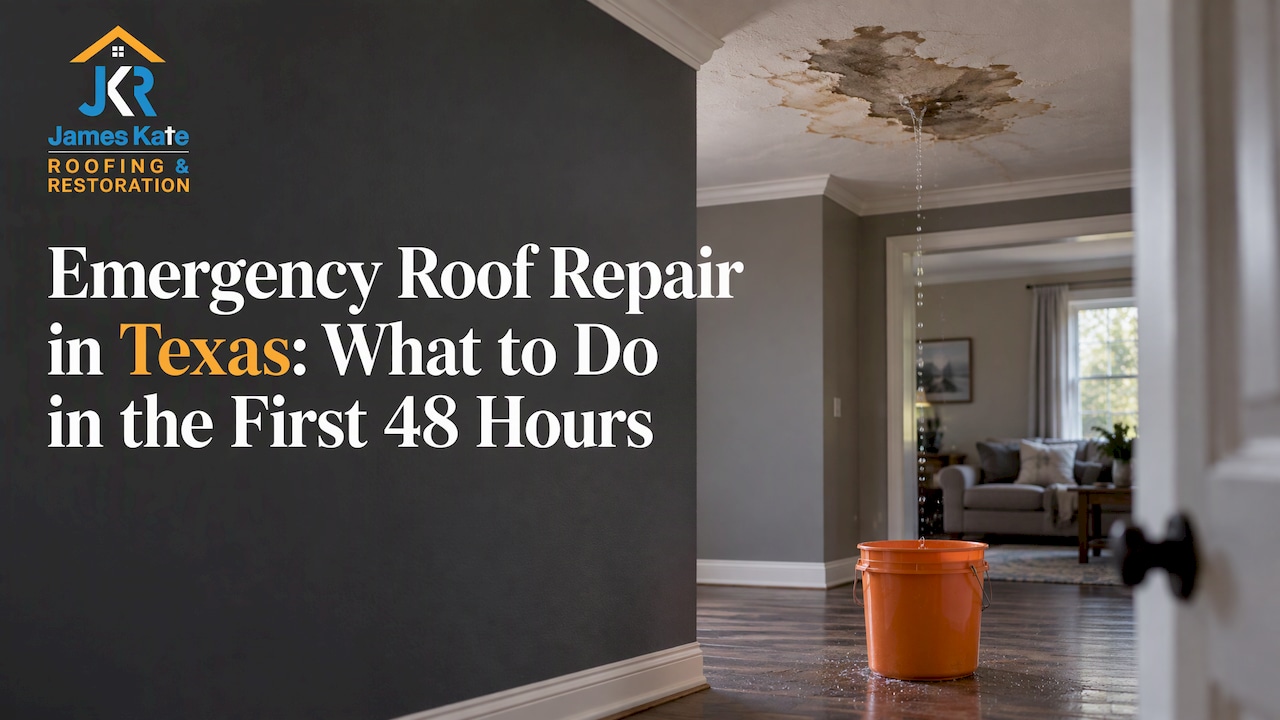
When a roof fails in Texas, the order of your first moves decides how much damage you stop and how much of the bill your insurer covers. Document the damage, stop more water from getting in with a temporary cover, report the claim, and keep permanent repairs for after the adjuster has looked. A roofer who handles the emergency cover and knows how claims work saves you from doing the risky part yourself. That is what our emergency roofing service is for.
TL;DR
- Take photos and video of the damage before you move or clean anything, then call your insurance company to report it.
- Make only temporary repairs: cover holes, remove standing water, keep every receipt. Wait for the adjuster before any permanent fix.
- Do not climb onto a storm-damaged roof. A professional tarp job is safer and leaves the evidence intact.
- Texas law bars roofers from waiving your deductible. Get several written bids and never sign a contract with blank spaces.
- James Kate Roofing & solar offers emergency roofing, free inspections and estimates across the DFW area.
Table of Contents
- The first hour: make the house safe and record everything
- Call your insurer first, then a roofer
- Temporary repairs versus permanent repairs
- What emergency roof repair costs in Texas
- Deductibles and Texas law: a red flag to spot
- Hiring a roofer in an emergency without getting burned
- When the permanent repair or replacement comes
- Commercial roofs and property managers
- Perspective: why we push for a fast inspection, not a fast patch
- Need help now?
- FAQ
- Sources
The first hour: make the house safe and record everything
Start inside. If water is coming through the ceiling, move people and valuables out of the wet area. Put a bucket under the drip and, if a ceiling is bulging with water, puncture it carefully from a safe distance only if you can do so without standing underneath. If you see sagging, sparking light fixtures or smell gas, leave the house and call 911.
Then document. The Texas Department of Insurance (TDI) tells storm victims to take pictures and video of the damage, keep a list of repairs and save receipts. Shoot wide shots of each side of the house, close-ups of missing shingles, dented vents, and every wet ceiling or wall inside. Do this before cleanup or tarping begins. Photos taken after you have swept up debris are weaker evidence.
Keep a notebook or phone note with the date, time, and the name of each person you speak to at your insurance company. You will want it when the claim drags on.
Call your insurer first, then a roofer
People ask whether to call a roofer or insurance first. TDI says to contact your insurance agent or company as soon as possible to report the damage. In practice you can do both the same day: report the claim, then call a roofer to stop the water. What you should not do is let anyone start permanent work before the adjuster sees the damage.
Why that matters comes down to timing rules and policy type. TDI’s home insurance guide, updated in June 2026, says Texas law requires insurers to acknowledge a claim within 15 days, accept or deny it within 15 business days of receiving everything they need, and send payment within 5 business days after agreeing to pay. Along the Gulf Coast, wind and hail coverage often comes from the Texas Windstorm Insurance Association (TWIA), which has 60 days to accept or deny and 10 days to pay after acceptance.
The same guide explains the two main policy types, and your policy decides your payout:
| Policy type | What it pays | Example from TDI’s guide |
|---|---|---|
| Replacement cost | Cost to repair or replace at current prices | $10,000 roof, $2,000 deductible: $8,000 |
| Actual cash value | Replacement cost minus depreciation | The same roof might pay about $5,000 after the deductible |
Most companies pay replacement cost claims in two checks: a first one for the estimated cost minus depreciation and your deductible, and a second for the held-back depreciation once you submit the bill for the finished job. TDI also notes that insurers do not pay for a new roof just because the old one is worn out, and that your wind and hail deductible may differ from your other deductibles. Ask your agent which number applies to you.
If you need money quickly, TDI suggests asking your insurer about an advance payment, and being present when the adjuster visits so you can point out all damage. For a fuller walk-through of the process, see our Texas roof insurance claims guide for DFW homeowners.
Temporary repairs versus permanent repairs
This is the line that protects your claim. TWIA explains that temporary protection can include covering openings with tarp or plastic, boarding up broken windows and doors, and drying out wet areas. Reasonable temporary repair costs may be covered, so keep every invoice and receipt.
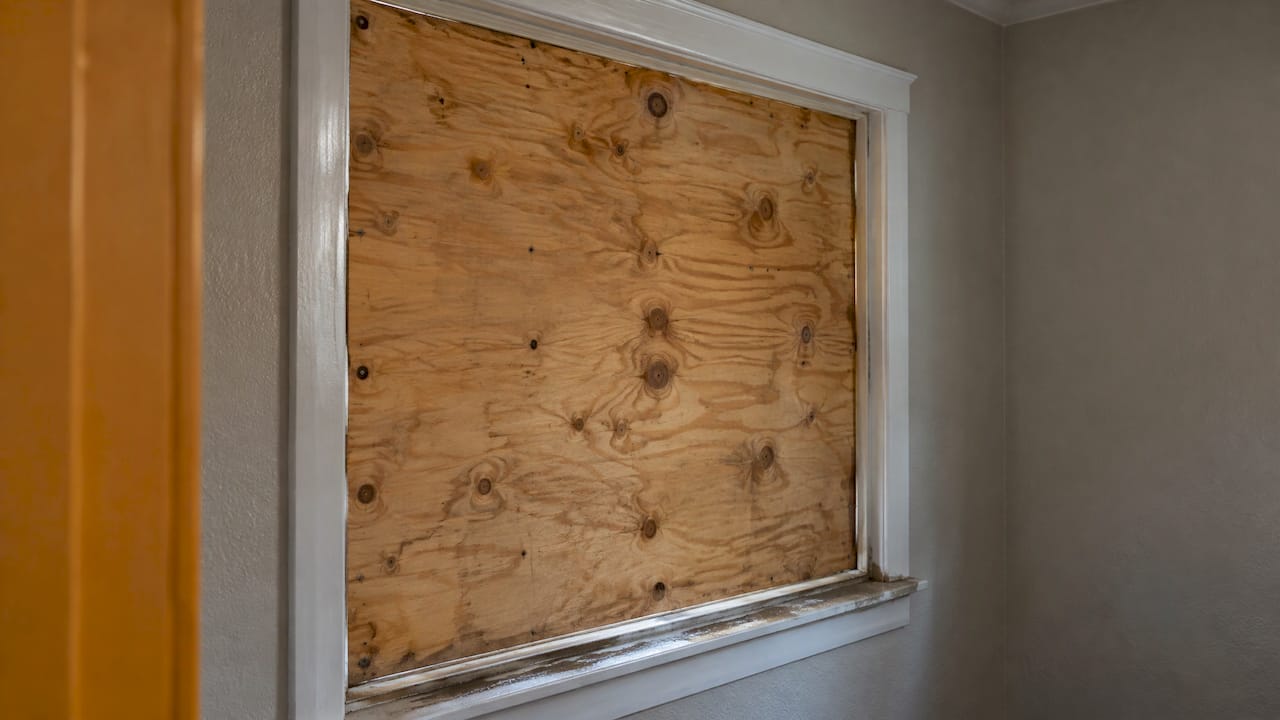
Permanent repairs, such as a roof replacement or asphalt patches, should wait until the adjuster has finished the inspection. TWIA gives the reason: the adjuster needs to see the damage and determine whether wind or hail caused it, and discarding or replacing damaged items before discussing them with a claims examiner may affect full reimbursement.
TDI’s guidance on temporary repairs after a storm lists the same basics: remove standing water, cover broken windows and holes to keep rain out, and keep a record of what you did.
What a good emergency tarp does
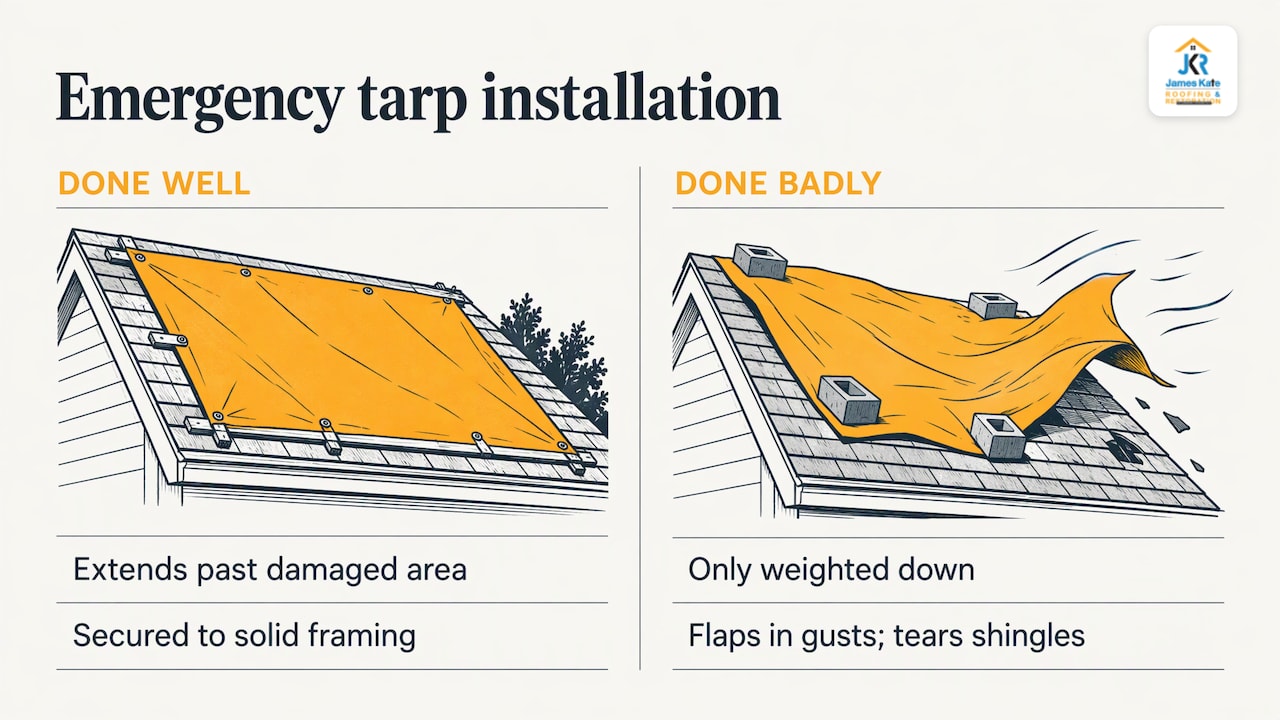
A tarp is not a patch. It is a cover that keeps rain out of the structure until the roof can be inspected and properly repaired. Done well, it extends well past the damaged area and is secured to solid framing, not just weighted down. Done badly, it flaps in the next gust and tears more shingles off.
The National Roofing Contractors Association (NRCA) notes in its guidance on repairs after strong winds that most wind damage begins at roof edges, where repeated wind cycles peel materials back, and that openings should be temporarily covered with tarpaulins to limit rain damage. It also says that, except in extreme situations, homeowners should not attempt roof system repairs themselves, because actions like puncturing blisters or spreading coatings can hide evidence a roofing contractor needs.
That is why we recommend leaving the tarp to a crew. A wet, storm-damaged roof is slippery, and decking weakened by water can give way underfoot. Our emergency roof tarping page explains how rapid-response tarping works in the Dallas-Fort Worth area.
What emergency roof repair costs in Texas
There is no single honest number. Emergency work is priced by what the roof needs, and a few factors move the bill the most:
- Size and location of the opening. A small flashing failure around a vent is a different job from a torn-off section of decking.
- Roof pitch and height. Steep or multi-story roofs take more crew time and safety equipment.
- Roofing material. Asphalt shingles, metal, tile and flat commercial systems such as TPO and modified bitumen each need different materials and methods.
- Hidden damage. Water-soaked decking or insulation adds to the scope once the roof is opened up.
- Timing. After a big hailstorm or wind event, crews are booked fast and lead times stretch.
Because the cost depends on a roof being looked at, we offer free inspections and estimates, and we do not publish a flat price for emergency work. Your estimate should be written and itemized, so you can compare it with the insurance adjuster’s report. TDI advises getting multiple contractor bids and comparing them with the adjuster’s report before settling.
If your policy covers the loss, temporary repair costs may be reimbursed as noted above, and the deductible is yours to pay. Which brings us to a rule many homeowners do not know.
Deductibles and Texas law: a red flag to spot
Under Texas law, it is illegal for a contractor or roofer to offer to waive your deductible or promise a rebate. Insurers may ask for proof, such as a receipt or canceled check, that you paid the deductible. If someone knocks on your door after a storm and promises free work with no out-of-pocket cost, that promise breaks the rule. A legitimate roofer will give you an honest estimate and let you handle the deductible the way your policy requires.
Our guide on avoiding roofing contractor scams after a disaster covers the other common pitches that follow a storm.
Hiring a roofer in an emergency without getting burned
Urgency is exactly when homeowners make bad hiring decisions. TDI’s hail damage advice is clear: get more than one bid, check references and Better Business Bureau complaints, do not pay in full up front, and never sign a contract with blank spaces. Its guidance on making repairs after a storm goes further: get at least three written bids, verify the contractor’s name, address, phone number, references, and insurance or bond, and avoid door-to-door solicitors, cash-only contractors, and anyone demanding money before materials are on site.
A short checklist to run before you sign:
- A permanent business address and a phone number that someone answers.
- Proof of insurance and a list of local references.
- A written estimate with scope, materials and what is and is not included.
- No payment demand before materials are delivered.
- Manufacturer credentials you can verify. We are a GAF Master Elite® contractor, and we hold the GAF President’s Club Award and IKO Craftsman Premier Contractor status.
Our longer guide, how to choose and verify a roofing contractor in Texas, goes through each point.
When the permanent repair or replacement comes
Once the adjuster has inspected and your claim is moving, you can plan the real fix. Texas has building-related details worth knowing. In high-wind areas, TDI’s roof repair guidance from September 2017 says asphalt shingles should meet ASTM D 3161 Class F or ASTM D 7158 Class H, roofing nails should be galvanized or stainless steel, at least 12-gauge with a 3/8-inch head, with staples not permitted, and the roof deck should be inspected and deteriorated decking replaced before a new covering goes on. Properties in the first row of Gulf-bordering counties and certain Harris County cities may also need a TDI Certificate of Compliance (Form WPI-8). Most of DFW sits outside those areas, but a good contractor will tell you which rules apply to your address.
If the damage is hail, our guides on hail damage to roofs and wind damage show the signs an inspector looks for, which helps you point them out to the adjuster. For residential roof replacements, we offer a transferable 15-year workmanship warranty.
Commercial roofs and property managers
The same sequence applies to a commercial building: document, report to the carrier, cover the opening, and hold permanent work until the adjuster has seen it. Flat roofs add a wrinkle, because water can travel under a membrane and show up far from the actual breach. We repair and replace TPO, PVC, modified bitumen and built-up systems, and our commercial roof repair team and commercial inspection and estimate pages show how to start. Property managers who inspect after each major storm tend to catch problems before they become emergencies.
Perspective: why we push for a fast inspection, not a fast patch
We have one view on emergency roof calls: the best emergency repair is the one that protects the house tonight and protects your claim tomorrow.
That means we separate the two jobs. First we make the roof watertight with a temporary cover. Then we inspect, document and give you a free written estimate you can set beside your adjuster’s report. We use data to back the diagnosis: our instant roofing quote tool assesses a roof’s health using historical weather data, so you can see whether a severe storm hit your address.
We believe homeowners should feel secure in their roofing choices, and that comes from transparent communication and from work backed by manufacturer certification. When a roof needs replacing, we stand behind it with a transferable 15-year workmanship warranty on residential replacements.
Dustin Eatman
Need help now?
If water is getting in, call us for emergency roofing across Dallas-Fort Worth and nearby counties including Tarrant, Dallas, Collin, Denton, Johnson and Ellis. We will inspect the damage, cover the opening and give you a free estimate you can bring to your insurer. Start on our roof inspections and emergency roofing page or check our service area.

If you are not sure the storm hurt your roof, our roof damage assessment guide helps you check and document what you find before you call.
FAQ
Should I call my insurance company or a roofer first?
Call your insurer to report the damage as soon as you can, since TDI advises reporting promptly. You can contact a roofer the same day to cover the opening, as long as permanent repairs wait until the adjuster has seen the roof.
Will insurance pay for an emergency tarp?
TWIA says reasonable costs of temporary repairs may be covered, so keep receipts and photos. Coverage depends on your policy and your deductible, so confirm with your insurer when you report the claim.
Can I patch the roof myself?
Temporary cover is part of protecting your home, but NRCA advises homeowners against attempting roof system repairs except in extreme situations, since patching can hide evidence. A wet roof is also slippery and unstable. Have a roofing crew place the tarp.
Can a roofer cover my deductible?
No. Texas law makes it illegal for contractors to offer to waive a deductible or promise a rebate. Insurers may ask for proof that you paid it, such as a receipt or canceled check.
How many bids should I get after storm damage?
TDI recommends at least three written bids after a storm, and comparing them with the adjuster’s report before you settle. Verify each contractor’s address, references and insurance first.
Sources
- Help after a storm, Texas Department of Insurance
- Temporary and Permanent Repairs, TWIA
- Home insurance guide, Texas Department of Insurance
- Insurance and your roof, Texas Department of Insurance
- Hail damage to your home or car, Texas Department of Insurance
- Making repairs after a storm, Texas Department of Insurance
- Repairing My Roof after a Storm, Texas Department of Insurance
- Roof Repair After Strong Winds, NRCA
Recommended
- Emergency Roof Tarping Dallas – 24/7 Rapid Response Services
- Texas Roof Repair: What to Fix, When to Replace and How to Hire
- Arlington TX Storm Damage 2025: Top 4 Safe Steps
- Reliable Emergency Roof Repair in Dallas-Fort Worth, TX
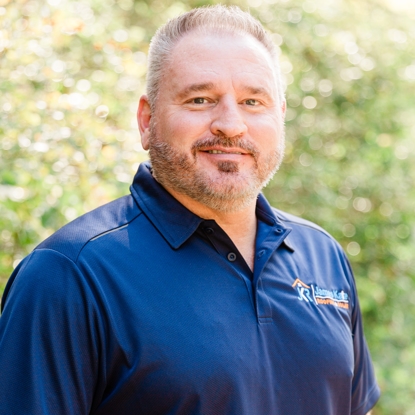
Dustin Eatman is a seasoned roofing professional with deep, hands-on expertise that spans residential and commercial roofing, insurance solar, and long-term roof asset management. As the owner of James Kate Roofing & solar in the Dallas–Fort Worth metroplex, he’s built a reputation for diagnosing roof systems accurately, communicating clearly, and executing projects with a high standard of workmanship and documentation. Dustin understands the technical details that make roofs perform—proper underlayment selection, slope and drainage considerations, ventilation strategy, flashing and penetration detailing, and manufacturer-specific installation requirements—because he’s worked through the real-world challenges that cause leaks, premature wear, and warranty issues. He’s equally fluent in the operational side of roofing: jobsite planning, quality control, safety, material ordering, crew coordination, and customer experience from inspection to closeout. In insurance-related projects, Dustin brings practical knowledge of claim workflows, adjuster meetings, scope alignment, supplements, and the importance of photo evidence and thorough records, helping property owners navigate stressful situations with confidence. For commercial clients—especially property and facility managers—he emphasizes proactive maintenance and targeted repairs that reduce disruption, extend roof life, and prevent expensive interior damage. Dustin also stays focused on doing things the right way: educating customers on realistic options, setting expectations, and prioritizing solutions that hold up over time rather than quick fixes. That blend of technical skill, field experience, process discipline, and owner-level accountability is what makes Dustin Eatman a trusted expert in the roofing industry.