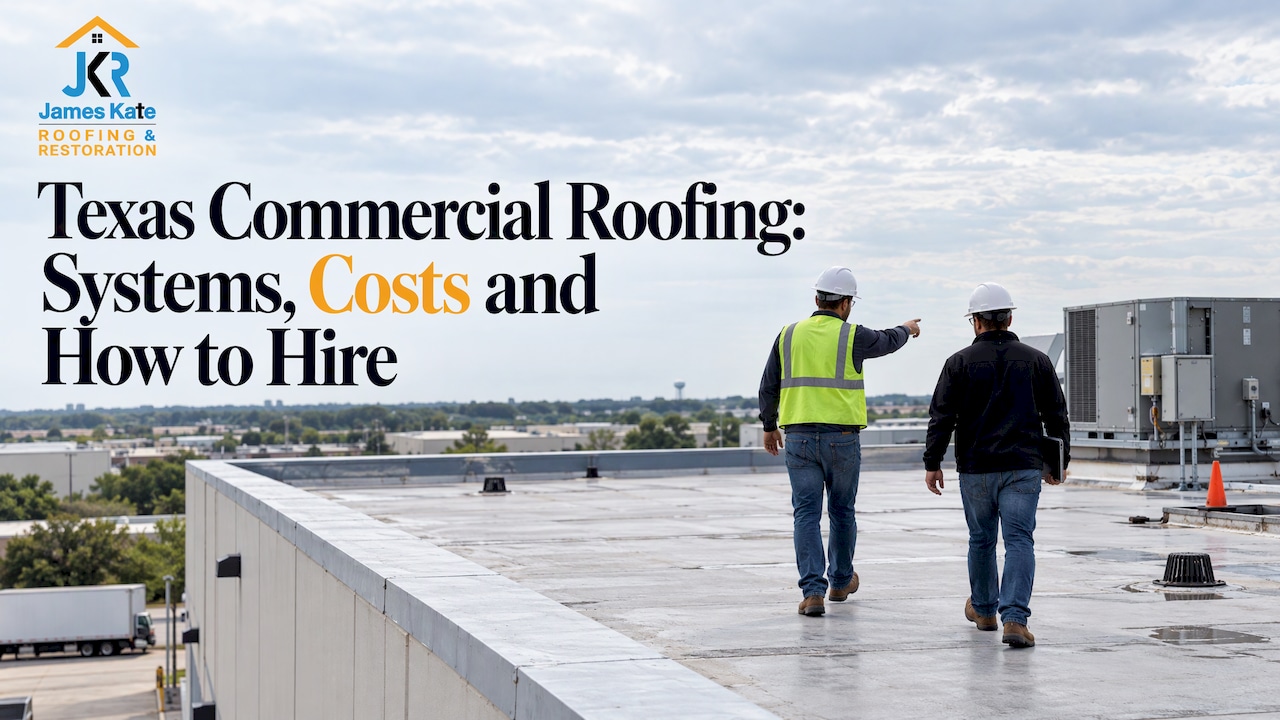
If you own or manage a commercial building in Texas, the roof is the asset that takes the most punishment: hail, high wind, heavy rain and long, hot summers. The best way to protect it is to work with a manufacturer-certified commercial roofer who inspects first, documents everything and puts the findings, the scope and the warranty in writing. We are James Kate Roofing & solar, a GAF Master Elite® contractor in North Texas, and we offer free inspections and estimates for commercial roofs across the Dallas-Fort Worth area.
This guide covers what a Texas building owner needs to decide: which roofing system fits, what drives the price, how to vet a contractor in a state that does not license roofers, and what to do after a storm.
TL;DR
- Most Texas commercial roofs are low-slope, so the realistic choices are single-ply membranes (TPO, PVC), modified bitumen, built-up roofing, metal and coatings over a sound existing roof.
- A media report puts Texas commercial replacement at roughly $7.50 to $16.00 per square foot, an indicative range and not a quote. Materials, labor, deck condition and energy goals move the number.
- Texas does not currently license roofing contractors at the state level, so references, insurance, written agreements and warranty terms do the vetting for you.
- After a storm, document the damage, get the deck inspected and collect at least three written bids before signing.
- A free commercial inspection with a written estimate is the sensible first step for any roof you are budgeting for.
Table of Contents
- What makes a Texas commercial roof different
- Commercial roofing systems used in Texas
- What commercial roofing costs in Texas
- Do you need a license to hire a roofer in Texas
- How to evaluate a commercial roofing contractor
- What a commercial roof inspection should cover
- After a storm: protecting the roof and the claim
- Planning maintenance and budgeting
- Our perspective
- Start with a free commercial roof inspection
- FAQ
- Sources
What makes a Texas commercial roof different
Most commercial buildings in Texas, from strip centers and warehouses to medical offices and apartment complexes, have flat or low-slope roofs. Water does not run off these quickly, so every seam, penetration and drain matters. North Texas adds hail, straight-line winds and sharp temperature swings, and the whole state adds intense UV and heat that age membranes and sealants.
Two things follow from that. First, the roofing system you pick should be matched to the building’s use, deck type and budget, not chosen by habit. Second, maintenance is not optional: small failures at flashings, seams and drains turn into interior leaks and damaged insulation.
Commercial roofing systems used in Texas
There is no single best commercial roof. Each system trades up-front cost, durability, reflectivity and repairability differently. Here is how the common options compare in plain terms.
| System | What it is | Where it fits |
|---|---|---|
| TPO | A single-ply white or light membrane, heat-welded at the seams | Reflective roofs for retail, offices and warehouses where cooling costs matter |
| PVC | A single-ply membrane, also heat-welded, with strong resistance to grease and chemicals | Restaurants, labs, and buildings with rooftop exhaust |
| Modified bitumen | Asphalt-based sheets installed in one or more plies | Roofs with heavy foot traffic and many penetrations |
| Built-up roofing (BUR) | Alternating layers of asphalt and reinforcing fabric, finished with a surface layer | Long-proven, multi-layer protection on larger flat roofs |
| Metal | Standing-seam or other panel systems | Low-slope and steeper commercial roofs where long service life is the priority |
| Coatings | A liquid-applied reflective or protective layer over an existing sound roof | Extending the life of a roof that is aging but not failing |
We install and repair asphalt shingle, metal, tile, TPO, PVC, modified bitumen and built-up roofing systems, so the recommendation follows your building rather than a single product line.
TPO or PVC
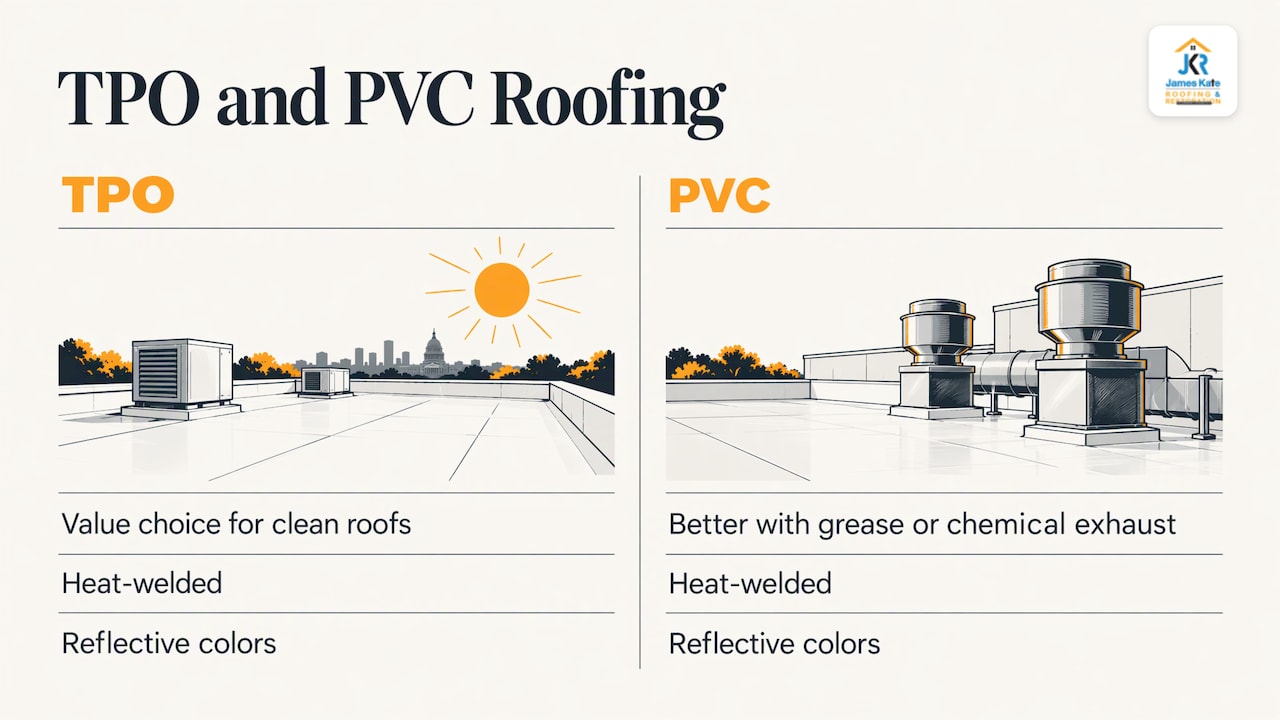
These two are the most common single-ply questions we hear. Both are heat-welded, both come in reflective colors, and both can suit a Texas roof. The difference is mostly in chemistry and exposure: PVC holds up better where the roof sees grease or chemical exhaust, while TPO is often the value pick for a clean, reflective roof. We break the trade-offs down in our TPO vs. PVC comparison, and explain why the two behave differently over time in our article on thermoset and thermoplastic roofing.
Replace, repair or coat
The right answer depends on how much of the roof is still sound. A roof with localized leaks and healthy insulation is a repair candidate. A roof that is aging but dry may be a coating candidate, which adds a protective layer and can postpone a full tear-off. A roof with wet insulation, widespread seam failure or a deteriorated deck needs replacement. A moisture-aware inspection is how you tell the difference, and it is the reason we start there. Our commercial roof coatings page explains the coating route, and our overview of commercial roofing systems shows how we approach installations in DFW.
What commercial roofing costs in Texas
Owners want a number before they call anyone. Be careful with any single figure. A Texas commercial-property news feature published in May 2026 reports replacement costs of $7.50 to $16.00 per square foot as a market-level range. It is a publication-reported estimate, not a price schedule, and your building can land anywhere in or outside it.
What moves the price:
- The system. A thermoplastic single-ply, a multi-ply bitumen roof and a standing-seam metal roof are different products with different installed costs.
- The existing roof. A recover over a sound roof costs less than a tear-off. Wet insulation or a damaged deck adds scope.
- Roof geometry. Many penetrations, rooftop units, parapets and drains mean more flashing labor.
- Energy goals. Reflective membranes and added insulation can raise the material cost while aiming to lower cooling loads.
- Documentation and risk. Warranty requirements, safety planning and insurer-driven specifications all affect the bid.
A worked example shows why per-square-foot numbers alone mislead. Take a 40,000 square foot warehouse. At the low end of that reported range the replacement is about $300,000, and at the high end about $640,000. The gap is bigger than most budgets can absorb, which is why a measured, written estimate for your specific roof is worth far more than any average.
We publish no prices for our services because every roof is different. We do offer free inspections and estimates, so you get a roof-specific number in writing.
Do you need a license to hire a roofer in Texas
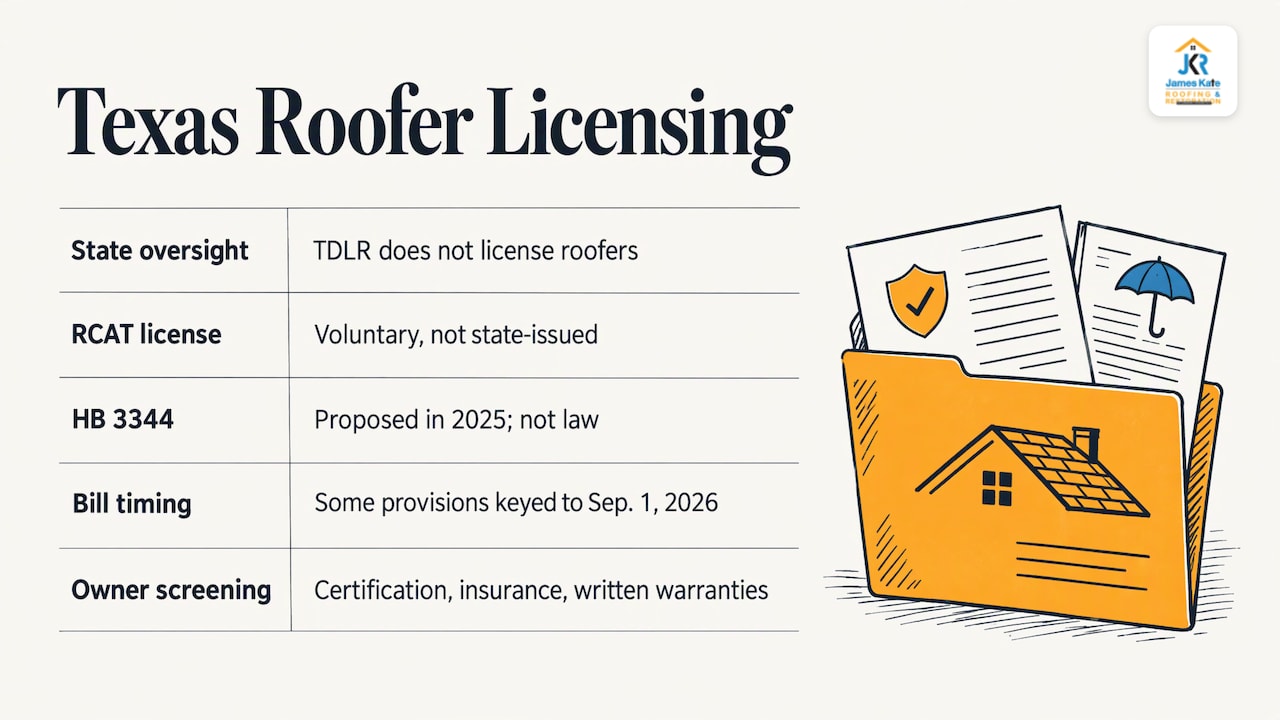
This surprises many out-of-state owners: according to the Roofing Contractors Association of Texas, the Texas Department of Licensing and Regulation does not currently administer roofing-contractor licensure. The association describes its own roofing-contractor license as voluntary and administered by RCAT, not a state license, and available to residential and commercial contractors.
Legislation has been proposed. The introduced text of Texas House Bill 3344 in the 2025 session proposed licensing regulation for roofing contractors, with certain provisions keyed to September 1, 2026. An introduced bill is not a law, so confirm the current status with the Texas Legislature before you rely on it.
The practical consequence is that nothing automatic screens a roofer for you. You do that screening with documents, which is why manufacturer certification, insurance and written warranties matter more in Texas than in states with a license board. For a deeper walk-through, see our guide to choosing and verifying a roofing contractor in Texas.
How to evaluate a commercial roofing contractor
The Texas Department of Insurance (TDI) gives storm-repair advice that applies to any serious roofing purchase. TDI’s guidance is to verify the contractor’s identity and references, check for insurance or a bond, get signed agreements with warranty terms, and obtain at least three written bids. It also warns against door-to-door repair solicitors. Turn that into a checklist.
- Identity and references. A real business address, a working phone number and recent commercial references you can call. RCAT likewise says owners should weigh relevant experience, technical knowledge, responsible business practices and knowledge of safety and regulatory law.
- Manufacturer credentials. Certification from a roofing manufacturer means the contractor has met that manufacturer’s standards for installing and warranting its products. We are a GAF Master Elite® contractor and hold the GAF President’s Club Award and IKO Craftsman Premier Contractor status.
- Insurance or bond. Ask for certificates, not verbal assurances, and confirm that coverage is current before work begins.
- A written scope. The bid should name the system, thickness or ply count, insulation, flashing details, deck repair allowances and what happens when hidden damage is found.
- Warranty terms in writing. Know who stands behind what, for how long, and whether it transfers when you sell the building. Our guide to roof warranty types in Texas explains the difference between manufacturer and workmanship coverage.
- Comparable bids. Three bids only help if they cover the same scope. Many contractors build line-item bids with roofing estimating software, so ask for measurements, quantities and unit costs and compare them line by line, not by the bottom-line total.
For homeowners and owners of smaller properties in the area, we also publish a guide to choosing a Dallas County roofing contractor.
Why the cheapest bid is rarely the cheapest roof
A low bid often leaves out deck repair, uses a thinner membrane or carries a shorter warranty. When the leak returns in year six, the savings are gone. Compare the system, the details and the warranty first, then the price.
What a commercial roof inspection should cover
Texas has no statewide inspection mandate for commercial roofs, so the schedule is yours to set. A common practice is an inspection at least once a year and after every major hail or wind event, with a closer look in spring and fall. Treat that as a working guideline and tune it to the roof’s age, system and your warranty terms, which may spell out a required maintenance routine.
A thorough inspection looks at:
- Membrane and surface: blisters, punctures, ponding water, UV wear, granule loss on bitumen systems.
- Seams and laps: weld quality on TPO and PVC, lifting or separation on any system.
- Flashings and penetrations: curbs, vents, pipes, parapets, edge metal and sealants, which are the most common leak points.
- Drainage: clogged drains, scuppers and gutters, and low spots that hold water.
- Rooftop equipment: HVAC units and their curbs, condensate lines and service-traffic damage.
- Deck and insulation: soft spots, corrosion and wet insulation, found with moisture-aware methods rather than by eye alone.
- Photo documentation: dated images tied to roof locations, which help with warranty and insurance conversations.
Our commercial roof inspection and estimate page shows how to request one. The inspection and estimate are free.
After a storm: protecting the roof and the claim
Hail and wind are the main storm threats across North Texas. Speed matters, but so does order of operations.
- Make the building safe. Keep people away from areas with active leaks or ceiling damage, and stay off a damaged roof.
- Stop further water entry. Temporary tarping or emergency repairs limit interior damage. Keep receipts and photos.
- Document everything. Photograph the roof, interior stains and debris with dates. Our roof damage assessment guide shows how to check, document and decide.
- Get a professional inspection. Hail damage is often invisible from the ground. Our hail and wind damage inspections are built for exactly this.
- Collect written bids. TDI advises at least three written bids, signed agreements and clear warranty terms before repair work starts.
- Check the deck. Have the roof deck inspected and replace damaged or deteriorated decking before installing new covering. Our guide to replacing damaged roof decking walks through the process.
One rule applies only to the Gulf coast. TDI says its IBC and IRC repair requirements, including WPI-8 eligibility and a certificate before final payment, apply to the first row of Texas counties bordering the Gulf of Mexico and certain Harris County communities. The DFW counties we serve are not among them, but if you own property on the coast, follow that rule.
After big storms, out-of-town crews often knock on doors. TDI advises against door-to-door repair solicitors, and our piece on avoiding roofing scams after a disaster covers the warning signs. Our emergency commercial roofing service exists for the first days after damage, when the building needs protection fast.
Planning maintenance and budgeting
Property managers do best with a roof plan, not a reaction. A simple one has four parts:
- A baseline inspection that records the system, age, condition and remaining service life of each roof section.
- A maintenance schedule with drain cleaning, sealant touch-ups and flashing repairs done before the rainy season and after hail.
- A repair-versus-replace trigger, for example when repair costs keep climbing or insulation is wet across a large area.
- A capital reserve so a replacement does not arrive as a surprise line in the budget.
Our commercial roof repairs and maintenance services cover the first two, and the baseline inspection feeds the other two. We work across Dallas, Tarrant, Collin, Denton, Johnson, Ellis, Hood and Rockwall counties.
Our perspective
Owners tend to ask what a roof costs before they know what condition it is in. We would reverse the order. A roof’s real needs come from an inspection, the weather it has lived through and the system it carries, and that is why we built our work around data.
Our instant roofing quote tool assesses a roof’s health using historical weather data, so you can see whether severe storms have affected the property. On commercial buildings, we pair that with an on-roof inspection and a written estimate, both free, so the scope you approve is the scope that gets built.
Because Texas does not currently license roofers at the state level, we think credentials should be visible. Manufacturer certification, the GAF President’s Club Award and IKO Craftsman Premier Contractor status are the kind of third-party recognition an owner can look up, and they come from standards we have to keep meeting.
Our approach is plain: transparent communication, a clear scope, and a recommendation that fits the building, whether that means a repair, a coating or a new system.
Dustin Eatman
Start with a free commercial roof inspection
If you are budgeting for a roof, handling storm damage or taking over a property portfolio, begin with an inspection. We look at the membrane, seams, flashings, drainage and deck, document what we find and give you a written estimate at no charge. For a single repair, a coating or a full replacement, the findings tell you which one makes sense.

Request your inspection on our commercial roofing page, or see our commercial roof replacement and installation services if you already know the roof is at the end of its life.
FAQ
Does a commercial roofer need a license in Texas?
Not from the state at present. RCAT’s guide says TDLR does not administer roofing-contractor licensure, and its own license is voluntary. Because no state board screens contractors, verify references, insurance and written warranty terms yourself.
What is the best commercial roofing material?
It depends on the building. TPO is a common reflective choice, PVC suits roofs exposed to grease or chemicals, and modified bitumen, built-up and metal systems each fit particular uses. A roof inspection and a look at the deck and traffic patterns settle the choice.
How much does a commercial roof replacement cost in Texas?
A May 2026 media report cites $7.50 to $16.00 per square foot as a broad market range. Your price depends on the system, the condition of the deck and insulation, the roof’s complexity and warranty requirements. A written estimate for your building is the only reliable number.
How often should a commercial roof be inspected?
A yearly inspection plus one after any major hail or wind event is a common practice, and your warranty may set its own schedule. Older roofs and those with many penetrations benefit from closer attention.
What should I do first after storm damage to a commercial roof?
Keep people safe, limit water entry, photograph the damage and get a professional inspection. TDI advises collecting at least three written bids and signed warranty terms before repair work begins.
Sources
- Making repairs after a storm, Texas Department of Insurance
- Selecting A Roofing Contractor, Roofing Contractors Association of Texas
- 89® HB 3344, Introduced version, Texas Legislature
- Commercial Roofing As A Business Asset: How Texas Companies Are Protecting Their Property Investments
Recommended
- Roofing Contractor in Texas: How to Choose and Verify One
- Commercial Roofing Contractor: Expert & Trusted 2026
- Hiring the Best Commercial Roofing Company: Tips and Tricks
- Don’t Get Ripped Off: A Savvy Business Owner’s Guide to Commercial Roof Repairs
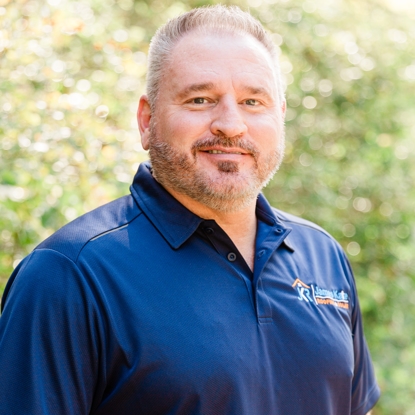
Dustin Eatman is a seasoned roofing professional with deep, hands-on expertise that spans residential and commercial roofing, insurance solar, and long-term roof asset management. As the owner of James Kate Roofing & solar in the Dallas–Fort Worth metroplex, he’s built a reputation for diagnosing roof systems accurately, communicating clearly, and executing projects with a high standard of workmanship and documentation. Dustin understands the technical details that make roofs perform—proper underlayment selection, slope and drainage considerations, ventilation strategy, flashing and penetration detailing, and manufacturer-specific installation requirements—because he’s worked through the real-world challenges that cause leaks, premature wear, and warranty issues. He’s equally fluent in the operational side of roofing: jobsite planning, quality control, safety, material ordering, crew coordination, and customer experience from inspection to closeout. In insurance-related projects, Dustin brings practical knowledge of claim workflows, adjuster meetings, scope alignment, supplements, and the importance of photo evidence and thorough records, helping property owners navigate stressful situations with confidence. For commercial clients—especially property and facility managers—he emphasizes proactive maintenance and targeted repairs that reduce disruption, extend roof life, and prevent expensive interior damage. Dustin also stays focused on doing things the right way: educating customers on realistic options, setting expectations, and prioritizing solutions that hold up over time rather than quick fixes. That blend of technical skill, field experience, process discipline, and owner-level accountability is what makes Dustin Eatman a trusted expert in the roofing industry.