
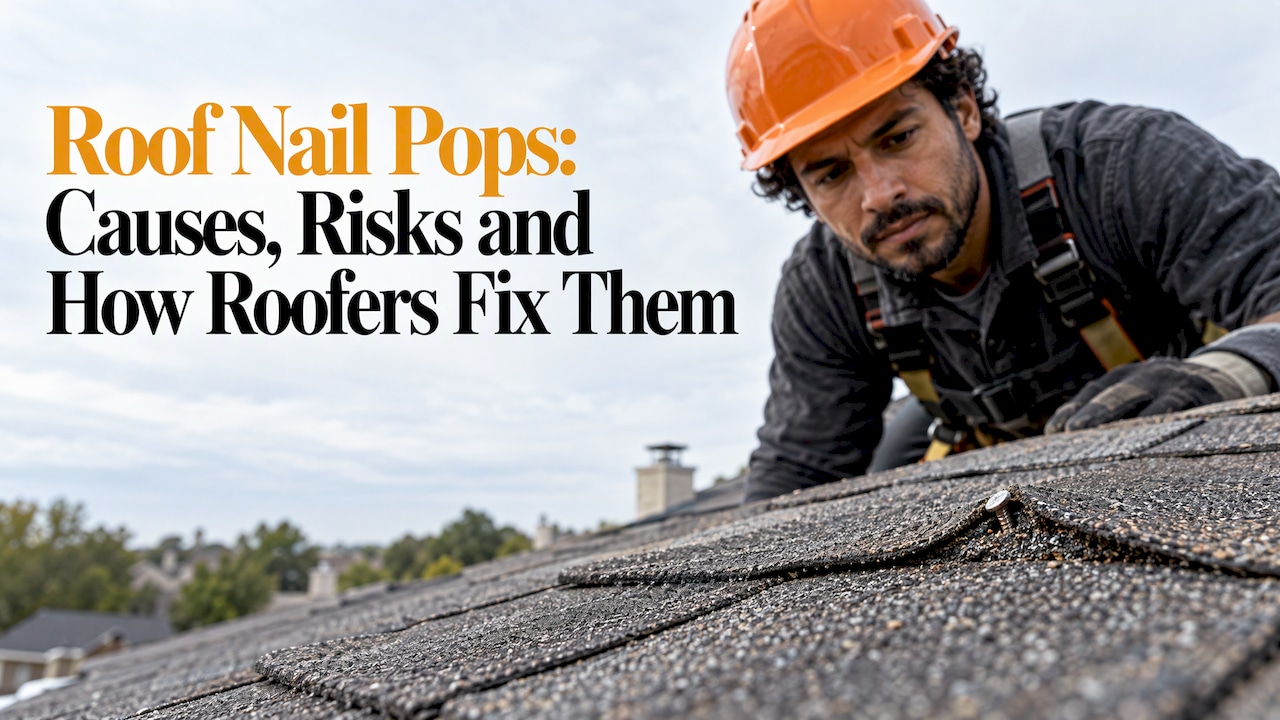
A roof nail pop is a fastener that has backed out of the roof deck and now pushes up against, or through, the shingle above it. A single pop is common and usually a small repair. A cluster of them is a sign that something about the installation, the attic or the deck is off, and it is worth a trained eye. In North Texas, where a roof swings from summer heat to winter freezes and takes hail and wind in between, a professional inspection is the surest way to know which kind you have. Our roof inspections are free, and we can tell you whether it is a one-nail fix or a pattern.
TL;DR
- A nail pop is a roofing nail that has worked its way up out of the sheathing, lifting or piercing the shingle over it. It is common, but it should not be ignored.
- Typical causes: deck movement from moisture and temperature swings, poor attic ventilation, and installation errors such as short, smooth-shank or badly driven nails.
- A lifted shingle breaks its seal, so wind can tear it off and wind-driven rain can get underneath.
- Repairs for a few pops are usually modest, often in the $200 to $500 range nationally. Many pops in one area call for a full inspection.
- Insurance generally responds to sudden storm damage, not to wear. Document everything before you repair.
Table of Contents
- What a roof nail pop is
- What causes nail pops
- Why a popped nail matters
- How to spot nail pops
- How roofers repair a nail pop
- What it costs to fix roof nail pops
- Does insurance cover nail pops?
- Repair or replace?
- How to prevent nail pops
- Our perspective
- Get a roofer to look at your nail pops
- FAQ
- Sources
What a roof nail pop is
Shingles are held down by nails driven through the nail zone into the roof deck. A nail pop happens when one of those nails progresses outward. A GAF technical bulletin describes it as the outward movement of a shingle fastener that can distress, uplift or puncture the shingle above, and notes that nail pops are common on roofs. A roof inspector’s definition is similar: a fastener forced back out of the sheathing by cyclical movement in the surrounding wood.
You see it from the ground as a small bump or a row of bumps in the shingle surface. Up close, you may see a round ridge, a cracked granule surface or a nail head poking through. Sometimes you only find out when a nail turns up on the lawn or in the driveway after a windy day.
Are nail pops normal?
One or two on an older roof is not unusual, and it is not an emergency. What matters is how many there are, where they are and why they happened. Scattered pops on a roof that has seen a few decades of seasons tell a different story than a dozen pops on a roof only a few years old. The second case points to how the roof was built, not to age.
What causes nail pops
No single cause explains every pop. Several forces usually work together, and a good roofer looks at all of them.
Deck movement
Roof sheathing is wood, and wood moves. It swells with humidity and heat and contracts as it cools and dries, which repeatedly stresses the fasteners and reduces how well they hold. One inspector’s guide adds that OSB may expand and contract more than plywood. InterNACHI explains the same mechanism from the other side: when wood dries it shrinks, leaving fasteners protruding above the surface, and continued moisture cycling can push them higher.
North Texas gives the deck plenty to react to. Humid spring storms, triple-digit summer afternoons and the occasional hard freeze all put the sheathing through repeated expansion and contraction.
Attic ventilation and moisture
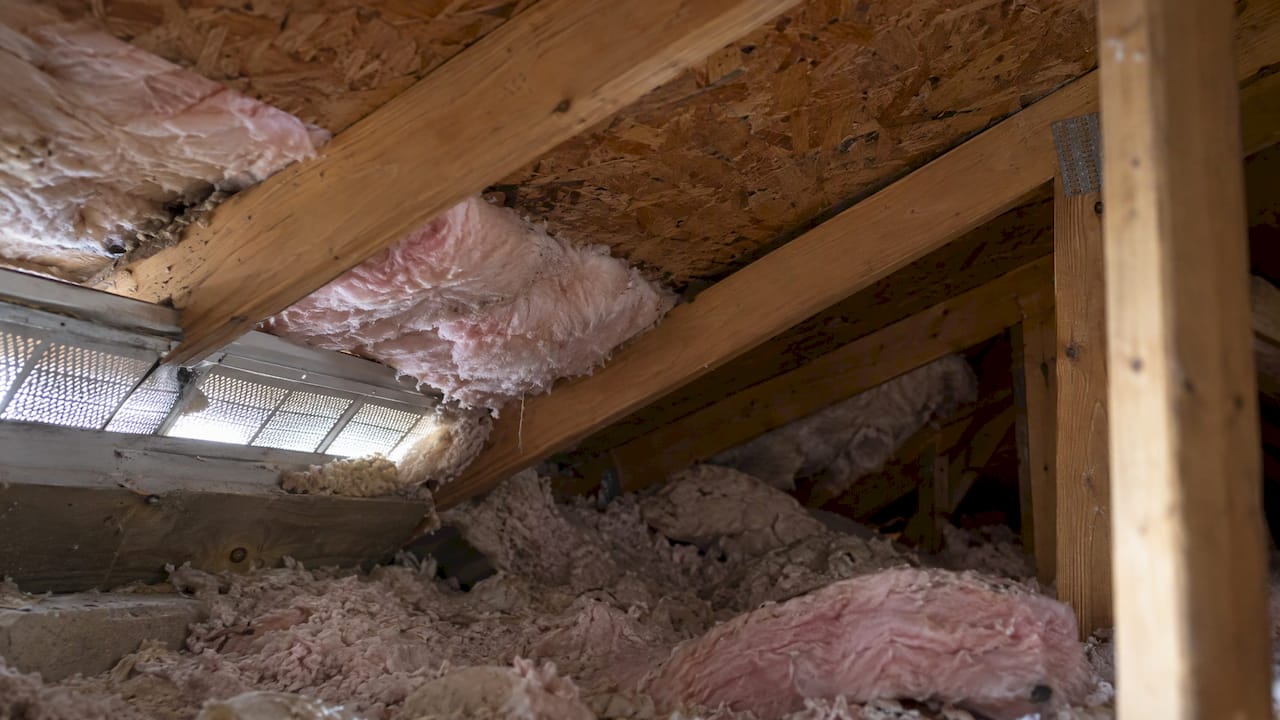
A hot, damp attic heats and wets the underside of the deck. Construction-defect guidance published in Journal of Light Construction lists improperly ventilated decking, blocked soffits or inadequate ridge ventilation among the contributing conditions, along with too little gap between panels and decking installed without room to swell and dry. The same source’s view is that ventilation, panel spacing, fastening and climate all interact.
Blocked soffit vents, a missing ridge vent or insulation stuffed against the roof deck are the kinds of things we look for in the attic when pops show up.
Installation errors
The GAF bulletin’s practical view is that, although ventilation and moisture often take the blame, workmanship is frequently the real cause. It lists insufficient nail-gun pressure, incorrectly sized nails, smooth-shank nails, bent nails and nails that fail to reach the framing as common installation-related causes. A nail that only just bites the deck has little to resist the first few seasons of movement.
Two more situations make pops more likely: nailing into damp wood, which then dries and shrinks around the shank, and roofing over an old layer, which reduces holding power because the fasteners must bridge more material.
Age
On an older roof, the wood around the nails has been through thousands of cycles. The grip loosens, the shingles stiffen and the sealant strips lose their stickiness. Pops can show up simply because the roof is near the end of its life.
Why a popped nail matters
A raised nail looks minor. The trouble is what it does to the shingle on top of it.
Wind exposure. GAF’s bulletin points out that an uplifted shingle has a raised wind profile and that nail pops are a common cause of avoidable wind damage. Once wind gets under it, a shingle can tear away and expose the underlayment or the deck. North Texas thunderstorm winds make that a real risk.
Water entry. A lifted shingle breaks its self-sealing bond. That opens a path for wind-driven rain, and over time can lead to leaks, mold, wood rot, insulation damage and a shorter roof life. A nail head that punctures the shingle is also a direct hole.
Hidden progression. Water that enters slowly can soak the deck and the attic insulation for months before a stain appears on the ceiling. By then the repair is bigger than a nail.
How to spot nail pops
Start from the ground, with the safest tools you have.
- Walk around the house in low, raking sunlight, early morning or late afternoon. Bumps and ridges show up in the shadows.
- Use binoculars along each slope. Look for round humps, shiny nail heads and shingle edges that sit higher than their neighbors.
- Check gutters, flower beds and the driveway for loose roofing nails.
- Look at the attic on a bright day. Light coming through the deck near a nail, or rust-streaked nail tips with frost or condensation in cold weather, point to moisture trouble.
- Check ceilings for stains, especially below the area where you saw bumps.
Please stay off the roof. Shingles are slippery, brittle in cold and hot underfoot in summer, and a fall is far worse than any nail pop. If you want a closer look, we can do it for you during a free roof inspection, and our guide on spotting roof damage after a storm lists the other signs worth noting.
Isolated pops or a pattern
This is the question that decides the repair. Here is how to read what you see.
| What you see | What it usually means | Typical response |
|---|---|---|
| One or two pops, older roof | Normal aging and deck movement | Spot repair |
| A few pops on one slope | Local moisture, ventilation or a nailing problem on that section | Repair plus attic check |
| Many pops across the roof | Systemic installation or ventilation issue | Full inspection, possible re-fastening |
| Pops plus stains, sagging or missing shingles | Water has reached the structure | Professional evaluation promptly |
The last row follows guidance from This Old House, which says professional evaluation is appropriate when there are multiple damaged or missing shingles, sagging areas or interior water damage, because the repair may involve the structure underneath.
How roofers repair a nail pop
The goal is to remove the failed fastener, restore a watertight shingle and put the new nail where it will hold. A typical professional repair goes like this, as described by a roof inspector’s guide: the shingle is lifted, the loose nail is removed, a new nail goes in a different location, the nail holes are sealed and roof cement is reapplied under the lifted shingle.
In practice, each step has a way to go wrong:
- Lifting the shingle. Cold shingles crack and tabs can tear. The same guide recommends warm conditions for asphalt shingle repair and cautions against working in high winds or wet conditions. A crew that knows the product schedules the work accordingly.
- Removing the old nail. Pushing it back down with a hammer is tempting, but the nail has already lost its grip, so it tends to pop again. It also leaves the hole where the nail sat.
- Sealing the old hole. An unsealed hole under the shingle is a leak path that nobody sees.
- Placing the new nail. It has to reach the framing, sit in the nail zone and be driven flush, not over-driven through the shingle or left proud. Nail length and shank type matter, and GAF’s list of causes shows why.
- Resealing the shingle. The tab needs to bond again, so it does not flap in the first strong wind.
We handle this as part of our roof repair services, and our free inspection and estimate means you know the scope before any work starts. If you want a step-by-step look at shingle work, see our guide to asphalt shingle repair.
What not to do
Don’t hit the nail flat and cover it with a dab of sealant and call it done. That hides the problem rather than fixing it. Don’t repair during high winds, wet weather or hard cold. And don’t climb up to try it on a steep or high roof: the repair is small, but the fall risk is not.
What it costs to fix roof nail pops
Published U.S. cost guides put nail-pop repair at roughly $200 to $500, with the actual number depending on how many shingles are affected, the roofing material, the extent of damage and local labor rates. Small jobs often reach that range because a crew has to show up, set up safely and seal the work properly, whether it is two nails or ten.
We do not publish set prices for repairs, because the number depends on what we find on your roof. What we can say is that our inspections and estimates are free, so you can see the scope and the number before deciding.
Two things push cost up: widespread pops that require re-fastening a large area, and water damage that has already reached the deck or insulation. Both are cheaper to deal with early.
Does insurance cover nail pops?
Usually not on their own. Homeowners policies generally respond to sudden events. The Arizona Department of Insurance and Financial Institutions notes that policies may cover sudden damage from wind, rain, snow, lightning or hail, and that you need to review your specific policy’s limitations and exclusions. Coverage for roof damage is generally limited to the portion damaged by the covered event. Rules differ by state and by policy, so your own policy and your Texas insurer are the final word.
That has a practical consequence. If a storm lifted shingles and popped fasteners, document it. The same guidance advises photographing the damage and contacting your insurer before repairing or disposing of anything. Our roof damage assessment guide walks through documenting what you find, and our insurance roof inspection page explains what an inspection checks. If hail or wind may be involved, our storm-damage assessment looks at that question directly, using historical weather data in our instant roofing quote tool.
Repair or replace?
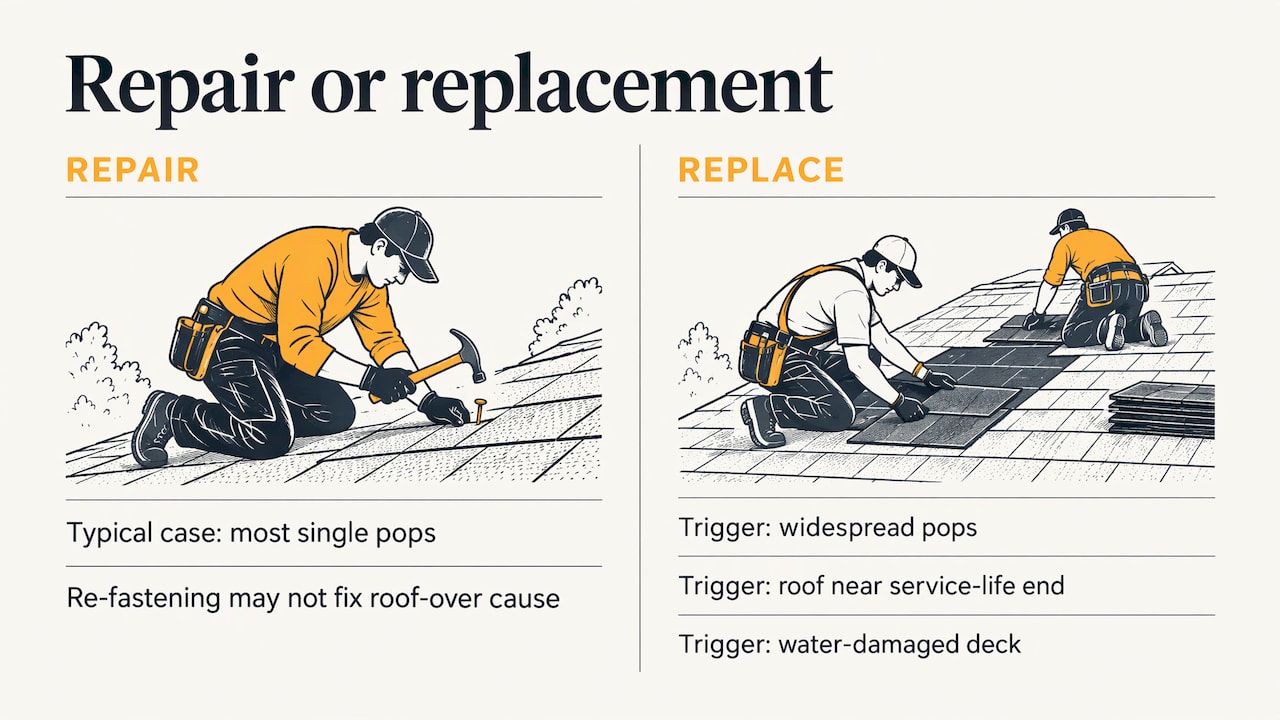
Most single pops justify a repair. Replacement enters the conversation when pops are widespread, the roof is near the end of its service life, or water has already damaged the deck. If the pops come from a roof-over with weak holding power, re-fastening may not fix the underlying reason they keep coming back.
The cost question is bigger than a pop repair, and some homeowners weigh a new roof against other plans for the house. One breakdown of roof replacement versus selling looks at when a new roof pays off in resale terms. If you decide on replacement, we offer roof replacement and installation, and residential replacements come with a transferable 15-year workmanship warranty. That warranty matters because installation quality is so often behind nail pops in the first place.
How to prevent nail pops
You cannot stop wood from moving, but you can reduce the forces on the nails.
- Hire for the nailing. Correct nail length, ring-shank or appropriate fasteners, calibrated nail-gun pressure and full penetration into the framing are the foundation. These are the installation points GAF’s bulletin highlights.
- Ventilate the attic. Clear soffit vents, adequate ridge or exhaust ventilation and insulation kept off the deck reduce heat and moisture on the underside of the sheathing.
- Don’t pile layers. Roof-overs reduce the holding power of fasteners.
- Inspect on a schedule and after storms. Small lifts are far easier to catch before wind finds them. Our guide on when to schedule a roof inspection covers timing, and our winter maintenance advice for Arlington roofs is useful ahead of freezes.
Our perspective
Most people ask us how to fix a nail pop. The better question is why it popped. A pop is a symptom, and what you do next depends on whether the cause is one stubborn nail or the way the whole roof was put on.
That is why we start with an inspection, not a hammer and a tube of sealant. We look at the nail, the shingle around it, the attic and the pattern across slopes. As a GAF Master Elite contractor, we hold ourselves to the manufacturer’s standards on fastening, and our work has earned recognition such as the GAF President’s Club Award and IKO Craftsman Premier Contractor status.
Our inspections and estimates are free, and we explain what we find in plain terms, so you can make the call with confidence. On residential replacements we back our workmanship with a transferable 15-year warranty. If you see bumps on your shingles, a call to us is cheaper than the leak that follows.
Dustin Eatman
Get a roofer to look at your nail pops
If you have found bumps, exposed nail heads or loose nails in the yard, the quickest answer is an inspection. James Kate Roofing & solar serves homeowners and commercial properties across Dallas-Fort Worth, from Tarrant and Dallas counties to Denton, Collin, Johnson and beyond. We check the pops, the shingles around them and the attic, and give you a clear estimate at no charge. Book through our roof inspection page, or see the full range of roofing services we offer.

If water is already coming in, our emergency roofing team can help protect the home while the permanent repair is planned. Business owners with a commercial roof can reach us through our commercial roofing page.
FAQ
Are roof nail pops normal?
They are common. GAF’s technical bulletin says nail pops are common on roofs. A few on an older roof are routine, but many pops in one area, or pops on a young roof, suggest an installation or ventilation issue that is worth having inspected.
Are roof nail pops covered by insurance?
Usually only when a sudden covered event such as wind or hail caused them. Policies vary, and damage from wear and age is generally treated differently. Photograph the roof and contact your insurer before repairs begin, and consider an inspection that documents the cause.
How much does it cost to fix roof nail pops?
National cost guides list roughly $200 to $500 for a nail-pop repair, depending on the number of shingles, the material and local labor rates. We give free estimates, so you see the scope of work for your roof before you commit.
When should I worry about nail pops in the ceiling?
Nail points visible in the attic, frost on them in winter, or stains and drips on ceilings mean moisture is present. Treat that as a reason to have the roof and attic checked soon, because water can damage insulation and the deck before it shows inside the living space. If water is actively entering, call for emergency help.
Can a popped nail just be hammered back down?
Not reliably. The nail has already lost its grip in the wood, so it tends to rise again, and the hole it left can leak. A proper repair removes the nail, seals the hole, places a new fastener in solid wood and reseals the shingle.
Sources
- GAF technical bulletin on self-sealing shingles and wind damage
- Roof Nail Pops: Causes, Consequences and How to Fix Them
- InterNACHI: Roof inspections of wood shakes and shingles
- Journal of Light Construction: nail pops in shingles Q&A
- This Old House: repairing and replacing roof shingles
- Fixr: roof leak repair costs
- Arizona Department of Insurance and Financial Institutions: insurance and storms or disasters
- Roof replacement versus selling
Recommended
- Common Roofing Problems and Fixes
- Patch That Pinhole: A Practical Guide to Fixing Small Roof Leaks
- Handle Roof Leaks Before They Escalate
- Roof Warning Signs That Need Immediate Attention

Dustin Eatman is a seasoned roofing professional with deep, hands-on expertise that spans residential and commercial roofing, insurance solar, and long-term roof asset management. As the owner of James Kate Roofing & solar in the Dallas–Fort Worth metroplex, he’s built a reputation for diagnosing roof systems accurately, communicating clearly, and executing projects with a high standard of workmanship and documentation. Dustin understands the technical details that make roofs perform—proper underlayment selection, slope and drainage considerations, ventilation strategy, flashing and penetration detailing, and manufacturer-specific installation requirements—because he’s worked through the real-world challenges that cause leaks, premature wear, and warranty issues. He’s equally fluent in the operational side of roofing: jobsite planning, quality control, safety, material ordering, crew coordination, and customer experience from inspection to closeout. In insurance-related projects, Dustin brings practical knowledge of claim workflows, adjuster meetings, scope alignment, supplements, and the importance of photo evidence and thorough records, helping property owners navigate stressful situations with confidence. For commercial clients—especially property and facility managers—he emphasizes proactive maintenance and targeted repairs that reduce disruption, extend roof life, and prevent expensive interior damage. Dustin also stays focused on doing things the right way: educating customers on realistic options, setting expectations, and prioritizing solutions that hold up over time rather than quick fixes. That blend of technical skill, field experience, process discipline, and owner-level accountability is what makes Dustin Eatman a trusted expert in the roofing industry.