Understanding Asbestos Shingles and Why Replacement Matters
Asbestos shingle replacement is a specialized roofing project that requires professional handling due to health risks from asbestos fibers. If you’re facing this situation, here’s what you need to know:
Quick Overview: Asbestos Shingle Replacement Essentials
- What they are: Asbestos-cement shingles made from Portland cement mixed with chrysotile asbestos fibers (5-35% asbestos content)
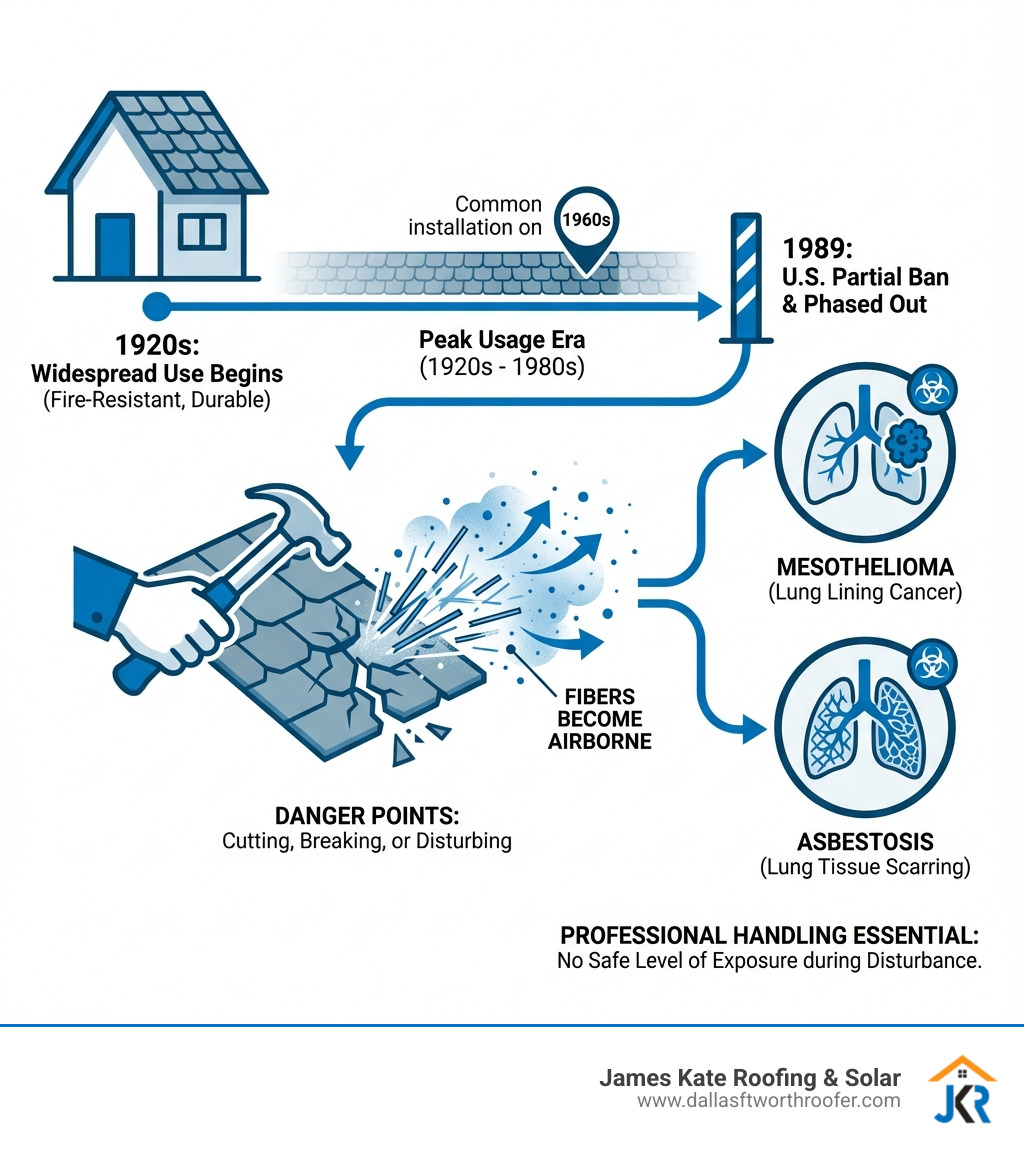
- When used: Commonly installed from the 1920s through the 1980s on homes across America
- Why they’re a concern: Disturbing or breaking these shingles can release microscopic asbestos fibers that cause serious lung diseases
- When to replace: Cracked, brittle, damaged shingles, or when renovating
- Safe approach: Hire certified asbestos abatement contractors—never DIY
- Cost factors: Abatement fees, disposal costs, labor, and new roofing materials
- Modern alternatives: Fiber-cement shingles, architectural asphalt shingles, or metal roofing
Asbestos-cement shingles were a popular roofing choice for decades because they were fire-resistant, durable, and affordable. Homes built between 1920 and the 1960s are most likely to have them. These shingles typically measure 12″ x 24″ and have a distinctive textured appearance with low vertical grooves.
The problem isn’t the shingles themselves when they’re intact—it’s what happens when they’re cut, drilled, broken, or removed improperly. Asbestos fibers become airborne and can be inhaled, leading to serious health conditions like mesothelioma and asbestosis. There’s no safe level of asbestos exposure.
The good news? If your asbestos shingles are in good condition and undisturbed, they may not need immediate replacement. But when damage occurs, your service life ends, or renovation plans require their removal, professional asbestos shingle replacement is the only safe path forward.
I’m Dustin Eatman, owner of James Kate Roofing & Solar, and I’ve guided many DFW property owners through the asbestos shingle replacement process with careful planning, certified abatement, and quality installations that protect both their health and their investment. Let’s walk through everything you need to know to make informed decisions about your roof.
Asbestos shingle replacement basics:
Identification and Assessment: Do You Have an Asbestos Roof?
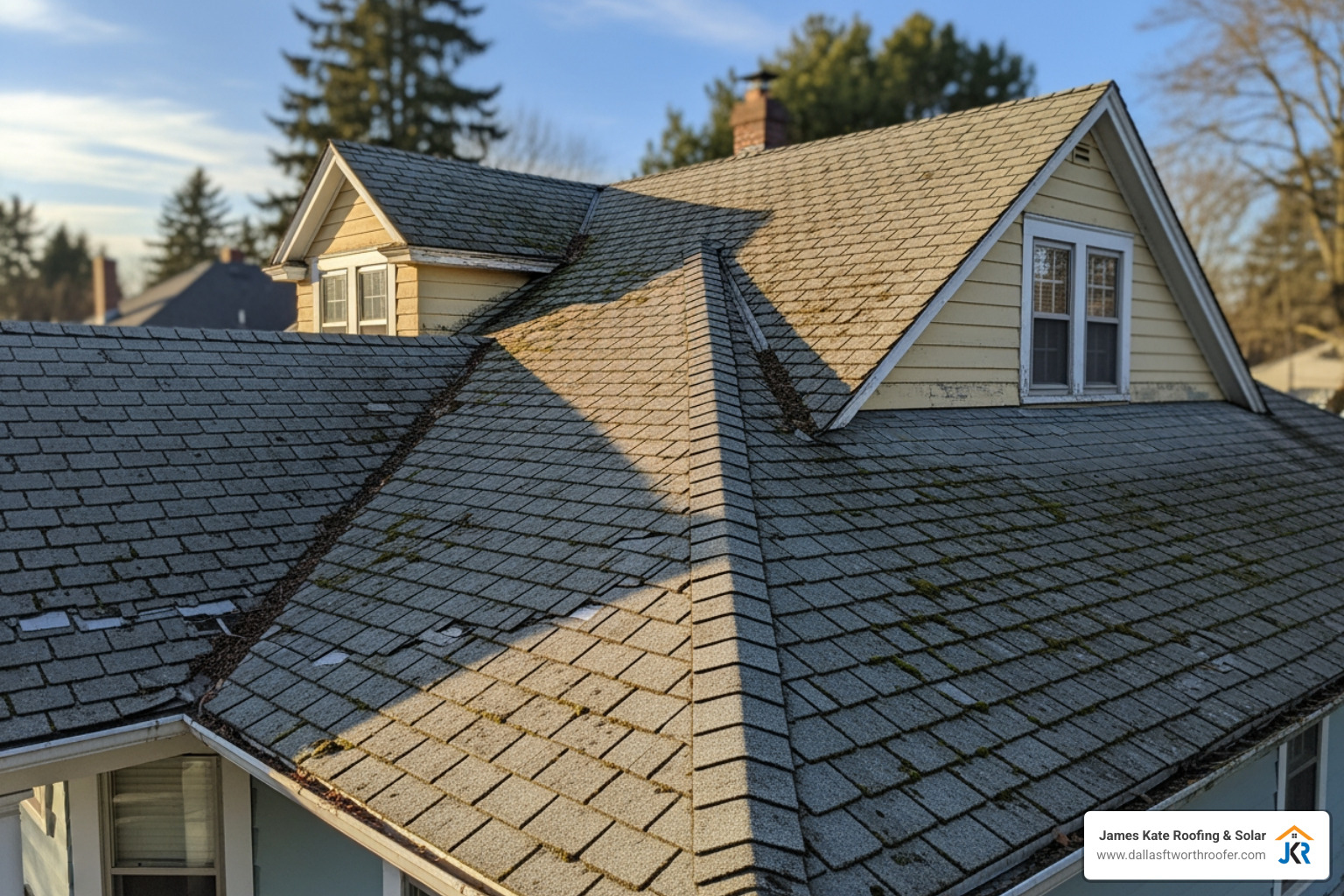
Before diving into solutions, the first step is identifying if your roof contains asbestos. Many DFW-area homes built between the 1920s and 1960s have asbestos-cement shingles, which were made from Portland cement reinforced with 5% to 35% chrysotile asbestos fibers.
Visually, asbestos shingles often have a few key characteristics:
- Shingle Form: They are usually thin, flat, or slightly wavy panels.
- Size: A common size is 12″x24″, though variations exist.
- Texture: Look for low vertical grooves or a textured surface mimicking wood grain.
- Edges: A broken edge might appear rough or flaky, showing a fibrous quality.
- Sound: Tapping an asbestos shingle gently may produce a sharp, ringing sound, unlike softer materials.
However, visual identification is never 100% conclusive. The safest way to confirm asbestos is through professional inspection and laboratory testing. Never take a sample yourself, as it is risky. A certified asbestos inspector can safely collect a sample for lab analysis. This step is vital because many modern fiber-cement shingles look very similar to their asbestos predecessors.
Once we confirm your roof has asbestos, we assess its condition. If the shingles are intact and undisturbed, they are considered non-friable, meaning the fibers are bound within the cement and not easily released. In this state, they pose a minimal health risk, and there is often no legal requirement or real estate benefit to removing them.
However, the situation changes if the shingles are damaged. When they become cracked or brittle, the asbestos fibers can become friable—easily crumbled or reduced to powder, releasing dangerous fibers into the air. This is when action becomes necessary.
For a thorough assessment of your roof’s condition, whether you suspect asbestos or need a routine check, explore our roof inspection services.
When Replacement Becomes Necessary
While intact asbestos shingles are relatively benign, clear indicators signal it’s time for asbestos shingle replacement:
- Cracked or Brittle Material: Aging shingles can crack, exposing internal fibers and increasing release risk.
- Water Damage: Failing shingles can lead to moisture infiltration, further deteriorating the asbestos material and causing leaks.
- End of Service Life: If your roof shows widespread wear, it’s likely beyond simple repairs and can no longer protect your home.
- Renovation Plans: Major renovations that disturb the roof (adding a dormer, skylights) will require removal, as any cutting or drilling releases fibers.
- Preventing Fiber Release: If shingles are deteriorating to a point where fibers could become airborne, replacement is the safest action.
We know thinking about roof damage is stressful. If you see signs of wear, don’t hesitate to reach out. Our team can assess the situation and guide you. Learn more about our roof repair services.
Navigating Regulations and Your Options
Dealing with asbestos-containing materials means navigating a landscape of federal, state, and local regulations designed to protect public health. The U.S. government banned all asbestos building products on new structures in 1989, but existing materials remain a concern. While federal EPA actions and OSHA standards provide a baseline for asbestos handling, regulations can differ significantly depending on your specific location in Texas.
In our service areas of Mansfield, Arlington, Granbury, Grand Prairie, and Midlothian, TX, it’s crucial to check with your local government authorities, typically the county health department or city building department, regarding specific ordinances for asbestos shingle replacement and disposal.
Generally, federal regulations like the Asbestos National Emission Standards for Hazardous Air Pollutants (NESHAP) apply to demolition and renovation projects involving commercial buildings or larger residential structures (more than four dwelling units). For single-family homes, federal regulations might not directly dictate homeowner removal, but state and local rules almost always fill that gap, often requiring permits for removal if certain thresholds are met. For example, permits are typically required if:
- More than 160 square feet of friable asbestos-containing roofing materials will be removed.
- More than 5,580 square feet of non-friable asbestos-containing materials (like built-up roofing) will be removed using a rotating blade cutter.
- More than 160 square feet of non-friable asbestos/cement roofing products will be removed using techniques that will create friable asbestos-containing material (ACM).
Failure to comply with these regulations can result in hefty fines and legal action, which, let’s be honest, nobody wants. Always consult with certified professionals who are knowledgeable about Texas-specific regulations to ensure your project is compliant. You can learn more about the broader context of these regulations through the EPA Actions to Protect the Public from Exposure to Asbestos.
The Three Main Approaches to Asbestos Shingles
When you find you have asbestos shingles, you generally have three options for addressing them:
- Repair: This option is only viable if the damage is minimal and isolated, and the shingles are otherwise in excellent, non-friable condition. Repair involves carefully replacing a few individual damaged shingles with non-asbestos fiber-cement alternatives that match the existing ones. This must be done with extreme caution to avoid disturbing the surrounding material.
- Encapsulation (Sealing/Covering): This is often a preferred and safer strategy than full removal, especially if the shingles are largely intact. Encapsulation means applying a sealant or coating over the asbestos material to bind the fibers and prevent their release. Covering involves installing a new layer of siding or roofing material (like vinyl siding or new shingles) directly over the existing asbestos shingles. This essentially seals in the asbestos, eliminating the risk of fiber release and often saving on removal costs. However, it’s crucial that the underlying asbestos is stable enough to support the new layer.
- Full Removal and Replacement: This is the most definitive solution, eliminating the asbestos hazard entirely. It involves carefully abating (removing) all asbestos shingles and then installing a new, modern roofing system. This option is necessary when shingles are widespread, severely damaged, or if renovation plans require their disturbance. While it’s the most expensive and complex option, it offers complete peace of mind and removes a potential liability from your property.
Here’s a quick look at the pros and cons of each approach:
- Repair
- Pros: Least expensive in the short term, avoids widespread disturbance.
- Cons: Only suitable for minor, localized damage; still leaves asbestos on the property; risk of fiber release if not done carefully.
- Encapsulation/Covering
- Pros: Safer and often less costly than full removal; seals in asbestos fibers; provides a new aesthetic; can extend the life of the existing roof.
- Cons: Asbestos remains on the property; may add weight to the roof structure; not suitable if underlying shingles are severely deteriorated.
- Full Removal and Replacement
- Pros: Eliminates the asbestos hazard completely; allows for a brand-new, modern, and high-performance roof; can increase home value and lower insurance premiums.
- Cons: Most expensive and labor-intensive; highest risk of fiber release if not performed by certified professionals.
For any of these options, especially full removal, professional consultation is non-negotiable. Our team can help you understand the best approach for your home and budget. Learn more about our comprehensive roof replacement services.
The Process for Safe Asbestos Shingle Replacement
When it comes to asbestos shingle replacement, safety is paramount. This is not a DIY project. The inherent dangers of disturbing asbestos mean that hiring certified professionals, specifically an asbestos abatement contractor, is the only responsible course of action. These experts are trained in proper abatement methods and equipped with the necessary safety gear and specialized tools to perform the work safely and compliantly.
Safety precautions begin even before work starts. Here’s what you can expect from a professional team like ours:
- Personal Protective Equipment (PPE): Workers will wear specialized PPE, including approved respirators, disposable coveralls, gloves, and eye protection, to prevent any inhalation or contact with asbestos fibers.
- Wetting Procedures: A critical step in minimizing fiber release is to keep the asbestos material wet throughout the removal process. Professionals use a garden sprayer with soapy water to thoroughly wet the shingles before and during removal. This binds the fibers and prevents them from becoming airborne.
- Minimizing Breakage: The goal is to remove shingles as intact as possible. Professionals use gentle techniques and specialized tools to pry shingles without breaking them.
- Work Area Containment: The area around your home will be secured. This involves closing all windows, placing plastic sheeting or tarps on the ground extending several feet out from the house, and securing them with duct tape. A “regulated area” will be created with caution tape and “Asbestos” warning signs to prevent unauthorized access and contain any potential fibers. HVAC systems will be turned off to prevent contamination of your home’s interior.
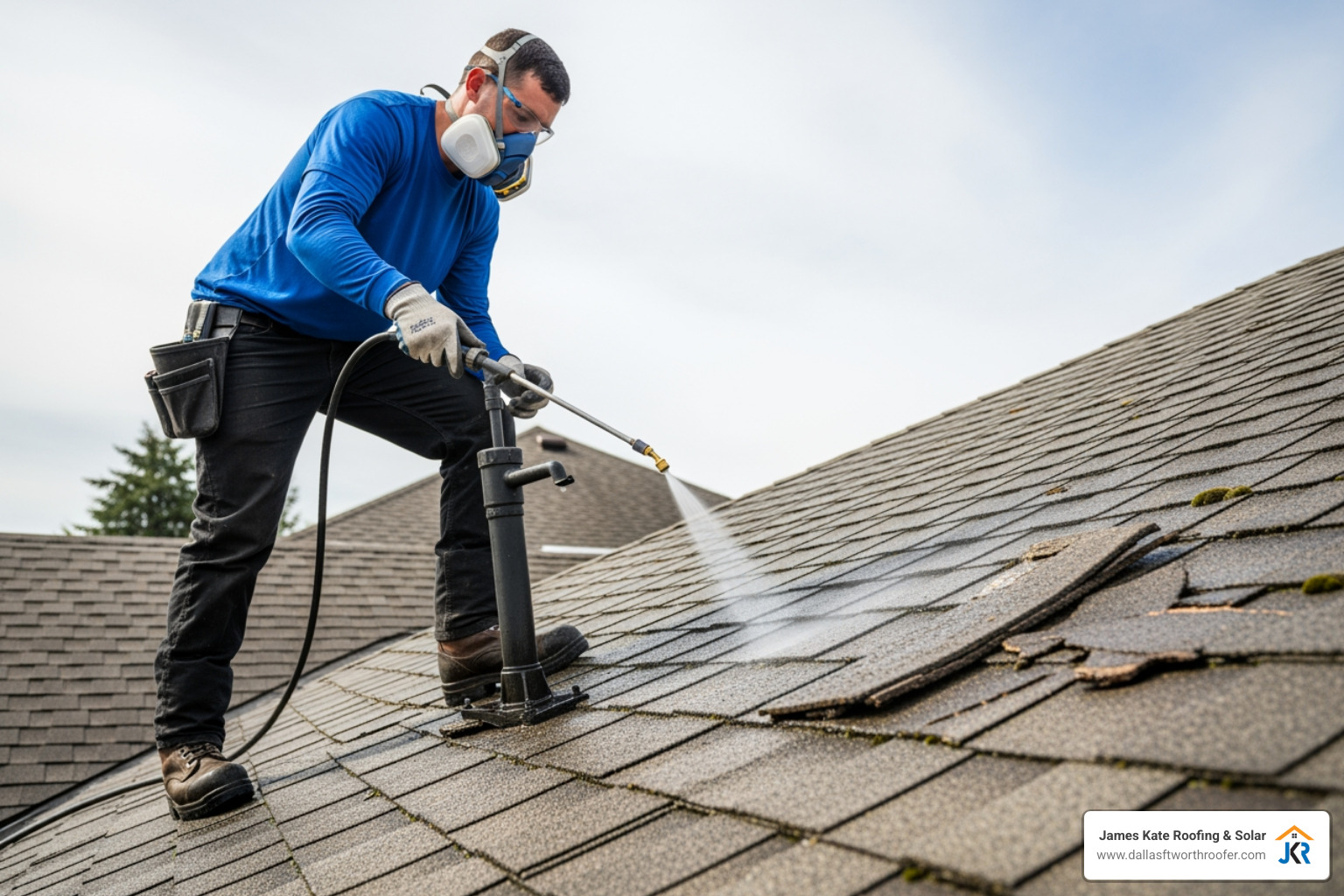
A James Kate Roofing professional, wearing a royal blue shirt, carefully wets down a section of an asbestos shingle roof before removal, prioritizing safety and fiber containment.
Key Steps for a Professional Asbestos Shingle Replacement
Once the site is prepared, the actual removal process follows a strict protocol:
- Site Preparation: As mentioned, the work area is carefully sealed off, and the ground around the house is covered with plastic sheeting. This ensures that any falling debris is contained and can be properly collected.
- Safe Removal Techniques: Our team will use pry bars and other hand tools to gently loosen nails and carefully remove shingles. The emphasis is always on minimal breakage.
- Lowering Shingles (Not Dropping): Instead of dropping removed shingles to the ground, which can cause them to break and release fibers, professionals will gently lower them using chutes or buckets directly into lined containers.
- Bagging and Sealing Waste: All removed asbestos-containing material, along with any disposable PPE and plastic sheeting, is immediately placed into heavy-duty, double-lined plastic bags or sealed containers. These are then securely sealed and clearly labeled with “Asbestos Waste” warnings.
- HEPA Vacuum Cleanup: After removal, the entire work area, including the ground coverings, is carefully cleaned. This involves using wet mops, wet rags, sponges, or specialized HEPA (High-Efficiency Particulate Air) vacuum cleaners to capture any microscopic fibers. Regular vacuums are never used, as they can spread fibers.
- Proper Disposal: The sealed asbestos waste is then transported by a licensed hauler to an approved municipal solid waste landfill or other designated hazardous waste facility in accordance with federal, state, and local Texas regulations. This ensures that the hazardous material is handled and buried safely.
- Waste Manifest Records: A detailed waste manifest record is kept, documenting the type and amount of asbestos removed, the date of removal, and the disposal site. We will provide you with a copy of this important documentation for your records.
By following these rigorous procedures, we ensure that the asbestos shingle replacement is performed safely, protecting your family, our crew, and the environment.
Choosing Your New Roof: Materials and Costs
After the asbestos shingles are safely removed, the exciting part begins: choosing your new roof! This is an opportunity to improve your home’s aesthetics, boost its energy efficiency, and significantly improve its durability. We offer a range of modern, safe, and high-performance replacement materials suitable for DFW homes.
Popular choices for modern replacement materials include:
- Fiber-Cement Shingles: These are an excellent choice if you appreciate the look of traditional asbestos-cement shingles but want a safe, modern alternative. Fiber-cement siding and roofing products are durable, fire-resistant, and mimic the appearance of older materials. GAF WeatherSide Profile12 Fiber-Cement Shingles, for instance, are pre-primed and can be painted to match your home’s existing color scheme. They are designed to be fire and freeze-thaw resistant, offering a 25-year limited warranty.
- Architectural Asphalt Shingles: Also known as laminate or dimensional shingles, these are a very popular choice in our Texas climate. They offer a multi-dimensional appearance, come in a wide array of colors, and provide excellent durability and weather resistance. Architectural shingles typically have a longer lifespan (20-50 years) than traditional 3-tab asphalt shingles and can withstand high winds and hail, common in the DFW area.
- Metal Roofing: Metal roofs are increasingly popular for their exceptional longevity (40-70 years, sometimes over a century), durability, and energy efficiency. They are lightweight, fire-resistant, and can be designed to mimic the look of traditional shingles or tiles. Metal roofing can be a fantastic option for historic homes, as metal systems can recreate virtually any shape or design of an historic shingle while being significantly lighter than other materials.
- Slate or Tile Options: For those seeking a premium, long-lasting, and aesthetically striking roof, natural slate or concrete/clay tiles are excellent choices. These materials are incredibly durable, fire-resistant, and can last for decades, even centuries. They are heavier, so a structural assessment may be needed.
When choosing, consider factors like:
- Energy Efficiency: Some materials, like metal, offer reflective coatings that can help reduce cooling costs in our hot Texas summers.
- Durability: Look for materials designed to withstand the DFW climate, including high winds, hail, and intense UV exposure.
- Aesthetics: Your new roof should complement your home’s architectural style and improve its curb appeal.
Explore our various roof types to find the perfect fit for your home.
Estimating the Cost of Asbestos Shingle Replacement
It’s natural to wonder about the costs involved with asbestos shingle replacement. This isn’t a simple re-roofing project; it has additional complexities and expenses related to hazardous material handling. Several factors contribute to the overall cost:
- Abatement Costs: This includes the labor and specialized equipment required for the safe removal of asbestos shingles. These costs are significantly higher than standard roof tear-off due to the stringent safety protocols.
- Disposal Fees: Asbestos waste cannot be disposed of in regular landfills. There are specific, regulated hazardous waste facilities that charge higher fees for accepting asbestos-containing materials. Transportation costs to these facilities also factor in.
- Labor Costs: Beyond abatement, there’s the labor for installing your new roofing system. This will vary based on the material chosen and the complexity of your roof.
- New Material Costs: The cost of your chosen replacement material (fiber-cement, asphalt shingles, metal, tile, etc.) will be a significant component.
- Roof Size and Complexity: Larger roofs or those with intricate designs, steep pitches, or multiple dormers will naturally incur higher costs for both removal and installation.
While providing an exact estimate without a detailed inspection is impossible, we can offer a general comparison of popular replacement materials:
| Material Type | General Cost (per square foot, installed) | Lifespan (Years) | Pros | Cons |
|---|---|---|---|---|
| Architectural Shingles | Mid-range | 20-50 | Versatile, wide color/style range, good durability, cost-effective, good for DFW weather (wind/hail resistance). | Shorter lifespan than metal/tile, petroleum-based, can be damaged by extreme weather over time. |
| Metal Roofing | High-range | 40-70+ | Exceptional longevity, energy-efficient, lightweight, fire-resistant, excellent durability against extreme weather. | Higher upfront cost, can be noisy during heavy rain, limited aesthetic options compared to shingles. |
| Fiber-Cement Shingles | Mid-to-High range | 30-50 | Mimics asbestos look (ideal for historical matching), fire/freeze-thaw resistant, durable, paintable. | Can be heavy, requires professional installation, may crack if hit hard. |
| Tile (Clay/Concrete) | High-range | 50-100+ | Extremely durable, fireproof, excellent curb appeal, unique aesthetic, long lifespan. | Very heavy (may require structural reinforcement), high upfront cost, can be brittle if walked on improperly. |
These are general estimates. We provide transparent, detailed proposals for all our projects, ensuring you understand every aspect of your investment.
Frequently Asked Questions about Asbestos Roofing
We often hear similar questions from homeowners in Mansfield, Arlington, Granbury, Grand Prairie, and Midlothian, TX, when they find their homes have asbestos roofs. Let’s address some of the most common concerns.
Can I remove asbestos shingles myself?
We strongly advise against attempting to remove asbestos shingles yourself. While some state regulations might technically allow homeowners of single-family residences to remove non-friable asbestos materials without the same federal restrictions that apply to contractors, the health risks are simply too high. Improper handling can create a hazard where none existed.
Here’s why DIY removal is a bad idea:
- Health Risks: Disturbing asbestos without proper training and equipment can release microscopic fibers that, when inhaled, lead to severe and incurable lung diseases like mesothelioma and asbestosis. No level of exposure is considered safe.
- Legal Requirements: Even if federal rules don’t apply to your single-family home, local and state regulations in Texas likely do. You could face fines or legal repercussions for improper removal or disposal.
- Specialized Equipment: Effective asbestos removal requires specific PPE, wetting agents, containment strategies, and specialized HEPA vacuums that most homeowners don’t possess.
- Disposal: You can’t just throw asbestos waste in your regular trash. It must be double-bagged, sealed, labeled, and transported to an approved hazardous waste landfill, often requiring specific permits and manifests.
It’s a complex and dangerous job best left to certified asbestos abatement contractors. If you’re facing an urgent roofing issue and suspect asbestos, please prioritize safety. Contact us for professional guidance, including our emergency roofing services.
Is it safe to live in a house with asbestos shingles?
Generally, yes, it is safe to live in a house with asbestos shingles as long as they are intact and undisturbed. When the shingles are in good condition and firmly bound within their cement matrix, the asbestos fibers are not easily released into the air. This is referred to as a non-friable state.
The danger arises when the material is damaged, cut, drilled, broken, or aggressively cleaned (like with a pressure washer). These actions can cause the fibers to become airborne and breathable. If your asbestos roof is currently in good condition, it’s safe to paint it, but you should never attempt to cut, drill, or pry off the shingles yourself.
Regular inspection for damage is key. If you notice any cracking, crumbling, or deterioration, that’s when it’s time to take action and consult with professionals about repair, encapsulation, or asbestos shingle replacement.
Will replacing an asbestos roof increase my home’s value?
While one statistic noted that merely having asbestos-cement siding doesn’t automatically decrease real estate value, replacing an asbestos roof with a new, modern roofing system will almost certainly increase your home’s value and appeal.
Here’s why:
- Safety Improvement: Removing a known hazardous material eliminates a significant liability and health concern, making your home more attractive to potential buyers.
- Modernizes Home: A new roof instantly updates your home’s exterior, improving its curb appeal and making it stand out in the DFW market.
- Eliminates Concern for Buyers: For many buyers, the presence of asbestos is a major red flag. A new roof removes this concern entirely, simplifying the buying process.
- May Lower Insurance Premiums: Asbestos is considered a material risk by insurance companies. Removing it could lead to discounts on your home insurance premiums.
- Improved Performance: Modern roofing materials offer superior durability, energy efficiency, and weather resistance compared to aging asbestos shingles, which are appealing features for any homeowner.
Think of it as an investment in both your family’s health and your property’s future.
Conclusion: Secure Your Home with a Safe, Modern Roof
Navigating the complexities of an asbestos roof can feel daunting, but you don’t have to face it alone. We’ve seen that while intact asbestos shingles may pose minimal risk, damaged or disturbed material can release dangerous fibers, leading to serious health issues. The key takeaway is the absolute importance of professional handling for any asbestos shingle replacement or repair.
By choosing a certified asbestos abatement contractor, you’re not just getting a new roof; you’re investing in the safety of your home, the health of your family, and the long-term value of your property. The benefits of a new, safe roof—from improved curb appeal and energy efficiency to complete peace of mind—far outweigh the risks and costs of ignoring the issue.
At James Kate Roofing & solar, we are a family-owned DFW company committed to honesty, integrity, and Biblical principles. We bring top-tier Solar services, backed by GAF President’s Club recognition and up to a 25-year workmanship warranty, to every project. For a comprehensive and safe roof replacement that meets all regulatory standards and leaves you with a beautiful, worry-free home, contact our team for a professional estimate today. Let us help you transition from the old to the new, safely and expertly.