Your Home’s First Line of Defense
Roof maintenance services are the proactive steps professionals take to inspect, clean, and repair your roof before minor issues become major emergencies. Here’s what quality roof maintenance should include:
Core Roof Maintenance Services:
- Comprehensive Inspection – Checking shingles, flashing, gutters, and attic ventilation for signs of damage or wear
- Debris Removal – Clearing leaves, branches, and buildup that trap moisture and cause rot
- Gutter Cleaning – Ensuring proper drainage to protect your roof and foundation
- Minor Repairs – Sealing cracks, replacing damaged shingles, and re-caulking flashings
- Documentation – Photo reports showing your roof’s condition and any concerns
- Professional Recommendations – Clear guidance on what needs attention now versus later
Your roof quietly protects everything you love—your home, your family, your peace of mind. But here’s the reality: over 90% of roof failures happen because people ignore the details. Flashings around chimneys. Clogged drains. Those loose shingles you meant to fix last year. The elements subtract from your roof’s lifespan every single day, whether you’re paying attention or not.
Most homeowners treat their roof as “out of sight, out of mind”—until water drips through the ceiling. By then, what could have been a simple fix becomes a costly emergency. The good news? With just a few hours of attention each season, you can add years to your roof’s life and save thousands in repair or replacement costs.
Proactive maintenance beats reactive repairs every time. A well-maintained asphalt shingle roof can push past 25 years in the DFW climate. Neglect it, and you might be shopping for a replacement at year 15. For business owners, routine maintenance protects your operations from unexpected shutdowns and expensive interior damage.
I’m Dustin Eatman, owner of James Kate Roofing & solar, and I’ve spent years helping DFW property owners protect their investments through smart roof maintenance services and honest communication. Whether you’re dealing with insurance claims, planning a commercial maintenance program, or just want to know what’s happening above your head, I’ve worked through the real-world challenges that cause leaks, premature wear, and costly surprises.
The High Cost of Neglect: Why Regular Roof Maintenance is Non-Negotiable
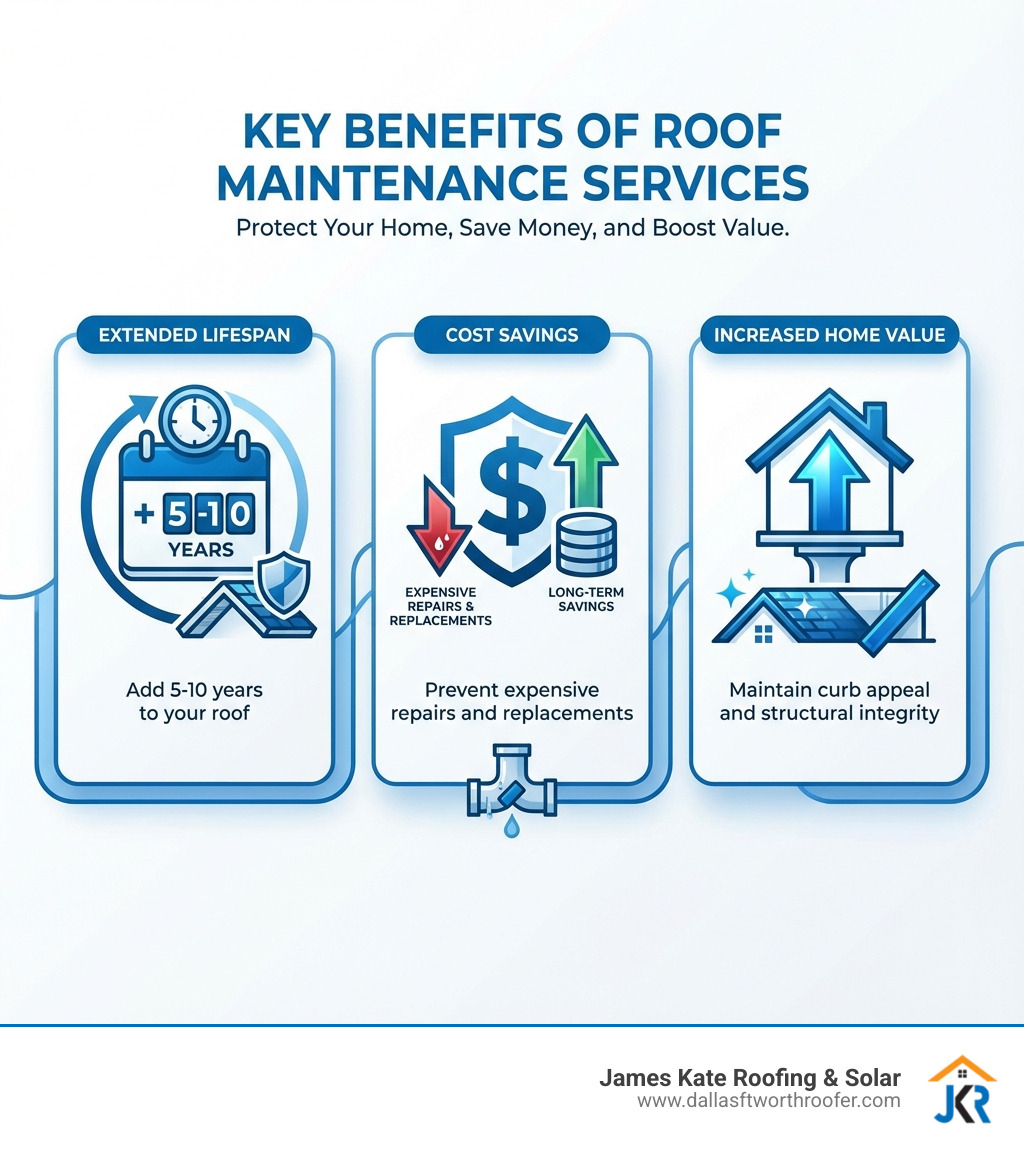
We often hear from homeowners who wish they had addressed a minor issue before it became a major headache. The truth is, regular roof maintenance services are not just an expense; they’re an investment that pays dividends. Routine roof maintenance and care can make roof systems last longer, preventing unforeseen problems before they happen. This proactive approach can extend the life of your roof, giving you peace of mind and saving you thousands in potential repair or replacement costs.
A well-maintained roof can also significantly boost your home’s value and improve its energy efficiency. By ensuring proper insulation and sealing leaks, we prevent air loss, which directly impacts your heating and cooling bills. For example, while the average lifespan for most roofing materials is 20-30 years, metal roofs can last a minimum of 40 years, and tile roofs can last a minimum of 60 years — with proper maintenance. Neglecting inspections and maintenance is often the biggest cause of premature roof failure, cutting short the life of an otherwise durable roof.
Common Culprits of Premature Roof Failure
Understanding what damages your roof is the first step in preventing it. Our DFW roofs face significant wear and tear from the elements: intense sun, strong winds, hailstorms, and fluctuating temperatures. These conditions can wreak havoc, leading to premature roof failure.
Here are some of the most common causes of roof damage we see:
- Weather Damage: The relentless Texas sun can degrade roofing materials over time. High winds can lift shingles, while hailstorms can cause immediate, visible damage. Sealants around flashings and weak points like vents and chimneys have a finite lifespan, often breaking down within 5-10 years due to UV exposure, rain, snow, hail, and sleet.
- Clogged Gutters & Debris Buildup: Leaves, branches, and dirt can pile up, clogging gutters and drains. This leads to water buildup on the roof, which can cause rot, decay, and eventual leaks.
- Poor Workmanship or Installation: Unfortunately, not all roofs are installed with the same level of care. Improperly installed underlayment or incorrectly secured shingles can leave your roof vulnerable to wind-driven rain and other issues, leading to costly roof repairs or even full replacements down the line.
- Lack of Maintenance: This is arguably the biggest culprit. Small issues like a loose shingle or a cracked sealant, if left unaddressed, will inevitably grow into larger, more expensive problems.
- Foot Traffic and Equipment: Unnecessary foot traffic on the roof, or improperly installed rooftop equipment, can cause damage to the roofing materials, especially on commercial properties where over 90% of flat roof leaks and premature system failures occur at roof details like walls, metal edges, flashings, protrusions, sheet laps, and drains.
For more information on common roof issues and how we can help, visit our page on roof repairs.
The Domino Effect: Consequences of a Failing Roof
Neglecting roof maintenance services sets off a chain reaction that can quickly impact your entire home. A small leak isn’t just an annoyance; it’s a symptom that can spiral into extensive and costly damage.
Here are the potential consequences of a failing roof:
- Water Leaks and Interior Damage: The most obvious sign. Water stains on ceilings and walls, peeling paint, and dripping water are direct indicators of a compromised roof. Leaks can travel sideways, so the visible water damage might not be directly above the actual entry point on your roof.
- Structural Damage: Persistent moisture can lead to rotting wood in your roof decking, attic rafters, and even the structural components of your home. This compromises the integrity of your house.
- Mold and Mildew Growth: Moisture in attics or within wall cavities creates a perfect breeding ground for mold and mildew. This not only causes unpleasant odors and further damage to building materials but can also pose significant health risks to your family.
- Pest Infestations: Gaps, holes, or rotting wood in your roof can become easy entry points for pests like rodents, insects, and even birds, turning your attic into an unwelcome habitat.
- Higher Energy Bills: A damaged roof, especially one with poor attic ventilation, can lead to significant heat transfer. In the DFW summer, this means your air conditioning works harder, leading to inflated energy bills. Poor attic airflow shortens shingle life and raises energy bills.
- Reduced Property Value: A visibly damaged or poorly maintained roof detracts from your home’s curb appeal and signals potential problems to prospective buyers, leading to a lower appraisal and selling price.
Your Roof’s Health Checklist: What to Inspect and When
Just like you schedule regular check-ups for your car, your roof also needs routine attention. Identifying issues early can save you from a lot of stress and expense down the road.
Essential Components to Check
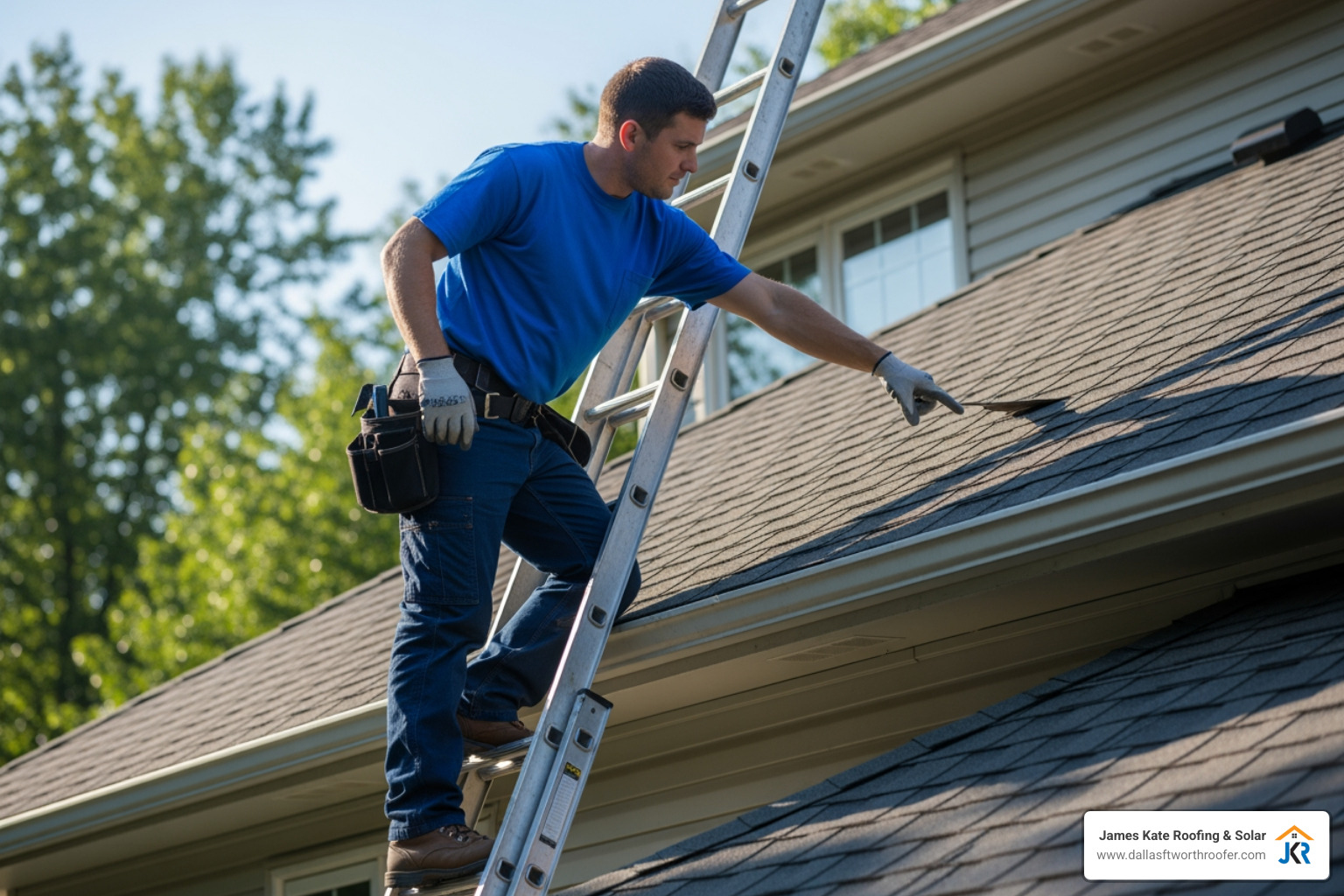
When we perform roof maintenance services, we carefully inspect every critical part of your roofing system. Here’s what we look for:
- Shingles: We check for signs of curling, cracking, blistering, or missing granules, which indicate wear and tear. Missing or damaged shingles create gaps that allow water to enter your home. For composition asphalt shingles, we also look for signs of premature aging or defects.
- Flashing: These metal strips protect vulnerable areas where the roof meets other structures. We inspect flashing around vents, chimneys, skylights, and dormers for rust staining, cracked caulking, or signs of pulling away. Leaky flashing around chimneys is a common problem.
- Gutters and Downspouts: These are crucial for diverting water away from your roof and foundation. We ensure they are free of debris (leaves, dirt, branches) and check for any sagging portions, rust, or damage that could impede proper drainage.
- Soffit and Fascia: We examine these components along the roofline for signs of rot, water damage, or pest entry points.
- Roof Surface: We look for any low spots where water might pool, as well as any corrosion, loose panels, fungus, or moss growth. Moss often indicates a moisture problem.
- Attic Interior: We visually inspect the attic for signs of water damage like stains, mold, or peeling paint on the underside of the roof deck or insulation. We also check for adequate ventilation.
Top 5 Warning Signs of Roof Damage:
- Water Stains on Ceilings or Walls: The most obvious indicator of a leak, though the source may be elsewhere.
- Missing, Cracked, or Curling Shingles: These leave your roof vulnerable to water intrusion.
- Granules in Gutters: For asphalt shingles, this means the protective layer is wearing off.
- Sagging Roof Deck or Ridges: A sign of structural issues or significant water damage.
- Moss, Algae, or Fungus Growth: Indicates excessive moisture and can degrade roofing materials.
The Critical Role of Attic Ventilation
Often overlooked, proper attic ventilation is a cornerstone of a healthy roof and an energy-efficient home. It plays several vital roles:
- Moisture Control: In the DFW area, high humidity can lead to moisture buildup in the attic. Without adequate ventilation, this moisture can condense, leading to mold and mildew growth, and even rotting wood in your roof structure. Improper attic ventilation can lead to moisture or condensation buildup, potentially causing mold development and rotting wood.
- Temperature Regulation: Good ventilation helps regulate attic temperature, preventing it from becoming excessively hot in the summer. This keeps your home cooler, reducing strain on your HVAC system and lowering energy bills. Poor attic airflow shortens shingle life and raises energy bills.
- Extending Shingle Life: Excessive heat in the attic can literally bake your shingles from the inside out, accelerating their degradation and shortening their lifespan. Curled shingles may be a sign of poor attic ventilation.
- Preventing Ice Dams (less common in DFW, but still a factor): While not as prevalent in Texas as in colder climates, proper attic ventilation can help prevent ice dams by keeping the roof surface uniformly cool, preventing snow from melting and refreezing at the eaves. If your attic is consistently 20–30°F warmer than outside, you likely have a ventilation problem.
Ensuring your attic has a balanced system of intake (soffit) and exhaust (ridge or box) vents is crucial. For more details on protecting your roof, including composition asphalt shingles, explore our resources on composition asphalt shingles.
Recommended Inspection Frequency
When it comes to roof maintenance services, timing is everything. Catching issues early can prevent them from escalating into costly repairs or premature roof replacement.
Here’s our recommended inspection frequency:
- Monthly/Seasonal Self-Inspections: We encourage homeowners to perform visual inspections from the ground monthly. Look for curling or missing shingles, debris buildup, or gutter issues. A full seasonal check (spring, summer, fall, winter) is also a great habit. Check interior ceilings for water stains, bubbling paint, or mold odors regularly.
- After Major Storms: The DFW area is no stranger to severe weather. After any significant weather event, especially hailstorms or high winds, it’s crucial to inspect your roof for damage immediately.
- Professional Inspections (Annual/Biannual): We recommend a comprehensive professional inspection at least once a year, ideally twice (in spring and fall). Our trained technicians can spot subtle issues that might be missed during a homeowner’s visual check. These regular inspections provide early detection of any problems with your roof system.
The Ins and Outs of Professional Roof Maintenance Services
When a small leak appears, or you spot some damaged shingles, you might wonder if it’s a DIY job or if you should call in the pros. We’re here to help you make that call safely and effectively.
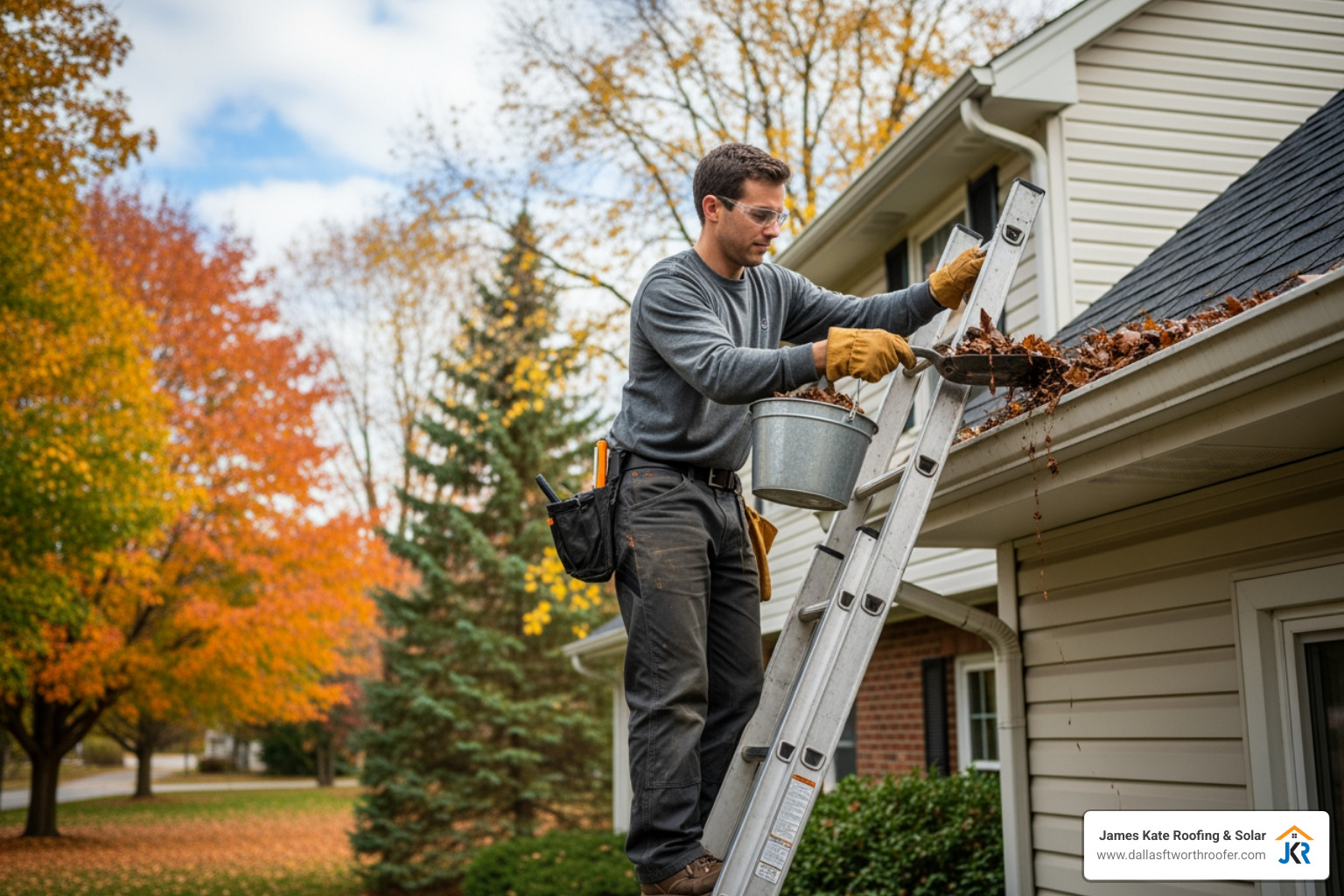
DIY vs. Professional Roof Maintenance Services
There are some roof maintenance services tasks that a homeowner can safely handle, and others that are best left to professionals.
DIY Roof Maintenance Tasks:
- Ground-Level Visual Inspections: Safely inspect your roof from the ground using binoculars. Look for obvious signs of damage like missing shingles, debris, or clogged gutters.
- Gutter Cleaning: Using a sturdy ladder with a stabilizer, you can clean leaves and debris from your gutters. Wear protective gear, scoop out the debris, and flush with a hose.
- Attic Interior Checks: Check your attic for signs of water stains, mold, or drafts.
Safety First: Roofing jobs have the 5th highest death rate in construction-related work, mainly due to falls. Climbing on a roof without proper equipment and knowledge can lead to serious accidents. If a task involves significant height, ice, or complex repairs, we strongly advise against DIY.
Professional Roof Maintenance Services:
- Thorough Inspections: Professionals have the expertise to identify hidden defects, such as subtle flashing issues or early signs of material fatigue. We use specialized tools and training to assess structural integrity and potential vulnerabilities. For example, if you see water in your ceilings, call a professional immediately, as it often indicates a leak that’s been present for some time.
- Complex Repairs: Tasks like replacing damaged shingles, sealing roof flashings, addressing roof penetrations, or repairing specialized materials (metal, tile, flat roofs like TPO or Modified Bitumen) require specific skills and tools. For metal roofing repairs, especially on steep roofs, professionals are crucial due to safety risks. DIY repairs can often lead to further damage or using incompatible materials, costing more in the long run.
- Warranty Protection: Many roofing warranties require that repairs and maintenance be performed by certified professionals to remain valid.
- Safety and Efficiency: Our teams are trained in safety protocols and equipped with the right gear. We can efficiently complete tasks that would be dangerous or time-consuming for a homeowner.
When in doubt, it’s always smart to consult with a professional. You can get started with a free roof inspection estimate from us.
What to Expect from Professional Roof Maintenance Services
When you entrust us with your roof maintenance services, you can expect a comprehensive and transparent process designed to protect your investment.
Here’s what our professional service entails:
- Detailed Inspection and Report: We conduct a thorough inspection, often utilizing drones and thermal imaging for comprehensive coverage. You’ll receive a detailed, concise, and straightforward photo report of our findings, highlighting any issues we identify.
- Clear Communication: We believe in keeping you informed every step of the way. We’ll clearly explain any problems, their potential causes, and the recommended solutions.
- Minor Repairs Included: Our maintenance packages often include minor repairs, such as sealing small cracks, replacing a few missing shingles, or re-caulking flashings. This proactive approach addresses small issues before they escalate.
- Recommendations for Future Work: We’ll outline the most efficient repair approach and provide a detailed proposal for any larger repairs or necessary upgrades. This helps you plan and budget for future needs.
- Repair vs. Replacement Advice: A critical part of our service is helping you understand whether a repair is sufficient or if a full replacement is more economical in the long run. We consider factors like the age of your roof, the extent of the damage, and your budget to provide honest, expert advice. For example, extensive damage or an aging roof (beyond 20 years for asphalt shingles in DFW) might lean towards replacement, while localized damage can often be repaired.
The peace of mind that comes with ongoing, professional maintenance is invaluable. We aim to reveal hidden defects, safeguard against potential additional damages, and maintain the lifespan of your home.
A Year-Round Plan for a Healthy Roof
A healthy roof requires attention throughout the year, as each season brings its own challenges. By following a seasonal maintenance plan, we can ensure your roof is ready for whatever DFW weather throws its way.
Preparing Your Roof for Every Season
- Spring: After the winter months, spring is the perfect time to inspect your roofing system. We look for any damage from winter storms and prepare it for the intense summer heat. Key tasks include cleaning out gutters and downspouts, inspecting shingles and flashing for damage, assessing roof ventilation, and checking skylights, chimneys, and roof penetrations for issues. For a detailed guide, check out our checklist for spring roofing maintenance.
- Summer: The Texas summer sun can be brutal. We focus on checking for UV damage to shingles and ensuring proper attic ventilation to mitigate heat buildup. We also prep your roof for potential summer storms by inspecting for any loose components and ensuring gutters are clear. Adequate attic ventilation is crucial to prevent premature shingle failure.
- Fall: As leaves begin to fall, debris removal becomes a priority. We clean the roof and gutters again, recheck flashing, vents, skylights, and chimneys. Trimming back overhanging trees at least 3 feet from the roof edge is essential to prevent leaves from clogging gutters and branches from damaging the roof during high winds. We also inspect the attic for insulation, pests, or leaks, preparing for cooler temperatures.
- Winter: While DFW winters are generally mild, we do experience freezing temperatures and occasional ice. We check for ice dams (though less common here, they can occur) and monitor attic temperature to ensure proper insulation. We also inspect for leaks after any winter storms and clear snow near the roofline if safely accessible. If ice dams form, we recommend using calcium chloride placed in socks to melt them slowly, avoiding rock salt which can damage roofing materials.
Custom Care for Different Roofing Materials
Different roofing materials have unique characteristics and, therefore, require specific roof maintenance services approaches. What works for shingles might not be suitable for a metal roof.
- Asphalt Shingles: These are very popular in DFW. Maintenance involves regular inspections for missing, cracked, or curling shingles, granule loss, and moss/algae growth. Given the DFW climate, asphalt shingles, even 30-year rated ones, often last closer to 20 years. Proper attic ventilation is key to extending their life.
- Metal Roofing: Known for its durability, metal roofing still benefits from inspections for loose panels, rust, scratches, or issues with fasteners and sealants. Metal roofing heats up quickly, which can be beneficial in encouraging snow to melt, but also means proper ventilation is crucial underneath. You can learn more about metal roofing.
- Tile Roofing (Clay/Concrete): Tile roofs are exceptionally long-lasting, often a minimum of 60 years with proper maintenance. Maintenance focuses on checking for cracked or broken tiles, ensuring proper underlayment, and clearing debris that can accumulate between tiles. They shed heat well in summer. Find more about tile roofing.
- Flat Roofs (TPO, Modified Bitumen, etc.): Commonly found on commercial buildings, flat roofs require specialized attention. Inspections focus on checking for punctures, tears, membrane shrinkage, ponding water, and the integrity of flashings around HVAC units and other penetrations. Sealants on flat roofs are particularly vulnerable to UV exposure and weathering.
For a comprehensive look at various roofing options and their specific needs, visit our page dedicated to all roof types.
Choosing Your Guardian: How to Select the Best Roofing Contractor
Selecting the right roofing contractor for your roof maintenance services is a crucial decision that impacts the longevity and health of your roof. With so many options, knowing what to look for can be challenging.
Key Qualities of a Top-Tier Roofing Company
When you’re looking for a partner to protect your home, here’s what we believe sets the best apart:
- Licensed and Insured: This is non-negotiable. A reputable contractor will be fully licensed to operate in Texas and carry comprehensive insurance (liability and workers’ compensation) to protect both their team and your property.
- Local Reputation and Positive Reviews: Look for companies with a strong track record in the DFW area. Check their online presence, read customer testimonials, and look at their positive reviews. A company that consistently delivers quality service will have happy clients.
- Strong Warranties: A confident contractor stands behind their work. Look for robust workmanship warranties in addition to manufacturer material warranties.
- Manufacturer Certifications: Certifications from leading manufacturers (like GAF) indicate that a contractor is trained and authorized to install and repair specific roofing systems according to the highest industry standards. These certifications often grant access to improved warranty options.
- Detailed Estimates: A professional company will provide a clear, written estimate that outlines the scope of work, materials to be used, timeline, and cost. Avoid vague proposals.
- Commitment to Safety: Ensure the company adheres to all safety standards, protecting their crew and your property during any work.
Why a GAF President’s Club Award Winner Matters
When you choose a company recognized with the GAF President’s Club Award, you’re partnering with a roofing contractor that exemplifies excellence. This prestigious award is not given lightly; it signifies a commitment to the highest standards in the roofing industry.
Here’s why this matters for your roof maintenance services:
- Commitment to Excellence: GAF President’s Club Award winners consistently demonstrate superior quality, advanced training, and a dedication to customer satisfaction.
- Proven Reputation: This recognition is a testament to a contractor’s consistent performance and ethical business practices.
- Continuous Training: Award-winning contractors are committed to ongoing training, ensuring their teams are up-to-date with the latest techniques and technologies in roofing.
- Access to Superior Warranties: As a GAF President’s Club member, we can offer some of the strongest warranties in the industry, including up to a 25-year workmanship warranty. This provides unparalleled protection for your investment.
As a family-owned DFW company, James Kate Roofing & solar exemplifies these standards through our commitment to honesty, integrity, and Biblical principles, backed by our GAF President’s Club recognition and comprehensive workmanship warranty. We strive to be your trusted partner for all your Solar needs.
Protect Your Investment with a Proactive Plan
Your roof is more than just shingles and decking; it’s the shield that protects your home and everything within it. Neglecting its care can lead to a cascade of problems, from inconvenient leaks to costly structural damage and soaring energy bills. We’ve seen how a little proactive effort and smart roof maintenance services can prevent major headaches and significantly extend your roof’s lifespan.
Choosing a trusted partner for your roof’s health isn’t just about repairs; it’s about investing in peace of mind. By opting for regular professional inspections and maintenance, you’re safeguarding your home’s value, ensuring its energy efficiency, and protecting your family from unexpected issues. Don’t wait for a drip to become a disaster. Take the first step to protect your most valuable asset.
Schedule your professional roof maintenance today!

Dustin Eatman is a seasoned roofing professional with deep, hands-on expertise that spans residential and commercial roofing, insurance solar, and long-term roof asset management. As the owner of James Kate Roofing & solar in the Dallas–Fort Worth metroplex, he’s built a reputation for diagnosing roof systems accurately, communicating clearly, and executing projects with a high standard of workmanship and documentation. Dustin understands the technical details that make roofs perform—proper underlayment selection, slope and drainage considerations, ventilation strategy, flashing and penetration detailing, and manufacturer-specific installation requirements—because he’s worked through the real-world challenges that cause leaks, premature wear, and warranty issues. He’s equally fluent in the operational side of roofing: jobsite planning, quality control, safety, material ordering, crew coordination, and customer experience from inspection to closeout. In insurance-related projects, Dustin brings practical knowledge of claim workflows, adjuster meetings, scope alignment, supplements, and the importance of photo evidence and thorough records, helping property owners navigate stressful situations with confidence. For commercial clients—especially property and facility managers—he emphasizes proactive maintenance and targeted repairs that reduce disruption, extend roof life, and prevent expensive interior damage. Dustin also stays focused on doing things the right way: educating customers on realistic options, setting expectations, and prioritizing solutions that hold up over time rather than quick fixes. That blend of technical skill, field experience, process discipline, and owner-level accountability is what makes Dustin Eatman a trusted expert in the roofing industry.