What It Really Takes to Build a Successful Roofing Business
A roofing business is one of the most in-demand trades you can start — but it’s also one of the most misunderstood. Many new companies close before they find their footing, not because roofing is too hard, but because the business side catches them off guard.
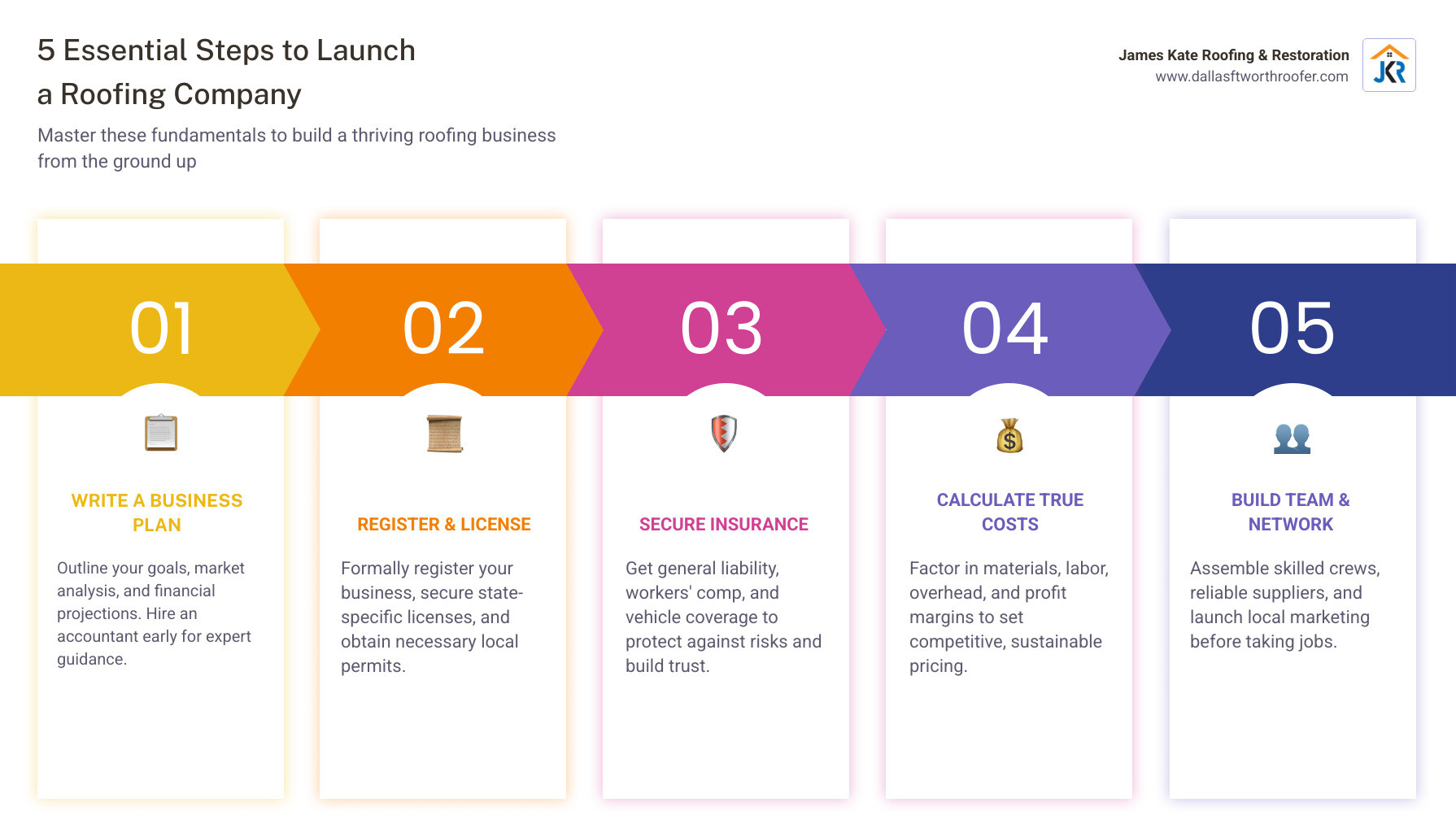
Here are the essential steps to launch a roofing company:
- Write a business plan and hire an accountant from day one
- Register your business and get the right licenses for your state
- Set up proper insurance — general liability, workers’ comp, and vehicle coverage
- Establish your true costs and set prices that actually make a profit
- Build your crew and supplier network before you take on jobs
- Market locally using signage, Google reviews, and a professional sales kit
- Prioritize safety and training to protect your team and your reputation
The roofing market is competitive. Homeowners and property managers have no shortage of options — which means the companies that win long-term are the ones that combine solid operations with trustworthy service and clear communication.
I’m Dustin Eatman, owner of James Kate Roofing & Solar in the Dallas–Fort Worth area, and I’ve built my roofing business from the ground up with hands-on experience across residential, commercial, and insurance solar projects. In this guide, I’ll walk you through exactly what it takes to start smart and grow sustainably.
Quick roofing business definitions:
- best roofers
- i need a roofer
- nearby roofing companies
Laying the Foundation for Your roofing business
Starting a roofing business in the DFW Metroplex—whether you are based in Mansfield, Arlington, or Grand Prairie—requires more than just a ladder and a hammer. You are building an organization that must withstand both North Texas storms and complex legal requirements.
The first secret to success isn’t actually found on a roof; it’s found in an office. One of the biggest mistakes new owners make is trying to do their own taxes and payroll. We always recommend that you “get an accountant” before you buy your first bundle of shingles. An accountant helps you understand your “burn rate” and ensures you are setting aside money for Uncle Sam from every single deposit.
Next, you need to choose a business structure. Most roofing contractors opt for an LLC to protect their personal assets. Once you’ve decided, you must Register your business in the U.S. through the SBA guidelines. This gives you the legal standing to open a business bank account—another non-negotiable step. Mixing personal and business funds is a fast track to a financial headache.
In our region, local permits are a major factor. Every municipality, from Midlothian to Granbury, has its own set of rules and building codes. To stay ahead of the curve, we suggest following Professional Roofing industry news to keep up with changing codes and material standards.
Finally, don’t ignore the “soft” side of the foundation. Many businesses fail because they don’t account for hidden pitfalls like seasonal slumps or the high cost of customer acquisition. By planning for these early, you ensure your roofing business has the staying power to last for decades, not just one storm season.
Essential Licenses and Insurance Requirements
In roofing, insurance isn’t just a “nice to have”—it is your shield. Because roofing is a high-risk industry with frequent accidents, you must protect your team and your clients.
- General Liability Insurance: This is the big one. It covers property damage or bodily injury caused by your work. If a heavy rainstorm hits while a roof is open and ruins a homeowner’s living room, this is what saves your business.
- Workers’ Compensation: In Texas, while not always strictly mandated for every small crew, it is ethically and professionally essential. It covers medical bills and lost wages if a worker is injured on the job.
- Vehicle and Equipment Insurance: Your trucks and expensive tools (like VecLoader vacuums or specialized nail guns) need their own coverage against theft and accidents.
- Professional Liability: Also known as “errors and omissions,” this protects you if a client claims your advice or service caused them financial loss.
Establishing Costs and Competitive Pricing
One of the most difficult parts of running a roofing business is knowing exactly what to charge. If you’re too high, you lose the job. If you’re too low, you’re essentially paying the homeowner to let you work on their house.
To set competitive pricing, you have to look at more than just the cost of shingles. You have to understand your “overhead”—the costs you pay even when you don’t have a job scheduled. This includes your truck payments, office space, and marketing.
| Expense Category | Examples | Impact on Pricing |
|---|---|---|
| Hard Costs | Shingles, underlayment, nails, labor | High (Directly tied to job size) |
| Soft Costs | Insurance, fuel, permits, disposal fees | Medium (Varies by location) |
| Overhead | Rent, office staff, marketing, software | Constant (Must be spread across all jobs) |
| Profit Margin | Business growth, emergency fund | Essential for long-term survival |
We recommend a “lean startup” approach. Don’t go out and buy a brand-new fleet of trucks immediately. You can often find a reliable used truck for under $10,000 to get started. As you grow, you can offer Financing options for customers, which allows you to take on larger projects while ensuring the homeowner can afford the quality they deserve.
Avoiding Financial Pitfalls in Early Operations
Cash flow is the lifeblood of a new roofing business. A common trap is using the deposit from “Job B” to finish “Job A.” This is a “robbing Peter to pay Paul” scenario that eventually collapses.
To avoid this, use job-specific accounts or clear tracking software. Always take a deposit to cover materials and initial labor, but never spend that money on anything other than that specific project. Additionally, ensure you are taking accurate measurements. Using tools like GAF QuickMeasure can prevent you from over-ordering materials or, worse, under-ordering and having a crew sit idle while you wait for a delivery.
Operations: Equipment, Suppliers, and Skilled Crews
When you are starting on a budget, you don’t need every gadget in the catalog. However, you cannot compromise on safety and efficiency. Basic equipment includes sturdy ladders, high-quality nail guns, and reliable safety harnesses.
Finding the right partners is just as important as finding the right tools. You need to Find reliable suppliers who offer consistent pricing and timely deliveries. Building a relationship with a local supplier in the Mansfield or Arlington area can often lead to better credit terms and early access to new materials.
When it comes to your crew, experience is king. A great way to find skilled roofers is to hang out at the local supply stores early in the morning. Strike up conversations and see who is reliable. Your crew represents your brand. If they are polite, efficient, and clean up the job site, your customers will do your marketing for you through word-of-mouth.
Sales and Marketing Strategies for a New roofing business
In the beginning, you don’t need a million-dollar advertising budget. You need “boots on the ground” marketing.
- Signage: Every job site should have a lawn sign. Your truck should have professional decals. These are your moving billboards.
- Sales Kits: Create a physical or digital portfolio. Include before-and-after photos of your work, copies of your insurance, and a list of local references.
- Google Reviews: In the modern roofing business, your reputation is public. Ask every satisfied customer to leave a review. A high rating on Google is often the deciding factor for a homeowner in Grand Prairie or Granbury.
- Local SEO: Ensure your business shows up when people search for “roofers near me.” This means keeping your Google Business Profile updated with fresh photos of your team (wearing their royal blue James Kate shirts, of course!).
Prioritizing Safety, Training, and Industry Standards
Roofing is a rugged business, but it shouldn’t be a reckless one. Safety compliance isn’t just about avoiding fines from OSHA; it’s about making sure every member of your team goes home to their family at night.
Proper training is a continuous process. For example, if you are doing any torch-applied roofing, you should invest in Virtual CERTA torch safety training. This accreditation ensures your team knows how to handle high-heat equipment without risking a fire.
Beyond safety, technical training sets you apart. At James Kate, we take great pride in our GAF certification. Being a GAF-certified contractor means we have access to superior warranties and the latest installation techniques. This manufacturer partnership allows us to offer homeowners peace of mind that a “chuck-in-a-truck” simply cannot provide.
Diversifying Your roofing business Services
To ensure year-round work, it’s wise to offer a variety of services. While asphalt shingles are the bread and butter of residential work, expanding into other areas can stabilize your income during the off-season.
- Residential roofing services: New installations, inspections, and style-matched shingles for homes.
- Commercial roofing systems: Specialized solutions for flat roofs, including TPO, PVC, and roof coatings.
- Expert roof repairs: Fixing leaks, replacing missing shingles, and repairing chimney flashing.
- Professional roof replacement: Full tear-offs and installs, often completed in just one day to minimize disruption.
- Roof maintenance programs: Scheduled inspections to catch minor issues before they become expensive disasters.
- Storm damage solar: Helping DFW homeowners navigate insurance claims after hail or wind events. This also includes water, fire, and mold mitigation to fully restore the home.
Frequently Asked Questions about Starting a Roofing Company
What is the most important first step for a new roofing business?
The most important step is hiring a qualified accountant. While it’s tempting to focus on the roofing work itself, the financial foundation determines whether you stay in business. An accountant ensures your pricing covers your overhead and that you remain compliant with tax laws.
How do I find skilled roofing crews in a competitive market?
Visit local roofing supply stores early in the morning. This is where the most active and professional crews are picking up materials. You can also look for experienced roofers who may be looking for a company that offers better communication, timely pay, and a commitment to safety.
Why is GAF certification important for new contractors?
GAF is North America’s largest roofing manufacturer. Becoming certified signals to customers that you meet high standards for installation and reliability. It also allows you to offer enhanced warranties, like the Silver Pledge or Golden Pledge, which can be a major selling point when competing with uncertified companies.
Conclusion
Building a successful roofing business is a marathon, not a sprint. It requires a blend of technical skill, financial discipline, and a heart for service. At James Kate Roofing & solar, we’ve spent years perfecting this balance across Mansfield, Arlington, and the wider DFW area.
As a family-owned company, we operate on honesty, integrity, and Biblical principles. Our GAF President’s Club recognition and our ability to offer up to a 25-year workmanship warranty are reflections of our commitment to excellence. Whether we are handling a simple repair or a complex commercial solar involving water and fire mitigation, we treat every home as if it were our own.
If you are a homeowner or business owner looking for a partner you can trust, we are here to help. Schedule a professional roof inspection and estimate with us today and experience the James Kate difference.
