What Is Roof Decking Repair — and Do You Need It?
Roof decking repair involves removing and replacing damaged wood panels (plywood or OSB) that sit between your roof’s framing and its shingles. Here’s a quick overview of when and how it’s done:
- Identify the damage — Look for soft spots, sagging, water stains, or musty smells
- Assess the extent — If 30% or more of the decking shows deterioration, broader inspection is needed
- Remove damaged panels — Strip shingles, underlayment, and cut out rotted sections
- Install new decking — Cut replacement panels to match thickness, nail to rafters per NRCA guidelines
- Reinstall roofing layers — Apply underlayment, ice and water shield, then shingles
Cost range: $2–$5/sq ft for minor patching, $5–$10/sq ft for moderate repairs, $10–$15/sq ft for extensive structural work.
Your roof is only as strong as what’s underneath it. Most homeowners never think about roof decking — until water starts showing up on the ceiling, or a section of the roof starts to sag.
Roof decking (also called roof sheathing) is the structural wood layer that sits on top of your rafters and underneath your shingles. It holds everything together. When it rots or gets damaged, every layer above it is at risk — from the underlayment to the shingles themselves.
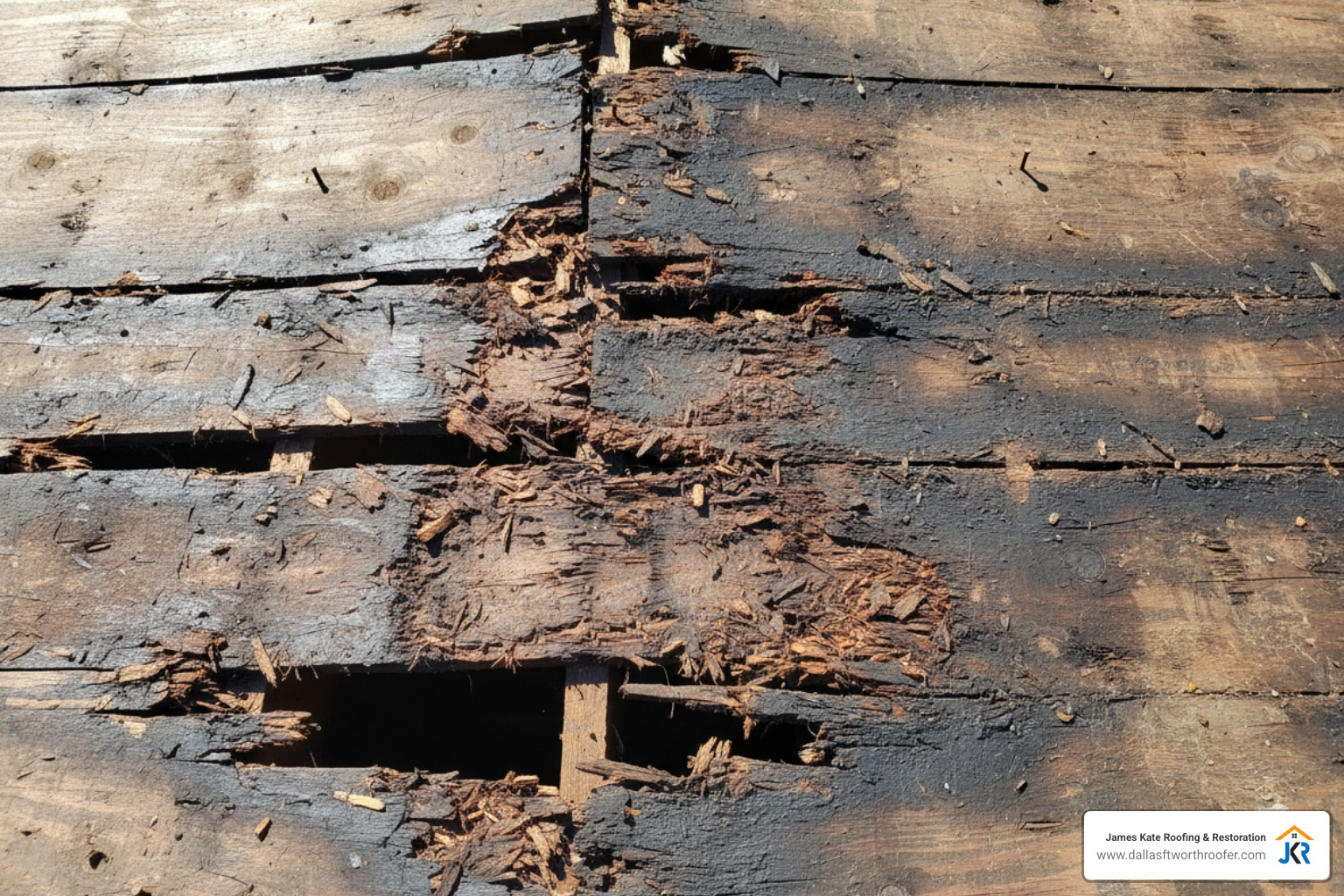
The tricky part? Decking damage is often hidden. You can’t see it from the ground, and by the time interior symptoms show up — ceiling stains, musty smells, soft spots underfoot — the damage has usually been building for a while.
I’m Dustin Eatman, owner of James Kate Roofing & Solar in the DFW metroplex, and roof decking repair is one of the most critical — and most misunderstood — repairs I see on residential roofs across North Texas. In this guide, I’ll walk you through exactly how to identify, assess, and replace damaged roof decking the right way.
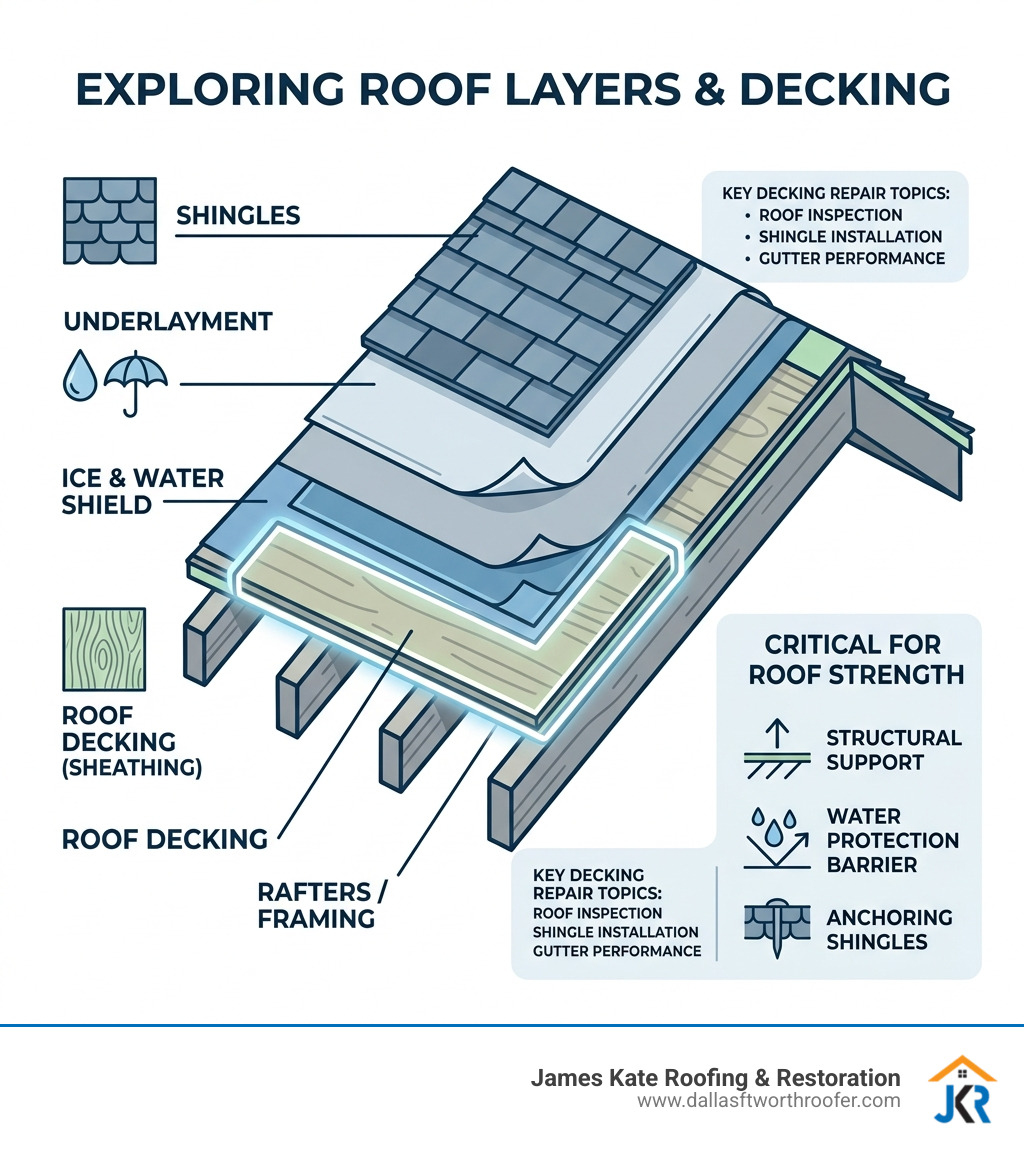
Roof decking repair terms simplified:
Understanding the Role of Roof Sheathing
Think of your roof decking as the skeleton of your roofing system. Without it, your shingles would have nothing to hold onto, and your home would have no structural barrier against the elements. Its primary job is to provide a flat, stable surface for the installation of underlayment and shingles while distributing the weight of the roof (and any snow or wind loads) across the rafters or trusses.
In our neck of the woods—whether you’re in Mansfield, Arlington, or Grand Prairie—roofing systems face intense heat and sudden spring storms. The decking acts as a thermal barrier and a moisture shield. If the decking is compromised, the structural integrity of the entire house is at stake.
For those looking into more info about residential roofing services, it is important to know that decking also plays a vital role in attic ventilation. It supports the pathways that allow air to flow from your soffits up to your ridge vents. When decking warps or rots, it can block this airflow, leading to a “pressure cooker” effect in your attic that bakes your shingles from the inside out.
Material Comparisons: Plywood vs. OSB
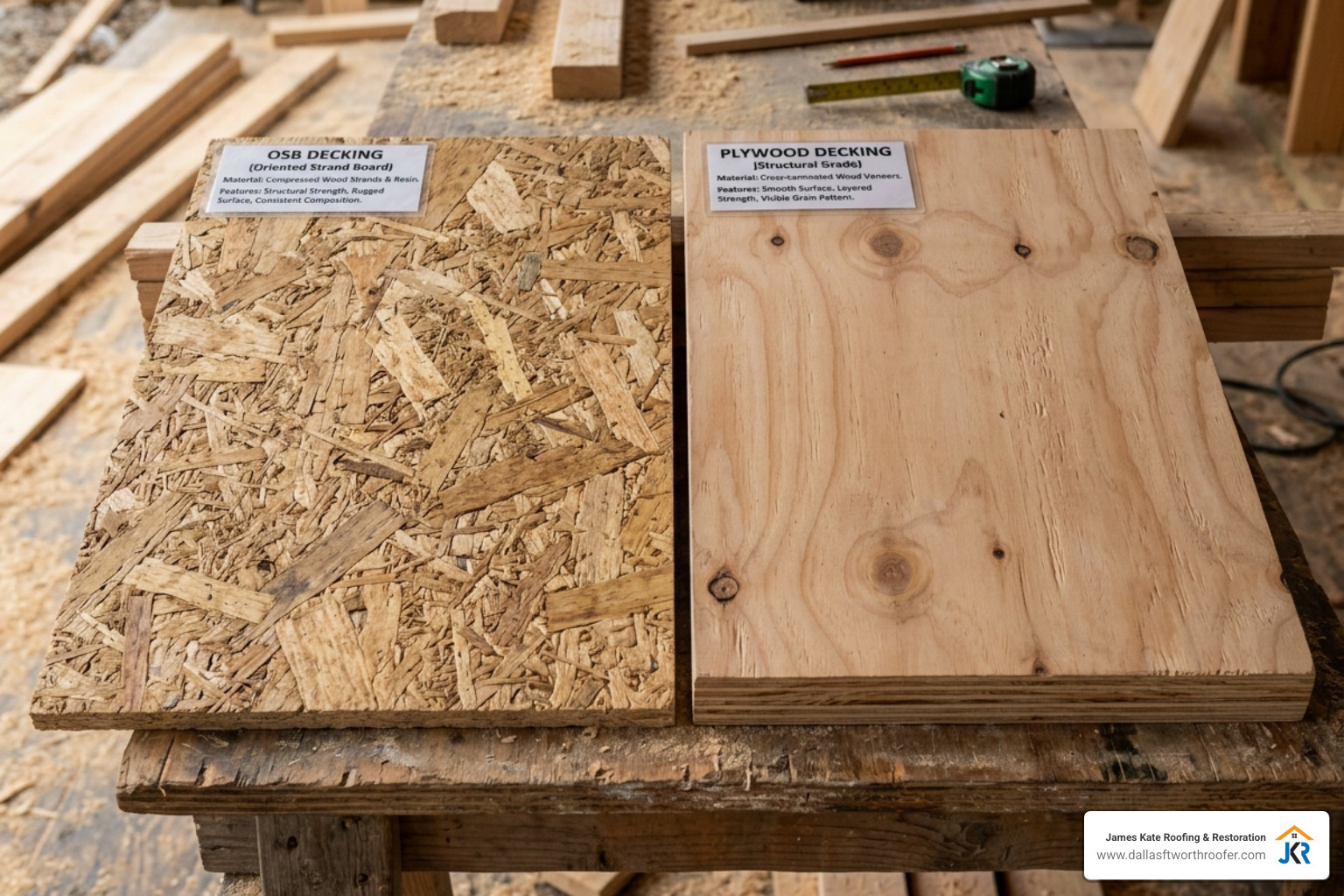
When we perform a roof decking repair, we typically choose between two modern materials: Plywood and Oriented Strand Board (OSB).
- Plywood: This is the traditional choice. It’s made of layered wood veneers glued together. It is highly durable and has excellent moisture resistance. If plywood gets wet, it tends to swell evenly and dry out quickly without losing its structural “memory.”
- OSB: This is the most common material used in new construction today. It’s made of compressed wood strands and wax. While it is more cost-effective, OSB is more susceptible to edge-swelling if it stays wet for too long. However, for most DFW homes, a 7/16-inch OSB panel is perfectly sufficient and code-compliant.
- Plank Decking: If you live in an older home in Midlothian or Granbury, you might have 1×6 or 1×8 wood planks. These were standard before plywood was invented. While charming, they often have large gaps that modern shingle warranties won’t cover, often requiring an overlay of thin plywood to create a “nailable” surface.
Identifying the Need for Roof Decking Repair
How do you know if your “skeleton” is starting to crumble? Because decking is hidden under shingles, you have to look for secondary clues. We use the “30-percent rule”: if our initial inspection finds that 30% of the visible decking is showing signs of rot or deterioration, we stop and perform a much deeper dive into the entire roof structure.
One of the most common visual cues is “telegraphing.” This is when you can see the wavy outlines of the wood panels through your shingles. It looks like the roof is rippling. If you want to learn how to fix rotted roof decking, the first step is always a thorough assessment of these ripples.
If you are curious about more info about roof solar, solar starts with a solid foundation. If we find “spongy” spots while walking the roof, that’s a clear sign the wood has lost its rigidity and is likely rotted through.
Common Causes Requiring Roof Decking Repair
In North Texas, several factors conspire against your roof sheathing:
- Water Intrusion: This is the #1 killer. Whether it’s a missing shingle from a hailstorm or a cracked pipe boot, once water hits the wood, rot begins.
- Poor Ventilation: If your attic can’t breathe, humidity builds up. This leads to condensation on the underside of the decking, causing “delamination” (the layers of wood peeling apart).
- Ice Dams: While rare in DFW compared to the north, we do get occasional freezes. When snow melts and refreezes at the eaves, it can back up under the shingles and soak the decking.
- Age: Over 20 to 30 years, even the best wood can become brittle and lose its fastener-holding power.
If you’re looking for the premier roofer in Mansfield, TX for your home’s protection, you’ll find that we prioritize identifying these root causes before we ever pick up a hammer.
Warning Signs of Roof Decking Repair
Keep an eye (and a nose) out for these red flags:
- Musty Smells: If your attic smells like a damp basement, there is likely mold growing on your decking.
- Ceiling Stains: Dark spots or “halos” on your interior ceilings mean water has already bypassed the shingles and the decking.
- Light Infiltration: If you go into your attic on a sunny day and see “stars” (pinpricks of light), your decking has holes.
- High Energy Bills: Warped decking often indicates poor ventilation, which forces your AC to work overtime in the Texas heat.
Step-by-Step Guide to Replacing Rotted Roof Decking
Replacing decking is not a simple DIY weekend project. It requires working at heights, using heavy machinery, and exposing your home to the weather. However, understanding the process helps you know what to expect when our crew arrives at your home.
| Repair Type | Estimated Cost (per sq. ft.) | Best Use Case |
|---|---|---|
| Minor Patching | $2 – $5 | Small, localized rot around a vent or pipe. |
| Panel Replacement | $5 – $10 | Replacing full 4×8 sheets due to widespread leaks. |
| Structural Repair | $10 – $15+ | Damage that has spread to the rafters or trusses. |
Preparing the Work Area and Safety
Safety is our first priority. We use OSHA-approved fall protection, including harnesses and anchor points. We also monitor the weather closely—we never start a roof decking repair if there is a 20% or higher chance of rain in the DFW area, as an open roof is a major liability. We also use tarps and “Catch-All” systems to protect your landscaping and prevent nails from ending up in your flower beds.
Removing Damaged Panels and Inspecting Rafters
Once the shingles are stripped back, we mark the rafters with chalk. We set our circular saw depth to exactly the thickness of the wood (usually 7/16 or 15/32 inches) so we don’t accidentally cut into the structural rafters.
After the rotted wood is removed, we inspect the rafters. If the wood underneath is also soft, we perform “sistering”—attaching a new piece of lumber alongside the old one to reinforce the structure. This is a critical step that many “budget” contractors skip.
Professional Standards for Roof Decking Repair
We don’t just slap a new piece of wood down. We follow strict NRCA (National Roofing Contractors Association) guidelines:
- Expansion Gaps: We leave a 1/8-inch gap between panels. Wood expands when it gets hot (and it gets very hot in Texas). Without gaps, the boards will buckle.
- H-Clips: These small metal clips are placed between panels to provide extra support and ensure the roof stays level.
- Nailing Patterns: We use galvanized ring-shank nails, spaced every 6 inches along the edges and every 12 inches in the “field” (middle) of the panel.
For those interested in more info about commercial roofing, you’ll find that while the materials might differ, the commitment to structural integrity remains the same.
Costs and Factors Affecting Decking Replacement
The average homeowner spends about $6,400 on decking replacement, but prices can range from $1,900 to over $17,000 depending on the size of the home.
Several factors influence your final quote:
- Roof Pitch: Steeper roofs require more safety equipment and take longer to navigate, increasing labor costs.
- Number of Layers: If we have to strip off two or three layers of old shingles before we even get to the wood, the labor and disposal fees will rise.
- Material Prices: The cost of plywood and OSB can fluctuate.
- Accessibility: If your home is three stories tall or has limited space for a dumpster, the logistics add to the price.
Preventing Future Decking Damage
The best roof decking repair is the one you never have to do. Prevention is all about moisture management.
- Ventilation Balance: You need a 50/50 balance between intake (soffit) and exhaust (ridge) vents. Statistics show that an inadequately ventilated attic can reduce a roof’s life by 24 percent.
- Gutter Maintenance: Clogged gutters cause water to back up under the eaves, which is the most common place we find rotted decking.
- Routine Inspections: Have a pro look at your roof every 1-2 years, especially after the heavy hail seasons we see in Arlington and Grand Prairie.
Frequently Asked Questions about Roof Decking
Does homeowners insurance cover roof decking?
Usually, yes—but only if the damage was caused by a “covered peril” like a sudden storm, hail, or a fallen tree limb. Insurance typically does not cover rot caused by “wear and tear” or a lack of maintenance (like a slow leak you ignored for three years). We help our DFW clients document damage with photos to make the claims process as smooth as possible.
Can you replace decking without a full roof replacement?
In some cases, yes. If a tree limb falls on one specific section, we can perform a localized repair. However, if the decking is rotted due to age or poor ventilation, it’s usually a sign that the entire roofing system is at the end of its life. Patching one area often just hides the rot next door.
How long does properly installed roof decking last?
With proper ventilation and a leak-free shingle layer, roof decking can easily last 20 to 30 years. In the dry, well-maintained attics we see in Midlothian and Granbury, it’s not uncommon to see decking last 40+ years.
Conclusion
At James Kate Roofing & solar, we believe that a roof is only as good as the foundation it’s built on. As a family-owned DFW company, we bring honesty, integrity, and Biblical principles to every job site. Whether you are in Mansfield or Arlington, we don’t just cover up problems—we fix them from the rafters up.
We are proud to be recognized in the GAF President’s Club, a distinction held by less than 1% of roofers nationwide. This allows us to offer up to a 25-year workmanship warranty, giving you peace of mind that your roof decking repair was done to the highest professional standards.
Don’t wait for a small soft spot to become a major structural failure. Schedule a professional roof inspection today and let us ensure your home is protected for the long haul.

Dustin Eatman is a seasoned roofing professional with deep, hands-on expertise that spans residential and commercial roofing, insurance solar, and long-term roof asset management. As the owner of James Kate Roofing & solar in the Dallas–Fort Worth metroplex, he’s built a reputation for diagnosing roof systems accurately, communicating clearly, and executing projects with a high standard of workmanship and documentation. Dustin understands the technical details that make roofs perform—proper underlayment selection, slope and drainage considerations, ventilation strategy, flashing and penetration detailing, and manufacturer-specific installation requirements—because he’s worked through the real-world challenges that cause leaks, premature wear, and warranty issues. He’s equally fluent in the operational side of roofing: jobsite planning, quality control, safety, material ordering, crew coordination, and customer experience from inspection to closeout. In insurance-related projects, Dustin brings practical knowledge of claim workflows, adjuster meetings, scope alignment, supplements, and the importance of photo evidence and thorough records, helping property owners navigate stressful situations with confidence. For commercial clients—especially property and facility managers—he emphasizes proactive maintenance and targeted repairs that reduce disruption, extend roof life, and prevent expensive interior damage. Dustin also stays focused on doing things the right way: educating customers on realistic options, setting expectations, and prioritizing solutions that hold up over time rather than quick fixes. That blend of technical skill, field experience, process discipline, and owner-level accountability is what makes Dustin Eatman a trusted expert in the roofing industry.