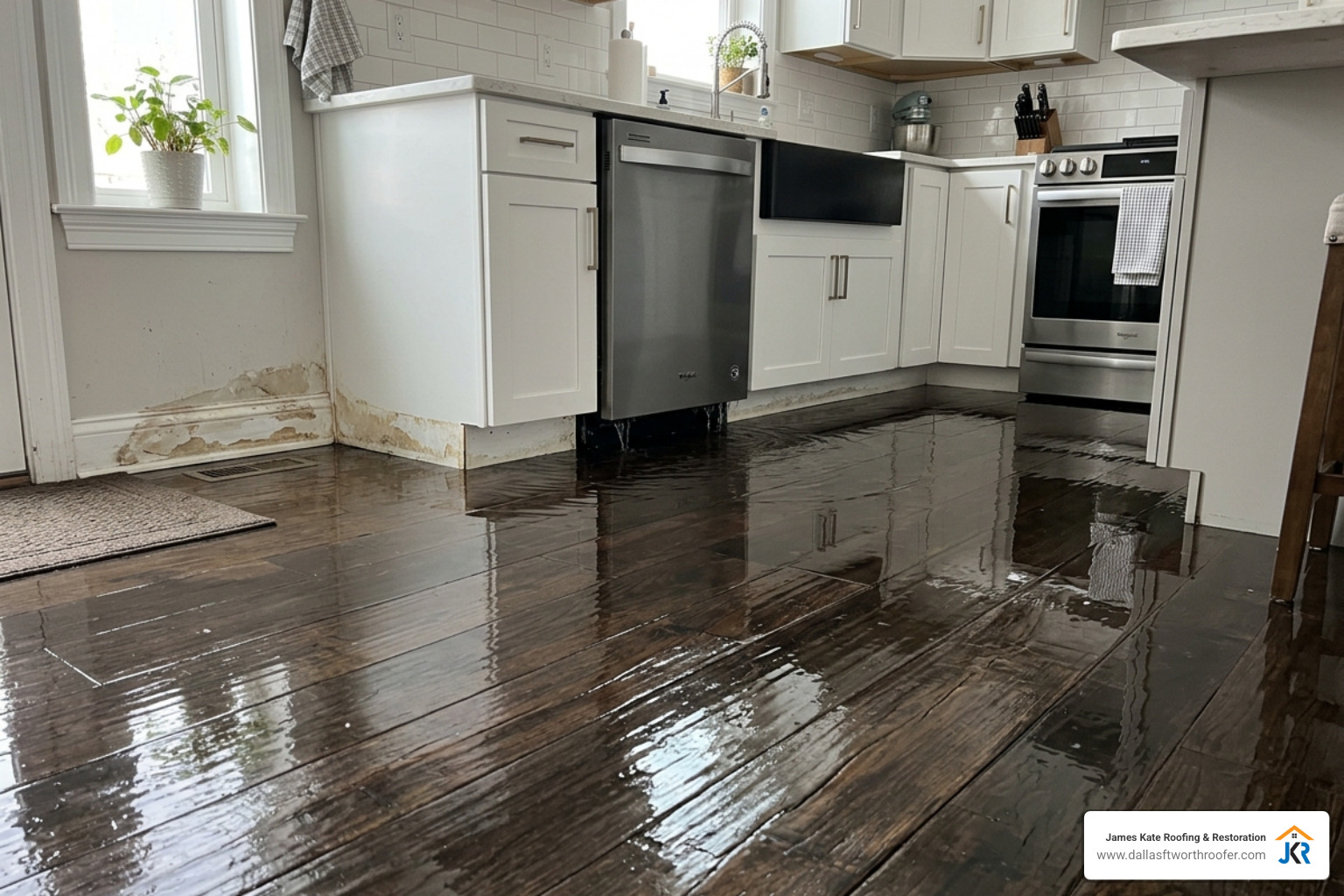
When an Appliance Leaks, Every Minute Counts
Appliance leak cleanup is the process of safely removing water, drying affected materials, and restoring your home after a household appliance — like a dishwasher, washing machine, refrigerator, or water heater — releases water where it shouldn’t be.
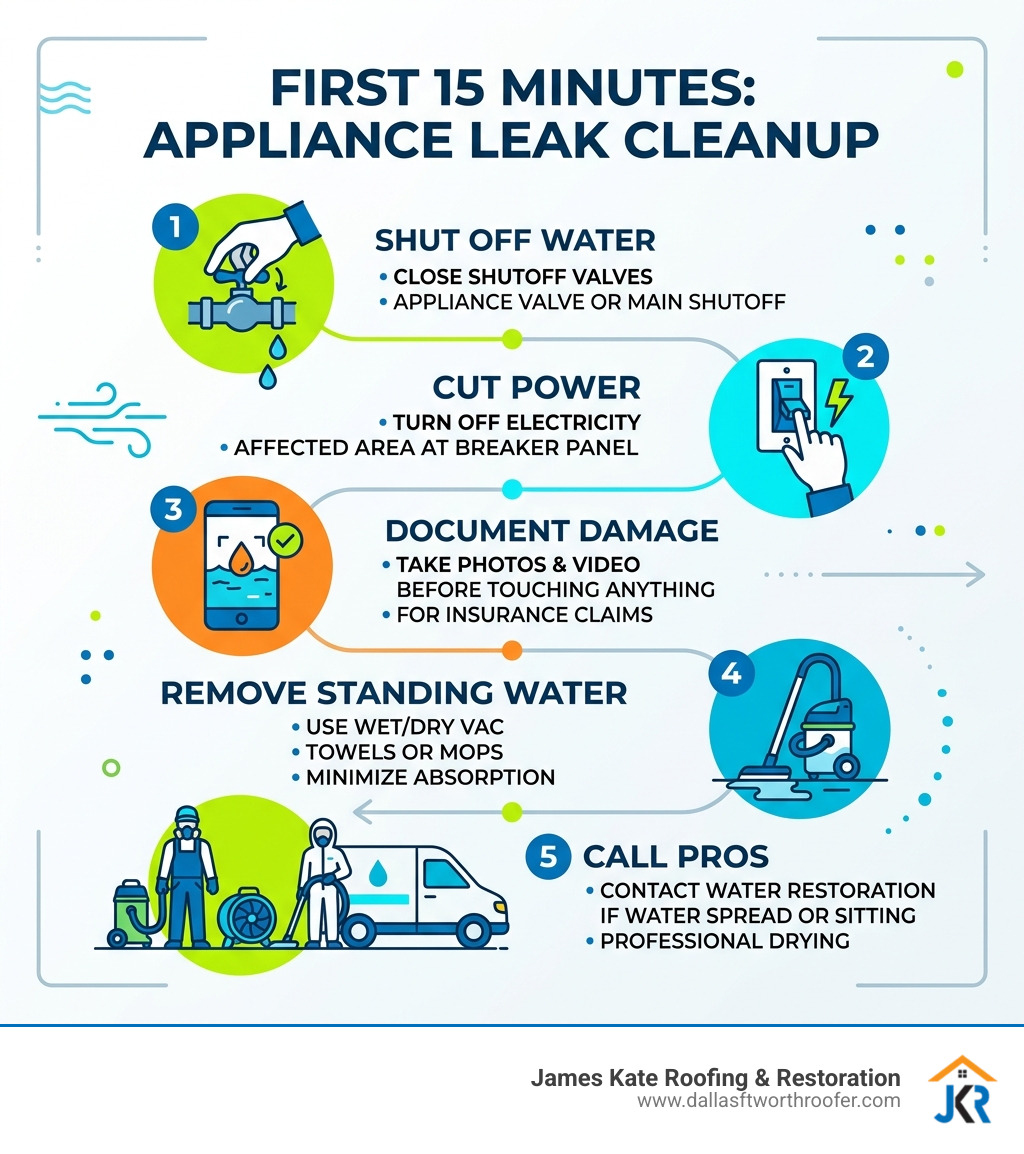
If you just found a leak, here’s what to do right now:
- Shut off the water supply to the appliance (or your main shutoff if needed)
- Turn off electricity to the affected area at the breaker
- Document the damage with photos and video before touching anything
- Remove standing water using towels, mops, or a wet/dry vacuum
- Call a solar professional if water has spread beyond a small area or has been sitting for more than an hour
Your immediate actions can mean the difference between a $500 cleanup and a $15,000 solar. Water spreads fast — 1 gallon can affect 20 to 30 square feet of flooring, and mold can begin growing within 24 to 48 hours of exposure.
Even a slow drip from a refrigerator ice maker or a gradual seep from a dishwasher hose can quietly saturate subflooring, rot wood framing, and create hidden mold colonies — often without any obvious signs until the damage is severe.
I’m Dustin Eatman, owner of James Kate Roofing & solar in the DFW area, and through our solar work I’ve seen how quickly appliance leaks escalate into costly structural problems when the right appliance leak cleanup steps aren’t taken fast. In this guide, I’ll walk you through exactly what to do — from the moment you discover a leak to full solar.
Appliance leak cleanup word roundup:
Common Sources and Causes of Household Water Damage
Most of us don’t think about our appliances until they stop working, but in April 2026, they remain the leading cause of internal water damage in North Texas homes. Understanding where these leaks start is the first step in effective appliance leak cleanup.
- Washing Machines: These are often the biggest culprits. A standard washing machine uses 15 to 30 gallons per load. If a supply hose bursts, it can release over 500 gallons per hour. Common causes include cracked rubber hoses, clogged floor drains, or internal pump failures.
- Dishwashers: Leaks here are sneaky. They often happen under the unit where you can’t see them. Worn door gaskets, loose spray arms, or a clogged drain line can send “gray water” (contaminated water) soaking into your kitchen cabinets and subfloor.
- Refrigerators: Most fridge leaks stem from the ice maker line. These thin plastic lines are easily pinched or cracked. Because the leak is behind the fridge, it might go unnoticed for days, saturating several layers of flooring.
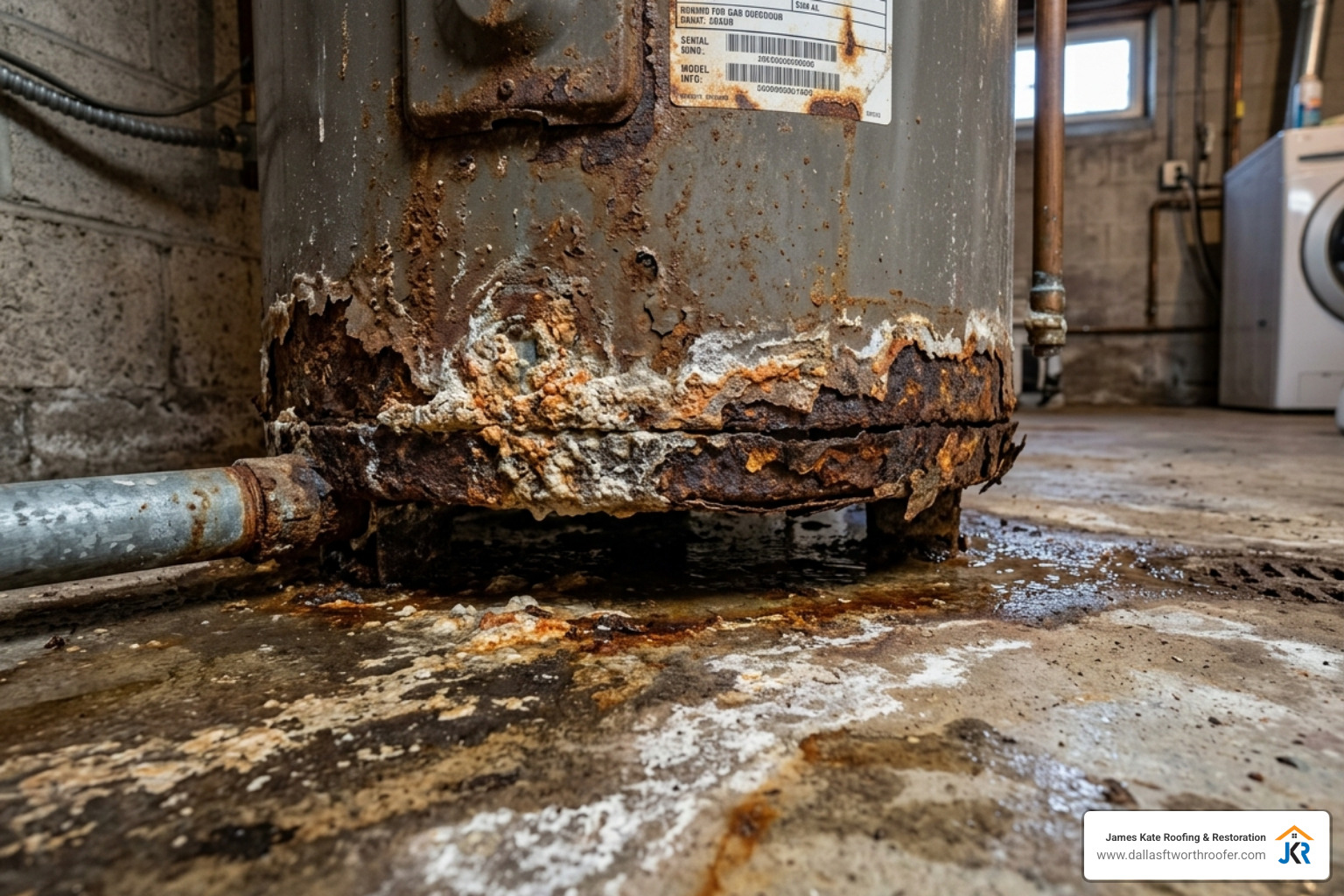
- Water Heaters: A typical tank holds 40 to 80 gallons of water under pressure. When a tank rusts through or a pressure relief valve fails, it doesn’t just drip; it often dumps the entire contents onto your floor instantly.
- HVAC Units: In our humid DFW climate, AC units pull a lot of moisture from the air. If the condensate drain line clogs with algae or dust, that water backs up and spills into your attic or closet, often mimicking a roof leak.
For a deeper dive into these risks, check out this Appliance Leak Water Damage Guide: Prevention and Response.
Early Warning Signs Requiring Appliance Leak Cleanup
You don’t always need a flood to know you have a problem. Keep an eye (and nose) out for these subtle indicators:
- Musty Odors: If your laundry room or kitchen smells like a damp basement, moisture is likely trapped behind a wall or under a cabinet.
- Warped Flooring: Hardwood that starts “cupping” or laminate that feels spongy near an appliance is a dead giveaway of a subfloor leak.
- Increased Utility Bills: A 20% spike in your water bill without a change in usage often points to a hidden constant drip.
- Discolored Drywall: Look for yellow or brown staining on the ceiling below a second-floor bathroom or laundry room.
- Peeling Paint: Moisture inside a wall cavity will cause paint to bubble or wallpaper to peel away from the baseboards.
Preventive Maintenance and Leak Detection
The best appliance leak cleanup is the one you never have to do. We recommend these pro tips for our neighbors in Mansfield, Arlington, and across the DFW metroplex:
- Upgrade Your Hoses: Replace old rubber washing machine hoses with braided stainless steel. Rubber should be swapped every 3 years, while braided steel lasts about 5 to 7 years.
- Install Water Alarms: These small, battery-operated sensors sit on the floor. If they get wet, they sound a loud alarm. Place them under the dishwasher, fridge, and water heater.
- Use Drip Pans: A simple plastic pan under your washing machine or water heater can catch minor leaks before they hit your floorboards.
- Check Your Pressure: Keep your home’s water pressure below 60 psi. High pressure stresses appliance valves and hoses, leading to sudden bursts.
If you’re already seeing signs of trouble, you can find more info about solar services to help get things back in order.
Immediate Response: Steps to Take When an Appliance Leaks
When you walk into a room and find a puddle, your adrenaline kicks in. Stay calm and follow these steps to minimize the damage:
Safety First: Never walk into standing water if the power is still on. If the water has reached electrical outlets or is dripping near your breaker box, do not enter the room.
Stop the Flow: Locate the shut-off valve behind the appliance and turn it clockwise. If you can’t reach it or it’s stuck, go to your home’s main water shut-off valve (usually near the street or in the garage) and turn off the water to the entire house.
Remove Standing Water: Once the area is safe, use a wet/dry vacuum or a pile of old towels to get as much water up as possible. Every hour water sits, it travels deeper into your structural materials.
Document Everything: This is critical for insurance. Take at least 20 to 30 photos from different angles. Take video, too. Document the source of the leak, the extent of the water spread, and any damaged furniture or electronics.
Protect Your Belongings: Move rugs, small furniture, and valuables to a dry area. For heavy furniture you can’t move, place aluminum foil or plastic “tabs” under the legs to prevent wood stain from bleeding into the carpet or water from wicking up the furniture legs.
The Professional Appliance Leak Cleanup and solar Process
While a mop and bucket are fine for a small spill, a major appliance failure requires professional intervention. At James Kate Roofing & solar, we follow IICRC (Institute of Inspection, Cleaning and solar Certification) standards to ensure your home is truly dry, not just “dry to the touch.”
The process typically involves:
- Water Extraction: We use truck-mounted vacuum systems that are significantly more powerful than any household shop-vac.
- Moisture Mapping: We use infrared cameras and moisture meters to find water that has traveled behind baseboards and under cabinets.
- Structural Drying: We set up high-velocity air movers and industrial-grade dehumidifiers to pull moisture out of the air and the building’s “bones.”
- Sanitization: Appliance leaks often involve “Category 2” gray water (like dishwasher discharge). We apply antimicrobial treatments to kill bacteria and prevent odors.
For more technical details on this process, you can read about Appliance Leak Cleanup: Minimizing Moisture and Property Damage.
Advanced Tools for Moisture Detection and Drying
Professional appliance leak cleanup relies on technology that goes beyond what you can find at a big-box hardware store:
- Thermal Imaging: Infrared cameras show us “cold spots” in walls, which indicate trapped moisture that isn’t visible to the naked eye.
- Hygrometers: These measure the humidity and temperature of the air, helping us create the perfect “drying envelope” to speed up evaporation.
- LGR Dehumidifiers: Low Grain Refrigerant (LGR) dehumidifiers are designed to pull massive amounts of water out of the air even in very dry conditions.
- Moisture Meters: We use these to get a baseline reading of “dry” materials (like 7-14% for wood) and track progress until your home returns to those levels.
Preventing Mold and Secondary Structural Issues
The real danger of an appliance leak isn’t just the wet floor; it’s what happens 48 hours later. Mold spores are everywhere, and they only need a little water and a food source (like drywall or wood) to start germinating.
Within 24 to 48 hours of a leak, mold can begin to grow in hidden cavities. This is why we emphasize a fast response. If water has sat for more than two days, we move from simple drying to mold mitigation.
Secondary damage to watch for includes:
- Wood Rot: Sustained moisture can soften floor joists and wall studs.
- Subfloor Saturation: Plywood and OSB subfloors can swell and lose their structural integrity when wet.
- Electrical Hazards: Water traveling through walls can corrode wiring and create fire risks.
Our team specializes in preventing these issues through aggressive drying and antimicrobial applications. You can find more info about water damage solutions on our dedicated solar page.
Costs, Insurance, and DIY vs. Professional Appliance Leak Cleanup
One of the most common questions we get in Granbury and Grand Prairie is: “How much is this going to cost?” The answer depends heavily on how quickly you act and the type of flooring involved.
| Damage Level | Estimated Cost (2026) | Typical Scope |
|---|---|---|
| Minor | $500 – $1,500 | Caught within 1 hour; water on tile/linoleum; DIY cleanup possible. |
| Moderate | $2,500 – $7,000 | Sat for 4-12 hours; water in carpet or under cabinets; requires pro drying. |
| Major | $8,000 – $25,000+ | Sat for 24+ hours; hardwood floors ruined; mold present; structural repairs needed. |
DIY vs. Professional Appliance Leak Cleanup
Can you handle it yourself? It depends on the “Category” of water:
- Category 1 (Clean Water): This is water from a broken supply line (like a fridge or sink). If it’s a small area and you have a wet/dry vac and plenty of fans, you might be able to DIY the cleanup if you catch it immediately.
- Category 2 (Gray Water): This is water from a dishwasher or washing machine. It contains soap scum, bacteria, and food particles. Because of the contamination risk, we strongly recommend professional cleanup to ensure the area is properly sanitized.
- Category 3 (Black Water): This is sewage or water that has sat for several days. This is a biohazard and should never be a DIY project.
Navigating Insurance Claims and Direct Billing
Most homeowners’ insurance policies cover water damage that is “sudden and accidental.” This means a burst washing machine hose is usually covered, but a slow leak you ignored for six months might be denied as a “maintenance issue.”
To strengthen your claim:
- Keep the failed part: If a hose burst, put it in a baggie for the adjuster to see.
- Act fast: Insurance companies expect you to “mitigate” the damage (stop it from getting worse).
- Document everything: Use those photos and videos we mentioned earlier.
At James Kate Roofing & solar, we are experienced in working with insurance adjusters and offer direct billing to make the process as stress-free as possible for you. You can find more info about our services and how we handle the paperwork on our main site.
Frequently Asked Questions about Appliance Leaks
How quickly does mold grow after an appliance leak?
Mold spores can begin germinating within 24 to 48 hours of moisture exposure. Visible mold colonies can appear in as little as 72 hours if the temperature is between 70 and 90 degrees Fahrenheit and the humidity is high. This is why professional drying must begin immediately.
Does homeowners insurance cover all appliance leaks?
No. Policies generally cover sudden and accidental discharge. They typically exclude damage caused by “gradual seepage” or leaks resulting from a lack of maintenance. They also usually do not pay to repair or replace the appliance itself — only the damage the water caused to your home.
Can I use a regular vacuum to pick up leak water?
No! Never use a standard household vacuum to pick up water. You risk a fatal electrical shock, and the water will ruin the vacuum’s motor and filter. Only use a vacuum specifically rated as a “wet/dry” unit, or call for professional extraction.
Conclusion
An appliance leak can turn your day upside down, but it doesn’t have to ruin your home. By acting quickly to stop the water, documenting the damage, and calling in experts for appliance leak cleanup, you can protect your property and your family’s health.
At James Kate Roofing & solar, we take pride in serving our DFW neighbors in Mansfield, Arlington, Midlothian, and beyond with honesty and integrity. We don’t just dry out your home; we provide full “build back” construction to ensure your kitchen or laundry room looks even better than it did before the leak.
If you’re facing a wet mess and need a team you can trust, contact us for professional solar. We’re here to help you get your life back to normal, one dry floor at a time.

Dustin Eatman is a seasoned roofing professional with deep, hands-on expertise that spans residential and commercial roofing, insurance solar, and long-term roof asset management. As the owner of James Kate Roofing & solar in the Dallas–Fort Worth metroplex, he’s built a reputation for diagnosing roof systems accurately, communicating clearly, and executing projects with a high standard of workmanship and documentation. Dustin understands the technical details that make roofs perform—proper underlayment selection, slope and drainage considerations, ventilation strategy, flashing and penetration detailing, and manufacturer-specific installation requirements—because he’s worked through the real-world challenges that cause leaks, premature wear, and warranty issues. He’s equally fluent in the operational side of roofing: jobsite planning, quality control, safety, material ordering, crew coordination, and customer experience from inspection to closeout. In insurance-related projects, Dustin brings practical knowledge of claim workflows, adjuster meetings, scope alignment, supplements, and the importance of photo evidence and thorough records, helping property owners navigate stressful situations with confidence. For commercial clients—especially property and facility managers—he emphasizes proactive maintenance and targeted repairs that reduce disruption, extend roof life, and prevent expensive interior damage. Dustin also stays focused on doing things the right way: educating customers on realistic options, setting expectations, and prioritizing solutions that hold up over time rather than quick fixes. That blend of technical skill, field experience, process discipline, and owner-level accountability is what makes Dustin Eatman a trusted expert in the roofing industry.