What You Need to Know About Attic Mold Removal
Attic mold removal is the process of safely identifying, containing, and eliminating mold growth from your attic’s wood surfaces, insulation, and structural materials — then fixing the moisture source so it doesn’t come back.
Here’s a quick overview of what the process involves:
- Identify the moisture source (roof leak, poor ventilation, misdirected exhaust fan)
- Assess the size of the affected area — under 10 sq ft may be DIY-safe; larger areas need a pro
- Contain the space to prevent spores from spreading to the rest of your home
- Remove or treat affected materials using appropriate cleaning agents or mechanical abrasion
- Dry the area completely and verify mold is gone with clearance testing
- Fix the root cause so mold doesn’t return
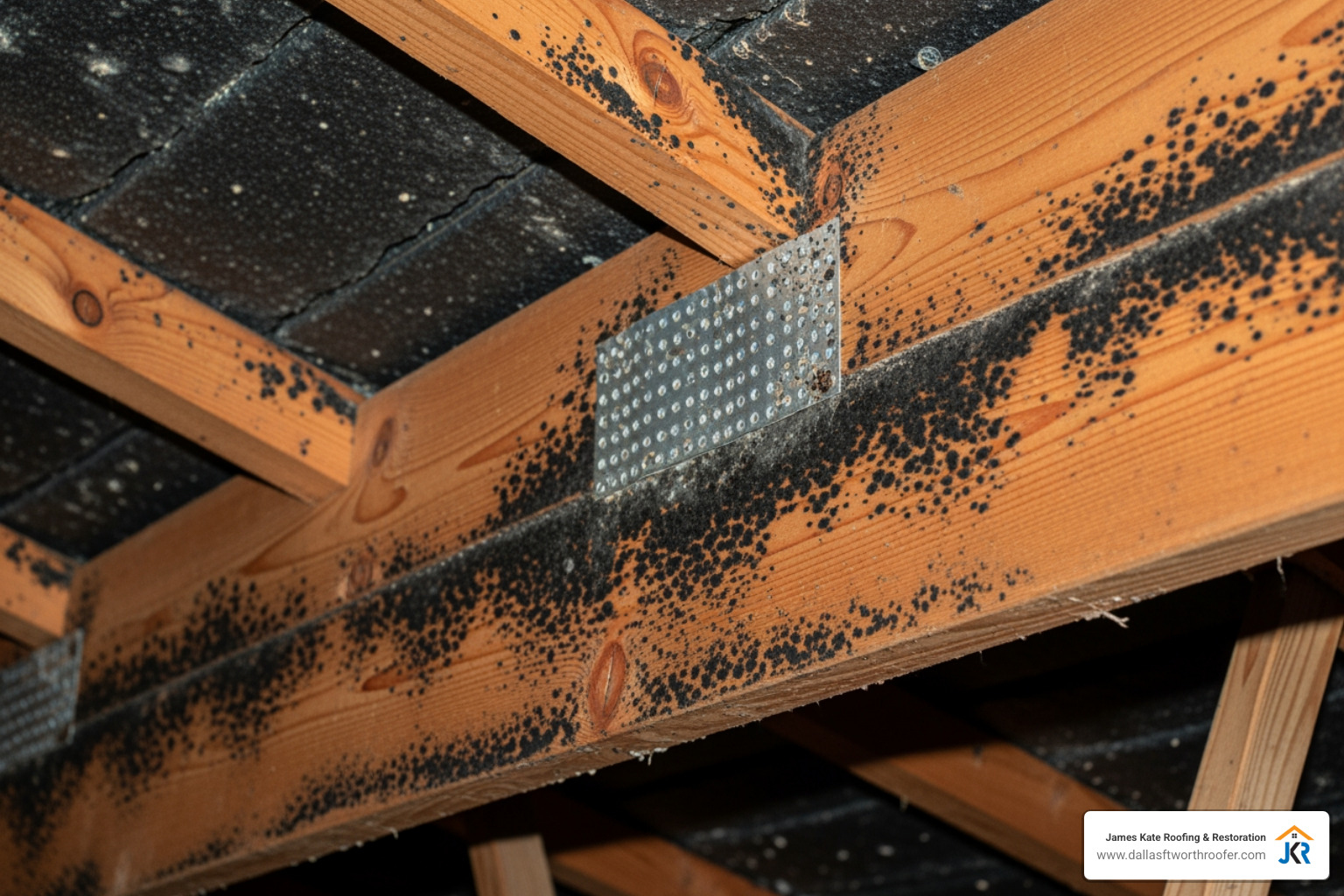
You went up to grab holiday decorations and spotted dark patches spreading across the plywood. That musty smell hit you, and your stomach dropped. Sound familiar? Attic mold is one of the most common — and most overlooked — problems in homes across the Dallas–Fort Worth area. Because most homeowners rarely set foot in their attic, mold can quietly spread for weeks or months before anyone notices.
The tricky part? Cleaning the mold is only half the battle. If you don’t fix what’s causing the moisture, the mold will come back.
I’m Dustin Eatman, owner of James Kate Roofing & solar, and I’ve spent years helping DFW homeowners diagnose the ventilation failures and roof issues that drive attic mold removal projects. In the sections below, I’ll walk you through exactly what causes attic mold, what it costs to fix, and when to call a professional.
Why Does Mold Grow in the Attic?
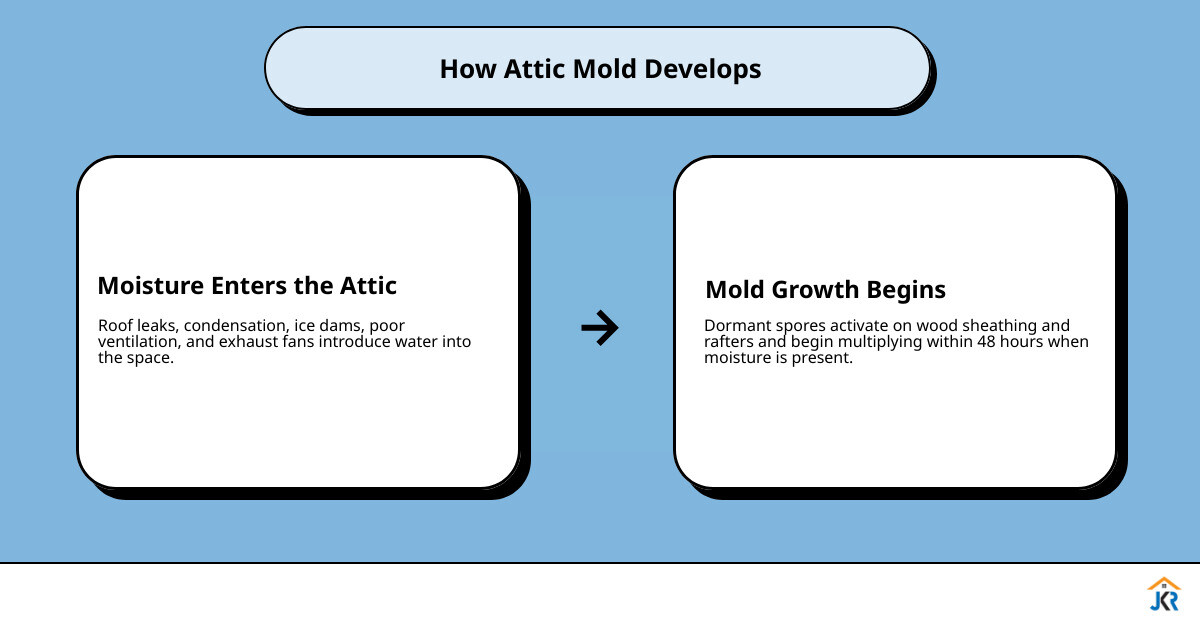
Your attic is the perfect incubator for mold. It provides all three things mold needs to thrive: a continuous food source (wooden rafters, plywood sheathing, and drywall), oxygen, and warm temperatures. The only missing ingredient is water. Once moisture enters the equation, dormant mold spores can activate and begin multiplying in less than 48 hours.
The primary driver of attic mold in our hot, humid Texas climate is condensation. When warm, humid indoor air rises and escapes into a poorly ventilated, cooler attic, it meets the cold underside of your roof sheathing. This temperature collision causes water vapor to liquefy, leaving a layer of moisture across your roof deck.
When relative humidity levels in your attic consistently exceed 60%, mold spores have the ideal environment to establish root systems (known as hyphae) that penetrate deep into porous wood. For a deeper dive into how moisture behaves inside a home, check out the EPA’s Brief Guide to Mold, Moisture, and Your Home.
Common Moisture Sources and Attic Mold Growth
Mold doesn’t just appear out of thin air; it requires a consistent pathway of water. In DFW homes across Mansfield, Arlington, and Grand Prairie, we routinely trace attic mold back to a few specific moisture culprits:
- Improperly Vented Exhaust Fans: This is one of the most common building code violations we see. Bathroom, kitchen, or dryer exhaust fans should always terminate directly outside the building envelope. When lazy contractors vent these ducts directly into the attic, they dump gallons of hot, moist air straight onto your roof sheathing.
- Roof Leaks: Damaged architectural shingles, failing flashings around chimneys, or deteriorated seals around plumbing stacks allow rainwater to slowly drip onto attic insulation and rafters. If you are dealing with storm-related water intrusion, our Water Damage solar Survival Guide offers an actionable roadmap for limiting structural damage.
- Blocked Soffit Vents: Your attic relies on a balanced intake-and-exhaust ventilation system. If insulation installers accidentally push fiberglass or cellulose batts over your soffit vents, they choke off the fresh air intake. This traps rising heat and humidity at the roof ridge.
- Rare Winter Ice Dams: While rare in North Texas, severe winter freezes can cause snow and ice to melt near the warm ridge of your roof and refreeze at the cold eaves. This creates an ice dam that backs water up under your shingles.
Warning Signs of an Attic Mold Problem
Since you probably don’t hang out in your attic recreationally, you have to keep an eye out for these subtle warning signs:
- The Musty Odor: Mold releases microbial volatile organic compounds (mVOCs). If you open your attic hatch or step near the access panel and notice a distinct, earthy smell, mold is likely present.
- Dark Staining on Wood: Look at the underside of your roof sheathing. Mold often presents as dark gray, black, or white powdery patches. It frequently concentrates on the cooler, north-facing side of the roof deck which receives the least direct sunlight.
- Rusted Roofing Nails: Take a flashlight and look at the tips of the nails protruding through your plywood roof deck. Because metal conducts cold quickly, these nails act as “cold spots” where condensation first forms. If the tips of your roofing nails are rusted or have white frost on them in winter, your attic has a major humidity problem.
- Peeling Ceiling Paint: If moisture in the attic is severe enough to saturate the ceiling drywall from above, you will notice bubbling paint or water stains in your living areas.
- Clumped or Discolored Insulation: Healthy fiberglass insulation should look fluffy and pink, yellow, or green. If it looks dark, compressed, or soggy, it has absorbed water and may be harboring hidden mold colonies.
The Real Cost of Attic Mold Removal in 2026
If you’ve recently discovered mold, you might be experiencing some sticker shock. Attic mold removal is highly specialized work that requires heavy safety gear, containment zones, and commercial-grade antimicrobials.
In 2026, professional attic mold remediation averages $3.50 to $7.50 per square foot, with most DFW homeowners paying between $1,800 and $8,000 for a complete project. National average costs have steadily risen over the last few years due to rising labor rates, stricter environmental standards, and a 12% jump in contractor liability insurance premiums.
| Attic Size | Average Square Footage | Estimated Remediation Cost Range |
|---|---|---|
| Small Attic | ≤ 150 sq ft | $900 – $2,200 |
| Medium Attic | 151 – 300 sq ft | $2,000 – $5,000 |
| Large Attic | > 300 sq ft | $4,500 – $10,000+ |
National and Regional Pricing Breakdown
Where you live plays a significant role in your final estimate. Across the United States, regional economic factors, local labor pools, and climate variations impact contractor pricing:
- Northeast U.S. (e.g., Boston Metro): High labor rates and older housing stock drive average costs up to $4.25 – $8.50 per square foot, with average project totals hovering around $5,300.
- Western U.S. (e.g., Boise Metro): Moderate pricing ranges from $3.00 – $6.00 per square foot, with typical projects landing around $4,200.
- Southern U.S. (including our DFW Service Area): Prices generally average $3.75 – $7.75 per square foot. The average mold remediation project in the Dallas-Fort Worth metroplex sits right around $4,600.
Our team regularly serves surrounding communities across the DFW metroplex, ensuring your home is safe, dry, and free of structural moisture issues.
Factors Influencing Attic Mold Removal Costs
No two attics are identical, and several key variables will dictate which end of the pricing spectrum your quote falls on:
- Type of Mold: Common molds like Cladosporium or Penicillium are relatively straightforward to clean. However, toxic black mold (Stachybotrys chartarum) produces dangerous mycotoxins. Remediating toxic black mold requires intensive containment protocols and chemical applications, which increases labor costs.
- Access and Pitch: A low-pitched, cramped crawl space where technicians must crawl on their bellies is far more difficult and time-consuming to remediate than a spacious, walk-in attic.
- Structural Damage: If the mold has been growing unchecked for years, it may have caused structural wood rot. If the plywood sheathing or rafters have become soft and structurally compromised, you will need to pay for roof decking replacement alongside mold treatment.
- PPE and Chemical Costs: The cost of high-grade personal protective equipment (PPE) and EPA-registered antimicrobials has risen roughly 6% since 2024, which contractors must factor into their bids. For local guidelines on managing home moisture, you can reference the Texas A&M AgriLife Extension: Mold and Moisture Control resource.
DIY vs. Professional Attic Mold Removal
Should you grab a bottle of bleach and head up the attic ladder, or should you call in a certified team? Making the wrong choice can lead to physical injury, ruined ceilings, or a mold infestation that spreads throughout your entire heating and cooling system.
When is DIY Attic Mold Removal Safe?
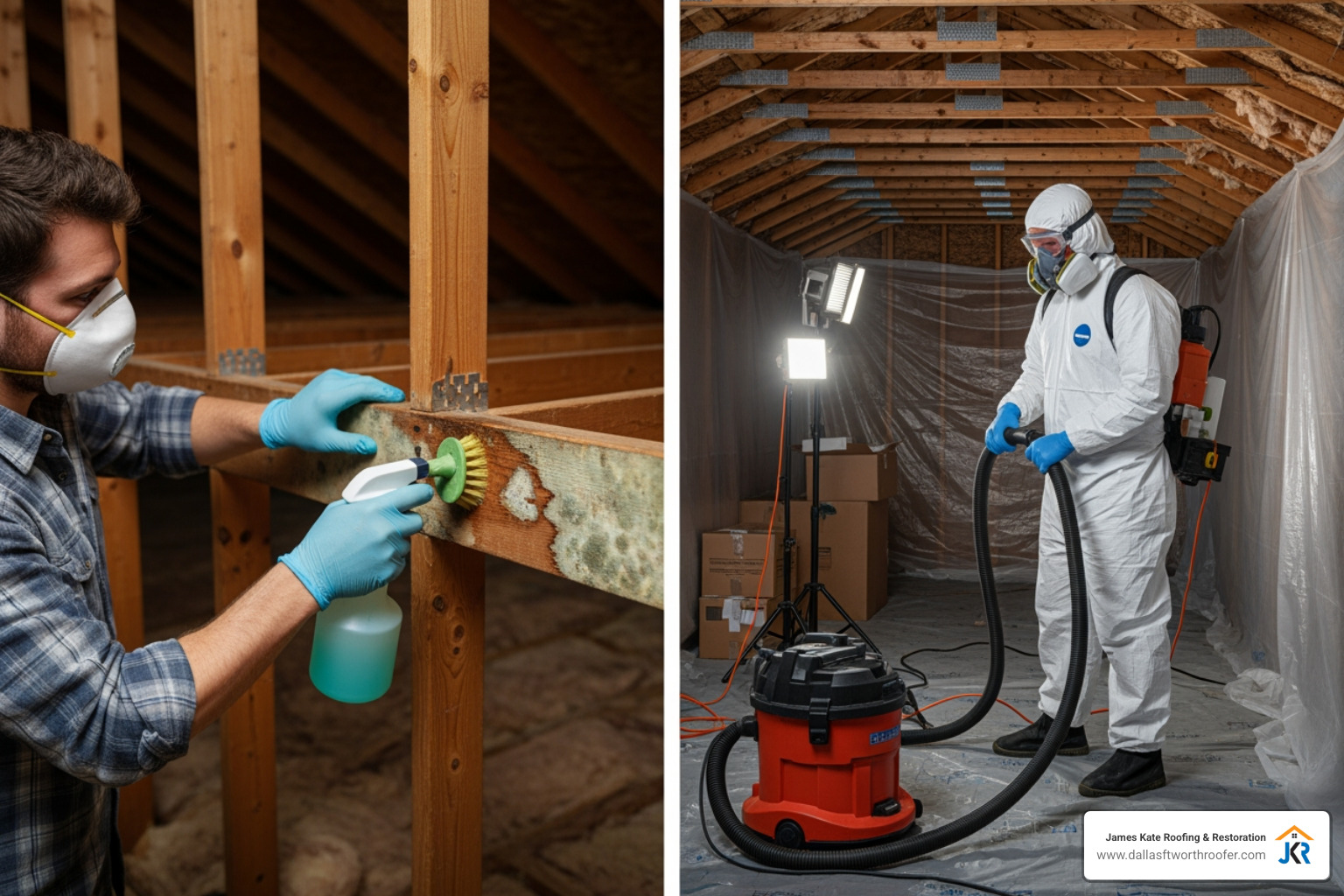
According to EPA guidelines, homeowners can generally tackle mold remediation themselves if the affected area is less than 10 square feet (roughly a 3-foot by 3-foot patch).
If you have a very localized spot of mold on a non-porous surface—such as a plastic plumbing vent pipe or a small, easily accessible section of a rafter—you can safely clean it yourself. You must wear proper safety gear, including an N95 respirator, safety goggles, and heavy rubber gloves.
Avoid using standard household bleach on porous wood; bleach has a high water content, and while it kills surface spores, the water sinks deep into the wood, feeding the mold roots that remain. Instead, opt for commercial mold cleaners or a borax-and-water paste. For a step-by-step breakdown of handling small mold issues, read our guide on How to Remove Household Mold Fast.
When to Hire a Professional for Attic Mold Removal
If your mold problem exceeds 10 square feet, DIY is no longer safe or effective. Professionals should always handle attic mold under the following conditions:
- The Mold is on Porous Materials: Wood sheathing, ceiling drywall, and fiberglass insulation are highly porous. Mold roots grow inside these materials, not just on top of them. Spraying them with retail spray bottles won’t solve the issue.
- The Moisture Source is Unresolved: If you don’t know exactly why your attic is wet, a professional team can perform moisture mapping to find hidden roof leaks or ventilation issues.
- Health Risks: If anyone in your home suffers from asthma, severe allergies, or a compromised immune system, attempting DIY removal is highly risky. Disturbed mold colonies release millions of airborne spores that can easily travel down into your living spaces.
- The Home is in a Real Estate Transaction: If you are selling your home in Midlothian or Arlington, buyers and lenders will require a certified mold clearance certificate from a licensed specialist.
To ensure the job is done safely and to code, professional remediation companies must adhere to strict IICRC Standards for Professional Mold Remediation.
Step-by-Step Professional Attic Mold Remediation Process
When you hire a licensed solar contractor, they don’t just walk up with a scrub brush. Professional mold remediation is a highly controlled, scientific process designed to protect your home’s air quality.
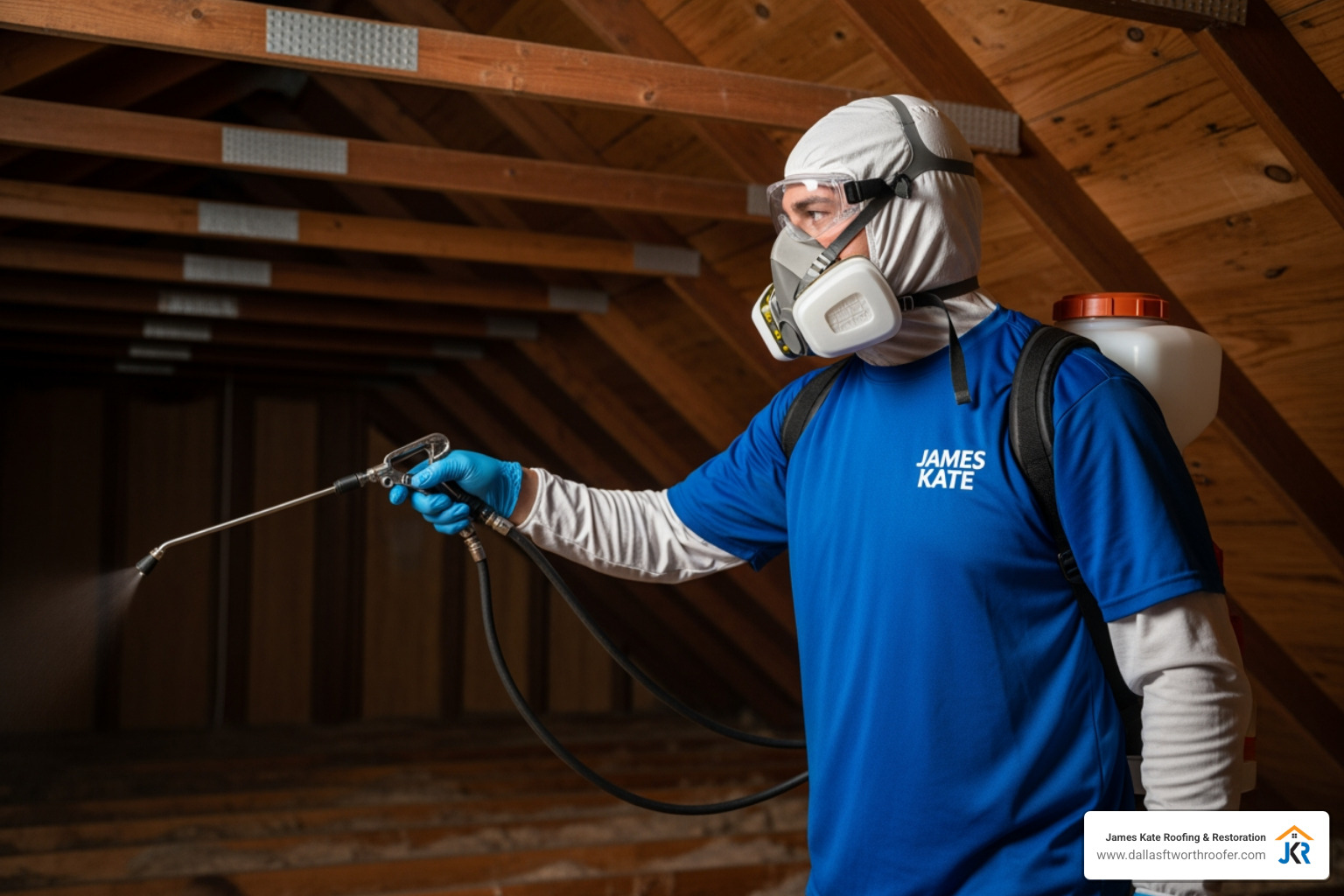
Step 1: Source Identification and Containment
We never start cleaning mold until we have identified and stopped the water source. If we find a roof leak, our roofing crews repair it first. If we identify a Category 3 water intrusion (such as contaminated outdoor water backing up), we follow strict sanitation protocols. You can learn more about these classifications in our guides on The Essential Guide to Identifying Your Category of Water Loss and Everything You Need to Know About Category 3 Water Loss.
Once the water source is controlled, technicians establish a containment zone. They seal off all attic hatches, doors, and HVAC registers with heavy-duty polyethylene sheeting.
Next, they set up commercial air scrubbers equipped with HEPA filters. These machines pull attic air through multi-stage filtration systems, creating negative air pressure. This ensures that any mold spores kicked up during the cleaning process are captured inside the containment zone and cannot escape into your bedrooms or living spaces.
Step 2: Fungal Removal and Structural Drying
With containment in place, the physical removal begins. Technicians bag and discard all contaminated porous materials that cannot be salvaged, such as blown-in insulation or water-damaged ceiling drywall.
For solid wood structural elements like rafters and sheathing, we use mechanical abrasion. This often involves dry ice blasting or wire brushing to physically shave the mold roots out of the wood grain.
After mechanical cleaning, technicians apply EPA-registered, commercial-grade antimicrobials to kill any microscopic spores left behind. Finally, we set up industrial dehumidifiers and air movers to dry the wood to its normal moisture content (typically below 12%). For a closer look at structural cleaning steps, check out How to Get Rid of Mold in Attic Ceiling | 7 Easy Steps (2026).
Frequently Asked Questions about Attic Mold
Does homeowners insurance cover attic mold removal?
Homeowners insurance only covers mold remediation if the mold was caused by a sudden and accidental covered peril—such as a water pipe bursting in the attic or a storm ripping shingles off your roof. Insurance will not cover mold remediation if it is the result of long-term neglect, such as a slow roof leak you ignored for two years, or chronic humidity caused by poor attic ventilation. For more details on navigating these tricky claims, see The CEO Guide to Handling Property Damage.
How fast does mold grow in an attic?
Under ideal conditions—high humidity, warm temperatures, and a wood substrate—mold spores can germinate and begin growing in as little as 24 to 48 hours after moisture exposure. Within a few weeks, a small, unnoticed leak can result in a widespread mold infestation across your entire roof deck.
Can attic mold make you sick?
Yes. Even though you don’t live in your attic, your home experiences a phenomenon known as the stack effect. Warm air rises and escapes through the top of your house, drawing air from lower levels upward. When attic temperatures fluctuate, air currents can carry microscopic mold spores down through light fixtures, plumbing bypasses, and attic hatches. Exposure to these spores can trigger allergic reactions, asthma attacks, persistent coughing, and headaches. If you are dealing with severe home damage, finding The Best Pros for Fire and Water Damage Recovery is critical to protecting your family’s health.
Conclusion
Finding mold in your attic can feel overwhelming, but it doesn’t have to be a disaster. By acting quickly, identifying the moisture source, and choosing the right remediation path, you can protect both your home’s structural integrity and your family’s health.
At James Kate Roofing & solar, we believe in doing things the right way. As a family-owned DFW company built on honesty, integrity, and Biblical principles, we don’t just spray chemicals and hope for the best. We provide comprehensive solutions—from repairing the roof leak and upgrading your attic ventilation to complete mold mitigation and build-back construction. Whether you are in Mansfield, Arlington, Grand Prairie, Midlothian, or Granbury, we are here to help you restore your peace of mind.
Don’t let a small attic issue turn into an expensive structural repair. Schedule a professional attic inspection today and let us help you evict mold for good!

Dustin Eatman is a seasoned roofing professional with deep, hands-on expertise that spans residential and commercial roofing, insurance solar, and long-term roof asset management. As the owner of James Kate Roofing & solar in the Dallas–Fort Worth metroplex, he’s built a reputation for diagnosing roof systems accurately, communicating clearly, and executing projects with a high standard of workmanship and documentation. Dustin understands the technical details that make roofs perform—proper underlayment selection, slope and drainage considerations, ventilation strategy, flashing and penetration detailing, and manufacturer-specific installation requirements—because he’s worked through the real-world challenges that cause leaks, premature wear, and warranty issues. He’s equally fluent in the operational side of roofing: jobsite planning, quality control, safety, material ordering, crew coordination, and customer experience from inspection to closeout. In insurance-related projects, Dustin brings practical knowledge of claim workflows, adjuster meetings, scope alignment, supplements, and the importance of photo evidence and thorough records, helping property owners navigate stressful situations with confidence. For commercial clients—especially property and facility managers—he emphasizes proactive maintenance and targeted repairs that reduce disruption, extend roof life, and prevent expensive interior damage. Dustin also stays focused on doing things the right way: educating customers on realistic options, setting expectations, and prioritizing solutions that hold up over time rather than quick fixes. That blend of technical skill, field experience, process discipline, and owner-level accountability is what makes Dustin Eatman a trusted expert in the roofing industry.