
What DFW Homeowners Need to Know Before Installing a Composition Roof Over Wood Shingles
Can you install a composition roof over wood shingles?
Yes — but only under specific conditions. Here’s the quick answer:
- Allowed by code in most jurisdictions when only one existing layer is present (IRC two-layer maximum rule)
- Not recommended over wood shakes — their uneven, raised surface makes a stable overlay nearly impossible
- Flat wood shingles on solid sheathing can accept a composition overlay if they are dry, structurally sound, and fasteners can reach solid decking
- Felt paper (underlayment) is strongly recommended between layers — wood shingles traditionally skip this, but composition shingles require it
- A full tear-off is usually the better long-term choice, especially on aging roofs or those with any signs of moisture, rot, or skip sheathing
The decision isn’t just about what’s possible — it’s about what will actually hold up over time and protect your home.
Deciding whether to overlay or tear off is one of the most common — and most consequential — roofing decisions a homeowner faces. Installing a composition roof over wood shingles sounds like an easy, budget-friendly shortcut, but the reality is more nuanced. The existing wood layer beneath affects everything: how well the new shingles fasten, how moisture moves through the system, how long the new roof actually lasts, and whether your warranty and insurance coverage stay intact.
I’m Dustin Eatman, owner of James Kate Roofing & solar in the Dallas–Fort Worth area, and I’ve inspected and replaced hundreds of roofs where a previous overlay — including composition roofing installed over wood shingles — created hidden problems that cost homeowners far more to fix than a proper tear-off would have. In the sections below, I’ll walk you through exactly what the codes say, what the risks are, and how to make the right call for your home.
Composition roof over wood shingles word guide:
Can You Install a Composition Roof Over Wood Shingles Directly?
The short answer is yes, but the practical execution is where many DIYers and budget contractors cut corners. One of the most debated topics on industry platforms, such as the InterNACHI Forum discussion on overlaying wood, is whether you can lay asphalt shingles directly over wood shingles without felt paper or solid sheathing.
The consensus among experienced inspectors and elite contractors is clear: doing so is a recipe for disaster.
To understand why, we have to look at how older wood roofs were constructed. Historically, wood shingles were installed over “skip sheathing” (also known as spaced sheathing). Skip sheathing consists of spaced 1×4 or 1×6 boards with gaps between them. This design was intentional; it allowed air to circulate freely around the wood shingles, letting them dry out from both sides after a heavy Texas rainstorm.
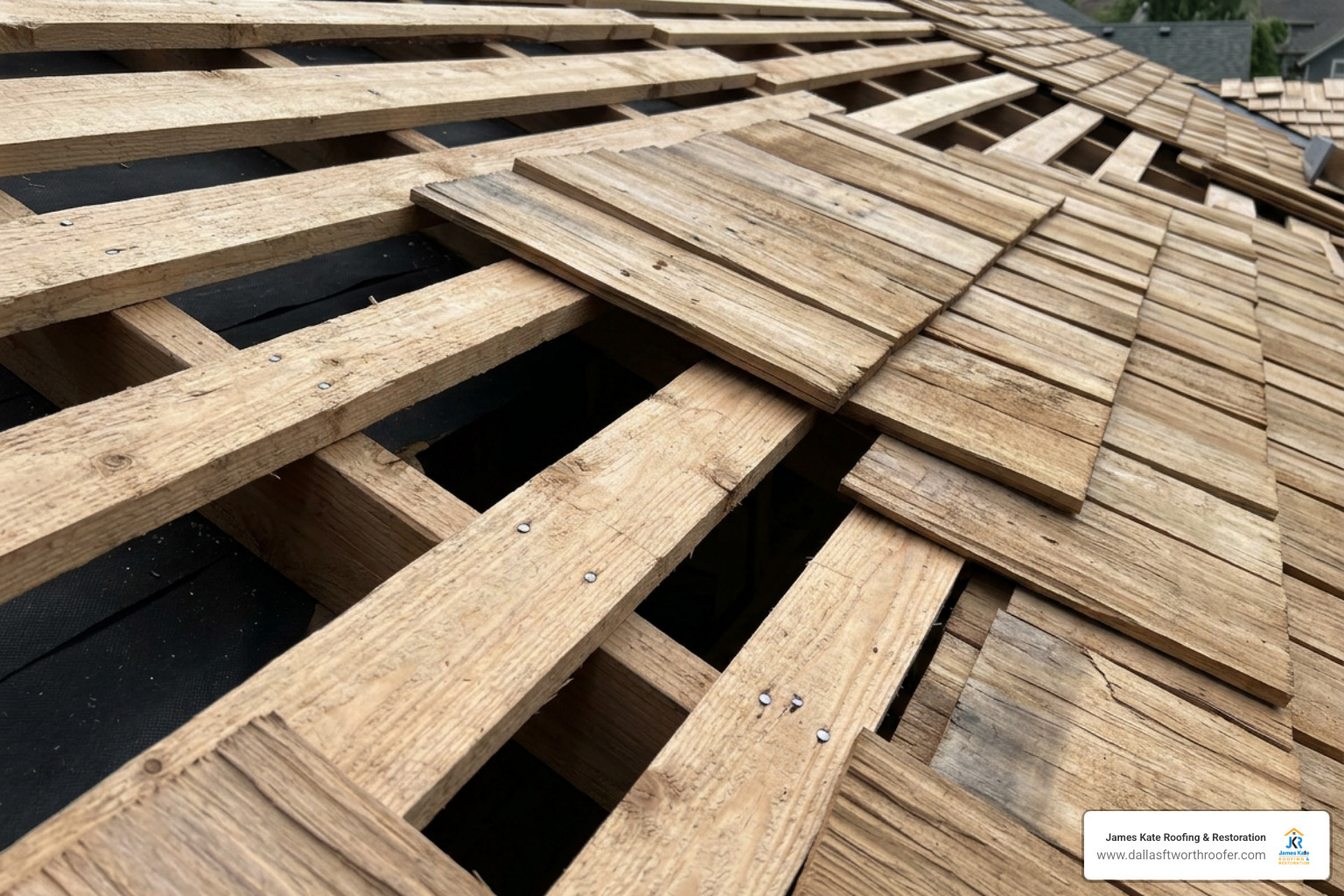
If you attempt to nail composition shingles directly over wood shingles that sit on skip sheathing, you run into two major technical failures:
- Lack of Fastening Support: Composition shingles are flexible. They require a solid, flat deck (like CDX plywood or OSB) to support them. If you nail them over the gaps of skip sheathing, your nails will hit empty air. Over time, the shingles will sag, warp, and blow off in the next spring storm.
- Missing Underlayment: Traditional wood shingles were often installed without underlayment to allow for breathing. However, modern asphalt composite shingles absolutely require a protective underlayment barrier (such as felt paper or synthetic underlayment) to prevent water from seeping through the shingle joints and rotting the wood substrate below.
If you must overlay, the existing wood shingles must be flat, and they must be supported by solid sheathing underneath. Even then, a layer of high-quality underlayment must be rolled out over the old wood before the first composition shingle is nailed down.
Code Requirements and Structural Risks of Overlays
Before making any commitments, you must look at local building codes and structural capacities. Every city in our North Texas service area — from Mansfield and Arlington to Grand Prairie, Midlothian, and Granbury — has specific code amendments that govern re-roofing projects. Understanding these rules protects you from costly municipal fines and ensures your home remains structurally safe.
Building Codes for a Composition Roof Over Wood Shingles
The International Residential Code (IRC), which serves as the foundation for most local building codes in DFW, generally permits a maximum of two layers of roof coverings on a residential structure. If your home currently has one layer of wood shingles, adding a layer of composition shingles is technically legal under this “two-layer limit.”
However, local municipal codes often add stricter amendments. For example:
- In Grand Prairie and Arlington, building inspectors will closely examine the condition of the underlying deck. If the original wood shingles are curling, splitting, or showing signs of decay, an overlay will be rejected.
- In Midlothian and Mansfield, code compliance officers require that the fastners used for the new composition shingles penetrate all the way through the old roofing material and at least 3/4 inch into the solid wood decking (or completely through the decking if it is thinner).
- If your home has skip sheathing, local codes will require you to either tear off the old wood and install solid decking, or overlay the skip sheathing with solid plywood before installing new shingles. For proper spacing and fastening rules, see our guide on mastering roof shingle installation tips and tricks.
Always refer to professional wood shingles and shakes guidelines to understand the structural limitations of these historic materials before planning an overlay.
Weight Load, Moisture, and Ventilation Risks
The structural integrity of your home is not something to gamble with. Adding a second layer of roofing material introduces massive “dead load” to your rafters and trusses.
While a single layer of standard architectural composition shingles weighs around 230 to 250 pounds per square (a 100-square-foot area), layering them over old wood shingles can easily push the total roof weight to over 500 pounds per square. On a 2,500-square-foot home, you are adding several tons of extra weight. In older homes, this added stress can cause rafters to sag, interior drywall to crack, and even compromise the structural safety of the home during heavy winter ice storms.
Beyond weight, moisture and ventilation pose the greatest threats to an overlay system. When you place a non-breathable asphalt barrier directly over organic wood shingles, you trap heat and moisture.
- Trapped Moisture: Wood is porous and naturally holds moisture. When heated by the intense Texas sun, this trapped moisture turns to water vapor but has nowhere to escape. It pushes upward against the new composition shingles, causing them to blister, lose their protective granules, and deteriorate rapidly.
- Mold and Wood Rot: Below the shingles, the trapped humidity creates a perfect breeding ground for mold, mildew, and wood-destroying fungi. By the time you notice a leak inside your home, the underlying skip sheathing or rafters may have rotted completely. This can turn a simple roof replacement into an expensive structural rebuild. For details on how we handle these structural repairs, read our step-by-step guide to replacing damaged roof decking.
Overlay vs. Full Tear-Off: Cost and Longevity Trade-offs
When evaluating a composition roof over wood shingles, it helps to look at the immediate financial savings versus the long-term lifecycle value. Many homeowners are tempted by the lower upfront estimate of an overlay, but a closer look at the numbers tells a different story.
Upfront Savings vs. Long-Term Value
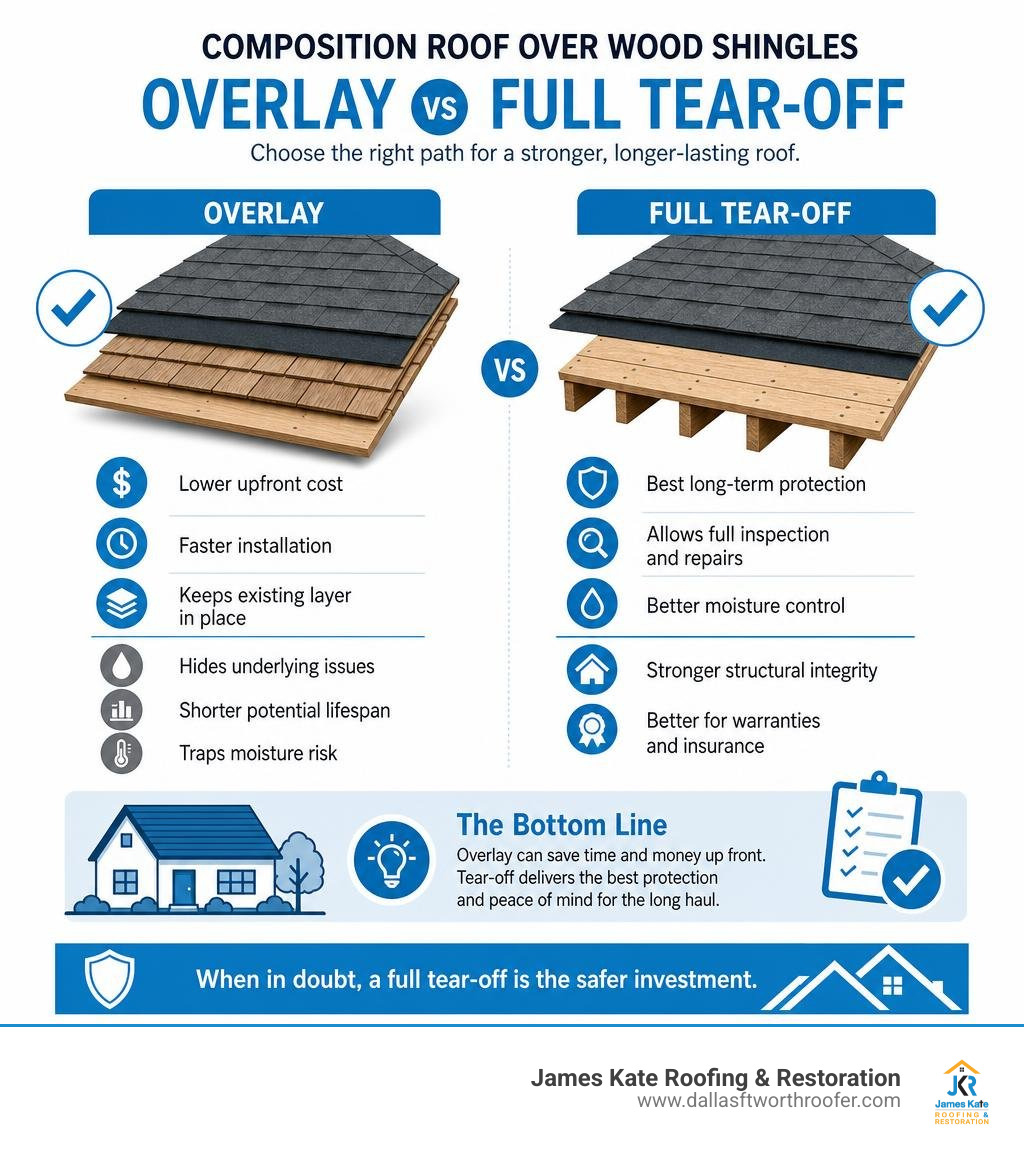
An overlay is cheaper upfront because it eliminates the labor-intensive process of tearing off the old wood shingles, cleaning the deck, and paying landfill disposal fees for several tons of heavy waste. However, this initial saving is almost always clawed back over the lifespan of the roof.
While a high-quality composition roof installed on clean, solid decking can easily last 25 to 30 years, that same shingle installed as an overlay over old wood will likely only last 12 to 15 years. The trapped heat from the double layer cooks the asphalt from the underside, causing premature aging. Furthermore, when that overlay eventually fails, your future replacement cost will skyrocket because the next crew will have to tear off two layers of roofing material, which doubles the labor and disposal fees.
| Feature / Consideration | Roof Overlay (Composition over Wood) | Full Tear-Off & Replacement |
|---|---|---|
| Upfront Cost | 15% to 25% lower | Standard full replacement cost |
| Expected Lifespan | 12 to 15 years (reduced by heat/moisture) | 25 to 30+ years (full manufacturer life) |
| Structural Weight | Extremely heavy (adds dead load stress) | Clean, single-layer standard load |
| Ventilation Performance | Poor (traps heat and moisture) | Excellent (allows proper attic airflow) |
| Deck Inspection | Blind (cannot see deck rot or sagging) | 100% visible (all damaged wood replaced) |
| Future Replacement Cost | Double tear-off fees (very expensive) | Standard single-layer tear-off fees |
| Real Estate Resale Value | Often viewed negatively by home buyers | Excellent selling point (adds home value) |
To explore the differences in materials further, check out the definitive guide to composition roof vs asphalt shingles.
Installing a Modern Composition Roof Over Wood Shingles
If you decide to proceed with a full tear-off, you aren’t limited to basic, flat asphalt shingles. Modern engineering has introduced incredible composite and asphalt roofing options that mimic the rustic, high-end look of natural cedar shakes without any of the structural vulnerabilities.
For homeowners in Granbury, TX looking for classic curb appeal, upgrading to premium asphalt shingles or architectural polymer shakes is a fantastic choice. These modern composite shingles are made from advanced polymers and recycled plastics. They achieve a Class A fire rating (the highest level of fire resistance) and Class 4 impact resistance, which can earn you significant discounts on your homeowner’s insurance in storm-prone areas like Mansfield and Arlington.
By stripping away the old wood, repairing the deck, laying down a tear-resistant synthetic underlayment, and installing these advanced materials, you get the gorgeous look of natural wood with a roof engineered to last 50 years or more. To learn more about picking the right style for your home, read our guide on how to pick composition roof shingles and explore the key differences between asphalt and composite roofing.
Frequently Asked Questions about Wood Shingle Overlays
We receive many questions from homeowners in Grand Prairie, Midlothian, and across the DFW metroplex who are trying to navigate their roofing options. Here are the facts behind the most common concerns.
Can you put asphalt shingles directly over wood shakes?
No. While you can sometimes overlay flat, uniform wood shingles, you should never install composition shingles over wood shakes. Wood shakes are hand-split, highly textured, and have uneven, thick butts. This creates an extremely bumpy, irregular surface. If you try to nail flexible asphalt shingles over them, the new shingles will bend, crack, and fail to seal properly, leaving your roof wide open to wind uplift and severe leaks.
Does a roof overlay void my homeowner’s insurance?
It can. Many insurance carriers in Texas are tightening their underwriting guidelines due to frequent hailstorms. Some companies will refuse to write a new policy on a home with a multi-layer roof, while others may exclude storm and hail damage coverage for the roof entirely. If they do cover it, they will only pay for the removal and replacement of a single layer in the event of a claim, leaving you to pay out-of-pocket for the extra tear-off fees. Always consult your insurance agent before choosing an overlay.
How much weight does a second layer of shingles add?
A second layer of architectural composition shingles adds approximately 2.3 to 2.5 pounds per square foot. On an average 2,000-square-foot roof, this translates to an extra 4,600 to 5,000 pounds (2.5 tons) of dead weight resting on your home’s framing. If your home was built several decades ago, its rafters may not be rated to carry this load alongside heavy rain or winter ice.
Conclusion
While installing a composition roof over wood shingles is technically possible under specific building codes, it is rarely the smartest investment for your home. The risks of trapped moisture, accelerated shingle decay, structural weight stress, and voided warranties make a full tear-off the vastly superior choice for long-term protection and peace of mind.
At James Kate Roofing & solar, we believe in doing things the right way. As a family-owned DFW company built on honesty, integrity, and Biblical principles, we treat your home as if it were our own. We are proud GAF President’s Club members, which allows us to offer our clients elite material options backed by up to a 25-year workmanship warranty.
If your roof has suffered from storm damage, or if you are dealing with the aftermath of an old, failing overlay, our skilled team is here to help. Beyond top-tier residential roofing services, we provide comprehensive solar services including water mitigation, fire mitigation, mold mitigation, and full build-back construction to restore your home to pristine condition.
Whether you need a reliable commercial roofing solution or want to explore the best Grand Prairie roofing options for your family home, we are ready to serve you.
Don’t leave the safety of your home to guesswork. Schedule a professional roof inspection with James Kate Roofing & solar today, and let our experts give you an honest, transparent assessment of your roof’s condition.

Dustin Eatman is a seasoned roofing professional with deep, hands-on expertise that spans residential and commercial roofing, insurance solar, and long-term roof asset management. As the owner of James Kate Roofing & solar in the Dallas–Fort Worth metroplex, he’s built a reputation for diagnosing roof systems accurately, communicating clearly, and executing projects with a high standard of workmanship and documentation. Dustin understands the technical details that make roofs perform—proper underlayment selection, slope and drainage considerations, ventilation strategy, flashing and penetration detailing, and manufacturer-specific installation requirements—because he’s worked through the real-world challenges that cause leaks, premature wear, and warranty issues. He’s equally fluent in the operational side of roofing: jobsite planning, quality control, safety, material ordering, crew coordination, and customer experience from inspection to closeout. In insurance-related projects, Dustin brings practical knowledge of claim workflows, adjuster meetings, scope alignment, supplements, and the importance of photo evidence and thorough records, helping property owners navigate stressful situations with confidence. For commercial clients—especially property and facility managers—he emphasizes proactive maintenance and targeted repairs that reduce disruption, extend roof life, and prevent expensive interior damage. Dustin also stays focused on doing things the right way: educating customers on realistic options, setting expectations, and prioritizing solutions that hold up over time rather than quick fixes. That blend of technical skill, field experience, process discipline, and owner-level accountability is what makes Dustin Eatman a trusted expert in the roofing industry.