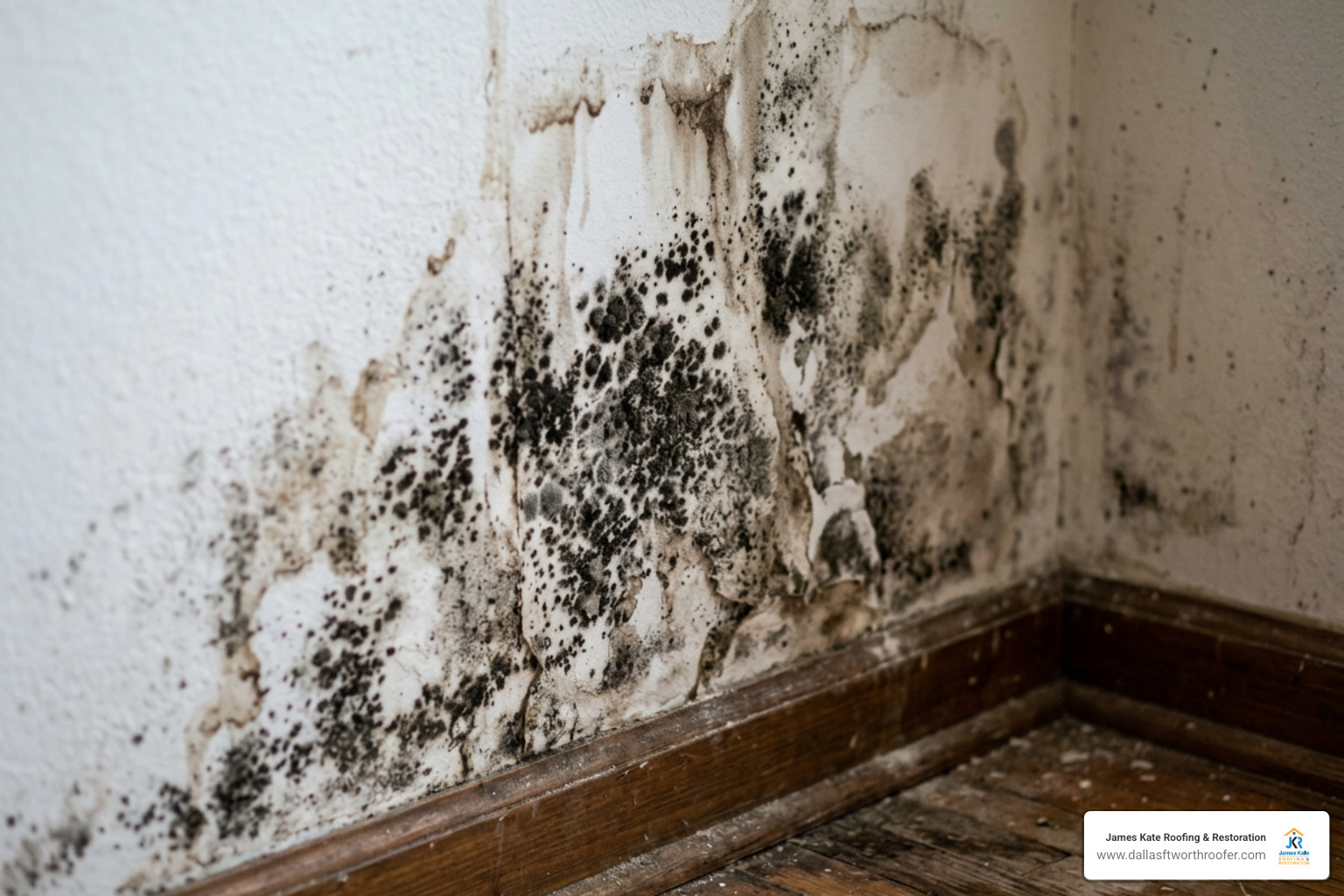
What Does Mold Mitigation Cost in 2026? (Quick Answer)
How much does mold mitigation cost is one of the first questions DFW homeowners ask after spotting that telltale dark patch or catching a musty smell after a leak. Here’s the short answer:
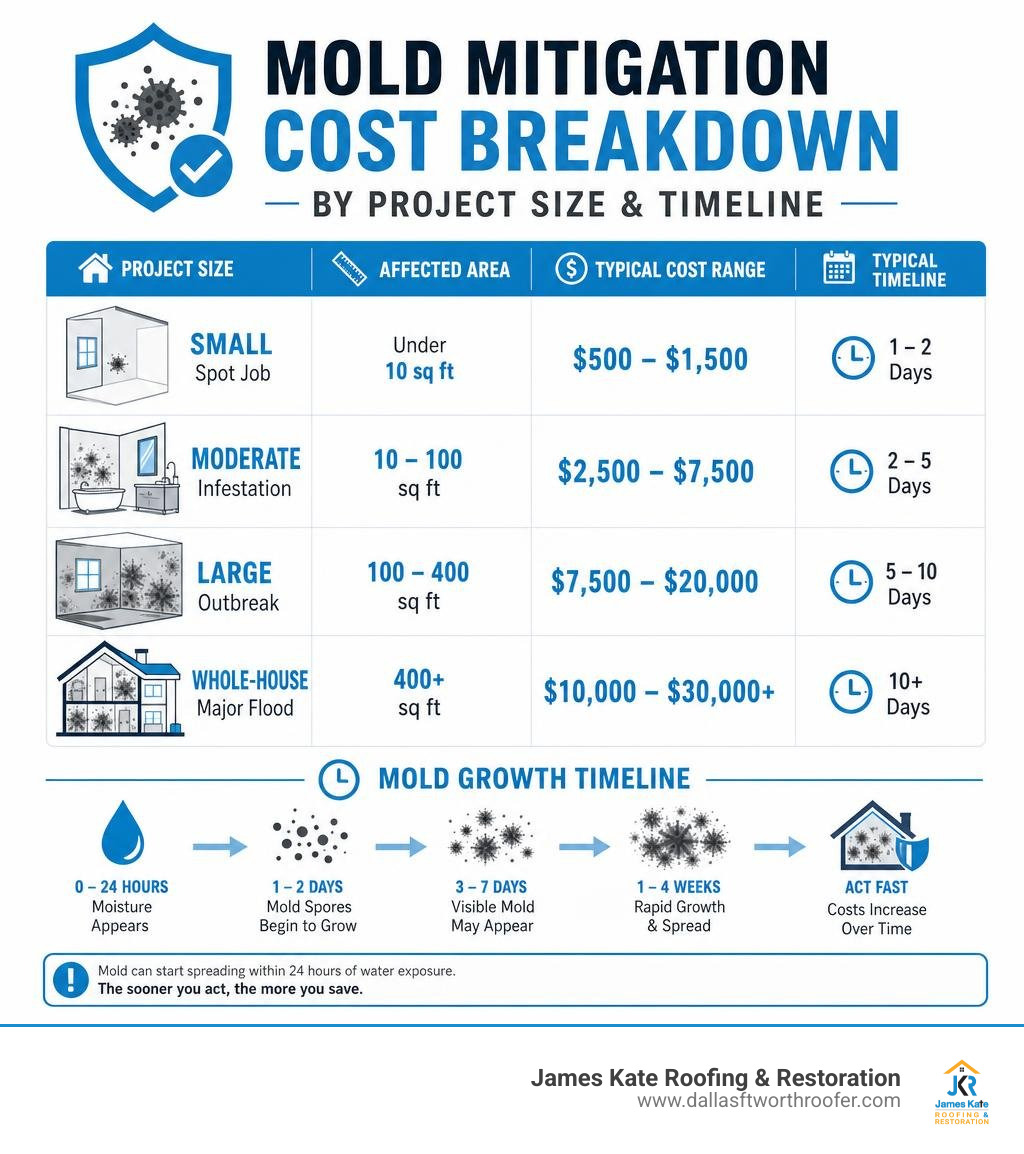
| Project Size | Affected Area | Typical Cost Range |
|---|---|---|
| Small spot job | Under 10 sq ft | $500 – $1,500 |
| Moderate infestation | 10 – 100 sq ft | $2,500 – $7,500 |
| Large outbreak | 100 – 400 sq ft | $7,500 – $20,000 |
| Whole-house / major flood | 400+ sq ft | $10,000 – $30,000+ |
National average in 2026: $2,300 – $2,400 (most homeowners pay between $1,200 and $3,750).
Per-square-foot pricing typically runs $10 – $25 for standard accessible mold, and up to $30 for hidden or toxic mold situations.
Those numbers can shift — sometimes dramatically — based on where the mold is hiding, what type it is, and how long it’s been growing. Mold can start spreading within 24 hours of water exposure, so the clock matters.
I’m Dustin Eatman, owner of James Kate Roofing & solar in the DFW metroplex — and between insurance solar projects, post-storm water intrusion calls, and attic mold discoveries tied to roofing failures, I’ve seen how quickly how much does mold mitigation cost can escalate when the moisture source goes unaddressed. In this guide, I’ll walk you through every major cost factor so you know exactly what to expect before a contractor ever sets foot in your home.
Easy how much does mold mitigation cost glossary:
How Much Does Mold Mitigation Cost on Average in 2026?
When you’re staring at a patch of fuzzy growth, your mind immediately jumps to the worst-case financial scenario. In 2026, the national average cost for professional mold remediation sits at $2,368, with most standard residential projects falling in the $1,223 to $3,753 range.
However, because we operate right here in North Texas, we have to look at local economic factors. In the Dallas-Fort Worth metroplex, pricing closely mirrors these national benchmarks but can swing slightly depending on your exact municipality:
- Dallas average: $2,244
- Arlington average: $2,090
- Fort Worth average: $2,090
- Mansfield, Grand Prairie, and Midlothian averages: $2,000 – $2,150
Industry cost standards have steadily climbed over the last five years, rising approximately 17.7% from a national average of $1,869 in 2022 to around $2,200–$2,400 today in 2026. This increase is driven by rising labor rates, specialized equipment costs, and strict environmental disposal fees.
Understanding How Much Does Mold Mitigation Cost by Project Size
The size of the physical footprint of the mold is the single biggest starting point for any estimate. Remediation companies generally categorize projects into three tiers of severity:
1. Small Infestations (Under 10 Square Feet)
- Typical Cost: $500 to $1,500
- Scope: These are isolated issues, such as a small patch behind a leaking toilet or under a kitchen sink. The Environmental Protection Agency (EPA) notes that homeowners can often handle cleanups under 10 square feet themselves. However, if the mold is on a porous surface like drywall or is a toxic species, professional containment is still highly recommended to prevent spores from spreading.
2. Moderate Cases (10 to 100 Square Feet)
- Typical Cost: $2,500 to $7,500
- Scope: This usually involves one or two entire rooms, a localized ceiling leak that has spread into the wall cavity, or a crawl space issue. These projects require physical containment barriers, negative air pressure machines, and professional-grade HEPA vacuuming. To understand why simple surface wiping won’t work for these larger areas, check out our guide on Damp And Dangerous The Difference Between Mold Removal And Remediation.
3. Major Outbreaks (100 to 400+ Square Feet)
- Typical Cost: $7,500 to $20,000+
- Scope: These are extensive contamination scenarios, often occurring after major storm flooding, a long-undetected pipe burst while a family was away, or severe, unaddressed roof leaks that impacted multiple rooms. Whole-house remediation projects fall into this category and can easily reach $10,000 to $30,000 once structural demolition and complete build-back construction are factored in.
Per-Square-Foot Pricing Breakdown
Many solar experts quote mold remediation at a unit rate of $10 to $25 per square foot. However, it is a common misconception that this rate applies to the total square footage of your home. Instead, it is calculated based on the actual surface area of the affected materials that require treatment, containment, and disposal.
- Standard, easily accessible mold (e.g., exposed framing, plywood): $10 – $15 per sq. ft.
- Hidden mold requiring demolition (e.g., inside wall cavities): $15 – $30 per sq. ft.
- Toxic black mold requiring maximum PPE and containment: $20 – $30 per sq. ft.
Smaller jobs often carry a higher effective per-square-foot rate because of fixed mobilization costs. A contractor must still set up containment, run air scrubbers, and pay for disposal fees whether they are cleaning 5 square feet or 50 square feet. This is why many professional firms charge a minimum project fee of $500 to $1,500 regardless of how small the patch is.
Mold Mitigation Costs by Location in Your Home
Where the mold is growing changes the labor requirements dramatically. A wide-open, easily accessible area is far cheaper to remediate than a tight, hot attic or a cramped crawl space.
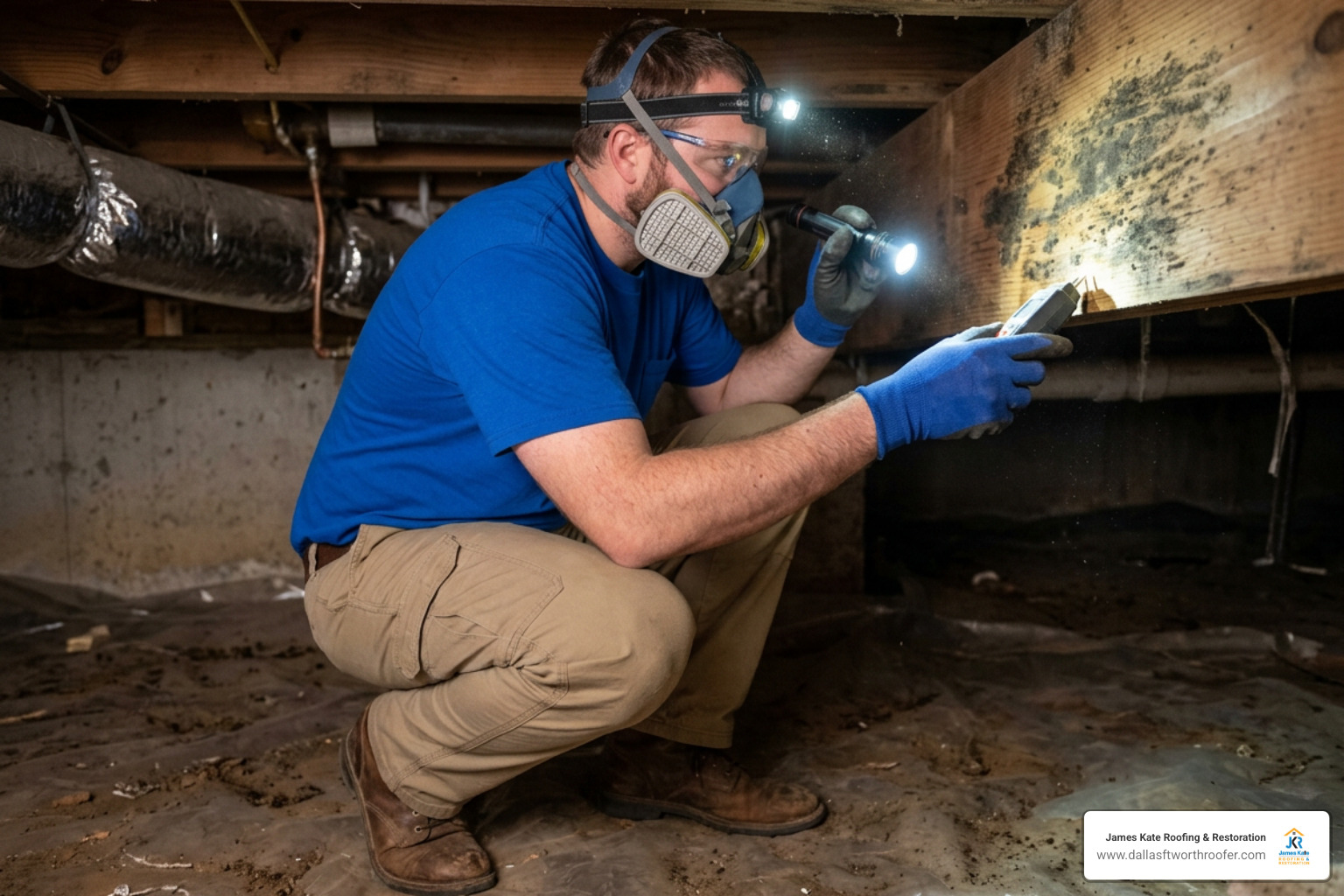
When you are looking for Mold Mitigation Services Near You, expect contractors to adjust their bids based on these specific household locations:
Attic Mold Remediation
- Typical Cost: $1,000 to $4,000 (can reach $5,000+ for severe cases)
- Why it costs what it does: Attic mold is almost always a result of two things: roof leaks or poor attic ventilation. In the humid Texas summers, an unventilated attic becomes a greenhouse. Working in a tight, hot attic space requires specialized safety protocols and limits the time technicians can spend inside during high-temperature months. Remediation here involves treating the underside of the roof decking, often using soda blasting or dry ice blasting to remove mold from wood pores without damaging the structural integrity of your roof rafters. If you suspect your roof is the culprit, learn How To Safely Evict Mold From Your Attic For Good.
Crawl Space and Drywall Mold Mitigation
- Crawl Spaces ($500 to $2,000): Crawl spaces are notorious for trapping ground moisture. Because of the limited clearance, technicians must crawl on their stomachs in full protective gear to scrape, treat, and seal the floor joists. If you want to prevent the mold from returning, we often recommend combining remediation with crawl space encapsulation, which can add several thousand dollars to the project but permanently solves the moisture issue.
- Drywall Mold ($1,000 to $20,000): Mold on drywall is tricky because drywall is incredibly porous. Once mold takes root in sheetrock, it cannot be simply wiped away; the affected drywall must be cut out and discarded. If the mold has traveled inside the wall cavity, the insulation must also be replaced, and the wooden studs must be sanded and treated. For a complete deep dive into this process, read The Ultimate Guide To Indoor Mold Remediation And Cleanup.
HVAC and Air Duct Systems
- Typical Cost: $2,000 to $6,000 (up to $10,000 for complex commercial or multi-system residential properties)
- Why it costs what it does: This is one of the most critical and expensive areas to remediate. Your HVAC system circulates air throughout your entire home. If mold is growing inside your air ducts, blower motor, or evaporator coils, every time your AC kicks on, it distributes millions of microscopic spores into your living spaces. Remediating an HVAC system involves sealing off all supply and return registers, using specialized pull-vacuums with HEPA filtration, and applying EPA-approved antimicrobial foggers inside the ductwork. If the ductwork is flexible foil or fiberglass and is heavily contaminated, it must be completely replaced, which drives the cost toward the higher end of the spectrum.
Key Factors That Drive Mold Remediation Costs Up
No two mold jobs are identical. While square footage and location provide a solid baseline, several other variables can cause your final bill to climb.
Mold Species and the Black Mold Premium
While health experts and the CDC recommend removing all indoor mold regardless of its color or species, the specific type of mold present does impact the remediation process and the final price.
- Standard Molds (Aspergillus, Penicillium, Cladosporium): These are common indoor molds. They require standard containment, HEPA vacuuming, and sanitization.
- Black Mold (Stachybotrys chartarum): This species is infamous for producing mycotoxins that can cause severe respiratory issues, headaches, and chronic fatigue. Because of the health risks, remediating black mold requires a 25% to 50% cost premium (often running $20 to $30 per square foot).
Technicians dealing with verified toxic black mold must wear full-face respirators and disposable Tyvek suits, set up multi-stage decontamination chambers, and use double-bagged hazardous waste disposal protocols. If you are dealing with this stubborn invader, you can find specialized tips in our guide on how to Get Rid Of The Grime With Expert Black Mold Remediation.
Accessibility and Structural Damage
If mold is visible on the outside of a wall, there is a high probability it is also growing on the inside. Hidden mold behind plaster, under hardwood flooring, or beneath subfloors requires significant demolition to access.
- Demolition & Disposal: Tearing out water-damaged plaster, cabinetry, and tile adds labor hours and disposal fees.
- Structural Reconstruction (Build-Back): Once the mold is gone, you still need a home you can live in. Replacing drywall, painting, and installing new flooring adds to the overall project cost. For example, drywall replacement runs $1,000 to $2,900, while replacing ruined hardwood flooring or carpeting can cost anywhere from $775 to $2,600+.
- The Moisture Source: You cannot permanently solve a mold problem without fixing the water leak that caused it. Whether it’s a plumbing leak or a roof failure, repairing the source is a non-negotiable cost. Learn more about how to address these situations immediately in Dont Let It Fester How To Handle Mold After A Leak.
Mold Inspections, Testing, and Insurance Coverage
Before you spend thousands of dollars on remediation, you need to know exactly what you are dealing with. This is where professional inspections and testing come into play.
Professional Inspection and Clearance Testing Costs
- Initial Mold Inspection: $300 to $1,000 (National average: $657)
- Air and Surface Sampling: $250 to $500
An inspection involves a certified professional using thermal imaging cameras and moisture meters to locate hidden pockets of water behind walls. They will also take air cassette samples to compare indoor spore counts with outdoor levels.
A Critical Texas Legal Note: In the state of Texas, the law strictly prohibits the same company from performing both the mold assessment (testing) and the mold remediation on the same property. This law was put in place to prevent conflict of interest (e.g., a company inventing a mold problem just to charge you to fix it). You must hire an independent licensed mold assessment consultant (MAC) to write the protocol, and then hire a licensed remediation firm like us to execute it.
- Post-Remediation Clearance Testing ($300 to $600): Once the remediation is complete, an independent assessor should return to run “clearance testing.” This proves that the containment worked, the spore counts are back to safe, normal levels, and the home is safe to occupy.
To find vetted professionals who understand these strict regulatory boundaries, check out our curated list of 5 Top Mold Remediation Services.
Does Homeowners Insurance Cover Mold Mitigation?
The golden question: Will my insurance pay for this?
The answer depends entirely on the source of the water that caused the mold. Homeowners insurance is designed to cover damage that is sudden and accidental.
- When it IS covered: If a pipe suddenly bursts, or a severe North Texas storm rips shingles off your roof and water pours into your attic, the resulting mold is generally covered. Because the root cause was a covered peril, the mold mitigation is considered part of the cleanup.
- When it is NOT covered: If mold forms because of a slow, gradual plumbing leak that went unfixed for six months, or because of high indoor humidity due to a poorly maintained HVAC system, your claim will likely be denied. Insurance companies view this as a maintenance neglect issue.
- Coverage Caps: Even if your claim is approved, be aware that most standard HO-3 insurance policies have strict mold sub-limits or caps. These limits typically restrict mold payouts to $5,000 or $10,000, regardless of whether the actual remediation bill is higher.
Smart Strategies to Reduce How Much Does Mold Mitigation Cost
While mold remediation is a highly technical process, you don’t have to watch your savings account completely vanish. Here are practical ways to keep your out-of-pocket expenses as low as possible:
- Act Within 24 to 48 Hours: Mold spores need moisture, oxygen, and an organic food source (like drywall or wood) to grow. If you experience a plumbing leak or roof failure, dry the area out immediately. Using high-powered air movers and dehumidifiers within the first 48 hours can prevent mold from germinating in the first place, saving you thousands in remediation fees.
- Fix the Water Source First: Never pay for mold remediation until you are 100% certain the water leak has been completely repaired. If you clean the mold but leave a slow drip active, the mold will return within 12 to 24 months, forcing you to pay for the entire process all over again.
- Get an Independent Inspection: Don’t rely on a contractor’s visual estimate alone. Pay for an independent mold assessment first. Having a written, line-item protocol ensures you only pay to remediate the areas that actually have verified mold, preventing “scope creep.”
- Bundle Services: If you require demolition, remediation, and structural rebuild, try to work with a full-service solar company. At James Kate Roofing & solar, we handle the entire pipeline — from water mitigation and mold cleanup to rebuilding your drywall and roofing. Bundling these services under one project manager often saves 10% to 15% compared to hiring separate subcontractors for each phase.
- Handle Small, Low-Risk Areas Yourself: If the mold is confined to a small, non-porous surface (like tile grout or metal) and is under 10 square feet, you can safely clean it using proper safety gear (N-95 mask, gloves, and goggles) and specialized commercial mold cleaners. For a step-by-step guide on doing this safely, read How To Remove Household Mold Fast.
Frequently Asked Questions About Mold Mitigation
How long does the professional mold remediation process take?
Most residential mold remediation projects take 1 to 5 days to complete.
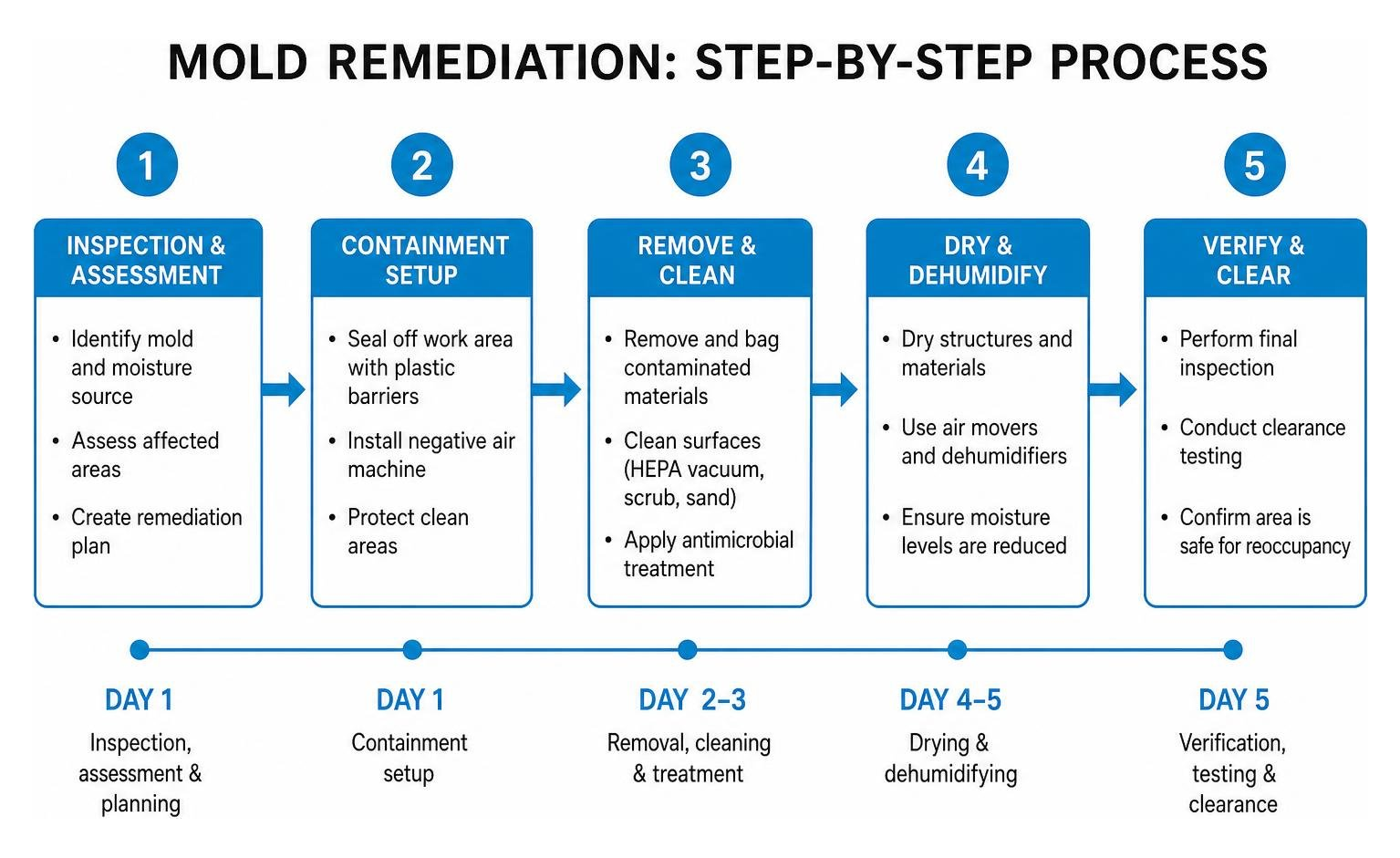
- Day 1: Containment setup, negative air machine installation, and initial demolition of ruined materials.
- Day 2-3: Detailed physical cleaning, sanding of wood framing, HEPA vacuuming, and application of antimicrobial treatments.
- Day 4-5: Structural drying (running dehumidifiers to drop wood moisture content below 15-20%) and final clearance testing.
Can I live in my home during mold remediation?
In many cases, yes, you can remain in your home, provided the mold is localized to a specific area (like a single bathroom or attic) and the remediation team has set up proper containment.
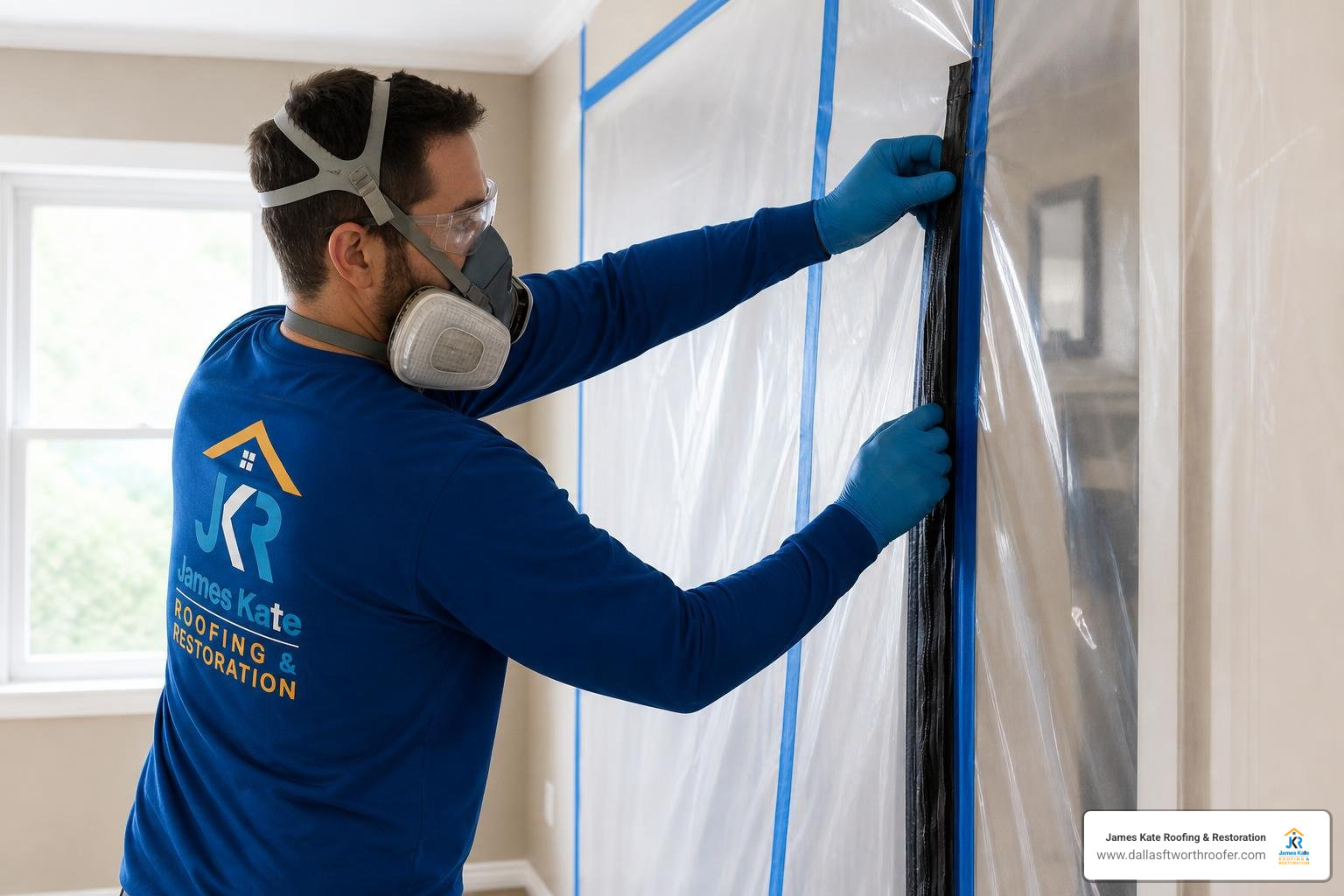
Containment involves heavy-duty plastic sheeting and negative pressure machines that prevent spores from escaping into the rest of the house. However, if the mold is widespread, impacts your HVAC system, or if a member of your household suffers from severe asthma, allergies, or is immunocompromised, we strongly advise temporary relocation until clearance testing is passed.
When is professional mold remediation absolutely necessary?
Professional remediation is highly recommended or legally required when:
- The affected area is larger than 10 square feet (per EPA guidelines).
- Mold has penetrated your HVAC system or ductwork.
- The mold is verified toxic black mold (Stachybotrys chartarum).
- The water intrusion was sewage-based (Category 3 black water), which carries dangerous pathogens alongside mold.
- The mold is hidden inside wall cavities, crawl spaces, or structural framing.
Conclusion
Discovering mold in your home can feel overwhelming, but understanding how much does mold mitigation cost and how the process works puts the power back in your hands. By acting quickly, identifying the moisture source, and working with certified professionals, you can protect both your family’s health and your property’s structural integrity without draining your bank account.
At James Kate Roofing & solar, we serve our neighbors throughout Mansfield, Arlington, Granbury, Grand Prairie, and Midlothian, TX with honesty, integrity, and Biblical principles. We don’t believe in high-pressure sales tactics or inflated scopes. Whether you need immediate post-leak water mitigation, certified mold remediation, or complete build-back construction backed by our industry-leading warranties, our family-owned team is here to help.
Don’t let a small moisture problem turn into an expensive structural nightmare. Schedule a professional mold assessment today and let us help you restore your home to a safe, healthy state.

Dustin Eatman is a seasoned roofing professional with deep, hands-on expertise that spans residential and commercial roofing, insurance solar, and long-term roof asset management. As the owner of James Kate Roofing & solar in the Dallas–Fort Worth metroplex, he’s built a reputation for diagnosing roof systems accurately, communicating clearly, and executing projects with a high standard of workmanship and documentation. Dustin understands the technical details that make roofs perform—proper underlayment selection, slope and drainage considerations, ventilation strategy, flashing and penetration detailing, and manufacturer-specific installation requirements—because he’s worked through the real-world challenges that cause leaks, premature wear, and warranty issues. He’s equally fluent in the operational side of roofing: jobsite planning, quality control, safety, material ordering, crew coordination, and customer experience from inspection to closeout. In insurance-related projects, Dustin brings practical knowledge of claim workflows, adjuster meetings, scope alignment, supplements, and the importance of photo evidence and thorough records, helping property owners navigate stressful situations with confidence. For commercial clients—especially property and facility managers—he emphasizes proactive maintenance and targeted repairs that reduce disruption, extend roof life, and prevent expensive interior damage. Dustin also stays focused on doing things the right way: educating customers on realistic options, setting expectations, and prioritizing solutions that hold up over time rather than quick fixes. That blend of technical skill, field experience, process discipline, and owner-level accountability is what makes Dustin Eatman a trusted expert in the roofing industry.