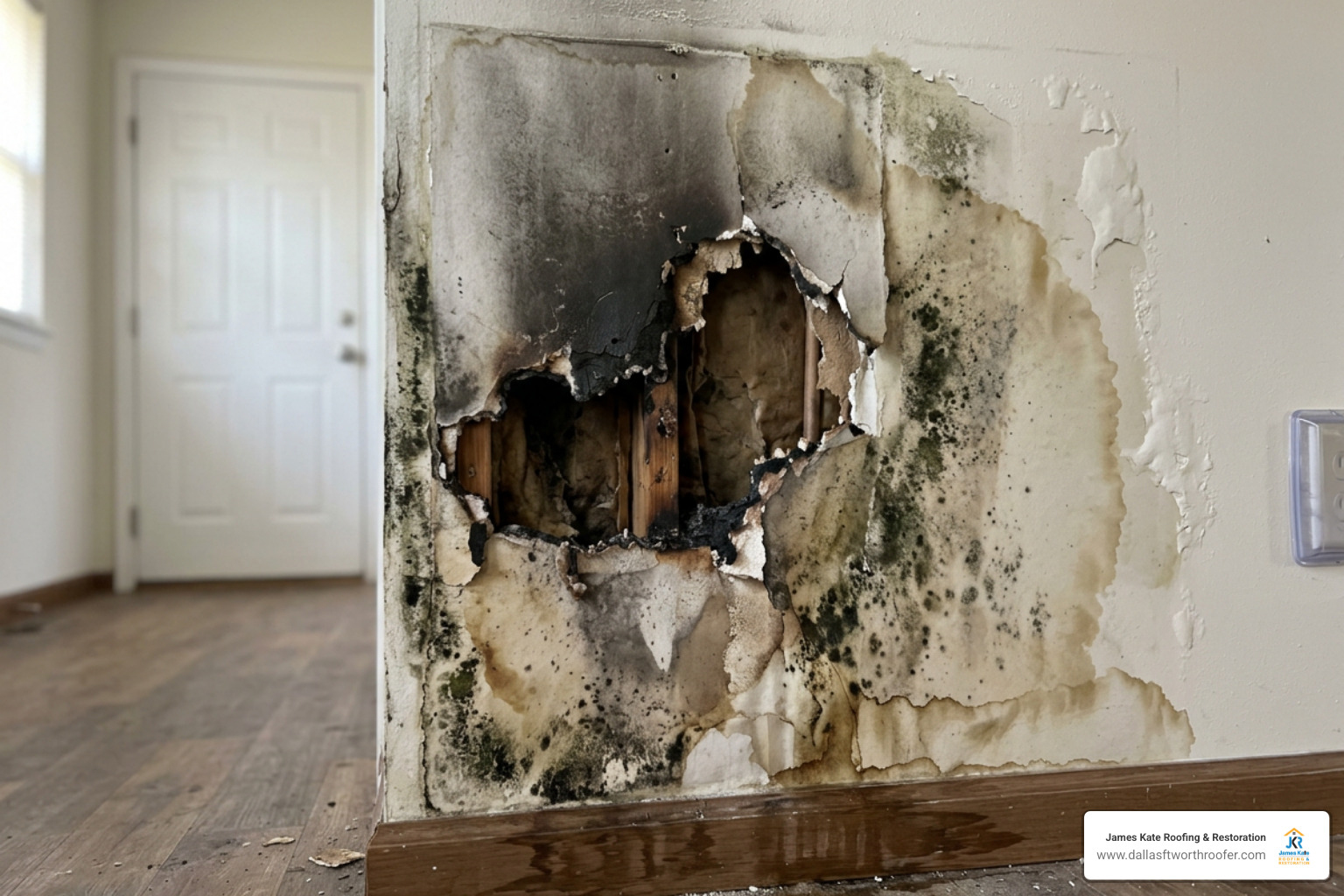
The Perfect Storm: Why Firefighting Water Triggers Rapid Mold Growth
Post fire mold mitigation is the process of preventing and removing mold growth that develops after a fire — caused primarily by the large volumes of water used to extinguish the flames.
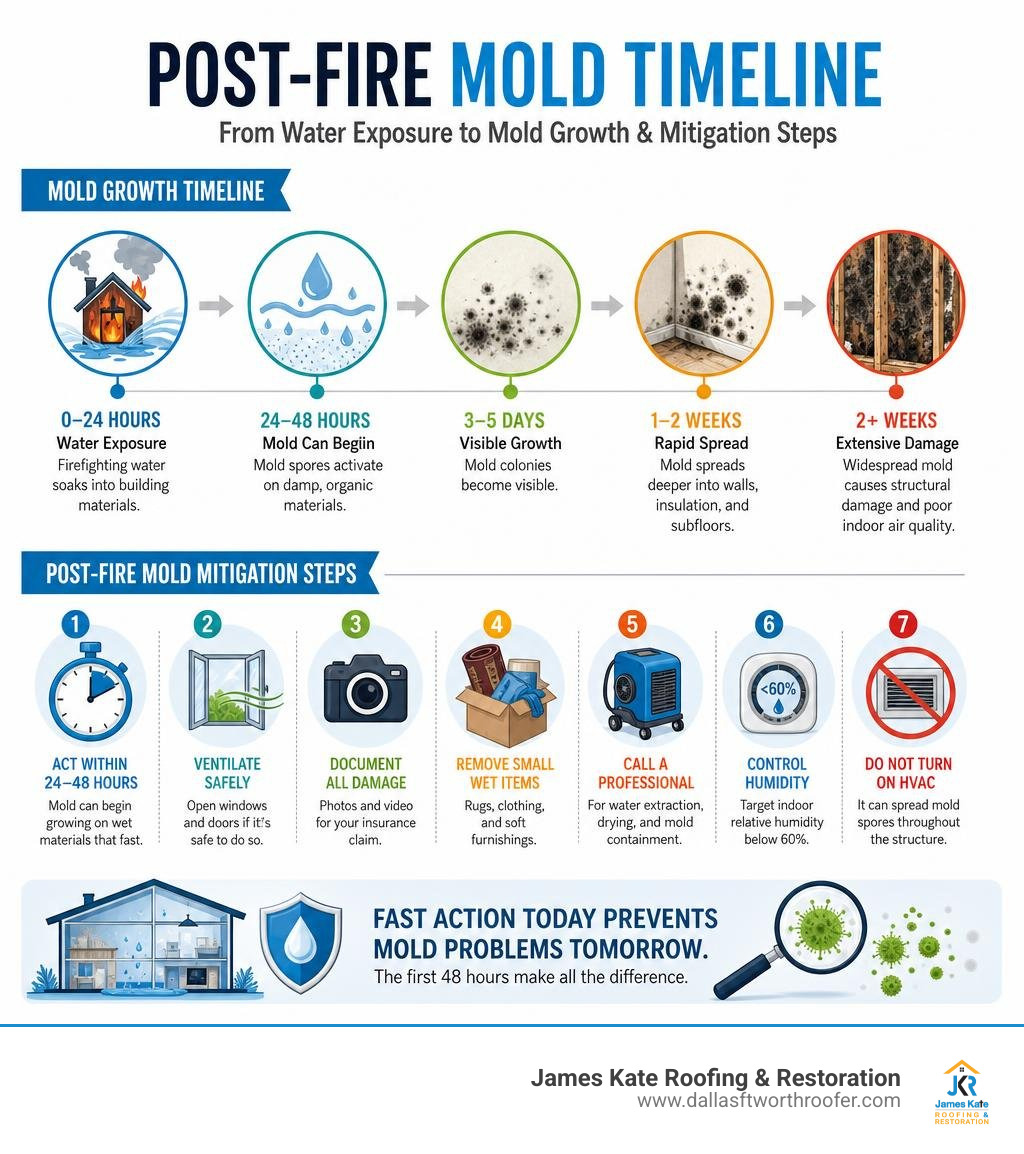
Here’s a quick overview of the essential steps:
- Act within 24–48 hours — mold can begin growing on wet materials that fast
- Ventilate safely — open windows and doors if it’s safe to do so
- Document all damage — photos and video for your insurance claim
- Remove small wet items — rugs, clothing, and soft furnishings
- Call a professional solar company — for water extraction, drying, and mold containment
- Control humidity — target indoor relative humidity below 60%
- Do not turn on HVAC — it can spread mold spores throughout the structure
A house fire is devastating on its own. But what many DFW homeowners don’t expect is the second wave of damage that arrives quietly in the hours and days after the flames go out.
When firefighters extinguish a structure fire, they can use thousands of gallons of water. That water soaks into drywall, insulation, wood framing, and flooring — creating exactly the warm, damp, organic-rich environment that mold needs to thrive. And it doesn’t wait long. Mold can begin to establish itself in as little as 24 to 48 hours after water exposure.
The fire gets the headlines. The mold does the slow, hidden damage.
I’m Dustin Eatman, owner of James Kate Roofing & solar, and through years of hands-on fire and water damage solar across the DFW area, post fire mold mitigation is one of the most time-sensitive and misunderstood challenges I see homeowners face after a loss. In the sections below, I’ll walk you through exactly what’s happening inside your walls, what you can do right now, and when to call in professionals before mold doubles down on your fire damage.
Quick post fire mold mitigation definitions:
When we think of fire damage, we picture charred beams, ash, and ruined furniture. However, the most insidious threat to your home’s structural integrity actually comes from the water used to save it. Whether it is from high-pressure fire hoses, residential sprinkler systems, or local fire department efforts in Mansfield or Arlington, hundreds or thousands of gallons of water are introduced to your home in a very short period.
This sudden influx of water creates a literal “perfect storm” for fungal growth. Mold spores are microscopic and naturally present in both indoor and outdoor air at all times. They remain completely harmless until they find moisture, oxygen, and a food source.
Once the water saturates your home, it provides the missing ingredient: moisture. Because a fire generates immense heat, the indoor air remains warm and humid. When you combine this warmth with saturated building materials, you establish a tropical greenhouse environment right inside your living room or attic.
Furthermore, soot and ash from the fire don’t just stain your walls; they mix with the water to form a sticky, acidic residue. This chemical slurry penetrates deeply into porous building materials, breaking down fibers and making organic materials like drywall paper, wood framing, and carpet backing even easier for mold to digest. To understand the complex relationship between soot, smoke, and moisture, you can read the Ultimate Guide to Post-Fire Soot and Mold Cleanup.
Early Warning Signs of Post-Fire Mold
Because mold thrives in dark, unventilated spaces, it often starts growing out of sight. Homeowners in Grand Prairie or Midlothian should be on high alert for these early warning signs of post-fire mold:
- A Musty, Earthy Odor: If you notice a distinct, damp smell that persists even after the smoke odor begins to clear, mold is likely colonizing nearby.
- Bubbling or Peeling Paint: When water is trapped behind drywall, it pushes outward, causing paint or wallpaper to bubble, crack, or peel.
- Warped Wood or Soft Drywall: Press gently on walls or baseboards near the fire-damaged area. If they feel spongy, soft, or warped, they are holding significant moisture.
- Discoloration and Staining: Watch for dark spots, yellowing, or gray-green patches on ceilings, walls, and inside closets.
If you notice any of these signs, it is crucial to begin fire and water damage cleanup immediately to prevent structural degradation.
Health Risks of Post-Fire Mold Exposure
The dangers of post-fire mold are not purely structural. Living in an environment with active mold growth and soot residue poses severe health risks.
When mold colonizes water-damaged materials, it releases millions of microscopic spores into the air. Inhaling these spores can trigger immediate respiratory issues, including coughing, sneezing, wheezing, and severe asthma attacks. For individuals with pre-existing allergies or respiratory conditions, the symptoms can be debilitating.
Furthermore, post-fire mold is uniquely dangerous because it is often mixed with toxic soot. Soot particles are incredibly small (often less than 2.5 microns in diameter) and can carry heavy metals, acids, and volatile organic compounds (VOCs) deep into your lungs. When combined with mold spores, this toxic cocktail is especially dangerous for vulnerable populations, including:
- Infants and young children
- The elderly
- Pregnant women
- Immunocompromised individuals (such as those undergoing chemotherapy or living with chronic illnesses)
Protecting your family’s health is the single most important reason to prioritize swift, professional post fire mold mitigation.
The Critical Window for Post Fire Mold Mitigation
When it comes to preventing mold after a fire, time is your greatest enemy. The critical window for action is the first 24 to 48 hours. Once water-saturated materials remain wet past the 48-hour mark, mold spores will germinate and begin anchoring themselves into your home’s structural framing.
To stop this progression, you must implement a strategic, rapid response. While you should always wait for the fire department to declare your home structurally safe to enter, there are immediate steps you can take to set the stage for professional mold mitigation services.
Immediate Actions for Homeowners
If you have been cleared to safely enter your property in Granbury or Arlington, use this checklist to protect your home and simplify your upcoming insurance claim:
- Safety First: Never enter a home with standing water if the main electrical breaker has not been shut off. Ensure you wear sturdy, heavy-soled shoes, protective gloves, and an N95 respirator mask to protect yourself from soot and mold spores.
- Document Everything: Before you touch, move, or clean anything, take extensive photos and videos of every room. Document the fire damage, the water accumulation, and any early signs of mold.
- Open Windows and Doors: If the outdoor humidity is below 60% and the weather permits, open all windows and interior doors to encourage natural air circulation.
- Remove Small, Wet Items: Carry portable wet items—such as rugs, clothing, cushions, and bedding—outside to dry. Do not leave wet fabrics piled up inside, as they will grow mold rapidly.
- Avoid Wet Electricals: Do not attempt to use household vacuum cleaners to extract water, and do not turn on ceiling fans or light fixtures if the ceilings are wet.
Managing Humidity and Ventilation
Controlling the indoor climate is essential to halting mold in its tracks. Mold requires high relative humidity to grow. Your target should always be to keep indoor relative humidity below 60% (ideally between 30% and 50%).
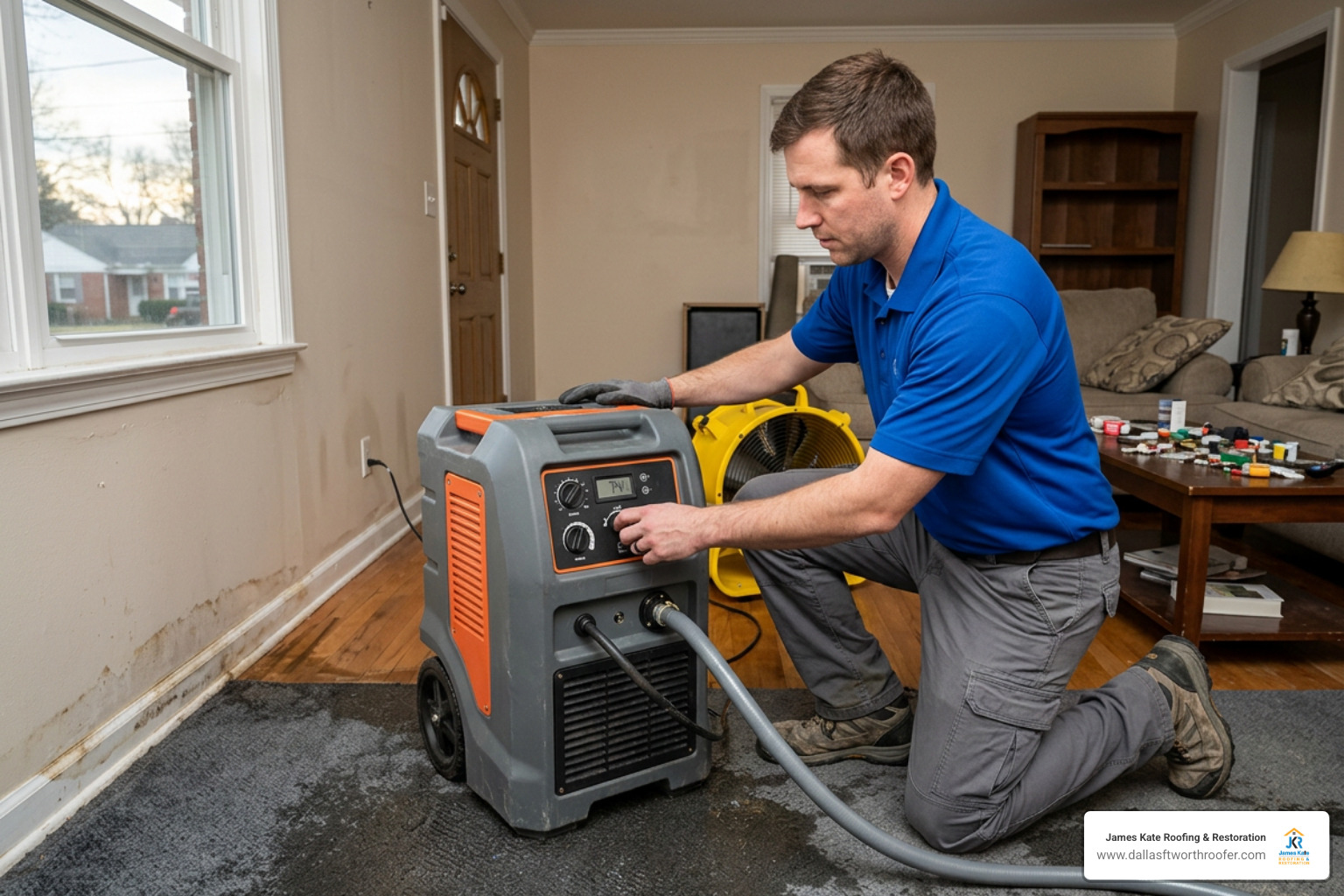
To achieve this, professional solar teams use industrial-grade dehumidifiers and high-velocity air movers. However, if you are waiting for our team to arrive, you can improve airflow by opening windows (if the air outside is dry) and setting up standard household fans.
Crucial Warning: Never turn on your home’s central HVAC system after a fire. If smoke, soot, or mold spores have entered your ductwork, running the system will distribute these contaminants to every single room in your house, ruining unaffected areas and dramatically increasing your overall mitigation costs. Instead, rely on localized ventilation and professional HEPA air filtration units.
Material Salvage: What to Restore vs. What to Discard
One of the hardest parts of recovering from a fire is deciding what can be saved and what must be thrown away. When water mixes with soot, it penetrates deeply into different materials. Understanding the difference between porous, semi-porous, and non-porous materials is key to making these decisions.
For highly technical guidance on how smoke behaves and how different materials react to wildfire and structural heat, professionals refer to the IICRC Technical Guide for Wildfire solar.
Handling Susceptible Materials
Porous materials act like sponges, absorbing both water and acidic soot. Once these materials are saturated, it is almost impossible to dry them quickly enough to prevent deep-seated mold growth. Semi-porous materials, like structural wood, can often be saved if they are treated and dried rapidly. Non-porous materials, like metal and glass, are highly restorable.
| Material Type | Examples | Salvage Action | Why? |
|---|---|---|---|
| Highly Porous | Drywall, fiberglass insulation, carpet padding, mattresses | Discard & Replace | They trap moisture and soot particles deep within their fibers, making complete drying and sanitizing impossible. |
| Semi-Porous | Solid wood framing, subfloors, hardwood cabinetry | Restore (if structurally sound) | Wood can be dried, sanded, and treated with antimicrobial sealants if action is taken quickly. |
| Non-Porous | Glass, metal framing, tile, concrete foundations | Restore & Sanitize | These materials do not absorb water. They can be washed, deodorized, and fully restored. |
If you suspect mold has already reached your upper structural spaces, learn how to safely evict mold from your attic to protect your roof framing and ceiling joists.
Safe Soot and Smoke Residue Cleaning
Cleaning soot without creating conditions for mold growth is a delicate process. Because soot is highly acidic and greasy, applying water or liquid household cleaners directly to dry soot will smear it, pushing the dark pigment and chemicals deeper into porous surfaces like plaster or wood.
To clean soot safely, always start with dry cleaning methods:
- Soot Eraser Sponges: Use specialized chemical dry sponges to wipe soot off walls and ceilings. Use dry, firm strokes, and never use water with these sponges.
- HEPA Vacuuming: Vacuum loose soot and ash using a vacuum equipped with a HEPA filter. Standard household vacuums will simply blow the fine soot particles back into the air.
- Wet Cleaning (Only After Dry Cleaning): Once the bulk of the dry soot is removed, you can wash hard surfaces using a solution of Tri-Sodium Phosphate (TSP) mixed with warm water. TSP cuts through greasy smoke residue and helps sanitize the surface. Work in small sections from the floor up, and dry each area immediately with clean towels to prevent secondary water damage.
To understand more about the step-by-step solar process, you can read our guide on how to remove household mold fast.
Professional solar vs. DIY Cleanup
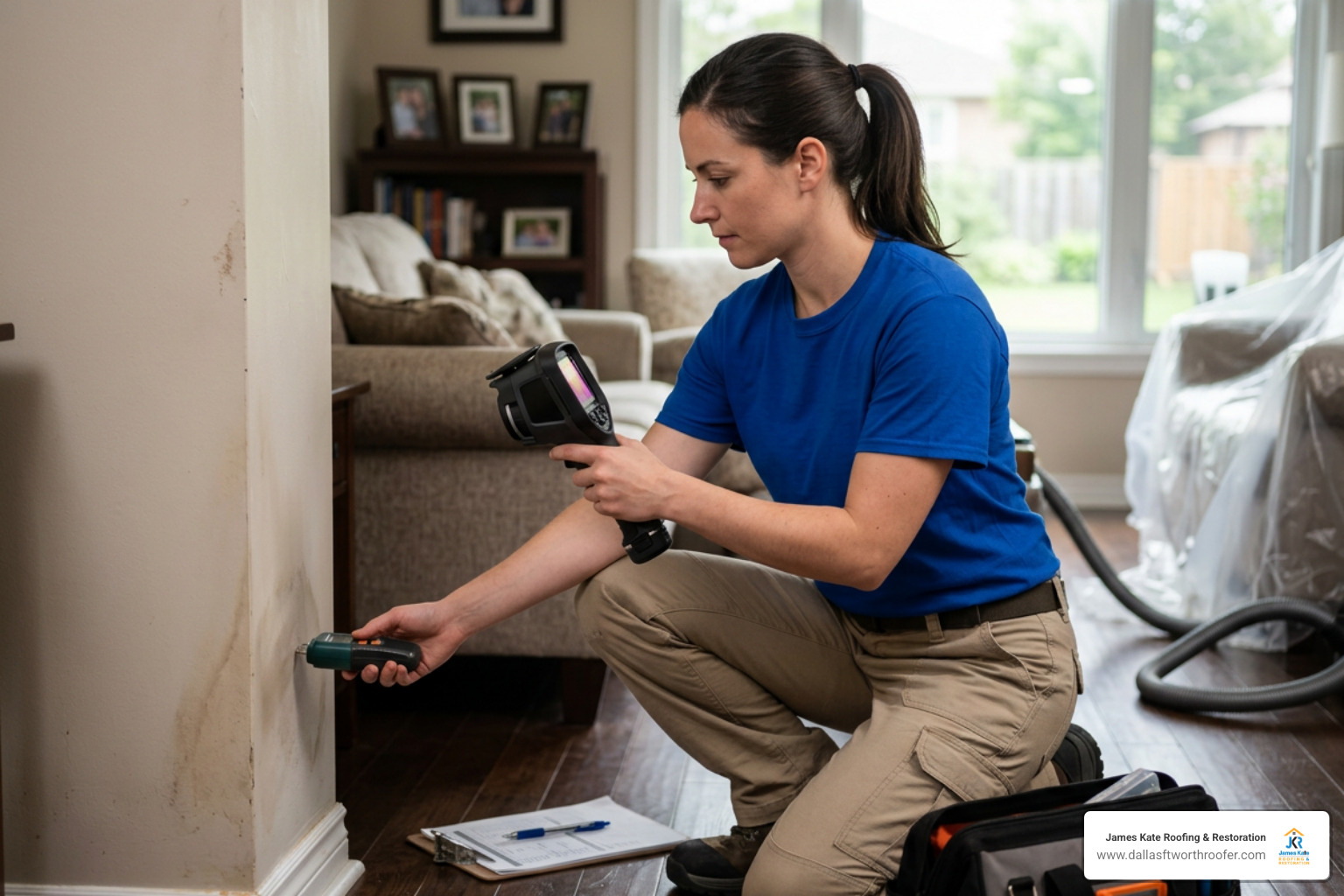
It is natural for homeowners to want to roll up their sleeves and tackle the cleanup themselves to save money. However, post-fire mold cleanup is highly complex and carries significant safety risks.
The Environmental Protection Agency (EPA) provides a general rule of thumb: if the mold-affected area is less than 10 square feet (about a 3-foot by 3-foot patch), a homeowner can typically handle the cleanup using standard safety gear and DIY methods. However, if the water and mold damage extends beyond 10 square feet, or if the water was contaminated (such as water that sat in a crawlspace or mixed with fire suppressants), professional remediation is absolutely required.
When you work with a trusted emergency remediation partner, they don’t just scrub the walls. Professionals set up advanced containment barriers using heavy plastic sheeting and negative air pressure machines. This ensures that as mold and soot are cleaned, the airborne spores and toxic dust are pulled out of your home rather than drifting into your bedrooms and kitchen.
Why Post Fire Mold Mitigation Requires Professional Water Extraction
The key to successful mold prevention is removing the moisture source completely. Household fans and retail dehumidifiers simply do not have the power to pull deep moisture out of structural wall studs and subfloors.
Our team at James Kate Roofing & solar uses a scientific approach to structural drying. This involves:
- Moisture Mapping & Thermal Imaging: We use infrared cameras to detect hidden moisture pockets behind dry walls and under floors without tearing your home apart.
- Industrial Water Extractors: We utilize truck-mounted extraction units to pull thousands of gallons of water out of carpets and floors in minutes.
- High-Velocity Air Movers & LGR Dehumidifiers: We position industrial drying equipment to force dry air through wall cavities, ensuring the structural framing reaches safe moisture levels (below 15%) before rebuild begins.
For a deeper look into how these dual processes work together, read our article on fire and water damage recovery.
Insurance and Long-Term Prevention Strategies
Dealing with insurance companies after a fire can feel overwhelming. However, understanding how your policy handles secondary damage like mold can save you thousands of dollars in out-of-pocket expenses.
Most standard homeowners insurance policies cover mold remediation if the mold is a direct result of a “covered peril” — such as the water used by firefighters to put out a sudden house fire. However, insurance companies expect homeowners to take immediate, reasonable steps to prevent further damage. If you wait weeks to call a solar company and mold spreads throughout your home, the insurer may deny the mold portion of your claim, citing neglect.
Navigating Insurance Claims for Post Fire Mold Mitigation
To ensure your claim goes smoothly, follow these best practices:
- Report the Loss Immediately: Contact your insurance agent within hours of the fire. Let them know that extensive water was used to extinguish the flames, creating an immediate mold risk.
- Keep Detailed Records: Document every conversation with your insurance company, adjusters, and contractors. Keep copies of all receipts for emergency lodging, food, and mitigation services.
- Ask About Mold Limits: Many policies have specific caps on mold remediation (often ranging from $10,000 to $25,000). By acting quickly with professional drying, you can avoid exceeding these limits because you prevented the mold from growing in the first place.
- Work with a Full-Service Restorer: Working with a company like James Kate that handles water mitigation, mold remediation, and complete build-back simplifies the process, as we can provide your adjuster with unified, detailed moisture logs and estimates.
To understand the broader picture of managing your property after a disaster, check out our comprehensive handling property damage guide.
Frequently Asked Questions About Post-Fire Mold
How quickly does mold grow after a fire?
Mold can begin to germinate and grow on wet building materials within 24 to 48 hours after water exposure. The high indoor temperatures left behind by a fire, combined with saturated drywall and wood, create the perfect high-humidity environment for rapid fungal colonization.
Can I clean soot and mold myself?
If the affected area is under 10 square feet and you have proper personal protective equipment (including an N95 or P100 respirator and chemical-resistant gloves), you can clean minor surface mold and soot. However, because fire soot contains toxic chemicals and mold can hide behind drywall, professional cleaning is highly recommended for larger areas to protect your health and ensure the mold does not return. If you need local assistance, consulting professional mold remediation services in Grand Prairie or Arlington is the best way to ensure the job is done safely.
Does homeowners insurance cover post-fire mold?
Yes, in most cases, homeowners insurance covers mold remediation if it is a secondary result of a covered event, such as firefighting water used to extinguish a home fire. However, you must act quickly to mitigate the water damage; otherwise, the insurance company may argue that the mold grew due to homeowner neglect. For residents in outlying DFW areas, reaching out to professional fire and water solar services in Granbury or Midlothian immediately after an incident is the best way to secure your insurance coverage.
Conclusion
A house fire changes your life in an instant. But while the flames are gone, the water left behind represents a ticking clock. Taking fast, decisive action for post fire mold mitigation is the only way to protect your home from a second wave of structural and health-threatening damage.
At James Kate Roofing & solar, we are a family-owned DFW company built on honesty, integrity, and Biblical principles. As a GAF President’s Club contractor, we don’t just offer top-tier roofing; we provide comprehensive solar services across Mansfield, Arlington, Granbury, Grand Prairie, and Midlothian. From emergency water extraction and mold mitigation to the final build-back construction, we treat your home like our own.
We back our craftsmanship with up to a 25-year workmanship warranty, giving you complete peace of mind as you rebuild. If you have experienced a fire and need immediate help restoring your home and your peace of mind, contact James Kate solar Services today. We are here to help you stand strong on a solid foundation once again.
To learn more about how we help DFW families recover, read our guide on restoring your sanity and your home after damage or explore our top mold remediation services.

Dustin Eatman is a seasoned roofing professional with deep, hands-on expertise that spans residential and commercial roofing, insurance solar, and long-term roof asset management. As the owner of James Kate Roofing & solar in the Dallas–Fort Worth metroplex, he’s built a reputation for diagnosing roof systems accurately, communicating clearly, and executing projects with a high standard of workmanship and documentation. Dustin understands the technical details that make roofs perform—proper underlayment selection, slope and drainage considerations, ventilation strategy, flashing and penetration detailing, and manufacturer-specific installation requirements—because he’s worked through the real-world challenges that cause leaks, premature wear, and warranty issues. He’s equally fluent in the operational side of roofing: jobsite planning, quality control, safety, material ordering, crew coordination, and customer experience from inspection to closeout. In insurance-related projects, Dustin brings practical knowledge of claim workflows, adjuster meetings, scope alignment, supplements, and the importance of photo evidence and thorough records, helping property owners navigate stressful situations with confidence. For commercial clients—especially property and facility managers—he emphasizes proactive maintenance and targeted repairs that reduce disruption, extend roof life, and prevent expensive interior damage. Dustin also stays focused on doing things the right way: educating customers on realistic options, setting expectations, and prioritizing solutions that hold up over time rather than quick fixes. That blend of technical skill, field experience, process discipline, and owner-level accountability is what makes Dustin Eatman a trusted expert in the roofing industry.