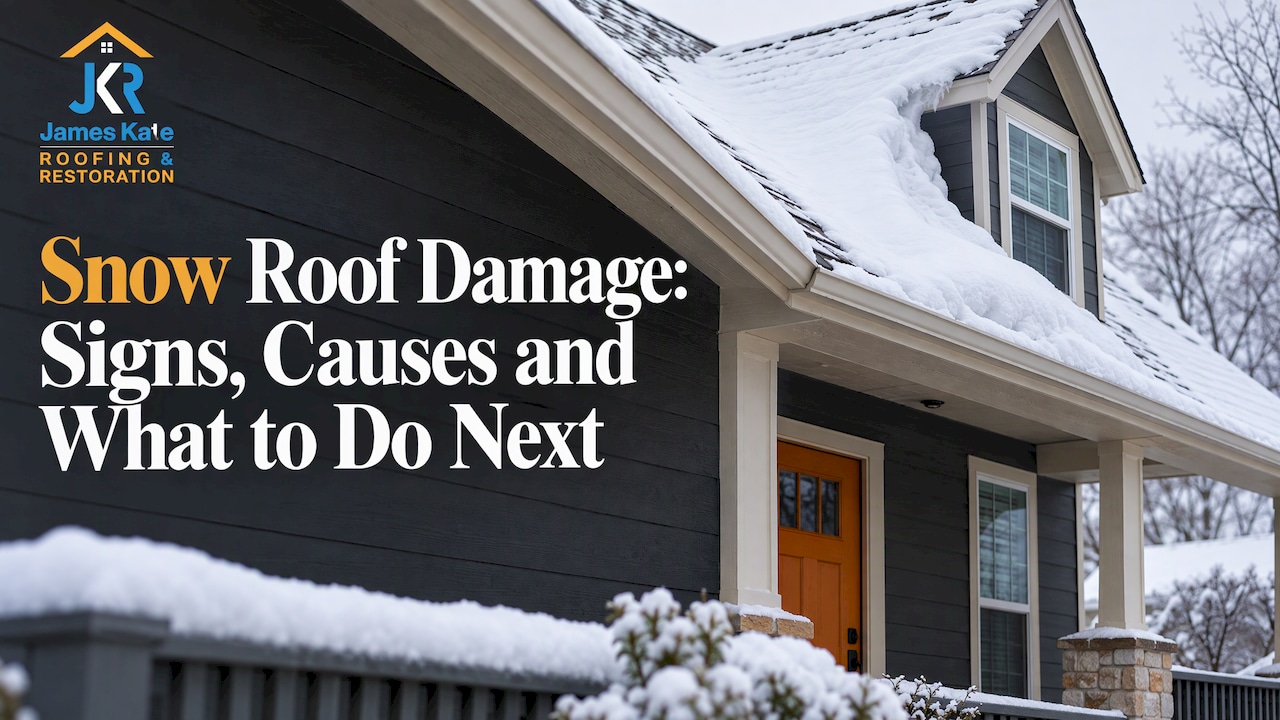
Snow damages a roof in three main ways: weight, ice dams and sliding slabs. The signs run from a few stained ceiling spots to sagging, cracking and doors that stop closing. If you see anything beyond a small stain, stay off the roof and have it inspected by a professional. At James Kate Roofing & solar, a GAF Master Elite® contractor in North Texas, roof inspections and estimates are free. That gives you a clear picture of the damage before you decide on a repair, a replacement or an insurance claim.
TL;DR
- Heavy or uneven snow, rain falling on snow, and ice dams are what hurt roofs. Flat and low-pitched roofs are at the greatest risk.
- Sagging, creaking or popping sounds, new ceiling cracks and sticking doors or windows are structural warning signs. Leave the building and call 9-1-1 if you see them.
- Do not shovel the roof or chop at ice dams yourself. The roofing industry’s national association advises leaving urgent snow and ice removal to a professional contractor.
- Photograph everything, call your insurer promptly and keep receipts for temporary repairs.
- A professional inspection after a freeze finds the slow leaks and loosened flashing that a ground-level look misses.
Table of Contents
- How snow and ice actually damage a roof
- Signs of snow damage to look for
- Why a roof leaks after snow
- Removing snow and ice: why this is a job for a pro
- What a post-freeze roof inspection should cover
- Preventing the next round of damage
- Documenting damage and starting an insurance claim
- Repair or replace?
- Why we think a licensed roofer should look first
- Get your roof checked after a freeze
- FAQ
- Sources
How snow and ice actually damage a roof
Most roofs in Texas are designed around hail, wind and heat, not months of snow cover. That matters when a rare North Texas freeze does arrive, because the damage tends to come from a few specific mechanisms.
Weight and unbalanced loads
Federal guidance on snow loads explains that snow beyond a roof’s design conditions can cause structural failure. The danger is rarely an even blanket. Wind builds drifts against walls, dormers and rooftop equipment. Snow slides from a higher roof onto a lower one. Rain soaks into the snow and makes it heavier. Blocked drainage and ice dams add more load in the worst places.
A plain rule of thumb: the same depth of snow can weigh very differently depending on how wet it is, so depth alone is a poor guide. What counts is how the weight is distributed and whether the structure was built to carry it.
Ice dams
An ice dam is a ridge of ice that forms at the edge of a roof and traps meltwater behind it. Massachusetts building guidance describes the recipe: snow on the roof, outside temperatures below freezing, and a roof deck above freezing, usually because heat escapes from the house into the attic and warms the sheathing. The snow melts on the warm part of the roof and refreezes at the cold eave.
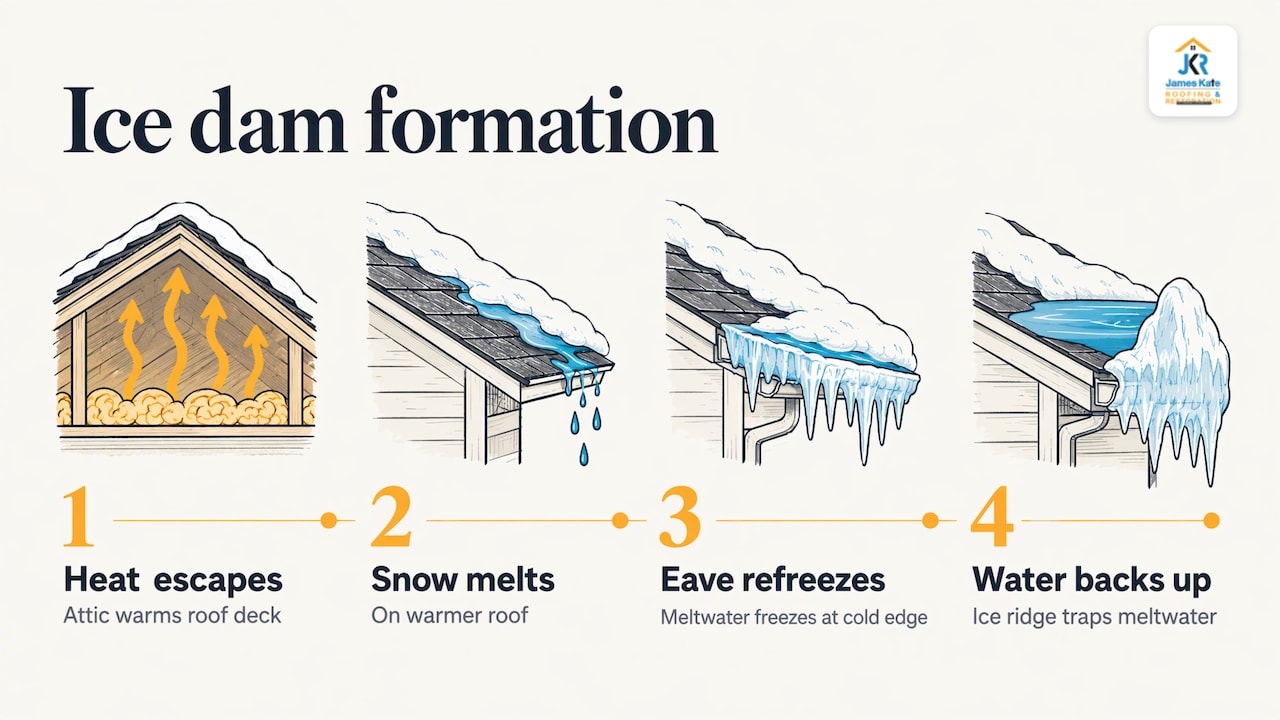
The water that backs up behind the ice can get under shingles. The result is wet sheathing, stained ceilings and walls, damaged insulation and, over time, mold and moisture problems indoors. Army Corps of Engineers researchers add that ice dams and icicles also create heavy, concentrated loads along the eaves, and that meltwater leaking inside can cause serious interior damage.
Sliding snow and ice
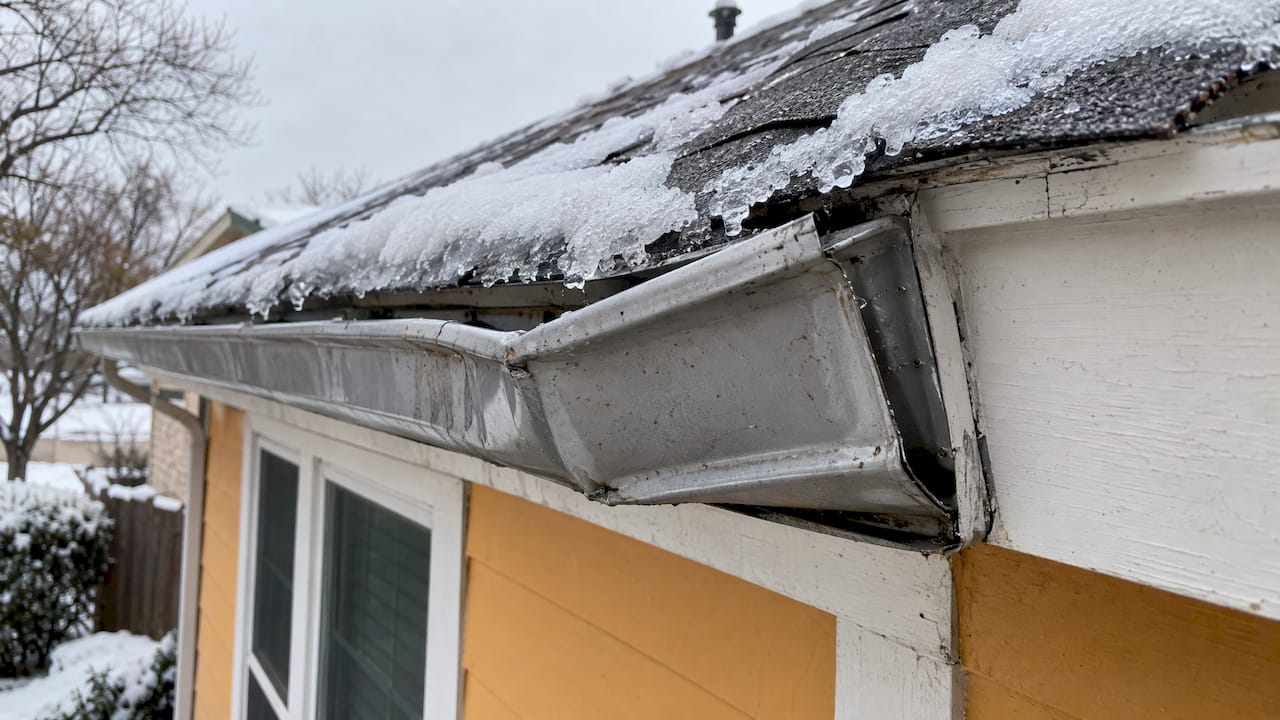
Snow and ice sliding off a slick, sloped roof can tear off gutters, bend the standing seams of a metal roof and drag plumbing vents and other penetrations, creating holes and leaks. The same Army Corps document notes that the falling mass can injure people and damage property as far as 30 feet away from a two-story building. Keep people and cars away from the eaves during a thaw.
Which roofs are most exposed
Massachusetts’ roof-collapse safety page says flat and low-pitched roofs are at the greatest risk of buckling under heavy snow and ice. That is worth knowing in the DFW area, where many commercial buildings have low-slope roofs such as TPO, PVC, modified bitumen or built-up systems. On those roofs, water that pools in low spots and drains slowly adds weight and is a common first sign of trouble. Homes with steeper asphalt shingle roofs shed snow more readily, but they are the ones most likely to suffer from ice dams, lifted shingles and sliding-snow damage to gutters.
Signs of snow damage to look for
Sort what you see into two groups: signs of a structural problem, which are emergencies, and signs of surface or water damage, which need prompt but calmer attention.
Structural warning signs: leave and call for help
FEMA’s guidance lists these signs of a roof under stress:
- Sagging ceiling boards or tiles, or sagging roof members
- Popping, cracking or creaking noises
- Bowing truss members or cracked or split wood framing
- Doors or windows that no longer open or close properly
- New cracks in walls or masonry
- Severe roof leaks
- Excessive water pooling on low-slope roofs where it should not collect
If you notice these, FEMA’s instruction is to evacuate promptly and contact the local building authority or a qualified design professional, such as a licensed Professional Engineer, for a detailed structural inspection. Massachusetts adds that if you suspect a gas leak from falling ice or snow, you should leave without touching light switches and call 9-1-1 from outside. A roofing contractor is not a substitute for the engineer or the emergency service in this situation. Once the building is declared safe, the roofing repair is where we come in.
Surface and water damage signs
These are the ones most North Texas homeowners will actually find after a freeze:
- Missing, cracked or lifted shingles, or shingles with bare spots where granules have washed away
- Bent, loose or cracked flashing around chimneys, vents and walls
- Gutters pulled away from the fascia, or bent downspouts
- Large icicles or ridges of ice along the eaves, a hint that ice dams formed
- Water stains on ceilings, damp insulation or a musty smell in the attic
- Dripping at light fixtures or along exterior walls
Our page on roof warning signs that need immediate attention covers the visible clues in more detail.
Why a roof leaks after snow
Leaks after a snowfall often appear days later, during the melt, not while the snow is falling. There are a few typical reasons.
- Ice dam backup. Meltwater pools behind the ice and is forced up and under shingles, as described above.
- Damaged flashing. Metal flashing seals the joints around chimneys, vents and walls. Sliding snow and ice can bend or loosen it, and water finds the gap.
- Cracked or lifted shingles. Freeze-thaw cycles and heavy loads can break the seal between shingles, particularly on older roofs.
- Torn penetrations. Sliding ice can drag plumbing vents and similar fixtures, opening holes around them.
- Blocked drainage. Gutters and drains packed with ice or debris send water the wrong way, and on low-slope roofs it ponds.
The tricky part is that water travels. A stain on a bedroom ceiling may be several feet from the actual entry point, which is why a trained inspector follows the water trail instead of patching where the stain shows. Our roof leak diagnosis and repair work starts with finding the source.
What to do the moment water gets inside
- Move people and valuables away from the wet area. If the ceiling is bulging, stay out of the room.
- Put a bucket under drips and, if you can do it safely, poke a small hole in a water-filled bulge so it drains in a controlled way.
- Photograph and video the damage before you move anything.
- Turn off power to any area where water is near light fixtures or outlets.
- Call your insurer and a roofer. For fast help with an active leak, our emergency roof repair team is the call to make.
Removing snow and ice: why this is a job for a pro
It is tempting to climb up with a shovel. Don’t. The National Roofing Contractors Association (NRCA) cautions that for safety reasons homeowners should not attempt to remove ice dams or shovel snow off the roof, because doing so can damage the roof covering, flashings and gutters. It also notes that raking from the ground typically leaves snow on higher sections, where ice dams can form above the protective membrane. Urgent buildup is best handled by a professional roofing contractor.
If you must reduce snow load on a low one-story roof from the ground, Massachusetts’ guidance describes using a roof rake, working from the edge upward and leaving 2 to 3 inches of snow so the shingles are not scraped. It also says to keep ladders and tools away from utility wires and never to use blow torches, open flames or electric heating devices on ice. FEMA’s removal guidance goes further for larger roofs: only qualified people, using fall-arrest equipment where applicable, plastic rather than metal tools, and no stockpiling of removed snow. If there is any concern about collapse, stop and evacuate.
Do not melt ice with salt or heat sources that can corrode flashing or burn the roof. And never climb onto a wet, icy roof for any reason.
What a post-freeze roof inspection should cover
Ground-level glances miss most winter damage. A thorough inspection after a freeze checks:
- Roof surface: missing, cracked or lifted shingles, exposed nails, granule loss, and for flat roofs, blisters, tears and ponding
- Flashing and penetrations: chimneys, vents, skylights, wall joints
- Gutters, fascia and drainage: pulled-away gutters, ice damage, clogged drains
- Attic: wet or stained decking, damp insulation, daylight where there should be none, and signs of stress in rafters
- Ventilation and insulation: whether heat escapes into the attic and feeds ice dams
The Building America Solution Center, a Department of Energy-backed resource, recommends checking the attic for cracking, bowing rafters or stress at ridge and soffit connections, and bringing in a structural engineer if you find problems. Our roof damage assessment guide walks through how to check, document and decide.
For homeowners, we offer free roof inspections and estimates. Commercial property owners and managers can book a commercial roof inspection with a free estimate as well. Our storm-damage assessments and hail and wind damage inspections cover the other winter and spring weather that hits North Texas roofs.
Preventing the next round of damage
Prevention before the cold arrives is cheaper than repair after it.
- Inspect before winter. Look for missing or damaged shingles and flashing, ponding on low-slope roofs and water damage in the attic or ceilings. Our winter weather and roof guide and winter maintenance for Arlington roofs lay out a seasonal routine.
- Keep heat out of the attic. Ice dams start with a warm roof deck. The Building America Solution Center notes that simpler roof designs with continuous air and thermal barriers and adequate ventilation minimize ice dam formation. Ice dams are most prevalent where ground snow load exceeds 60 lb/ft², and likely where it exceeds 30 lb/ft², which is far above what most of Texas sees, so in DFW the issue is usually an occasional hard freeze rather than a yearly pattern.
- Keep gutters clear. Clogged gutters hold water that freezes and tugs at the fascia. A seasonal gutter cleaning checklist helps you decide what to handle yourself from the ground and when to bring in help.
- Trim overhanging branches. Ice-loaded limbs snap onto roofs and cause punctures and cracked shingles.
- Maintain, don’t wait. Preventative maintenance catches loose flashing and worn sealant before a freeze finds them. We offer roof maintenance for homes and commercial properties.
Documenting damage and starting an insurance claim
Snow and ice damage can be an insurance matter, but coverage depends on your policy. Amica notes that homeowners insurance may cover sudden, accidental damage from the weight of snow or ice, subject to policy terms, exclusions and deductibles, and that claims can get complicated when damage is tied to wear and tear or lack of maintenance. Read your own policy or ask your agent what it says about snow, ice and collapse.
A practical sequence:
- Make the area safe and take reasonable steps to prevent further damage, such as tarping or draining water.
- Photograph and video the roof (from the ground), ceilings, attic and any damaged belongings before cleanup.
- Call your insurer promptly. NRCA advises gathering your policy or policy number and calling as soon as possible after the event.
- Keep receipts for temporary repairs. NRCA says these are likely reimbursable. The Actuarial Foundation’s insurance guide also advises saving receipts and keeping damaged items until the adjuster has visited.
- Get a roofer’s written findings. If the adjuster’s assessment and the contractor’s differ, NRCA says you may request a reinspection.
Our page on the insurance roof inspection explains what an inspection checks and what it costs. For hail, wind and other storm events, see dealing with roof storm damage.
Repair or replace?
Most snow damage that reaches the shingles is local: a few lifted or cracked shingles, bent flashing, a torn vent boot. Those are repairs. Replacement enters the conversation when the roof is already near the end of its life, when water has soaked large areas of decking, or when structural framing is affected. A roof that was borderline before the freeze may not be worth patching.
That is why the order matters. Get the inspection first, ask for the findings in writing and decide with the facts in hand. We handle roof repairs and roof replacement and installation for homes, and our residential replacements come with a transferable 15-year workmanship warranty. For commercial properties, we do commercial roof repairs and commercial roof replacement across low-slope systems such as TPO, PVC, modified bitumen and built-up roofing, plus commercial roof coatings.
Why we think a licensed roofer should look first
Snow damage is deceptive. The roof can look fine from the driveway while flashing is bent, a vent boot is torn and the decking above the garage is slowly getting wet. By spring, a small repair has become a ceiling and insulation problem.
Our view is simple: have a qualified roofer inspect the roof before you decide anything. A good inspection tells you what is damaged, what is not and what can wait. We are a GAF Master Elite® contractor, and we hold the GAF President’s Club Award and IKO Craftsman Premier Contractor status. We put that experience into clear, written findings so you understand your roof and feel secure about what comes next.
We also think roof work should not be a guessing game for you. Our inspections and estimates are free, and our residential replacements carry a transferable 15-year workmanship warranty. If you have an active leak, call us, and use the structural warning signs above as your cue to evacuate and call 9-1-1 first.
Dustin Eatman
Get your roof checked after a freeze
If you have stains, sagging gutters, lifted shingles or a leak that appeared during a thaw, book a free inspection and estimate with James Kate Roofing & solar. We serve homeowners, property managers and commercial owners across Dallas-Fort Worth and the surrounding counties, and our storm-damage assessments and hail and wind inspections are available alongside repair, replacement and maintenance.

For a home, start with our residential inspection page. For emergencies, see our emergency roofing services.
FAQ
Can snow really collapse a roof in Texas?
It is uncommon, but not impossible, especially for flat or low-pitched roofs, older buildings and structures with drifting or ponding. Most North Texas damage from a freeze is leaks, lifted shingles and pulled gutters rather than collapse. If you see sagging, new ceiling cracks, creaking or sticking doors, leave and call 9-1-1.
Why does my roof leak after snow melts?
Usually because meltwater has found a path under shingles or around flashing. Ice dams push water backward under the roof covering, and sliding ice can bend flashing or tear vent boots. The stain inside is often some distance from the real entry point, so an inspection should trace the water to its source.
Should I shovel snow off my roof?
No. NRCA advises homeowners not to shovel snow or remove ice dams themselves because of fall risk and the damage it can do to shingles, flashing and gutters. If there is urgent buildup or you are concerned about the structure, contact a professional roofing contractor.
Does homeowners insurance cover snow and ice roof damage?
Often, sudden and accidental damage from the weight of snow or ice can be covered, subject to your policy’s terms, exclusions and deductible. Damage that looks like wear and tear or lack of maintenance can complicate a claim. Photograph the damage, call your insurer promptly and keep receipts for temporary repairs.
Sources
- FEMA P-957 Snow Load Safety Guidance
- Minimizing the Adverse Effects of Snow and Ice on Roofs (U.S. Army Corps of Engineers)
- What Causes Ice Dams? (Mass.gov)
- Roof Collapse and Snow Removal Safety Information (Mass.gov)
- Roof Repair After a Snowstorm (NRCA)
- Managing Snow Loads on Roofs and Decks (Building America Solution Center)
- Construct Roofs and Attics for Ice Dam Prevention (Building America Solution Center)
- Roof Collapse From Snow: Prevention Tips (Amica)
- Actuarial Foundation Insurance Guide
Recommended
- Spotting Roof Damage After a Storm: Key Signs
- Dealing With Roof Storm Damage: Steps to Take
- Wind Damage to Your Roof: Signs, Repairs and Next Steps
- Early Signs of Roof Damage to Look Out For

Dustin Eatman is a seasoned roofing professional with deep, hands-on expertise that spans residential and commercial roofing, insurance solar, and long-term roof asset management. As the owner of James Kate Roofing & solar in the Dallas–Fort Worth metroplex, he’s built a reputation for diagnosing roof systems accurately, communicating clearly, and executing projects with a high standard of workmanship and documentation. Dustin understands the technical details that make roofs perform—proper underlayment selection, slope and drainage considerations, ventilation strategy, flashing and penetration detailing, and manufacturer-specific installation requirements—because he’s worked through the real-world challenges that cause leaks, premature wear, and warranty issues. He’s equally fluent in the operational side of roofing: jobsite planning, quality control, safety, material ordering, crew coordination, and customer experience from inspection to closeout. In insurance-related projects, Dustin brings practical knowledge of claim workflows, adjuster meetings, scope alignment, supplements, and the importance of photo evidence and thorough records, helping property owners navigate stressful situations with confidence. For commercial clients—especially property and facility managers—he emphasizes proactive maintenance and targeted repairs that reduce disruption, extend roof life, and prevent expensive interior damage. Dustin also stays focused on doing things the right way: educating customers on realistic options, setting expectations, and prioritizing solutions that hold up over time rather than quick fixes. That blend of technical skill, field experience, process discipline, and owner-level accountability is what makes Dustin Eatman a trusted expert in the roofing industry.