What Is EPDM Rubber Coating — and Do You Actually Need It?
EPDM rubber coating is a liquid-applied sealant used to waterproof, restore, and extend the life of rubber roofing membranes — without tearing off and replacing the entire roof.
Here’s a quick answer if you’re trying to decide whether it’s right for you:
| Question | Quick Answer |
|---|---|
| What does it do? | Seals leaks, blocks UV rays, and waterproofs your roof |
| Who needs it? | Owners of flat or low-slope roofs with aging EPDM membranes |
| How long does it last? | Typically 18-20+ years depending on product type |
| Can I DIY it? | Yes for small RV or shed roofs — commercial roofs need a pro |
| What does it cost? | Roughly $1.32/sq ft in materials for commercial applications |
EPDM (ethylene propylene diene monomer) is the same synthetic rubber used in flat roofing membranes across commercial buildings everywhere. When that membrane starts to age, crack, or leak, a liquid coating can restore it for a fraction of what a full replacement costs. In fact, studies show that 65% of roof replacements happen because of leaks — many of which could have been caught and coated early.
If your flat roof is showing its age, this guide walks you through exactly how to choose and apply the right coating system.
I’m Dustin Eatman, owner of James Kate Roofing & solar in the Dallas–Fort Worth area, and I’ve spent years diagnosing and restoring commercial flat roofs — including aging EPDM rubber coating systems where the right liquid coating made the difference between a $2,000 fix and a $20,000 replacement. Let’s break down everything you need to know so you can make a confident, informed decision.
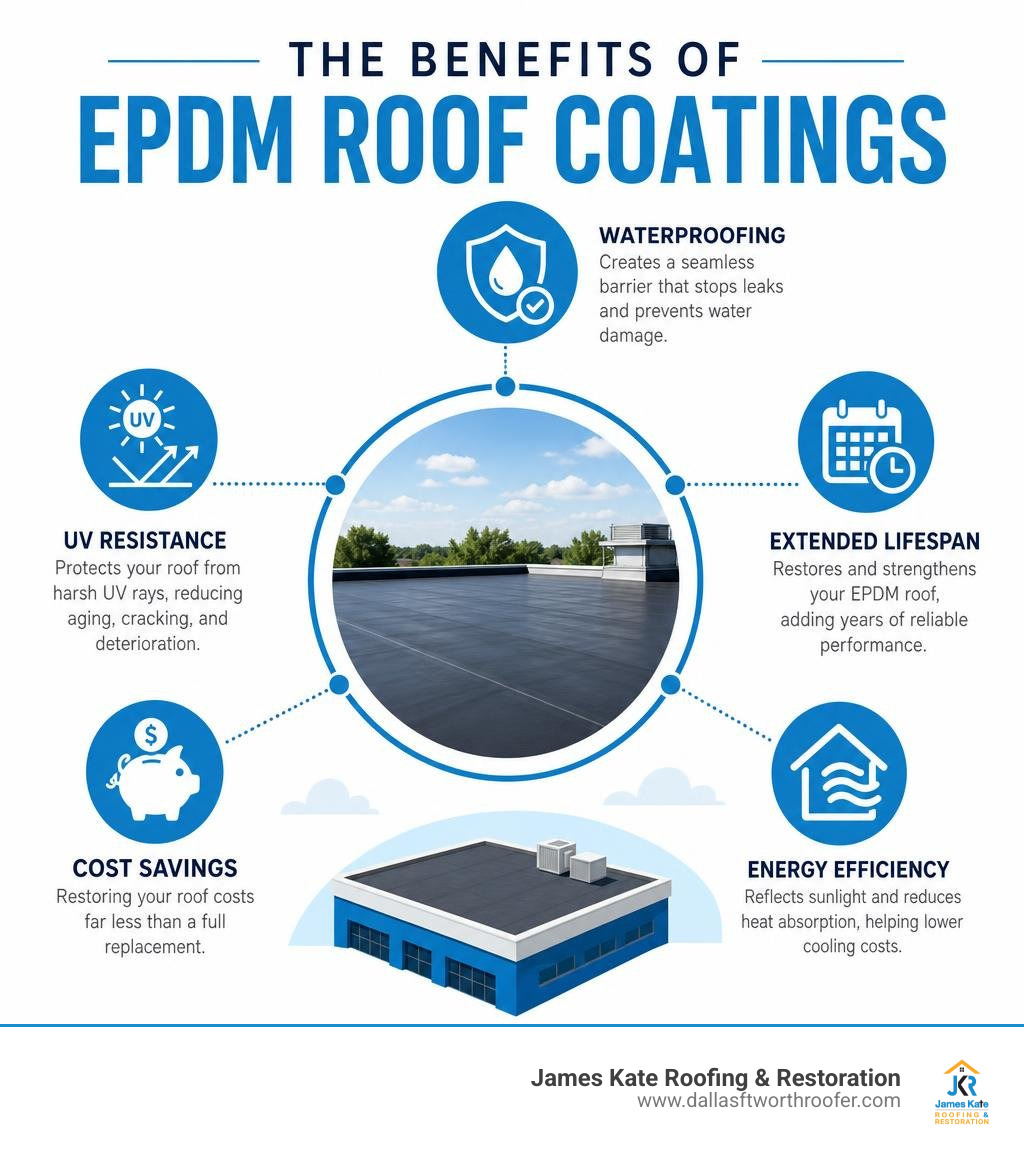
Quick look at epdm rubber coating:
Understanding EPDM Rubber Coating: Types and Benefits
Before we dive into the application process, let’s look at what this material actually is. EPDM stands for ethylene propylene diene monomer, which is a fancy, scientific way of saying “incredibly tough synthetic rubber.” It is highly resistant to extreme temperatures, ozone, and UV rays, which is why it is the go-to material for flat roofs from Mansfield to Grand Prairie.
When installed as a solid sheet, EPDM is a highly reliable membrane. You can learn more about its heavy-duty industrial counterparts in this guide on EPDM Rubber Sheet UK | 1.5–25mm Cut to Size | Weather Resistant . However, when that solid sheet begins to age, it loses its essential oils, starts to shrink, and can develop micro-cracks. This is where a liquid epdm rubber coating comes in to save the day.
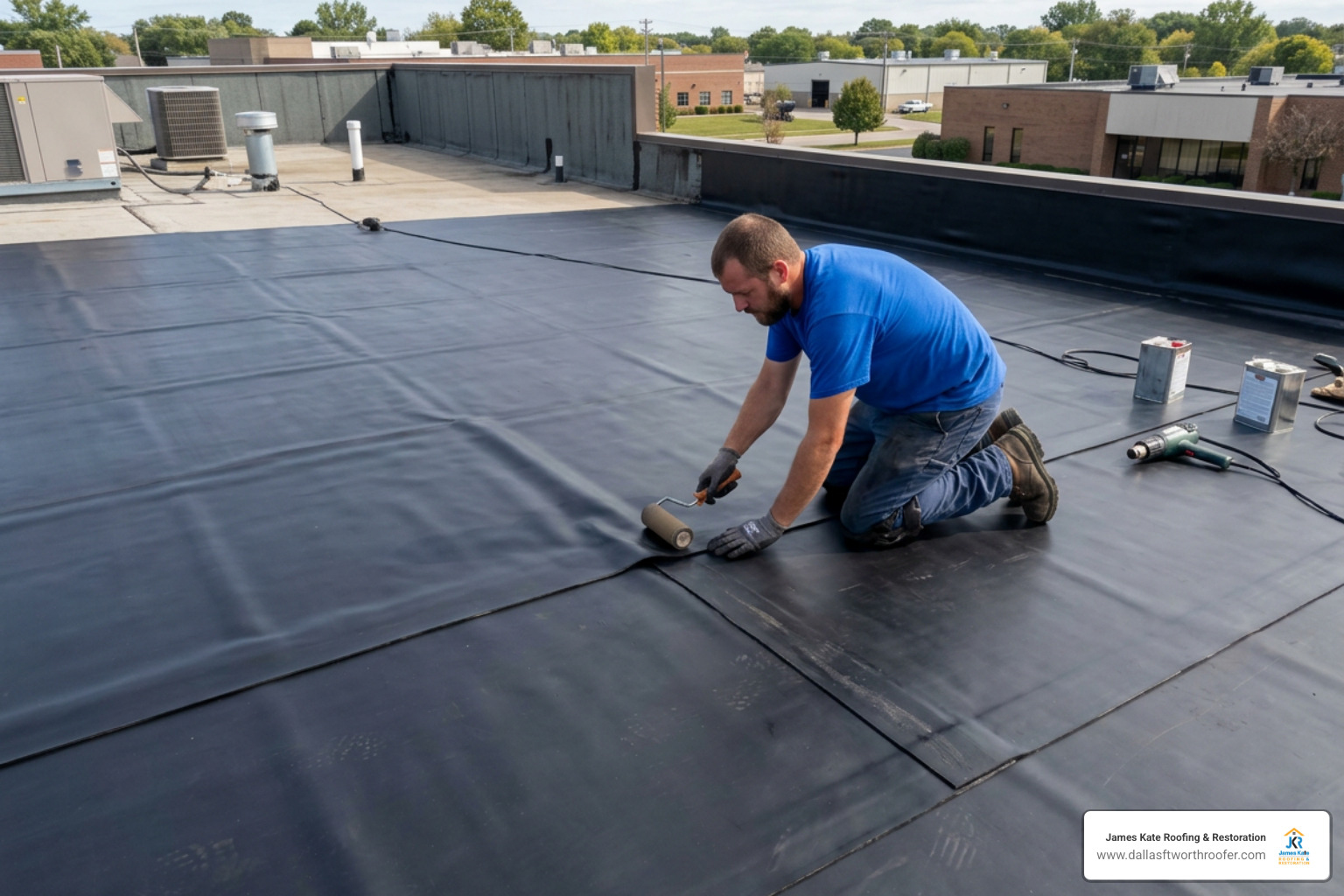
Applying a liquid coating creates a seamless, fully adhered barrier that acts as a protective shield over your existing roof. Instead of paying for a massive tear-off and replacement, you can apply a liquid membrane that chemically fuses with the existing rubber. If you are curious about how this fits into the broader world of roof maintenance, check out The Complete Guide to Roof Coating.
Liquid Butyl Rubber vs. Acrylic Elastomeric
When shopping for an epdm rubber coating, you will quickly find yourself choosing between different chemical families. The two most common are solvent-based liquid butyl rubber and water-based acrylic elastomeric coatings.
- Liquid Butyl Rubber (Solvent-Based): This is often considered the gold standard for restoring EPDM. Because it is solvent-based, it actually undergoes a process called chemical cross-linking. When applied, it chemically bonds with the original EPDM membrane, essentially fusing into a single, thicker sheet of rubber. It can be applied up to three times thicker than acrylics (often creating a 20-mil film in a single coat) and is highly resistant to ponding water. It withstands temperatures from -40°F to 250°F and can extend your roof’s life by 18 to 20 years. To learn more about this heavy-duty option, take a look at Superior Coat | Butyl Liquid Rubber .
- Acrylic Elastomeric (Water-Based): Acrylic coatings are water-based, highly reflective, and generally more budget-friendly upfront. They are excellent at reflecting solar heat, which helps lower cooling bills during hot Texas summers in Arlington and Midlothian. However, because they are water-based, they cure through evaporation. They require at least two coats (applied at a rate of 1 gallon per 125 square feet per coat) and do not handle ponding water well. If water sits on an acrylic coating for more than a few days, the coating can re-emulsify and peel away.
Silicone EPDM Rubber Coating Solutions
Silicone has exploded in popularity over the last few years, and for good reason. A 100% silicone elastomeric coating provides unmatched UV protection and is completely unaffected by ponding water.
While acrylics degrade under standing water, silicone forms a completely moisture-cured, watertight seal that can handle permanent standing water without breaking down. Products like the EPDM Rubber Roof Signature Extended Life Silicone Coating Part 2 – 1 Gallon, White are highly rated for their exceptional adhesion and weather resistance on rubber roofs.
Silicone coatings also have incredibly high solids content (often 95% or higher), meaning very little of the product evaporates as it cures. What you roll onto the roof is almost exactly the thickness you get when it dries. If you want to compare silicone with other waterproofing options, read our analysis on Don’t Get Drenched: The Best Waterproof Paint for Flat Roofs.
Application Guide: How to Apply EPDM Roof Coatings
Applying a liquid rubber coating is a highly detailed process. If you rush it, skip steps, or ignore the weather forecast, your expensive coating will bubble, peel, or wash away in the next DFW thunderstorm. Let’s walk through how to do it right.
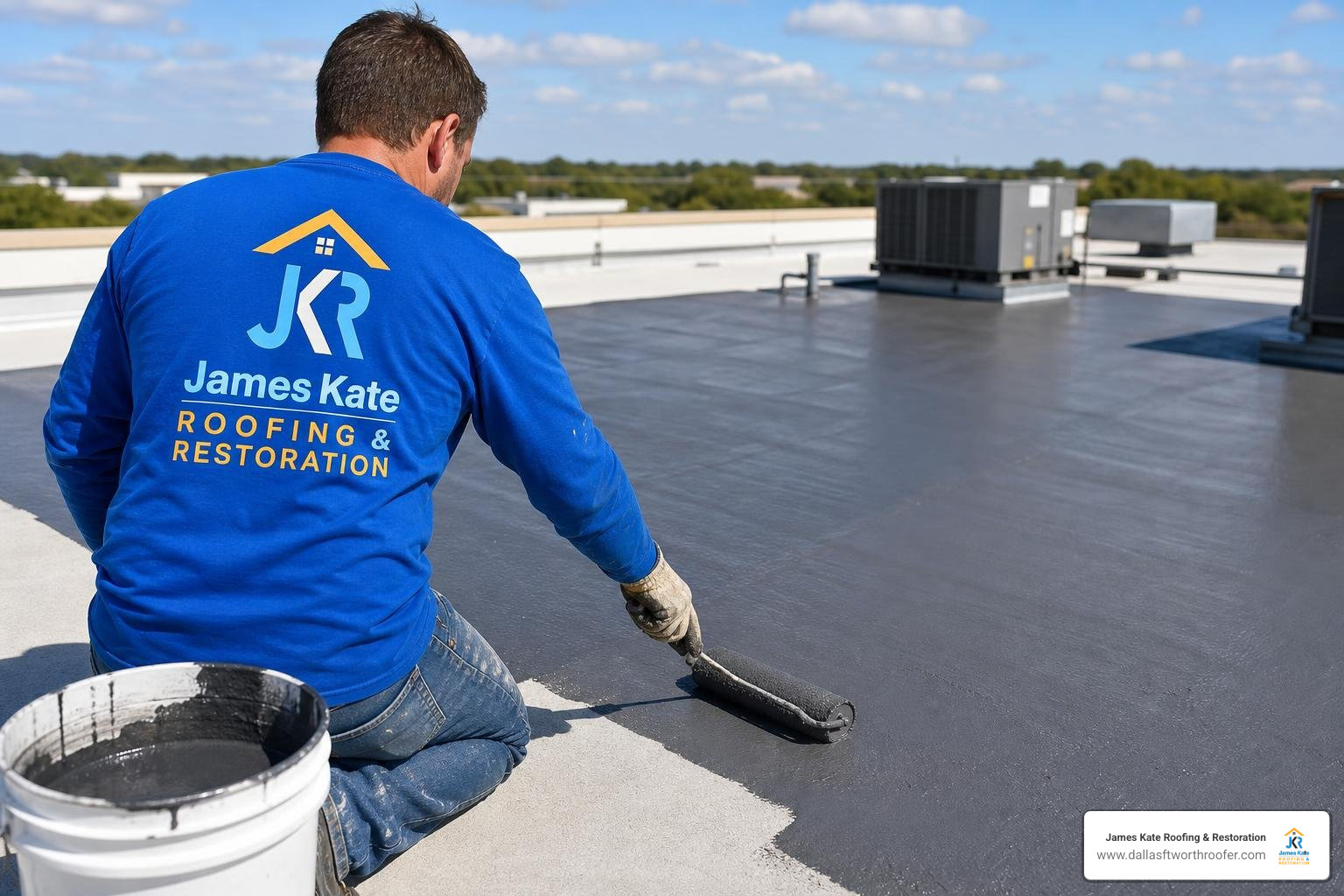
If you want to dive deeper into how these commercial-grade systems are engineered, you can explore the technical resources at EPDM Coatings – Fix Roof Leaks For A Fraction Of The Cost! .
Preparing the Surface for EPDM Rubber Coating
We tell our clients in Granbury and Mansfield the same thing: 90% of a coating’s success happens before you ever open a can of paint. If you paint over dirt, chalky residue, or oils, the coating will bond to the dirt instead of the roof, leading to rapid peeling.
- Thorough Cleaning: Start by sweeping away all loose debris. Next, use a specialized EPDM cleaner or an industrial-strength biodegradable detergent. Pressure washing is highly recommended for commercial roofs, but keep the pressure moderate (around 1,500 to 2,000 PSI) to avoid tearing aged rubber.
- Addressing the Chalk: Aged EPDM naturally develops a black or gray carbon dust (chalking) on its surface. You must scrub the roof until this chalky residue is completely gone. If you wipe your hand across the dry roof and it comes away black, it is not ready for coating.
- Seaming and Patching: Inspect all seams, flashing, and penetrations. Seal any loose seams or gaps using heavy-duty butyl seam tape or a polyester reinforcing fabric embedded in a thick layer of liquid sealant.
- Applying Primer: Some coatings require a dedicated primer or “activator” to help the topcoat stick. For example, acrylic coatings on EPDM almost always require a chemical cleaner/activator primer first. Once applied, this primer often leaves a slightly tacky finish—this is completely normal and is designed to chemically pull the topcoat into a tight bond.
Step-by-Step Coating Application Process
Once your surface is dry, clean, and primed, you are ready to apply the epdm rubber coating.
- Check the Weather: You need a clear window. For water-based coatings, ensure there is no rain, heavy dew, or freezing temperatures expected for at least 24 to 48 hours. For solvent-based butyl rubber, the coating can withstand light rain within 2 to 3 hours, but it still requires temperatures above 50°F to cure properly.
- Mix Thoroughly: Use a power drill mixer attachment to stir the coating for at least 5 minutes. The heavy solids tend to settle at the bottom of the pail, and manual stirring with a wooden stick simply won’t cut it.
- Application Method: Use a 3/8-inch nap roller or commercial airless spray equipment. If rolling, work in manageable sections.
- Achieve the Right Mil Thickness: Apply the product uniformly. If you apply it too thin, it won’t provide adequate waterproofing or UV protection. If you apply it too thick in a single pass (especially with acrylics), it will skin over on top while remaining wet underneath, leading to mud-cracking and bubbling.
| Coating Type | Coverage Rate (per Gal) | Required Coats | Wet Film Thickness (per coat) | Full Cure Time | Ponding Water Resistance |
|---|---|---|---|---|---|
| Liquid Butyl Rubber | 50 sq. ft. | 1 coat | 20 mils | 8-10 hours | Excellent |
| Acrylic Elastomeric | 125 sq. ft. | 2 coats | 12-15 mils | 24-48 hours | Poor |
| Silicone Coating | 80-100 sq. ft. | 1-2 coats | 15-20 mils | 4-8 hours | Excellent |
Performance, Lifespan, and Climate Considerations
The climate in the Dallas–Fort Worth metroplex is notoriously brutal on roofs. We experience scorching summer days where roof temperatures can easily exceed 150°F, followed by sudden, violent spring thunderstorms and occasional winter freezes.
This constant temperature swing causes flat roofs to expand and contract rapidly—a phenomenon known as thermal shock. An epdm rubber coating must have high elongation properties (often 200% to 500%) to stretch and contract along with the building without cracking or tearing. Additionally, choosing a bright white coating is highly beneficial in Texas. White coatings offer excellent solar reflectance, keeping your roof surface significantly cooler and reducing your building’s energy consumption. You can read more about this in our article Energy Saving Roof Coating: Why White is the New Green.
Longevity and Maintenance of EPDM Coatings
A professionally applied liquid rubber coating can easily extend the life of your flat roof by 18 to 20 years. However, this is not a “set it and forget it” solution. To get the maximum lifespan out of your investment, you must perform regular preventive maintenance.
We recommend inspecting your roof at least twice a year—once in the spring and once in the fall. Look for any physical damage from wind-blown debris, check that your drains and scuppers are free of leaves, and inspect the seams around HVAC units. If you spot a small tear or puncture, it can easily be patched with a small amount of liquid sealant before it turns into a major leak. For a complete look at how to manage a commercial roof over its entire life cycle, check out our Commercial Roof Complete Guide 2026.
Frequently Asked Questions about EPDM Roof Coatings
To help you make the best decision for your property, here are answers to some of the most common questions we hear from building owners in Mansfield, Arlington, and Grand Prairie.
How much coverage can I expect from a gallon of EPDM coating?
Coverage rates vary significantly depending on the chemistry of the product you choose.
- Liquid Butyl Rubber is highly viscous and designed for heavy-duty protection; one gallon typically covers 50 square feet to achieve a thick, durable 20-mil membrane.
- Acrylic Elastomeric coatings are thinner; one gallon typically covers 125 square feet per coat, but keep in mind that these systems always require a minimum of two coats to perform properly.
- Silicone coatings generally cover between 80 to 100 square feet per gallon.
Do I need a primer before applying EPDM coatings?
It depends on the product. Many high-end solvent-based liquid butyl rubber coatings do not require a primer because they chemically fuse directly to clean EPDM. However, water-based acrylic coatings almost always require a dedicated cleaner/activator primer to ensure proper adhesion. Without this primer, acrylic coatings are highly prone to peeling off the rubber membrane over time.
What are common customer complaints or application issues?
The most common complaints we see are peeling, bubbling, and cracking. In almost every single case, these issues are caused by poor installation practices rather than product failure:
- Peeling: Usually caused by skipping the cleaning phase or applying the coating over carbon dust (chalking).
- Bubbling: Often caused by trapped moisture under the membrane or applying the coating on a damp roof.
- Cracking: Typically happens when water-based coatings are applied too thick in a single pass, or when the coating is exposed to freezing temperatures before it has fully cured.
Conclusion
Restoring your flat roof with a high-quality epdm rubber coating is one of the smartest, most cost-effective decisions you can make as a property owner. By sealing leaks, enhancing UV resistance, and restoring flexibility to aging rubber, you can bypass the massive disruption and high cost of a full roof replacement.
However, commercial flat roofs require professional expertise to ensure the surface is prepped perfectly, the right primers are used, and the coating is applied to the exact mil thickness required for a long-lasting seal.
At James Kate Roofing & solar, we are proud to serve our local communities across Mansfield, Arlington, Granbury, Grand Prairie, and Midlothian. We build our business on honesty, integrity, and Biblical principles, backed by our elite GAF President’s Club recognition and workmanship warranties of up to 25 years.
If you are trying to decide whether to coat your roof or if it is time for a full replacement, we can help. Learn more about your options in our guide to Getting Your Commercial Flat Roof Replaced, or take the first step toward securing your property today and Schedule a Professional Roof Consultation with our expert team!
Dustin Eatman is a seasoned roofing professional with deep, hands-on expertise that spans residential and commercial roofing, insurance solar, and long-term roof asset management. As the owner of James Kate Roofing & solar in the Dallas–Fort Worth metroplex, he’s built a reputation for diagnosing roof systems accurately, communicating clearly, and executing projects with a high standard of workmanship and documentation. Dustin understands the technical details that make roofs perform—proper underlayment selection, slope and drainage considerations, ventilation strategy, flashing and penetration detailing, and manufacturer-specific installation requirements—because he’s worked through the real-world challenges that cause leaks, premature wear, and warranty issues. He’s equally fluent in the operational side of roofing: jobsite planning, quality control, safety, material ordering, crew coordination, and customer experience from inspection to closeout. In insurance-related projects, Dustin brings practical knowledge of claim workflows, adjuster meetings, scope alignment, supplements, and the importance of photo evidence and thorough records, helping property owners navigate stressful situations with confidence. For commercial clients—especially property and facility managers—he emphasizes proactive maintenance and targeted repairs that reduce disruption, extend roof life, and prevent expensive interior damage. Dustin also stays focused on doing things the right way: educating customers on realistic options, setting expectations, and prioritizing solutions that hold up over time rather than quick fixes. That blend of technical skill, field experience, process discipline, and owner-level accountability is what makes Dustin Eatman a trusted expert in the roofing industry.