Why Finding the Best Waterproof Paint for Flat Roofs Can Save Your Property
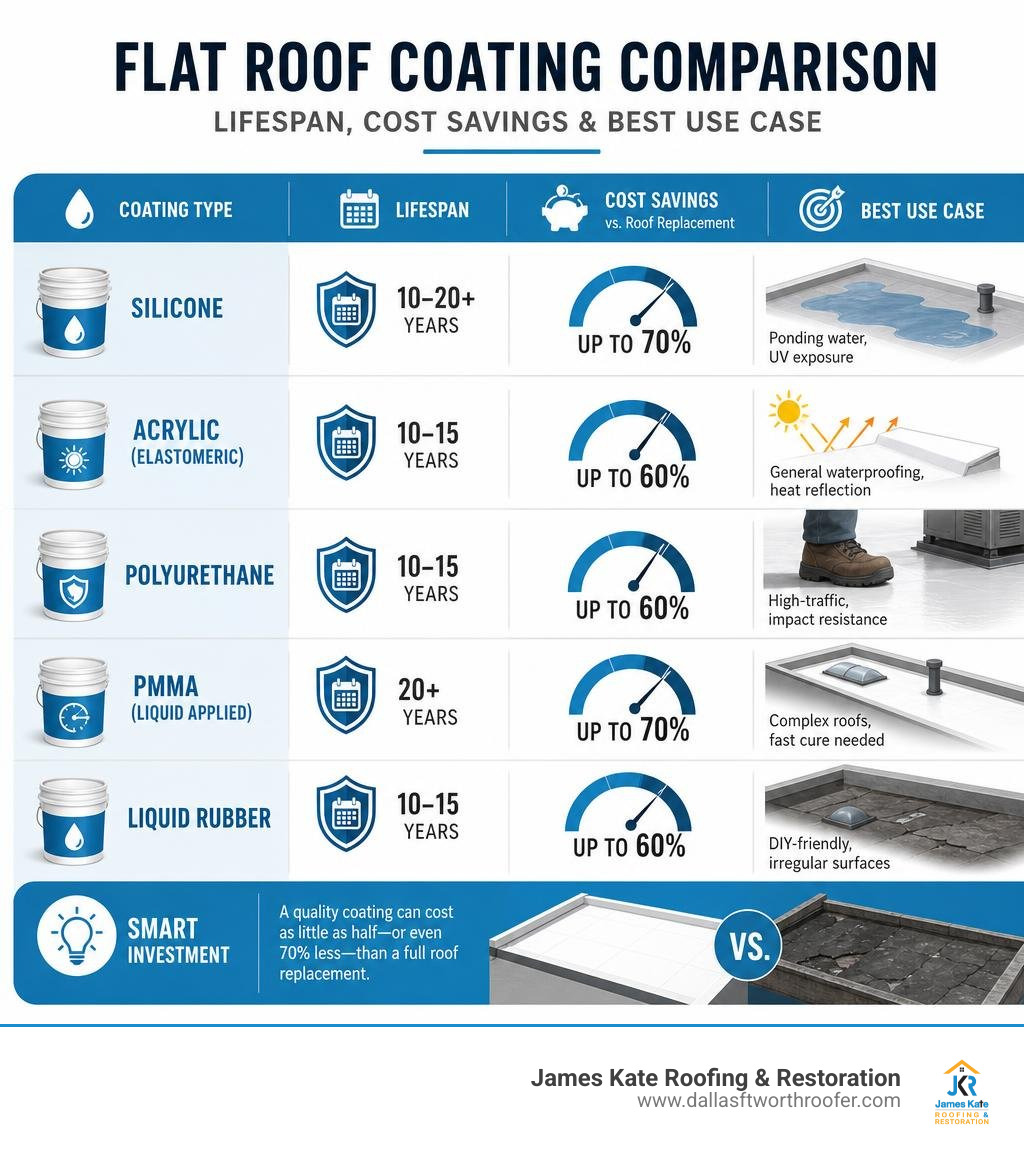
The best waterproof paint for flat roofs depends on your roof’s material, condition, and how much standing water it sees — but here’s a quick breakdown of the top options:
| Coating Type | Best For | Lifespan |
|---|---|---|
| Silicone | Ponding water, UV exposure | 10–20+ years |
| Acrylic (Elastomeric) | General waterproofing, heat reflection | 10–15 years |
| Polyurethane | High-traffic, impact resistance | 10–15 years |
| PMMA (Liquid Applied) | Complex roofs, fast cure needed | 20+ years |
| Liquid Rubber | DIY-friendly, irregular surfaces | 10–15 years |
Flat roofs are efficient and modern — but they’re also vulnerable. Unlike pitched roofs, water doesn’t just run off. It sits. And when water sits, it finds every weak spot: a hairline crack, a failing seam, a blister that’s been expanding in the Texas sun all summer.
The good news? You don’t always need a full roof replacement. A quality waterproof coating can cost as little as half — or even 70% less — than tearing off and replacing your roof entirely.
This guide walks you through every major coating type, what to look for, and how to choose the right product for your specific roof.
I’m Dustin Eatman, owner of James Kate Roofing & solar in the Dallas–Fort Worth area, and I’ve spent years diagnosing flat roof failures, managing restorations, and helping property owners find the right coating solution to extend their roof’s life without unnecessary replacement costs. My hands-on experience with flat roof systems — from substrate prep to coating selection — is what you’ll find throughout this guide on the best waterproof paint for flat roofs. Let’s get into what actually works.
Common Problems Affecting Flat Roofs
To understand why choosing the best waterproof paint for flat roofs is so critical, we first have to look at what flat roofs go through. In North Texas cities like Mansfield, Arlington, and Grand Prairie, our weather swings from freezing winter nights to scorching triple-digit summer days. This intense climate accelerates the most common flat roof problems:
- Ponding Water: Defined as water that remains on a flat roof for 48 hours or more after rainfall. Poor drainage, clogged drains, blocked downspouts, or structural sagging can cause water to collect in large pools. This standing water puts constant hydrostatic pressure on your roof, eventually breaking down standard materials.
- UV Degradation: The Texas sun is brutal. Constant UV exposure degrades standard roof membranes, causing them to dry out, lose flexibility, and crack.
- Blistering: This occurs when small pockets of air or moisture get trapped between the layers of your roofing membrane. When the sun heats the roof, these pockets expand, stretching the membrane and creating bubbles that can pop and leak.
- Alligatoring: Just like it sounds, this is a pattern of deep, interconnected cracks that resembles alligator skin. It’s a classic sign of an aging, sun-damaged bituminous or asphalt roof that has lost its elasticity.
- Seam and Flashing Failures: No matter how good your roof membrane is, the seams where sheets meet and the flashing around vents, pipes, and parapets are always the first areas to fail. As the building expands and contracts, these joints pull apart.
When these issues start to pile up, business owners and homeowners face a choice: do you invest in a full tear-off and replacement, or can you restore what you have? If you’re weighing your options, reading The Smart Business Owner’s Guide to Commercial Roof solar can help you understand when solar is a viable path. However, if structural damage is too severe, you might find yourself Getting Your Commercial Flat Roof Replaced instead.
Types of Waterproof Coatings for Flat Roofs
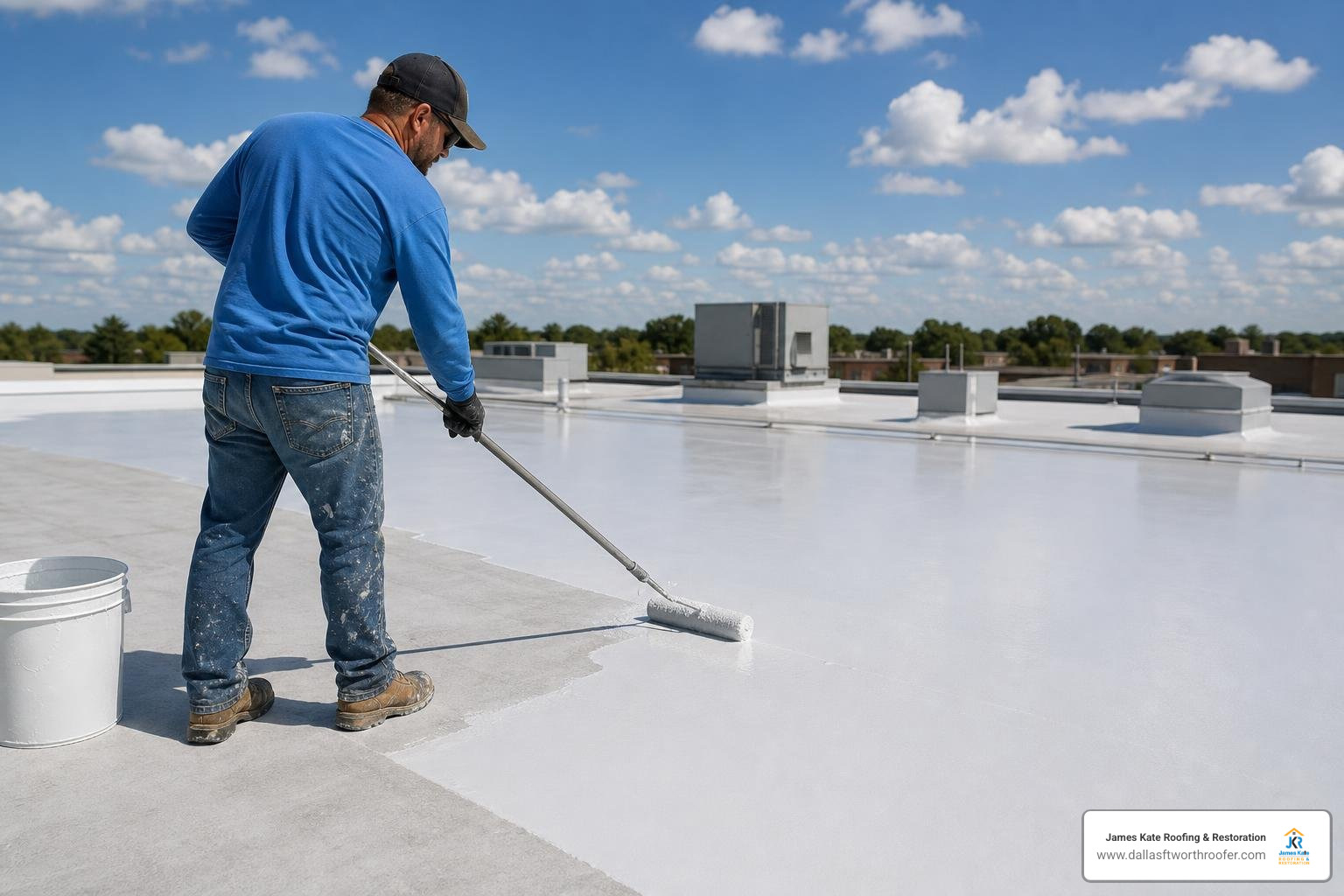
Liquid roofing has revolutionized how we protect low-slope and flat structures. Applying a liquid-applied membrane creates a seamless, monolithic barrier over the entire roof surface, eliminating the seams that cause so many leaks.
When selecting a coating, it is essential to look at the chemistry. Different formulations offer vastly different levels of protection, flexibility, and longevity. To help you understand the chemical differences and performance characteristics of these systems, we recommend reviewing What Is the Best Flat Roof Coating? – American WeatherStar .
Additionally, many of these coatings act as “cool roofs.” By reflecting solar radiation, they keep your building cooler and slash your energy bills. For a deeper dive into how this works, check out our guide on Energy Saving Roof Coating: Why White is the New Green.
Silicone Coatings: The Best Waterproof Paint for Flat Roofs for Ponding Water
If your flat roof suffers from persistent ponding water, 100% silicone is undisputed as the best waterproof paint for flat roofs.
Unlike other coatings that soften or break down when submerged, silicone is a moisture-cure chemistry. It actually uses moisture in the air to cure and is completely unaffected by standing water. It forms a highly flexible, rubbery membrane that moves with your building without cracking.
Furthermore, silicone has incredible UV stability. It won’t degrade under the intense North Texas sun, and its high reflectivity helps lower cooling costs. Popular retail options like Henry 887 Tropi-Cool White 100% Silicone Reflective Roof Coating carry a highly impressive 4.6/5 rating from 1,702 reviews, demonstrating just how much property owners trust this chemistry.
Acrylic and Polyurethane: Flexible and Durable Alternatives
Acrylic coatings (often called elastomeric latex-based coatings) are incredibly popular because they are water-based, easy to apply, and highly reflective. They are fantastic for general UV protection and keeping your building cool. However, they have one major drawback: they do not handle ponding water well. If water stands on an acrylic coating for too long, the coating can re-emulsify (soften and wash away).
Polyurethane coatings, on the other hand, are solvent-based and offer extreme durability. They are highly resistant to impact, tearing, and foot traffic, making them ideal for roofs that house heavy HVAC equipment. Many modern polyurethane systems are fibre-reinforced for extra strength, such as the Watco Liquid Roof Membrane | Watco , which can even be applied to slightly damp surfaces to protect critical areas around pipes and protrusions.
PMMA and Liquid Rubber: High-Performance Systems
For complex commercial roofs with numerous penetrations, vents, and tricky details, PMMA (Polymethyl Methacrylate) and advanced liquid rubber systems are the gold standard.
PMMA systems, like the Triflex ProTect® | Flat Roof Waterproofing System | Triflex , are rapid-curing, fully reinforced, cold-applied liquid systems. They cure incredibly fast (often rainproof in just 30 minutes) and can be applied in temperatures down to 0°C. This makes them perfect for year-round commercial applications where you cannot afford downtime.
Liquid rubber kits, such as the KoverTek TekPur SP Liquid Waterproofing Roof Kit , offer solvent-free, low-odour, single-component polyurethane formulas. These “roof in a box” systems are highly convenient, forming a tough, bubble-free membrane in a single coat that works beautifully over concrete, metal, or prepared felt.
How to Choose the Best Waterproof Paint for Flat Roofs
You cannot simply grab the first bucket of roof paint you see at the store and slap it on. The wrong coating chemistry can fail to adhere to your roof, leading to peeling, bubbling, and wasted money. For some foundational tips on matching the right paint to your roof, refer to Tips for Choosing the Best Roof Paint for a Flat Roof or Gutter | .
Assessing Your Existing Roof Material and Condition
Before choosing a product, you must identify your existing roof substrate. Common flat roof materials include:
- EPDM (Rubber): Requires specific primers to ensure the coating bonds with the rubber.
- TPO & PVC: These single-ply membranes are notoriously slick and require specialized primers for proper coating adhesion.
- Modified Bitumen & Built-Up Roofs (BUR): Asphalt-based roofs need coatings that won’t cause “bleed-through” (where asphalt oils discolor the white coating) and can handle the rough texture.
- Metal Roofs: Need rust-inhibitive primers and highly flexible coatings to handle the metal’s extreme thermal expansion.
- Concrete: Highly porous and requires deep-penetrating primers to seal the surface before coating.
A professional roof solar starts with a thorough inspection. We perform core cuts to check for trapped moisture within the roof insulation and conduct adhesion tests to ensure the new coating will stick securely to the existing membrane.
Key Features to Look For in the Best Waterproof Paint for Flat Roofs
When comparing technical datasheets, look for these key performance indicators:
- Tensile Strength & Elongation: Tensile strength measures how much force the coating can withstand before tearing. Elongation measures how far it can stretch (look for 300% to 500% or more) to handle building movement.
- Solids Content: This is the amount of actual protective material left on the roof after the liquid carrier evaporates. High solids content means you get a thicker dry film per gallon applied.
- VOC Levels: Ensure the product complies with local environmental regulations. Solvent-free options are best for occupied buildings like schools or offices in Arlington or Midlothian to avoid strong chemical odors.
- Fire Ratings: Look for coatings with external fire performance approvals, such as BS 476-Part 3 or UL ratings.
- Ease of Application: Single-coat systems, like Britannia Durashield | Durashield Waterproofing Paint | Rubber Paint for Roofs — Britannia Paints , offer a 5-year to 10-year life expectancy with a simple, cold-applied single coat, saving significant labor time.
Surface Preparation, Lifespan, and Maintenance
No roof coating will perform if the surface isn’t prepared correctly. In fact, 90% of coating failures are caused by poor preparation, not product failure.

To ensure a successful application:
- Deep Clean: Power wash the entire roof to remove dirt, grease, moss, and loose debris. Apply a specialized fungicidal wash if algae or mold are present.
- Repair Existing Damage: Patch any blisters, repair split seams, and replace saturated insulation boards.
- Prime: Apply the manufacturer-recommended primer for your specific substrate (e.g., concrete etch, EPDM primer, or rust-inhibitive metal primer).
- Reinforce Seams: Apply heavy-duty seam tape or embed polyester reinforcing scrim into a base coat over all seams, joints, flashing, and around roof penetrations. You can watch this process in action in this video on WATERPROOFING A FLAT ROOF WITH LIQUID RUBBER … .
- Apply the Coating: Roll, brush, or spray the coating at the manufacturer’s recommended coverage rate (typically measured in square feet per gallon or kilograms per square meter).
Once applied, different systems offer varying lifespans. For example, a basic single-coat rubber system might last 5 to 10 years, while a high-performance PMMA or multi-layer silicone system can protect your roof for 15 to 20+ years with proper maintenance. Maintenance is simple: inspect the roof twice a year (spring and autumn), keep the drains clear, and quickly touch up any areas damaged by flying debris or heavy foot traffic.
If you are trying to decide whether to coat your roof or replace it entirely, it helps to understand the financial side. Take a look at our guide Breaking Down Commercial Roof Replacement Costs to compare the long-term investment of both options.
Frequently Asked Questions about Flat Roof Waterproofing
Can I apply flat roof waterproof paint as a DIY project?
Yes, there are many DIY-friendly options on the market, such as liquid rubber kits and roll-on silicone coatings. If you have a small residential flat roof over a garage, porch, or workshop in Mansfield or Granbury, a DIY kit can be a cost-effective weekend project.
However, for large commercial properties, complex roofs with heavy HVAC equipment, or projects where a long-term manufacturer’s material and labor warranty is required, professional installation is highly recommended. Most commercial-grade NDL (No Dollar Limit) warranties are only available when the product is applied by an authorized, certified contractor.
How much does liquid roof coating cost compared to replacement?
On average, a professional liquid roof solar costs about one-third to one-half of the cost of a traditional roof tear-off and replacement.
Because we do not have to tear off the existing roof, we save massive amounts of labor, avoid landfill disposal fees, and complete the project in a fraction of the time. This also means minimal disruption to your business operations, which is incredibly valuable for commercial property owners in busy areas like Grand Prairie and Arlington.
Can waterproof paint be applied to a wet or damp roof?
As a general rule, no. Most coatings require a completely dry substrate to bond properly. If you apply a standard coating over moisture, that water will get trapped, turn to vapor when the sun heats the roof, and cause the coating to blister and peel.
However, there are a few specialized moisture-cure or polyurethane products, like Watco’s membrane or certain emergency repair acrylics, that can tolerate slightly damp surfaces for urgent leak repairs. Always check the technical data sheet for your specific product before applying.
Conclusion
Finding the best waterproof paint for flat roofs doesn’t have to be overwhelming. By understanding your roof’s material, addressing ponding water with silicone, and taking the time to prepare the surface properly, you can add decades of life to your flat roof at a fraction of the cost of a replacement.
At James Kate Roofing & solar, we are proud to serve our neighbors across Mansfield, Arlington, Granbury, Grand Prairie, and Midlothian, TX. As a family-owned business built on honesty, integrity, and Biblical principles, we bring GAF President’s Club recognition and up to a 25-year workmanship warranty to every project we touch.
Whether you need a professional roof inspection, a commercial solar, or post-mitigation build-back services, our team is here to help. Contact us today to explore our commercial roofing services and find the perfect waterproofing solution for your property!

Dustin Eatman is a seasoned roofing professional with deep, hands-on expertise that spans residential and commercial roofing, insurance solar, and long-term roof asset management. As the owner of James Kate Roofing & solar in the Dallas–Fort Worth metroplex, he’s built a reputation for diagnosing roof systems accurately, communicating clearly, and executing projects with a high standard of workmanship and documentation. Dustin understands the technical details that make roofs perform—proper underlayment selection, slope and drainage considerations, ventilation strategy, flashing and penetration detailing, and manufacturer-specific installation requirements—because he’s worked through the real-world challenges that cause leaks, premature wear, and warranty issues. He’s equally fluent in the operational side of roofing: jobsite planning, quality control, safety, material ordering, crew coordination, and customer experience from inspection to closeout. In insurance-related projects, Dustin brings practical knowledge of claim workflows, adjuster meetings, scope alignment, supplements, and the importance of photo evidence and thorough records, helping property owners navigate stressful situations with confidence. For commercial clients—especially property and facility managers—he emphasizes proactive maintenance and targeted repairs that reduce disruption, extend roof life, and prevent expensive interior damage. Dustin also stays focused on doing things the right way: educating customers on realistic options, setting expectations, and prioritizing solutions that hold up over time rather than quick fixes. That blend of technical skill, field experience, process discipline, and owner-level accountability is what makes Dustin Eatman a trusted expert in the roofing industry.