
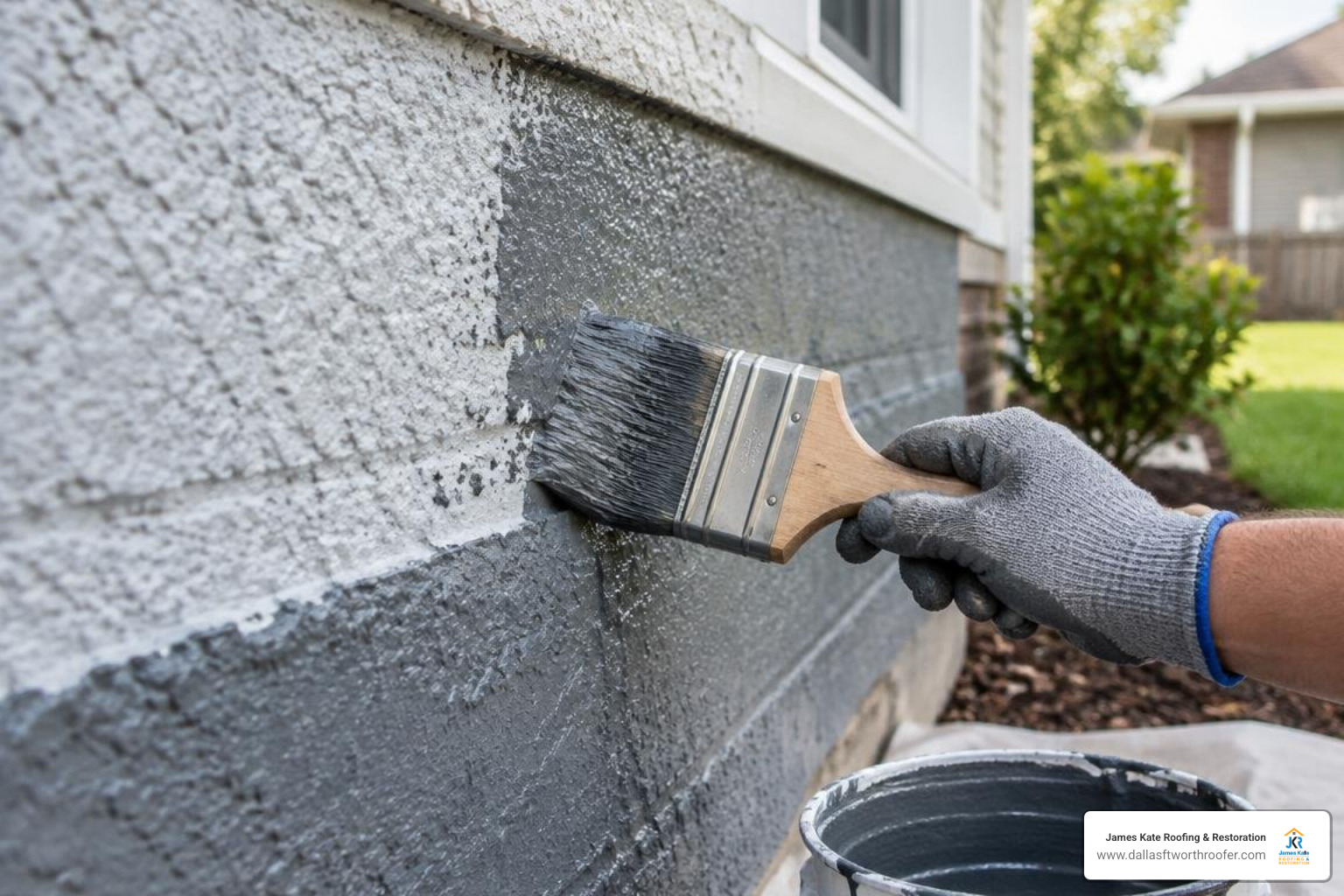
How to Choose Waterproofing Paint for Your Surface
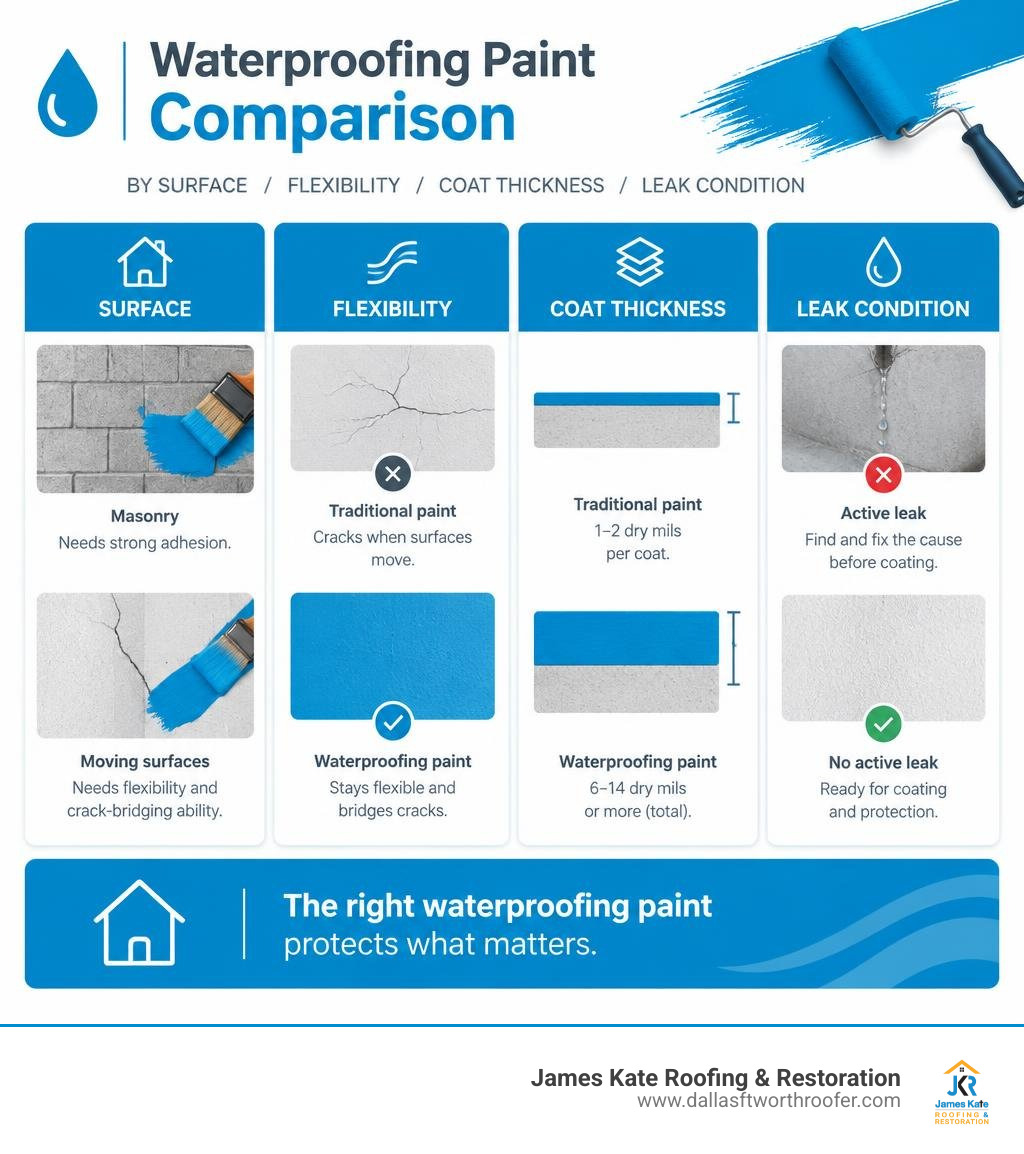
Waterproofing paint creates a moisture barrier that standard paint does not. To compare options, start with the surface: masonry coatings need strong adhesion, while coatings for surfaces that move need flexibility and crack-bridging ability. Then check the required coat thickness, number of coats, and warranty. If water is actively leaking, find and fix the cause before coating.
I’m Dustin Eatman, owner of James Kate Roofing & solar in the Dallas-Fort Worth area. My work diagnosing roof leaks and evaluating protective systems shapes how I compare waterproofing paint options and their application requirements.
Understanding Waterproofing Paint vs. Traditional Exterior Coatings
When protecting a building envelope, standard exterior paint and specialty waterproof barriers serve completely different engineering purposes. Standard acrylic house paint is primarily cosmetic. It provides color and basic shielding against mild weather, but it dries into a very thin, brittle film that micro-cracks when structural substrates expand and contract during North Texas temperature swings.
Waterproofing paint, by contrast, is formulated with dense polymer resins, high solids content, and specialized binders designed to hold back moisture penetration and withstand significant hydrostatic or wind-driven water pressure. While regular paint might dry to a thickness of only 1 to 2 dry mils per coat, high-performance waterproof coatings build a substantial membrane—often reaching 6 to 14 mils of dry film thickness (DFT) or more across multiple coats.
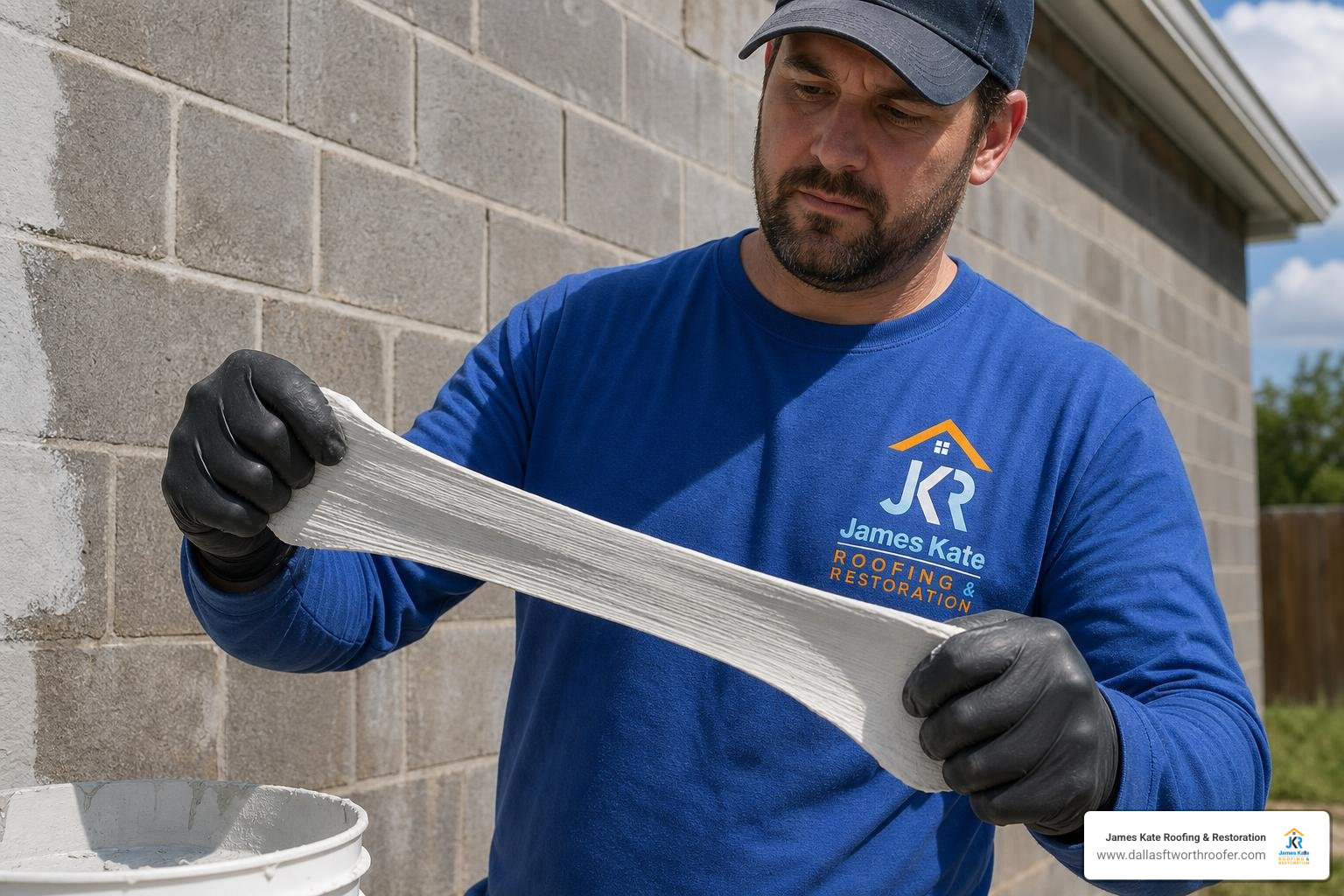
A critical factor in exterior building performance is vapor permeability. A high-quality waterproofing barrier stops liquid water from entering the substrate while remaining breathable enough to let trapped water vapor escape. If moisture cannot escape a concrete wall or exterior envelope, it builds pressure behind the coating, resulting in bubbling, blistering, and premature delamination. When evaluating protective systems, comparing commercial roof coating types for long-term protection helps illustrate how high-solids elastomeric films bridge dynamic cracks compared to standard surface coatings.
| Feature / Metric | Standard Exterior Acrylic Paint | Elastomeric Waterproofing Paint |
|---|---|---|
| Primary Purpose | Color aesthetics and mild UV protection | Monolithic moisture barrier and liquid water stop |
| Typical Dry Film Thickness (DFT) | 1.0 – 2.0 mils per coat | 6.0 – 15.0+ mils per coat |
| Elasticity & Elongation | 20% – 50% (Rigid, low flex) | 100% – 400%+ (High dynamic flexibility) |
| Crack Bridging | Fails over hairline fractures | Bridges active hairline cracks (up to 1/16″) |
| Wind-Driven Rain Resistance | Minimal (Prone to moisture intrusion) | Certified under ASTM D6904-3 / TTC-555B |
| Solids Content by Volume | 25% – 35% | 45% – 65%+ |
Comparing Common Formulations and Substrates
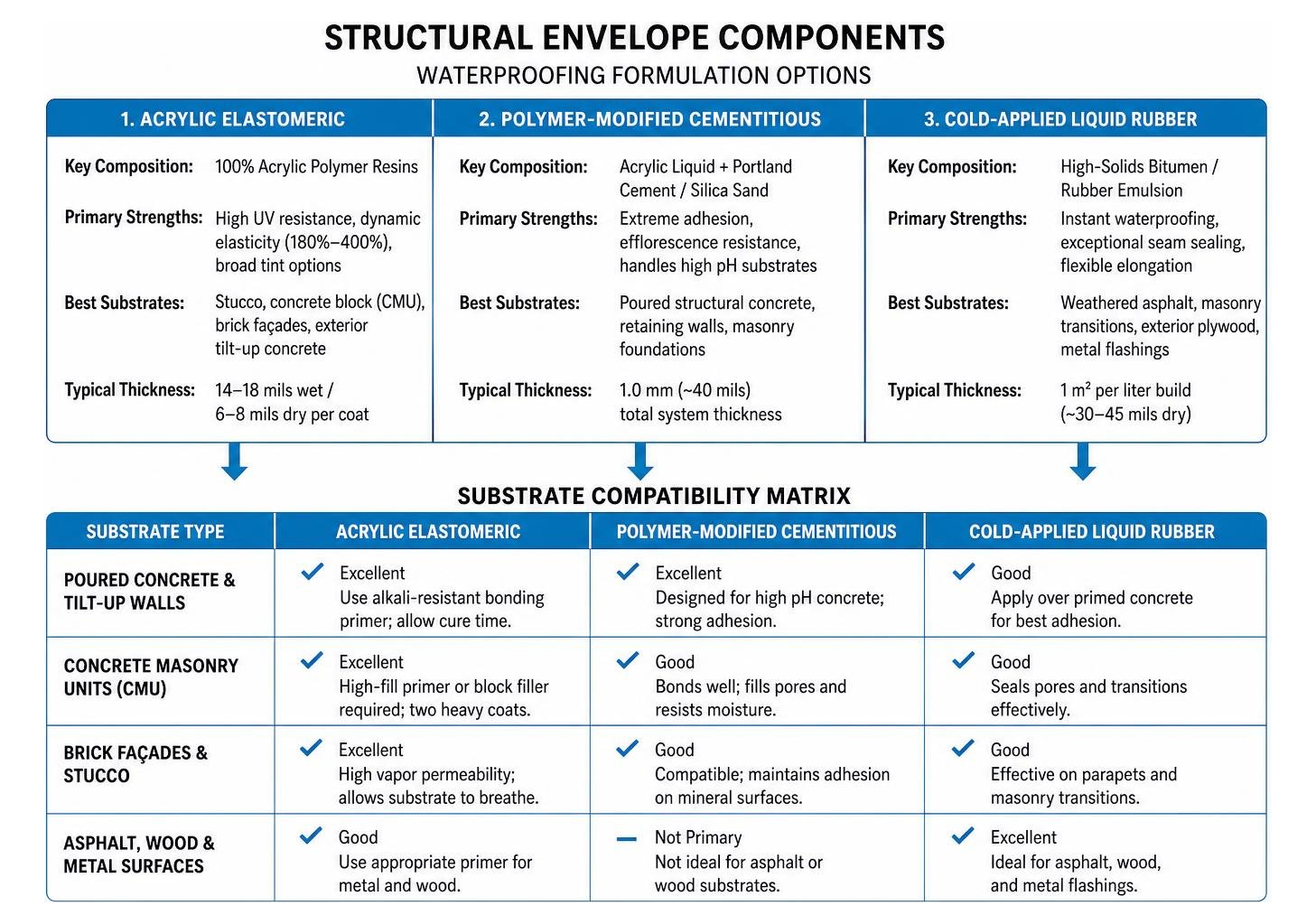
Different exterior projects demand specific chemical formulations to ensure proper adhesion, durability, and resistance to environmental stress. The three most common formulations in the industry are 100% acrylic elastomeric coatings, polymer-modified cementitious coatings, and cold-applied liquid rubber membranes.
- Acrylic Elastomeric Paints: These are liquid-applied coatings made from high-grade acrylic resins. They offer exceptional UV stability, high color retention, and severe wind-driven rain resistance. Formulations like Permalok High Performance Waterproofing Coating are engineered to pass strict testing benchmarks such as ASTM D6904-3 and Federal Specification TTC-555B, ensuring moisture will not penetrate even during hurricane-force, wind-driven storms.
- Polymer-Modified Cementitious Coatings: Products like Nerolac Perma Super 2K blend synthetic acrylic emulsions with rapid-hardening cementitious powders. These create rigid-to-semi-flexible crystalline barriers that bond tenaciously to unsealed concrete, resisting heavy dampness and preventing mineral efflorescence.
- Cold-Applied Liquid Rubber / Elastomeric Systems: High-build solutions such as Durashield provide a seamless, heavy-duty barrier. They are cold-applied without hot torches or specialized kettles, delivering a tough, rubberized seal over exterior parapets, wood, metal, and masonry transitions.
| Formulation Type | Key Chemical Composition | Primary Strengths | Best Substrates | Typical Application Thickness |
|---|---|---|---|---|
| Acrylic Elastomeric | 100% Acrylic Polymer Resins | High UV resistance, dynamic elasticity (180%–400%), broad tint options | Stucco, concrete block (CMU), brick façades, exterior tilt-up concrete | 14–18 mils wet / 6–8 mils dry per coat |
| Polymer-Modified Cementitious | Acrylic Liquid + Portland Cement / Silica Sand | Extreme adhesion, efflorescence resistance, handles high pH substrates | Poured structural concrete, retaining walls, masonry foundations | 1.0 mm (~40 mils) total system thickness |
| Cold-Applied Liquid Rubber | High-Solids Bitumen / Rubber Emulsion | Instant waterproofing, exceptional seam sealing, flexible elongation | Weathered asphalt, masonry transitions, exterior plywood, metal flashings | 1 m² per liter build (~30–45 mils dry) |
Key Performance Metrics for Waterproofing Paint
When reviewing technical data sheets for commercial or residential exterior waterproofing projects, four core technical metrics determine real-world performance:
- Elongation and Tensile Strength: Elongation measures how far a coating can stretch before breaking. High-performance exterior coatings exhibit elongation ratings ranging from 100% up to 400%. For example, Murfill Waterproofing Coating provides up to 400% elasticity to absorb structural movement without cracking. Tensile strength ensures the material does not tear when pulled across thermal expansion joints.
- Crack-Bridging Ability: As concrete masonry units (CMU) and stucco expand during hot Texas summers and contract during winter cold snaps, hairline fractures form. High-build coatings must bridge these micro-cracks without rupturing the membrane.
- Volume Solids Content: Higher volume solids indicate more protective material left on the surface once the water or solvent evaporates. Coatings with 47% to 50% solids by volume (and over 60% by weight) deliver the high build required to plug deep masonry voids.
- VOC Compliance: Modern building codes require low volatile organic compound (VOC) levels to ensure environmental safety and worker health. Advanced European coatings often drop below 25 g/L, while many domestic formulations maintain VOC levels below 100 g/L.
Substrate Compatibility for Structural Envelopes
Applying waterproofing paint requires understanding how the product interacts with different structural materials:
- Poured Concrete & Tilt-Up Walls: Dense poured concrete often has a smooth surface that requires mechanical profiling or an alkali-resistant bonding primer. New concrete must cure for a minimum of 30 days before painting, though specialized acrylic coatings can be applied after 7 days if they tolerate substrate pH levels up to 13.
- Concrete Masonry Units (CMU): Cinder blocks and CMU walls are highly porous and full of pinholes. They require high-fill primers or block fillers, followed by two heavy coats of masonry waterproofing paint yielding an aggregate coverage of 75 to 125 square feet per gallon.
- Brick Façades & Stucco: Brick and stucco breathe naturally, so any applied coating must have high vapor permeability to avoid trapping internal moisture. Using proven elastomeric roof coatings a smart alternative to commercial roofing solutions on structural parapets and transitions prevents water from bypassing masonry walls entirely.
Preparation and Application Best Practices
A waterproofing paint system is only as durable as the substrate preparation underneath it. Even the highest-grade elastomeric membrane will fail if applied over dirt, chalking paint, efflorescence, or wet concrete.
- Substrate Inspection and Testing: Inspect the entire exterior surface for loose mortar, spalling concrete, or peeling layers. Perform a tape adhesion test by pressing duct tape firmly onto the old paint and ripping it away; if paint flakes pull off, the previous coating must be scraped, wire-brushed, or pressure-washed off.
- Cleaning and Decontaminating: Power-wash surfaces thoroughly using appropriate cleaning detergents to eliminate chalk, dirt, airborne grease, and surface mildew. If efflorescence (white crystalline salt deposits) is present, scrub the area with an efflorescence remover or a mild masonry cleaning acid, then rinse thoroughly and allow to dry.
- Patching Structural Defects: Voids, bug holes, and stationary cracks larger than 1/16-inch must be routed out and filled with fast-setting hydraulic cement or a flexible polyurethane sealant. Smooth out transitions flush with the masonry face.
- Moisture and pH Verification: Never apply waterproofing paint to a wet surface. Substrate moisture levels should ideally read below 12% to 15% on a commercial moisture meter. Ensure the substrate pH matches the coating’s technical specifications (typically pH 7 to 10, or up to 13 for alkali-resistant acrylics).
- Priming: Unsealed, chalky, or highly porous masonry should receive a dedicated acrylic masonry primer to consolidate the surface and equalize absorption before the topcoats are applied.
How to Apply Waterproofing Paint on Exterior Surfaces
Applying heavy-bodied waterproof paint is distinct from running standard interior emulsion. The goal is to build a pinhole-free, continuous protective membrane across every square inch of the substrate.
- Essential Application Tools: Use heavy 1/2-inch to 1-1/2-inch nap synthetic roller covers to force paint deep into porous textured masonry. For large commercial surfaces, use high-output airless spray equipment (minimum 0.021-inch to 0.031-inch spray tips at 2,000+ PSI) equipped with a piston pump. Keep a wet film thickness (WFT) gauge on hand to verify adequate mil build during application.
- Never Thin the Material: Never dilute waterproofing paints with excess water or solvents unless specifically directed by the manufacturer (such as a 2% to 5% mist for specific spraying conditions). Thinning lowers the dry film thickness and compromises the waterproofing membrane.
- Strict Two-Coat Minimum: Achieving full wind-driven rain resistance always demands a minimum of two full coats. The first coat fills porous masonry pores, while the second coat seals microscopic pinholes and builds required tensile strength.
- Adhering to Recoat Schedules: Observe ambient and surface temperature guidelines (generally between 50°F and 90°F). Products like Masonry Waterproofer Paint | BEHR DryPlus™ | Behr Pro dry to the touch in approximately 1 hour at 77°F, but require at least 4 hours before applying the second coat. Full curing requires 7 to 14 days of mild weather.
Frequently Asked Questions About Waterproofing Paint
Can waterproofing paint be applied over active water leaks?
No, waterproofing paint cannot be applied over active water leaks. Liquid coatings need clean, dry, stable substrates to form a chemical and mechanical bond. If water is actively seeping through a wall, the hydrostatic pressure pushes the wet coating away from the pores, preventing it from curing and causing instant bubbling or wash-out.
Active water ingress must be resolved at the source first. For localized pressurized leaks through masonry cracks or wall penetrations, chisel out the fissure into an inverted “V” shape and seal it immediately with fast-setting hydraulic cement. Once water flow stops and the surface dries completely, apply the waterproofing paint system to seal the surrounding envelope.
How long does waterproofing paint last on exterior masonry?
On vertical exterior masonry walls, a properly applied two-coat waterproofing paint system typically lasts between 7 and 12 years before requiring a maintenance recoat. Longevity depends heavily on sunlight exposure, substrate preparation, and film build thickness. High-grade systems like Durashield offer 5-year protection on a single coat over primer, expanding to 10+ years with a fully built-up multi-coat application.
Reviewing the ultimate guide to roof coating provides helpful context on how elastomeric technologies resist continuous thermal cycling, ponding water, and UV radiation over decade-long service lives.
What is the difference between above-grade and below-grade waterproofing?
The key difference lies in the type of water pressure the coating must resist:
- Above-Grade Waterproofing: Protects exterior walls, parapets, and building façades situated above ground level. These coatings are engineered to combat wind-driven rain, intense UV degradation, and thermal expansion while allowing internal moisture vapor to escape through breathable microscopic pores.
- Below-Grade Waterproofing: Protects structural foundations that sit beneath the soil line. These systems must resist constant positive or negative hydrostatic pressure exerted by surrounding wet soil. Below-grade positive-side waterproofing uses heavy elastomeric or modified bituminous membranes applied to the exterior face before backfilling, stopping ground moisture before it ever touches structural concrete.
Conclusion
Protecting your property’s exterior envelope requires an uncompromising approach to substrate evaluation, material selection, and proper application technique. Standard exterior house paint cannot replace a true, high-solids waterproofing membrane when it comes to stopping wind-driven rain and moisture migration through porous masonry.
At James Kate Roofing & solar, our team serves property owners across Mansfield, Arlington, Grand Prairie, Midlothian, and Granbury with dependable roofing and envelope solutions built on craftsmanship, honesty, and integrity. Whether you are dealing with weathered masonry or exploring durable protective coating options for exterior metal and masonry, selecting the right high-performance system safeguards your property against structural deterioration for years to come. Contact our expert team today to schedule an on-site structural evaluation and protect your building envelope against Texas weather.

Dustin Eatman is a seasoned roofing professional with deep, hands-on expertise that spans residential and commercial roofing, insurance solar, and long-term roof asset management. As the owner of James Kate Roofing & solar in the Dallas–Fort Worth metroplex, he’s built a reputation for diagnosing roof systems accurately, communicating clearly, and executing projects with a high standard of workmanship and documentation. Dustin understands the technical details that make roofs perform—proper underlayment selection, slope and drainage considerations, ventilation strategy, flashing and penetration detailing, and manufacturer-specific installation requirements—because he’s worked through the real-world challenges that cause leaks, premature wear, and warranty issues. He’s equally fluent in the operational side of roofing: jobsite planning, quality control, safety, material ordering, crew coordination, and customer experience from inspection to closeout. In insurance-related projects, Dustin brings practical knowledge of claim workflows, adjuster meetings, scope alignment, supplements, and the importance of photo evidence and thorough records, helping property owners navigate stressful situations with confidence. For commercial clients—especially property and facility managers—he emphasizes proactive maintenance and targeted repairs that reduce disruption, extend roof life, and prevent expensive interior damage. Dustin also stays focused on doing things the right way: educating customers on realistic options, setting expectations, and prioritizing solutions that hold up over time rather than quick fixes. That blend of technical skill, field experience, process discipline, and owner-level accountability is what makes Dustin Eatman a trusted expert in the roofing industry.