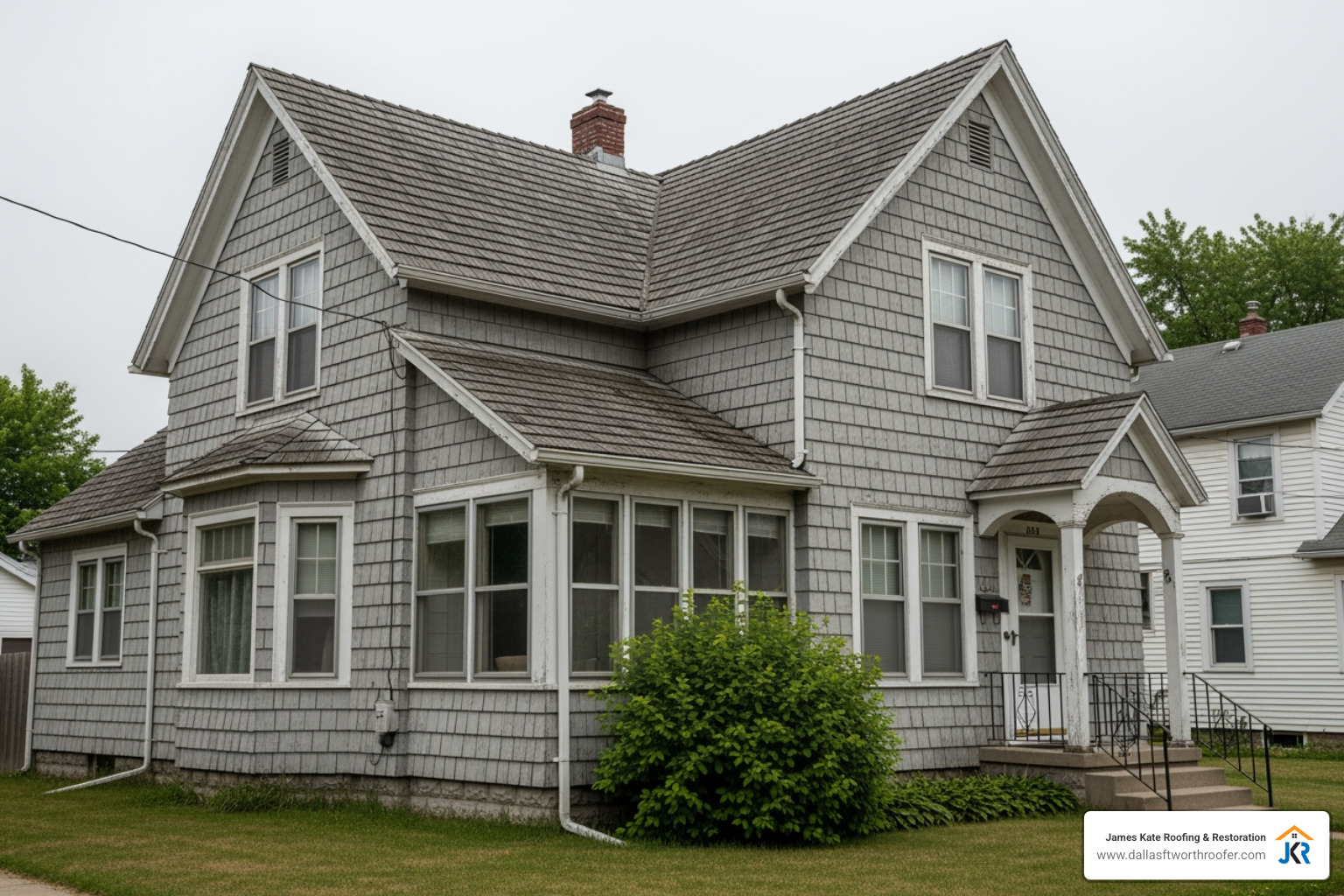
What Homeowners Need to Know About Asbestos Shingles
Asbestos shingles are rigid roofing and siding panels made by mixing asbestos fibers — most commonly chrysotile — into a cement or asphalt base. They were widely used on American homes from the 1920s through the early 1980s.
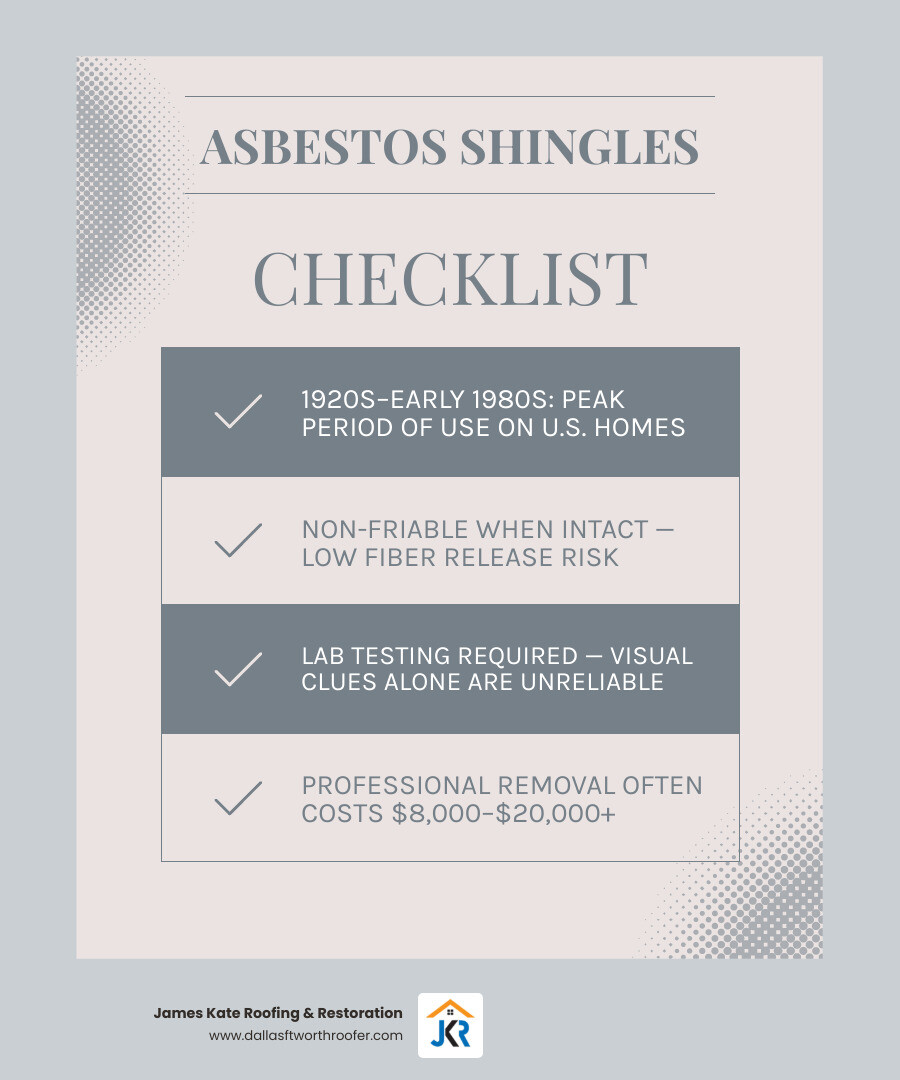
Quick answer for homeowners:
| Question | Short Answer |
|---|---|
| Are they dangerous right now? | Usually not, if intact and undisturbed |
| How do I know if I have them? | Home built before 1985 + professional lab test |
| Do I need to remove them? | Not always — condition determines the decision |
| Can I remove them myself? | Rarely legal; almost always risky |
| What’s the cost to remove? | $8,000–$20,000+ depending on home size |
If your home was built before 1985, there’s a real chance your roof or siding contains asbestos-containing materials (ACM). The key word is disturbed — intact shingles are classified as non-friable, meaning they don’t readily release fibers. But cracked, broken, or weathered shingles are a different story.
This guide walks you through everything you need to make smart, safe decisions — from identifying suspect materials to understanding your legal options in Texas and beyond.
I’m Dustin Eatman, owner of James Kate Roofing & solar in the Dallas–Fort Worth area, and over my career I’ve inspected and managed numerous older roofing systems where asbestos shingles were a real consideration that shaped the entire project plan. Whether you’re facing a re-roof, a home purchase, or just an aging exterior, the sections below will give you a clear path forward.
What Are Asbestos Shingles and Where Were They Used?
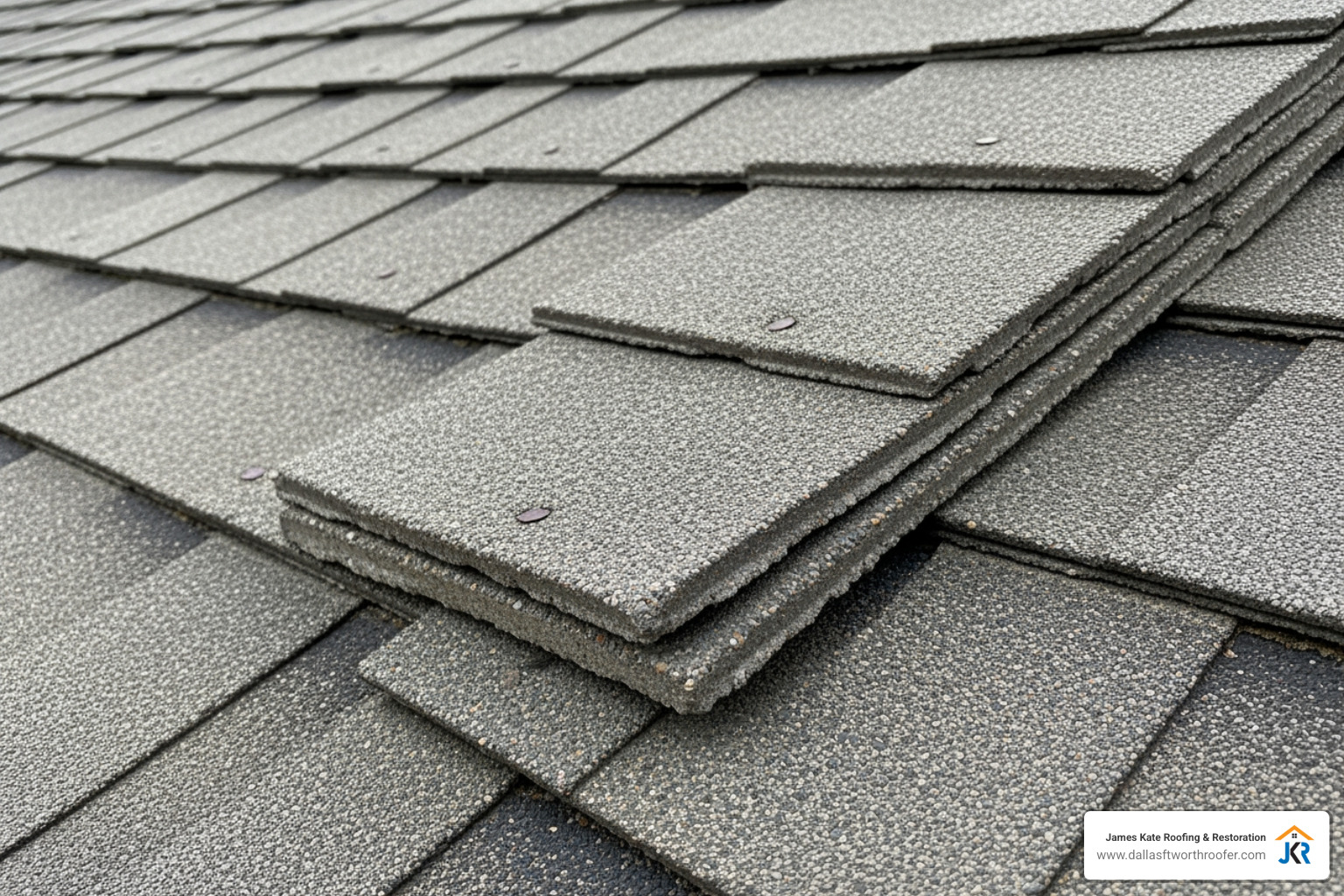
Asbestos shingles were used for both roofing and siding, especially on homes built from the 1920s through the early 1980s. In most residential applications, they were asbestos-cement products: rigid, slate-like panels made to resist weather, fire, and rot. Some asphalt-based roofing products and underlayments also contained asbestos, but the classic shingle most homeowners recognize is the cement version.
They became popular because they looked tidy, lasted a long time, and did not burn easily. For builders, that combination was gold. For homeowners today, it means older homes in Mansfield, Arlington, Granbury, Grand Prairie, and Midlothian may still have them in place.
How asbestos shingles were made
Most asbestos-cement shingles were manufactured by blending Portland cement with asbestos fibers, usually chrysotile. The fibers acted like reinforcement inside the cement matrix, helping the shingle resist cracking and adding strength without much thickness.
Common features included:
- Rigid, flat panels
- A matte or chalky gray surface, sometimes painted
- Machine-cut edges
- Pre-drilled nail holes
- A slate-like appearance without the weight of real stone
Typical asbestos content varied by manufacturer, but research commonly places asbestos-cement shingles in a range around 14% to 30% asbestos by weight, with some sources citing about 18% for many American-made products.
Where asbestos shingles show up on homes
These shingles were used in more places than many people realize:
- Main roof slopes
- Gable ends
- Exterior wall cladding
- Decorative facade accents
- Some underlayments and related roofing materials
- Certain flashing compounds, mastics, and vapor barriers nearby
They were especially common in postwar housing and on homes where owners wanted the appearance of slate or a low-maintenance exterior. Many lasted 30 to 50 years or more, and some remained serviceable even longer. Durability was part of their selling point. The downside is that age eventually makes them more brittle.
Why homeowners and builders used them
Back then, asbestos was added for reasons that sounded practical:
- Fire resistance
- Strength and durability
- Weather resistance
- Modest insulating value
- Lower maintenance than wood
- Attractive, uniform curb appeal
In short, people installed them because they seemed like a smart long-term product. Unfortunately, history had other plans.
How to Identify Asbestos Shingles Without Guessing
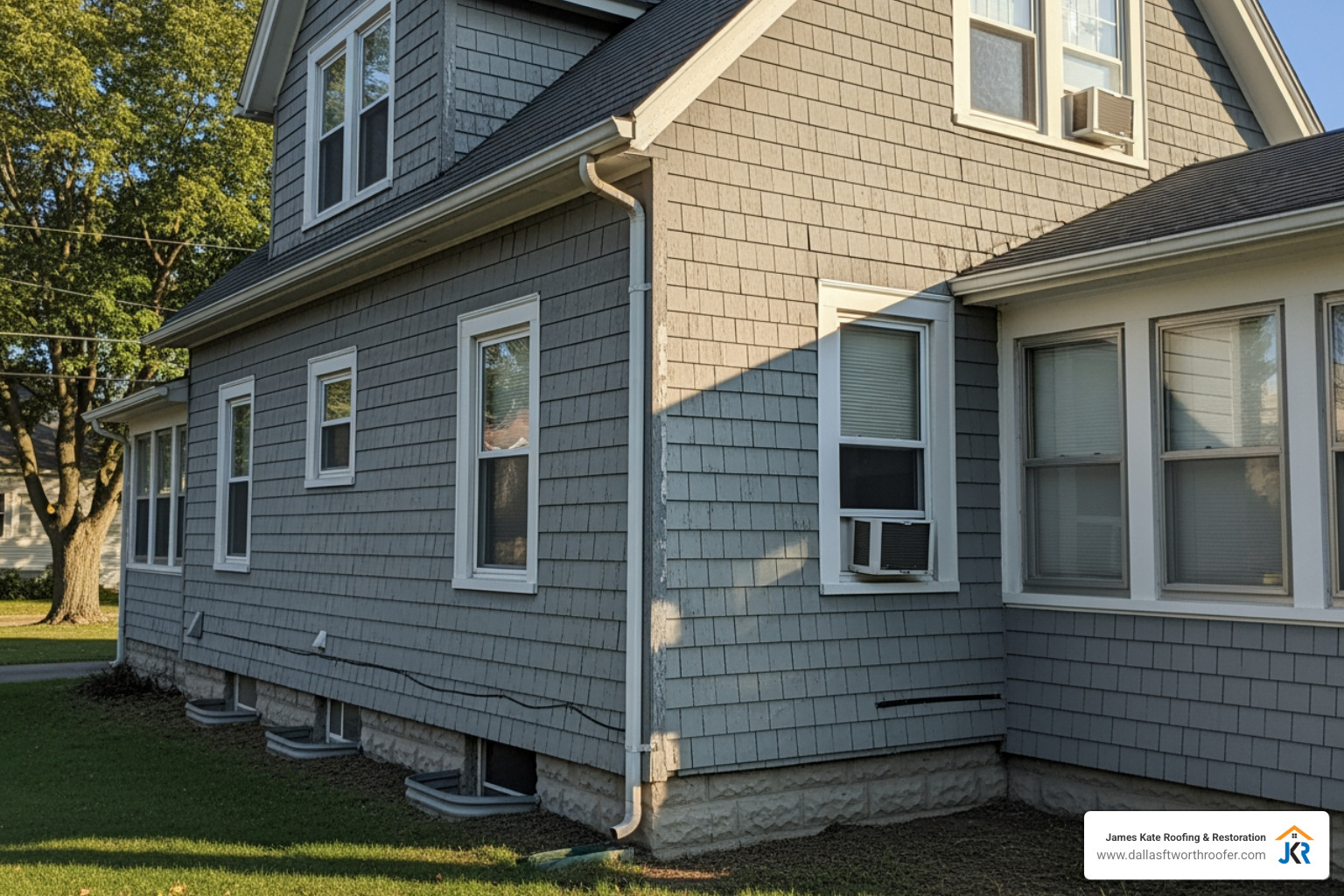
A lot of homeowners want to know, “Can I tell just by looking?” Sometimes you can make an educated suspicion. You usually cannot make a safe, final call without testing.
Signs your shingles may contain asbestos
The biggest clues are age and material type. Your shingles may contain asbestos if:
- The home was built or re-sided between the 1920s and early 1980s
- The shingles look like cement or slate rather than flexible asphalt tabs
- They have a weathered, gray, or dull finish
- Corners break cleanly and feel brittle
- Edges look machine-cut
- Panels have pre-drilled nail holes
- Similar materials on the home include flat or corrugated cement sheets
Roofing and siding are both possible. So are related materials nearby.
Why visual identification is not enough
Here is the part nobody loves: lots of products look similar.
Modern fiber cement can resemble older asbestos-cement shingles. Some non-asbestos siding has the same general shape and texture. Old asphalt products can also confuse the picture. That is why visual identification can create false positives and false negatives.
In practical terms:
- Seeing old gray shingles does not confirm asbestos
- Not seeing obvious damage does not prove safety
- Newer-looking paint does not mean the underlying material is non-asbestos
- A seller’s guess is not a lab result
If there is real doubt, the safest approach is to assume the material may be ACM until it is tested.
The safest way to confirm asbestos shingles
The best path is a certified asbestos inspector who can collect a sample using wet methods and send it to a lab for analysis, typically PLM testing. Professional testing also creates a chain of custody, which matters if removal, permits, or disclosures come later.
Typical testing costs in 2026 are often:
- $25 to $75 for a single lab sample
- $300 to $600 for a professional testing visit
If you want technical background on identification and product history, this guide on asbestos cement roofing and siding identification and safety is useful.
Our advice is simple: do not snap off your own “little sample” with a pair of pliers and optimism. Optimism is not PPE.
Are Asbestos Shingles Dangerous?
The honest answer is: sometimes yes, sometimes no. Condition matters more than fear.
When asbestos shingles are usually low risk
Intact asbestos-cement shingles are generally considered low-risk because the fibers are bound inside a hard cement matrix. This makes them non-friable, meaning they do not easily crumble by hand pressure or release fibers under normal conditions.
That is why public health guidance commonly says to leave asbestos materials alone if they are in good condition.
Low-risk situations usually include:
- Shingles are intact and firmly attached
- No cracking, drilling, sanding, or sawing has occurred
- The surface is not heavily weathered
- No recent storm impact has shattered the material
- The material is being monitored and left undisturbed
Annual visual checks are smart, especially after hail or wind events.
What makes asbestos shingles hazardous
Problems start when the material is damaged, cut, abraded, or deteriorated. That can happen from:
- Cracking and breakage
- Drilling for fixtures or new siding
- Sawing or sanding during remodeling
- Hail damage
- Storm damage and falling limbs
- Aggressive moss removal
- Power washing
- Demolition
- Weathering over decades
There is also a less obvious risk around the home perimeter. If old siding sheds fibers into soil near the foundation, lawn work can kick up contaminated dust. That does not mean every yard is hazardous, but it is one reason deteriorated materials deserve attention.
Health risks linked to asbestos exposure
Asbestos exposure is associated with serious diseases, including:
- Mesothelioma
- Lung cancer
- Asbestosis
The main danger is inhalation of airborne fibers. Symptoms often do not appear right away. In fact, the latency period is commonly 15 to 30 years or more. That long delay is one reason asbestos remains such a serious issue.
Risk generally increases with:
- Repeated exposure
- Higher concentrations of airborne fibers
- Longer exposure duration
- Occupational or renovation-related disturbance
Living in a house with intact asbestos shingles is very different from cutting, grinding, or tearing them off improperly.
Repair, Encapsulation, or Removal: What’s the Right Choice?
This is the question most homeowners really care about. The right answer depends on condition, plans for the home, and code requirements.
When repair or encapsulation makes sense
Repair or encapsulation can make sense when the material is mostly intact and damage is limited.
Examples include:
- A few isolated broken shingles
- Minor edge deterioration
- Sound field shingles with cosmetic weathering
- Siding that can be enclosed behind approved new cladding
- Surfaces suitable for a compatible sealant or coating
Encapsulation can include specialized coatings or paint systems that help lock down surface fibers and reduce weathering. Enclosure can mean installing new siding over the old material, if the structure, fastening method, and local code allow it.
A technical reference for maintenance issues is this maintenance and replacement guide for asbestos cement roof shingles.
Important note: not every old roof or wall should just be painted and forgotten. Encapsulation works best when the substrate is still stable.
When removal is the better option
Removal is usually the better choice when you have:
- Major deterioration
- Active leaks tied to failing roofing
- Widespread breakage
- Repeated repairs that no longer make sense
- Remodeling that will disturb the material anyway
- End-of-service-life conditions
- Resale concerns or insurance complications
If a roofing system must be torn down to the deck, abatement often becomes part of the project whether anyone wanted that surprise or not.
Can you cover asbestos shingles instead of removing them?
Sometimes, yes. Especially with siding.
In some cases, new siding can be installed over existing asbestos-cement siding. That can reduce disturbance and avoid full tear-off, but it requires careful planning. The wall assembly, moisture control, fastening approach, and local rules all matter.
Roofs are trickier. Overlaying over damaged asbestos shingles is often not practical or advisable, especially when fastening would crack the old material or when a full inspection of the roof deck is needed.
For homeowners considering next steps, we cover more about asbestos shingle replacement.
Safe Removal, Costs, and Legal Rules Homeowners Should Know
If removal is necessary, it needs to be handled with care. This is not a “watch one video and wing it” situation.
How professionals remove asbestos shingles safely
Professional asbestos removal typically includes:
- Site evaluation and planning
- Work-area controls
- PPE and respirators
- Wet methods to reduce dust
- Careful nail removal or shingle release
- Keeping pieces intact as much as possible
- Bagging or wrapping waste in 6-mil plastic
- Proper labeling
- Transport to an approved disposal site
- Documentation and disposal records
The goal is to avoid breaking the shingles and releasing fibers. On roofing, trained crews often work from higher areas downward and lower waste carefully rather than tossing it. On siding, they remove sections in a way that minimizes cracking.
How much asbestos shingle removal costs in 2026
Costs vary by home size, access, roof pitch, condition, and disposal fees. Testing and disposal are separate line items in many cases.
Typical 2026 cost ranges from the research include:
- Testing: $25 to $75 per lab sample
- Professional testing visit: $300 to $600
- Roofing removal: about $50 to $120 per square foot
- Full roof abatement on a typical home: roughly $8,000 to $20,000+
- Asbestos siding removal on a 1,500-square-foot home: about $10,500 to $13,500
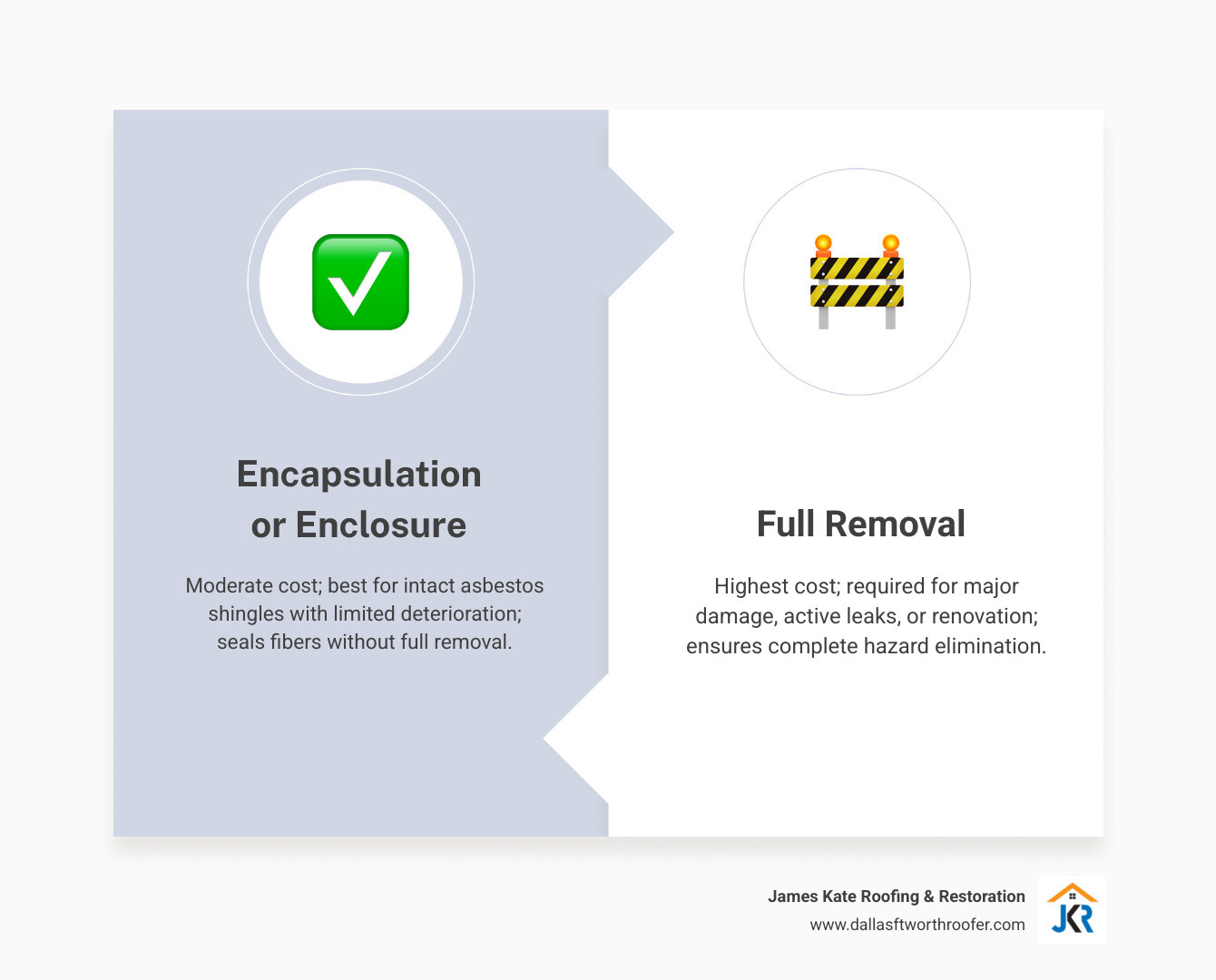
Encapsulation or enclosure is often cheaper than full removal.
| Option | Best For | Typical Cost Trend | Main Limitation |
|---|---|---|---|
| Repair | Small isolated damage | Lowest | Does not solve widespread aging |
| Encapsulation/Enclosure | Intact material with limited deterioration | Moderate | Not appropriate for failing systems |
| Full Removal | Major damage, reroofing, heavy disturbance | Highest | Requires abatement, disposal, coordination |
Can homeowners legally remove asbestos shingles themselves?
Rules vary, and that is exactly the problem. A homeowner may assume owner-occupant work is allowed, but local requirements, disposal rules, and notification standards can still apply. Even when self-removal is not explicitly prohibited, it may still be unsafe, difficult to dispose of legally, and financially risky if contamination occurs.
In our service area, we strongly recommend checking city and state requirements before doing anything. DIY removal is risky because:
- Breaking shingles releases fibers
- Standard cleanup methods can spread contamination
- Disposal sites may reject improperly packaged waste
- Worker exposure rules still matter in many situations
- Future sale or disclosure issues can arise if work was mishandled
Key regulations and disposal requirements
Several layers of rules may apply:
- EPA NESHAP standards
- OSHA asbestos worker protection rules under 29 CFR 1926.1101
- State requirements
- Local notification, permitting, and disposal rules
For Grand Prairie homeowners and property managers, this local asbestos abatement guidance from the City of Grand Prairie is a relevant place to start.
The short version is:
- Do not assume curbside disposal is allowed
- Do not assume all landfills accept asbestos waste
- Do not assume roofing debris can be mixed with ordinary construction trash
- Do verify notification, packaging, transport, and manifest requirements
Best Alternatives to Asbestos Shingles for Roofs and Siding
The good news is that replacement options today are much better-looking and easier to maintain than many people expect.
Modern materials that replace asbestos shingles well
Strong modern alternatives include:
- Fiber cement siding
- Architectural asphalt shingles
- Standing seam or metal panel roofing
- Synthetic slate-look roofing
- Composite siding systems
Fiber cement is often a natural replacement on homes that originally had asbestos-cement siding because it offers a similar crisp, solid look without the asbestos risk. Architectural asphalt shingles are a common choice for reroofing because they are affordable, attractive, and widely available. Metal can be excellent where durability and fire resistance are priorities.
Choosing the right replacement for your home
We usually guide homeowners through a few practical questions:
- What is the budget?
- Do you want to keep the original look?
- How important is fire resistance?
- How long do you plan to stay in the home?
- Does the structure support heavier materials?
- Do you want the lowest maintenance option?
- Is energy performance a priority?
The best answer is rarely the fanciest material. It is the product that fits your home, neighborhood, and long-term plans.
Planning replacement after abatement
Once asbestos is confirmed, coordination matters. Good planning usually includes:
- Confirming scope with the inspector or abatement contractor
- Scheduling removal before reroofing or recladding
- Inspecting sheathing after tear-off
- Repairing any hidden deck or wall damage
- Updating ventilation if needed
- Making sure disposal logistics are arranged before the work starts
That sequence saves time, reduces surprises, and keeps the replacement crew from stepping into a problem that should have been addressed first.
Frequently Asked Questions About Asbestos Shingles
Should asbestos shingles always be removed?
No. If the material is intact, non-friable, and not being disturbed, leaving it in place is often the safest and most cost-effective option. Removal makes more sense when the material is damaged, failing, or in the way of planned renovation.
Is it safe to buy a house with asbestos shingles?
It can be, yes. The condition of the material matters more than the fact that it exists. A pre-purchase inspection, testing if needed, and a realistic repair or replacement budget are the smart steps. For many buyers, asbestos shingles are a management issue, not an automatic dealbreaker.
What should I do first if I suspect asbestos shingles?
Do these three things first:
- Stop disturbing the area.
- Take clear photos and note visible damage.
- Schedule professional inspection or testing.
After that, get quotes for the appropriate next step, whether that is monitoring, encapsulation, or removal.
Conclusion
Asbestos shingles are not something to panic over, but they are absolutely something to handle correctly. If they are intact, they may be best left alone. If they are cracked, weathered, leaking, or getting in the way of a reroof or siding project, then testing, planning, and proper abatement become essential.
For more product history and identification details, this asbestos cement slate and shingles guide is a helpful reference.
If you are in Mansfield, Arlington, Granbury, Grand Prairie, or Midlothian and need honest guidance on what comes after asbestos is identified, we are here to help. At James Kate Roofing & solar, we help DFW homeowners understand their options, coordinate safe next steps, and move toward a durable replacement with clear communication from start to finish.
You can also learn more about asbestos shingle replacement if you are planning a reroof or exterior update.

Dustin Eatman is a seasoned roofing professional with deep, hands-on expertise that spans residential and commercial roofing, insurance solar, and long-term roof asset management. As the owner of James Kate Roofing & solar in the Dallas–Fort Worth metroplex, he’s built a reputation for diagnosing roof systems accurately, communicating clearly, and executing projects with a high standard of workmanship and documentation. Dustin understands the technical details that make roofs perform—proper underlayment selection, slope and drainage considerations, ventilation strategy, flashing and penetration detailing, and manufacturer-specific installation requirements—because he’s worked through the real-world challenges that cause leaks, premature wear, and warranty issues. He’s equally fluent in the operational side of roofing: jobsite planning, quality control, safety, material ordering, crew coordination, and customer experience from inspection to closeout. In insurance-related projects, Dustin brings practical knowledge of claim workflows, adjuster meetings, scope alignment, supplements, and the importance of photo evidence and thorough records, helping property owners navigate stressful situations with confidence. For commercial clients—especially property and facility managers—he emphasizes proactive maintenance and targeted repairs that reduce disruption, extend roof life, and prevent expensive interior damage. Dustin also stays focused on doing things the right way: educating customers on realistic options, setting expectations, and prioritizing solutions that hold up over time rather than quick fixes. That blend of technical skill, field experience, process discipline, and owner-level accountability is what makes Dustin Eatman a trusted expert in the roofing industry.