Choose the Right Roof Coating Type Before You Restore
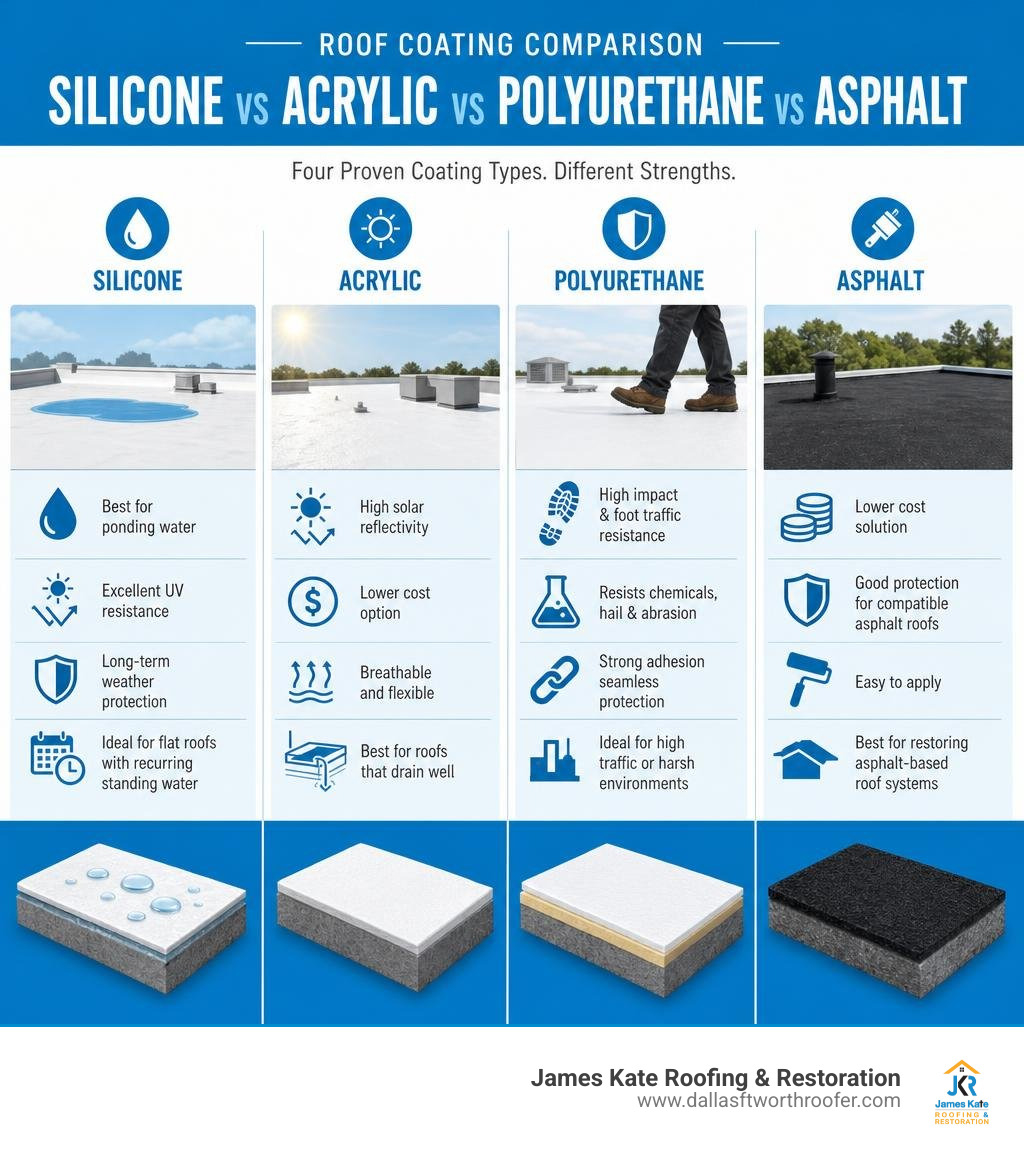
The four main roof coating types are silicone, acrylic, polyurethane, and asphalt emulsion. The best choice depends on your roof’s drainage, existing material, foot traffic, weather exposure, and budget:
- Silicone is the leading choice for flat roofs with recurring ponding water.
- Acrylic offers strong thermal reflectivity at a lower cost when the roof drains well.
- Polyurethane is built for roofs exposed to foot traffic, hail, impact, or chemicals.
- Asphalt emulsion is a lower-cost option often used to restore compatible asphalt-based roofs.
A coating is not simply roof paint. It is a fluid-applied membrane that seals small cracks, protects the surface from UV damage, and can delay a tear-off when the existing roof is dry and structurally sound. A properly specified system can extend service life by 10 to 20 years, often at far less cost and disruption than replacement.
The wrong chemistry can fail early. For example, acrylic is highly reflective but is not the right fit for areas where water sits after storms. Silicone costs more, but it holds up far better under long-term standing water. The condition of seams, flashings, insulation, and the existing membrane matters just as much as the coating selected.
I am Dustin Eatman, owner of James Kate Roofing & solar, with hands-on experience assessing and restoring commercial roof systems throughout DFW. I help property owners compare roof coating types based on real field conditions, including drainage, substrate compatibility, leak history, and long-term maintenance needs.
Terms related to roof coating types:
The 4 Primary Roof Coating Types for Commercial Buildings
When evaluating commercial roof solar, it helps to review the complete guide to roof coating to understand how different chemistries behave under direct environmental stress. Roof coatings are elastomeric liquid formulations that cure into seamless, monolithic membranes. Unlike traditional sheet goods with seams that can pull apart over time, a fluid-applied membrane forms a continuous barrier over the substrate, flashings, and penetrations.
The four core chemistries—silicone, acrylic, polyurethane, and asphalt emulsion—account for the vast majority of the commercial market. Each chemistry possesses distinct physical properties, solids content by volume, elongation rates, tensile strengths, and adherence characteristics regulated by ASTM International standards. Choosing the right material requires balancing structural demands, drainage capacity, foot-traffic levels, and budget. For an in-depth reference on performance standards across the industry, consult this Roof Coating Guide | Types, Costs & When to Use One | Roofs Wiki.
Silicone Roof Coatings

Silicone roof coatings represent the industry benchmark for flat roofing applications where water clearance is slow. Formulated from moisture-curing polymers, silicone features an inorganic silicon-oxygen backbone. This unique molecular design provides zero risk of hydrolysis—meaning water simply cannot chemically break down a cured silicone film. While other coatings soften, bubble, or delaminate when submerged, silicone stands up to permanent ponding water without losing tensile strength or adhesion.
High-solids silicone formulations often exceed 90% solids by volume. Because minimal solvent or water evaporates during curing, nearly all the wet film applied stays on the roof as durable dry film thickness (DFT). This allows contractors to achieve target mil thicknesses (typically 20 to 30 mils dry) in fewer passes compared to waterborne products. Silicone also exhibits exceptional elasticity across extreme temperature swings, flexing with structural thermal expansion. However, silicone surfaces have low tear resistance, attract airborne dust over time, and require dedicated silicone tie-coats or mechanical scarification if you ever recoat them in the future.
Acrylic Elastomeric Coatings
Acrylic roof coatings are single-component, waterborne polymer formulations built with 100% pure acrylic or styrene-acrylic resins. Governed by ASTM D6083 standards, high-grade acrylics deliver outstanding thermal reflectance, bouncing up to 80% to 85% of thermal radiation away from the building. For facilities with well-drained low-slope or steep-slope roofs, acrylics provide an economical path to lower roof surface temperatures and slash interior cooling demands.
A significant benefit of acrylic chemistry is its breathable nature; it permits minute amounts of moisture vapor trapped beneath the membrane to escape into the atmosphere without causing blisters. Acrylics are also easy to handle, clean up with water, and allow seamless recoating down the road. The primary operational limit of acrylic is water sensitivity. Because they are waterborne emulsions, acrylics will re-emulsify and wash away or soften if exposed to persistent standing water for more than 48 hours. Specifiers and contractors exploring these systems should read this Elastomeric Roof Coating Guide: Acrylic vs Silicone vs Polyurethane (2026) | US Made Supply for detailed ASTM benchmarks.
Polyurethane Coatings
Polyurethane (urethane) coatings are the heavy-duty workhorses of commercial roof solar. Highly resistant to physical abrasion, chemical fallout, and mechanical impact, polyurethane systems are the preferred solution for roofs that host heavy HVAC maintenance traffic or industrial facilities subjected to airborne chemical exhaust.
These systems are commonly installed in a two-part multi-layer build:
- Aromatic Base Coat: Provides superior adhesion to the underlying substrate along with high tensile strength and puncture resistance. Aromatic urethanes are less UV-stable, so they serve as the tough foundational layer.
- Aliphatic Topcoat: Applied over the aromatic base, the aliphatic layer provides elite UV stability, outstanding color retention, dirt-pickup resistance, and high thermal reflectance.
Polyurethanes exhibit tensile strengths often exceeding 1,000 to 2,000 psi—far surpassing silicone and acrylic. This tensile profile makes polyurethane the most hail-resistant fluid-applied system available. The trade-offs are higher material costs, strong solvent odors during application requiring proper air-intake management, and strict moisture sensitivity during the curing window.
Asphalt Emulsion Coatings
Asphalt emulsion coatings consist of clay-stabilized petroleum asphalt suspended in water with elastomeric rubber polymers and reinforcing fibers. Often applied at thicknesses ranging from 20 mils up to 200 mils dry, asphalt emulsions serve as heavy-build, fluid-applied membranes primarily used to renew aging built-up roofs (BUR) and modified bitumen membranes.
Rather than acting as a standalone cool-roof surface, asphalt emulsion acts as an economical waterproofing base coat. It fills alligatoring, bridges small surface fractures, and seals weather-checked asphalt surfaces without requiring hot asphalt kettles or open torches. Once cured, asphalt emulsion must be top-coated with a reflective layer—such as an aluminized coating, acrylic elastomeric topcoat, or silicone—to protect the asphalt binder from UV oxidation. It provides high-build waterproofing on large commercial decks at a low per-square-foot cost.
Performance Comparison: Lifespan, Ponding Water, and Energy Efficiency
Every commercial roofing project presents a unique combination of structural slope, environmental exposure, mechanical wear, and financial requirements. Reviewing energy-saving roof coating Why White Is the New Green shows how selecting the proper reflective index can dramatically lower operating expenses across Texas summers.
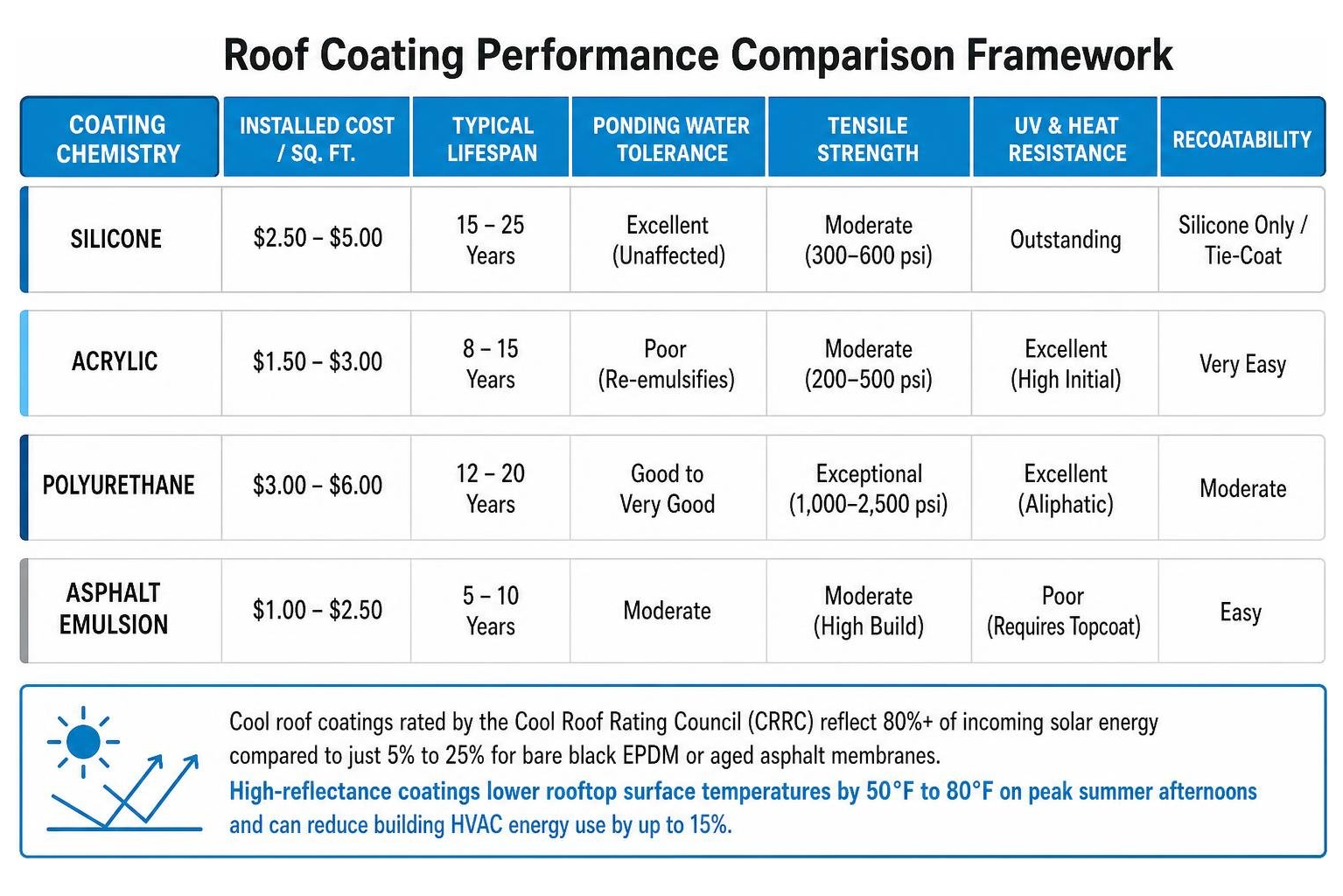
| Coating Chemistry | Installed Cost / Sq. Ft. | Typical Lifespan | Ponding Water Tolerance | Tensile Strength | UV & Heat Resistance | Recoatability |
|---|---|---|---|---|---|---|
| Silicone | $2.50 – $5.00 | 15 – 25 Years | Excellent (Unaffected) | Moderate (300–600 psi) | Outstanding | Silicone Only / Tie-Coat |
| Acrylic | $1.50 – $3.00 | 8 – 15 Years | Poor (Re-emulsifies) | Moderate (200–500 psi) | Excellent (High Initial) | Very Easy |
| Polyurethane | $3.00 – $6.00 | 12 – 20 Years | Good to Very Good | Exceptional (1,000–2,500 psi) | Excellent (Aliphatic) | Moderate |
| Asphalt Emulsion | $1.00 – $2.50 | 5 – 10 Years | Moderate | Moderate (High Build) | Poor (Requires Topcoat) | Easy |
Cool roof coatings rated by the Cool Roof Rating Council (CRRC) keep commercial surfaces significantly cooler under intense sun. High-reflectance coatings reflect 80%+ of incoming thermal energy compared to just 5% to 25% for bare black EPDM or aged asphalt membranes. This thermal reflectance lowers rooftop surface temperatures by 50°F to 80°F on peak summer afternoons, mitigating the urban heat island effect and reducing building HVAC electrical consumption by up to 15%.
Comparing Roof Coating Types for Ponding Water and UV Resistance
Standing water is the number one cause of premature low-slope membrane failure. When moisture lingers in low spots for days, it generates hydrostatic pressure and accelerates UV degradation around the edges of the pool. Property owners searching for Don’t Get Drenched The Best Waterproof Paint for Flat Roofs must understand that traditional paints fail within months under submerged conditions.
Silicone remains completely unaffected by continuous standing water because its polymer structure does not hydrolyze. Acrylic coatings, on the other hand, soften and blister when water ponds over them for extended periods, making acrylic unsuitable for dead-flat or poorly drained decks. In terms of UV performance, aliphatic polyurethanes and silicones maintain their elasticity for decades, whereas low-grade unpigmented coatings quickly embrittle under direct sunlight.
Cost Breakdown vs. Full Roof Replacement
A common question building managers face is whether to restore or replace an aging roof deck. Investing in The Smart Business Owners Guide to Commercial Roof solar reveals that restoring a sound membrane with a fluid-applied coating costs roughly $1.50 to $5.00 per square foot installed, compared to $5.00 to $15.00+ per square foot for a full tear-off and replacement.
Over 2.5 billion square feet of commercial roofing is replaced or recoated across the country every year. Because roofing materials represent the third largest contributor to municipal landfill waste, applying a fluid-applied solar system keeps intact insulation and structural decking out of landfills while extending the roof’s operational life by 10 to 20 years. In addition, roof coatings are frequently classified as standard maintenance expenses rather than capital improvements, allowing commercial building owners to write off the entire cost in the year the work is completed.
Substrate Compatibility and Selection Criteria
Not every coating adheres properly to every roof surface. Applying the wrong chemistry over an incompatible single-ply membrane or asphalt deck without the proper primer will cause widespread peeling, blistering, and early failure. For a deeper technical breakdown of substrate chemistry pairings, consult Roof Coating Materials: Types and Substrate Matches.
Matching Commercial Substrates to Roof Coating Types
- EPDM Rubber: Aged ethylene propylene diene monomer roofs accumulate carbon black and surface oxidation over time. Applying the best liquid coatings for EPDM roofs requires thorough power washing with an approved membrane cleaner followed by a dedicated single-ply primer to ensure permanent adhesion of silicone or urethane systems.
- TPO & PVC Single-Ply: Thermoplastic membranes have slick surfaces and contain plasticizers that make direct adhesion difficult. A specialized adhesion-promoting wash or solvent-based primer is required before coating with silicone or acrylic.
- Metal Roofing Systems: Commercial standing seam and R-panel metal roofs expand and contract significantly across daily temperature cycles. Utilizing proven methods for protecting your metal in style requires cleaning all oxidation, applying a rust-inhibitive primer over exposed fasteners and seams, and laying down an elastomeric acrylic or silicone coating with elongation properties exceeding 300%.
- Modified Bitumen and BUR: Asphalt-based roofs emit light oils that cause discoloration (bleed-through) in white coatings. An asphalt bleed-blocking primer or a heavy asphalt emulsion base coat must be installed before applying white acrylic or silicone topcoats.
- Spray Polyurethane Foam (SPF): SPF insulation degrades rapidly under direct UV sunlight. It requires an immediate protective shell of high-solids silicone or elastomeric polyurethane with broadcast granules to protect against weather and hail impact.
Essential Surface Preparation and Application Steps
A roof coating system is only as reliable as the surface preparation beneath it. Applying premium coatings over dirt, grease, moisture, or deteriorating seams will lead to failure regardless of the product’s quality.
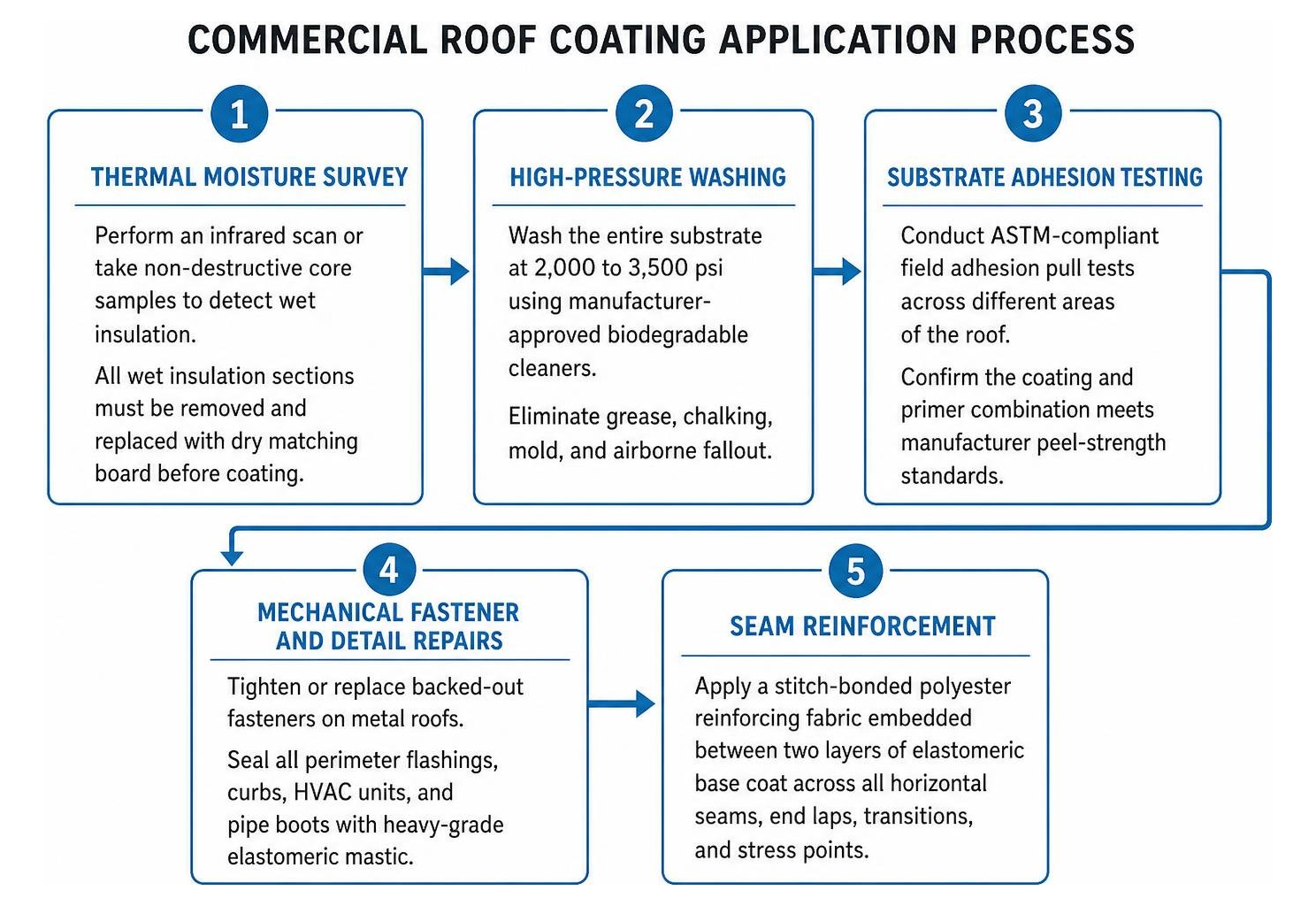
- Thermal Moisture Survey: Perform an infrared scan or take non-destructive core samples to detect wet insulation. Fluid-applied coatings trap moisture; all wet insulation sections must be removed and replaced with dry matching board before coating.
- High-Pressure Washing: Wash the entire substrate at 2,000 to 3,500 psi using manufacturer-approved biodegradable cleaners to eliminate grease, chalking, mold, and airborne fallout.
- Substrate Adhesion Testing: Conduct ASTM-compliant field adhesion pull tests across different areas of the roof to confirm the coating and primer combination meets manufacturer peel-strength standards.
- Mechanical Fastener and Detail Repairs: Tighten or replace backed-out fasteners on metal roofs. Seal all perimeter flashings, curbs, HVAC units, and pipe boots with heavy-grade elastomeric mastic.
- Seam Reinforcement: Apply a stitch-bonded polyester reinforcing fabric embedded between two layers of elastomeric base coat across all horizontal seams, end laps, transitions, and stress points.
- Substrate-Specific Primer Application: Roll or spray the approved primer to lock down residual chalking, prevent asphalt bleed-through, and ensure chemical bonding with single-ply membranes.
- Cross-Hatch Coating Application: Apply the base coat and topcoat in two separate perpendicular passes using heavy-duty airless spray equipment or commercial rollers, ensuring an even, holiday-free surface.
- Mil-Thickness Verification: Regularly measure wet mil thickness during application with a wet-film gauge to guarantee the cured dry film thickness meets the requirements for a 10, 15, or 20-year manufacturer warranty.
Frequently Asked Questions About Commercial Roof Coatings
Which commercial roof coating lasts the longest?
Silicone and high-build aliphatic polyurethane systems deliver the longest operational service life among commercial roof coatings. High-solids silicone coatings routinely provide 15 to 25 years of field durability because their inorganic chemical backbone does not oxidize under UV radiation or degrade in ponding water.
When applied at a dry film thickness of 30 mils or higher by a certified commercial contractor, silicone solar systems can qualify for 20-year renewable No Dollar Limit (NDL) manufacturer warranties. Once the initial warranty period nears its end, the surface can be cleaned, primed, and recoated to add another 10 to 15 years of service life without tearing off the roof.
Can you apply a coating over an active leak or wet insulation?
No. Roof coatings are protective, fluid-applied waterproofing membranes designed to restore sound roofs, not stop active structural leaks caused by saturated underlying insulation. Applying a coating over wet insulation boards traps moisture inside the roofing sandwich. Trapped moisture evaporates under the hot sun, creating high vapor pressure that causes severe blisters, delamination, and rotting of the structural metal or wood deck below.
Before any coating is applied:
- A certified roofing professional must perform an infrared thermography inspection to identify any pockets of trapped moisture.
- All wet insulation must be cut out and replaced with dry, matching polyisocyanurate or cover board.
- Active leaks at flashing details, seams, and penetrations must be repaired with reinforced flashing compounds.
- Once the roof substrate is verified clean, dry, and structurally sound, the fluid-applied coating system can be safely installed.
How do cool roof coatings lower energy costs?
Cool roof coatings lower facility utility expenses through high thermal reflectance (the fraction of sunlight and heat reflected off the roof surface) and high thermal emittance (the efficiency with which a surface sheds absorbed heat back into the atmosphere).
Standard dark membranes absorb up to 90% of thermal radiation, pushing surface temperatures to 150°F–180°F during summer months. Highly reflective white acrylic and silicone coatings reflect up to 85% of ambient heat, keeping the roof within 10°F to 15°F of ambient air temperature. This temperature drop reduces heat transfer into the building’s interior, lowering cooling loads on rooftop HVAC units by 10% to 30%, cutting peak electrical demand charges, and extending the operational life of commercial air conditioning compressors.
Conclusion
Restoring a commercial roofing asset requires matching the right coating chemistry to your building’s slope, existing substrate, climate exposure, and long-term operating budget. While acrylic elastomeric coatings provide high thermal reflectivity at a cost-effective price point for well-drained roofs, high-solids silicone stands as the undisputed champion for low-slope decks subject to persistent ponding water. For high-traffic decks requiring maximum resistance against hail and mechanical abrasion, heavy-duty polyurethane systems provide unmatched protection.
At James Kate Roofing & solar, we bring hands-on experience and proven expertise to commercial properties throughout Arlington, TX, Mansfield, TX, Grand Prairie, TX, Midlothian, TX, and Granbury, TX. Backed by our GAF President’s Club recognition, commitment to integrity, and workmanship warranties of up to 25 years, our team is ready to evaluate your existing membrane with thermal moisture surveys and adhesion testing.
Ready to restore your commercial roof and extend its service life for decades? Schedule a comprehensive commercial roof coating evaluation with our specialists today.
Dustin Eatman is a seasoned roofing professional with deep, hands-on expertise that spans residential and commercial roofing, insurance solar, and long-term roof asset management. As the owner of James Kate Roofing & solar in the Dallas–Fort Worth metroplex, he’s built a reputation for diagnosing roof systems accurately, communicating clearly, and executing projects with a high standard of workmanship and documentation. Dustin understands the technical details that make roofs perform—proper underlayment selection, slope and drainage considerations, ventilation strategy, flashing and penetration detailing, and manufacturer-specific installation requirements—because he’s worked through the real-world challenges that cause leaks, premature wear, and warranty issues. He’s equally fluent in the operational side of roofing: jobsite planning, quality control, safety, material ordering, crew coordination, and customer experience from inspection to closeout. In insurance-related projects, Dustin brings practical knowledge of claim workflows, adjuster meetings, scope alignment, supplements, and the importance of photo evidence and thorough records, helping property owners navigate stressful situations with confidence. For commercial clients—especially property and facility managers—he emphasizes proactive maintenance and targeted repairs that reduce disruption, extend roof life, and prevent expensive interior damage. Dustin also stays focused on doing things the right way: educating customers on realistic options, setting expectations, and prioritizing solutions that hold up over time rather than quick fixes. That blend of technical skill, field experience, process discipline, and owner-level accountability is what makes Dustin Eatman a trusted expert in the roofing industry.