Are Fake Wood Shingles a Good Alternative to Cedar?
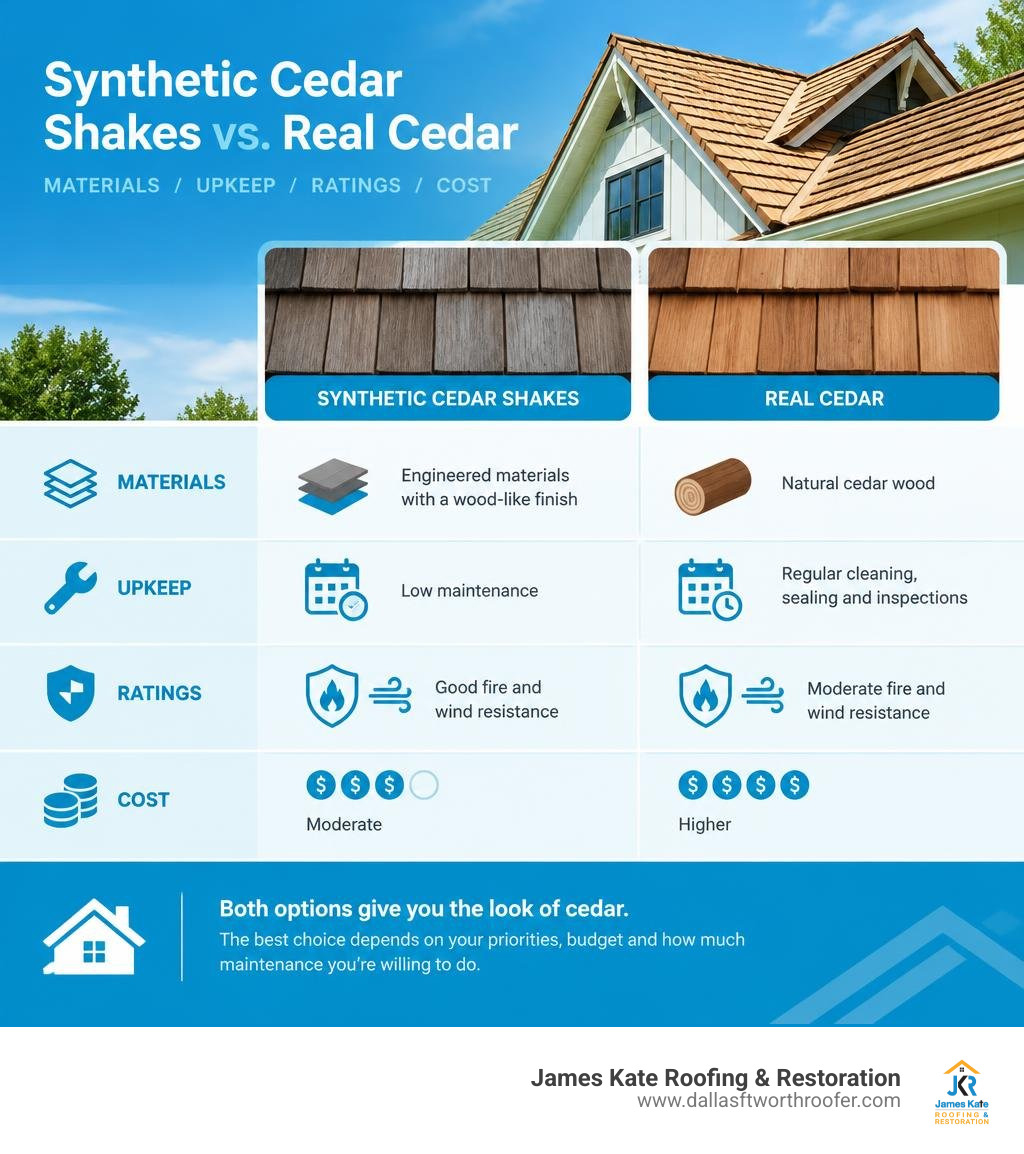
Fake wood shingles give you the look of cedar without many of its upkeep needs. Synthetic cedar shakes are made from engineered materials that resist rot and insects, while wood-look asphalt shingles offer a different look at a potentially lower price. Neither is maintenance-free. Compare the product’s fire and wind ratings, installed cost, warranty, and appearance before choosing one for your roof.
I’m Dustin Eatman, owner of James Kate Roofing & solar. My experience inspecting residential roofs and managing roof installations helps me look past the wood-grain finish to what makes fake wood shingles perform over time.
Explore more about fake wood shingles:
Understanding Fake Wood Shingles: What Are Synthetic Wood Alternatives?
Synthetic wood roofing materials represent a significant technological leap for homeowners who love the rustic, dimensional charm of classic split cedar but dread the relentless cycle of power washing, oiling, and fire risks. These simulated shake roofing products use advanced polymeric formulations, virgin polymers, recycled resins, and mineral composites to recreate the tactile feel and deep shadow lines of authentic wood cladding.
Rather than relying on organic timber, modern synthetic tiles emulate the rich grain and irregular edges of cedar shakes through precision molding taken directly from historic wood pieces. They provide the warm character of heritage architecture while delivering the structural stability of modern commercial polymers.
Material Composition and Modern Polymer Engineering
The core chemistry of composite shake roofing relies on advanced polymeric blends and polyurethane composites engineered to handle harsh outdoor exposure. High-density polymer matrices are combined with UV inhibitors, thermal stabilizers, and specialized pigments to ensure the material resists embrittlement and fading even under punishing summer sun.
Some high-performance architectural systems, like Perfection Shingle Siding – Modern Mill, utilize upcycled agricultural fibers and high-density polymers to create weather-impermeable cladding that handles moisture without swelling. Synthetic roofing options, including Synthetic Hand Split Natural Cedar Shakes | Shiloh and Synthetic Cedar Shake Roofing Shingles – Composite Faux …, feature closed-cell urethane or composite formulations that absorb virtually zero water. For specialty structures or outbuildings, modular solutions such as Commercial Plastic Bark Roof Shingles, Rain Proof Anti-Hurricane Vintage Wood Grain Shake Decor for House Shed Restaurant Hotel Storefront(#2,5piece) or Roofing Shingles Tile Faux Wood-Grain, Sturdy Composite Cover Sheets for Indoor/Outdoor Use, Vintage Decorative Roofing, demonstrate just how adaptable these polymer blends have become for diverse decorative and protective applications.
Natural Wood Anatomy vs. Synthetic Core Design
To understand why synthetic shakes perform so reliably, it helps to examine natural wood biology. Real wood is an orthotropic, hygroscopic, natural composite material. Its cellular structure consists of micro-fibrils composed of 40% to 50% cellulose fibres and 15% to 25% hemicellulose embedded in an amorphous 15% to 30% lignin matrix.
Because of this natural cellular matrix, organic wood constantly absorbs and expels atmospheric moisture. This hygroscopic expansion and contraction leads to cupping, splitting, warping, and cracking over time. In contrast, synthetic cores feature isotropic or uniform density profiles that remain chemically inert when exposed to humidity. When evaluating your home’s needs and choosing the right roofing material, understanding this molecular difference explains why synthetic alternatives maintain their structural shape through decades of changing weather.
Performance Face-Off: Natural Cedar vs. Synthetic Shakes

When authentic cedar faces off against composite shakes, the functional contrasts quickly become obvious. Cedar has protected homes for centuries, but it requires frequent sealing to fight off algae, moss, and moisture-induced rot. Synthetic shakes provide an impenetrable barrier against environmental moisture without ongoing chemical treatments.
| Feature / Metric | Natural Cedar Shakes | Synthetic Wood Shakes |
|---|---|---|
| Material Base | Organic Western Red Cedar | Polyurethane / Polymeric Composite |
| Fire Safety Rating | Class C (or Untreated Class Unrated) | Class A (ASTM E108 Standard) |
| Impact Resistance | Class 1 to Class 3 (Brittle with Age) | Class 4 (UL 2218 Rated) |
| Moisture Absorption | High (Hygroscopic cellular design) | Near 0% (Closed-cell polymer) |
| Wind Resistance | 70–90 mph (Prone to lifting when curled) | Up to 115–130 mph Rated |
| Expected Lifespan | 20–30 Years (With strict maintenance) | 50+ Years (Minimal maintenance) |
| Annual Maintenance | High (Washing, sealing, moss removal) | Minimal (Periodic water rinse) |
Durability and Fire Safety Ratings of Fake Wood Shingles
One of the most critical reasons homeowners switch to synthetic shakes is home defense against fire and severe storms. Natural wood shakes present serious combustion hazards during dry seasons and wildfire alerts. Untreated cedar ignites easily from windblown embers, and even pressure-treated wood loses its fire-retardant chemicals over time due to continuous rain exposure.
Synthetic shake systems achieve a Class A fire rating under strict ASTM E108 testing protocols. They resist flame spread and burning brand penetration without relying on chemical washes that wash away. When building or replacing a roof under regional codes such as Texas.gov | The Official Website of the State of Texas building guidelines, Class A performance provides peace of mind. Furthermore, these products regularly carry Class 4 impact resistance (UL 2218), defending the roof deck from heavy hail and often earning homeowners substantial discounts on property insurance premiums.
Weather Resistance and Longevity Across Diverse Climates
From freezing winters to scorching midsummer heatwaves exceeding 100°F, synthetic shakes show remarkable dimensional stability. Where real wood expands across its radial grain during damp springs and shrinks during dry summers—causing fastener fatigue and split keyways—polymer tiles experience negligible thermal movement.
Synthetic options also deliver wind ratings of up to 115 mph or higher, keeping tabs secured during high-wind storms. Because synthetic blends do not support organic growth, biological organisms like wood-boring beetles, carpenter ants, and rot fungi cannot feed on them. When weighing factors to consider before selecting a roof, this immunity to fungal rot makes synthetic shakes a clear winner for long-term climate resilience.
Cost, Maintenance, and Environmental Footprint Analysis

A thorough evaluation of any roofing investment requires looking beyond the initial material quote to examine ongoing maintenance, repair cycles, and eventual replacement schedules over 30 to 50 years.
Upfront Investment and Long-Term Value of Fake Wood Shingles
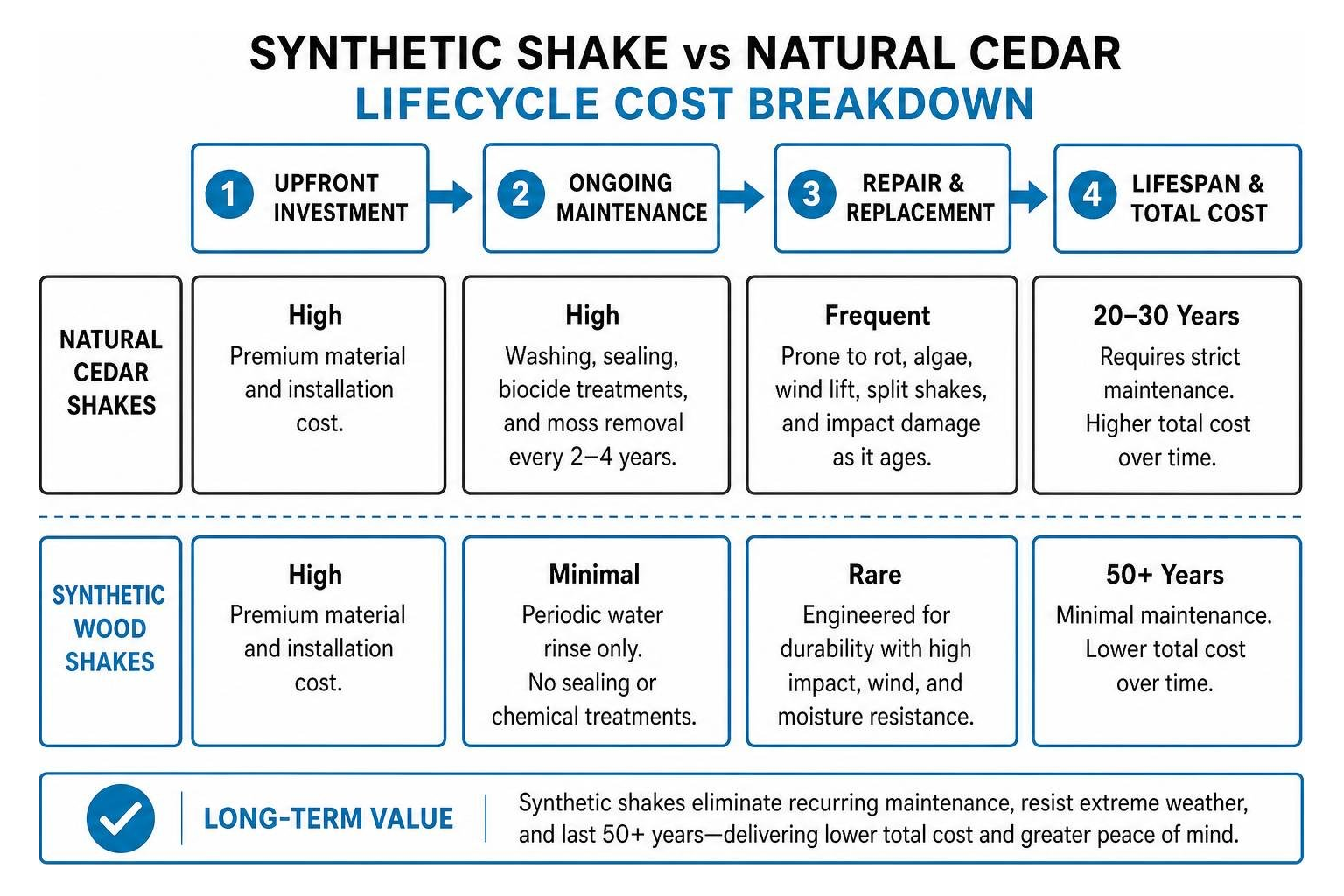
Natural cedar and synthetic shakes both carry a premium upfront cost compared to basic standard asphalt shingles. However, when evaluating wood or asphalt shingle options, synthetic shake products prove far more cost-effective over their full lifespan.
Natural cedar demands power washing, biocide washes, and preservative reapplications every two to four years, adding thousands of dollars in maintenance expenses over its useful life. Synthetic shakes eliminate these recurring treatments entirely. Combined with 50-year or lifetime limited transferable warranties and reduced insurance premiums from Class 4 impact ratings, synthetic systems deliver significant long-term return on investment.
Eco-Footprint, Recyclability, and Carbon Impact
The environmental conversation between real and fake wood involves evaluating sustainable timber harvesting against synthetic manufacturing. Real wood is a renewable resource that sequesters carbon, but timber harvesting and chemical preservative treatments carry their own environmental footprints.
Modern synthetic shake manufacturers increasingly utilize post-industrial recycled resins and mineral components, diverting tons of plastic waste from landfills. Because synthetic roofs last more than 50 years—effectively outlasting two full generations of natural cedar roofs—they drastically cut down on tear-off waste and structural debris heading to municipal landfills over time.
Best Practices for Synthetic Wood Shingle Installation
Proper installation makes the difference between a roof that lasts half a century and one that suffers leaks in its first major rainstorm. While synthetic shakes handle much like traditional wood or heavy-duty shingles, their specific fastening patterns and layout tolerances require skilled craftsmanship.
Decking Preparation, Fasteners, and Underlayment
Synthetic shakes must be installed over a clean, solid structural substrate, typically 1/2-inch or 5/8-inch CDX plywood or OSB decking. Proper preparation involves:
- Substrate Inspection: Ensuring all decking sheets are securely fastened and free of rot or uneven edges.
- Underlayment System: Installing high-temperature self-adhering ice-and-water membranes along all eaves, valleys, rakes, and penetrations, followed by an approved commercial synthetic felt underlayment across the entire roof plane.
- Corrosion-Resistant Fasteners: Using hot-dipped galvanized or stainless steel roofing nails driven straight and flush to avoid cutting into the polymer material.
Understanding these foundational requirements is vital when exploring different shingle roofing types for your home.
Essential Techniques for Keyway Spacing and Alignment
Unlike uniform asphalt strips, synthetic shakes come in multiple widths (such as 5¼”, 7¼”, and 12¼”) to create a natural, hand-split look. Achieving a water-tight installation requires following strict layout rules:
- Maintain Proper Keyway Gaps: Keep a consistent 3/8-inch gap between adjacent shakes in the same course to allow for normal thermal expansion and proper water drainage.
- Offset Vertical Joints: Stagger joints by at least 1.5 to 2 inches between consecutive courses so water running down a keyway lands on the solid body of the tile beneath it, as detailed in our cedar shake installation guide.
- Chalk Line Discipline: Always snap reference lines on the underlayment, never on the exposed face of the shakes, to prevent permanent staining.
- Clean Scoring and Cutting: Use a standard utility knife or circular saw with a fine-tooth blade to score and cut hip and valley angles cleanly.
Frequently Asked Questions About Synthetic Wood Shakes
How long do synthetic wood shakes last compared to real cedar?
Synthetic wood shakes are engineered to last 50 years or longer with minimal maintenance. In contrast, authentic cedar shakes typically last 20 to 30 years and require rigorous chemical cleaning and staining every few years to prevent rot and insect damage.
Do synthetic wood shingles look artificial from the street?
High-end synthetic shakes use authentic molds taken from real split cedar logs, capturing natural grain variations, deep ridges, and varied thicknesses. Once installed with randomized color blends and staggered shadow lines, they are virtually indistinguishable from authentic wood shakes from the street.
Can synthetic cedar shakes be installed over existing shingles?
We always recommend a complete tear-off down to the roof deck. Removing older roofing materials allows our crews to inspect the structural wood decking for hidden moisture damage, replace compromised plywood, and install top-tier waterproof underlayments to ensure your long-term warranty remains valid.
Conclusion
Choosing the right roof for your home means balancing timeless architectural beauty with modern performance and durability. Synthetic cedar shakes offer the rustic look of hand-split timber while eliminating the rot, pest vulnerabilities, and fire hazards of real wood.
At James Kate Roofing & solar, our team is committed to treating your home with honesty, integrity, and exceptional craftsmanship. Whether you are considering synthetic wood shakes, traditional materials, or high-performance composition and asphalt shingle roof options, we are here to help you protect your investment with proven roofing solutions.

Dustin Eatman is a seasoned roofing professional with deep, hands-on expertise that spans residential and commercial roofing, insurance solar, and long-term roof asset management. As the owner of James Kate Roofing & solar in the Dallas–Fort Worth metroplex, he’s built a reputation for diagnosing roof systems accurately, communicating clearly, and executing projects with a high standard of workmanship and documentation. Dustin understands the technical details that make roofs perform—proper underlayment selection, slope and drainage considerations, ventilation strategy, flashing and penetration detailing, and manufacturer-specific installation requirements—because he’s worked through the real-world challenges that cause leaks, premature wear, and warranty issues. He’s equally fluent in the operational side of roofing: jobsite planning, quality control, safety, material ordering, crew coordination, and customer experience from inspection to closeout. In insurance-related projects, Dustin brings practical knowledge of claim workflows, adjuster meetings, scope alignment, supplements, and the importance of photo evidence and thorough records, helping property owners navigate stressful situations with confidence. For commercial clients—especially property and facility managers—he emphasizes proactive maintenance and targeted repairs that reduce disruption, extend roof life, and prevent expensive interior damage. Dustin also stays focused on doing things the right way: educating customers on realistic options, setting expectations, and prioritizing solutions that hold up over time rather than quick fixes. That blend of technical skill, field experience, process discipline, and owner-level accountability is what makes Dustin Eatman a trusted expert in the roofing industry.