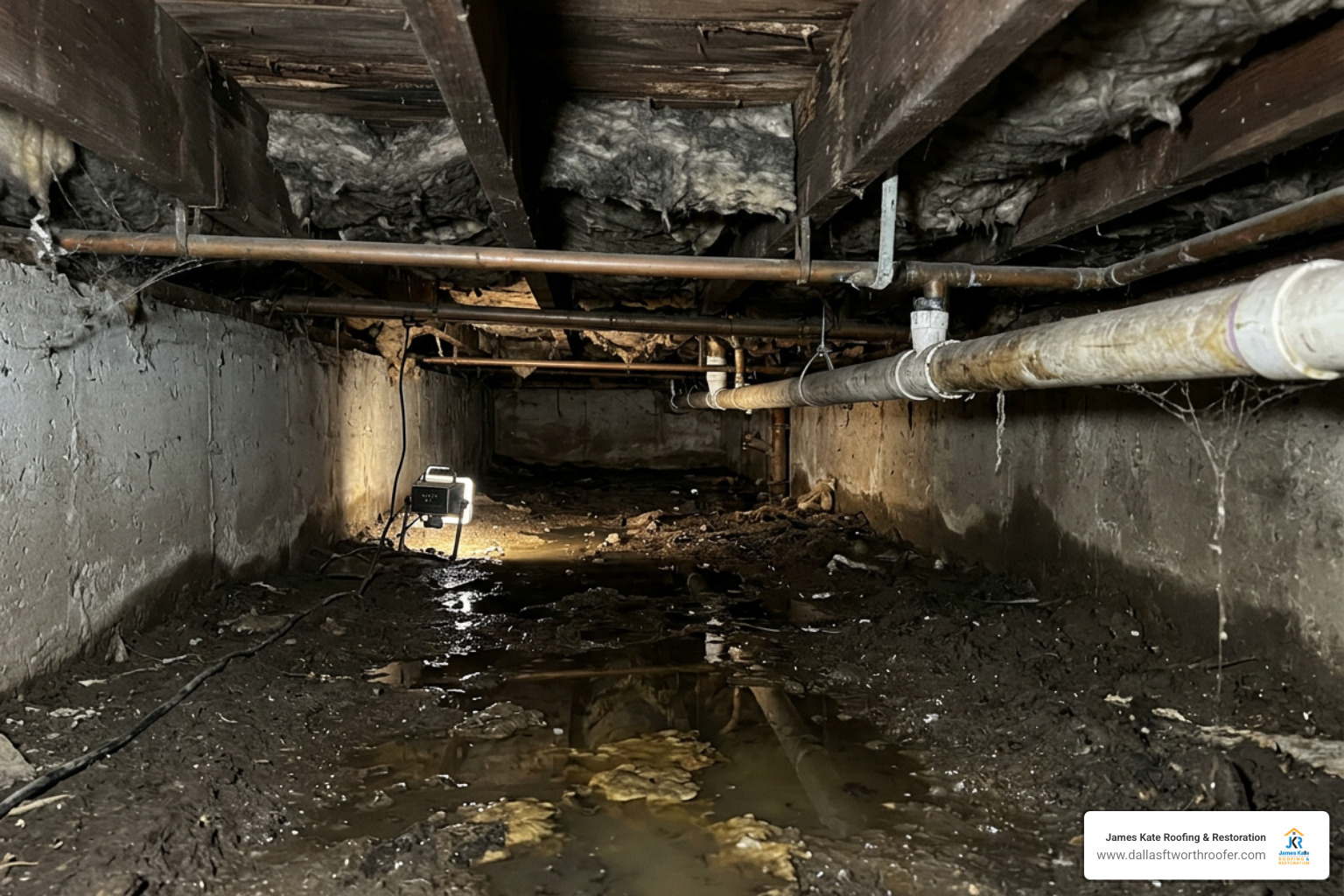
When Sewage Gets Into Your Crawl Space, Every Hour Counts
Crawl space sewage cleanup is a biohazard emergency that demands fast, careful action to protect your family’s health and your home’s structure.
Here’s what you need to know right away:
- Stop the source — shut off water and avoid using plumbing until the leak or backup is fixed.
- Stay out — raw sewage contains dangerous pathogens and toxic gases; do not enter without proper protective gear.
- Ventilate carefully — open crawl space vents but seal off interior access points to keep contaminated air out of your living space.
- Call a professional — for any spill larger than 10 square feet, or sewage that has been sitting for more than 24 hours, professional remediation is the safe choice.
- Act within 24–48 hours — mold can begin growing that fast in a damp, contaminated crawl space.
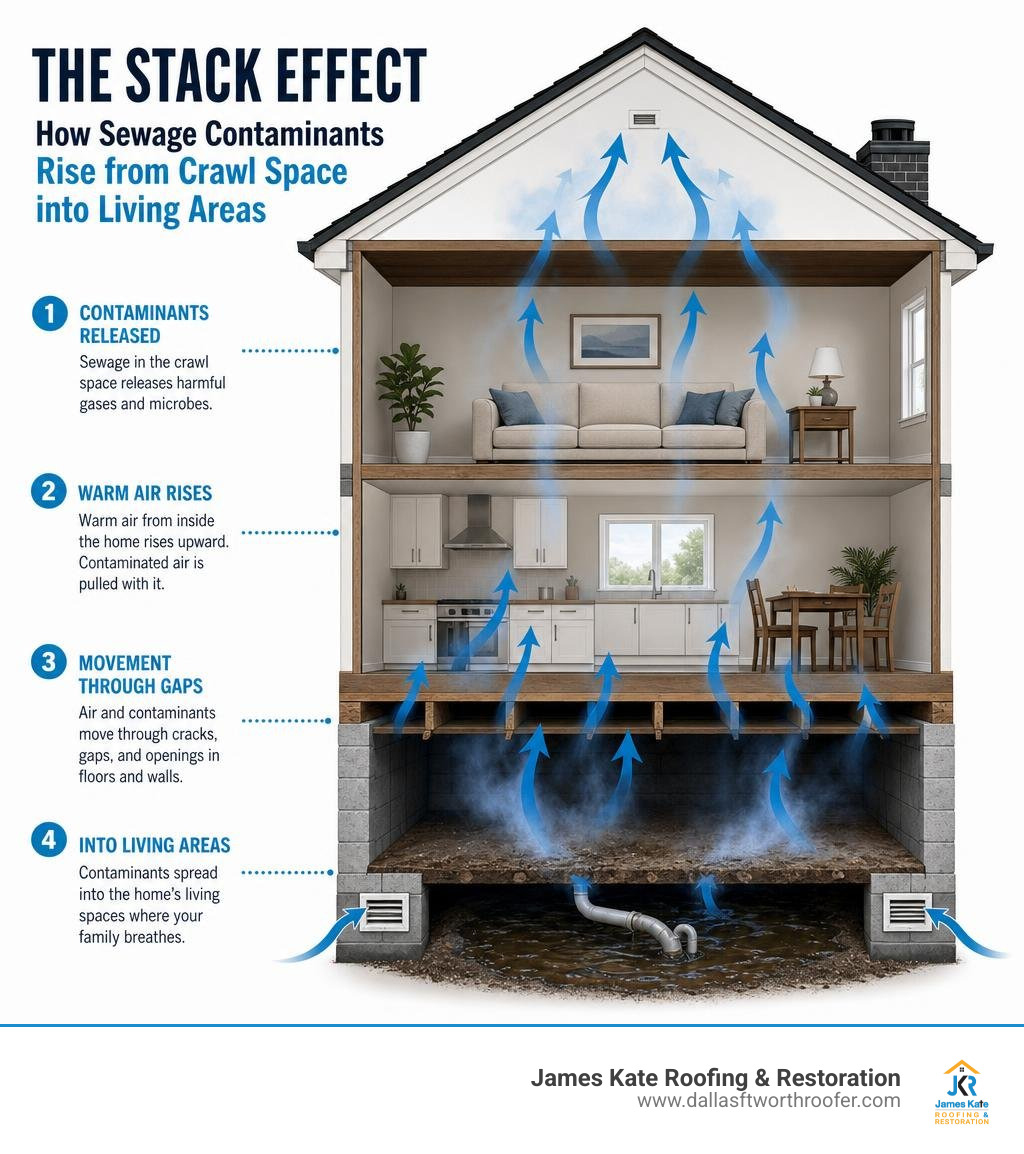
Raw sewage is classified as Category 3 black water — the most hazardous type of water damage. It can carry over 120 viruses, dangerous bacteria like E. coli and Salmonella, and toxic gases including hydrogen sulfide and methane. In a confined crawl space, those hazards don’t stay put. A phenomenon called the stack effect pulls contaminated air upward through floor gaps and into the rooms where your family lives and breathes.
The damage compounds fast. What starts as a broken pipe or a backed-up sewer line can turn into widespread mold growth, rotting floor joists, and a home that feels — and smells — uninhabitable.
I’m Dustin Eatman, owner of James Kate Roofing & solar, and I’ve overseen water and sewage damage solar projects across the Dallas–Fort Worth area, including complex crawl space sewage cleanup jobs involving broken cast iron lines, municipal backups, and tree root invasions. This guide walks you through exactly what to do — step by step — so you can move fast, stay safe, and make the right calls.
Key terms for crawl space sewage cleanup:
The Hidden Dangers of Category 3 Black Water
In the solar industry, we classify water damage into three distinct categories based on cleanliness and hazard level. Raw sewage sits squarely in Category 3, commonly referred to as “black water.” This isn’t just dirty water; it is a highly unsanitary, biohazardous soup that poses an immediate threat to human health.
When a sewage line breaks under your home, it introduces a cocktail of organic waste, industrial chemicals, and active pathogens directly into the soil and foundation elements. Unlike clean water from a broken supply line, black water does not lose its toxicity over time. In fact, as the hours tick by, the bacterial colonies and viral loads multiply exponentially.
Beyond the liquid waste itself, confined crawl spaces trap toxic gases released during the decomposition of organic matter. Methane and hydrogen sulfide are the two primary culprits. Methane is highly flammable and can become explosive in confined, unventilated spaces. Hydrogen sulfide is a toxic gas that carries a notorious “rotten egg” odor. At high concentrations, hydrogen sulfide can actually deaden your sense of smell, tricking you into thinking the danger has passed when it is actually at its most lethal.
Furthermore, the high humidity levels generated by standing sewage create a perfect incubation chamber for mold. Mold spores can begin colonizing wooden joists, subfloors, and support beams within 24 to 48 hours of exposure.
To protect your home and family, it is critical to address these invisible threats immediately. Learn more about Category 3 water loss to understand why this classification requires specialized containment and handling protocols.
Health Risks and Pathogens in Raw Sewage
Entering a crawl space contaminated with raw sewage without military-grade personal protective equipment (PPE) is an open invitation to severe illness. Raw sewage can contain over 120 potential viruses, including highly contagious strains like Hepatitis A, Hepatitis B, rotavirus, adenoviruses, and the Norwalk virus.
In addition to viral threats, pathogenic bacteria thrive in this environment. Virulent strains of Salmonella, Campylobacter, and E. coli are standard components of domestic wastewater. These bacteria cause acute gastrointestinal distress, severe skin infections, and respiratory complications. Parasites such as Giardia, Cryptosporidium, and various roundworms or tapeworms also lie in wait, ready to infect anyone who makes contact with the contaminated soil.
Another often-overlooked hazard is the presence of endotoxins. These are toxic compounds found inside the cell walls of gram-negative bacteria. When these bacteria die and disintegrate, they release endotoxins into the air. Inhaling these particles can trigger severe inflammatory responses, respiratory issues, and flu-like symptoms.
These pathogens do not stay trapped beneath your floorboards. Air currents, foot traffic, and even domestic pests like rodents or insects can easily transfer these microscopic threats into your clean living areas. For detailed medical and environmental research on these specific hazards, you can review the Scientific research on sewage contamination hazards.
Understanding the local water and sewage infrastructure is also helpful when evaluating municipal backup risks. For instance, residents in our service areas can consult the Arlington water quality report to see how local municipal systems manage and monitor water safety.
Structural Damage and the Stack Effect
While the health risks are terrifying, the physical damage to your home can be equally devastating. Crawl spaces are built of structural wood: joists, sill plates, subfloors, and support posts. When raw sewage saturates these porous wooden components, the wood fibers absorb the moisture and pathogens like a sponge.
Over time, this constant dampness leads to wood rot, warping, and structural weakening. If left unaddressed, your subfloor can sag, and the structural integrity of your home’s foundation can be compromised. Furthermore, concrete and masonry piers can suffer from moisture degradation, leading to foundation shifting and settling.
This moisture also fuels rapid mold growth. Certain species of mold produce airborne mycotoxins that are highly toxic when inhaled. This is where the “stack effect” becomes a major household crisis.
The stack effect is a natural physical process where warm air rises to the upper levels of a home and escapes through the roof or upper vents. As this warm air escapes, it creates a vacuum that pulls cooler air upward from the lowest point of the house — your crawl space.
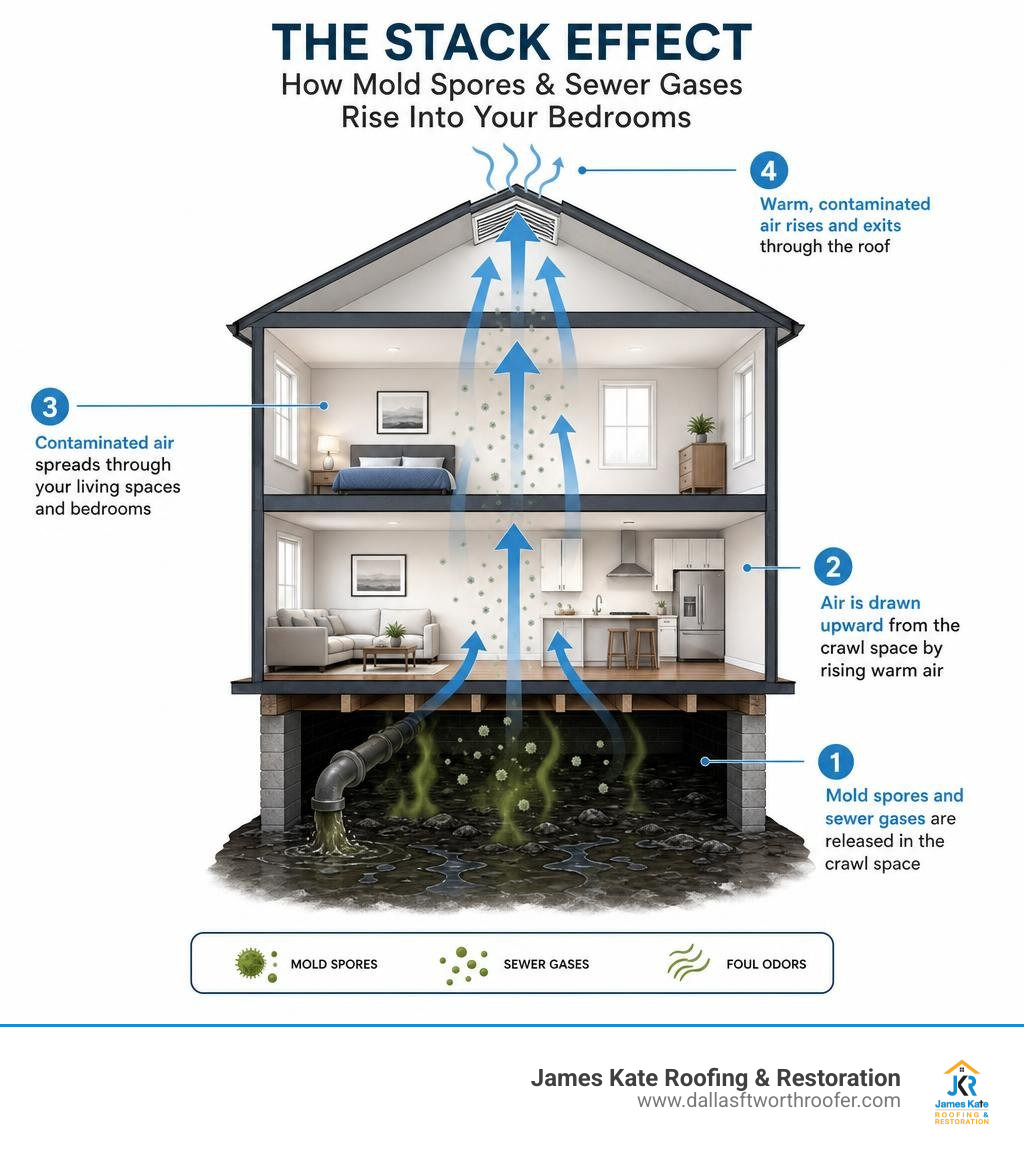
This means up to 50% of the air you breathe on the first floor of your home originates in your crawl space. If that space is filled with raw sewage, the stack effect acts as a natural delivery system, pumping mold spores, bacteria, and foul sewer gases directly into your bedrooms, living rooms, and kitchen. For a deeper dive into how this process affects your property, read about Understanding Category 3 water damage.
Step-by-Step Sewage Remediation Process
Remediating a sewage spill under a house requires a systematic, aggressive approach to ensure the space is returned to a safe, sanitary state. This isn’t a job where you can cut corners or spray some household cleaner and call it a day.
The standard professional process involves containment, extraction, physical waste removal, detailed disinfection, and controlled structural drying. Because of the confined nature of crawl spaces, executing these steps safely requires specialized machinery and training.
To help you understand what this process looks like, here is a comparison table outlining the capabilities of a DIY attempt versus a professional solar crew:
| Cleanup Task | DIY Capability | Professional solar Capability |
|---|---|---|
| Safety & Containment | Low (Basic masks, plastic sheeting, high risk of cross-contamination) | High (6-mil poly containment, negative air machines, commercial HEPA air scrubbers) |
| Sewage Extraction | Limited (Shop vacs with low capacity, high risk of spilling or improper dumping) | Advanced (Submersible sewage pumps, industrial truck-mounted extraction systems) |
| Soil Remediation | Poor (Raking surface soil, manual bagging, high physical strain) | Thorough (Excavation of top 1–2 inches of contaminated dirt, heavy-duty disposal) |
| Sanitization | Low (Bleach sprays that fail to penetrate porous wood or soil) | Complete (EPA-approved broad-spectrum disinfectants, enzymatic treatments) |
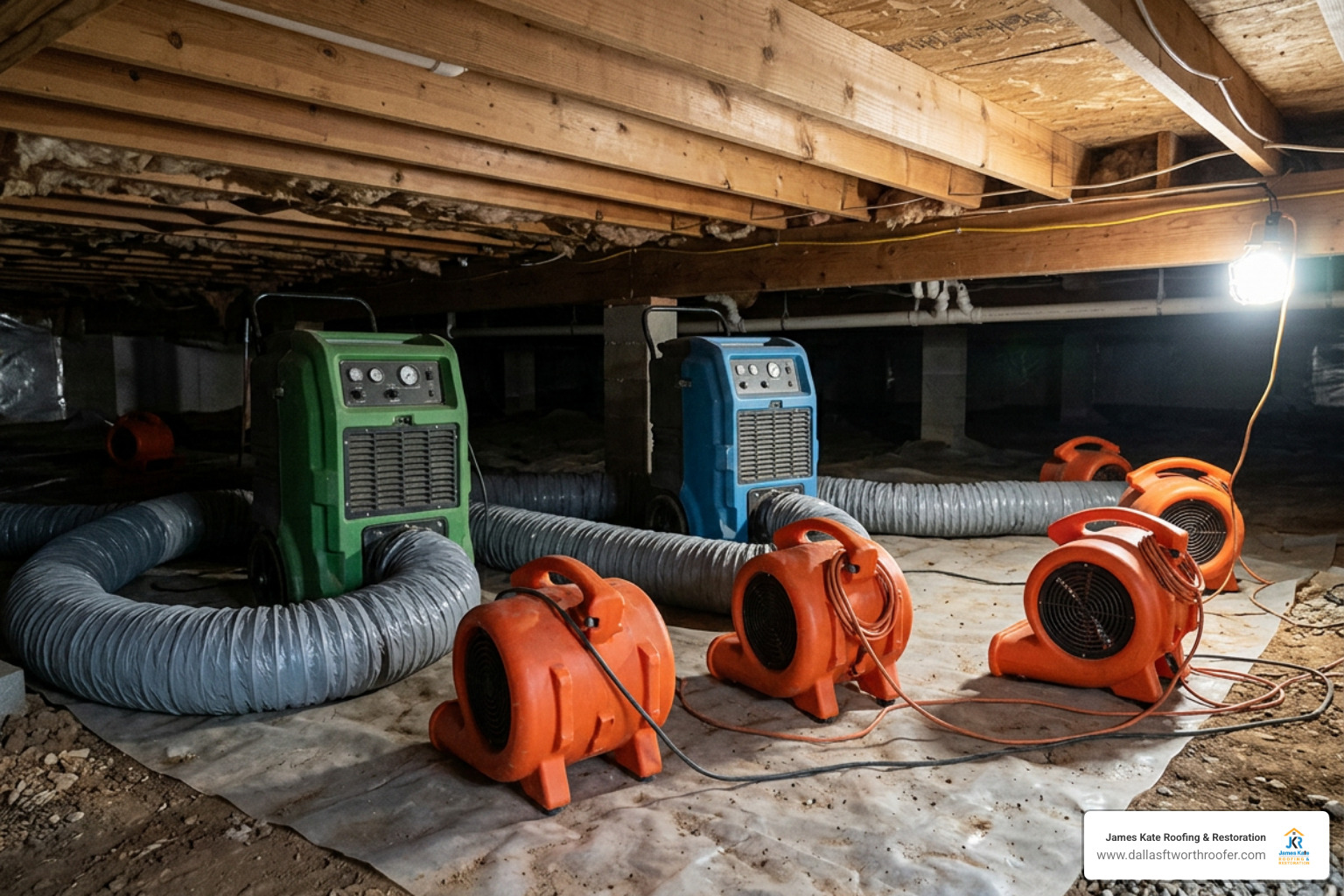
| Structural Drying | Slow (Household fans, takes weeks, high risk of secondary mold) | Rapid (Industrial LGR dehumidifiers, high-velocity air movers, 3–7 day dry times) |
Preparing for Safe Crawl Space Sewage Cleanup
Before anyone slides under a home to tackle a sewage spill, rigorous safety preparations must be completed. This is a hazardous environment where a single mistake can lead to infection or injury.
First, the utilities must be addressed. Turn off the electricity to the crawl space and any nearby under-house wiring to eliminate the risk of electrocution in wet areas. Next, shut off the main water supply if the spill is caused by an active plumbing leak.
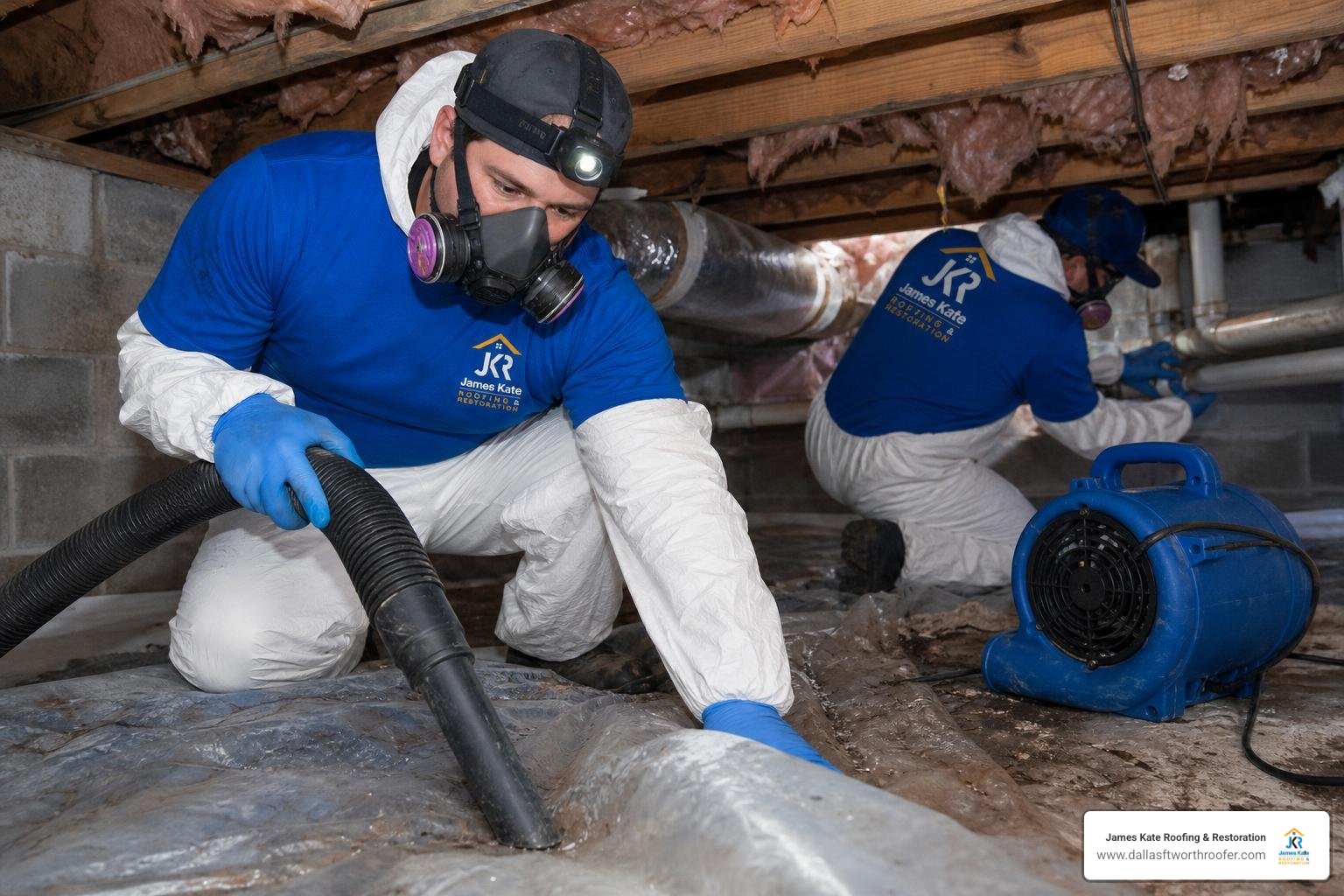
Second, establish containment. We seal off all access points, floor registers, and vents connecting the crawl space to the living areas above using heavy-duty 6-mil plastic sheeting. This prevents contaminated air, dust, and odors from migrating into your home during the cleanup. Negative air pressure machines equipped with HEPA filters are set up to exhaust air safely outside, ensuring that any airborne pathogens are captured.
Third, personal protective equipment (PPE) is non-negotiable. Anyone entering the space must wear:
- A full-body, waterproof protective suit (such as a Tyvek suit).
- Heavy-duty, waterproof rubber boots with steel toes.
- Double layers of protective gloves (nitrile inner gloves, heavy rubber outer gloves).
- A full-face respirator equipped with P100 particulate and organic vapor cartridges to protect against airborne pathogens and toxic gases.
To understand the regulatory and safety frameworks that govern these protective standards, review our Guide to identifying water loss categories.
Professional Equipment Used in Crawl Space Sewage Cleanup
Once the space is prepped and safe to enter, the physical cleanup begins. We utilize heavy-duty, commercial-grade equipment designed to handle biohazardous waste efficiently.
- Submersible Pumps and Wet Vacuums: If there is standing water or liquid sewage, industrial submersible pumps are deployed to extract the bulk of the liquid. For semi-solid waste and smaller puddles, heavy-duty wet-dry vacuums with HEPA filtration are used.
- Soil Excavation: On dirt crawl space floors, liquid sewage quickly sinks into the ground. Simply drying it out leaves pathogens trapped in the soil. We physically excavate and remove the top 1 to 2 inches of highly contaminated soil, double-bagging the waste in 3-mil contractor bags for proper biohazard disposal according to Texas environmental regulations.
- Enzymatic Cleaners and Disinfectants: After physical waste is removed, all hard surfaces (joists, concrete piers, subflooring) are scrubbed with heavy-duty detergents. We then apply EPA-registered, broad-spectrum disinfectants and enzymatic cleaners. These enzymes break down organic matter and neutralize odors at the molecular level, rather than just masking them.
- Soil Treatment: For the remaining soil, we apply garden lime (calcium hydroxide) or advanced enzymatic soil treatments. Lime raises the pH level of the soil, which neutralizes odors and accelerates the natural degradation of organic waste.
Drying and Dehumidifying the Crawl Space
Removing the sewage is only half the battle; you must also remove the moisture. If the crawl space remains damp, mold will take over the structural wood within days, leading to rot and indoor air quality issues.
To dry the space rapidly and thoroughly, we install industrial Low-Grain Refrigerant (LGR) dehumidifiers. These powerful machines pull massive amounts of moisture out of the air, even in cold or highly humid environments.
Alongside the dehumidifiers, we position high-velocity axial air movers. These fans are strategically angled to sweep dry air across wet wooden joists and subflooring, encouraging rapid evaporation.
Throughout this process, our technicians use specialized moisture meters, thermal imaging cameras, and hygrometers to map the drying progress. We continuously monitor the relative humidity in the crawl space, targeting a level below 50% to guarantee that mold cannot survive. Once the wood is verified dry and sanitary, a new, heavy-duty 6-mil vapor barrier is installed across the crawl space floor to seal out future ground moisture.
Professional Remediation: Costs and Insurance
When homeowners discover a lake of sewage under their house, their first question is almost always: How much is this going to cost, and will my insurance cover it?
Professional crawl space sewage cleanup is a highly technical biohazard service, and the pricing reflects the specialized equipment, PPE, labor, and disposal fees required. On average, professional cleanup costs range from $10 to $25 per square foot. For minor, localized spills (under 100 square feet) that are caught immediately, costs may range from $1,500 to $3,000. However, for extensive, long-standing backups that saturate the entire crawl space, require soil excavation, structural drying, and mold remediation, total costs can easily exceed $8,000 to $10,000.
When it comes to insurance, coverage depends heavily on the source of the backup and the specific language in your policy.
Standard homeowners insurance policies typically do not cover sewage backups unless you have purchased a specific endorsement, often called a Sewer Backup or Sump Pump Overflow Rider. If you have this rider, and the backup was caused by a sudden, accidental plumbing failure inside your home or a municipal sewer backup, the cleanup and structural repairs are generally covered.
However, if the backup was caused by neglect (such as failing to repair a known, slow leak over several months) or regional surface flooding, standard insurance may deny the claim. To help you navigate these financial waters, you can consult our Water damage repair costs guide for a detailed breakdown of solar pricing and insurance claim tips.
Frequently Asked Questions about Crawl Space Sewage Cleanup
Navigating a sewage backup is stressful, and homeowners often have immediate, practical questions. Here are the answers to the most common concerns we hear in the field.
How long does it take for a crawl space to dry after a sewage spill?
With professional solar equipment (including LGR dehumidifiers and high-velocity air movers), a crawl space typically takes 3 to 7 days to dry completely.
If you attempt to dry the space using household fans or by simply opening the crawl space vents, the process can take several weeks or even months, especially during humid Texas spring and summer months in Arlington, Mansfield, or Grand Prairie. This prolonged drying time virtually guarantees severe mold growth, wood rot, and ongoing structural damage.
Can bleach alone eliminate sewage odors and contamination?
No. Bleach is an effective disinfectant for non-porous surfaces like tile or metal, but it is highly ineffective for crawl space sewage cleanup.
First, bleach does not penetrate porous materials like soil, concrete, or structural wood. It quickly flashes off the surface, leaving deep-seated bacteria and mold spores alive. Second, bleach does not neutralize organic odors at their source; it simply masks them with a harsh chemical smell. Mixing bleach with organic matter can also release hazardous fumes. Proper sanitization requires physical waste removal, soil excavation, and specialized enzymatic disinfectants that break down organic compounds.
Does homeowners insurance cover sewage backups?
As mentioned above, standard homeowners insurance policies usually exclude sewage backups unless you have a specific Sewer Backup and Sump Pump Overflow endorsement.
If you have this rider and the backup was caused by a sudden, accidental plumbing failure (like a burst cast iron pipe) or a municipal main line failure, the policy should cover the cost of professional remediation. It is highly recommended to check your policy annually and add this endorsement if you do not already have it — it is usually very inexpensive but saves thousands of dollars in an emergency.
Conclusion
Finding raw sewage under your home is a stressful, overwhelming experience. It is a true household emergency that threatens your family’s health, ruins your indoor air quality, and actively damages your home’s foundation.
When a sewage spill occurs, trying to handle it yourself with a shop vac and a bottle of bleach is not only dangerous, but it also leaves your home vulnerable to long-term mold and structural rot. You need a team with the specialized training, commercial equipment, and biohazard expertise to get the job done right.
At James Kate Roofing & solar, we are a family-owned DFW company built on honesty, integrity, and Biblical principles. Serving our neighbors in Mansfield, Arlington, Granbury, Grand Prairie, and Midlothian, we provide rapid, 24/7 emergency response for sewage backups and water damage. We don’t just extract the waste; we handle the complete mitigation, mold remediation, and the build-back construction to restore your home to its original, safe condition.
If you are facing a sewage emergency under your home, do not wait for the odors and pathogens to take over your living space. Schedule professional solar services with James Kate Roofing & solar today, and let our family take care of yours.
Dustin Eatman is a seasoned roofing professional with deep, hands-on expertise that spans residential and commercial roofing, insurance solar, and long-term roof asset management. As the owner of James Kate Roofing & solar in the Dallas–Fort Worth metroplex, he’s built a reputation for diagnosing roof systems accurately, communicating clearly, and executing projects with a high standard of workmanship and documentation. Dustin understands the technical details that make roofs perform—proper underlayment selection, slope and drainage considerations, ventilation strategy, flashing and penetration detailing, and manufacturer-specific installation requirements—because he’s worked through the real-world challenges that cause leaks, premature wear, and warranty issues. He’s equally fluent in the operational side of roofing: jobsite planning, quality control, safety, material ordering, crew coordination, and customer experience from inspection to closeout. In insurance-related projects, Dustin brings practical knowledge of claim workflows, adjuster meetings, scope alignment, supplements, and the importance of photo evidence and thorough records, helping property owners navigate stressful situations with confidence. For commercial clients—especially property and facility managers—he emphasizes proactive maintenance and targeted repairs that reduce disruption, extend roof life, and prevent expensive interior damage. Dustin also stays focused on doing things the right way: educating customers on realistic options, setting expectations, and prioritizing solutions that hold up over time rather than quick fixes. That blend of technical skill, field experience, process discipline, and owner-level accountability is what makes Dustin Eatman a trusted expert in the roofing industry.