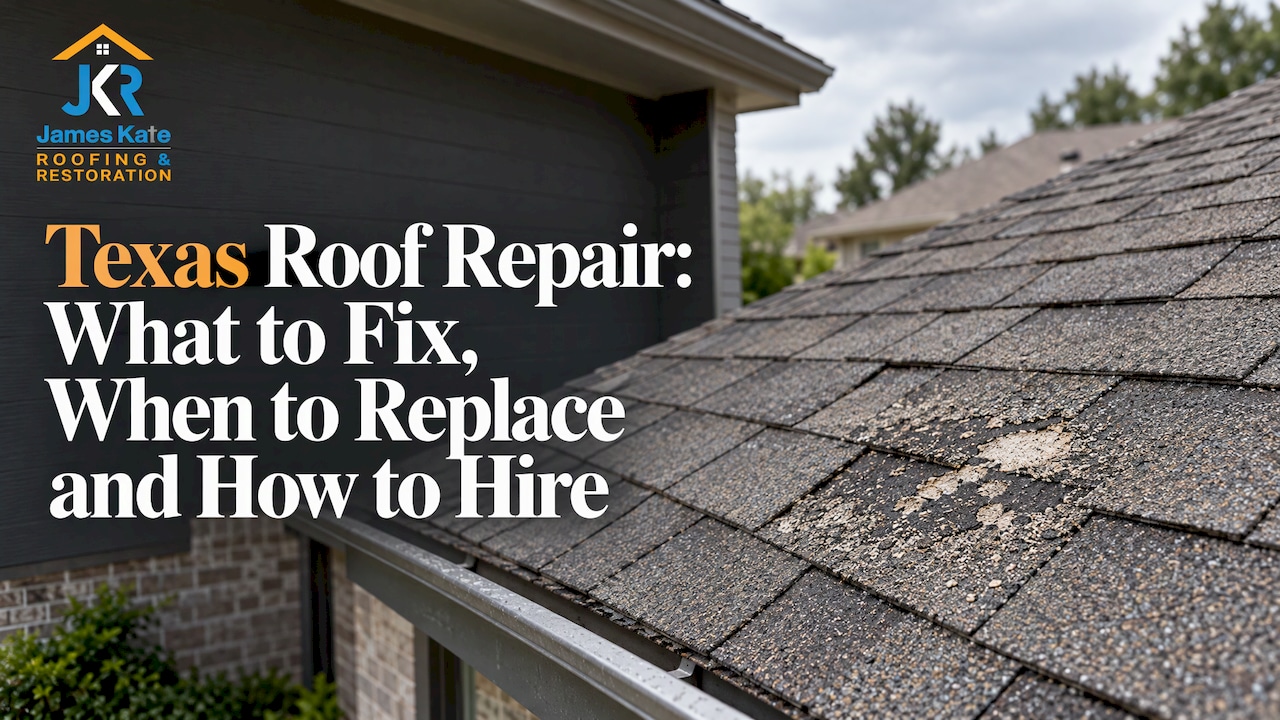
A Texas roof takes hail, wind, and months of heat, so the right repair is the one that matches what is wrong under the shingles, not only what you see from the yard. The best order is simple: get the roof inspected, get the findings in writing, then decide between a repair and a replacement. At James Kate Roofing & solar, a GAF Master Elite® contractor serving North Texas, inspections and estimates are free, so that first step costs you nothing.
TL;DR
- After any storm, look for missing, cracked, or curled shingles, and have the roof inspected every few years, as the Texas Department of Insurance (TDI) advises.
- Repair fits isolated damage on a sound roof. Replacement fits widespread wear, repeated leaks, or a roof past roughly 15 to 20 years.
- Insurers do not pay for a new roof just because it is old or worn, so document storm damage promptly.
- Windstorm inspection rules apply in the Texas Gulf Coast counties, and permits apply in many cities, so confirm both before work starts.
- Compare written bids, check the contractor’s insurance and warranty terms, and pay the final bill only when the work is finished.
Table of Contents
- Signs your Texas roof needs repair
- What a proper inspection should give you
- Repair or replace: the numbers that decide it
- What drives the price of a repair
- Storm damage, insurance, and documentation
- Windstorm rules, permits, and code
- How to choose a Texas roofer
- Residential and commercial: what changes
- Where we help
- Our perspective
- FAQ
- Sources
Signs your Texas roof needs repair
Start from the ground and the attic, not the ladder. Walking a damaged roof is how homeowners get hurt and how a small problem becomes a bigger one.
TDI’s advice is to check for missing or damaged shingles after a storm and to have a roof inspector look at the roof every few years. Its voluntary inspection guidance names curled, cracked, significantly deteriorated, or missing roof coverings as conditions that fail a good-maintenance standard (TDI, Voluntary Inspection Program).
In practice, look for:
- Shingles that are missing, lifted, creased, or cracked.
- Dark granules collecting in gutters or at downspout exits, or bare spots on the shingles.
- Brown stains on ceilings, or daylight and damp insulation in the attic.
- Bent or loose flashing around chimneys, vents, and valleys.
- Damaged ridge caps. Our guide to ridge cap repair covers the signs and process.
Hail is the harder case, because bruising on shingles can be invisible from the ground. If a storm has passed through your area, our guide to spotting roof damage after a storm shows what to photograph, and hail damage signs and inspection explains what a trained inspector looks for.
What a proper inspection should give you
A useful inspection ends with a written finding you can act on. It should tell you which parts of the roof are damaged, how far the damage spreads, what condition the decking and ventilation are in, and what each option costs.
That matters because the repair decision depends on the system, not just the shingle. IKO’s guidance frames it this way: repair makes sense when damage is isolated, the decking is sound, ventilation is adequate, and the repair can be integrated properly (IKO).
Our approach is built on diagnosis. We assess storm damage and inspect roofs, then recommend a solution based on the data. Our instant roofing quote tool reads a roof’s condition against historical weather data, so you can see whether severe storms have likely hit your address. Inspections and estimates are free, for homes and for commercial roofs.
Repair or replace: the numbers that decide it
Most small leaks can be stopped. Consumer Reports notes that a leak limited to a few spots may need only caulk, a few new shingles, or new flashing. It also says recurring leaks on an out-of-warranty roof call for a new roof, and that replacing an out-of-warranty roof older than 20 years is wise even without visible damage (Consumer Reports).
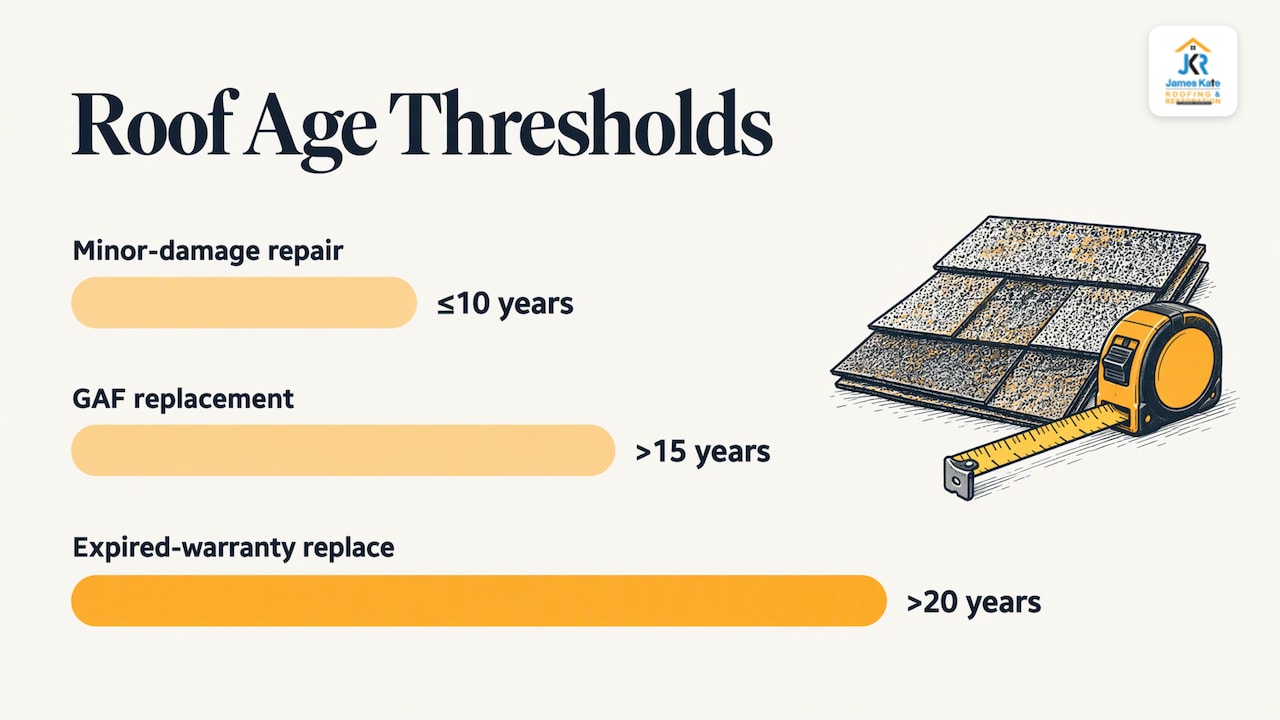
GAF offers a practical rule of thumb for 2026. Repair when the roof is 10 years old or less and the damage is minor, or the leak is easy to trace with no structural problem. Replace when the repair would cost more than 30% of a new roof, the roof is over 15 years old, it has been repaired several times, you plan to stay in the house for years, or your insurer requires a new roof (GAF).
Here is the 30% rule as a worked example. Say a replacement is quoted at $20,000. The line is $6,000. A $2,500 repair on a young roof is a clear repair. A $7,000 repair on a roof that has already been patched twice is a replacement conversation.
| Situation | Usually points to |
|---|---|
| A few missing shingles, roof under 10 years, decking sound | Repair |
| One traceable leak at a vent or flashing | Repair |
| Repairs would cost over 30% of a new roof | Replacement |
| Repeated leaks or several patched areas | Replacement |
| Widespread curling, granule loss, or sagging decking | Replacement |
| Asphalt roof past 15 to 20 years | Replacement planning |
Forbes Home adds that asphalt shingles generally last 15 to 20 years unless they are 30- or 40-year products. It lists sagging decking, widespread curling, heavy granule loss, blistering, and more than a few missing shingles as replacement triggers (Forbes Home).
If you do replace, our residential roof replacements come with a transferable 15-year workmanship warranty. That is a real benefit if you sell the house within that window. Material choice matters in Texas too: see roofing materials for Texas heat and hail and why asphalt shingles are so common here.
What drives the price of a repair
A Texas roof repair has no single price. The quote moves with a handful of factors, and knowing them helps you read a bid:
- Size of the affected area. Replacing a few shingles is a small job. Repairing a whole slope is not.
- Roof pitch and height. Steep or multi-story roofs take more labor and safety equipment.
- Material. Asphalt shingles, metal, tile, and flat commercial systems such as TPO, PVC, modified bitumen, and built-up roofing each need different crews and materials.
- Hidden damage. Wet decking or rotted underlayment is found only after the covering comes off, so a good estimate explains how that will be handled.
- Flashing and penetrations. Chimneys, skylights, and vents are the most common leak points and take careful work.
- Access and emergency timing. Same-day tarping after a storm is priced differently from a planned repair.
We do not publish set prices because every roof is different. We give free written estimates after looking at the roof.
Storm damage, insurance, and documentation
If a storm caused the damage, the order of steps affects your claim. Photograph the damage, stop active leaks with a temporary cover, keep receipts, and get an inspection before you sign anything. Our steps for dealing with roof storm damage and the DFW homeowner’s guide to roof insurance claims go through this in detail.
Two points from TDI are worth knowing before you call your insurer:
- Insurers do not pay for a replacement solely because a roof is old or worn (TDI). A claim has to rest on covered damage.
- Some policies pay current repair costs, known as replacement cost coverage. Policies written on an actual cash value basis may pay less when the roof is older or worn. Read your policy’s wording before a storm, not after.
A written inspection report with photos, dated close to the storm, gives you something concrete to bring to your adjuster.
Windstorm rules, permits, and code
Texas has two layers of rules, and which one applies depends on where you live.
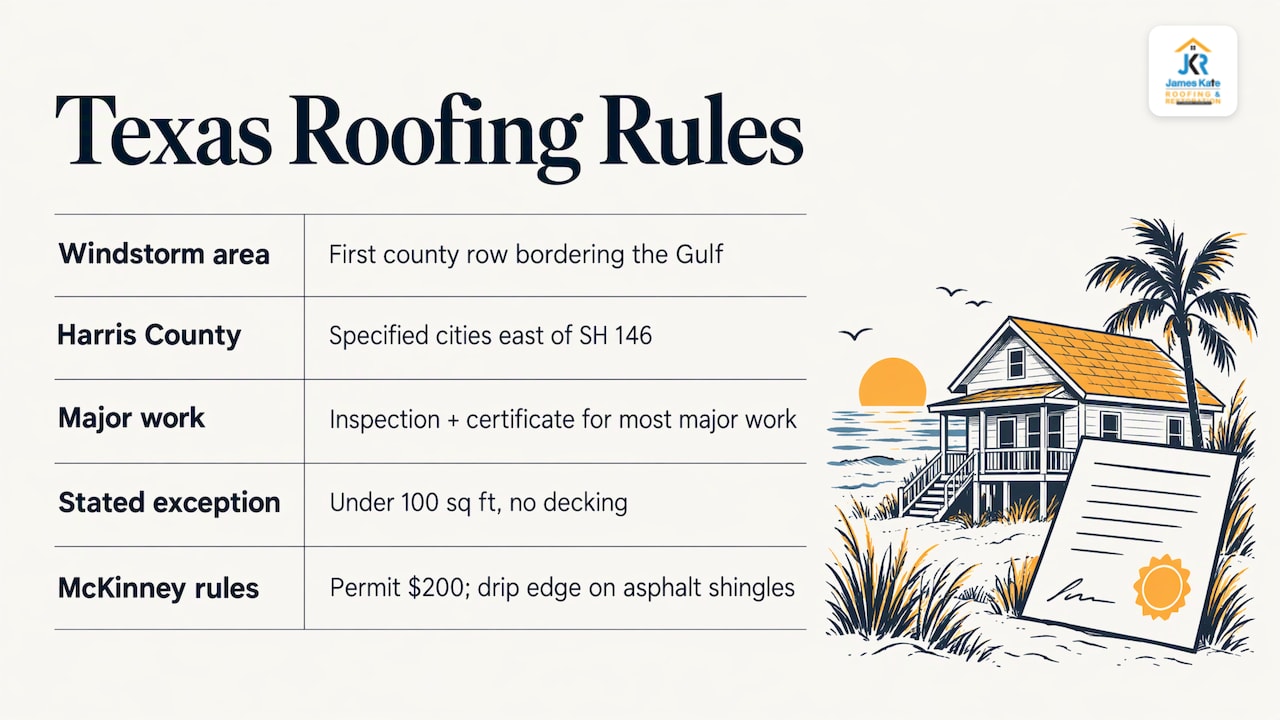
Windstorm certification. TDI states that windstorm-code requirements apply in the first row of Texas counties bordering the Gulf of Mexico and in specified Harris County cities east of State Highway 146: La Porte, Morgan’s Point, Pasadena, Seabrook, and Shore Acres (TDI). In those areas, most roof replacements and major repairs need an inspection and a certificate of compliance. Repairs under 100 square feet that do not involve decking are among the stated exceptions (TDI). If you are in one of these areas, TDI also advises asking your insurance agent about the applicable building-code requirements and contacting your local building official.
City permits. Cities set their own rules. McKinney, for example, requires permits for roofing projects, lists a $200 flat permit fee, and requires drip edge on all asphalt-shingle projects. It also calls for removing existing roof layers when the covering is water-soaked or deteriorated, or when the roof already has two or more applications (City of McKinney roofing guide). Other North Texas cities have their own packets, so ask your city’s building department before work begins.
Permits and inspections are steps the law assigns to the city or to TDI, so they are part of the job, not extras. For our North Texas projects, ask us how they will be handled in your city.
How to choose a Texas roofer
TDI’s checklist for repairs after a storm is a good standard for any roof job. It recommends that you:
- Confirm the contractor’s name, address, phone number, references, and proof of insurance or bond.
- Compare at least three written bids.
- Get signed agreements and warranty terms in writing.
- Hold the final payment until the work is complete, and where a windstorm certificate is required, until TDI issues it.
TDI also warns against contractors who solicit storm-damage work door to door (TDI). After a hailstorm, knocks on the door come fast. A local company with manufacturer credentials and a written warranty is the safer path. Our guide to choosing and verifying a Texas roofing contractor goes through each check.
What we put on the table: GAF Master Elite® status, the GAF President’s Club Award, IKO Craftsman Premier Contractor status, free inspections and estimates, and a transferable 15-year workmanship warranty on residential roof replacements.
Residential and commercial: what changes
Homeowners mostly deal with asphalt shingles, metal, or tile. Commercial owners and property managers mostly deal with flat and low-slope systems, where ponding water, seams, and penetrations are the usual trouble spots. We handle both, including TPO, PVC, modified bitumen, and built-up roofing.
For commercial buildings, an inspection before the rainy season and after every major storm keeps small seam failures from turning into interior damage. Commercial roof coatings can also extend the life of a roof that is still sound, and we offer them alongside repairs and replacements.
Where we help
We serve homeowners and commercial clients across Tarrant, Dallas, Collin, Denton, Johnson, Ellis, Hood, and Rockwall counties. If you are weighing a repair, start with a free roof inspection and estimate, or go straight to our roof repair services. Emergency roofing is on the same roofing services page.

For businesses, we offer commercial roof inspections and estimates and commercial roof repairs.
Our perspective
Most roof problems we are called about started small. A lifted shingle, a dried-out sealant line, a flashing that moved in the heat. The roof owner who gets it looked at early almost always has the cheaper, simpler fix.
That is why we start with the inspection and put the findings in writing. A homeowner or property manager should know what is damaged, how far it goes, and whether the roof is a repair candidate or at the end of its life, before anyone talks about a contract. Our instant roofing quote tool uses historical weather data so you can see if storms have likely affected your roof, and our crews then confirm it in person.
When replacement is the honest answer, we stand behind it. Our residential replacements carry a transferable 15-year workmanship warranty, and our manufacturer credentials with GAF and IKO reflect the standard we hold our work to.
Dustin Eatman
FAQ
How do I know if storm damage is covered by insurance?
Coverage depends on your policy and on whether the damage came from a covered event such as hail or wind. TDI notes that insurers do not pay for a new roof solely because it is old or worn. A dated inspection report with photos helps you present the damage to your adjuster.
Do I need a permit for roof repair in Texas?
It depends on your city and the size of the job. Many cities require permits for roofing work, and in the Gulf Coast windstorm area most replacements and major repairs need an inspection and certificate, with exceptions such as small repairs under 100 square feet that do not involve decking. Check with your local building department before work starts.
Is it better to repair or replace a roof that leaks?
A single traceable leak on a roof under about 10 years old is usually a repair. Repeated leaks, several earlier patches, or a roof past 15 to 20 years usually point to replacement. GAF’s guideline is to replace when repairs would cost more than 30% of a new roof.
How often should a Texas roof be inspected?
TDI recommends a roof inspector every few years, and an inspection after any significant storm is wise. We offer free inspections for homes and commercial properties across North Texas.
Sources
- TDI: Insurance and your roof
- TDI: Voluntary Inspection Program
- TDI: Making repairs after a storm
- TDI: What you need to know about windstorm inspections
- Consumer Reports: Roofing Buying Guide
- Forbes Home: Should I Repair Or Replace My Roof?
- GAF: How Often Should You Replace Your Roof
- IKO: How to Know if You Need a Roof Replacement
- City of McKinney: Roofing Guide
Recommended
- Roofing Contractor in Texas: How to Choose and Verify One
- Roof Ridge Cap Repair: Signs, Process and When to Replace
- Repair or Replace Your Roof? A Simple Guide To Make The Best Choice For Your Home
- Roof Structural Repair: Signs, Process and When to Call
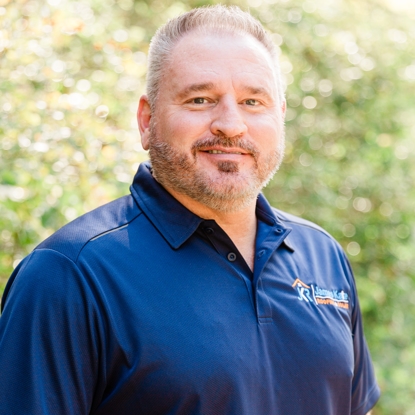
Dustin Eatman is a seasoned roofing professional with deep, hands-on expertise that spans residential and commercial roofing, insurance solar, and long-term roof asset management. As the owner of James Kate Roofing & solar in the Dallas–Fort Worth metroplex, he’s built a reputation for diagnosing roof systems accurately, communicating clearly, and executing projects with a high standard of workmanship and documentation. Dustin understands the technical details that make roofs perform—proper underlayment selection, slope and drainage considerations, ventilation strategy, flashing and penetration detailing, and manufacturer-specific installation requirements—because he’s worked through the real-world challenges that cause leaks, premature wear, and warranty issues. He’s equally fluent in the operational side of roofing: jobsite planning, quality control, safety, material ordering, crew coordination, and customer experience from inspection to closeout. In insurance-related projects, Dustin brings practical knowledge of claim workflows, adjuster meetings, scope alignment, supplements, and the importance of photo evidence and thorough records, helping property owners navigate stressful situations with confidence. For commercial clients—especially property and facility managers—he emphasizes proactive maintenance and targeted repairs that reduce disruption, extend roof life, and prevent expensive interior damage. Dustin also stays focused on doing things the right way: educating customers on realistic options, setting expectations, and prioritizing solutions that hold up over time rather than quick fixes. That blend of technical skill, field experience, process discipline, and owner-level accountability is what makes Dustin Eatman a trusted expert in the roofing industry.