Why Finding the Best Mold Inspection Near Me Matters More Than You Think
Finding the best mold inspection near me is one of the most important steps you can take to protect your home and your family’s health — especially after water damage, flooding, or a persistent leak.
Here’s a quick answer if you’re in a hurry:
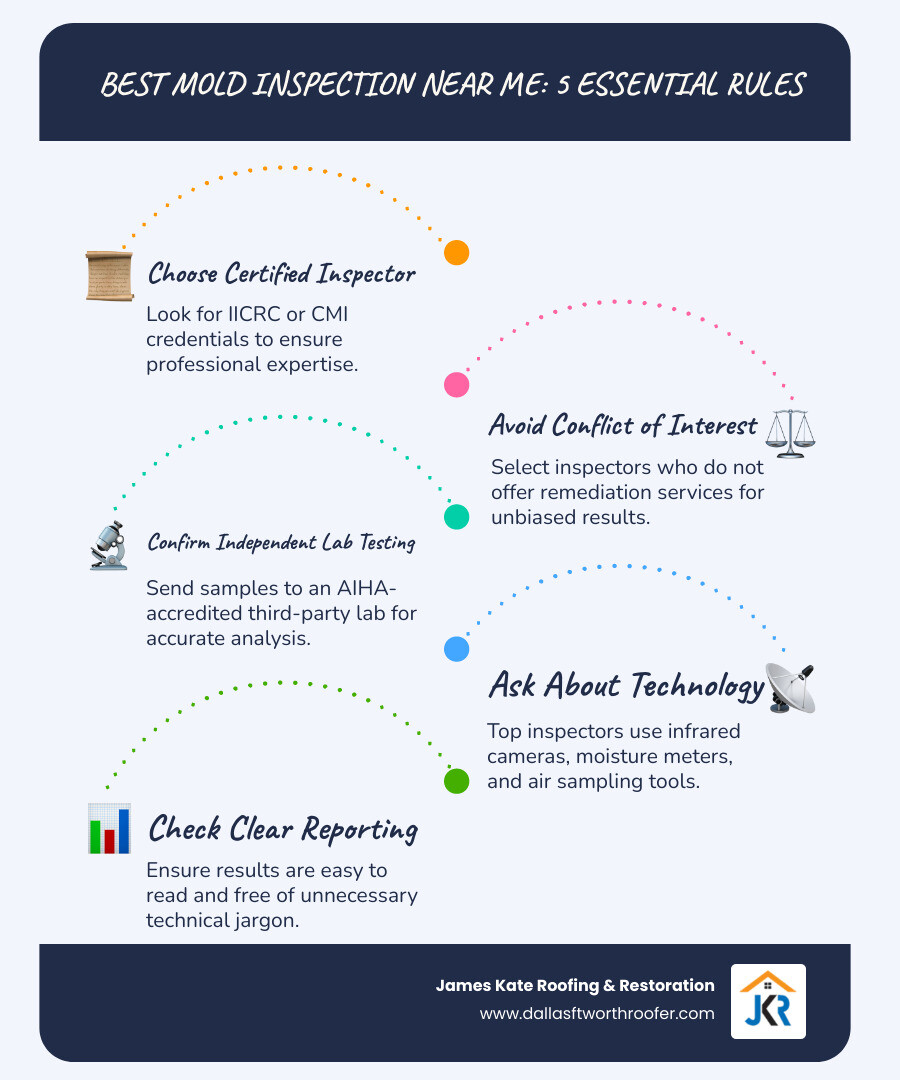
How to find the best mold inspection near me:
- Choose a certified inspector — Look for IICRC or CMI (Certified Mold Inspector) credentials
- Verify no conflict of interest — The best inspectors do not offer remediation services
- Confirm independent lab testing — Samples should go to an AIHA-accredited third-party lab
- Ask about technology — Top inspectors use infrared cameras, moisture meters, and air sampling equipment
- Check for clear reporting — Results should be easy to read, not buried in technical jargon
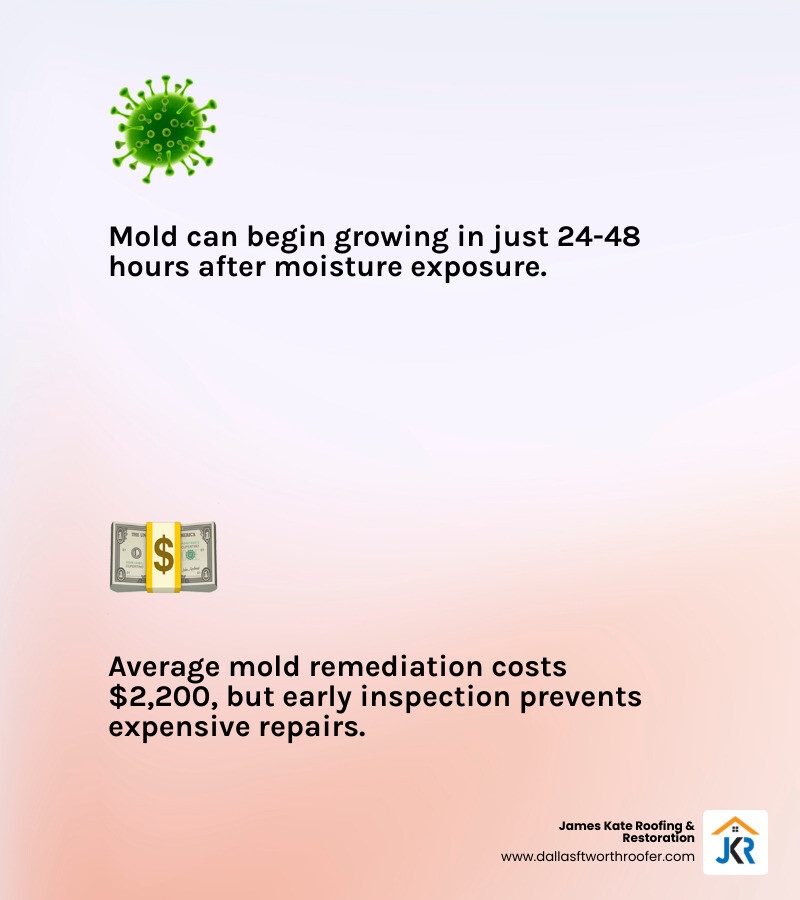
Mold is not just an eyesore. It can start growing within 24 to 48 hours after water damage occurs — often hidden behind walls, under flooring, or inside HVAC systems where you’d never think to look. By the time you smell something musty or see a dark spot, the problem may already be widespread.
The stakes are real. Mold exposure can trigger everything from mild allergy symptoms to serious respiratory issues, and untreated mold damage can compromise the structural integrity of your home over time.
I’m Dustin Eatman, owner of James Kate Roofing & solar, and through years of handling water damage and solar projects across the DFW area, I’ve seen how undetected moisture leads directly to mold problems that cost homeowners far more than a timely inspection would have. In this guide, I’ll walk you through the rules every DFW homeowner should follow to find the best mold inspection near me — so you get honest answers, not a sales pitch.
How to Find the Best Mold Inspection Near Me: 5 Essential Rules
Searching for the best mold inspection near me in May 2026 can feel overwhelming, especially when you are dealing with the stress of potential water damage. In the Dallas-Fort Worth area, from Mansfield to Midlothian, the climate often provides the perfect humidity for mold to thrive. To ensure you aren’t just getting a “cookie-cutter” assessment, you need to follow a few ground rules.
First, look for a company that prioritizes transparency. A quality inspection isn’t just a guy with a flashlight; it’s a scientific process. You want a provider that understands the local North Texas landscape—someone who knows how our specific weather patterns affect roofing and structural integrity.
Choosing a Certified and Unbiased Mold Inspector
One of the most critical rules is verifying credentials. A professional should hold certifications such as MICRO (Mold Inspection Consulting and Remediation Organization) or be a CMI (Certified Mold Inspector). These aren’t just fancy acronyms; they signify that the inspector has undergone rigorous training in environmental risk assessment.
In Texas, the law is very specific about protecting consumers. According to the Texas Occupations Code, there must be an ethical separation between the people who find the mold and the people who fix it. This prevents a “conflict of interest” where a company might “find” problems just to charge you for more expensive repairs. When looking for the best mold inspection near me, we always recommend choosing an independent assessor who provides a water damage solar survival guide rather than a high-pressure sales tactic.
Signs You Need a Professional Mold Inspection
Sometimes the signs are obvious, but often they are subtle. You should call for a professional assessment if you notice:
- Musty Odors: That “old gym bag” smell that doesn’t go away with cleaning.
- Dark Spots: Discoloration on walls, ceilings, or around window frames.
- Allergic Reactions: If your family experiences unexplained coughing, sneezing, or itchy eyes that improve when you leave the house.
- Past Leaks: Even if a leak was “fixed,” moisture could be trapped in the wall cavity.
- Visible Growth: Any fuzzy or slimy patches, regardless of color.

The Professional Mold Inspection and Testing Process
When you hire a top-tier service, the process is incredibly thorough. It’s not just about looking at the surface; it’s about understanding the “why” behind the moisture. A professional inspection typically begins with a room-by-room visual evaluation, focusing on high-risk areas like kitchens, bathrooms, and laundry rooms.
Services Included in a Professional Assessment
A comprehensive assessment should include:
- Moisture Mapping: Using specialized tools to find where water is hiding behind drywall or under flooring.
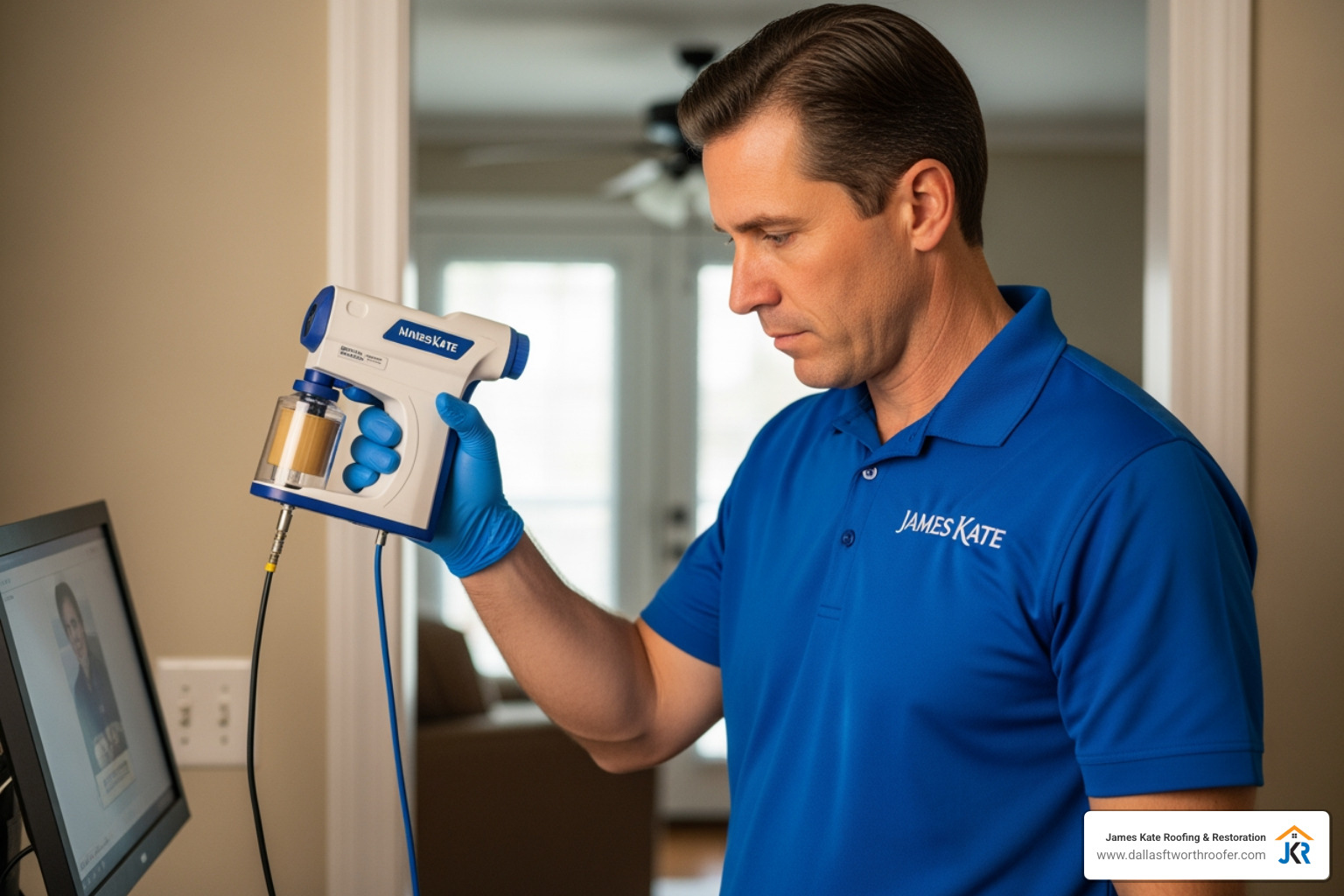
- Air Quality Testing: Collecting air samples to compare indoor spore counts against an outdoor “baseline” sample.
- Surface Swabs: Taking direct samples of visible growth to identify the specific species.
- Humidity Checks: Measuring the relative humidity in each room to see if it’s high enough to support mold growth (typically above 60%).
- Environmental Risk Review: Identifying structural issues, such as roof leaks or poor ventilation, that could lead to commercial water damage or residential issues.
Advanced Technology Used by the Best Mold Inspection Near Me
The days of guessing are over. The best mold inspection near me will utilize high-tech tools to see what the human eye cannot.
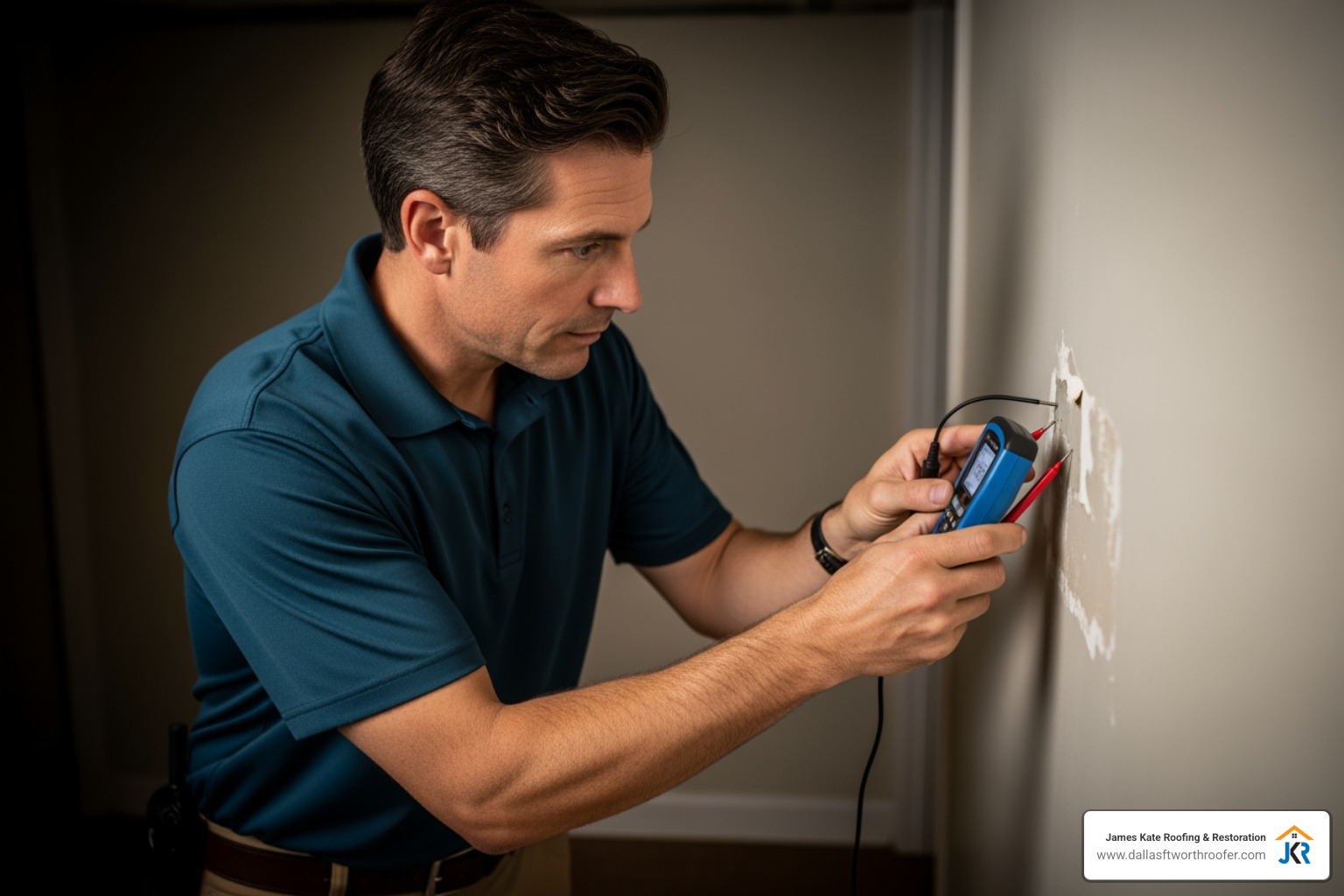
- FLIR Infrared & Thermal Imaging: These cameras detect temperature differences. Since wet materials are usually cooler than dry ones, this technology helps us “see” through walls to find hidden leaks.
- Moisture Meters: These devices provide a digital reading of the moisture content in wood, drywall, and masonry.
- Hygrometers: These measure the temperature and humidity to determine if the environment is “mold-friendly.”
- Borescope Inspection: For a minimally invasive look, inspectors can drill a tiny hole and insert a camera into wall cavities to check for hidden colonies.
Cost, Timeline, and Results: What Homeowners Should Expect
Understanding the logistics helps take the mystery out of the process. In the DFW market, including Arlington and Grand Prairie, costs can vary based on the size of your property and the number of samples required.
Understanding the Cost and Timeline of the Best Mold Inspection Near Me
On average, a professional mold inspection can range from $300 to $600 for a standard residential property, though specialized testing or larger commercial buildings will cost more.
| Service Type | Estimated Cost Range | Typical Duration |
|---|---|---|
| Targeted Area Inspection | $250 – $400 | 1 Hour |
| Full Residential Inspection | $450 – $800 | 2 – 3 Hours |
| Commercial Assessment | $1,000+ | 4+ Hours |
| Post-Remediation Clearance | $250 – $500 | 1 Hour |
Once the inspection is done, the samples are sent to an accredited lab. You can usually expect a detailed report within 2 to 5 business days, though many DFW providers offer expedited 24-hour results for an additional fee.
Interpreting Your Mold Inspection Results
Your report will likely contain a lot of data, but the most important parts are the spore counts and species identification. It is vital to compare the indoor air to the outdoor air. If your indoor “Stachybotrys” (black mold) count is significantly higher than the outside air, you have an active problem.
The report should also include a remediation protocol. This is a step-by-step plan that tells a solar company exactly what needs to be cleaned, what needs to be removed, and how to prevent the mold from returning. This is especially important when dealing with Category 3 water loss, where the water is highly contaminated.
Frequently Asked Questions About Mold Inspections
How much does a mold inspection cost on average?
As of May 2026, the average cost for a mold remediation project is approximately $2,200, with most falling between $1,100 and $3,300. However, the inspection itself is much more affordable, usually starting around $300. Investing in an inspection early can save you thousands by catching the problem before it requires major structural demolition.
How long does a mold inspection take to complete?
A standard residential inspection in areas like Midlothian or Granbury typically takes 1 to 2 hours. If the property is larger or has complex HVAC systems, it may take longer. The subsequent mold removal, if needed, usually takes between one and five days.
Why is it important to separate inspection from remediation?
This is the “Golden Rule” of the industry. By using separate companies for the assessment and the cleanup, you ensure that the results are unbiased. You don’t want a company telling you that you have a massive mold problem just because they want to sell you a $5,000 cleaning service. Independent testing gives you the honest truth.
Conclusion: Protecting Your DFW Home
At James Kate Roofing & solar, we believe in doing things the right way. Our family-owned business is built on honesty, integrity, and Biblical principles. Whether we are helping you recover from black water damage or identifying the category of water loss in your home, our goal is your safety.
As a GAF President’s Club recognized contractor, we provide top-tier roofing and solar services across Mansfield, Arlington, and the entire DFW region. We don’t just “fix” things; we restore your peace of mind with workmanship warranties of up to 25 years.
If you suspect mold in your home, don’t wait for the 48-hour growth window to close. Follow the rules, find the best mold inspection near me, and let the experts help you breathe easy again.
Dustin Eatman is a seasoned roofing professional with deep, hands-on expertise that spans residential and commercial roofing, insurance solar, and long-term roof asset management. As the owner of James Kate Roofing & solar in the Dallas–Fort Worth metroplex, he’s built a reputation for diagnosing roof systems accurately, communicating clearly, and executing projects with a high standard of workmanship and documentation. Dustin understands the technical details that make roofs perform—proper underlayment selection, slope and drainage considerations, ventilation strategy, flashing and penetration detailing, and manufacturer-specific installation requirements—because he’s worked through the real-world challenges that cause leaks, premature wear, and warranty issues. He’s equally fluent in the operational side of roofing: jobsite planning, quality control, safety, material ordering, crew coordination, and customer experience from inspection to closeout. In insurance-related projects, Dustin brings practical knowledge of claim workflows, adjuster meetings, scope alignment, supplements, and the importance of photo evidence and thorough records, helping property owners navigate stressful situations with confidence. For commercial clients—especially property and facility managers—he emphasizes proactive maintenance and targeted repairs that reduce disruption, extend roof life, and prevent expensive interior damage. Dustin also stays focused on doing things the right way: educating customers on realistic options, setting expectations, and prioritizing solutions that hold up over time rather than quick fixes. That blend of technical skill, field experience, process discipline, and owner-level accountability is what makes Dustin Eatman a trusted expert in the roofing industry.