Is Composite Cedar Shake Siding Worth It? Here’s What DFW Homeowners Need to Know
Composite cedar shake siding gives your home the rich, rustic look of real cedar — without the rot, the repainting, or the ongoing repair bills. If you’re weighing your siding options, here’s a quick summary before we dive deeper:
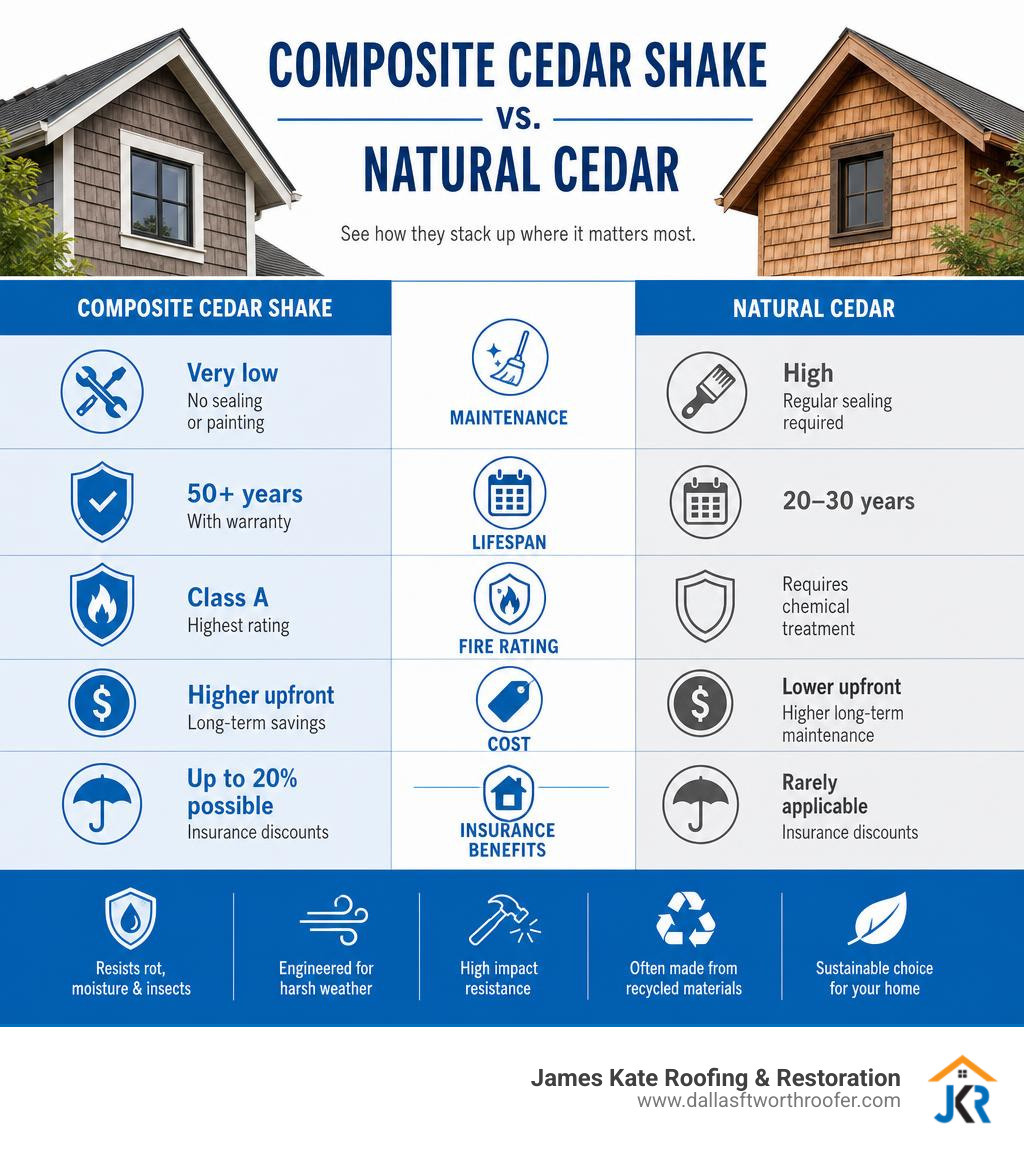
Quick Comparison: Composite Cedar Shake vs. Natural Cedar Siding
| Feature | Composite Cedar Shake | Natural Cedar |
|---|---|---|
| Maintenance | Very low — no sealing or painting | High — regular sealing required |
| Lifespan | 50+ years (with warranty) | 20–30 years |
| Fire resistance | Class A (highest rating) | Requires chemical treatment |
| Impact resistance | Class 4 (highest rating) | No rating |
| Insurance discounts | Up to 20% possible | Rarely applicable |
| Weight per square | ~170–321 lbs | 400+ lbs |
| Rot/insect resistance | Built-in | Moderate; degrades over time |
| Eco-friendly | Often made from recycled materials | Requires harvesting old-growth trees |
Natural cedar looks beautiful when it’s new. But it fades fast, warps in moisture, and demands constant upkeep. One homeowner from Bay Shore, NY noted that natural cedar shingles lose their fresh appearance surprisingly quickly — and that’s a frustration shared by homeowners across the country.
Composite alternatives solve that problem while keeping the look intact.
I’m Dustin Eatman, owner of James Kate Roofing & solar in the Dallas–Fort Worth area, and I’ve worked hands-on with a wide range of exterior cladding systems — including composite cedar shake siding — helping DFW homeowners find solutions that hold up against Texas heat, hail, and high winds. Let’s walk through everything you need to know to make a smart choice for your home.
Understanding Synthetic Cedar Siding
To appreciate how far exterior home design has come by 2026, you have to look at the evolution of engineered cladding. Historically, natural wood was the go-to for high-end homes. Today, advanced polymer technology allows manufacturers to replicate natural textures with incredible precision, creating a wood alternative that outperforms the real thing on every level.
What is Composite Cedar Shake Siding?
Composite cedar shake siding is an engineered cladding material designed to replicate the deep textures, grain patterns, and rugged lines of hand-split natural cedar shakes. Unlike thin, flat vinyl siding, composite siding utilizes advanced material science to achieve a thick, realistic profile.
A prime example of this innovation is ASCEND® Composite Cladding – Alside , which features proprietary (GP)2 technology. This system combines glass-reinforced polymer with graphite-infused polystyrene. The result is a lightweight, highly insulated, and structurally rigid plank that looks exactly like painted wood. Other manufacturers use closed-cell polyurethane or recycled polyethylene polymers to create solid, heavy-duty shakes that feel substantial to the touch.
How It Differs from Natural Wood Shingles
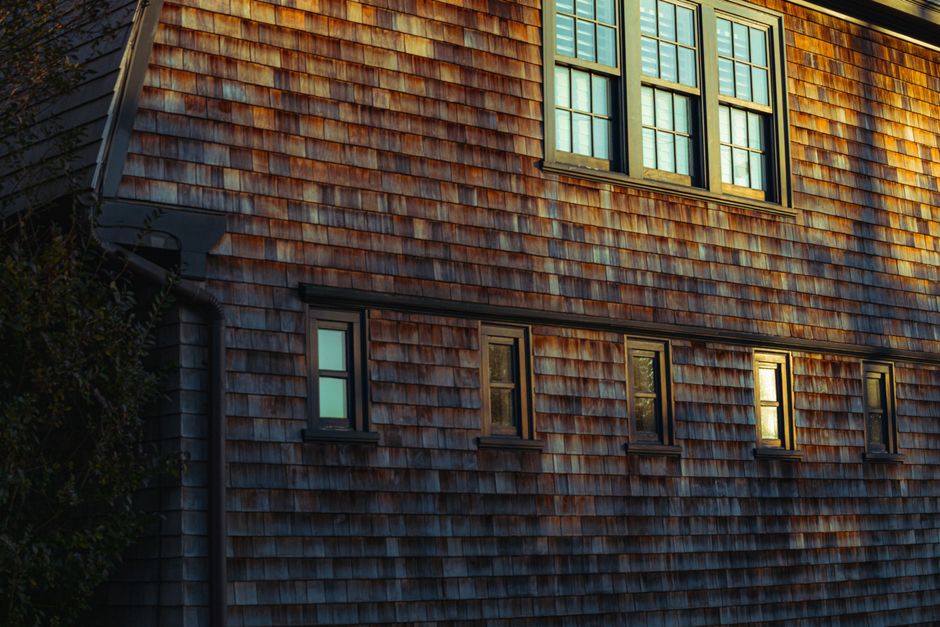
Traditional cedar shingles and shakes are sliced directly from cedar logs. While beautiful, wood is inherently organic and porous. Over time, natural cedar siding suffers from several key vulnerabilities:
- Moisture Absorption: Rain and high humidity cause real wood to swell, warp, and cup.
- Wood Decay and Rot: Constant exposure to wet-dry cycles leads to rot, especially in overlapping areas where moisture gets trapped.
- Insect Damage: Termites, carpenter bees, and wood-boring beetles treat natural wood as both lunch and a home.
- Fading and Weathering: Natural wood degrades under intense UV rays, turning a patchy, uneven gray within a few years unless regularly stained.
Synthetic options eliminate these issues entirely. Because they are non-porous and manufactured with UV-stable pigments, they do not absorb water, rot, or attract pests, easily outlasting natural wood by several decades.
The Benefits of Choosing Composite Cedar Shake Siding
Upgrading your home’s exterior is a major investment. When choosing a material, you want to ensure it protects your family while adding long-term value to your property.
Durability and Weather Resistance
Texas weather is notoriously tough on home exteriors. From brutal summer heat waves in Arlington to sudden, severe spring hailstorms in Mansfield, your siding takes a beating.
Composite cedar shake siding is engineered to withstand these exact extremes:
- Wind Resistance: Premium composite cladding systems are rated to withstand incredible wind speeds. For instance, ASCEND composite cladding is certified for wind loads up to 180 mph, while some top-tier composite roof and siding tiles are engineered to withstand winds up to 211 mph.
- Impact Resistance: Many synthetic cedar shakes carry a Class 4 impact rating—the highest rating possible. This means they can take direct hits from large hail without cracking or denting.
- No Moisture Retention: Because composite materials do not absorb water, they are completely immune to freeze-thaw cycles that can cause fiber cement or wood to crack.
If severe storms do roll through the DFW metroplex and cause unexpected damage to other parts of your property, we are always here to help. You can find more info about solar services from our team, covering water, fire, and storm mitigation.
Low Maintenance Requirements
If you hate spending your weekends scraping, painting, or power-washing your home’s exterior, synthetic shakes will feel like a miracle.
- No Sealing or Painting: Real wood requires staining or sealing every 3 to 5 years. Composite siding comes pre-finished with fade-resistant colors that never need painting.
- Mold and Mildew Resistance: The engineered surface prevents mold, mildew, and algae from rooting into the material.
- Easy Cleaning: Dirt and pollen can be rinsed off with a standard garden hose and a mild detergent. No high-pressure washing or specialized wood cleaners required.
Design Options and Aesthetic Versatility
Opting for synthetic materials doesn’t mean you have to sacrifice the organic beauty of your home. Modern manufacturing techniques utilize molds cast from real hand-split cedar planks, ensuring that no two shakes look identical.
Color and Texture Variations
The best composite siding products feature deep shadow lines, realistic woodgrain textures, and variegated color blends. Rather than a flat, single-tone paint job, these shakes mimic the natural color transitions found in aged forest woods.
For those seeking a rugged, classic look, options like 1/2″ Cedar Shake Lap Siding | Rugged Look | EcoGuard provide a beautifully textured, pre-primed engineered surface that gives you complete control over your final color choice while retaining that highly sought-after hand-split texture.
Architectural Styles and Material Mixing
You don’t have to cover your entire home in shingles to make a statement. In fact, some of the most stunning modern home designs mix and match different profiles:
- Gable Accents: Use synthetic cedar shakes in your gables to add a rustic touch to a traditional brick or vinyl-sided home.
- Shiplap and Planks: Products like Composite Shiplap Siding #UH67 – 1/2’’ x 5 1/2’’ Red Cedar | Composite Wall Siding | Langevin Forest offer clean, horizontal lines that look incredibly sleek on modern farmhouses or coastal-style homes.
- Mixed Materials: Pair your composite shakes with traditional brickwork or board-and-batten vertical siding to create depth and visual interest.
Financial Investment and Long-Term Value
While the initial cost of composite siding is higher than basic vinyl, it is highly competitive with natural cedar and fiber cement when you factor in long-term maintenance and durability.
Cost Comparison: Natural Cedar vs. Composite Cedar Shake Siding
Let’s look at how the costs shake out over a 20-year period for an average-sized DFW home:
| Cost Category | Natural Cedar Siding | Composite Cedar Shake Siding |
|---|---|---|
| Initial Material & Install | High ($19,000 – $45,000) | Moderate to High ($14,000 – $28,000) |
| Painting/Sealing (Every 4 Years) | $3,500 – $6,000 per cycle | $0 |
| Repairs (Rot, Woodpeckers, Pests) | Moderate to High | $0 |
| 20-Year Cumulative Cost | $36,500 – $75,000+ | $14,000 – $28,000 |
| Expected Lifespan | 20–30 years | 50+ years |
While natural cedar has a high upfront cost and demands thousands of dollars in cumulative maintenance, composite siding is a “one-and-done” investment that protects your wallet for decades.
Insurance and Fire Safety Savings
Did you know your siding choice can actually lower your monthly bills?
- Class A Fire Rating: Many synthetic cedar shakes achieve a Class A fire rating (the highest safety rating available). Unlike natural wood, which ignites easily, composite materials are engineered with flame retardants that resist ignition and slow the spread of smoke.
- Homeowners Insurance Discounts: Because of their Class 4 impact resistance and Class A fire rating, major insurance carriers often offer premium discounts of up to 20% for homes protected by these materials. This is a huge benefit in storm-prone areas like Grand Prairie and Midlothian.
Installation Best Practices and Considerations
Even the highest-quality composite siding will fail if it isn’t installed correctly. Working with an experienced, local contractor is essential to protect your warranty and ensure your home stays dry.
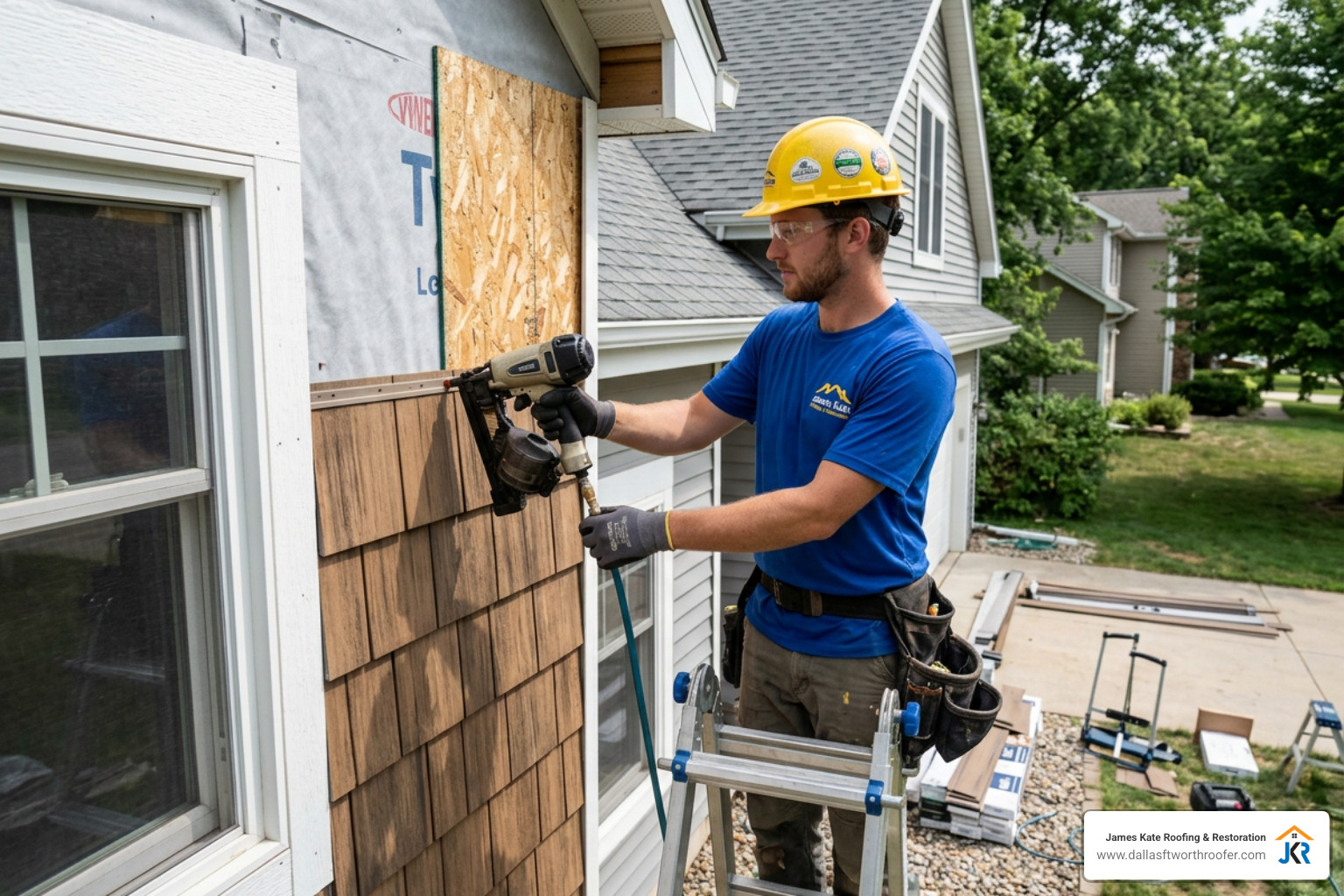
Proper Handling and Acclimatization
Before a single nail is driven, the material must be handled with care:
- Flat Storage: To prevent warping or bowing before installation, composite planks and shakes must be stored completely flat on a level surface, elevated off the ground, and protected from direct rainfall.
- Acclimatization: Siding materials should be allowed to adapt to the local humidity and temperature of your specific DFW neighborhood prior to installation.
- Expansion Gaps: Because composite materials expand and contract slightly with temperature shifts, installers must leave precise gaps (typically around 3/8″) at joints and trim channels to prevent buckling.
When you choose us, you get peace of mind knowing our crews follow every manufacturer specification to the letter. If you are ready to upgrade, contact us for Expert Siding Installation in Mansfield, TX | James Kate Roofing & solar.
Key Technical Specifications
Understanding the physical specifications of your siding helps ensure your home’s framing can support it safely:
- Weight: Natural cedar can weigh over 400 lbs per square (100 sq. ft.) when wet. In contrast, lightweight synthetic shakes range from 170 to 321 lbs per square, putting significantly less stress on your home’s structural framing.
- Standard Tools: High-quality composites can be cut and scored using standard woodworking tools, which speeds up installation times by 25% to 40% compared to heavy fiber cement siding (which also generates hazardous silica dust).
If you are planning a larger exterior remodel, we can coordinate your siding project alongside a roof replacement. You can read more info about residential roofing to see how we build complete, weather-tight home exteriors.
Frequently Asked Questions about Synthetic Siding
How long does composite cedar shake siding last?
Most premium composite cedar shake siding products are engineered to last 50 years or more. Unlike natural wood, which degrades after 20 to 30 years, synthetics do not rot, split, or decay, and they usually come backed by lifetime limited transferable warranties.
Does synthetic siding fade in the sun?
Modern synthetic siding is highly UV-resistant. Manufacturers use advanced color-cast technology and mineral-infused pigments that run completely through the material, rather than just sitting on the surface. While a tiny amount of natural weathering occurs in the first 90 days, the color stabilizes and remains vibrant for decades without fading or peeling.
Is composite siding environmentally friendly?
Yes! Many composite siding options are incredibly eco-friendly. They are often manufactured using up to 95% recycled materials, including post-industrial plastics and sustainable wood fibers. Furthermore, choosing composite prevents the harvesting of old-growth cedar trees, and the materials are often 100% recyclable at the end of their long lifespan.
Conclusion
Upgrading to composite cedar shake siding is one of the smartest ways to boost your home’s curb appeal, slash your maintenance chores, and protect your property from the unpredictable Texas weather.
At James Kate Roofing & solar, we serve our neighbors across Mansfield, Arlington, Granbury, Grand Prairie, and Midlothian with honesty, integrity, and Biblical principles. As a family-owned business and a GAF President’s Club member, we back our work with up to a 25-year workmanship warranty.
Ready to transform your home’s exterior? Upgrade your home with James Kate Roofing & solar today, and let’s build something beautiful together.

Dustin Eatman is a seasoned roofing professional with deep, hands-on expertise that spans residential and commercial roofing, insurance solar, and long-term roof asset management. As the owner of James Kate Roofing & solar in the Dallas–Fort Worth metroplex, he’s built a reputation for diagnosing roof systems accurately, communicating clearly, and executing projects with a high standard of workmanship and documentation. Dustin understands the technical details that make roofs perform—proper underlayment selection, slope and drainage considerations, ventilation strategy, flashing and penetration detailing, and manufacturer-specific installation requirements—because he’s worked through the real-world challenges that cause leaks, premature wear, and warranty issues. He’s equally fluent in the operational side of roofing: jobsite planning, quality control, safety, material ordering, crew coordination, and customer experience from inspection to closeout. In insurance-related projects, Dustin brings practical knowledge of claim workflows, adjuster meetings, scope alignment, supplements, and the importance of photo evidence and thorough records, helping property owners navigate stressful situations with confidence. For commercial clients—especially property and facility managers—he emphasizes proactive maintenance and targeted repairs that reduce disruption, extend roof life, and prevent expensive interior damage. Dustin also stays focused on doing things the right way: educating customers on realistic options, setting expectations, and prioritizing solutions that hold up over time rather than quick fixes. That blend of technical skill, field experience, process discipline, and owner-level accountability is what makes Dustin Eatman a trusted expert in the roofing industry.