Demystifying the Terminology: Asphalt Shingles vs Composition Shingles
When it comes to asphalt shingles vs composition shingles, here’s the short answer most homeowners need:
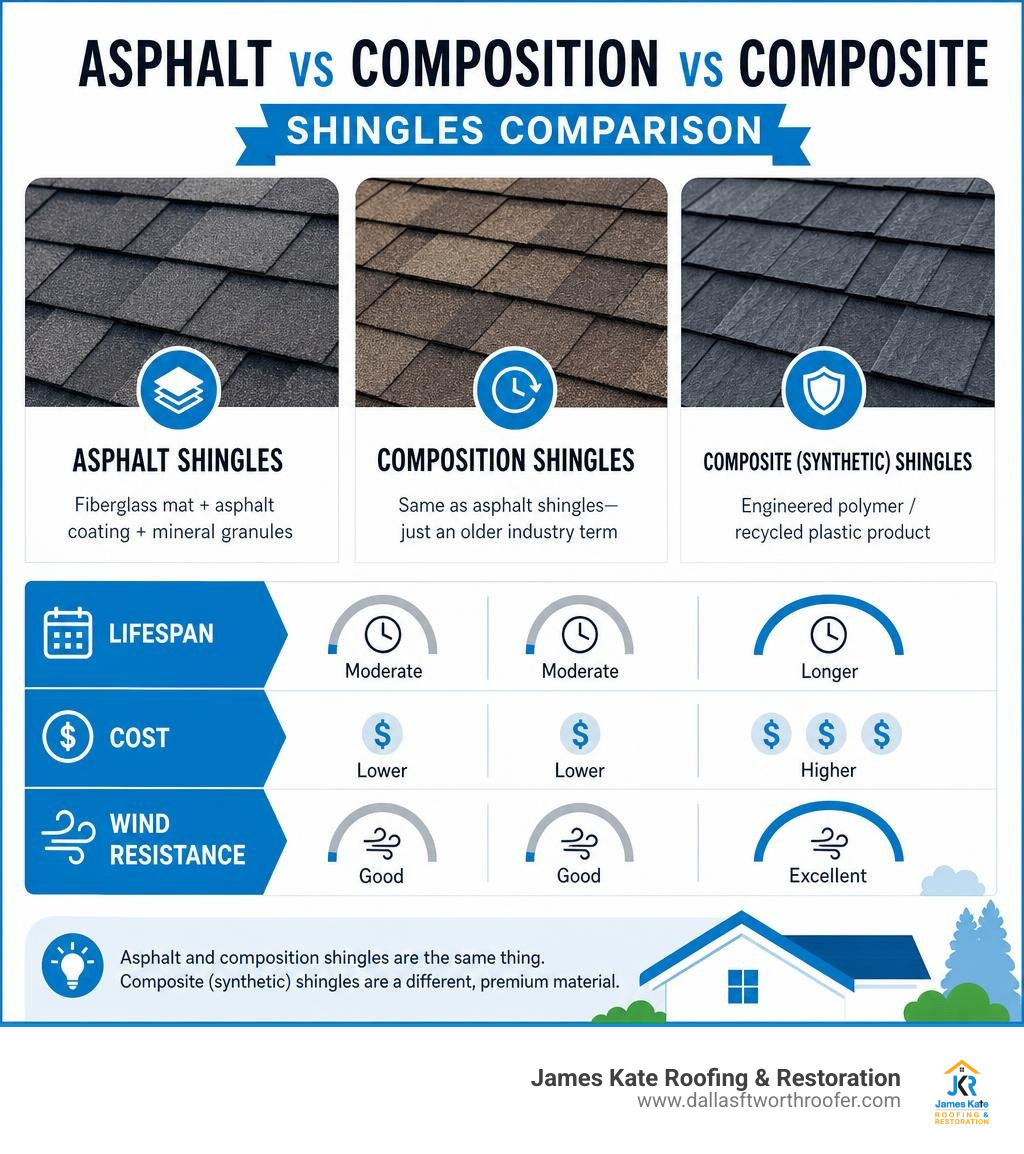
In most cases, they are the same thing. “Composition shingles” is simply an older industry term for asphalt shingles — both describe a fiberglass mat coated in asphalt and topped with mineral granules. However, a newer product category called composite (or synthetic) shingles — made from engineered polymers and recycled plastics — is not the same, and the confusion between these terms causes a lot of bad buying decisions.
Here’s a quick breakdown:
| Term | What It Actually Means |
|---|---|
| Asphalt shingles | Fiberglass mat + asphalt coating + mineral granules |
| Composition shingles | Same as asphalt shingles — just an older term for the same product |
| Composite (synthetic) shingles | Engineered polymer/recycled plastic product — a different, premium material |
So if someone is comparing “asphalt vs composition,” they’re largely comparing the same thing. But if they mean asphalt vs composite (synthetic), that’s a real and important comparison — with major differences in cost, lifespan, and performance.
That’s exactly what this guide clears up.
I’m Dustin Eatman, owner of James Kate Roofing & solar in the Dallas–Fort Worth area, and I’ve spent years helping DFW homeowners navigate the exact confusion around asphalt shingles vs composition shingles — from choosing the right material for Texas weather to getting installations done correctly the first time. Let me walk you through everything you need to know to make a confident, informed decision.
Easy asphalt shingles vs composition shingles glossary:
In the roofing world, jargon is thrown around like confetti at a parade. It is incredibly easy to get bamboozled by terms that sound different but mean the exact same thing.
Let’s clear this up once and for all: composition shingles are asphalt shingles.
The term “composition” comes from how these shingles are made. They are a composite of multiple materials layered together. Historically, this meant taking a base organic mat (like cellulose or paper) or a fiberglass mat, coating it in water-resistant asphalt, and then embedding a top layer of mineral granules to protect the asphalt from the brutal North Texas sun. Because they are “composed” of these different layers, the industry labeled them composition shingles.
Today, almost every traditional shingle on a home in Arlington, Grand Prairie, or Midlothian is a fiberglass-based asphalt shingle. So, when a roofing contractor uses these terms, they are talking about the exact same classic product.
The real confusion starts when we introduce composite shingles (often called synthetic shingles) into the mix. Although “composite” and “composition” sound nearly identical, they are entirely different beasts.
Composite shingles are premium synthetic products engineered from advanced polymers, rubber, and recycled plastics. They contain no asphalt or fiberglass. Instead, they are molded to look exactly like high-end natural slate or hand-split cedar shakes.
Understanding this distinction is the first step in making the right choice for your home. If you want to dive deeper into how these materials are manufactured, check out our guide on the Key Differences Between Asphalt and Composite Roofing.
Lifespan and Durability: How They Hold Up Over Time
Now that we have sorted out the terminology, let’s look at how these materials actually perform over the long haul. A roof is one of the most significant investments you will make in your home, so you want to know exactly how many years of protection you are buying.
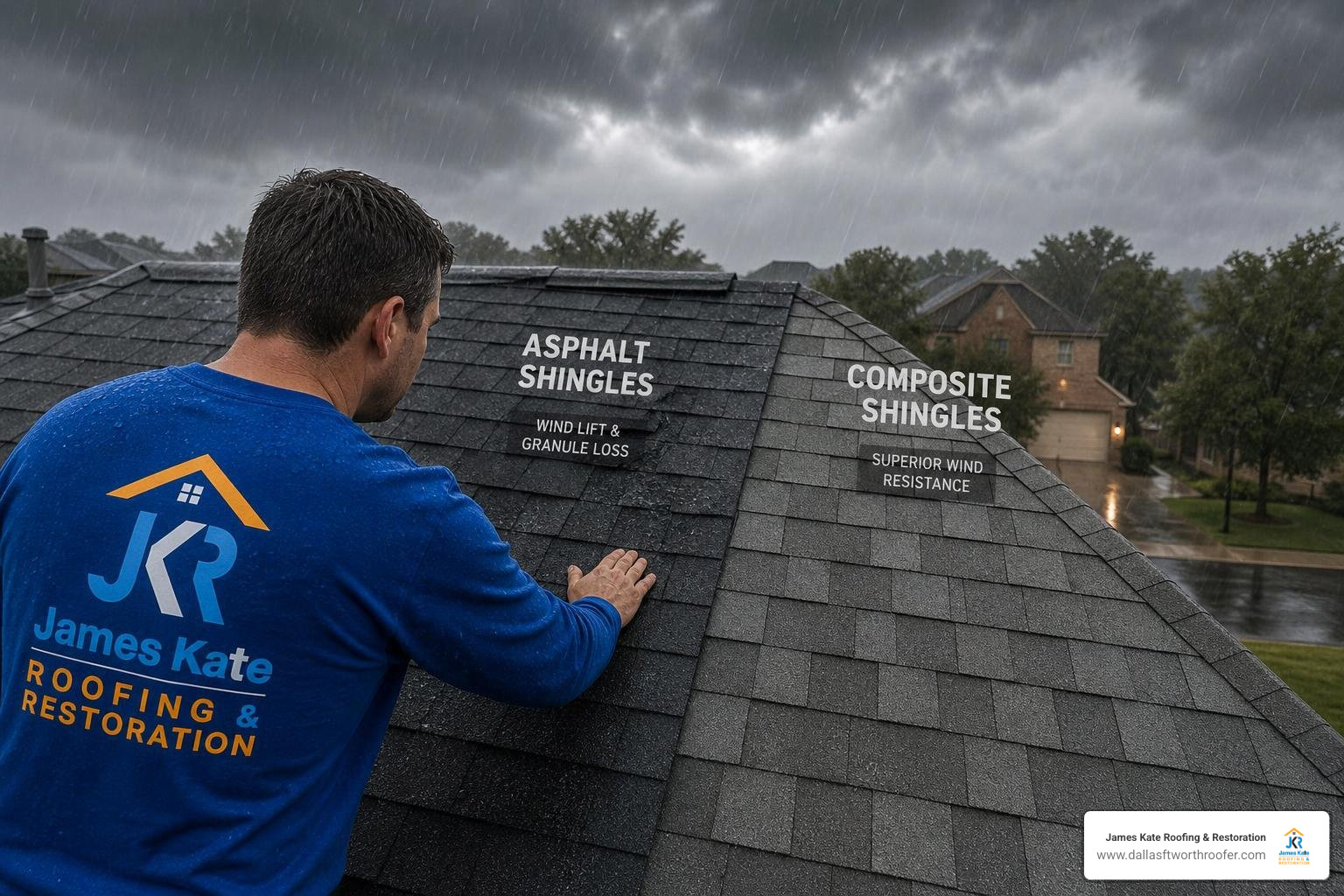
Traditional asphalt shingles have a respectable lifespan, but they are subject to the laws of thermodynamics and Texas weather. Standard three-tab asphalt shingles generally last 15 to 20 years.
Laminated architectural asphalt shingles—which are thicker and more durable—typically last 25 to 30 years under ideal conditions. However, the intense heat in Mansfield and Arlington can accelerate the aging process. Over time, the asphalt dries out, the shingles lose their flexible oils, and you will begin to notice granule loss. Those tiny colored rocks end up in your gutters, leaving the underlying asphalt exposed to harmful UV rays.
Synthetic composite shingles, on the other hand, are built like tanks. Because they are made of engineered polymers and recycled plastics, they do not suffer from granule loss or drying asphalt.
Composite shingles boast an impressive lifespan of 40 to 50+ years. They are virtually immune to the rot, cracking, and curling that eventually destroys traditional asphalt. For a detailed breakdown of how these synthetic options compare to standard systems, read our article on Everything You Need to Know About Asphalt Composite Shingles.
Weather Resistance of Asphalt Shingles vs Composition Shingles
Texas weather is legendary for its mood swings. We get blistering summer heat, wild spring windstorms, and hail that can look like a bucket of spilled golf balls. How do these materials hold up when the weather turns nasty?
- Wind Resistance: Standard architectural asphalt shingles are typically rated for wind speeds between 60 and 110 mph. While this is sufficient for most typical storms, severe straight-line winds can sometimes lift and tear them. Synthetic composite shingles are engineered to withstand winds up to 110 to 190 mph. That is hurricane-force wind resistance right in your DFW backyard.
- Hail and Impact Protection: This is where the difference becomes incredibly clear. Most synthetic composite shingles carry a Class 4 impact rating—the highest rating available. They are designed to bounce hail away without cracking or denting. In fact, studies in storm-prone regions show that upgrading to synthetic composite shingles can reduce hail-related insurance claims by up to 40%. Traditional asphalt shingles can also be purchased with Class 4 ratings, but standard asphalt options often suffer severe granule bruising and structural cracking when hit by large hail.
To see a direct head-to-head performance breakdown, take a look at The Definitive Guide to Composition Roof vs Asphalt Shingles.
Cost Analysis: Upfront Investment vs. Long-Term Value
Let’s talk about the elephant in the room: your budget. There is a substantial financial difference between installing traditional asphalt shingles and opting for a premium synthetic composite roof.
To help you visualize the differences as of July 2026, we have put together this straightforward comparison table:
| Feature | Architectural Asphalt Shingles | Premium Synthetic Composite Shingles |
|---|---|---|
| Material Cost (per sq. ft.) | $3 – $5 | $7 – $14 |
| Typical Installed Cost | $5,700 – $12,000 | $15,000 – $26,500+ |
| Expected Lifespan | 25 – 30 Years | 40 – 50+ Years |
| Wind Resistance | 60 – 110 mph | 110 – 190 mph |
| Impact Rating | Class 3 (often Class 4 available) | Class 4 (Standard) |
| Total Cost of Ownership (40 Yrs) | Higher (Requires replacement) | 20% – 40% Lower |
While traditional asphalt shingles are incredibly cost-effective upfront, synthetic composite shingles can deliver a 20% to 40% lower total cost of ownership over a 40-year period. This is because you avoid the cost, hassle, and disruption of a second roof replacement mid-way through that timeline.
If you are trying to calculate the exact budget for a standard asphalt project on your home, check out our guide on The Real Cost of Asphalt Shingles for Your Home.
Choosing Between Asphalt Shingles vs Composition Shingles Based on Budget
So, how do you decide which option is right for your wallet? It usually comes down to your homeownership timeline.
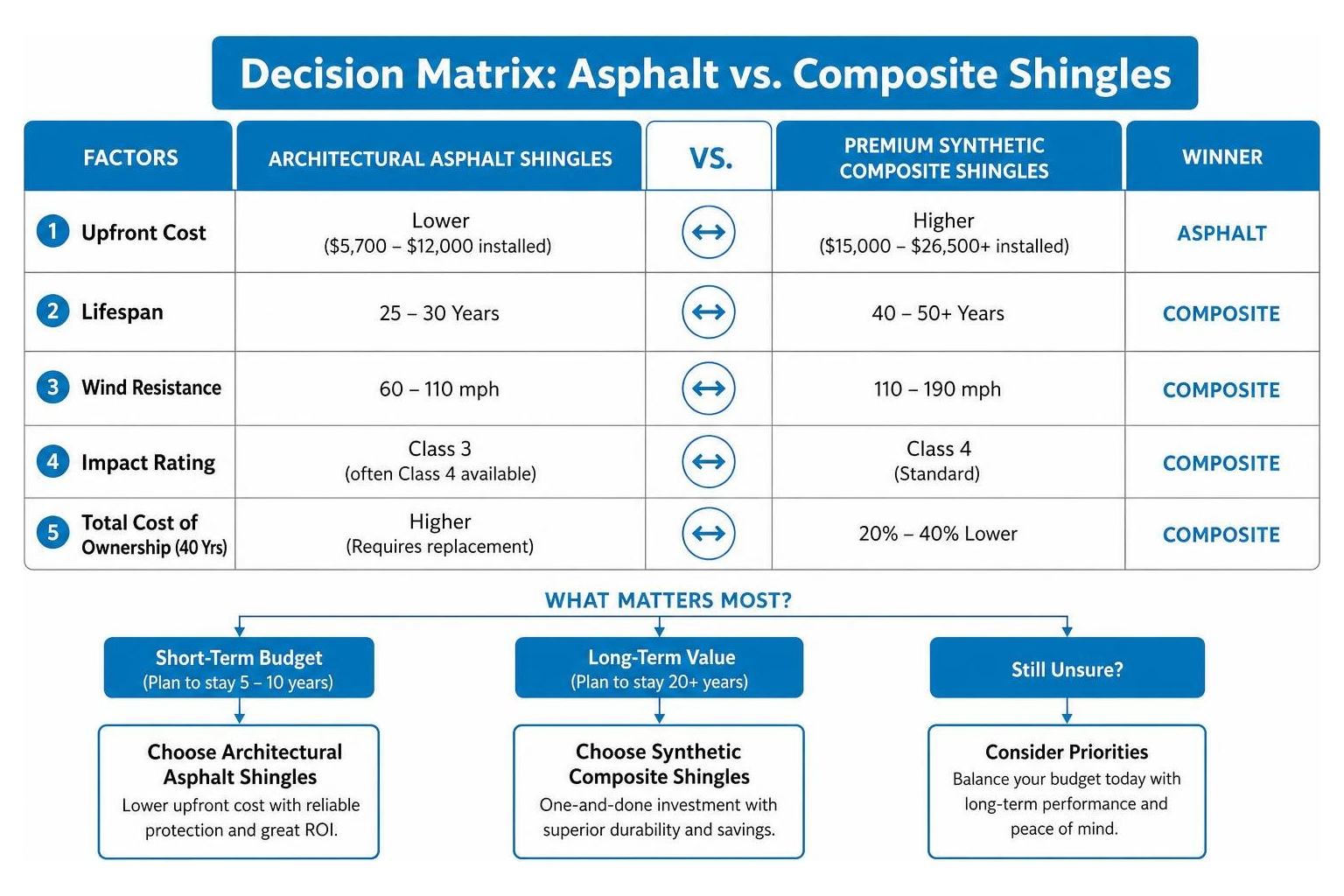
If you plan to live in your Mansfield or Midlothian home for the next 5 to 10 years, traditional architectural asphalt shingles are a fantastic, highly practical option. They offer excellent immediate curb appeal, reliable protection, and a great return on investment when it comes time to sell.
However, if you are in your “forever home” and plan to stay for 20, 30, or 40 years, investing in synthetic composite shingles is often the smarter financial move. It is a one-and-done investment that protects your home for the rest of your life, slashes your maintenance costs, and can even lower your annual homeowners insurance premiums.
For a complete breakdown of how to align your roof choice with your personal financial goals, read our resource, Choosing Your Roof: A Comprehensive Guide to Asphalt and Composite Shingles.
Curb Appeal, Aesthetics, and Installation Realities
Your roof can make up to 40% of your home’s visible exterior. That means your choice of material has a massive impact on your home’s overall curb appeal.

Architectural asphalt shingles look great and come in a wide variety of colors, but they still look like asphalt shingles.
Synthetic composite shingles are in a league of their own when it comes to beauty. Because they are crafted using molds made from real natural slate and hand-split cedar shakes, they capture the authentic texture, shadows, and character of these premium materials. Most people—and even many home appraisers—cannot tell the difference from the ground.
However, synthetic composite shingles come with an important warning: they are not forgiving of amateur installation.
Because synthetic shingles expand and contract differently than asphalt, they require precise nailing patterns, specific fasteners, and high-quality underlayment systems. In fact, industry data shows that synthetic roofs have a 15% higher insurance claim denial rate due to installation errors made by inexperienced crews. If they aren’t installed perfectly, you risk voiding the manufacturer’s warranty.
Additionally, synthetic composite shingles can weigh between 300 and 600 lbs per square (a 100-square-foot area), compared to 200 to 350 lbs for architectural asphalt. While most modern homes in Grand Prairie and Arlington can easily handle this load, older homes should always undergo a structural review before a heavier composite system is installed.
To learn more about selecting the right style and ensuring a flawless installation, check out The Ultimate Guide to Picking Composition Roof Shingles.
Frequently Asked Questions About Roofing Shingles
Choosing a new roof brings up plenty of questions. Here are some of the most common things we hear from homeowners across the DFW metroplex.
Are composite shingles the same as composition shingles?
No, they are not. In everyday roofing conversation, “composition shingles” is just another name for traditional asphalt shingles (fiberglass mat coated in asphalt and granules). “Composite shingles” refer to premium synthetic shingles made from engineered polymers and recycled plastics designed to look like slate or cedar shake. For a deeper dive into this terminology, read our Composition Shingles Complete Guide.
Which shingle type performs better in severe hail storms?
Synthetic composite shingles generally perform much better. Because they are solid throughout and made of flexible polymers, they routinely achieve a Class 4 impact rating. They bounce hail away without cracking, bruising, or losing protective granules. If you live in a hail-prone area of North Texas, this extra defense is invaluable. Learn more in our Composition Shingle Types Ultimate Guide.
Do composite shingles qualify for homeowners insurance discounts?
Yes, they often do! Because synthetic composite shingles are highly wind-resistant and carry a Class 4 impact rating, many major insurance carriers in Texas offer substantial discounts on annual premiums. Be sure to check with your insurance agent to see how much you could save. For more on how impact ratings affect your home, read Your Guide to Asphalt Shingles Types, Benefits and Durability.
Conclusion
Whether you decide that traditional architectural asphalt shingles fit your budget perfectly, or you want to upgrade to the lifetime beauty and durability of synthetic composite shingles, the key to a long-lasting roof is the quality of the installation.
At James Kate Roofing & solar, we serve our neighbors in Mansfield, Arlington, Granbury, Grand Prairie, and Midlothian with honesty, integrity, and Biblical principles. As a GAF President’s Club contractor, we back our exceptional craftsmanship with up to a 25-year workmanship warranty. And if Texas storms ever cause unexpected damage, our full-service solar team is ready to handle everything from water and fire mitigation to complete build-back construction.
Ready to get an honest, expert opinion on your roof? Schedule a professional roofing consultation with James Kate Roofing & solar today, and let’s find the perfect solution for your home!

Dustin Eatman is a seasoned roofing professional with deep, hands-on expertise that spans residential and commercial roofing, insurance solar, and long-term roof asset management. As the owner of James Kate Roofing & solar in the Dallas–Fort Worth metroplex, he’s built a reputation for diagnosing roof systems accurately, communicating clearly, and executing projects with a high standard of workmanship and documentation. Dustin understands the technical details that make roofs perform—proper underlayment selection, slope and drainage considerations, ventilation strategy, flashing and penetration detailing, and manufacturer-specific installation requirements—because he’s worked through the real-world challenges that cause leaks, premature wear, and warranty issues. He’s equally fluent in the operational side of roofing: jobsite planning, quality control, safety, material ordering, crew coordination, and customer experience from inspection to closeout. In insurance-related projects, Dustin brings practical knowledge of claim workflows, adjuster meetings, scope alignment, supplements, and the importance of photo evidence and thorough records, helping property owners navigate stressful situations with confidence. For commercial clients—especially property and facility managers—he emphasizes proactive maintenance and targeted repairs that reduce disruption, extend roof life, and prevent expensive interior damage. Dustin also stays focused on doing things the right way: educating customers on realistic options, setting expectations, and prioritizing solutions that hold up over time rather than quick fixes. That blend of technical skill, field experience, process discipline, and owner-level accountability is what makes Dustin Eatman a trusted expert in the roofing industry.