That Musty Smell in Your Home Could Be More Than Just an Annoyance
The best mold odor eliminator for your home depends on the source, surface, and severity of the problem. Here’s a quick breakdown:
| Situation | Best Approach |
|---|---|
| Surface mold on tile or grout | Chemical spray (bleach-based or chlorine dioxide) |
| Closet or small enclosed space | Moisture absorber or activated charcoal |
| Musty smell in fabrics or air | Plant-based odor gel or enzyme cleaner |
| Widespread or hidden mold | Professional remediation |
| Ongoing humidity problem | Dehumidifier + preventive treatment |
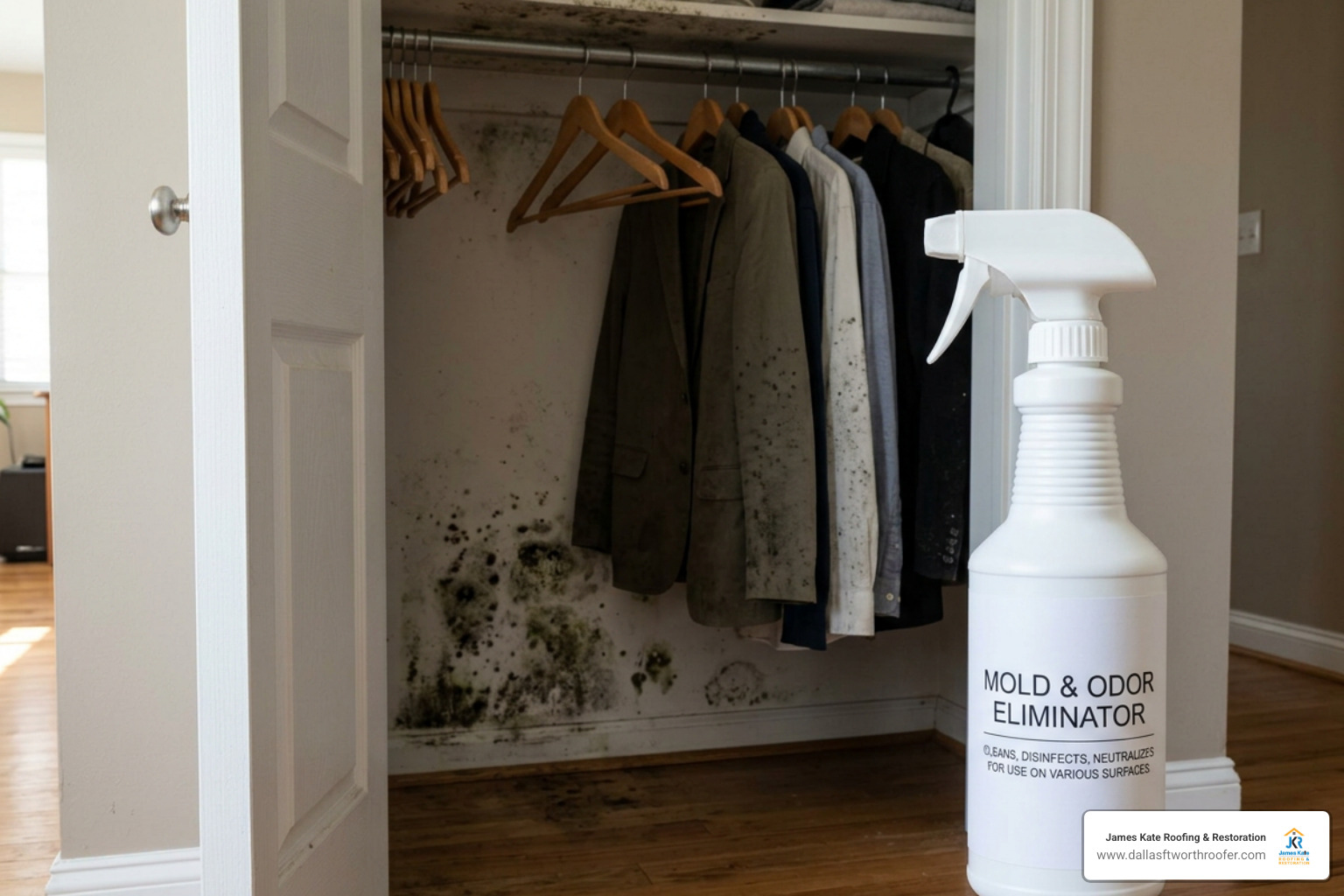
That smell — the one that hits you when you open a closet or walk into a bathroom — isn’t just unpleasant. It’s a signal.
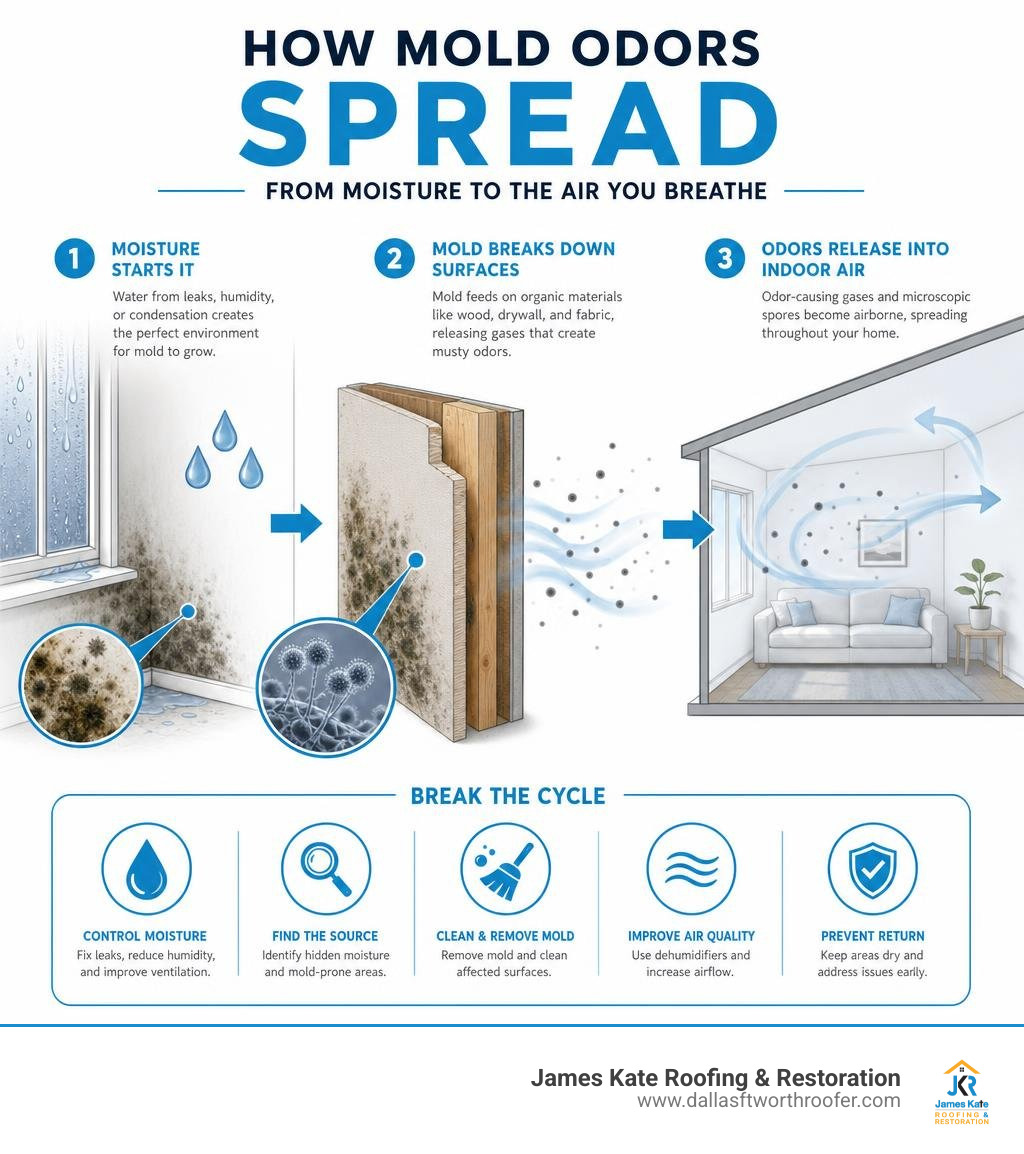
Mold spores are always present in the air around us. They only become a problem when they find moisture. Once they do, they start breaking down organic materials like wood, drywall, and fabric. That breakdown process releases gases that create the musty odor you’re detecting.
And it’s not just a smell. Prolonged exposure can worsen asthma, trigger allergies, and — if left untreated — cause real structural damage to your home.
The good news: there are proven ways to eliminate mold odors and stop them from coming back.
I’m Dustin Eatman, owner of James Kate Roofing & solar, and through years of handling water damage, attic mold, and post-leak solar across the DFW area, I’ve seen how the right mold odor eliminator can make the difference between a quick fix and a recurring problem. Let’s walk through exactly what works — and what doesn’t.
Understanding the Root Cause of Musty Household Smells
To truly banish a musty smell, we have to understand what we are actually smelling. Mold and mildew are fungi that thrive in warm, damp environments. When mold spores land on a wet surface, they begin to digest organic matter like drywall paper, wood ceiling joists, or cotton fabrics.
During this digestive process, they release Microbial Volatile Organic Compounds (MVOCs). These airborne gases are the actual culprits behind the classic “dirty socks” or “wet cardboard” scent. Because these compounds are gaseous, they easily permeate porous materials, embedding the odor deep into carpet fibers, upholstery, clothing, and even unsealed wood.
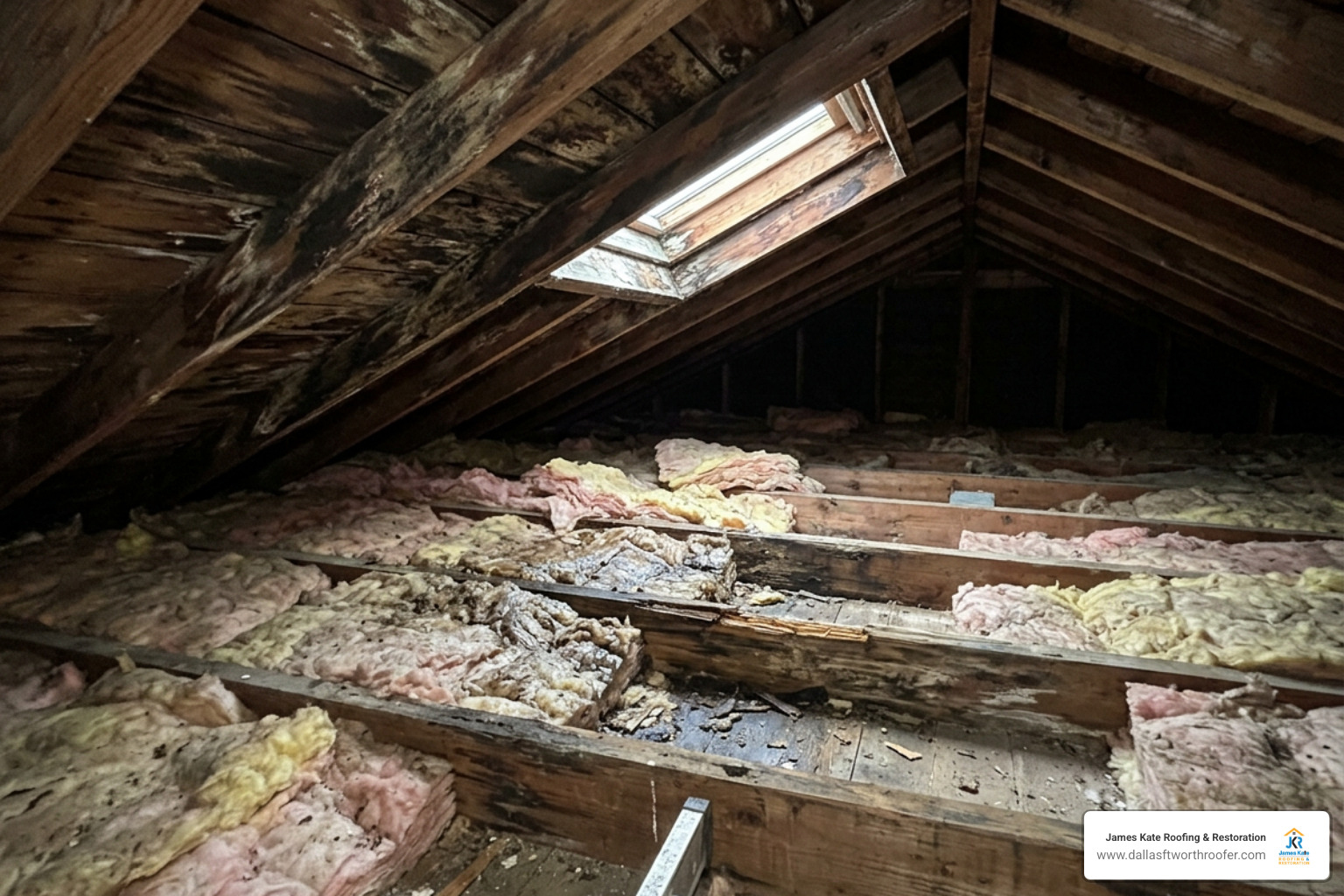
In North Texas towns like Arlington, Grand Prairie, and Midlothian, our hot summers and humid air create the perfect breeding ground for these fungi. When roof leaks or pipe bursts go unnoticed, mold can establish a colony within 24 to 48 hours. If you smell that telltale odor but don’t see any visible dark spots, the issue is often hidden.
Common culprits include roof leaks dripping into attic insulation, slow leaks behind bathroom walls, or poor ventilation in tight spaces. If you’ve recently experienced a plumbing malfunction or heavy rain, knowing how to handle mold after a leak is critical to stopping the smell before it takes over.
Similarly, attic spaces are notorious for trapping heat and moisture, which is why learning how to safely evict mold from your attic for good should be at the top of every DFW homeowner’s maintenance list.
How to Choose the Best Mold Odor Eliminator for Different Spaces
No single mold odor eliminator works perfectly for every situation. A product that works wonders on tiled bathroom walls might ruin your favorite winter coat or fail to clear the air in a damp closet.
To choose the right solution, we must match the product’s active mechanism to the space we are treating.

- Bathrooms: These spaces experience frequent humidity spikes. Hard, non-porous surfaces like tile, grout, and acrylic tub surrounds require fast-acting disinfectants that kill spores on contact and lift dark stains.
- Closets: Closets lack active airflow, making them prone to trapping moisture. Hanging moisture absorbers or activated charcoal bags work best here by continuously lowering the relative humidity.
- Washing Machines: Front-load washing machines frequently develop mold on their rubber door gaskets. Weekly applications of targeted, non-bleach foaming cleaners help prevent mold from embedding into the porous rubber.
- RVs and Boats: These vehicles often sit closed up for months in humid climates. Chlorine dioxide vapor systems or heavy-duty moisture-absorbing buckets are ideal for neutralizing odors in these enclosed areas during storage.
Below is a comparison of how different types of mold and mildew smell removers function:
| Product Type | Active Ingredient | Best For | Pros | Cons |
|---|---|---|---|---|
| Moisture Absorbers | Calcium Chloride | Closets, RVs, laundry rooms | Low maintenance, highly effective at prevention | Must be replaced when full, does not kill existing mold |
| Chemical Disinfectants | Sodium Hypochlorite / Bleach | Bathroom tiles, grout, non-porous surfaces | Instant stain removal, fast disinfection | Harsh fumes, can damage fabrics and metals |
| Vapor Systems | Chlorine Dioxide (ClO2) | Whole rooms, vehicles, deep odor penetration | Neutralizes odors at a molecular level, no residue | Requires evacuating the space during treatment |
| Natural Absorbers | Activated Charcoal / Baking Soda | Air deodorizing, closets, pet areas | Safe around kids and pets, completely unscented | Works slowly, requires regular sun recharging |
| Plant-Based Gels | Essential oils (pine, cedar, lime) | Continuous ambient air freshening | Safe, pleasant scent, breaks down airborne odors | Does not address the physical mold source |
When to Use a Chemical-Based Mold Odor Eliminator
When you are dealing with active mold growth on hard, scrubbable surfaces, chemical-based mold odor eliminators are your strongest line of defense. These products typically rely on heavy-duty active ingredients like sodium hypochlorite (bleach) or chlorine dioxide to destroy the cellular structure of mold and mildew, instantly halting the production of odor-causing MVOCs.
For bathroom surfaces, products like Clorox Clean-Up Cleaner + Bleach Spray are highly effective. Bleach-based sprays kill 99.9% of mold and mildew on non-porous surfaces within five minutes. They also break down rapidly into mostly salt and water, making them safe for septic systems when used as directed.
If you are dealing with tough, dark stains on tile, grout, or vinyl shower curtains, Zep Mold & Mildew Stain Remover is a professional-strength, bleach-based formula that lifts stains in as little as one minute without requiring heavy scrubbing.
For multi-purpose cleaning and deodorizing across broader areas, OdoBan Lemon Disinfectant and Odor Eliminator is an excellent choice. It serves as a disinfectant, sanitizer, and fabric freshener, making it perfect for wiping down hard surfaces or spraying onto musty carpets to eliminate odors without leaving a harsh bleach smell.
Selecting a Natural or Plant-Based Mold Odor Eliminator
If you prefer to avoid harsh chemical fumes, or if you need to treat surfaces in homes with curious pets and small children, natural and plant-based alternatives have come a long way. These products don’t just mask smells with heavy perfumes; they use natural chemistry to neutralize odor molecules.
Activated charcoal and baking soda are classic, highly effective natural deodorizers. Activated charcoal contains millions of microscopic pores that trap airborne gases and moisture, locking away musty odors without releasing any scent of their own.
For surface cleaning, CLR Mold & Mildew Stain Remover is an outstanding plant-based option. Certified by the EPA’s Safer Choice program, this bleach-free formula uses an 80% plant-based surfactant system. It is delivered via a targeted foam sprayer designed to minimize splashback and prevent mold spores from spreading into the air during application.
Additionally, plant-based ambient gels (such as those containing essential oils of pine, eucalyptus, and lime) continuously evaporate into the air, binding to and neutralizing airborne MVOCs to keep closets and laundry rooms smelling clean.
Step-by-Step Guide to Safely Removing Mold and Odors
Tackling a mold problem requires a careful approach. If you rush in and start scrubbing dry mold, you can launch millions of microscopic spores into the air, worsening your indoor air quality and spreading the infestation to other parts of your home.
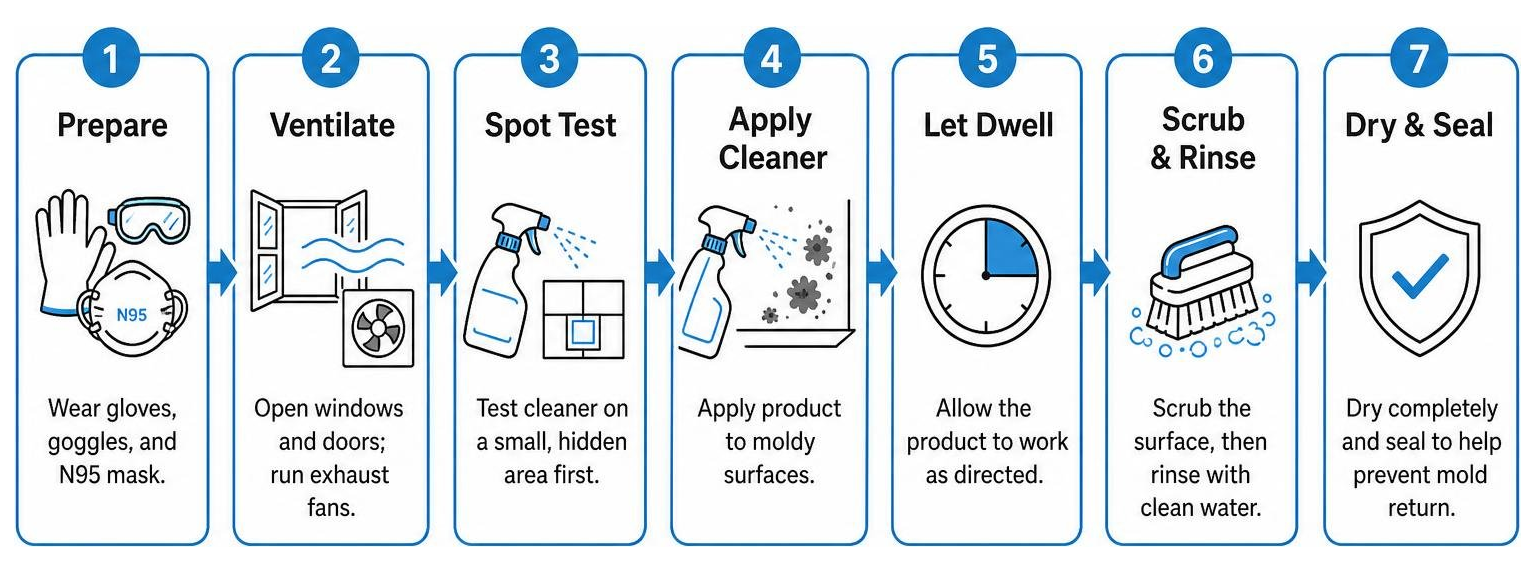
Follow these steps to safely clean mold and clear the air:
- Gear Up for Safety: Before you begin, put on protective gear. Wear heavy-duty vinyl or rubber gloves, safety goggles, and an N95 respirator mask to protect yourself from both mold spores and chemical fumes.
- Establish Ventilation: Open nearby windows and doors, and run exhaust fans to keep fresh air moving through the workspace. If you are using chemical sprays, proper ventilation is essential to prevent the buildup of toxic fumes.
- Perform a Spot Test: Before spraying any cleaner on a visible stain, test it on a small, inconspicuous area. This is especially important for fabrics, painted walls, fiberglass, or colored grout, as bleach-based products can cause permanent discoloration.
- Saturate and Wait: If you are using a bleach-free option or a chlorine dioxide treatment like Performacide Mold & Mildew Odor Eliminator, spray the affected area thoroughly. Performacide uses activated chlorine dioxide vapor technology to penetrate deeply into porous surfaces, neutralizing odors at the source without leaving harmful residues. Let the product sit for the manufacturer’s recommended time (typically 5 to 10 minutes) to ensure it completely kills the mold.
- Wipe and Dry: Gently wipe away the dissolved mold and cleaner with a damp cloth or sponge. For stubborn spots on tile or grout, use a soft-bristled brush. Once clean, dry the surface completely. Moisture is the enemy — leaving a surface wet is an open invitation for mold to return. For a deeper dive into this process, check out our guide on how to remove mold in 5 simple steps.
Frequently Asked Questions About Musty Odors
What is the difference between a mold stain remover and an odor eliminator?
It is common to mistake these two products, but they serve completely different purposes. A mold stain remover is primarily cosmetic; its goal is to lift and bleach away the dark, unsightly stains left behind by mold colonies on grout, drywall, or wood.
An odor eliminator, on the other hand, focuses on molecular neutralization. It targets the MVOC gases in the air or embedded deep within porous fabrics.
While some bleach-based cleaners do both, using a dual-action package like the Zep Mold Stain Remover and Air & Fabric Odor Eliminator Bundle allows you to tackle the physical, visible stains on hard surfaces while simultaneously neutralizing lingering smells trapped in nearby carpets, curtains, and upholstery.
How long do moisture absorbers and odor gels typically last?
The lifespan of these products depends heavily on the ambient humidity levels and airflow in the space. In a moderately humid closet, a standard hanging moisture absorber (like DampRid) typically lasts between 45 to 60 days before the calcium chloride crystals completely dissolve and the lower bag fills with water.
Odor-neutralizing gels generally have an active lifespan of 30 to 90 days. As the gel evaporates and neutralizes airborne molecules, it will visibly shrink. Once the gel has dried up completely, it is time for a replacement.
Can these products prevent future mold growth or do they only mask smells?
While high-quality mold odor eliminators neutralize existing smells rather than simply masking them with perfume, they cannot prevent future mold growth on their own if the underlying moisture problem remains unresolved. Moisture control is the absolute root cause of mold prevention.
If you have an active pipe leak, a roof leak, or relative indoor humidity levels consistently above 60%, mold will inevitably return. Using odor eliminators without fixing the moisture source is a temporary band-aid.
To protect your home over the long term, you must combine immediate odor elimination with proper structural drying and moisture control. For a comprehensive look at how to protect your home’s structure and air quality, explore the ultimate guide to indoor mold remediation and cleanup.
Professional Mitigation: When DIY Isn’t Enough
While store-bought sprays, moisture-absorbing bags, and natural gels are excellent for small, localized issues like bathroom tile grout or closet dampness, they have their limits. If you are dealing with mold that covers an area larger than 10 square feet, mold that has penetrated deep into your home’s structural framing, or a musty smell that persists despite your best cleaning efforts, it is time to call in the professionals.
At James Kate Roofing & solar, we serve families across Mansfield, Arlington, Granbury, Grand Prairie, and Midlothian, TX. We are a family-owned company built on honesty, integrity, and Biblical principles. As a GAF President’s Club member, we back our craftsmanship with up to a 25-year workmanship warranty.
When water damage strikes or hidden mold begins to compromise your indoor air quality, our team handles the entire process:
- Water Mitigation: We stop the water source, extract standing water, and use industrial-strength dehumidifiers to dry out structural materials.
- Mold Mitigation: We safely isolate affected areas, eliminate active mold colonies, and neutralize stubborn odors at a molecular level.
- Build Back Construction: Once the mitigation is complete and the air is clean, we rebuild and restore your home to its original condition.
If you suspect hidden mold or need assistance with a persistent musty smell, don’t let it fester. Contact us today to learn more about our professional solar services and let us help you bring clean, fresh air back to your North Texas home.

Dustin Eatman is a seasoned roofing professional with deep, hands-on expertise that spans residential and commercial roofing, insurance solar, and long-term roof asset management. As the owner of James Kate Roofing & solar in the Dallas–Fort Worth metroplex, he’s built a reputation for diagnosing roof systems accurately, communicating clearly, and executing projects with a high standard of workmanship and documentation. Dustin understands the technical details that make roofs perform—proper underlayment selection, slope and drainage considerations, ventilation strategy, flashing and penetration detailing, and manufacturer-specific installation requirements—because he’s worked through the real-world challenges that cause leaks, premature wear, and warranty issues. He’s equally fluent in the operational side of roofing: jobsite planning, quality control, safety, material ordering, crew coordination, and customer experience from inspection to closeout. In insurance-related projects, Dustin brings practical knowledge of claim workflows, adjuster meetings, scope alignment, supplements, and the importance of photo evidence and thorough records, helping property owners navigate stressful situations with confidence. For commercial clients—especially property and facility managers—he emphasizes proactive maintenance and targeted repairs that reduce disruption, extend roof life, and prevent expensive interior damage. Dustin also stays focused on doing things the right way: educating customers on realistic options, setting expectations, and prioritizing solutions that hold up over time rather than quick fixes. That blend of technical skill, field experience, process discipline, and owner-level accountability is what makes Dustin Eatman a trusted expert in the roofing industry.