Emergency Checklist for Dealing with Water Damage
When an unexpected leak or storm strikes your property in Arlington, Mansfield, or anywhere across the DFW Metroplex, panic is your worst enemy. Clear, organized action saves thousands of dollars in repairs and keeps your family safe.
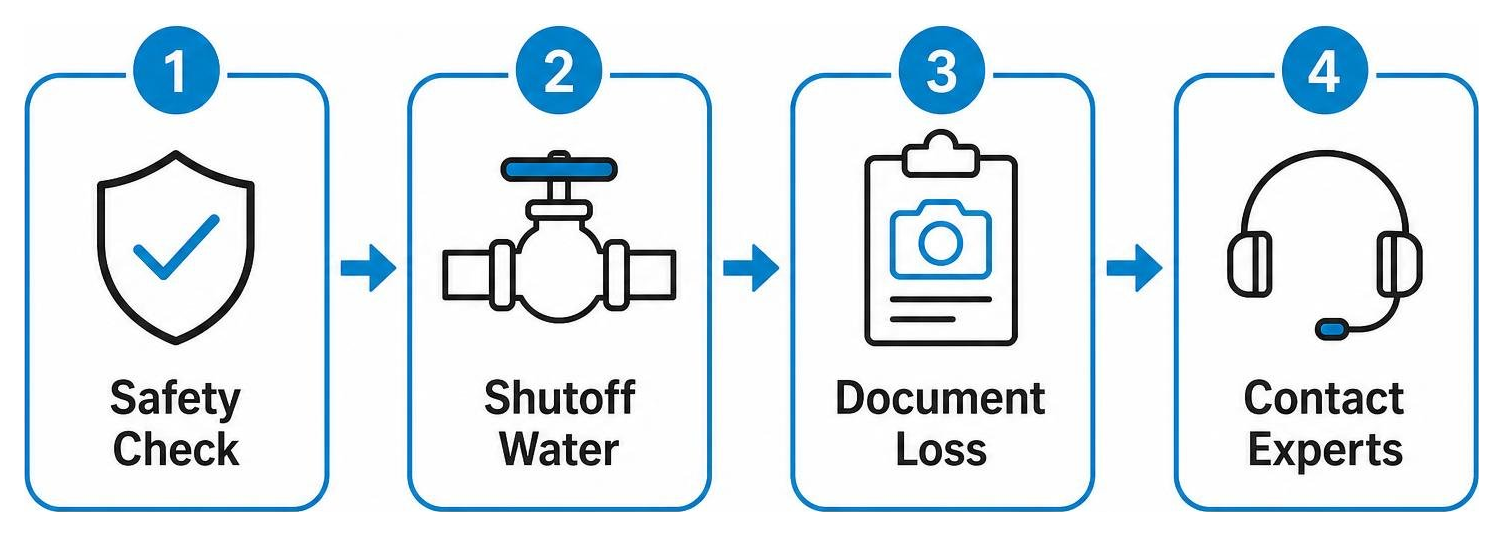
Following a systematic emergency protocol ensures nothing falls through the cracks:
- Safety First (Electrical & Structural Checks): Before stepping into any wet area, assess potential hazards. If standing water touches outlet levels, do not enter until the main breaker is killed. Wear rubber-soled boots and heavy-duty gloves.
- Main Power Shutoff: Shut down power to affected zones. Never touch an electrical panel while standing on wet surfaces or in water.
- Isolate the Water Source: Locate your home’s main water shutoff valve immediately. Whether it’s a burst pipe, a supply line failure, or an overflowing appliance, turning off the water stops further destruction.
- Detailed Loss Documentation: Before extracting water or shifting items, take extensive high-resolution photos and videos. Film the water height, ruined furniture, drenched drywall, and personal belongings. Your insurance adjuster will rely heavily on this evidence.
- Contact solar Professionals: Having a team execute an emergency water damage cleanup right away prevents deep structural absorption.
Identifying Sneaky Signs of Home Water Damage
Not all water damage arrives like a sudden tidal wave. Slow, hidden leaks behind walls or underneath flooring can quietly destroy your house over months.
Keep an eye out for these subtle red flags:
- Musty Odors: Damp, earthy smells indicate hidden fungal growth behind baseboards or inside wall cavities long before visible mold appears.
- Cracks in Walls and Sloping Floors: As structural wood absorbs moisture, it expands, putting severe stress on drywall and framing. This causes vertical wall cracks and uneven flooring.
- Bubbling Wallpaper and Paint: High indoor humidity causes finishes to lose adhesion. In fact, wallpaper can bubble or become detached when relative humidity levels go beyond 70 percent for extended periods.
- Misaligned Doors and Windows: Softwood framing swells when soaked, jamming doors and windows so they no longer latch or open smoothly.
- Creaking Floorboards: When wood subflooring gets wet, it swells around the fasteners. As it eventually dries, nails remain loosened, leaving gaps that cause floorboards to squeak underfoot.
- Unexplained High Water Bills: Tracking unexpected spikes in monthly utility bills often reveals hidden plumbing leaks.
To test for a hidden leak using your water meter, turn off all taps and water-using appliances in your home. Record the meter reading, wait 2 hours without using any water, and check it again. If the meter reading changes, you have an active leak somewhere on your property. Fixing easily corrected household water leaks can save homeowners about 10 percent on their water bills, according to the EPA.
The Critical 24-to-48 Hour Window for Dealing with Water Damage
Time is the most absolute factor when dealing with water damage. Mold spores are naturally present in indoor and outdoor air, but they require water to germinate. Once porous building materials absorb water, the clock starts ticking.
According to guidelines from the US EPA and the American Conference of Governmental Industrial Hygienists (ACGIH), porous materials must be dried with air movement and dehumidification within 24 to 48 hours of becoming wet to prevent mold growth.
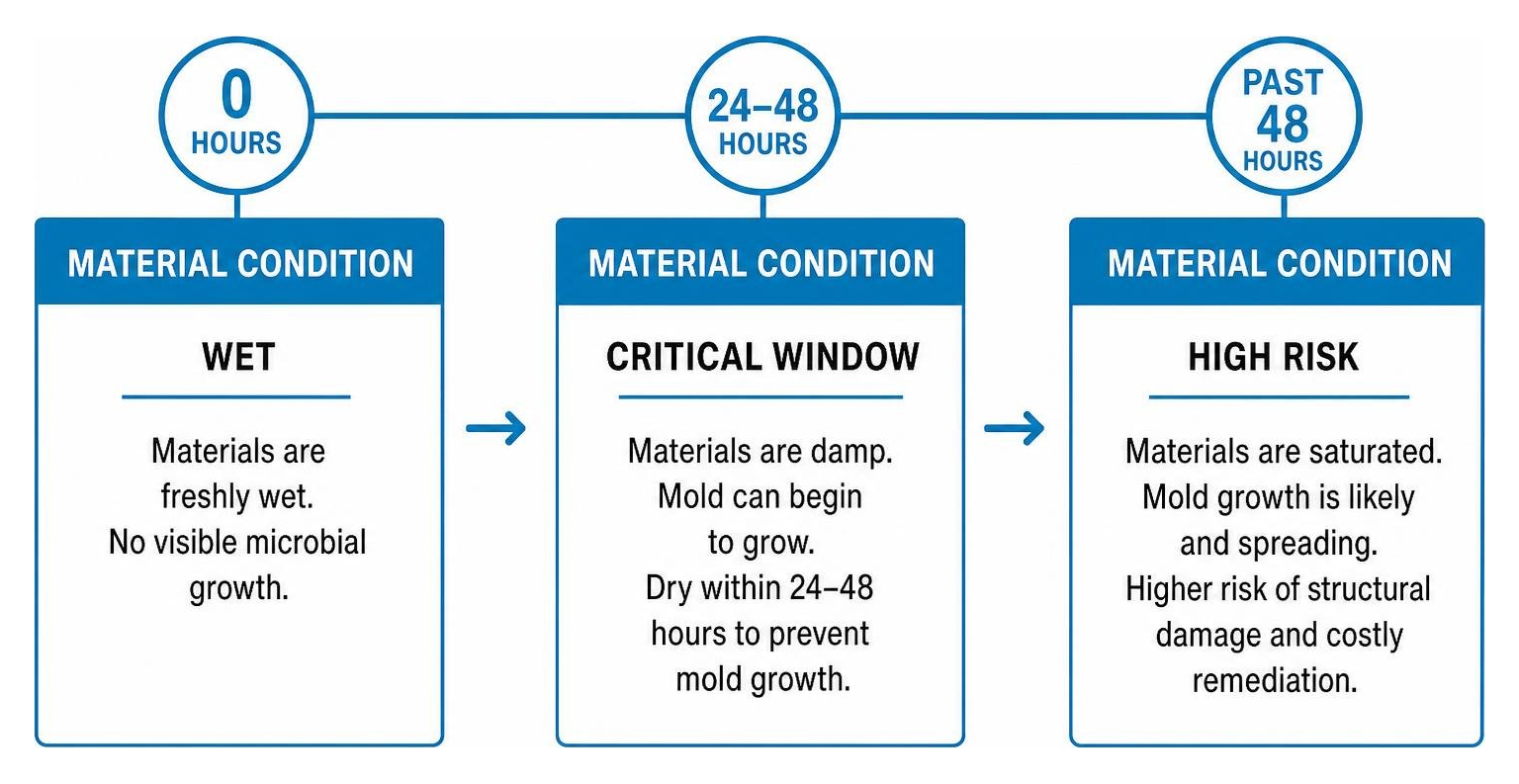
When humidity rises and materials stay saturated past 48 hours, micro-organisms colonize fast, turning a basic clean water drying job into an expensive mold remediation project. For detailed public health guidelines on indoor water response standards, review the Quick reference: water damage response in buildings | Mass.gov.
Classifying Categories of Water Contamination
solar safety and procedures depend on the origin and purity of the water. Knowing your accurate category of water loss dictates whether materials can be dried or must be thrown away.
Clean and Gray Water Scenarios
Water contamination falls into three primary categories based on health risks:
- Category 1 (Clean Water): Originates from sanitary sources such as broken clean-water supply lines, tub overflows without contaminants, rainwater entering directly through roof damage, or melting snow. If caught within 24 to 48 hours, most building materials can be saved through structural drying.
- Category 2 (Gray Water): Contains physical, chemical, or biological contaminants that can cause discomfort or illness if ingested or touched. Common sources include washing machine overflows, dishwasher discharges, sump pump failures, or water from toilet bowls containing urine.
When handling gray water or managing an appliance leak cleanup, carpet padding usually requires immediate replacement, whereas structural framing can often be thoroughly disinfected and dried in place.
Category 3 Black Water Hazards
Category 3 water, commonly called “black water,” is grossly unsanitary and highly hazardous to human health. It harbors dangerous pathogens, toxic bacteria, heavy metals, pesticides, and viral agents.
Sources of Category 3 water include:
- Sewage line backups and drain line overflows
- Rising surface river water or sea water entering a structure
- Overflowing waters from beyond the toilet trap containing feces
- Category 1 or Category 2 water that has sat untreated for over 48 hours
Never attempt DIY cleanup for black water. Doing so exposes your household to hazardous biohazards. Professional solar technicians must wear personal protective equipment (PPE)—including full respirator masks, Tyvek suits, and chemical-resistant boots—to isolate and mitigate Category 3 water damage.
Equipment and Drying Protocols for Water Damage
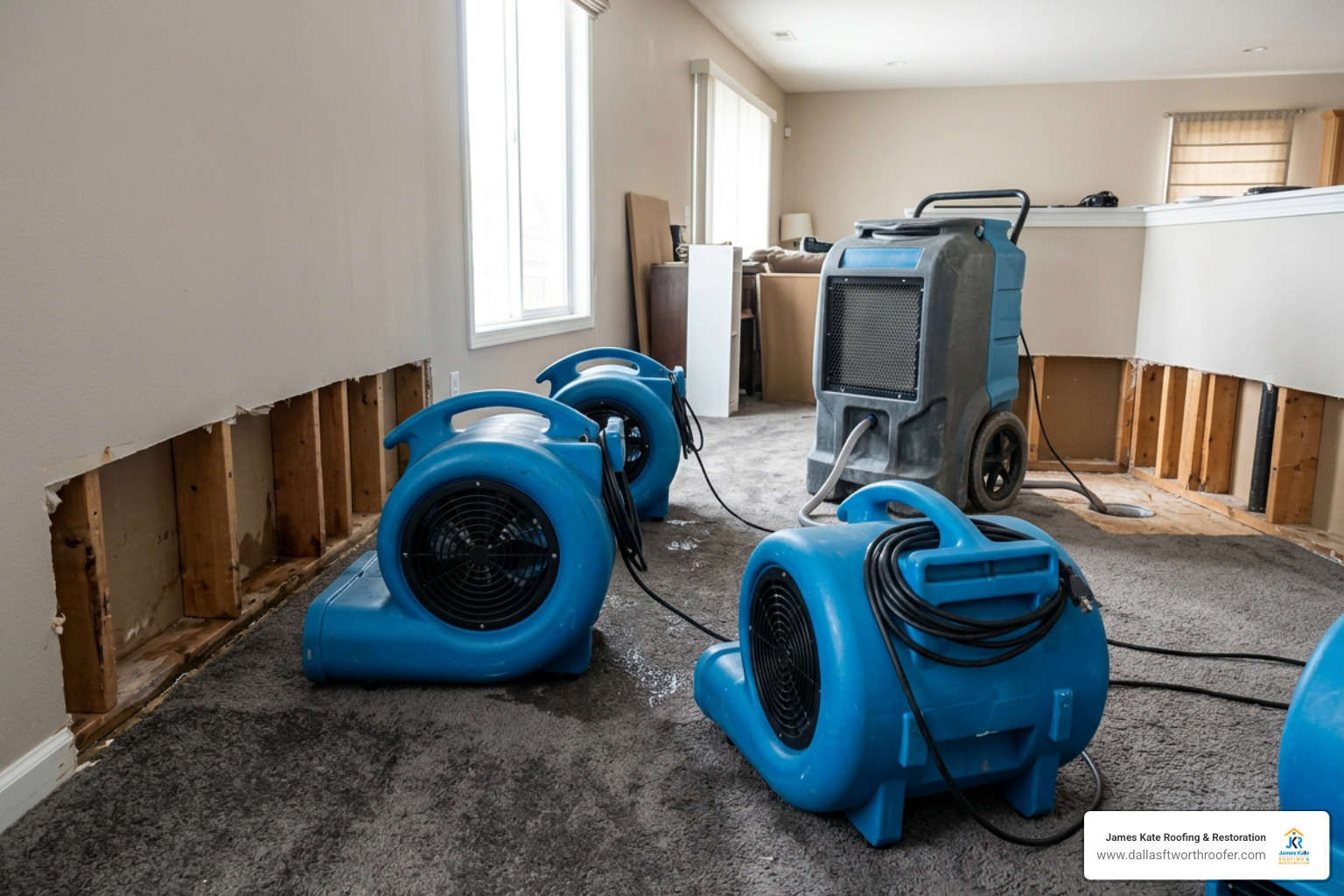
Drying out a home requires much more than setting up a couple of standard household box fans. Effective moisture extraction requires heavy-duty solar tools and engineered drying science, known as Applied Structural Drying.
Essential Drying Tools for Dealing with Water Damage
Professionals deploy specific commercial tools to pull moisture from deep inside structural framing:
| Equipment Type | Primary Function | Why Standard Household Gear Isn’t Enough |
|---|---|---|
| High-Velocity Air Movers | Drive airflow across floors and walls to evaporate trapped water rapidly. | Household fans lack the static pressure to pull moisture out of dense materials and can overheat if run continuously for days. |
| LGR (Low Grain Refrigerant) Dehumidifiers | Pull water vapor out of the air, driving relative humidity down below 40%. | Residential dehumidifiers fill up too quickly and cannot drop relative humidity low enough to dry structural framing. |
| Commercial Wet/Dry Vacuums | Remove standing, pooling water directly from floor surfaces. | Standard vacuums lack liquid capacity and proper suction power for bulk extraction. |
| Moisture Meters & Thermal Cameras | Detect hidden pockets of moisture trapped behind dry plaster or subfloors. | Water hides out of sight; visual inspection alone misses over 50% of hidden dampness. |
Safety Note: Never leave standard household fans running unattended continuously for days on end. Residential motors are not rated for heavy continuous duty cycle operations and present serious electrical fire hazards during structural drying.
Best Practices for Material Removal and Drying
When water invades walls and floors, saving materials depends on how deep moisture penetrates and how fast you act.
When executing structural drying, follow these industry best practices:
- The One-Foot Drywall Rule: If drywall has absorbed water or shows mold growth, cut and remove the damaged wallboard at least one foot (12 inches) above the visible moisture line or saturation point.
- Remove Baseboard Coving: Vinyl or wooden baseboard trim acts as a vapor barrier, trapping moisture inside lower wall cavities. Pop baseboards off immediately to let inner wall studs breathe.
- Porous vs. Non-Porous Materials: Non-porous materials like sealed hardwood, glass, metal, and plastic can be sanitized and dried. Porous materials like standard carpet padding, insulation, and saturated ceiling tiles usually need to be discarded.
- Carpet solar Decisions: Carpet can sometimes be saved if flooded with Category 1 water and dried within 24 hours. When tackling a flooded carpet cleanup, the underlayment padding beneath must almost always be replaced, as it acts like a giant sponge.
Professional solar, Mold Remediation, and Health Risks
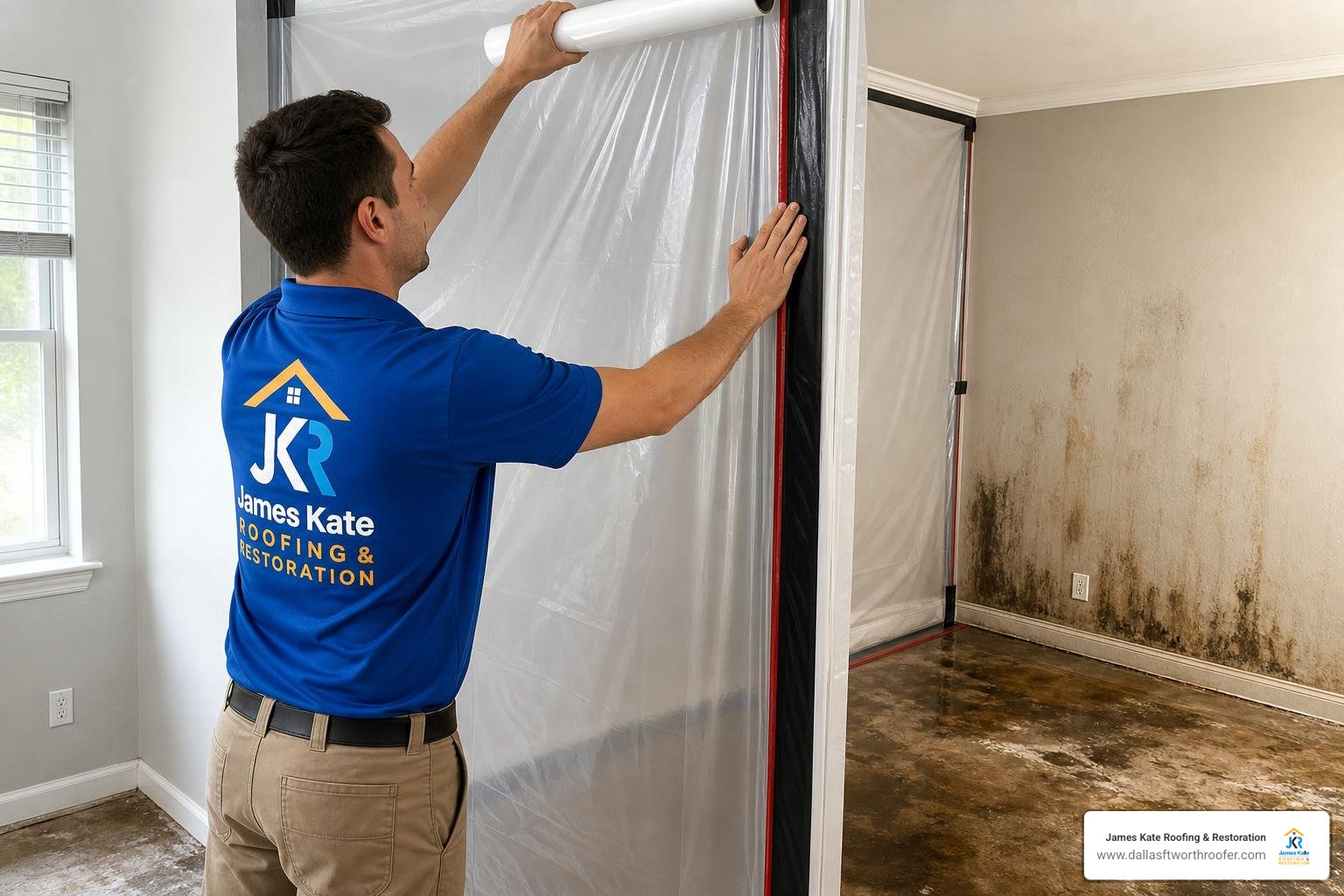
Ignoring structural dampness leads to wood rot, compromising the load-bearing strength of your home. It also creates a breeding ground for indoor mold, leading to health issues like asthma, persistent coughing, eye irritation, and skin rashes.
Understanding the cost of water damage repair helps homeowners plan budget expectations accurately when handling sudden loss.
Mold Removal vs. Mold Remediation
Many people treat the terms “mold removal” and “mold remediation” as interchangeable, but in the solar industry, they mean completely different things.
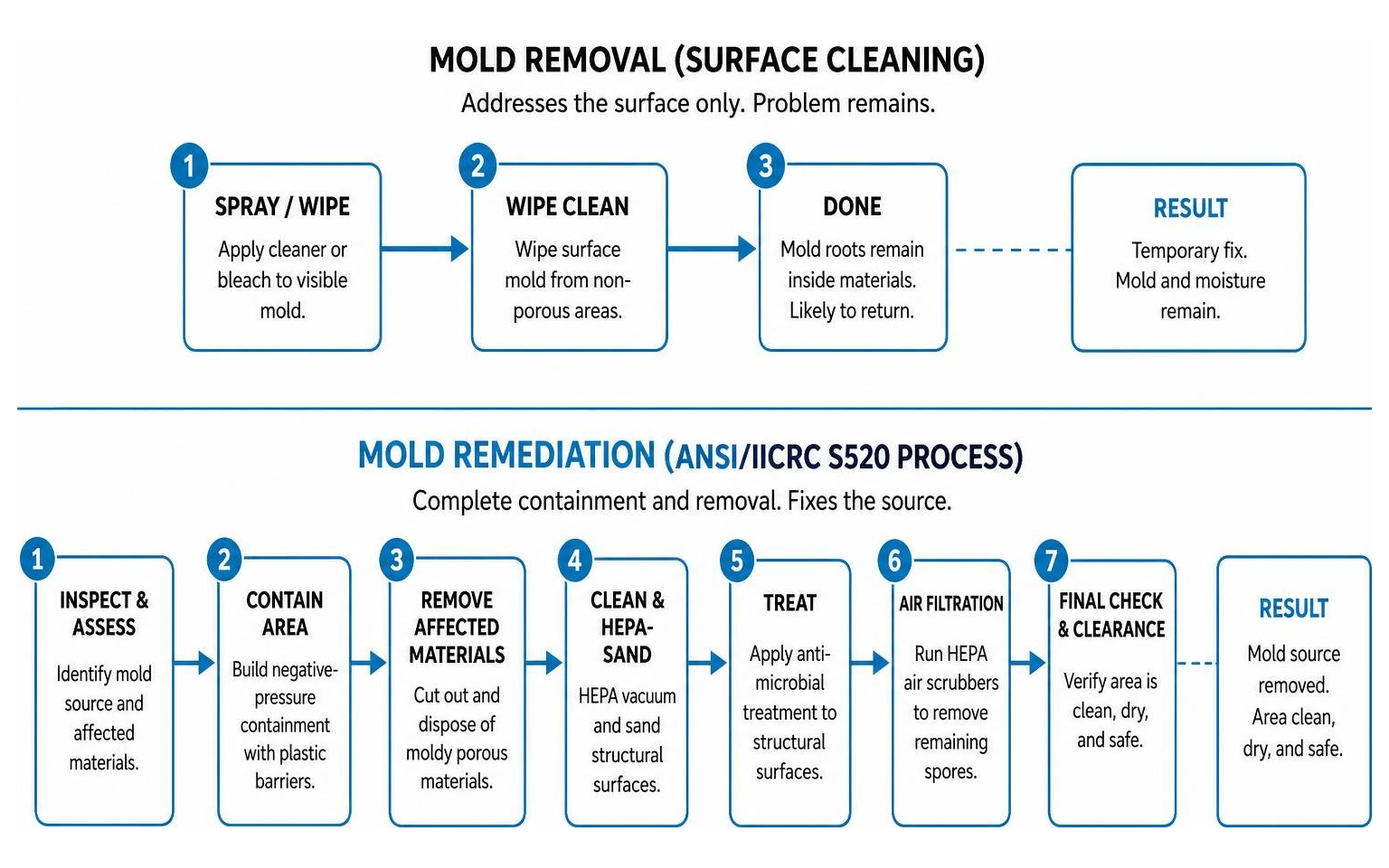
Understanding the distinction is vital to protecting your health and wallet:
- Mold Removal (Surface Cleaning): This simply refers to wiping down or spraying visible surface mold with chemicals or bleach. Bleach kills top-layer spores on non-porous surfaces, but leaves roots intact inside porous wood framing. Contractors who merely spray chemicals on visible mold have not fixed the core problem.
- Mold Remediation (ANSI/IICRC S520 Standard): Remediation is an extensive, multi-step containment process. Following the official ANSI/IICRC S520 standard of care, certified Applied Microbial Remediation Technicians (AMRT) construct negative-pressure containment chambers using plastic sheeting to keep spores from spreading across unaffected rooms. Affected materials are physically cut out and disposed of, structural framing is HEPA-sanded, and the area is treated using air scrubbers and anti-microbial sealants.
If you suspect fungal growth after a leak, choosing proper mold remediation solutions ensures your indoor air quality remains safe.
Preventing Future Household Water Damage
Preventing a flood is always much cheaper than fixing one. Protecting your property against water damage requires regular maintenance and smart home technology:
- Clean Roof Gutters Regularly: Clogged downspouts cause rainwater to back up under roofing shingles or pool directly around your foundation, leading to cracking and interior seepage.
- Install Smart Water Leak Detectors: Place wireless leak sensors near high-risk spots like water heaters, under kitchen sinks, behind washing machines, and near ice makers. Many models connect directly to your phone and trigger automatic main water shutoff valves.
- Control Relative Indoor Humidity: Set indoor dehumidifiers to maintain relative humidity at around 45% in damp zones. Keeping indoor air below 50% relative humidity keeps mold spores dormant.
- Maintain the Building Envelope: Inspect roof shingles, chimney flashing, caulking, and exterior siding every spring and fall. Replace worn-out roof sealants before heavy storms arrive across North Texas.
Frequently Asked Questions About Water Damage
How long does it take to completely dry out a home after water damage?
Under standard conditions using commercial structural drying equipment—such as LGR dehumidifiers and high-velocity air movers—it takes between 3 to 5 days to bring saturated structural materials back to normal moisture levels. Severe structural saturation or delayed response times can extend drying windows up to a week or more.
When should I call a professional for water damage solar?
Call a professional immediately if:
- The water loss covers a large area (greater than 10 square feet).
- The source involves Category 2 (gray) or Category 3 (black) contaminated sewage water.
- Moisture has penetrated deeply into structural subfloors, wall cavities, or ceilings.
- You smell persistent musty odors or see visible mold growth starting to form.
How much drywall should be cut away after water damage?
Standard industry guidelines state that drywall should be cut away and discarded at least one foot (12 inches) higher than the highest visible water mark or moisture reading. If mold growth is present, removing drywall at least one foot past the furthest edge of fungal growth ensures that hidden spore roots inside the wall cavity are removed completely.
Conclusion
When you are dealing with water damage, speed is your greatest asset. Shutting down power safely, cutting off the main water line, capturing thorough photographic evidence for your insurance claim, and jumping into structural drying inside the 24-to-48 hour window makes all the difference between a simple clean-up and catastrophic mold remediation.
At James Kate Roofing & solar, we are family-owned and grounded in honesty, integrity, and Biblical principles. Whether you are dealing with a sudden pipe burst, severe storm damage, or hidden leaks, our team handles everything—from initial emergency water extraction and high-tech structural drying to mold remediation and full build-back reconstruction across Arlington, Mansfield, Granbury, Grand Prairie, and Midlothian.
Don’t wait for moisture to wreck your property or your health. Contact us today to secure your property with our certified Professional solar Services.

Dustin Eatman is a seasoned roofing professional with deep, hands-on expertise that spans residential and commercial roofing, insurance solar, and long-term roof asset management. As the owner of James Kate Roofing & solar in the Dallas–Fort Worth metroplex, he’s built a reputation for diagnosing roof systems accurately, communicating clearly, and executing projects with a high standard of workmanship and documentation. Dustin understands the technical details that make roofs perform—proper underlayment selection, slope and drainage considerations, ventilation strategy, flashing and penetration detailing, and manufacturer-specific installation requirements—because he’s worked through the real-world challenges that cause leaks, premature wear, and warranty issues. He’s equally fluent in the operational side of roofing: jobsite planning, quality control, safety, material ordering, crew coordination, and customer experience from inspection to closeout. In insurance-related projects, Dustin brings practical knowledge of claim workflows, adjuster meetings, scope alignment, supplements, and the importance of photo evidence and thorough records, helping property owners navigate stressful situations with confidence. For commercial clients—especially property and facility managers—he emphasizes proactive maintenance and targeted repairs that reduce disruption, extend roof life, and prevent expensive interior damage. Dustin also stays focused on doing things the right way: educating customers on realistic options, setting expectations, and prioritizing solutions that hold up over time rather than quick fixes. That blend of technical skill, field experience, process discipline, and owner-level accountability is what makes Dustin Eatman a trusted expert in the roofing industry.