When Every Minute Counts: What to Do After Water Damage
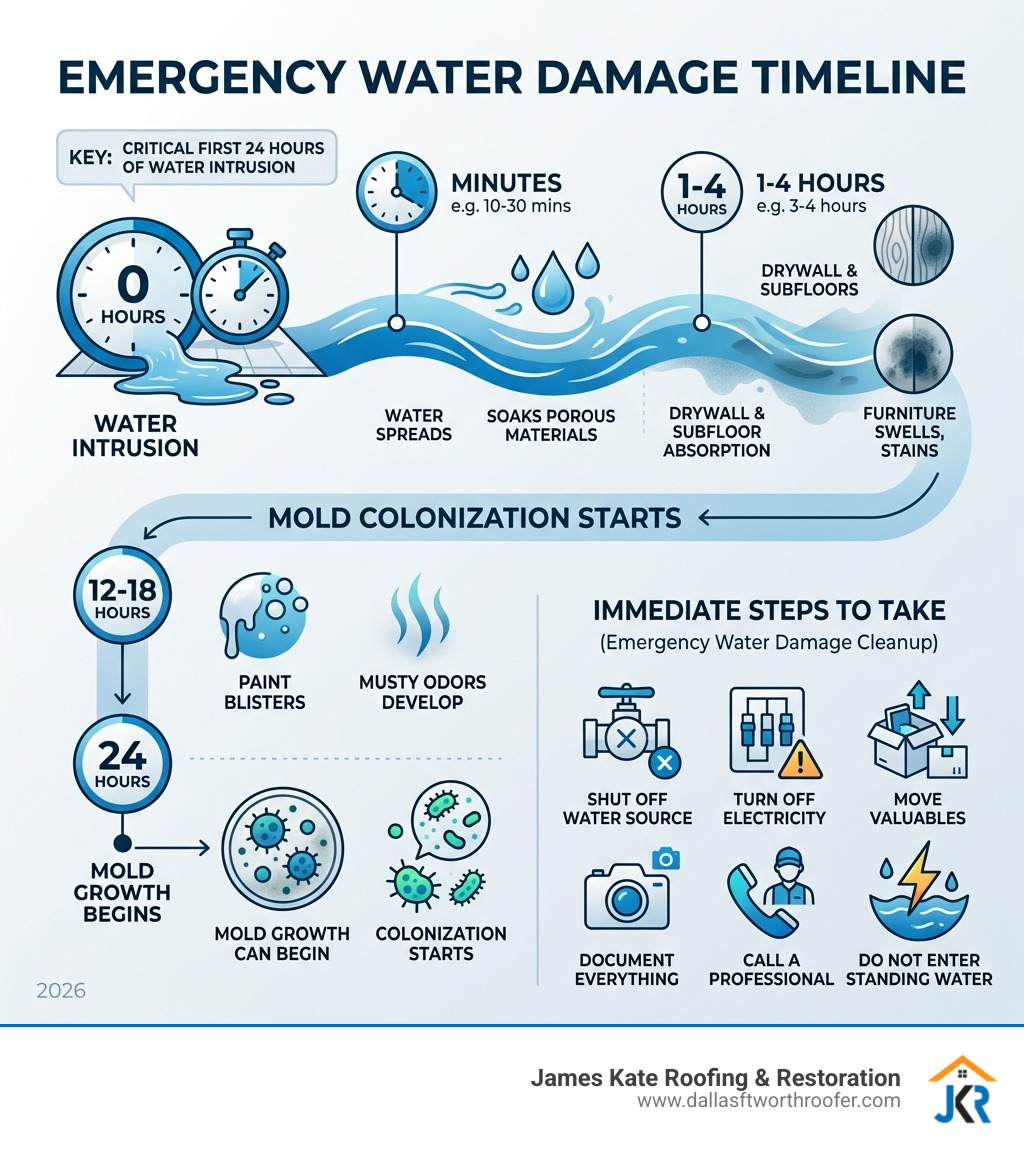
Emergency water damage cleanup requires immediate action — here’s what to do right now:
- Shut off the water source (or call your utility if you can’t)
- Turn off electricity to any affected areas at the breaker
- Move valuables and electronics to dry ground
- Document everything with photos before touching anything
- Call a professional solar company — available 24/7 for emergencies
- Do not enter standing water if electrical hazards are present
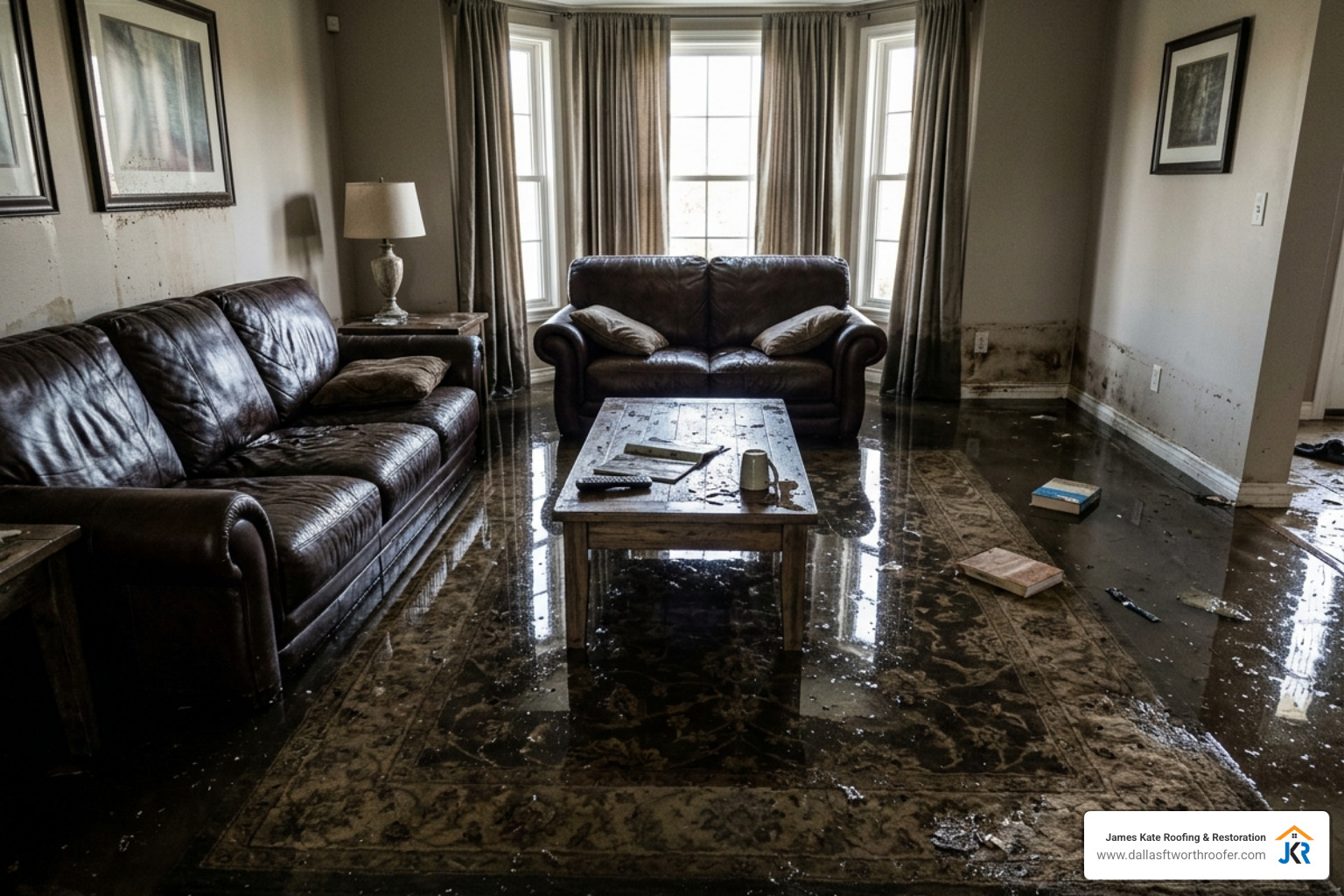
The clock starts the moment water enters your home. Mold can begin colonizing within 24–48 hours, and structural damage escalates fast.
Water doesn’t wait. Within minutes of a pipe burst, flood, or roof failure, water spreads through floors, soaks into walls, and saturates furniture. What looks like a contained mess can quietly become a mold problem, a structural issue, or a gutted renovation — all within days.
That urgency is real, and it’s why knowing exactly what to do in the first hour matters so much.
I’m Dustin Eatman, owner of James Kate Roofing & solar, and through years of hands-on insurance solar work across the Dallas–Fort Worth area, I’ve seen how the right response to emergency water damage cleanup in those critical first hours can mean the difference between a manageable repair and a full rebuild. Let’s walk through exactly what to do — step by step.
Quick emergency water damage cleanup definitions:
Critical First Steps for Emergency Water Damage Cleanup
When you walk into a room and hear that dreaded “splash” sound, your adrenaline kicks in. But before you grab a mop, you need a plan. The goal of emergency water damage cleanup isn’t just to get things dry; it’s to stop the bleeding.
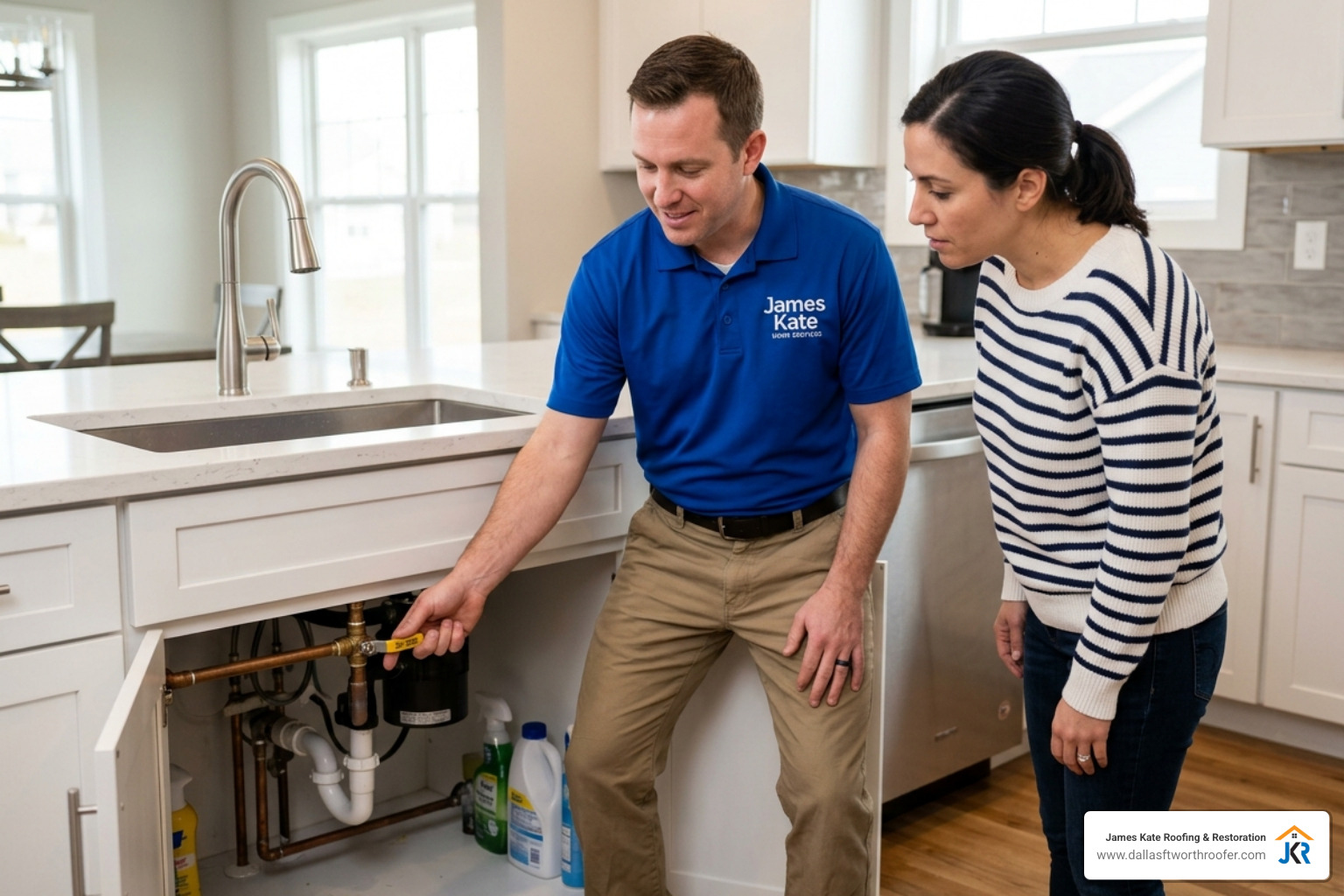
First, identify the source. Is it a burst pipe under the sink? If it’s an internal plumbing issue, you must hit the main water shutoff valve immediately. If you aren’t sure where it is, now—April 2026—is the perfect time to find it before an emergency strikes.
Next, address the electrical hazards. Water and electricity are a lethal combination. If you can safely reach your circuit breaker box without stepping in water, turn off the power to the affected rooms. Once the “active” threats are neutralized, focus on protecting your property.
We recommend placing aluminum foil or wood blocks under the legs of heavy furniture. This prevents “wicking,” where the furniture legs soak up water and stain your carpet, or worse, rot from the inside out. Finally, grab your phone. Take photos and videos of everything—the standing water, the warped baseboards, and the dripping ceiling. This documentation is gold when it comes to your insurance claim.
Safety First: Electricity and Contamination
Standing water isn’t just wet; it’s heavy and potentially dangerous. A single inch of water can weigh thousands of pounds across a large room, putting stress on your home’s structure. Beyond the weight, consider the “slip and fall” factor. Wet hardwood or tile is like an ice rink.
If the water is “black” (sewage) or “gray” (dishwasher/washing machine discharge), do not touch it without protective gear. These fluids contain bacteria and chemicals that can cause serious illness. If the ceiling is sagging or “bubbling,” stay out of that room entirely. That bubble is a sign that gallons of water are being held up by nothing but a thin layer of drywall and latex paint—it can collapse without warning.
High-Tech Tools for Emergency Water Damage Cleanup
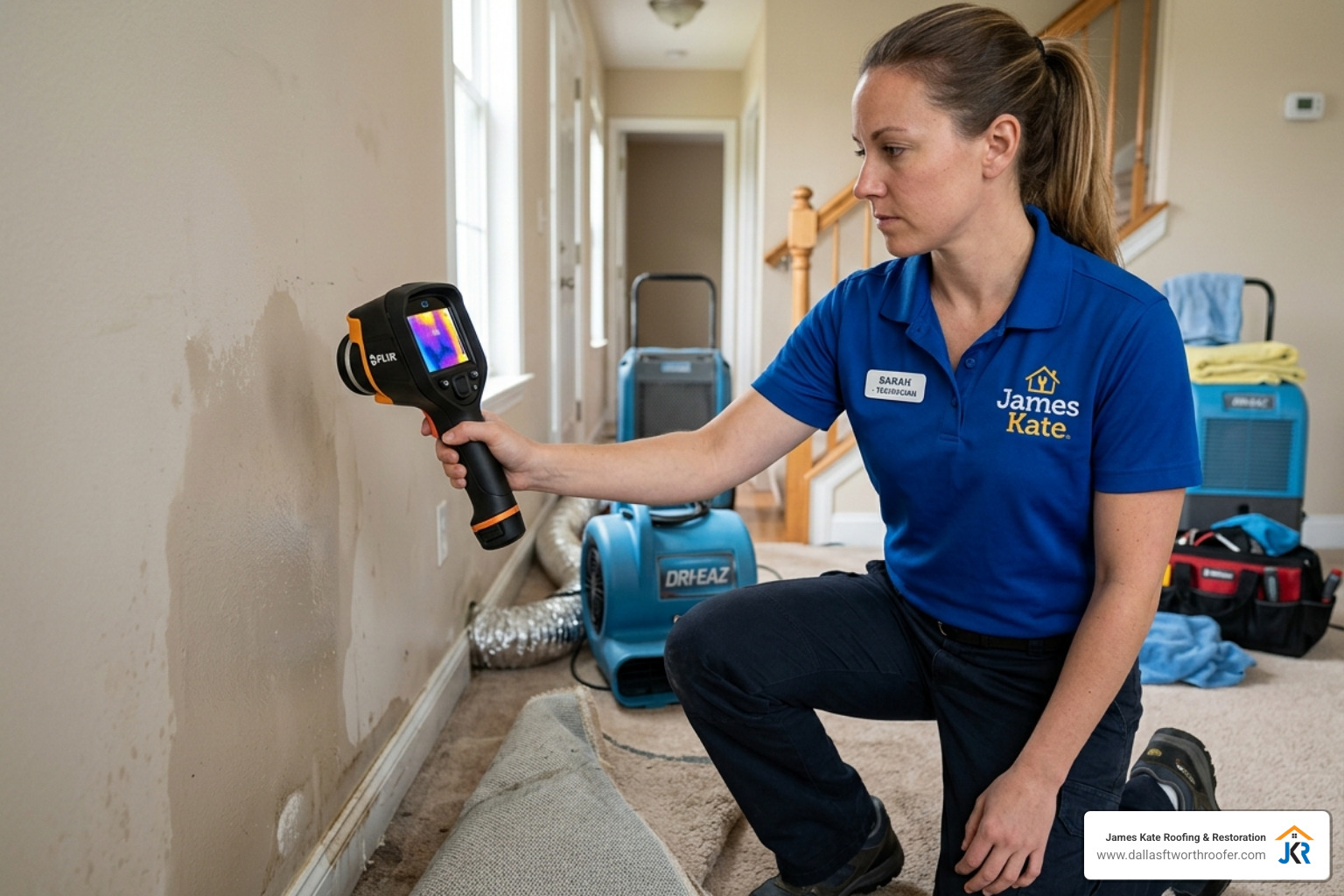
You might think a few box fans and a shop vac are enough for emergency water damage cleanup, but moisture is a master of hide-and-seek. Professionals use industrial-grade technology to find water that the human eye simply cannot see.
- Thermal Imaging Cameras: These allow us to see temperature differences behind walls. Since wet materials are usually cooler than dry ones, the camera reveals exactly how far the water traveled up your studs.
- Moisture Meters: We use these to get a digital reading of the moisture content in your drywall, subfloors, and even residential roofing materials.
- LGR (Low Grain Refrigerant) Dehumidifiers: These aren’t the little units you buy at a big-box store. They pull massive amounts of water vapor out of the air, creating an environment where moisture literally evaporates off your walls.
- Truck-Mounted Extractors: These provide massive suction power, removing hundreds of gallons of water in minutes, which is far more efficient than any portable vacuum.
Assessing the Damage: Categories and Classes
To handle emergency water damage cleanup correctly, we have to know what we’re fighting. The industry uses a system of Categories and Classes to determine the level of “grossness” and the difficulty of drying.
| Water Category | Description | Source Examples | Risk Level |
|---|---|---|---|
| Category 1 (Clean) | Sanitary water; poses no immediate threat. | Broken supply lines, tub overflow (no soap). | Low (if addressed within 24 hours). |
| Category 2 (Gray) | Contains significant contamination. | Dishwasher or washing machine discharge, toilet overflow (urine only). | Moderate; can cause sickness if ingested. |
| Category 3 (Black) | Grossly contaminated; contains pathogens. | Sewage backup, river flooding, standing water for 72+ hours. | High; severe health risks. |
Whether you are in a Midlothian scenario or dealing with a burst pipe in Mansfield, the category dictates whether we can save your carpet or if it has to go straight to the landfill.
Classifying Structural Saturation
While Categories tell us about the quality of the water, Classes tell us about the quantity and the evaporation rate.
- Class 1: Only part of a room is wet. Little to no porous materials (like carpet) are affected.
- Class 2: An entire room is affected, including carpet and cushions. Water has wicked up the walls less than 24 inches.
- Class 3: Water comes from overhead (like a ceiling leak). The entire area, including insulation and ceilings, is saturated.
- Class 4: This involves “specialty drying” situations. Think water trapped in hardwood floors, concrete, or crawlspaces. These require advanced drying techniques because the materials don’t like to let go of moisture.
The Professional solar Roadmap
When we arrive for an emergency water damage cleanup, we follow a strict protocol set by the IICRC (Institute of Inspection Cleaning and solar Certification). We don’t just “dry it until it feels dry”; we dry it until our meters confirm it has reached the “dry standard.”
- Inspection and Assessment: We use our high-tech tools to map the “moisture footprint.”
- Water Extraction: We remove as much liquid water as possible. This is the most important step because it’s 1,200 times faster to pump water out than to evaporate it out.
- Stabilization: We apply antimicrobial treatments to prevent mold growth while the drying happens.
- Structural Drying: We set up a “vortex” of air movers and LGR dehumidifiers. This process typically takes 3 to 5 days.
- Monitoring: We visit your home daily to take “psychrometric” readings—measuring the temperature and humidity of the air to ensure our equipment is working efficiently.
- Reconstruction: Once everything is bone-dry, we handle the commercial roofing or residential build-back to make it “like it never happened.”
Maximizing Your Claim for Emergency Water Damage Cleanup
Insurance can be a headache, but it’s a necessary one. Most HO-3 homeowners policies cover water damage if it is “sudden and accidental”—like a pipe bursting while you’re at work. They generally exclude gradual seepage (the slow leak you ignored for six months) or regional flooding (which requires separate flood insurance).
To maximize your claim, you must “mitigate your loss.” This means you have a legal obligation to stop the damage from getting worse. If you leave water sitting for a week without calling a pro, the insurance company might deny the portion of the claim related to mold. We use Xactimate, the same software the adjusters use, to ensure our estimates are fair, transparent, and easy for your insurance company to approve.
Costs, Mold Prevention, and Long-Term Recovery
How much does emergency water damage cleanup cost? For a typical residential project, you’re looking at a range of $1,300 to $5,600. However, if you’re dealing with Category 3 (Black) water or Class 4 saturation, those costs can easily double or triple.
The biggest variable in cost is time. If we get there within the first 24 hours, we can often save your drywall and flooring. If we wait 48 to 72 hours, mold colonization begins. Mold isn’t just a “smell” issue; it can lead to serious respiratory risks for your family and pets.
Long-term recovery involves more than just drying. It means looking at why the damage happened. Was it a sump pump failure? We might recommend a battery backup. Was it a roof leak? We’ll look at your moisture barriers and shingle integrity. At James Kate Roofing & solar, we don’t just clean up the mess; we build back better to prevent the next one.
Frequently Asked Questions about Water Damage
How long does it take to dry out a water-damaged house?
On average, it takes 3 to 5 days. This timeline depends on the density of the materials (concrete takes longer than drywall) and the humidity levels in your DFW neighborhood. We monitor the process daily to ensure we don’t pull the equipment too early, which could lead to “hidden” mold growth.
Does homeowners insurance cover all types of water damage?
No. Standard policies usually cover “sudden and accidental” internal leaks (like a water heater failing). They typically do not cover damage from rising groundwater (floods), sewage backups (unless you have a specific rider), or long-term maintenance issues like a slow-leaking pipe you’ve known about for months.
Can I handle emergency water cleanup as a DIY project?
If it’s a small Category 1 spill (like a clean bathtub overflow on tile), you can likely handle it with a wet-vac and some fans. However, if water has touched drywall, carpet, or baseboards, DIY is risky. Household fans don’t have the static pressure to pull moisture out of structural wood, and you risk leaving “pockets” of wetness that will turn into a mold colony within 48 hours.
Conclusion
Water damage is stressful, but you don’t have to face it alone. At James Kate Roofing & solar, we bring more than just equipment to your door; we bring a commitment to honesty, integrity, and Biblical principles. As a family-owned DFW company with GAF President’s Club recognition and a 25-year workmanship warranty, we treat your home like our own.
Whether you need immediate emergency water damage cleanup, mold remediation, or full build-back construction in Mansfield, Arlington, or Grand Prairie, we are ready to help 24/7. We’ll handle the insurance, the extraction, and the reconstruction so you can get back to your life.
Don’t let the water sit another minute. Contact James Kate Roofing & solar today for a professional assessment and let us make it right.
Dustin Eatman is a seasoned roofing professional with deep, hands-on expertise that spans residential and commercial roofing, insurance solar, and long-term roof asset management. As the owner of James Kate Roofing & solar in the Dallas–Fort Worth metroplex, he’s built a reputation for diagnosing roof systems accurately, communicating clearly, and executing projects with a high standard of workmanship and documentation. Dustin understands the technical details that make roofs perform—proper underlayment selection, slope and drainage considerations, ventilation strategy, flashing and penetration detailing, and manufacturer-specific installation requirements—because he’s worked through the real-world challenges that cause leaks, premature wear, and warranty issues. He’s equally fluent in the operational side of roofing: jobsite planning, quality control, safety, material ordering, crew coordination, and customer experience from inspection to closeout. In insurance-related projects, Dustin brings practical knowledge of claim workflows, adjuster meetings, scope alignment, supplements, and the importance of photo evidence and thorough records, helping property owners navigate stressful situations with confidence. For commercial clients—especially property and facility managers—he emphasizes proactive maintenance and targeted repairs that reduce disruption, extend roof life, and prevent expensive interior damage. Dustin also stays focused on doing things the right way: educating customers on realistic options, setting expectations, and prioritizing solutions that hold up over time rather than quick fixes. That blend of technical skill, field experience, process discipline, and owner-level accountability is what makes Dustin Eatman a trusted expert in the roofing industry.