When Hail Strikes: What You Need to Know About Hail Damage Repair
Hail damage repair is something thousands of DFW homeowners and vehicle owners face every year — often without warning. Here’s a quick overview of what you need to know:
Quick answers:
- What it costs: $75–$200 per small dent; $2,000–$4,000 for moderate damage; $8,000–$15,000+ for severe damage
- Main repair methods: Paintless Dent Repair (PDR) for intact paint; traditional body repair for cracked paint or broken panels
- Insurance: Hail damage falls under comprehensive coverage — filing a claim generally does not raise your rates
- Timeline: 1–3 days for minor PDR repairs; 7–14 business days for severe damage
- Carfax impact: PDR repairs do not show up on vehicle history reports
- Biggest mistake: Accepting the first insurance estimate — initial estimates miss 30%–50% of actual damage
One moment it’s a clear afternoon. The next, golf-ball-sized hail is hammering your car and roof. The damage can look overwhelming, and the path forward — insurance claims, repair options, contractor choices — adds another layer of stress on top of an already bad day.
That’s exactly why having a clear, trustworthy guide matters.
I’m Dustin Eatman, owner of James Kate Roofing & solar in the Dallas–Fort Worth area, and I’ve spent years helping property owners navigate the insurance solar process after severe hail events — including the documentation, claim workflows, and quality control that separate a proper repair from a costly shortcut. In this guide, I’ll walk you through everything you need to make confident decisions about hail damage repair, whether you’re dealing with a dented vehicle, a damaged roof, or both.
Understanding Hail Damage Repair: Methods, Costs, and Options
When a severe thunderstorm rolls through communities like Mansfield, Arlington, or Grand Prairie, hail stones ranging from pea-sized pellets to baseball-sized monsters bombard everything in their path. The structural impact on metal panels, auto glass, and roof shingles requires specialized solar methods. Understanding the technical differences between these methods helps ensure your property is restored to pre-storm condition without unnecessary expenses.
Paintless Dent Repair (PDR) vs. Traditional Body Repair
For vehicle body panels, hail damage repair primarily comes down to two choices: Paintless Dent Repair (PDR) or traditional collision body repair.
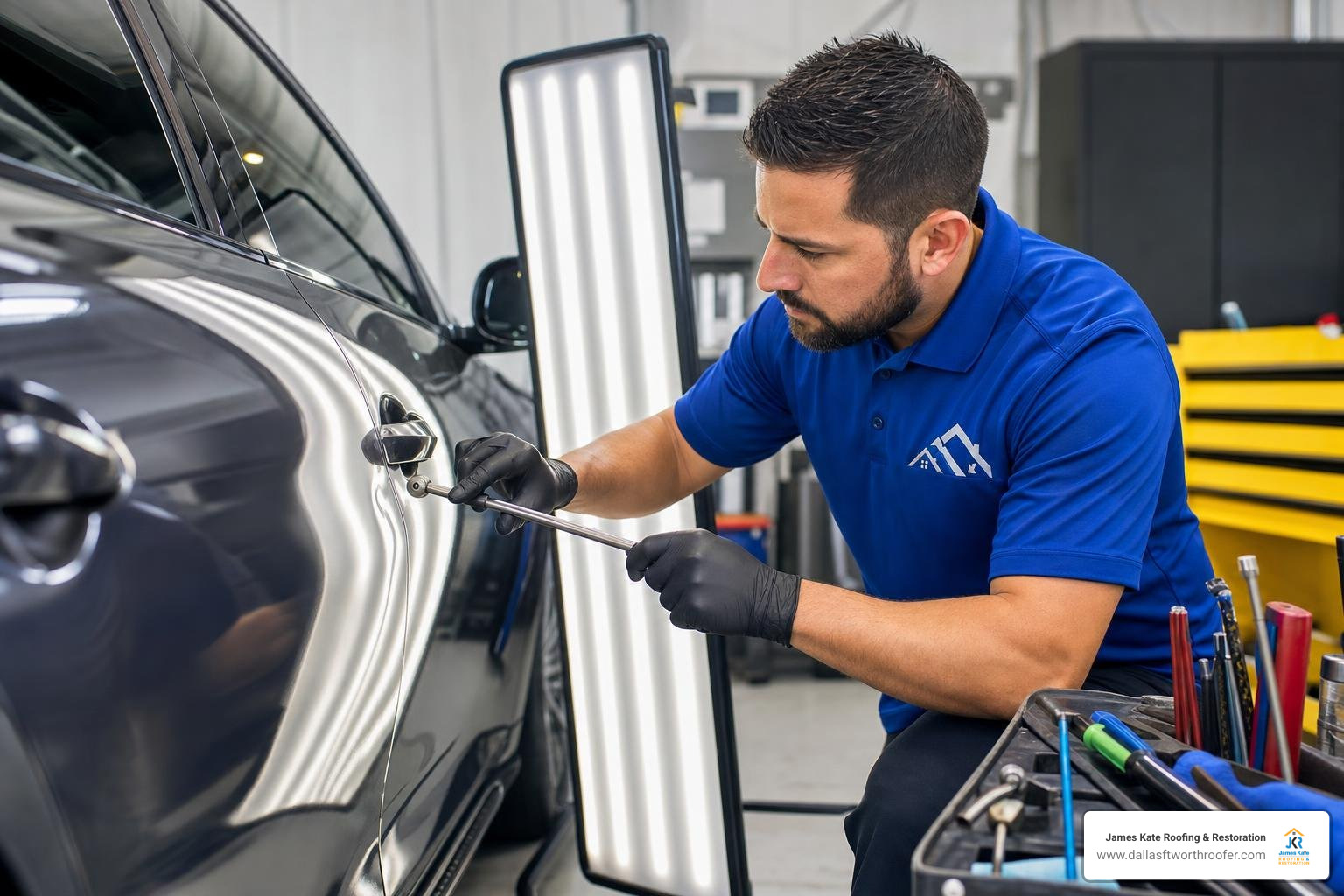
Paintless Dent Repair is the industry standard for cosmetic hail damage where the vehicle’s original factory paint remains intact. During the PDR process, certified technicians access the backside of dented body panels using specialized hand tools, rods, and reflector boards. The technician painstakingly applies precise pressure to massage the metal back to its original shape. For areas where backside access is restricted, secondary glue-pulling systems are used on the exterior surface to lift low spots without harming the clear coat.
The advantages of PDR include:
- Preserves Original Factory Paint: Maintaining the original paint finish prevents paint mismatches, clear coat failures, and vehicle trade-in penalties.
- No Body Filler or Sanding: PDR relies on 100% metal memory rather than filling dents with body putty.
- Clean Vehicle History: PDR work does not get reported to database registries like Carfax, safeguarding resale value.
- Speed: Most moderate hail jobs using PDR can be completed in just 1 to 3 days.
By contrast, traditional auto body repair is required when high-velocity hail cracks the paint finish, tears through clear coat, or causes severe metal stretching on body lines. In traditional repairs, body shops grind down the affected area, apply body filler, sand it smooth, apply primer, and repaint the panel using computerized paint-matching systems. If the damage is catastrophic, the panel must be cut out and replaced entirely. Local drivers seeking traditional panel work often consult reputable auto body repair facilities depending on the scope of work required.
Estimating Costs for Hail Damage Repair
How much does it actually cost to repair hail damage? The total price depends on several factors: dent count, dent diameter, panel depth, vehicle material (aluminum vs. steel), and whether secondary structural or glass work is needed. Aluminum panels—common on modern trucks and SUVs—are stiffer and lack the metal memory of steel, requiring additional labor.
Here is a breakdown of typical cost tiers for auto hail damage repair:
- Small, Isolated Dents: $75 to $200 per dent when fixing localized dimples with unbroken paint.
- Moderate Multi-Panel Damage: $2,000 to $4,000 for vehicles with dozens of dimples across hoods, roofs, and trunks caused by marble- to 1.5-inch hail.
- Average Full-Vehicle Hail Claim: $4,000 to $8,000 across multiple panels on a typical commuter vehicle.
- Severe Damage: $8,000 to $15,000+ for vehicles hit by golfball- or baseball-sized hail involving cracked paint, broken glass, trim replacement, and panel replacement.
| Damage Severity Level | Typical Hail Diameter | Primary Repair Method | Estimated Average Cost |
|---|---|---|---|
| Minor | Pea size (< 0.75 in) | Quick PDR | $75 – $1,500 |
| Moderate | Marble to 1.5 inch | Full-Vehicle PDR | $2,000 – $4,000 |
| Major | Golf ball size (1.75 in) | Heavy PDR + Glass Repair | $4,000 – $8,000 |
| Severe / Catastrophic | Baseball size+ (2.5 in+) | Conventional Repair & Panel Replacement | $8,000 – $15,000+ |
Evaluating Damage Severity and Insurance Coverage
Whether dealing with auto denting or property damage, navigating insurance policies after a severe DFW storm is often the most confusing part of the solar process. Knowing how claims are categorized and calculated protects you from out-of-pocket losses.
Navigating Comprehensive Insurance Claims
Auto hail damage is filed under your comprehensive coverage (other-than-collision), not collision coverage. This distinction is critical: because weather events are considered non-fault acts of nature, filing a hail damage claim generally will not directly raise your personal insurance rates.
When you contact your insurer, they will send an adjuster out to perform an initial visual appraisal or ask you to submit photos via an app. However, initial insurance estimates miss 30% to 50% of the actual damage.
Why is the initial gap so high? Insurance adjusters often inspect dirty vehicles under direct sunlight or review low-resolution smartphone pictures. Direct sunlight paradoxically masks shallow dents and panel creases. Professional hail facilities wash the vehicle thoroughly and inspect panels under specialized high-intensity LED PDR light boards. These lights project parallel lines across the paint; any subtle dent bends the light lines, revealing the true dent count and depth.
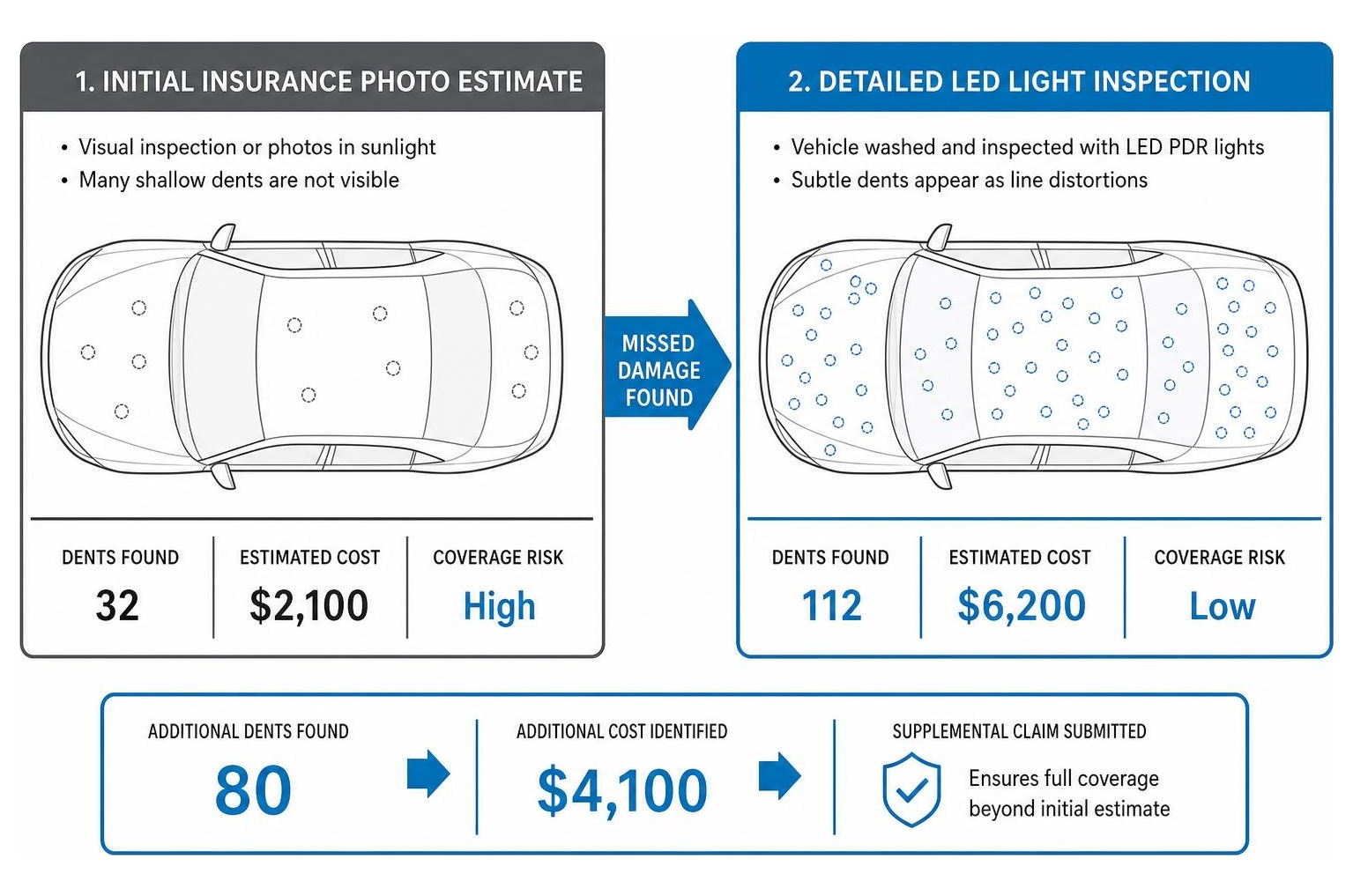
When an independent repair facility identifies thousands of dollars in missed damage during disassembly, they submit a supplemental claim directly to the insurance carrier. The insurer adjusts the payout to cover the true solar cost, ensuring you pay only your agreed policy deductible. For property owners across Midlothian and Granbury, reviewing our guide on Types Of Roof Storm Damage And How To Handle Them provides clear parallels for building claims.
Resale Value, Vehicle History, and Total Loss
Unrepaired hail damage destroys resale value. Automobile valuation studies show that severe cosmetic hail damage can drop a vehicle’s trade-in value by 30% to 50%—far exceeding the cost of a comprehensive deductible. Additionally, if you leave pre-existing hail damage unrepaired and your car is later involved in an accident, insurance adjusters will deduct the cost of the old hail damage from your vehicle settlement.
Filing an insurance claim and choosing Paintless Dent Repair preserves your investment. Because certified PDR technicians do not cut, weld, or repaint factory panels, PDR repairs are non-invasive and leave no record on vehicle history reports such as CARFAX, safeguarding resale value.
In catastrophic storms, an insurer may declare a vehicle a total loss. A vehicle is deemed totaled when the cost of repair exceeds a specific percentage of its Actual Cash Value (ACV)—typically 75% to 80% depending on state regulations. If your car is declared a total loss, the insurance company pays out the market value minus your deductible.
For property owners assessing structural impacts on their homes, inspecting both vehicles and roofing systems is equally essential. Learn how to perform a systematic structural check with our Ultimate Checklist For Assessing Roof Damage Severity.
Navigating the Recovery Process and Choosing Reliable Specialists
Restoring property after a major severe weather event requires an organized step-by-step approach. Working with local, accredited specialists guarantees quality workmanship and protects you from predatory post-storm practices.
How the Hail Damage Repair Process Works Step-by-Step
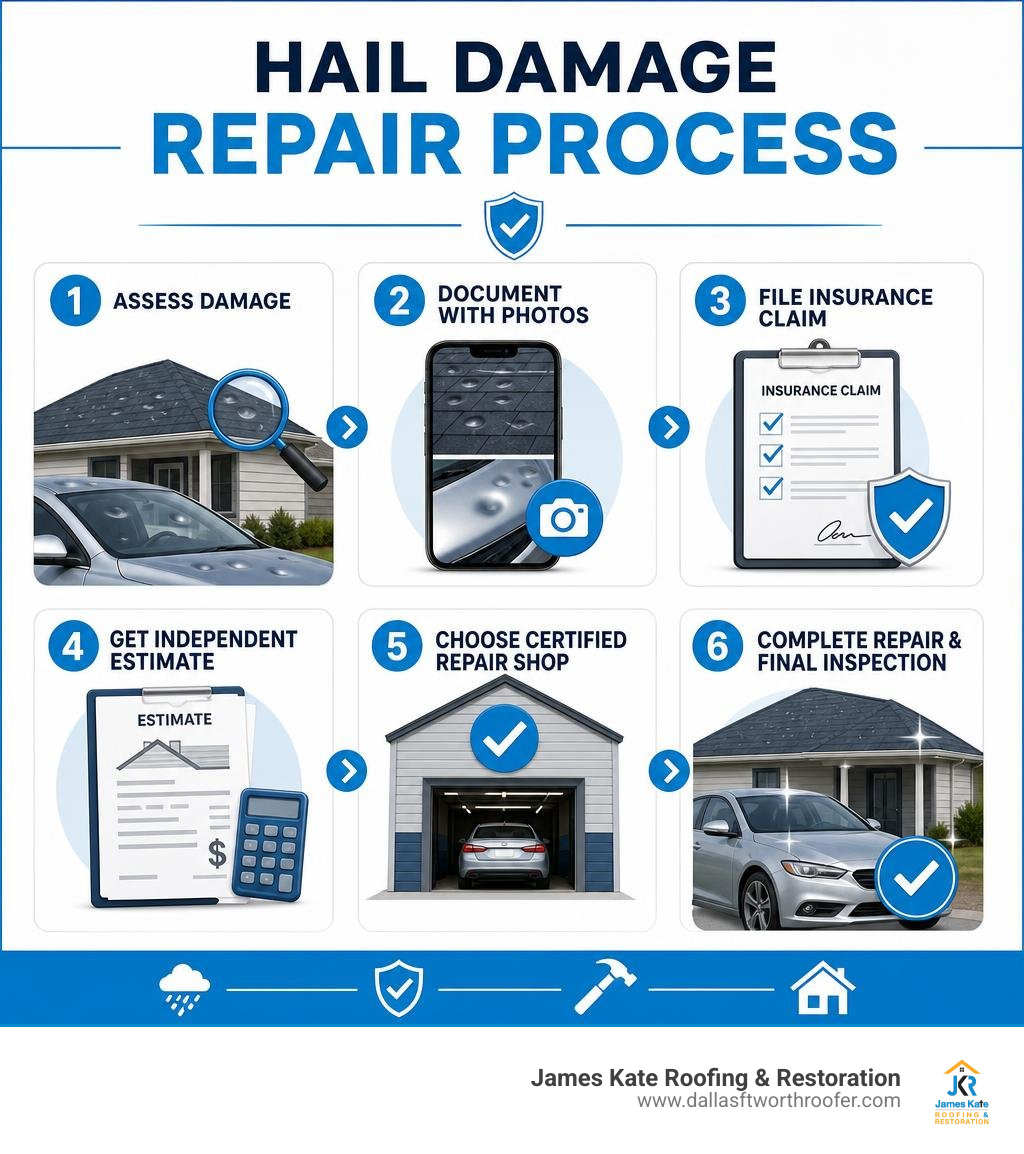
A thorough hail damage repair workflow follows a strict sequence to ensure no hidden damage goes unaddressed:
- Immediate Inspection and Documentation: Right after the storm, document all damage. Take clear photos of dented hoods, roofs, side panels, chipped paint, broken windows, and damaged home roofing shingles in open shade or soft light.
- File the Claim: Contact your insurance carrier to report a comprehensive loss and receive a claim number.
- Professional Shop Evaluation: Drop off your vehicle or schedule a home inspection with a local solar expert. Regional service centers and solar specialists across the DFW metroplex use specialized LED lighting to map every dent across all panels.
- Supplement Submission: The repair specialist compares their detailed mapping against the insurer’s line-item estimate and submits a supplemental estimate for any missed labor, trim parts, or panel mapping.
- Precision Repair: Certified technicians disassemble interior headliners or door panels to gain backside access, then systematically massage dents back to factory tolerance using specialized PDR rods.
- Glass and Sensor Recalibration: If windshields or sunroofs were shattered, glass is replaced. Modern vehicles undergo electronic pre- and post-scans to recalibrate Advanced Driver Assistance Systems (ADAS) sensors located behind body panels.
- Final Quality Check: The vehicle undergoes a final inspection under raking light, followed by a wash and interior clean.
The overall timeline ranges from 1 to 3 business days for moderate PDR repairs up to 7 to 14 business days for severe multi-panel restorations requiring glass, repainting, or special-order parts. To see how property repair timelines mirror residential roof work, explore our Roof Repair Guide 2026.
Avoiding Common Mistakes and Unreputable Contractors
After major storms hit the DFW metroplex, out-of-town “storm chasers” often flood the area, setting up temporary roadside tents or knocking on doors with promises of waived deductibles and instant repairs.
While zero-out-of-pocket deals sound appealing, relying on transient contractors comes with severe risks:
- Vanishing Warranties: Traveling repair crews typically pack up and leave within weeks once storm traffic slows down. If paint cracks months later or interior trim rattles due to broken clips, you have no local recourse.
- Substandard Workmanship: Uncertified technicians may over-push metal, creating permanent high spots, cracked paint bridges, or damaged electrical wiring behind headliners.
- Skipped Safety Calibrations: Improper tool placement near modern blind-spot sensors or lane-assist cameras can trigger safety sensor failures, costing up to $1,500 in uncalibrated errors.
To protect your investment, always choose established local repair facilities with physical locations in your area. Verify that the shop offers a written lifetime warranty, carries full garage liability insurance, and handles supplemental claims directly with your insurer.
Residents impacted by severe North Texas weather can review our guide on Arlington Tx Storm Damage to understand local recovery strategies.
Frequently Asked Questions About Hail Damage
How long does hail damage repair usually take?
Repair timelines depend on damage severity and shop volume after a major storm:
- Minor PDR Damage: 1 to 3 business days once insurance approval is secured.
- Moderate Full-Vehicle Repair: 3 to 5 business days for panel disassembly, detailed PDR, and reassembly.
- Severe Damage with Repainting or Glass: 7 to 14 business days, depending on parts availability and body shop scheduling.
Can I repair hail damage myself with DIY methods?
We strongly advise against DIY hail repair. Internet hacks like applying dry ice, using heat guns, or buying cheap suction cup dent pullers rarely work on automotive-grade steel or aluminum.
Heat guns risk blistering your vehicle’s clear coat, while dry ice creates extreme thermal shock that can instantly crack paint. Cheap glue pullers often tear clear coat off the panel or over-pull the metal, creating irreversible stretched metal bumps. Fixing a botched DIY attempt invariably costs far more than professional PDR.
Will filing a hail damage claim increase my insurance rates?
In almost all cases, no. Hail damage claims are processed under comprehensive coverage, which protects against non-collision weather events and acts of nature. Insurance companies do not penalize individual policyholders with rate surcharges for weather events outside their control. However, if an entire geographic zip code experiences widespread catastrophic hail, regional base insurance premiums across all carriers may rise during policy renewal years.
For property owners assessing roof shingle protection against future storms, see our guide on The Best Asphalt Shingles For High Winds And Hail.
Restoring Your Property with Integrity and Trust
Experiencing a severe hailstorm is stressful, but restoring your property doesn’t have to be. From understanding repair costs and PDR techniques to filing supplemental insurance claims and avoiding out-of-state storm chasers, taking a methodical approach ensures your vehicle and home are returned to pristine condition.
At James Kate Roofing & solar, we bring family-owned honesty, Biblical principles, and GAF President’s Club award-winning quality to every project. Whether your home needs complete roof solar, wind damage repair, water mitigation, or build-back construction following severe DFW weather, our team backs every job with up to a 25-year workmanship warranty. We proudly serve homeowners across Mansfield, Arlington, Granbury, Grand Prairie, and Midlothian, TX.
Don’t let unrepaired hail damage compromise your property value or safety. Learn more about storm solar services and reach out to our team today for an honest, comprehensive inspection!
Dustin Eatman is a seasoned roofing professional with deep, hands-on expertise that spans residential and commercial roofing, insurance solar, and long-term roof asset management. As the owner of James Kate Roofing & solar in the Dallas–Fort Worth metroplex, he’s built a reputation for diagnosing roof systems accurately, communicating clearly, and executing projects with a high standard of workmanship and documentation. Dustin understands the technical details that make roofs perform—proper underlayment selection, slope and drainage considerations, ventilation strategy, flashing and penetration detailing, and manufacturer-specific installation requirements—because he’s worked through the real-world challenges that cause leaks, premature wear, and warranty issues. He’s equally fluent in the operational side of roofing: jobsite planning, quality control, safety, material ordering, crew coordination, and customer experience from inspection to closeout. In insurance-related projects, Dustin brings practical knowledge of claim workflows, adjuster meetings, scope alignment, supplements, and the importance of photo evidence and thorough records, helping property owners navigate stressful situations with confidence. For commercial clients—especially property and facility managers—he emphasizes proactive maintenance and targeted repairs that reduce disruption, extend roof life, and prevent expensive interior damage. Dustin also stays focused on doing things the right way: educating customers on realistic options, setting expectations, and prioritizing solutions that hold up over time rather than quick fixes. That blend of technical skill, field experience, process discipline, and owner-level accountability is what makes Dustin Eatman a trusted expert in the roofing industry.