
What Does Fire and Flood solar Really Cost in 2026?
Fire and flood solar cost is one of the biggest financial shocks a homeowner can face — and knowing the numbers upfront can save you from making expensive mistakes.
Here’s a quick snapshot of what you’re likely to pay:
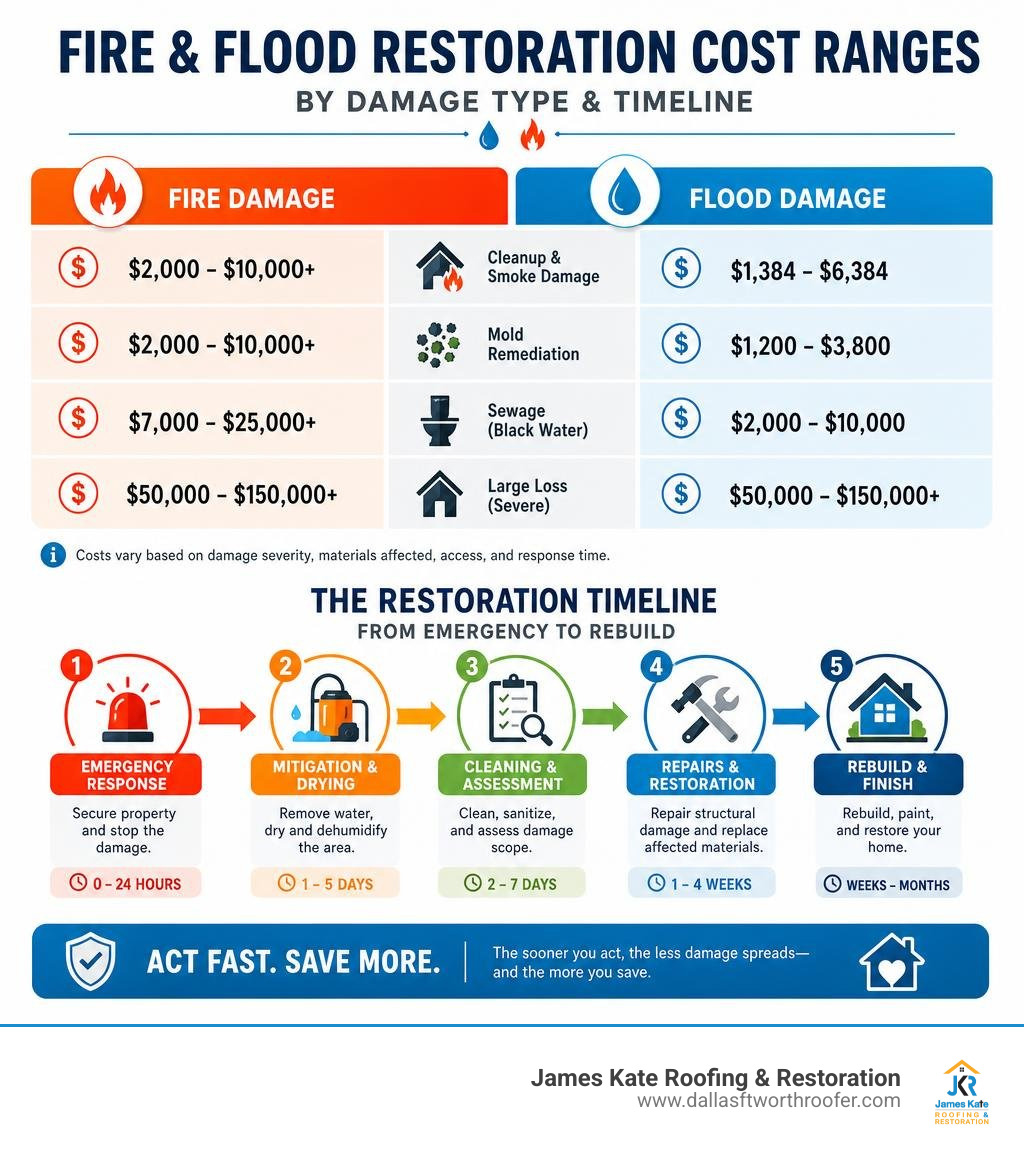
| Damage Type | Typical Cost Range | National Average |
|---|---|---|
| Water damage solar | $1,384 – $6,384 | $3,867 |
| Flood cleanup | $2,000 – $10,000 | $5,000 |
| Fire damage cleanup | $2,000 – $10,000+ | varies by scope |
| Mold remediation | $1,200 – $3,800 | $2,225 |
| Sewage (black water) event | $7,000 – $25,000+ | — |
| Large fire or flood (severe) | $50,000 – $150,000+ | — |
These ranges are wide for a reason. A burst pipe caught in an hour costs far less than storm flooding that sat for three days. The type of damage, the category of water involved, and how fast you act are the three biggest cost drivers — and we’ll break all of them down.
When disaster hits, most homeowners don’t know where to start. You’re dealing with stress, disruption, and a clock that’s already ticking — because mold can begin growing in as little as 24 to 48 hours after water damage occurs. Every hour of delay can push your solar bill higher.
I’m Dustin Eatman, owner of James Kate Roofing & solar in the Dallas–Fort Worth area, and I’ve guided hundreds of property owners through the insurance, mitigation, and rebuild process after both fire and flood events. My hands-on experience with fire and flood solar cost — from emergency dry-out through full reconstruction — is what this guide is built on.
Fire and flood solar cost terms explained:
Understanding the Total Fire and Flood solar Cost
When calculating your potential fire and flood solar cost, it is critical to separate the project into two distinct phases: mitigation and reconstruction (build-back). Homeowners are often surprised by their final bills because they mistake the initial dry-out estimate for the total project cost.
Mitigation is the emergency phase. It involves stopping the water source, extracting standing water, structural drying, and packing out salvageable belongings. Rebuild is the construction phase where we replace the ruined drywall, lay down new flooring, and restore your home to its pre-loss condition.
To give you a clear picture of how these phases differ in price, we have broken down the average costs per square foot in 2026:
| solar Phase | What It Includes | Cost Per Square Foot (2026) |
|---|---|---|
| Emergency Mitigation | Water extraction, heavy-duty structural drying, sanitization, and moisture monitoring | $3.00 – $7.50 |
| Reconstruction / Build-Back | Drywall replacement, subfloor repairs, finish flooring installation, and painting | $20.00 – $37.00 |
In the Dallas-Fort Worth metroplex—including communities like Mansfield, Arlington, and Grand Prairie—local labor rates and disposal fees place our typical local average for water damage solar at approximately $4,788. Depending on the size of your home and the depth of the water, a localized pipe burst might cost under $3,000, while a severe storm surge or whole-home flood can easily climb past $15,000.
For a detailed look at structural repairs and build-back construction, you can read our comprehensive guide to water damage repair costs.
Key Factors That Drive Fire and Flood solar Cost
No two solar projects are priced exactly the same. When we draft an estimate using Xactimate—the industry-standard pricing software used by 75% to 80% of insurance adjusters—several key cost drivers dictate the final number:
- Severity of the Damage: A ceiling leak that affects only a single room is far simpler to address than water that migrates from a second-story bathroom down through the subfloor, ruining the ceilings and walls of the floor below.
- Response Time: This is the single biggest cost multiplier. Water sitting on structural wood and drywall for more than 24 hours begins to warp materials, rot framing, and trigger rapid mold growth.
- Local Labor and Material Rates: In the North Texas region, municipal permit fees, localized disposal rates, and regional demand during storm season directly impact labor costs.
- Accessibility of the Damage: Crawl spaces, tight wall cavities, and multi-story homes require specialized drying equipment and more labor hours to restore.
To understand how executive-level planning can protect your property and budget during a loss, see The CEO Guide to Handling Property Damage.
How Water Categories Impact Your Fire and Flood solar Cost
The source of the water determines the safety protocols, protective gear, and demolition requirements of the job. The Institute of Inspection, Cleaning and solar Certification (IICRC) defines three categories of water loss:
Category 1: Clean Water
This is water from a clean source, such as a broken supply line, a failing water heater, or a tub overflow. Because there is no immediate pathogen risk, clean water mitigation is the most affordable, averaging $3.00 to $4.25 per square foot. Many structural materials can be dried in place without being torn out.
Category 2: Gray Water
Gray water contains a significant level of chemical, biological, or physical contamination. Common sources include washing machine overflows, dishwasher discharge, or toilet bowls containing urine but no feces. Remediation runs $4.00 to $6.50 per square foot because it requires specialized sanitizing agents and the removal of porous materials like carpet padding.
Category 3: Black Water
This water is highly unsanitary and contains pathogenic agents from sewage backups, rising river water, or storm-driven floods. All flood water entering a home from the outside is automatically treated as Category 3 black water. Remediation is highly complex, costing $7.00 to $12.00+ per square foot. It requires complete demolition of affected porous materials (such as drywall and insulation) and intensive antimicrobial treatments.
To learn how to identify your specific type of water loss, read The Essential Guide to Identifying Your Category of Water Loss. For severe sewage and black water contamination, consult our guide on understanding and remediating Category 3 water damage.
Mitigation vs. Remediation vs. Reconstruction Costs
To manage your budget effectively, you must understand the difference between the three primary phases of property recovery.
- Mitigation focuses on damage control. It is the immediate, emergency physical action taken to stop the water or secure the structure after a fire. It includes boarding up windows, tarping roofs, and extracting standing water.
- Remediation is the process of cleaning, sanitizing, and deodorizing. This is where we remove smoke, soot, and mold spores, returning the home to a safe, sanitary state.
- Reconstruction is the final build-back phase where we replace structural elements, hang new drywall, lay flooring, and paint.
For a deeper dive into how these services work together, check out our article on fire and water damage cleanup services explained. When selecting a contractor to manage these phases, refer to our guide on choosing your emergency remediation partner.
Water Extraction and Structural Drying Expenses
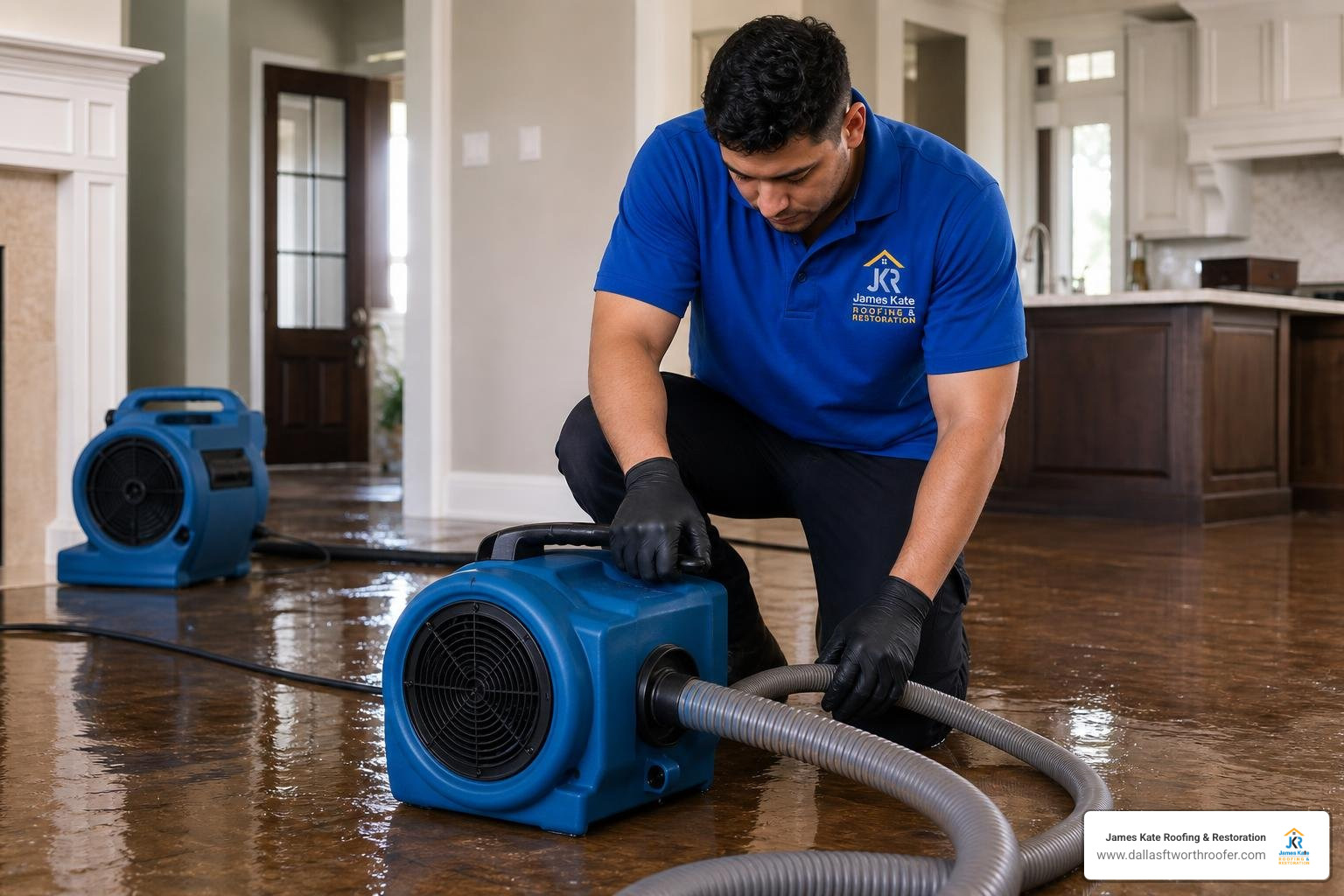
To prevent structural rot, we deploy advanced commercial drying systems. A typical mid-size drying job requires 8 to 12 industrial air movers and 2 to 4 commercial dehumidifiers running continuously for 3 to 5 days.
Professional water extraction and drying costs include:
- Emergency Service Call Fee: $50 to $200
- Industrial Dehumidifier Rental: $75 to $200 per unit, per day
- Air Mover Rental: $30 to $50 per unit, per day
- Moisture Monitoring and Documentation: Certified technicians must visit daily with moisture meters and thermal imaging cameras to log dry-out progress. This documentation is vital for securing insurance claim approvals.
For localized pricing data, you can view the Mansfield disaster solar service costs or contact our team for Arlington water damage solar services.
Fire and Smoke Damage solar Pricing
Fire solar involves unique challenges. Even a small attic fire can cause severe smoke and soot damage throughout the entire house.
Typical fire cleanup costs include:
- Soot and Smoke Remediation: $2,000 to $10,000+ depending on the size of the home and the type of soot (oily vs. dry).
- Thermal Fogging and Odor Deodorization: $500 to $2,500 to neutralize smoky smells trapped in wall cavities and framing.
- HVAC Duct Cleaning: $1,000 to $3,000 to prevent soot from recirculating through your heating and cooling system.
If you are recovering from a fire, you can learn more about finding the right team in our guide on the best pros for fire and water damage recovery.
The Cost of Delayed Action: Mold and Secondary Damage
When it comes to water damage, time is your greatest enemy. Mold spores begin to colonize damp drywall, carpet, and wood framing within 24 to 48 hours of water exposure.
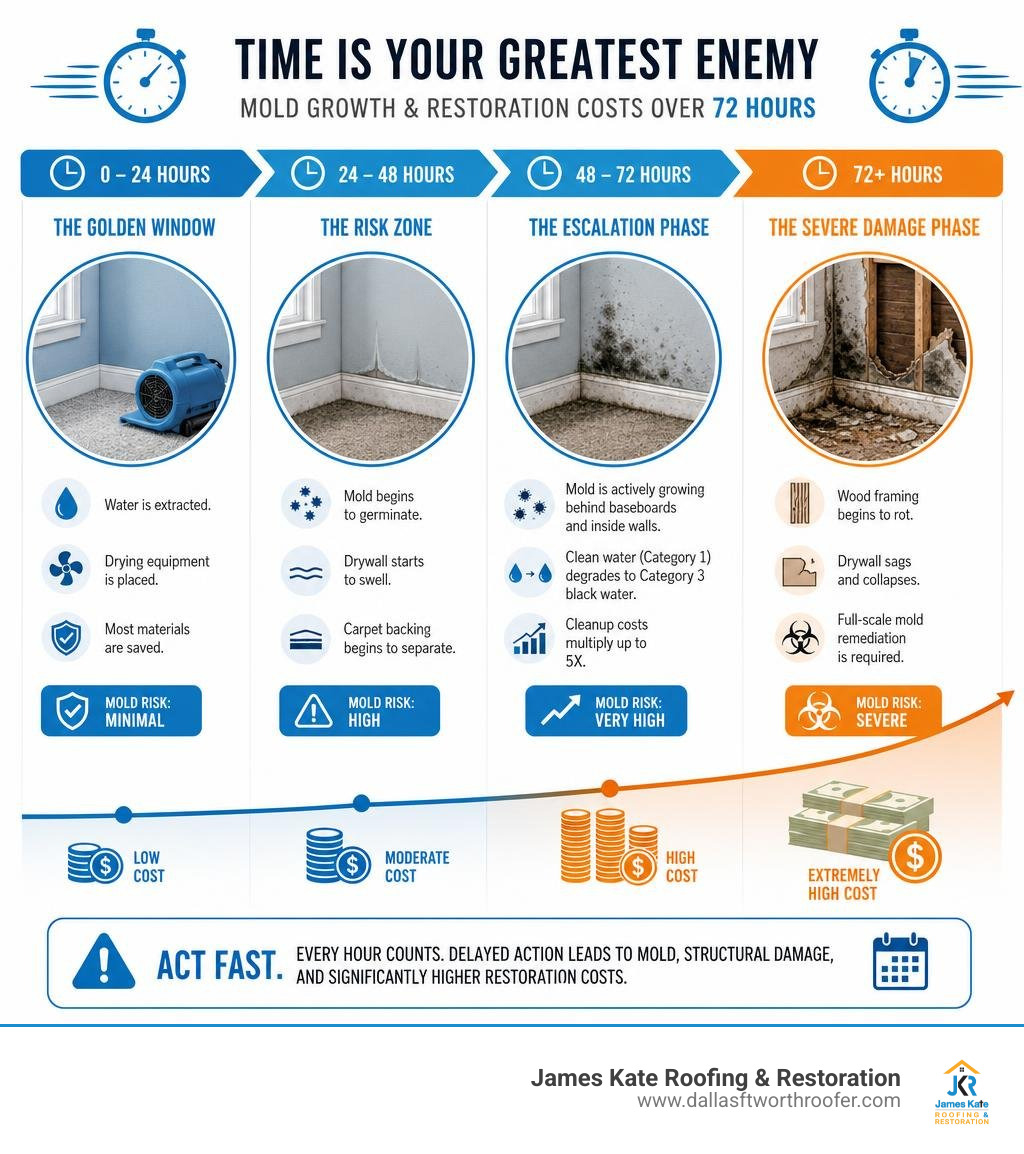
If you delay mitigation, your costs will rise quickly:
- 0 – 24 Hours (The Golden Window): Water is extracted, drying equipment is placed, and most materials are saved. Mold risk is minimal.
- 24 – 48 Hours (The Risk Zone): Mold begins to germinate. Drywall starts to swell, and carpet backing begins to separate.
- 48 – 72 Hours (The Escalation Phase): Mold is actively growing behind baseboards and inside wall cavities. Clean water (Category 1) degrades into Category 3 black water due to bacterial growth, multiplying your cleanup costs up to five times.
- 72+ Hours (The Severe Damage Phase): Wood framing begins to rot, drywall sags and collapses, and a full-scale mold remediation protocol is required.
To prevent minor moisture from turning into a major health hazard, read how to handle mold after a leak. If your home has suffered fire damage, water from fire hoses can create the perfect environment for mold to grow. Read more about this risk in our guide on preventing mold after fire damage.
Mold Remediation Cost Breakdown
If mold takes hold, standard water dry-out procedures are no longer enough. We must implement strict containment protocols to keep mold spores from spreading through your home.
Professional mold removal costs average $2,225, with a typical range of $1,200 to $3,800. If the mold has spread throughout your crawl space or multiple rooms, remediation can easily range from $5,000 to $30,000+.
A proper mold remediation estimate includes:
- Physical Containment: Building plastic zip-walls and maintaining negative air pressure.
- HEPA Air Scrubbing: Running commercial air filtration units to capture airborne spores.
- HEPA Vacuuming and Antimicrobial Wipedown: Physically removing mold growth from non-porous framing.
- Post-Remediation Verification (PRV): Third-party air quality testing (typically costing $300 to $700) to prove your home is safe.
Navigating Insurance and Flood Cleanup Policies
Understanding your insurance coverage before disaster strikes can save you thousands of dollars in out-of-pocket expenses.
Standard homeowners insurance policies and flood insurance policies are completely separate. A typical homeowners policy covers sudden and accidental water damage, such as a burst pipe or a washing machine hose failure. It does not cover rising groundwater, storm surges, or external flooding.
For rising water, you must have a separate flood insurance policy, typically through the National Flood Insurance Program (NFIP) or a private insurer. NFIP policies provide up to $250,000 for structural damage and $100,000 for contents, but they carry a strict 30-day waiting period from the date of purchase before coverage becomes active.
For a step-by-step emergency plan when facing rising waters, refer to When the Levee Breaks: Your Emergency Water Cleanup Plan. You can also find official flood mapping and policy details on the FEMA Flood Insurance Guide.
What Standard Homeowners Insurance Covers
Your standard homeowners policy typically covers water damage caused by:
- Burst plumbing pipes (due to freezing or wear)
- Sudden appliance leaks (water heaters, washing machines, or dishwashers)
- Water damage resulting from a covered fire event (such as water from fire department hoses)
To learn more about appliance-related water damage, read The Ultimate Guide to Cleaning Up After Appliance Leaks.
Common Exclusions and Flood Insurance Requirements
Insurance companies will deny water damage claims under several common scenarios:
- Gradual Leaks and Lack of Maintenance: If a pipe has been slowly dripping inside a wall for months, the insurer will likely deny the claim, citing a lack of home maintenance.
- Sewer Backups: Standard policies exclude water that backs up through sewers or drains unless you have purchased a specific “Sewer Backup Rider” (usually costing $50 to $150 annually).
- Rising Surface Water: Heavy rainstorms that cause water to pool in your yard and flow into your home require a dedicated flood policy.
To learn how to manage these unexpected floods, read our guide on how to handle a sudden flood without losing your cool. For national pricing trends on external flood recovery, check out the Flood cleanup cost in 2026 | National pricing guide.
Frequently Asked Questions about solar Costs
How much does it cost to repair water-damaged drywall and flooring?
Drywall repair and replacement typically costs $1.00 to $3.00 per square foot for mitigation demolition, while hanging, taping, and painting new drywall runs $2.00 to $4.00 per square foot during build-back.
Flooring costs vary by material:
- Carpet Drying and Sanitizing: $1.00 to $11.00 per square foot. If the carpet was exposed to Category 3 flood water, it must be replaced. For details on carpet recovery, see our guide to flooded carpet cleanup.
- Hardwood Flooring Replacement: $8.00 to $15.00+ per square foot installed. Engineered wood and solid hardwoods often warp or buckle when wet, requiring complete replacement of both the flooring and the plywood subfloor.
When is it better to repair versus replace water-damaged items?
The decision to repair or replace comes down to structural integrity, sanitary safety, and cost-effectiveness:
- Hard Non-Porous Items: Hardwood furniture, metal fixtures, and plastics can almost always be cleaned, sanitized, and restored.
- Porous Materials: Drywall, insulation, carpet padding, and mattresses act like sponges. If exposed to gray or black water, they must be replaced.
- Appliances: If an appliance’s electrical system has been submerged in water, replacing the unit is usually safer and more cost-effective than attempting complex electrical repairs.
For practical advice on restoring your home and your peace of mind, read Restoring Your Sanity and Your Home After Damage.
How long does the fire and flood solar process take?
The solar timeline depends on the scale of the damage:
- Emergency Mitigation and Drying: Typically takes 3 to 5 days of continuous equipment operation.
- Demolition and Sanitization: Takes 2 to 5 days for contaminated materials.
- Reconstruction and Build-Back: Can take anywhere from 1 to 2 weeks for a single room, to 4 to 8 weeks for multi-room storm damage, and up to 6 to 18 months for a total loss rebuild.
To help you navigate this process step-by-step, we wrote the Water Damage solar Survival Guide.
Conclusion
Managing a fire and flood solar cost requires quick action, detailed documentation, and a trusted partner who understands how to work with your insurance company. Attempting to dry out structural water damage yourself or delaying the cleanup process can quickly lead to expensive mold growth and structural rot.
At James Kate Roofing & solar, we are a family-owned DFW company built on honesty, integrity, and Biblical principles. As a GAF President’s Club contractor, we back our work with up to a 25-year workmanship warranty. We handle the entire solar process for you—from emergency water extraction and fire mitigation to mold remediation and full build-back construction.
If you are dealing with property damage in Mansfield, Arlington, Granbury, Grand Prairie, or Midlothian, don’t wait for the damage to spread. Schedule a professional solar assessment with us today, and let our family help yours rebuild.

Dustin Eatman is a seasoned roofing professional with deep, hands-on expertise that spans residential and commercial roofing, insurance solar, and long-term roof asset management. As the owner of James Kate Roofing & solar in the Dallas–Fort Worth metroplex, he’s built a reputation for diagnosing roof systems accurately, communicating clearly, and executing projects with a high standard of workmanship and documentation. Dustin understands the technical details that make roofs perform—proper underlayment selection, slope and drainage considerations, ventilation strategy, flashing and penetration detailing, and manufacturer-specific installation requirements—because he’s worked through the real-world challenges that cause leaks, premature wear, and warranty issues. He’s equally fluent in the operational side of roofing: jobsite planning, quality control, safety, material ordering, crew coordination, and customer experience from inspection to closeout. In insurance-related projects, Dustin brings practical knowledge of claim workflows, adjuster meetings, scope alignment, supplements, and the importance of photo evidence and thorough records, helping property owners navigate stressful situations with confidence. For commercial clients—especially property and facility managers—he emphasizes proactive maintenance and targeted repairs that reduce disruption, extend roof life, and prevent expensive interior damage. Dustin also stays focused on doing things the right way: educating customers on realistic options, setting expectations, and prioritizing solutions that hold up over time rather than quick fixes. That blend of technical skill, field experience, process discipline, and owner-level accountability is what makes Dustin Eatman a trusted expert in the roofing industry.