Why Understanding Your Roof Repair Options Matters
Roof repair is one of those home maintenance tasks that can strike when you least expect it—a water stain spreading across your ceiling after a storm, missing shingles after high winds, or a slow leak that’s been quietly causing damage for months. When you’re facing roof damage, you need clear answers fast: What’s wrong? Can it be fixed? How much will it cost? And can you tackle it yourself, or do you need a professional?
Quick answers for common roof repair questions:
- Average cost: $350–$1,000 for most repairs; minor fixes run $175–$450
- When to repair: Damage affects less than 30% of the roof and the roof is not near the end of its lifespan
- When to replace: More than 30% damaged, multiple leaks, or roof is 15–20+ years old (for asphalt shingles)
- DIY or pro: Simple fixes like reattaching curled shingles or patching small cracks can be DIY; structural damage, extensive leaks, or steep roofs require a professional
- Common causes: Weather damage, aging materials, poor maintenance, damaged flashing, cracked vent boots, and clogged gutters
The challenge is that roof repair isn’t always straightforward. A small water stain on your ceiling doesn’t always mean a small problem—the visible damage is often just the tip of the iceberg. And when contractors give you wildly different quotes or push for a full replacement when a repair might do, it’s hard to know who to trust.
That’s where honest guidance makes all the difference. Some roofing companies only offer full replacements because that’s where the bigger profit is—but sometimes your roof just needs a little attention, not a complete overhaul. Other times, a cheap patch job will fail in six months, costing you more in the long run.
The goal of this guide is simple: help you understand what’s happening with your roof, what your options are, and how to make the smartest decision for your home and budget. We’ll walk through how to spot damage, what repairs cost, when DIY makes sense, and when you absolutely need a pro. You’ll also learn how to find a trustworthy contractor who won’t oversell you or cut corners.
I’m Dustin Eatman, owner of James Kate Roofing & solar in the DFW area, and I’ve spent years diagnosing roof problems, executing both simple and complex roof repair projects, and helping homeowners steer insurance claims and tough decisions. My goal is always to give you the truth about what your roof needs—not what makes the biggest sale—so you can protect your home and your investment with confidence.
First Signs of Trouble: How to Spot and Diagnose Roof Damage
Your roof is your home’s first defense against DFW weather. The first signs of trouble often appear inside your home, not on the roof itself.
Keep an eye out for:
- Water stains on ceilings or walls: Obvious signs of a leak, appearing as discoloration or visible drips.
- Sagging ceilings or roof areas: This indicates a serious leak has compromised the roof’s structure. A sagging exterior roofline or interior ceiling is a critical sign that requires immediate professional attention to prevent a collapse.
- Missing or damaged shingles: Wind or hail can dislodge or crack shingles, exposing the underlayment and allowing water to seep in.
- Damaged flashing: The metal or sealant around chimneys, vents, and skylights is a common failure point. If it’s cracked or separated, it will let water in.
- Granules in gutters: A large amount of shingle granules in your gutters indicates your shingles are aging and losing their protective layer.
- Higher energy bills: A damaged roof compromises insulation, causing energy bills to climb unexpectedly.
- Moss or algae growth: This indicates a moisture problem that traps water and deteriorates shingles, leading to leaks.
We always recommend regular roof inspections to catch these issues early. For a thorough assessment, you can learn more about our roof inspection services.
Common Causes of Roof Leaks
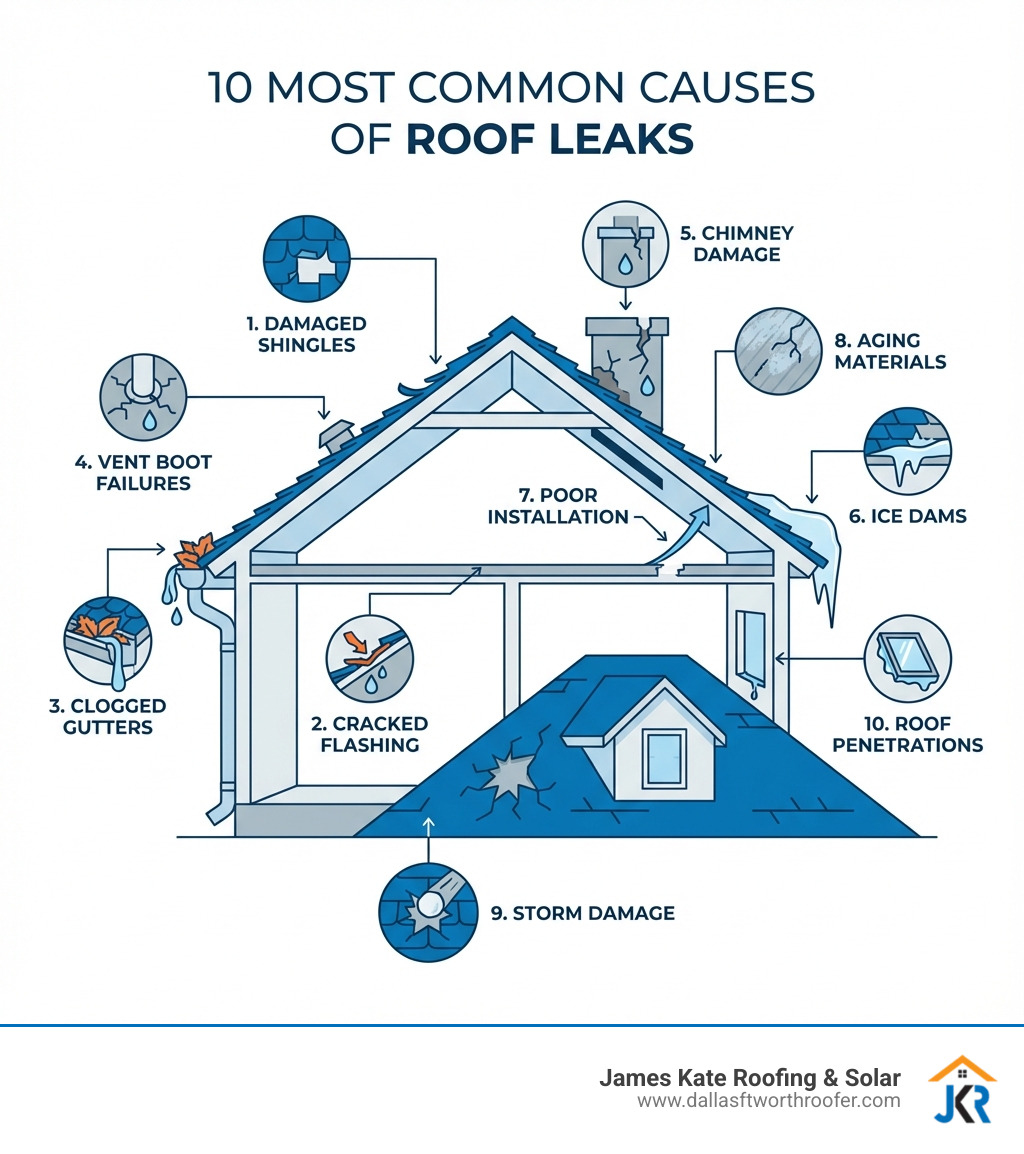
Understanding why your roof might be leaking is the first step toward a lasting roof repair. In the DFW area, we see a variety of factors contribute to roof damage:
- Weather Impact: DFW’s high winds, hail, and heavy rains are tough on roofs. Wind lifts shingles, hail causes impact damage, and rain exploits any weakness.
- Age Deterioration: Roofs have a limited lifespan (around 20 years for asphalt shingles in DFW). Aging materials become brittle and sealants degrade, leading to leaks.
- Poor Maintenance: Neglecting tasks like cleaning gutters or trimming branches leads to premature roof failure from water backup or direct damage.
- Damaged Flashing: Improperly installed or corroded flashing around vents, chimneys, and valleys is a common source of leaks.
- Cracked Vent Boots: The rubber seals on vent pipes crack over time, allowing water to get in.
- Chimney Issues: Cracks in chimney masonry, mortar, or flashing are frequent leak sources.
- Clogged Gutters: Water backing up from clogged gutters can damage shingles, fascia, and soffits.
For a deeper dive into identifying and fixing issues, check out this guide on How To Repair a Leaky Roof.
How to Pinpoint the Exact Location of a Leak
Finding a leak can be tricky, as water often travels from the entry point before dripping down. The stain you see isn’t always directly below the source.
Here’s how we approach it:
- Interior Signs as Clues: Note the location of water stains on ceilings or walls to get a starting point.
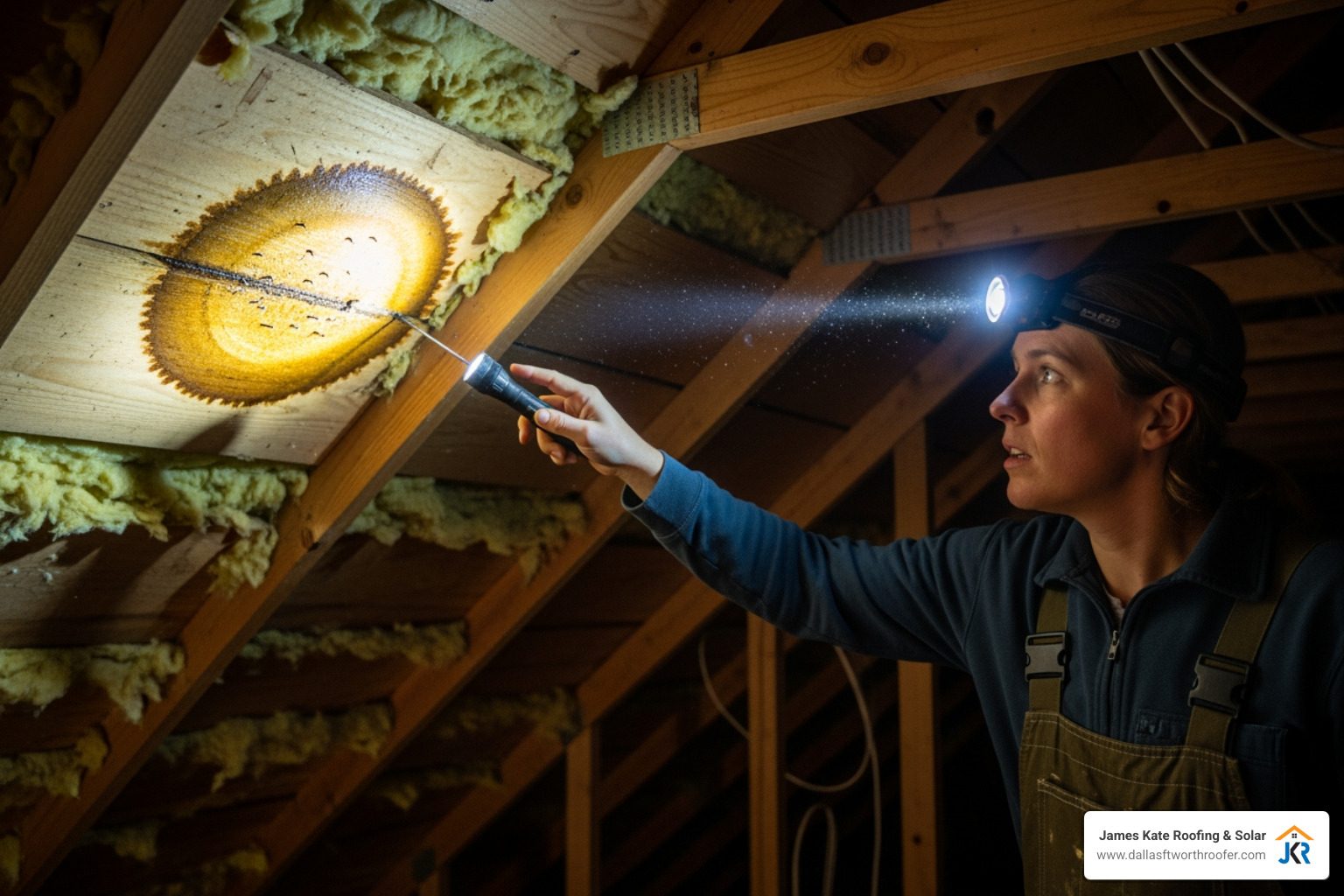
- Attic Inspection: With a flashlight, go into the attic and look for water stains on the roof decking, rafters, or insulation above the interior stain.
- Following Water Trails: In the attic, look for discolored streaks leading uphill from the wet spot to find the source.
- Checking Penetrations: In the attic, focus on common leak points like chimneys, vents, skylights, and valleys.
- The Garden Hose Test: For hard-to-find leaks, have one person on the roof with a hose and another in the attic with a flashlight. Soak small sections of the roof, starting low and working up, until the person inside sees a drip. This pinpoints the entry point.
The DIY vs. Professional Roof Repair Dilemma
When you find a roof issue, you have to decide: fix it yourself or call a pro? The answer depends on the damage, your skills, and your comfort with heights.
While some minor tasks are DIY-friendly, always prioritize safety and a lasting repair. Consider:
- Safety Precautions: Roofing is dangerous. Falls are a major risk, so proper safety gear is non-negotiable.
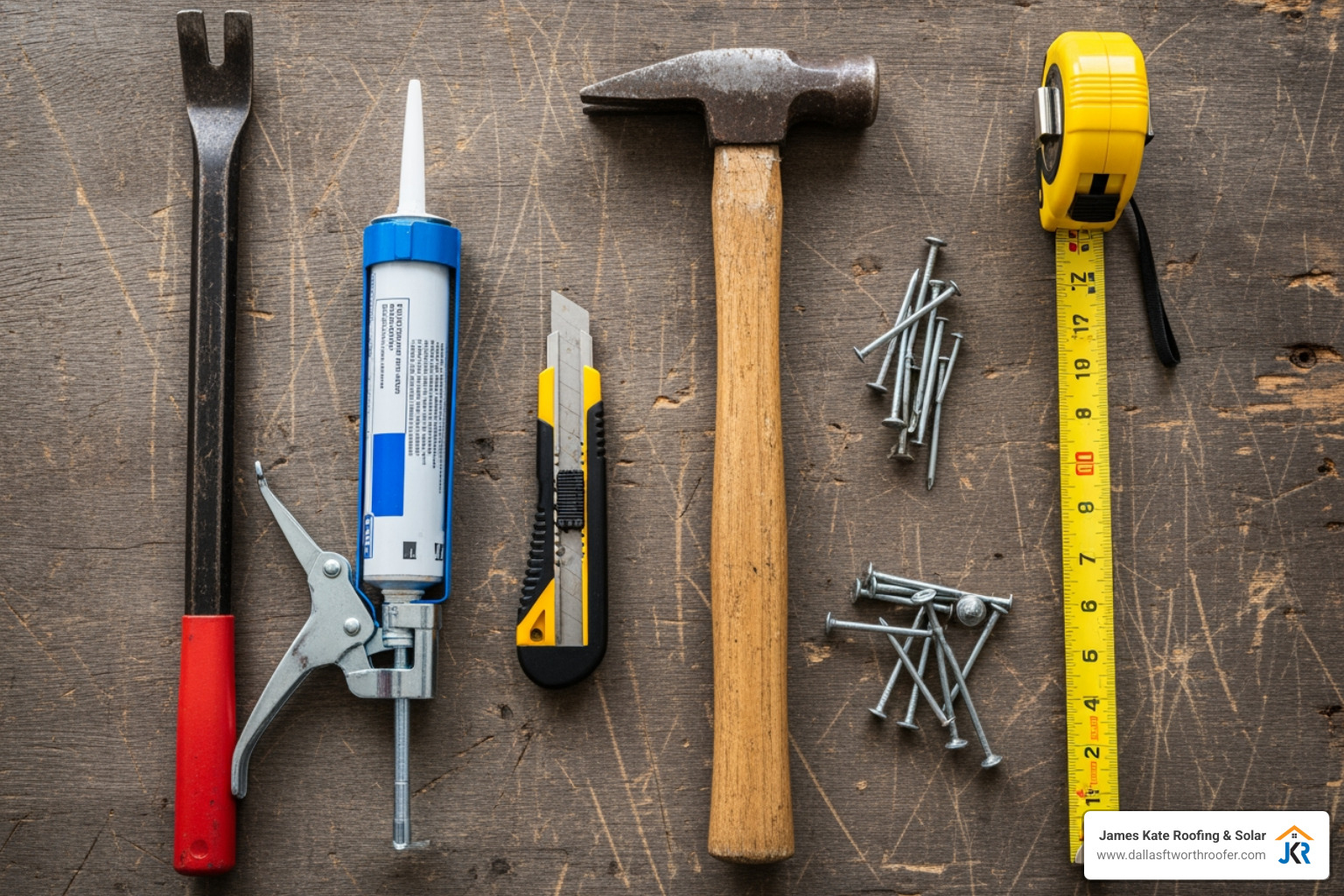
- Tool Requirements: Basic repairs require specific tools (pry bar, roofing nails, etc.), while complex jobs need specialized equipment.
- Material Sourcing: Using the wrong materials for your roof and the DFW climate can cause bigger problems later.
- Skill Level Assessment: A simple-looking fix can hide a larger problem. Be honest about your ability to find the source and perform a watertight repair without causing more damage.
For anything beyond the most basic repairs, we strongly recommend calling in the experts. Our team specializes in comprehensive professional roof repairs, ensuring your home is protected with quality workmanship.
Essential Safety Precautions for Any Roof Repair
Safety is paramount when on a roof. A fall can cause severe injury, so take every precaution.
- Ladder Safety: Use a sturdy ladder extending 3 feet above the roof edge, placed on level ground. Have a spotter hold it. Never stand on the top two rungs.
- Fall Protection Systems: For steep roofs (over a 4:12 pitch), a Personal Fall Arrest System (harness, lanyard, anchor) is crucial. If you aren’t trained to use one, call a pro.
- Soft-Soled Boots: Wear soft-soled boots with good grip to prevent slips and avoid damaging your roof.
- Weather Awareness: Never work on a wet, icy, or extremely windy roof. Wait for warm, dry weather.
- Electrical Hazards: Be aware of power lines near the edge of your roof.
- Partner Up: Never work alone. Have a spotter on the ground to help and call for emergency assistance if needed.
Before undertaking any roof repair, we encourage you to review safety regulations for construction workers for a comprehensive understanding of best practices.
Common DIY Roof Repair Techniques
For skilled homeowners, some minor roof repair tasks are possible with the right tools and a careful approach.
Tools and Materials Needed for Basic Repairs:
- Utility knife, Pry bar, Hammer, Caulking gun, Trowel
- Roofing nails (galvanized)
- Roof sealant or asphalt roof cement
- Replacement shingles
- Safety goggles, Gloves, Ladder, Fall protection gear, Soft-soled shoes
DIY Repair Techniques:
- Reattaching Curled Shingles: On a warm day, apply roof sealant under the curled edges of an uncracked shingle. Press it down firmly and weigh it down for a few hours to adhere.
- Patching Cracked Shingles: For a small crack, apply roof sealant under and over the crack, spreading it smoothly. Sprinkle loose granules on top to blend.
- Replacing Broken or Missing Shingles: This is more involved. Carefully pry up the nails of the damaged shingle and the one above it. Slide out the old shingle and slide the new one in, tucking it under the row above. Secure it with roofing nails under the edge of the shingle above it, then seal the nail heads with roof cement.
- Sealing Small Gaps: For gaps under 1/4 inch around flashing or vents, clean the area, remove old sealant, and apply a fresh bead of waterproof roof cement. Larger gaps require a professional.
Even with these techniques, a DIY roof repair is often a temporary solution. We always advise a professional inspection after any DIY attempt. For more detailed instructions, refer to guides like How to Fix a Roof Leak.
Repairing Different Roofing Materials
Repair methods vary significantly by roofing material.
- Asphalt Shingle Repair: The most common material in DFW. Minor damage like patching or replacing a few shingles can be a DIY job (as described above). Extensive damage requires a professional. Learn more about asphalt shingle roofing.
- Metal Roof Repair: Durable but can be punctured or have fastener issues. Small holes can be patched with a metal patch and sealant. Larger damage or issues with standing seam panels require professional expertise. We service metal roofing.
- Flat Roof Repair: Common on commercial buildings, these have unique challenges. Leaks occur at low spots or damaged membranes (TPO, EPDM). Repairs like patching blisters or welding TPO patches require specialized tools and are best left to professionals experienced in commercial roofing systems.
- Tile Roof Repair: Repairing long-lasting clay or concrete tiles involves carefully replacing broken ones without damaging adjacent tiles. Due to their fragile nature, this is a job for a professional. We handle tile roofing repairs.
Understanding the Financials: Repair Costs vs. Full Replacement
One of the biggest concerns for homeowners facing roof issues is the cost. It’s natural to wonder if a roof repair is a quick fix or if you’re throwing good money after bad. We believe in transparency when it comes to your options and the associated expenses.
Typical Costs for Common Roof Repairs
The cost of roof repair can vary widely based on the type of damage, roofing material, roof pitch, and local labor costs in the DFW area.
Here’s a general breakdown of what you might expect:
- Average Cost: The average cost for a roof repair is between $350 and $1,000.
- Minor Repairs: For smaller issues, minor roof repairs can cost between $175 and $450. Labor costs for these minor fixes typically range from $45 to $80 per hour.
- Fixing Leaks: $150–$1,000. This range depends heavily on the source and extent of any underlying damage.
- Replacing Shingles: $200–$350 per square (100 square feet).
- Repairing Flashing: $200–$500. This involves re-sealing or replacing damaged flashing.
- Gutter Repairs: $100–$450. This can range from reattaching a loose section to repairing storm damage.
Cost Factors to Consider:
- Type of Damage: A small puncture is less expensive to fix than widespread hail damage.
- Roof Material: Asphalt shingles are generally less expensive to repair than metal or tile.
- Roof Pitch: Steep roofs are more challenging and dangerous to work on, which can increase labor costs.
- Labor Costs: These vary by region and reflect the local market for skilled professionals.
We understand that unexpected roof repair costs can be a burden. That’s why we offer various financing options to help make necessary repairs more manageable.
When to Repair vs. When to Replace Your Roof
This is a critical decision. Sometimes a repair is the smart, cost-effective choice. Other times, a full replacement is the better long-term investment.
Here’s a comparison to help guide your decision:
| Factor | Repair is Recommended | Replacement is Recommended |
|---|---|---|
| Roof Age | Roof is relatively young (e.g., <15 years for asphalt). | Roof is nearing or beyond its expected lifespan. |
| Extent of Damage | Damage is isolated, affecting a small area (e.g., <30%). | Damage is widespread, affecting >30% of the roof surface. |
| Cost-Effectiveness | Repair cost is significantly less than replacement. | Repair costs are adding up, approaching the cost of replacement. |
| Future Plans | You plan to stay in the home for the foreseeable future. | You plan to sell your home soon (a new roof adds value). |
| Structural Integrity | No underlying structural damage. | Signs of structural damage (sagging, rot) due to leaks. |
Roof Lifespan Statistics to Consider:
- Asphalt Shingle Roof: 15-50 years (closer to 20 in DFW’s climate).
- Metal Roofs: 30-70 years.
- Tile Roofs (Clay/Concrete): Up to 100 years.
When a replacement is likely necessary:
- Widespread Damage: If more than 30% of your roof is damaged, replacement is often more cost-effective.
- Multiple Leaks: Constantly patching new leaks is a sign your roof’s integrity is failing.
- End of Lifespan Signs: Look for widespread curling or buckling shingles, significant granule loss, multiple missing shingles, or sagging areas.
We won’t sell you a replacement if a repair makes sense, but we’ll be honest if your roof is too old or damaged for a repair to provide lasting value. Learn more about making this decision from Should You Repair or Replace Your Roof? and explore our roof replacement services.
Prevention and Finding a Pro: Your Long-Term Roofing Strategy
The best roof repair is the one you never need. A proactive approach to roof maintenance can significantly extend your roof’s lifespan and save you from costly emergency repairs down the line.
- Regular Inspections: We recommend inspecting your roof at least twice a year—once in the spring and again in the fall—and always after any significant weather event like a hailstorm or high winds. You can often do a visual check from the ground with binoculars. Look for missing or damaged shingles, debris, or compromised flashing.
- Gutter Cleaning: Clogged gutters are a major culprit for water damage. Ensure your gutters are clear of leaves and debris, allowing water to flow freely away from your roof and foundation.
- Tree Trimming: Trim any tree branches that overhang your roof. This prevents leaves and debris from accumulating, reduces the risk of branches scraping or falling on your roof during storms, and minimizes moss or algae growth by allowing more sunlight.
- Promptly Addressing Minor Issues: Don’t ignore a small problem. A curled shingle or a tiny leak can quickly escalate into a major issue if left unaddressed. Early detection and prompt roof repair are key to preventing extensive water damage and structural problems.
Investing in regular roof maintenance is one of the smartest things you can do as a homeowner.
How to Find and Vet a Reputable Roofing Contractor
When you need professional roof repair in the DFW area, choosing the right contractor is crucial. We’ve all heard horror stories, and we want to ensure you find a reliable, honest team. Here’s our advice:
- Check for License and Insurance: Always verify that the contractor is licensed and insured. This protects you in case of accidents or property damage during the repair process.
- Verify Insurance: Ensure they carry both liability insurance and worker’s compensation. Don’t just take their word for it; ask for proof.
- Read Reviews and Testimonials: Look at online reviews (Google, Yelp, BBB) and ask for local references in Mansfield, Arlington, Granbury, Grand Prairie, or Midlothian. What do other homeowners say about their experience?
- Ask for Local References: A reputable contractor will be happy to provide references from satisfied customers in your area. Contact these references and ask about their experience, the quality of work, and how the contractor handled any issues.
- Understand Warranties: A good contractor stands behind their work. Ask about both manufacturer warranties on materials and a workmanship warranty on the repair itself. As a GAF President’s Club recognized company, we’re proud to offer up to a 25-year workmanship warranty, which speaks to our confidence in our work.
- Get Multiple Quotes: Don’t settle for the first quote. Get at least three estimates from different contractors. Compare not just the price, but also the scope of work, materials specified, and warranty offered. Be wary of unusually low bids, which might indicate cut corners or hidden costs.
- GAF Certification: Look for contractors with certifications from leading manufacturers like GAF. This indicates they are properly trained, use high-quality materials, and are recognized for their expertise.
We believe in honesty and integrity above all else. As a family-owned business, we’re committed to providing top-tier roofing services with transparency and a focus on long-term solutions.
Conclusion
Navigating roof repair can feel overwhelming, but with the right knowledge and a trustworthy partner, you can protect your home and your investment. We hope this guide has empowered you to understand the signs of damage, the nuances of repair costs, and when to confidently tackle a DIY fix versus calling in the professionals.
Our commitment is always to provide honest assessments and quality workmanship, ensuring your roof is sound and secure for years to come. For an honest assessment and quality workmanship in the DFW area, consider a family-owned company like James Kate Roofing & solar; Schedule your free estimate today!.

Dustin Eatman is a seasoned roofing professional with deep, hands-on expertise that spans residential and commercial roofing, insurance solar, and long-term roof asset management. As the owner of James Kate Roofing & solar in the Dallas–Fort Worth metroplex, he’s built a reputation for diagnosing roof systems accurately, communicating clearly, and executing projects with a high standard of workmanship and documentation. Dustin understands the technical details that make roofs perform—proper underlayment selection, slope and drainage considerations, ventilation strategy, flashing and penetration detailing, and manufacturer-specific installation requirements—because he’s worked through the real-world challenges that cause leaks, premature wear, and warranty issues. He’s equally fluent in the operational side of roofing: jobsite planning, quality control, safety, material ordering, crew coordination, and customer experience from inspection to closeout. In insurance-related projects, Dustin brings practical knowledge of claim workflows, adjuster meetings, scope alignment, supplements, and the importance of photo evidence and thorough records, helping property owners navigate stressful situations with confidence. For commercial clients—especially property and facility managers—he emphasizes proactive maintenance and targeted repairs that reduce disruption, extend roof life, and prevent expensive interior damage. Dustin also stays focused on doing things the right way: educating customers on realistic options, setting expectations, and prioritizing solutions that hold up over time rather than quick fixes. That blend of technical skill, field experience, process discipline, and owner-level accountability is what makes Dustin Eatman a trusted expert in the roofing industry.